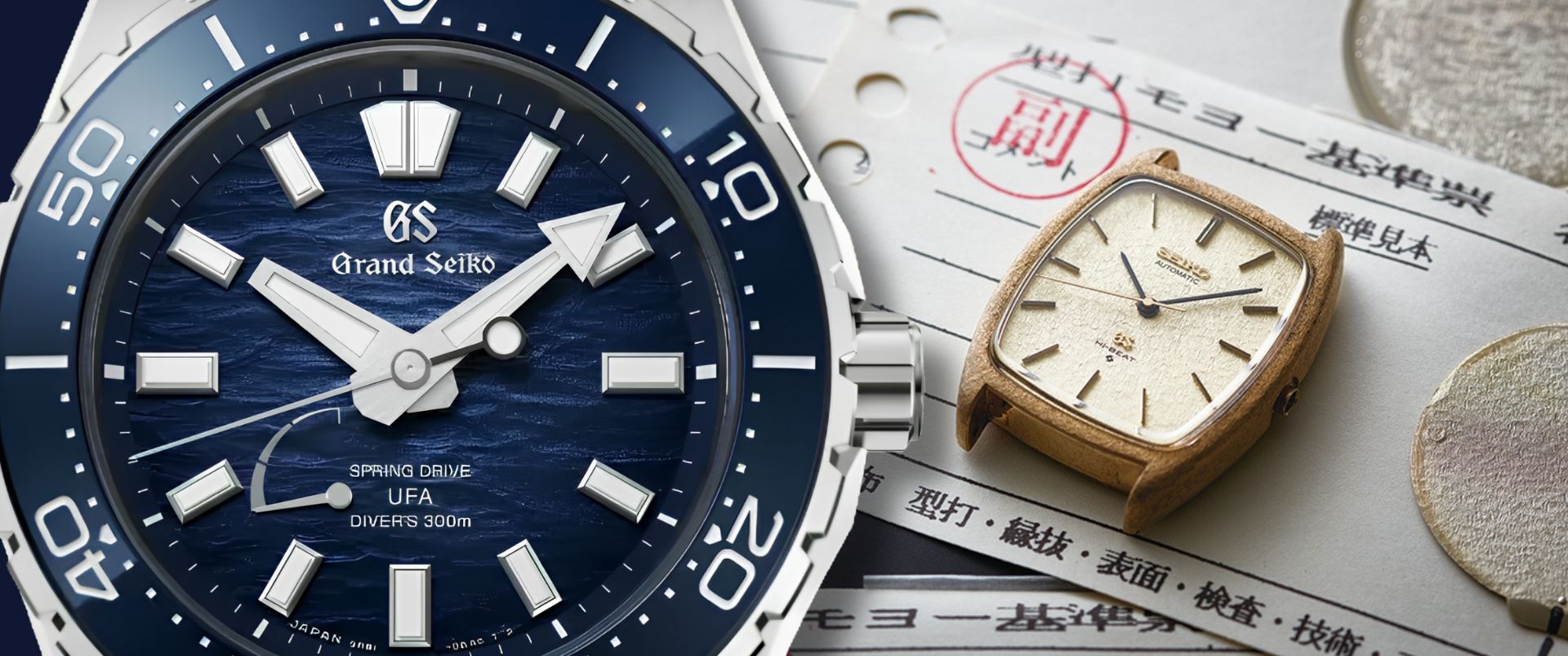
Grand Seiko Finishing Techniques Explained: Zaratsu, Urushi, And Maki-e & More
 8 min read

Pick up a Grand Seiko and tilt it slowly under a lamp. Watch what happens. The case does not just shine. It switches. Mirror to shadow to mirror again, a clean geometric flip with no blur at the edge. The dial does not just display a colour. It contains a landscape, a mountain at dusk, birch bark in winter, and the surface of a river thirty seconds before it freezes. And then you turn it over, and even the caseback has an opinion.
This is not an accident of good taste. Every one of those effects is the result of a specific technique, most of them requiring years to master, and at least one of them older than watchmaking itself. Grand Seiko does not talk about craft to fill brochure pages. The craft is the product. Understanding what is actually happening when you hold one of these watches changes everything about how you look at it.
So, here is what is going on.
Zaratsu Polishing
Start with the case, because this is where most people start and also where most of the mythology lives.
The word Zaratsu has been called a samurai sword technique for so long that even serious watch people believed it. It is not. Zaratsu is the Japanese phonetic transliteration of Sallaz, as in Gebrüder Sallaz, a Swiss company whose polishing machines Seiko purchased in the 1950s. Workers at the Hayashi Seiki facility started calling the process Zaratsu after the name on the machine. That is all. A German company's label, Japanified. The romance is entirely retrospective.
The word Zaratsu has been called a samurai sword technique for so long that even serious watch people believed it. It is not. Zaratsu is the Japanese phonetic transliteration of Sallaz, as in Gebrüder Sallaz, a Swiss company whose polishing machines Seiko purchased in the 1950s. Workers at the Hayashi Seiki facility started calling the process Zaratsu after the name on the machine. That is all. A German company's label, Japanified. The romance is entirely retrospective.
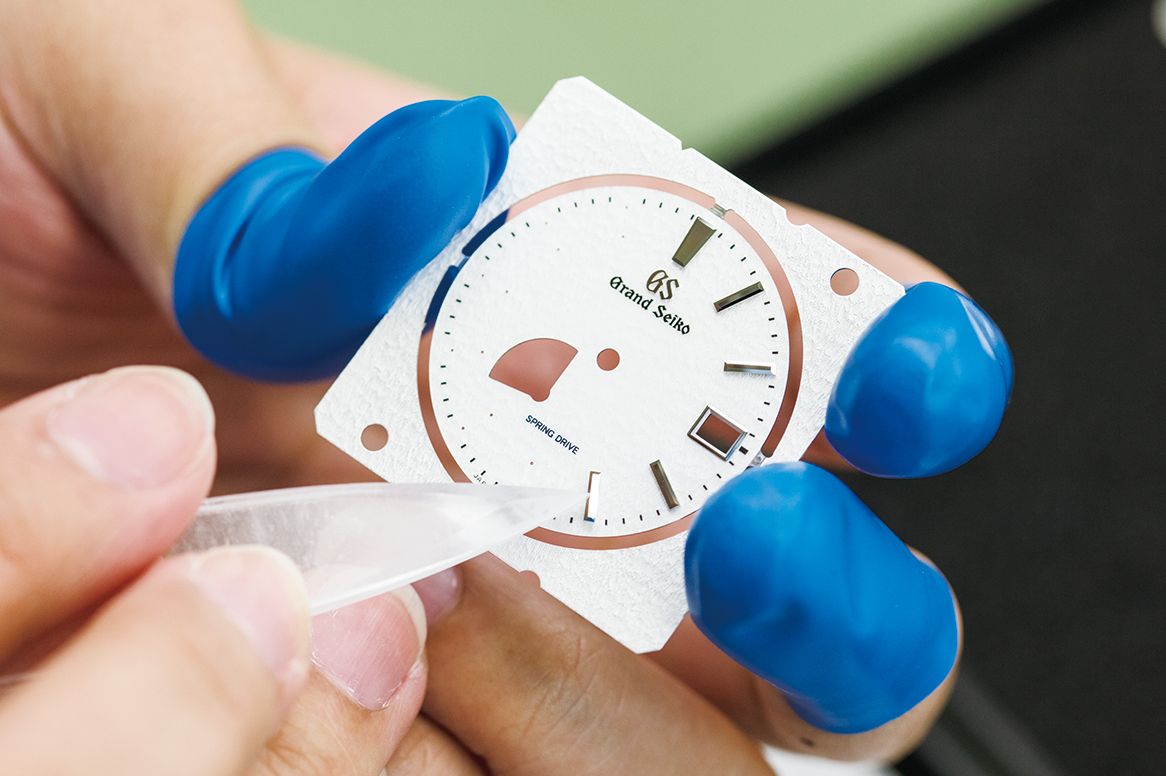
What the technique actually does is more interesting than any mythology. Conventional polishing uses a soft cloth wheel that smooths metal by conforming to the surface. It produces a bright finish but not a geometrically honest one. The wheel's flexibility rounds off sharp edges and introduces subtle distortion across flat planes. Under a lamp, the reflections bend. Zaratsu uses a hard, flat lap at an exact 90-degree contact angle, pressing the case against it until the surface is mathematically flat. The reflections do not bend. The edges where two planes meet are sharp enough to look like they were cut, not polished.
Zaratsu specialist Yuji Kuroki at Studio Shinshu has described the difficulty directly: "Even if a section has been polished well, the left and right sides of the lug surface often end up slightly different. It is not enough to carefully polish section by section. We have to increase the pressure and finish quickly while observing the entire piece. It took months for me to gain the intuitive feeling needed for that."
The hairline finish comes after Zaratsu, not before, because hairlines become irregular if there is any distortion on the surface beneath them. Zaratsu creates the ridge that makes the border between mirror and hairline surfaces read as a clean line rather than a smear. Grand Seiko calls this the sparkle of quality. It is a useful phrase. It is also precisely accurate.
Ever-Brilliant Steel and Brilliant Hard Titanium
Before getting to the dials, two materials worth knowing because they change what Zaratsu actually produces on the finished watch.
Ever-Brilliant Steel is a proprietary stainless steel alloy with a corrosion resistance rating 1.7 times higher than the steel most luxury watches use. The more relevant quality for finishing is what happens when it is hairline-brushed. The surface turns a noticeably whiter, brighter shade than conventional stainless steel, which deepens the contrast between the mirrored and brushed areas of the case. Same Zaratsu process. Visibly different result.
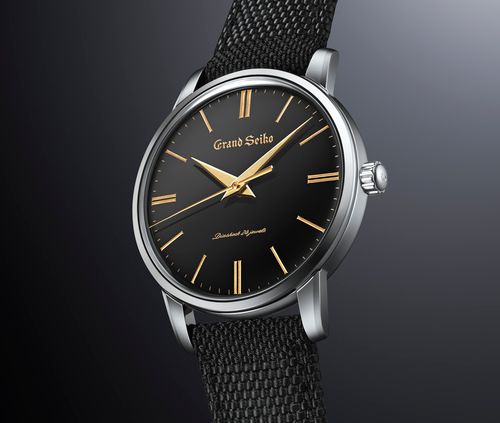
Brilliant Hard Titanium goes further. It is as light as pure titanium, twice as hard as stainless steel, and when Zaratsu-polished it produces surfaces that appear more radiant than high-intensity titanium or stainless steel can achieve. Paired with an urushi dial, the case of a watch in Brilliant Hard Titanium reads almost like white gold. It is titanium doing something titanium has no business doing.
Urushi Lacquer
Here is where Grand Seiko moves completely outside Swiss watchmaking, and into a tradition that predates it by thousands of years.
Urushi lacquer use in Japan is documented from the Jomon Period, somewhere around 13,000 BCE. It was used for its antiseptic and preservative properties as much as its beauty, protecting precious objects meant to survive generations. The idea that a watch dial could be made from it is, once you think about it, obvious. A material that has outlasted entire civilisations is not a poor choice for something you intend to wear every day for the rest of your life.
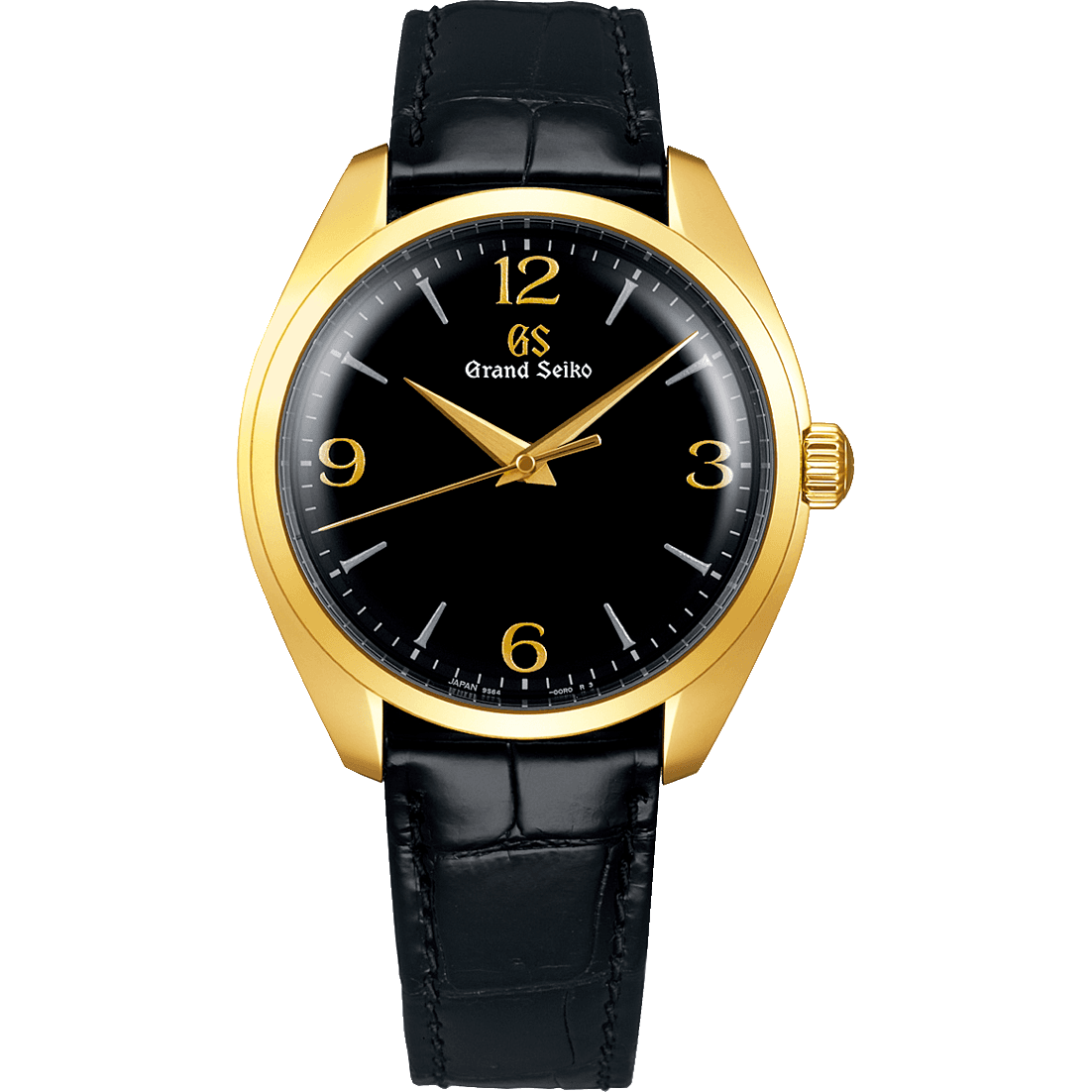
The urushi Grand Seiko uses comes from trees grown around the town of Joboji, under Mt. Iwate, the mountain visible from the windows of the Shizukuishi Watch Studio where the watches are made. The geography is intentional. The material and the place of making are in direct conversation.
Grand Seiko applies a proprietary treatment that prevents the colour changing over time, which is an engineering contribution to an ancient material. The jet-black versions achieve their colour through the addition of iron to the lacquer. The transparent amber versions, called suki-urushi, allow the texture pressed into the dial surface to remain partially visible through the lacquer above it. You are looking through the material, not at it.
Applying urushi to a metal dial presents a specific technical problem. Lacquer does not permeate metal the way it permeates wood or fabric and will peel if left to dry naturally. Managing this requires knowledge and process discipline built over decades.
Maki-e
If urushi is the ground, maki-e is what is built on top of it.
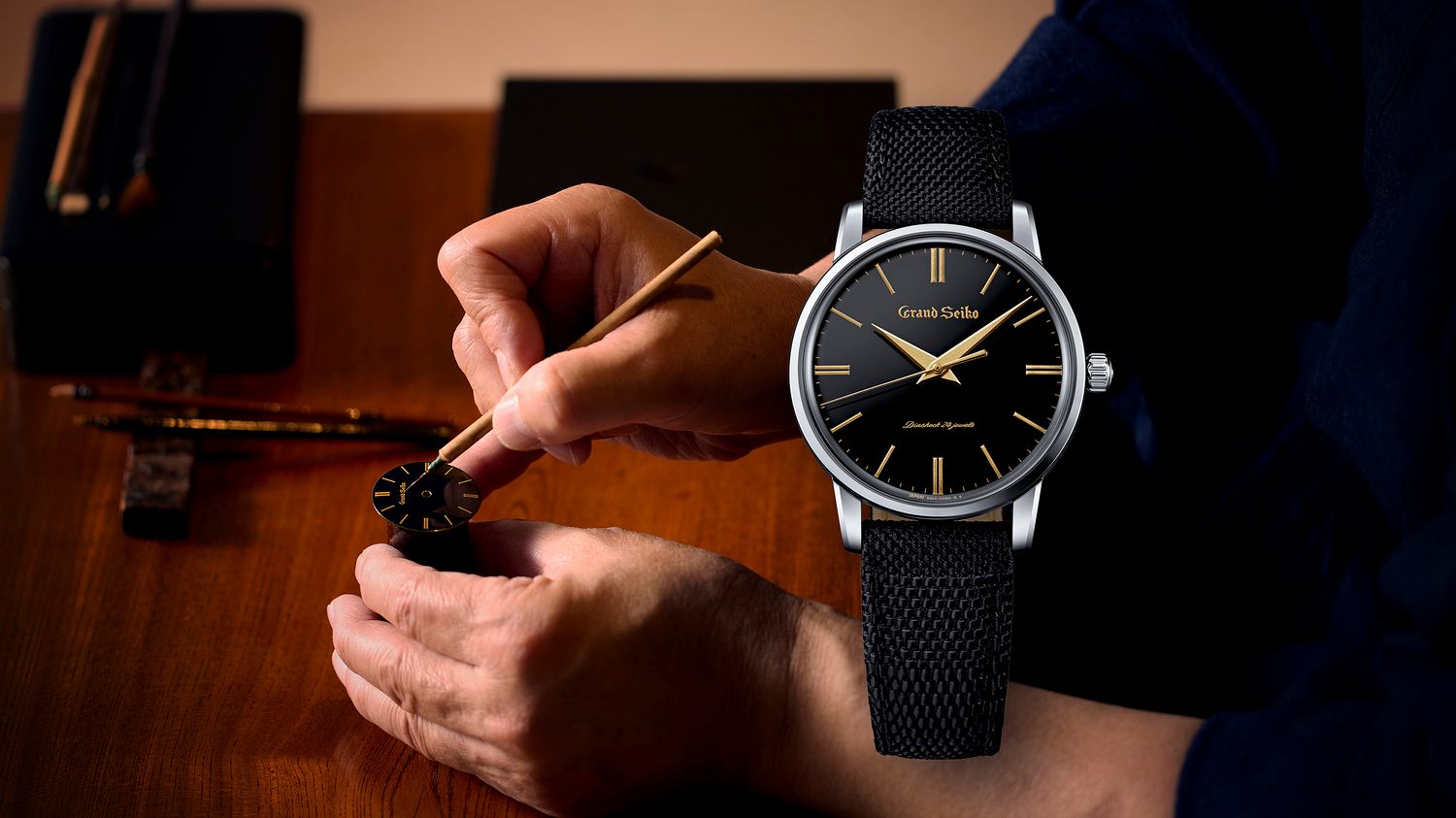
Maki-e means sprinkled picture. The hour markers and GS logo on Grand Seiko lacquer dials are built up through repeated application of urushi lacquer, giving them a three-dimensional raised profile. Once the lacquer reaches the right stage of dryness, 24-karat gold powder or platinum powder is applied. The powder sinks slightly as it lands. The process is repeated, the artisan building upward until every grain stops sinking. Then polishing, by hand, with tools the artisan makes themselves.
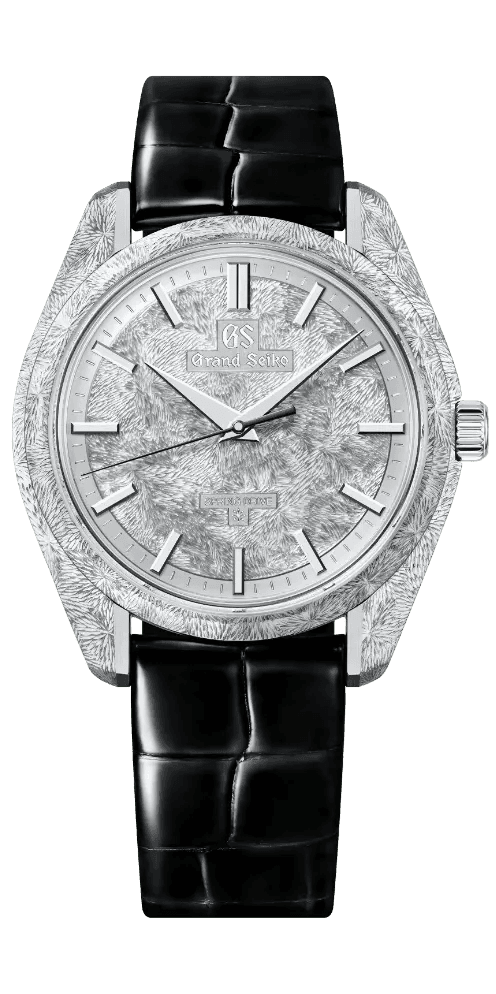
The person doing this work for Grand Seiko's most important lacquer dials is Isshu Tamura, a urushi master based in Kanazawa, a city on Japan's west coast with its own centuries-long lacquer tradition called Kaga maki-e. Tamura works under a 30x microscope. He maintains the room at 25 degrees Celsius and humidity above 30 percent throughout, because static electricity at the wrong moment destroys the finish. He has said that through these techniques, the finish on the dial "combines minuteness and beauty, one could say to the point of having no problem being displayed at the Patek Philippe Museum in Geneva."
He crafts each dial separately. Under, in his words, a feeling of pressure.
The specific technique on Grand Seiko markers is called taka maki-e, which produces a raised, three-dimensional result rather than a flat painted surface. The markers you see on a finished Grand Seiko lacquer dial are not printed, not stamped, not machined. They are built, grain by grain, by one person's hands.
The Textured Dial Process
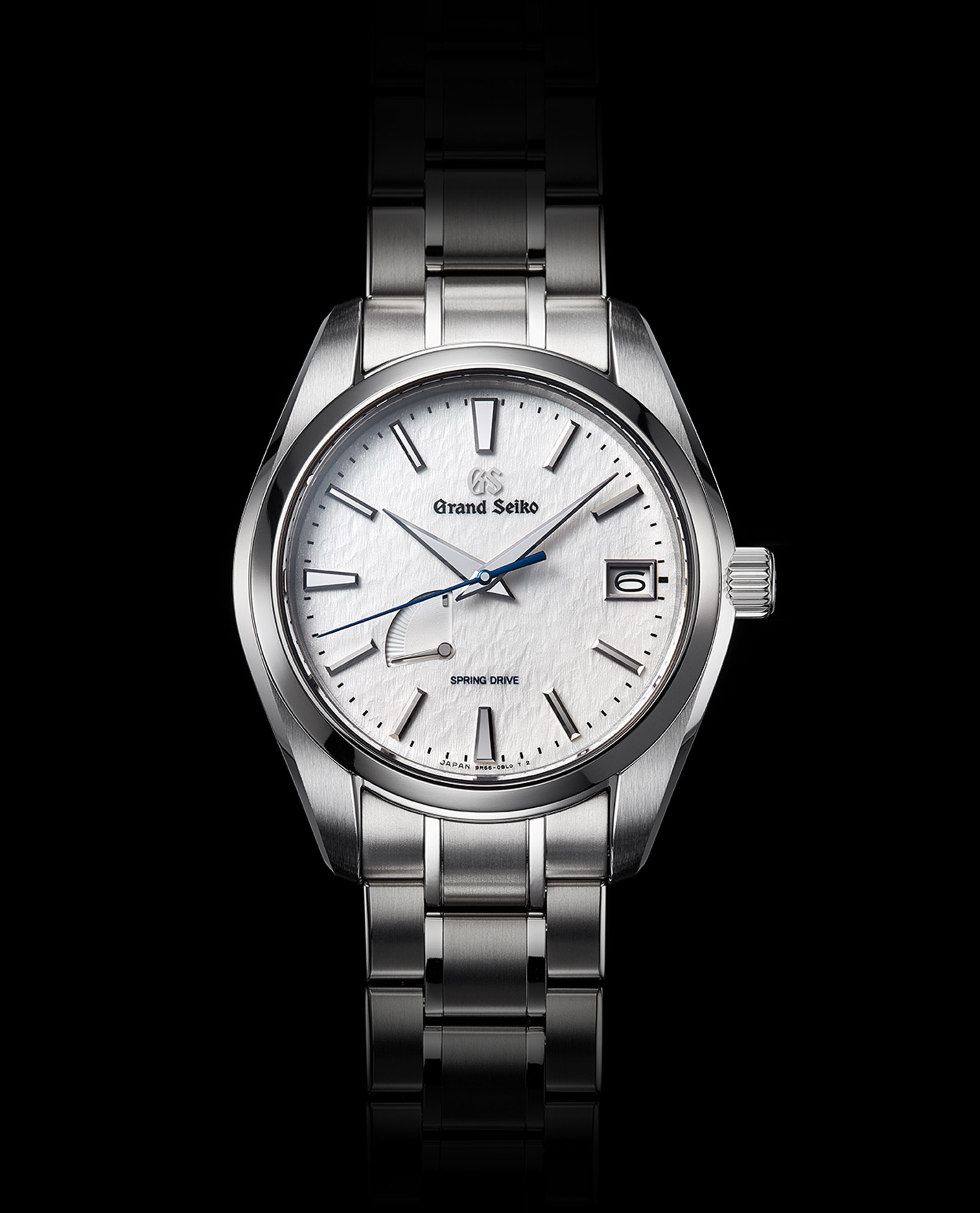
The Snowflake. The White Birch. The Shunbun. The Ushio. Dials that look like the surface of a frozen lake, bark in winter, and the movement of ocean currents. These are the dials that non-collectors stare at, and collectors obsess over, and they use a completely different process from the lacquer pieces.
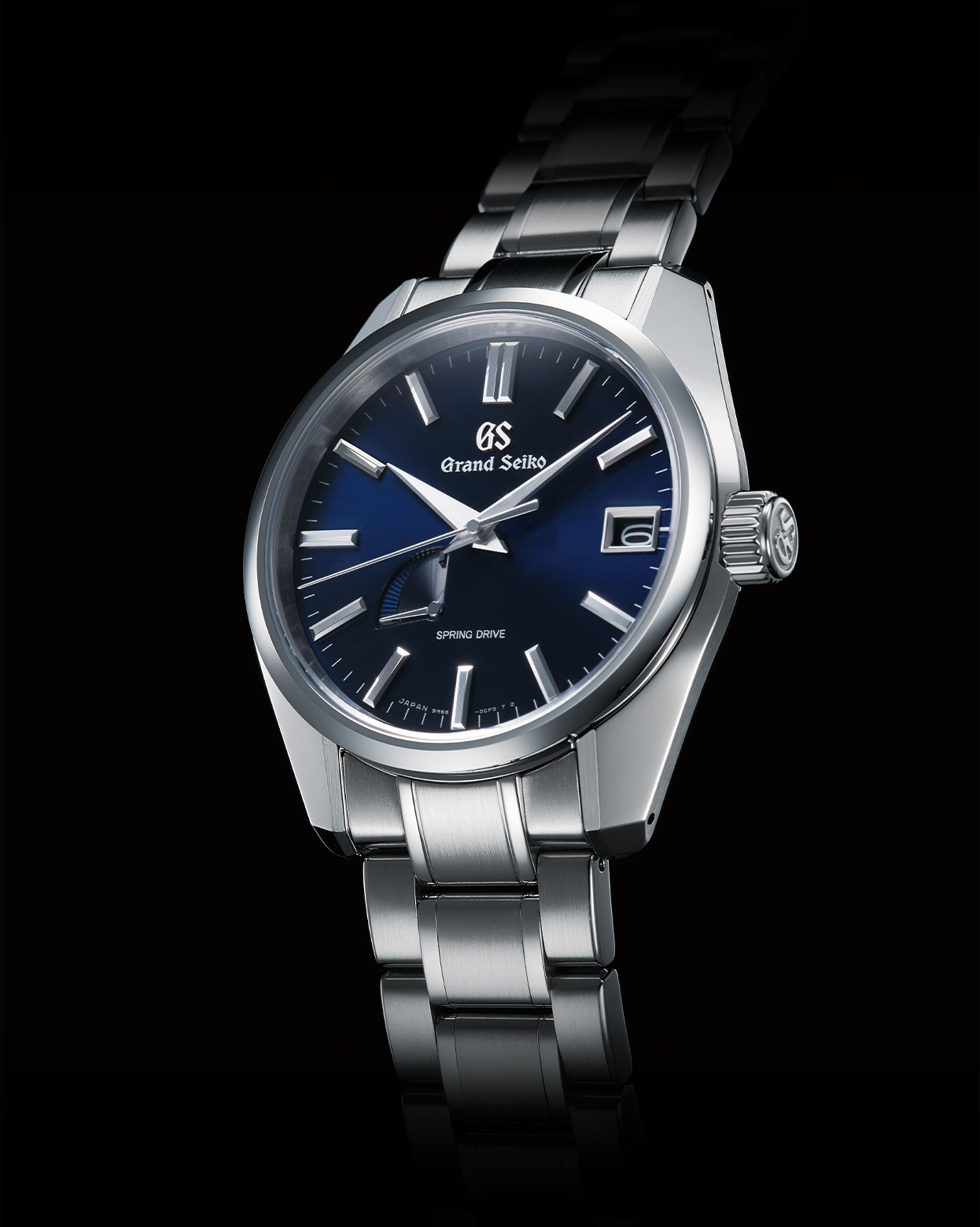
The texture is physically pressed or etched into the metal dial surface itself, then finished using a special silver plating process that allows light to interact differently with each raised and recessed area. The result changes with viewing angle and ambient light in a way that photographs cannot replicate. Every photo of a Snowflake dial undersells it. The only way to understand what it actually does is to hold one under different light sources and watch it transform. A warm lamp makes it amber at the edges and white at the centre. Daylight flattens it and then shifts everything. Candlelight makes it look carved.
The textures come directly from the landscape surrounding the Shizukuishi Studio. Mt. Iwate, the surrounding forest, the seasonal light, and the specific quality of snow on the mountain above the manufacture. Not mood board references. The literal view from the windows of the people making the watch.
What all of this adds up to
Grand Seiko is not the only brand using lacquer dials, or polished cases, or nature-inspired surfaces. Several Swiss houses use urushi for limited edition pieces. Several brands talk about the relationship between their manufacture and the surrounding landscape.
What Grand Seiko does differently is build every one of these techniques from a single design philosophy written down in the 1960s and extended ever since, rather than assembled to support a narrative that arrived later. The Zaratsu case, the Ever-Brilliant Steel, the urushi dial, the maki-e index, the textured surface pressed from the view outside the studio window: all of them are expressions of the same position, that beauty in a watch is not decoration added to function but the evidence of function taken seriously.
You do not have to think about any of that to enjoy the result on the wrist. But once you know it is there, you cannot look at one of these watches the same way again.


