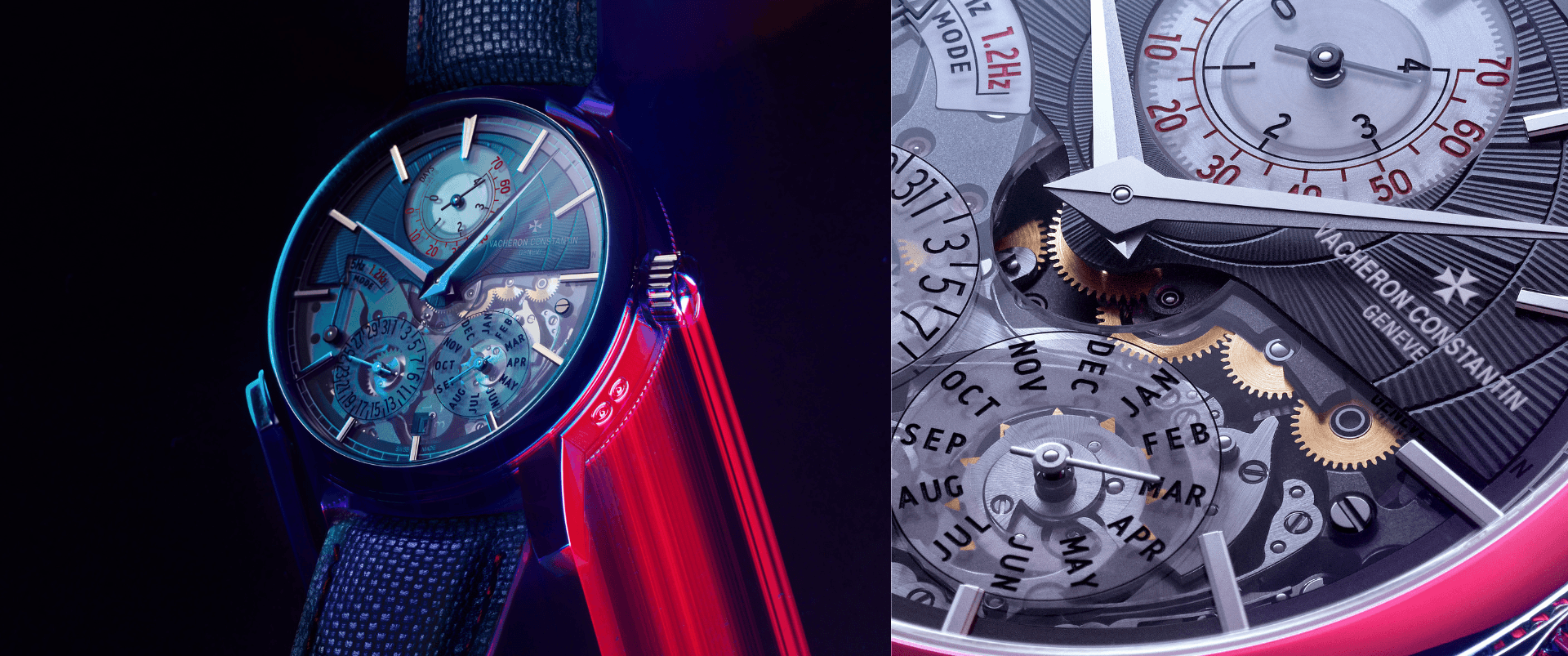
The Perpetual Calendar Problem, Solved: Vacheron Constantin Extends Power Reserve To 70 Days
 4 min read

The perpetual calendar has long been regarded as one of watchmaking's most poetic complications. Programmed to account for the irregularities of the Gregorian calendar including leap years it can accurately display the date without correction until the year 2100. Yet for all its brilliance, the complication has always carried a practical weakness: it only remains perpetual as long as the watch keeps running. Leave it unworn for too long, and the owner is faced with the tedious task of resetting a highly complex mechanism.
It was precisely this contradiction that Vacheron Constantin set out to solve when it unveiled the Traditionnelle Twin Beat Perpetual Calendar in 2019. Now, seven years later, the Geneva manufacture has refined its groundbreaking concept even further, introducing a new open-worked version powered by an enhanced Calibre 3610 QP capable of an extraordinary 70-day power reserve. More than a technical update, the latest Twin Beat reinforces one of the most innovative approaches to modern haute horlogerie- a perpetual calendar designed around the realities of ownership.
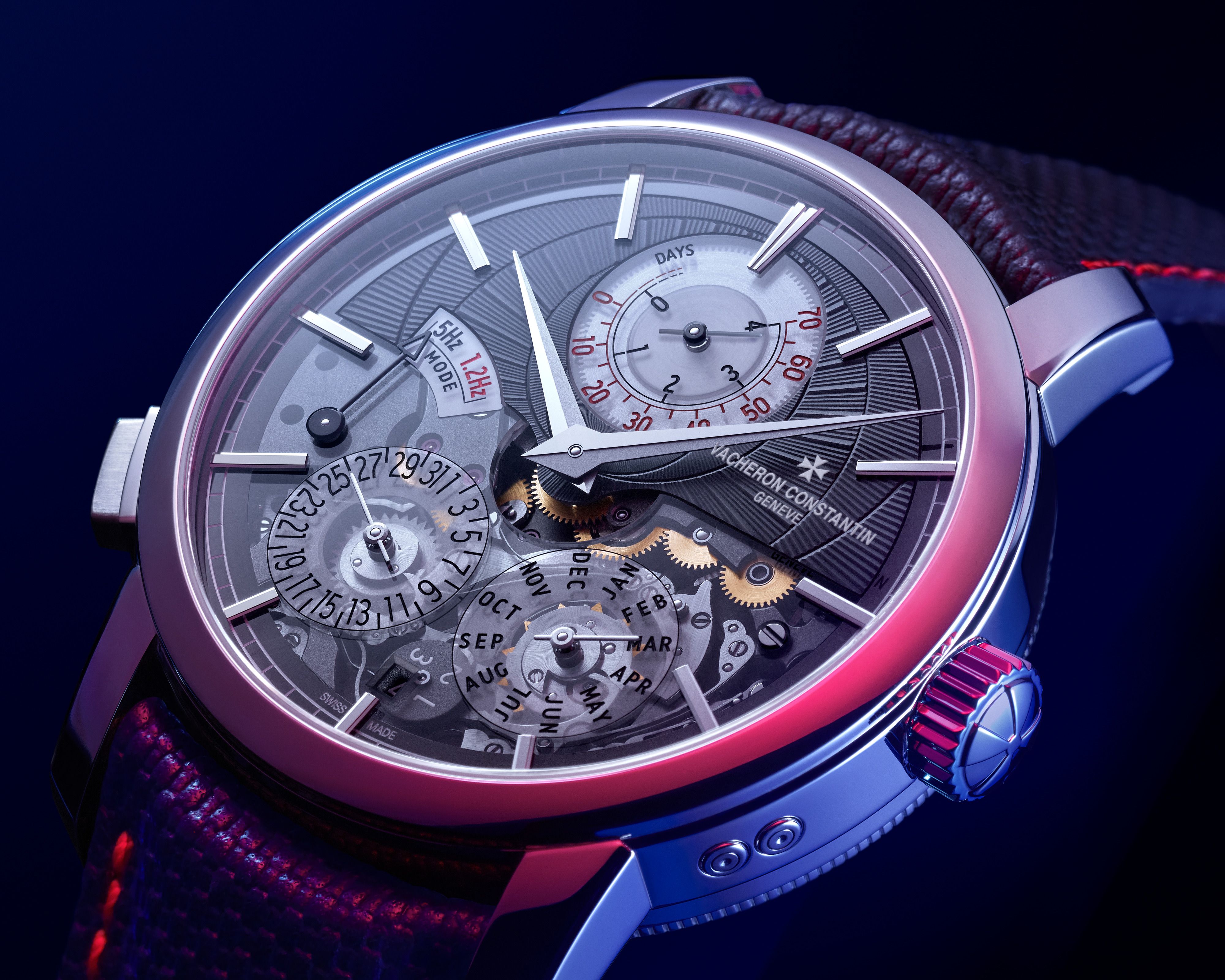
At the heart of the watch lies a patented dual-frequency movement unlike anything else in traditional watchmaking. Developed after four years of research and engineering, the Twin Beat system allows the wearer to switch between two distinct operating modes depending on whether the watch is being worn or stored. In Active mode, the movement beats at a high frequency of 5 Hz, or 36,000 vibrations per hour, delivering exceptional precision and a four-day power reserve. When the watch is taken off, a push-piece discreetly integrated into the case at 8 o'clock activates Standby mode, reducing the frequency to just 1.2 Hz, or 8,640 vibrations per hour.
The result is remarkable. By dramatically lowering energy consumption while maintaining all calendar functions, the watch can continue running for more than two months without intervention. For collectors who rotate between multiple timepieces, this transforms the ownership experience. Rather than returning to a stopped perpetual calendar and spending valuable time resetting day, date, month and leap-year indications, the Twin Beat remains alive and accurate, ready to wear at a moment's notice.
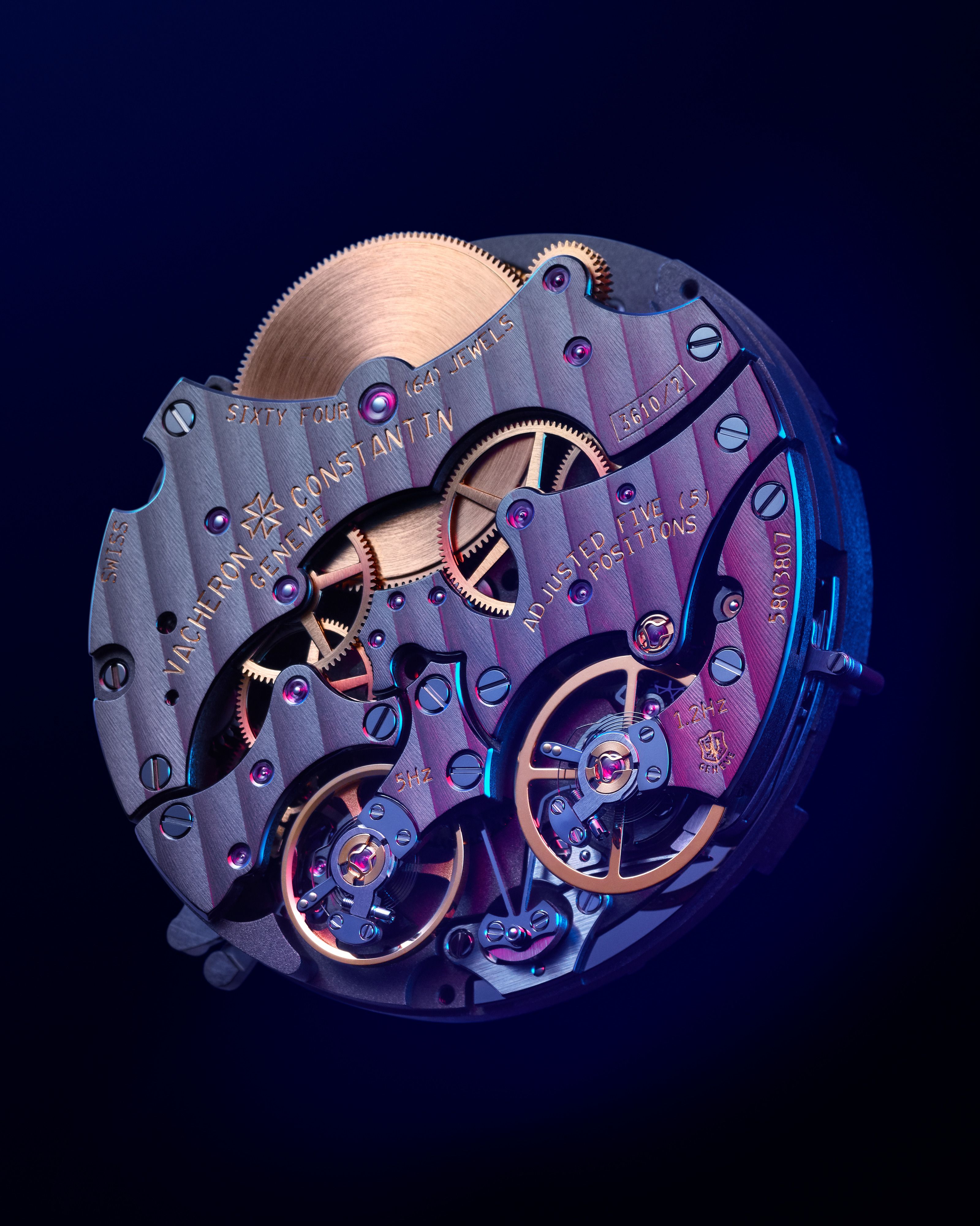
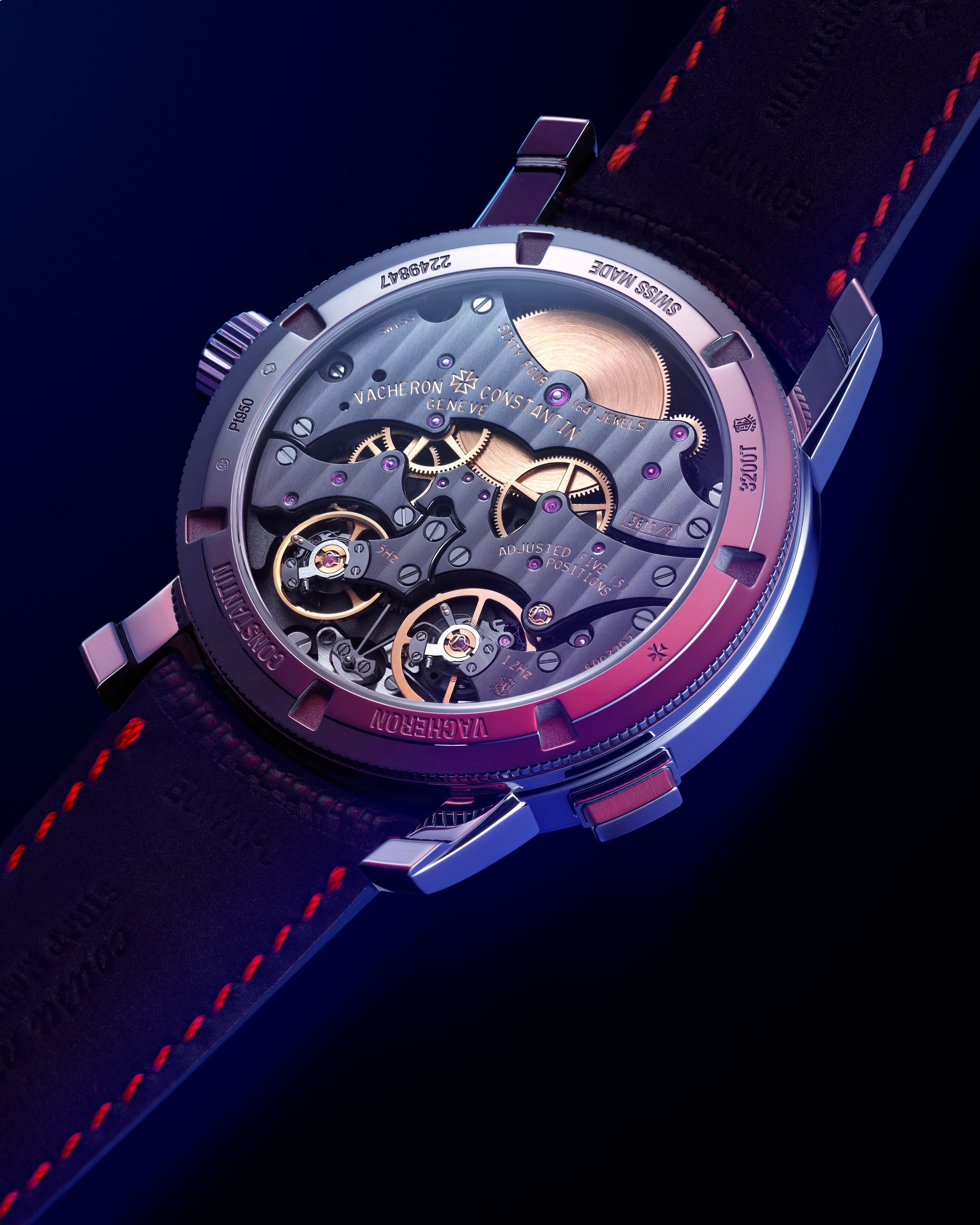
Achieving such autonomy, however, required far more than simply slowing down the balance wheel. Calibre 3610 QP is a marvel of mechanical engineering comprising 480 components packed into a movement only 6 mm thick. Two independent regulating organs operate through separate gear trains, both powered by a sophisticated coaxial double-barrel system. Switching between the two frequencies is instantaneous and seamless, with no interruption to the display of time or calendar indications. One balance wheel stops precisely as the other begins oscillating, ensuring a continuous flow of energy throughout the movement.
The latest evolution of the calibre pushes the concept even further. Vacheron Constantin's engineers focused their attention on one of the most energy-demanding functions within any perpetual calendar: the instantaneous date change. Traditionally, these mechanisms require considerable torque, which can affect balance amplitude and ultimately precision. To overcome this challenge, the manufacture developed a patented double-gear spring-winding mechanism that requires four times less energy than conventional systems. Combined with refinements across the movement particularly in low-frequency operation, this breakthrough has increased the Standby power reserve from 65 to an impressive 70 days.
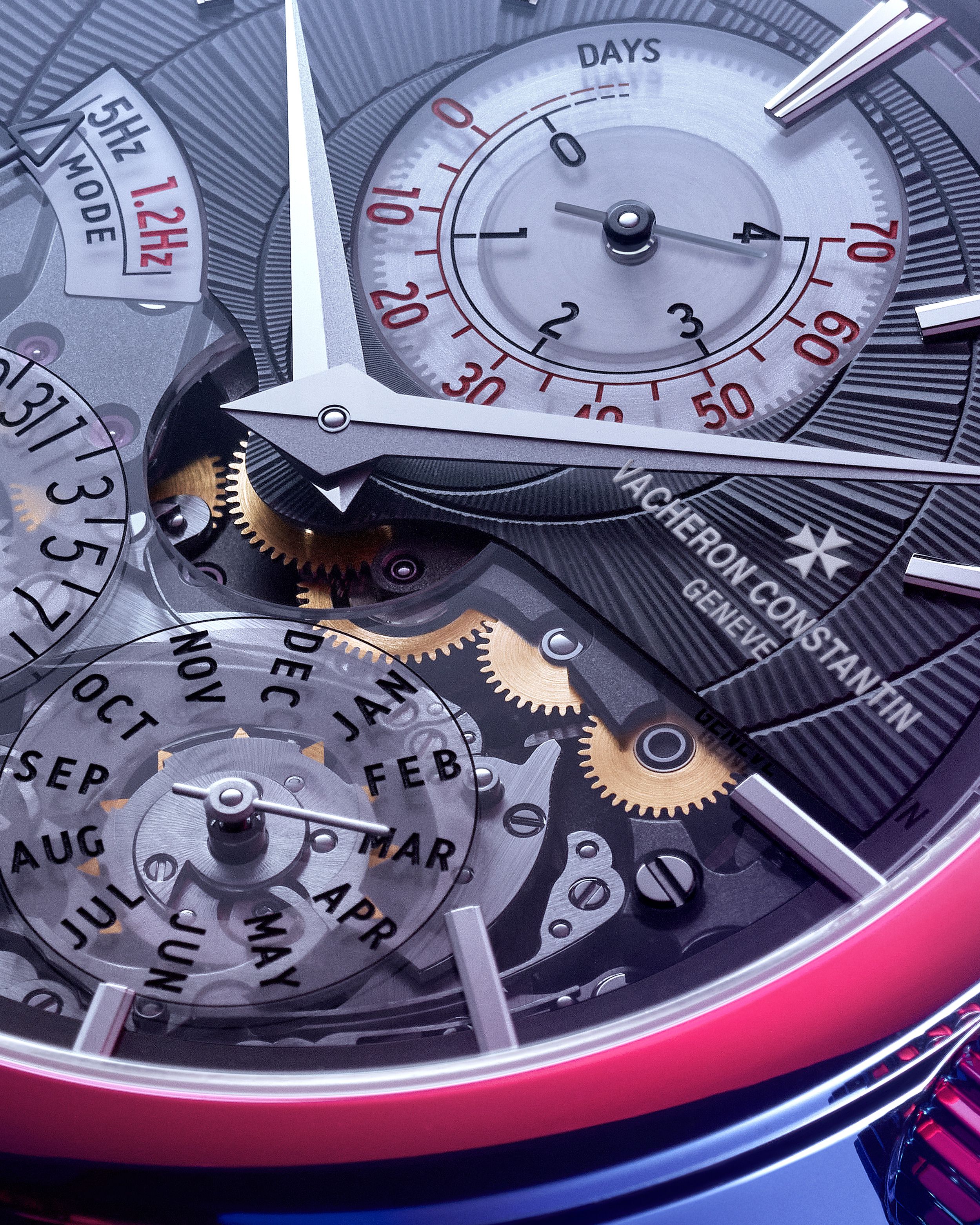
Yet despite its formidable technical credentials, the new Traditionnelle Twin Beat Perpetual Calendar is equally compelling as an object of design. Housed within a 42 mm platinum case measuring just 12.3 mm thick, it remains faithful to the refined architecture of the Traditionnelle collection, with its slender bezel, elegant proportions and fluted caseback. The real transformation is found on the dial.
For the first time, the Twin Beat adopts a dramatically open-worked display that reveals the complexity beneath. Constructed from sapphire, the dial is divided into two visual planes. The lower section exposes the movement's NAC-treated, sandblasted mainplate, offering a direct view into the mechanics that drive the watch. Above it sits an 18-carat gold dial plate finished in slate grey and decorated with a hand-guilloché radiating motif. White-gold baton markers, faceted Dauphine hands and a finely engraved railway minute track provide contrast while preserving legibility.
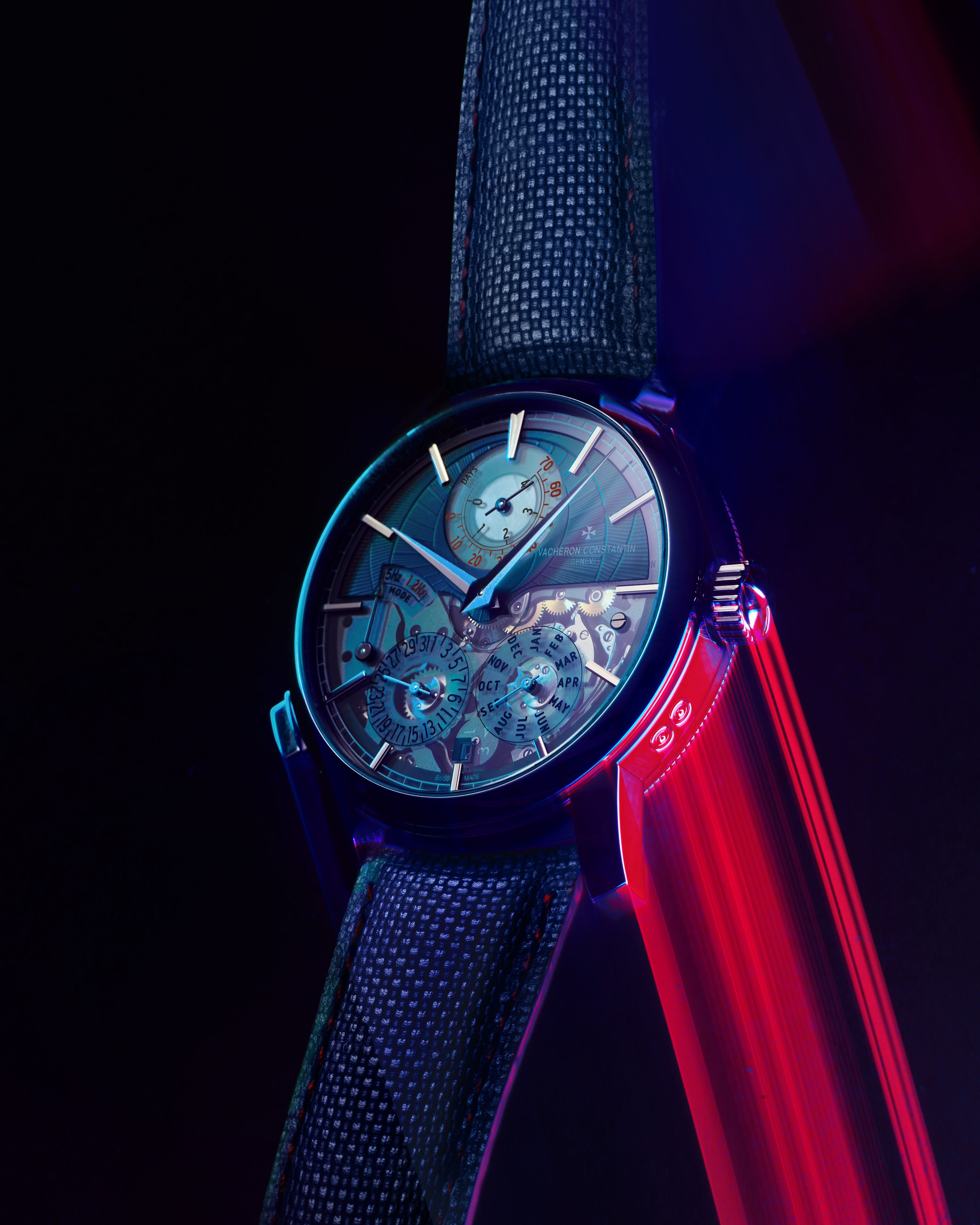
The movement itself becomes part of the visual spectacle. Turn the watch over and the reverse reveals the same interplay of textures and colours, with anthracite-grey bridges and mainplate contrasting against the warm golden tones of the moving components. Hand-bevelled edges, Côtes de Genève finishing and a satin-brushed barrel cover underscore the level of craftsmanship expected from one of watchmaking's oldest continuously operating manufactures.
Perhaps what makes the Traditionnelle Twin Beat Perpetual Calendar so compelling is that it represents innovation in service of practicality rather than novelty. In an industry often obsessed with adding complications, Vacheron Constantin has instead focused on improving the way one of watchmaking's most prestigious complications is actually used. By extending autonomy to 70 days while preserving precision and functionality, the Twin Beat challenges traditional notions of what a perpetual calendar can be. It is not merely a technical achievement. It is a thoughtful solution to a problem collectors have lived with for generations and one that brings the perpetual calendar closer than ever to fulfilling the promise implied by its name.


