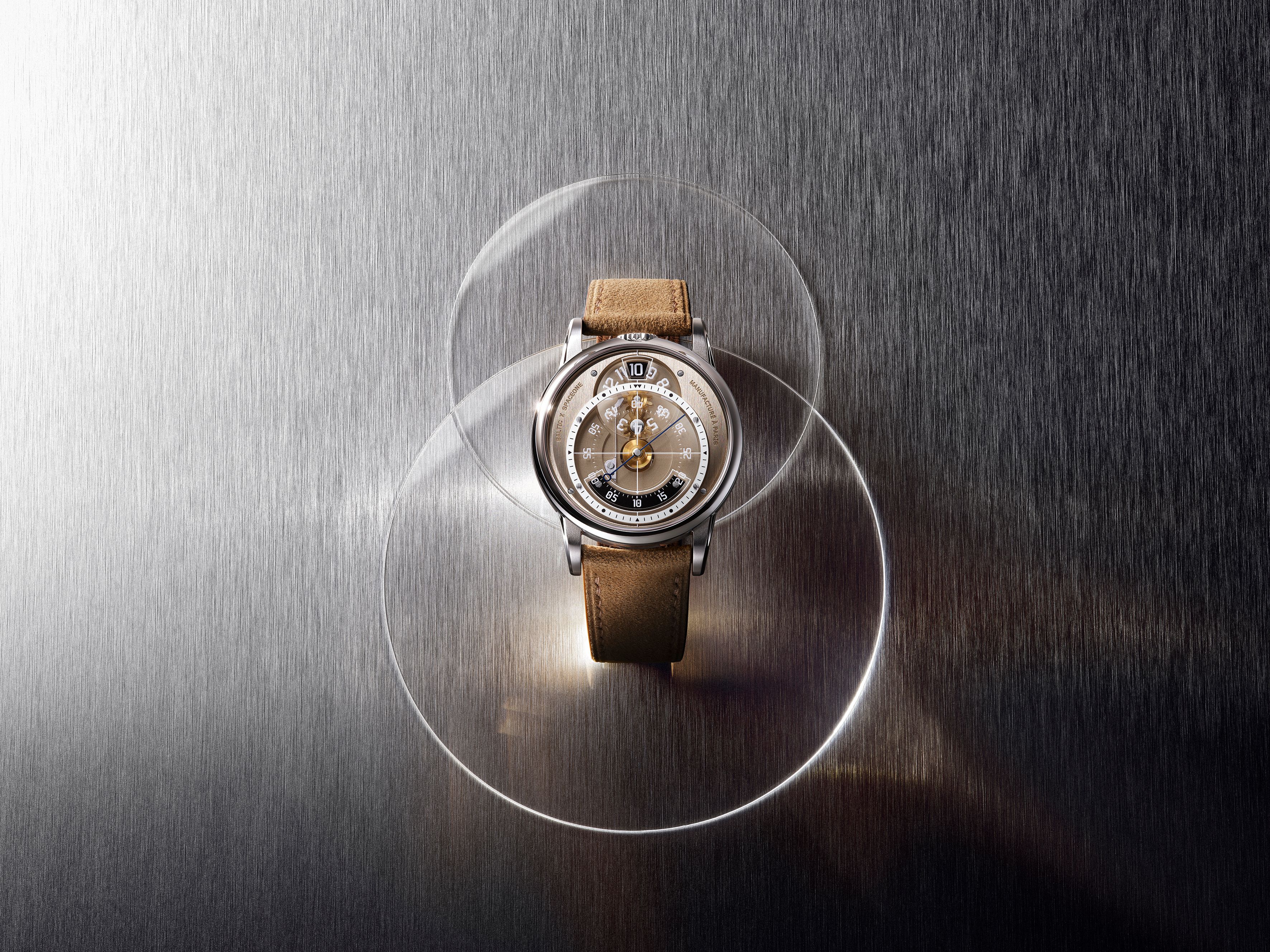
When Vintage Meets The Future: Baltic And SpaceOne Create The Unexpected With The Seconde Majeure
 4 min read

Collaborations in watchmaking are often predictable exercises in marketing. A logo swap here, a new dial colour there and suddenly the industry is expected to applaud another “creative partnership.” But every once in a while, a collaboration emerges that feels genuinely improbable. The new Seconde Majeure by Baltic Watches and SpaceOne Watches is precisely that kind of anomaly the result of friendship rather than strategy, and one of the most intellectually exciting independent releases of the year.

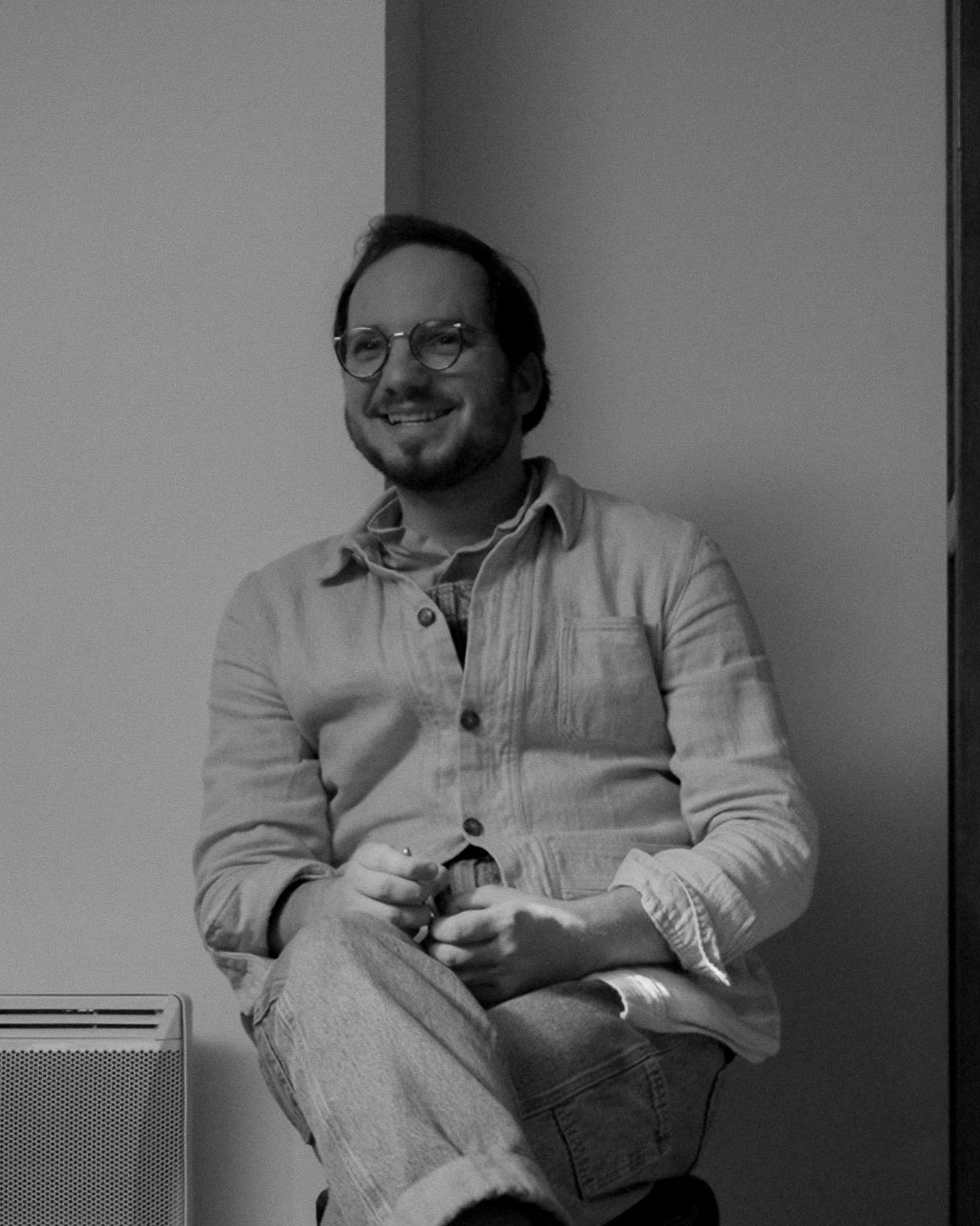
On paper, these two Parisian watchmakers should never have crossed paths creatively. Baltic has built its identity on beautifully restrained, vintage-inspired timepieces that celebrate traditional proportions and understated elegance. SpaceOne, founded by watchmaker Théo Auffret and entrepreneur Guillaume Laidet, exists at the opposite end of the spectrum, creating radical, spaceship-like watches that challenge the very idea of how time should be displayed.
And yet, the Seconde Majeure somehow makes complete sense.
The story began in 2021 at Baltic’s headquarters in Paris, where independent French watchmakers had gathered for an informal industry meet-up. It was there that Auffret and Laidet connected, forming a friendship that would eventually give birth to SpaceOne itself. Five years later, that same camaraderie has evolved into a watch that represents both brands without compromising either vision.
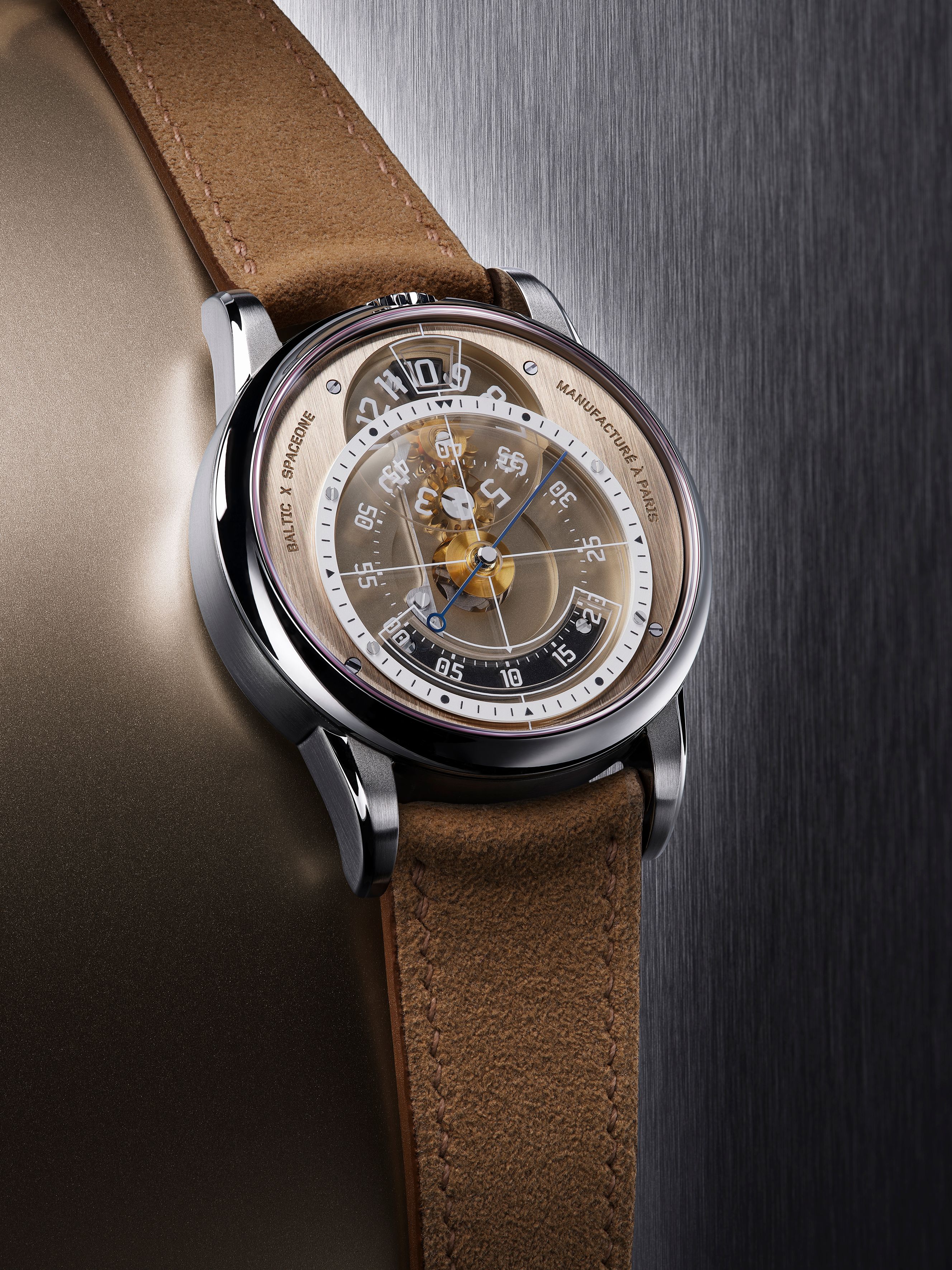
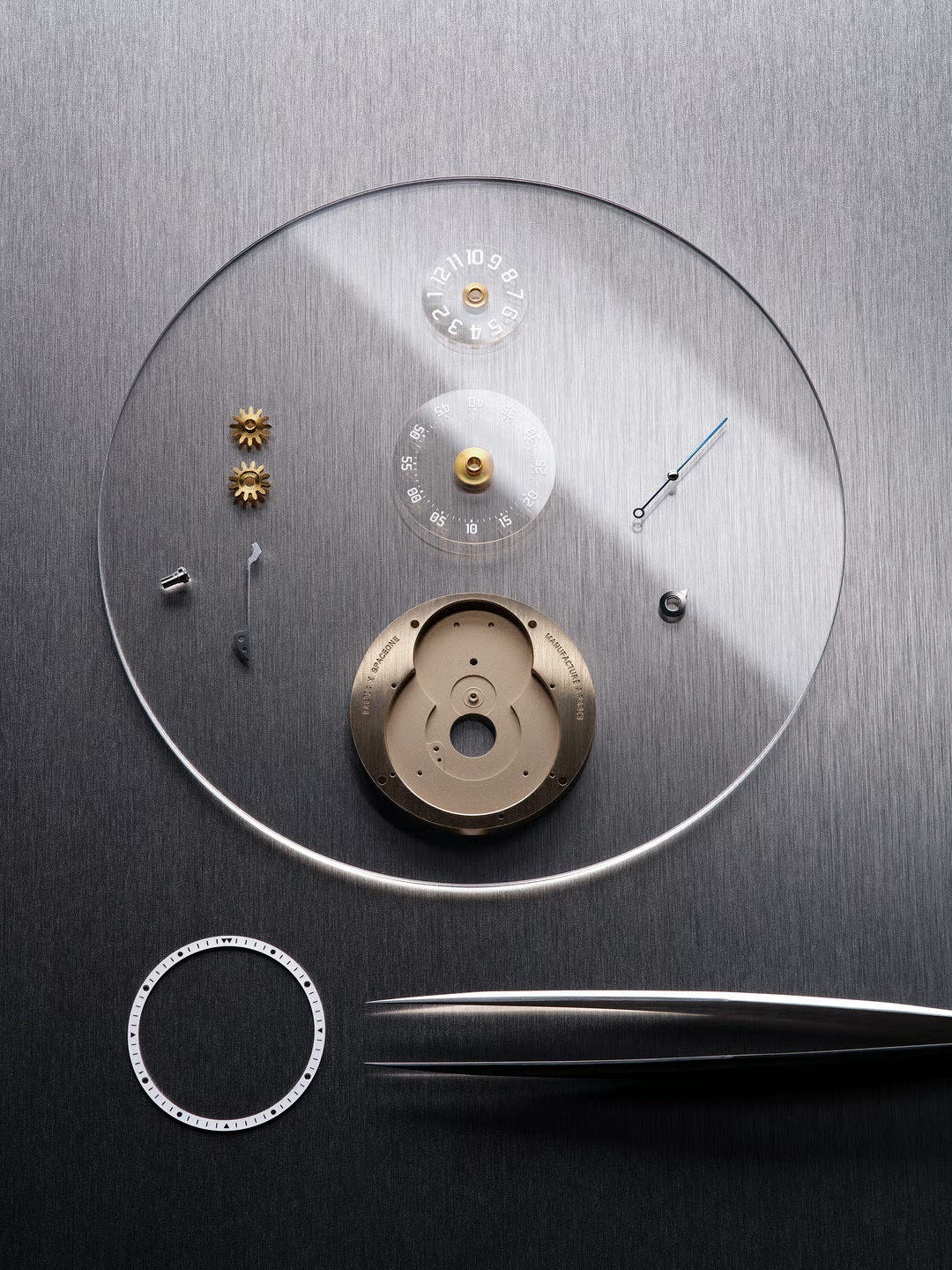
The Seconde Majeure is not merely a Baltic case with a SpaceOne module squeezed inside. In fact, the beauty of the project lies in how completely new it feels. The watch abandons conventional central hands in favour of a striking deconstructed display built around sapphire discs and a proprietary complication module developed by Auffret. Hours are displayed at 12 o’clock, minutes at 6, while a dramatic sweeping seconds hand dominates the dial, bringing kinetic energy to an otherwise architectural composition.
It is this large central seconds display that gives the watch its name “Seconde Majeure,” or “major seconds.” And visually, it truly is the protagonist. Floating above the dial like an orbiting instrument, it injects movement and tension into a display that already feels more like mechanical sculpture than traditional watchmaking.
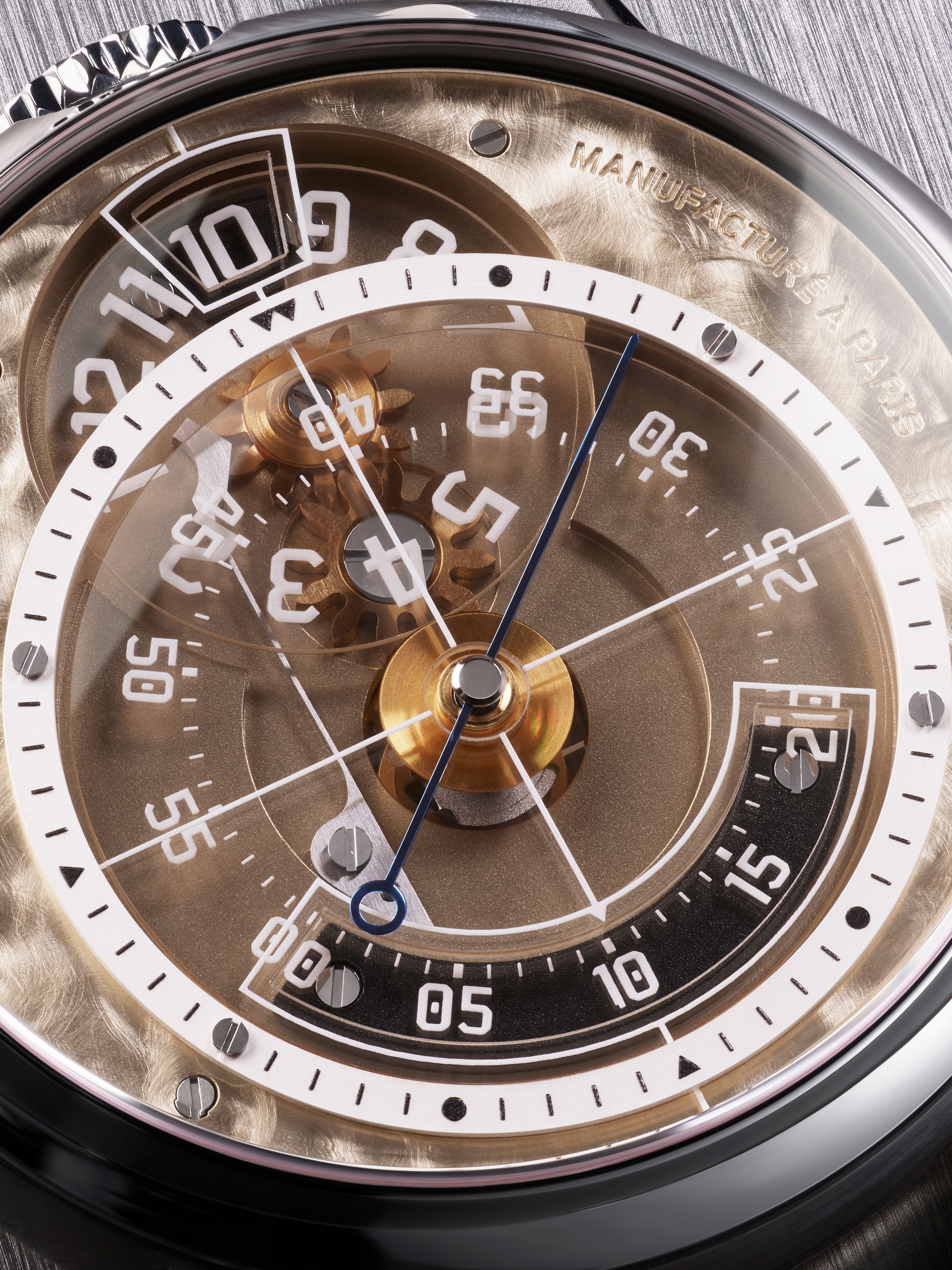
The brilliance of the Seconde Majeure, however, lies beneath the surface. The jumping-hour complication has been engineered with unusual transparency, allowing the wearer to observe key elements of the mechanism directly from the dial side. A central control wheel completes a rotation every sixty minutes before engaging with a 12-point star wheel responsible for advancing the hour display. Meanwhile, a visible jumper spring maintains tension until the exact moment the hour disc snaps into place.
For seasoned collectors, this openness is deeply satisfying because it transforms the watch from a simple timekeeping instrument into a living demonstration of mechanical choreography. It is technical watchmaking presented with theatrical flair. Despite its futuristic display, the Seconde Majeure retains a surprising degree of warmth and refinement thanks to Baltic’s influence. The 38.5mm case feels deeply rooted in contemporary independent watchmaking, balancing compact proportions with sculptural detailing. Brushed surfaces dominate the mid-case, lugs and caseback, while a polished concave bezel introduces contrast and sophistication. The sharply curved lugs arc downward elegantly, ensuring the watch hugs the wrist naturally rather than wearing like an experimental object. Even the strap reflects the obsessive attention to detail. Crafted by Delugs in beige Alcantara®, it integrates seamlessly into the case through curved spring bars, reinforcing the watch’s fluid silhouette.
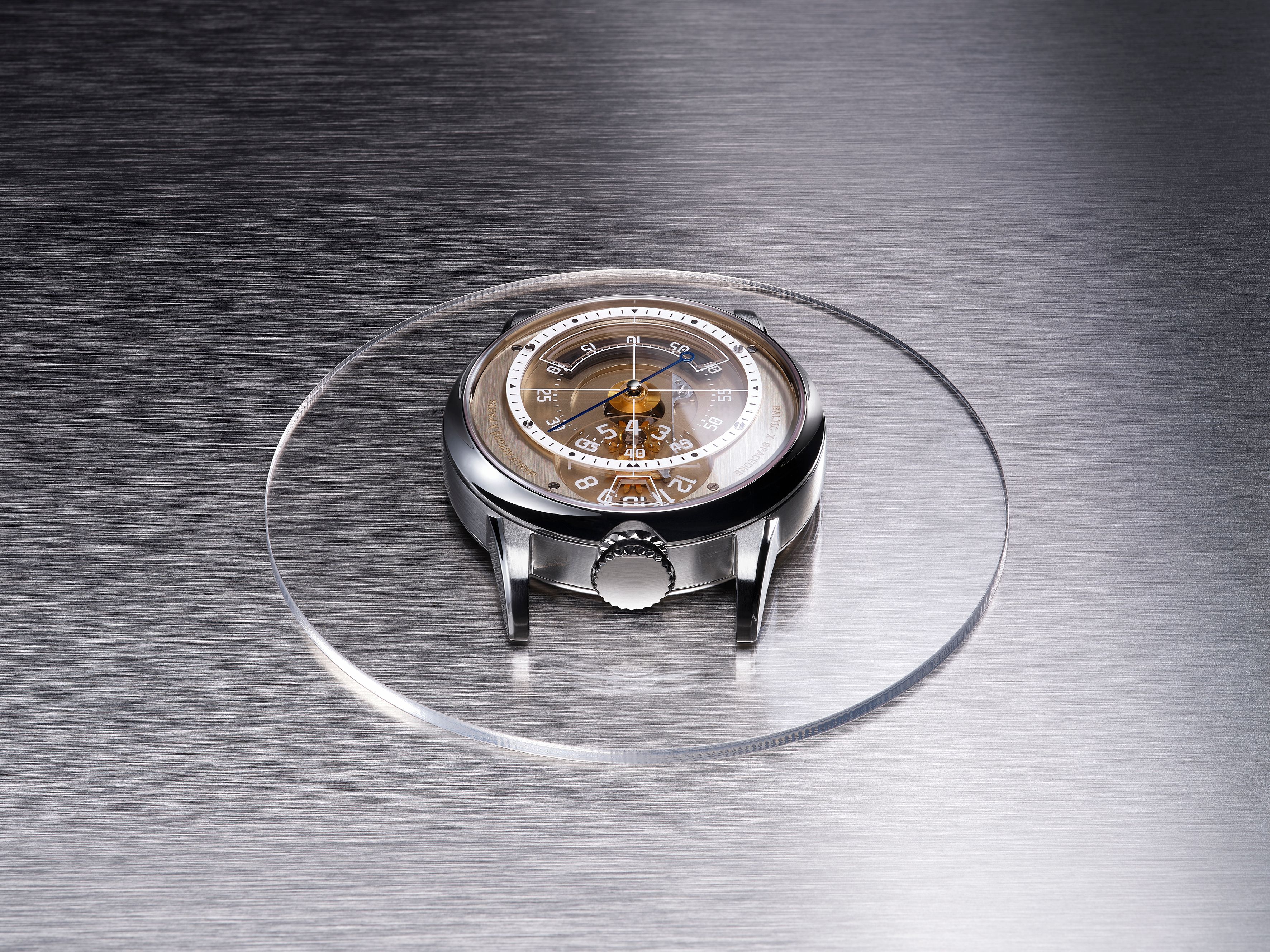
Then there is the dial finishing arguably one of the most compelling aspects of the watch. Buyers can choose between a vertical brushed finish or the far more artisanal “Charbonné” treatment, performed entirely by hand in Auffret’s atelier. Requiring up to three hours of meticulous work per dial, the finish gives every piece a unique texture and personality rarely found at this level of independent watchmaking.
What makes the Seconde Majeure so fascinating is not simply its mechanics or aesthetics, but what it represents culturally. Independent watchmaking has entered an era where creativity no longer needs to fit into rigid stylistic tribes. Vintage-inspired brands can collaborate with futuristic disruptors. Classical watchmakers can embrace playful experimentation. The old boundaries between heritage and innovation are beginning to dissolve.
And perhaps that is why this watch feels so refreshing. It was not conceived in a boardroom or manufactured to chase trends. It emerged from mutual admiration between four creative minds: Baltic founder Etienne Malec, Baltic creative director Jas Rewkiewicz, Auffret and Laidet. Each of them brought their own perspective to a singular vision. The result is a watch that feels neither entirely Baltic nor entirely SpaceOne. It exists in its own strange and beautiful category.
Available for preorder only between May 12 and May 17, the Seconde Majeure will be produced exclusively according to the number of orders placed during that six-day window, with every piece individually numbered. In an industry saturated with artificial scarcity, this feels like a refreshingly honest approach. More importantly, it proves that the most exciting watches today are not always born from tradition or disruption alone but from the rare moments when the two collide.


