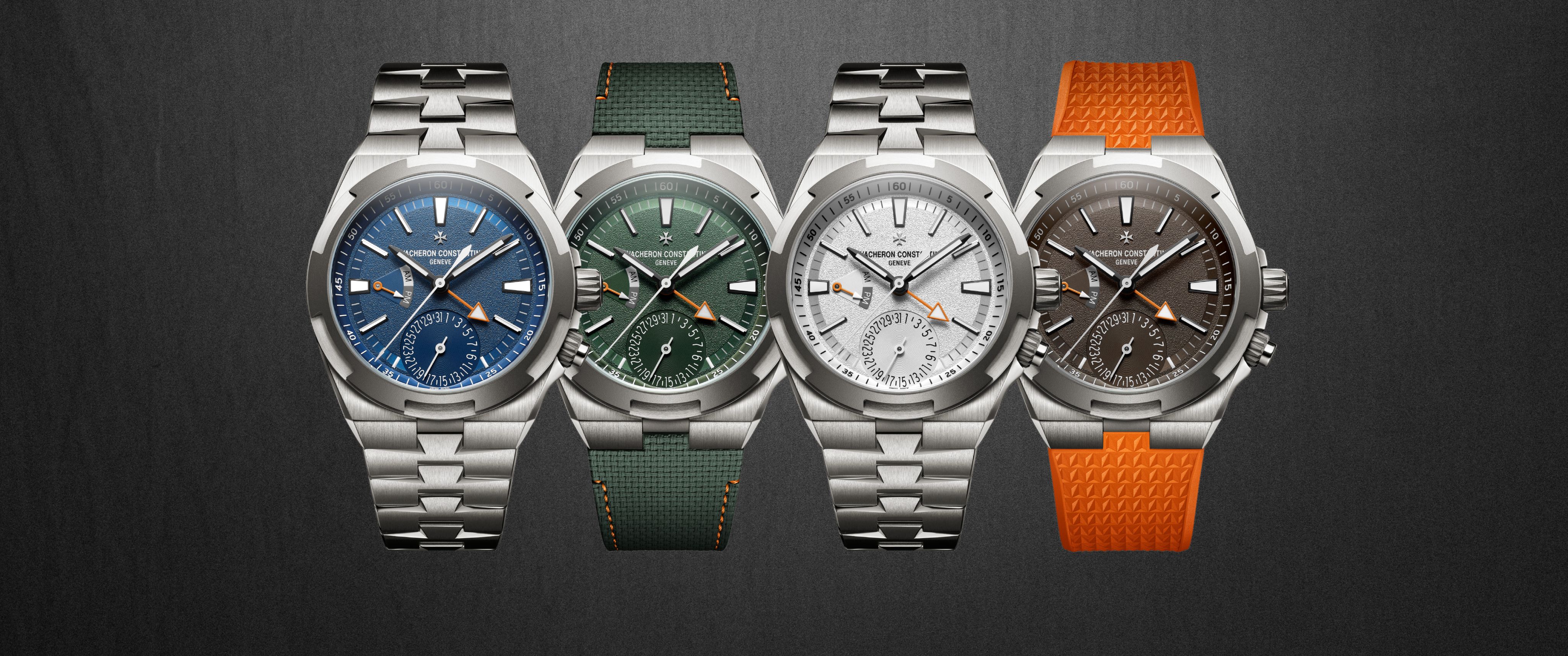
Vacheron Constantin Overseas Dual Time Cardinal Points: A Compass For The Modern Explorer
 7 min read

Seven years is an eternity in watchmaking. In the luxury sports watch world, it’s practically geological time - the kind of span during which a microbrand rises from Instagram obscurity to Chrono24 celebrity, only to vanish when the crypto market crashes. But for Vacheron Constantin, seven years was the gestation period for something that should have happened almost immediately: a production titanium Overseas Dual Time.
Enter the Vacheron Constantin Overseas Dual Time Cardinal Points, a four-watch collection that finally answers the question every serious collector has been asking since 2019: Will I ever be able to buy one of those titanium Dual Times without auctioning off my firstborn?

The answer, remarkably, is yes. At US$41,000, the Cardinal Points collection lands at a price point that’s painful but defensible - especially when you consider that the 150-piece 2021 Everest Limited Edition it descends from now trades on the secondary market for low six figures. That’s roughly a 25% increase from the Everest’s original $31,300 retail, which feels almost reasonable given inflation and the fact that you now get a titanium bracelet that doesn't require a separate purchase.
The Overseas Dual Time Cardinal Points represents a mature evolution of the Overseas philosophy itself - a watch that reframes travel not as a marketing trope, but as a mechanical and emotional experience.
Thirty years after the launch of the Overseas collection, Vacheron Constantin has returned to one of the most compelling ideas in modern horology: the notion that a luxury sports watch should be more than a luxury object. It should be a companion. A tool. The Overseas Dual Time Cardinal Points is precisely that.
The Compass Reimagined
The luxury watch industry has become extraordinarily good at manufacturing nostalgia. Every year brings another reissue, another vintage-inspired dial, another attempt to recreate the magic of a reference that collectors already worship.
The Overseas Dual Time Cardinal Points takes a different route.
Rather than looking backward, Vacheron Constantin looks outward.

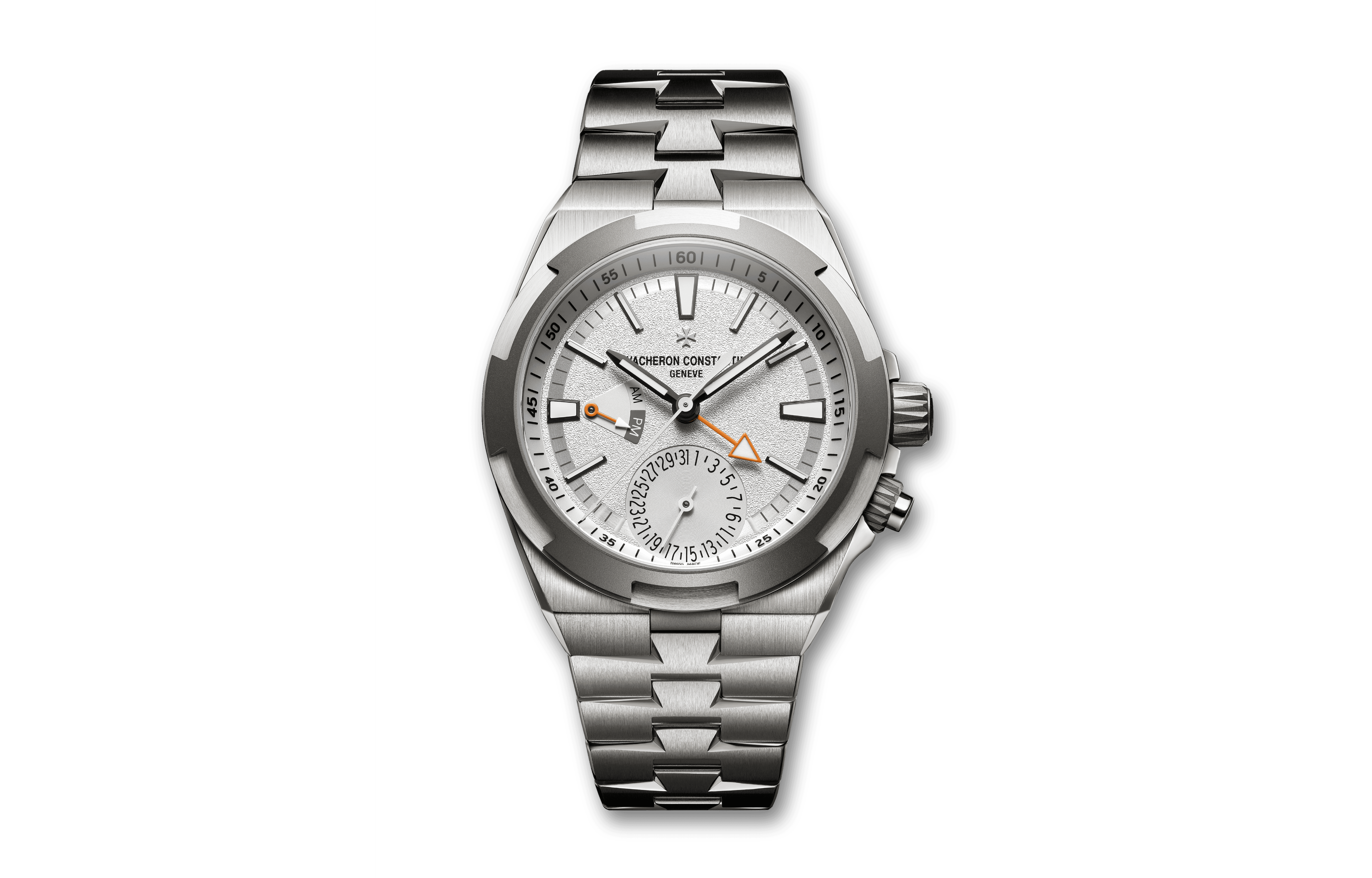
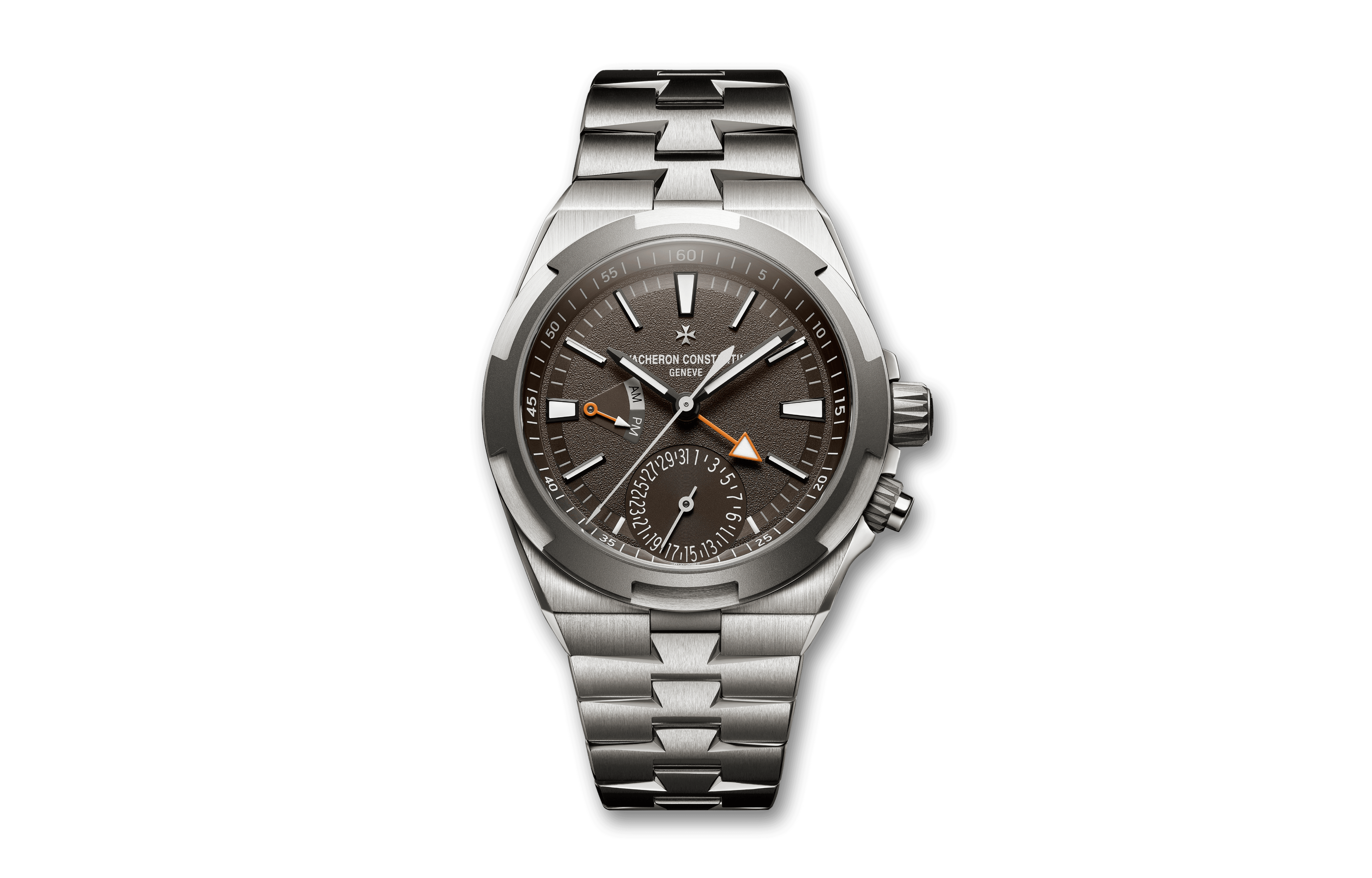
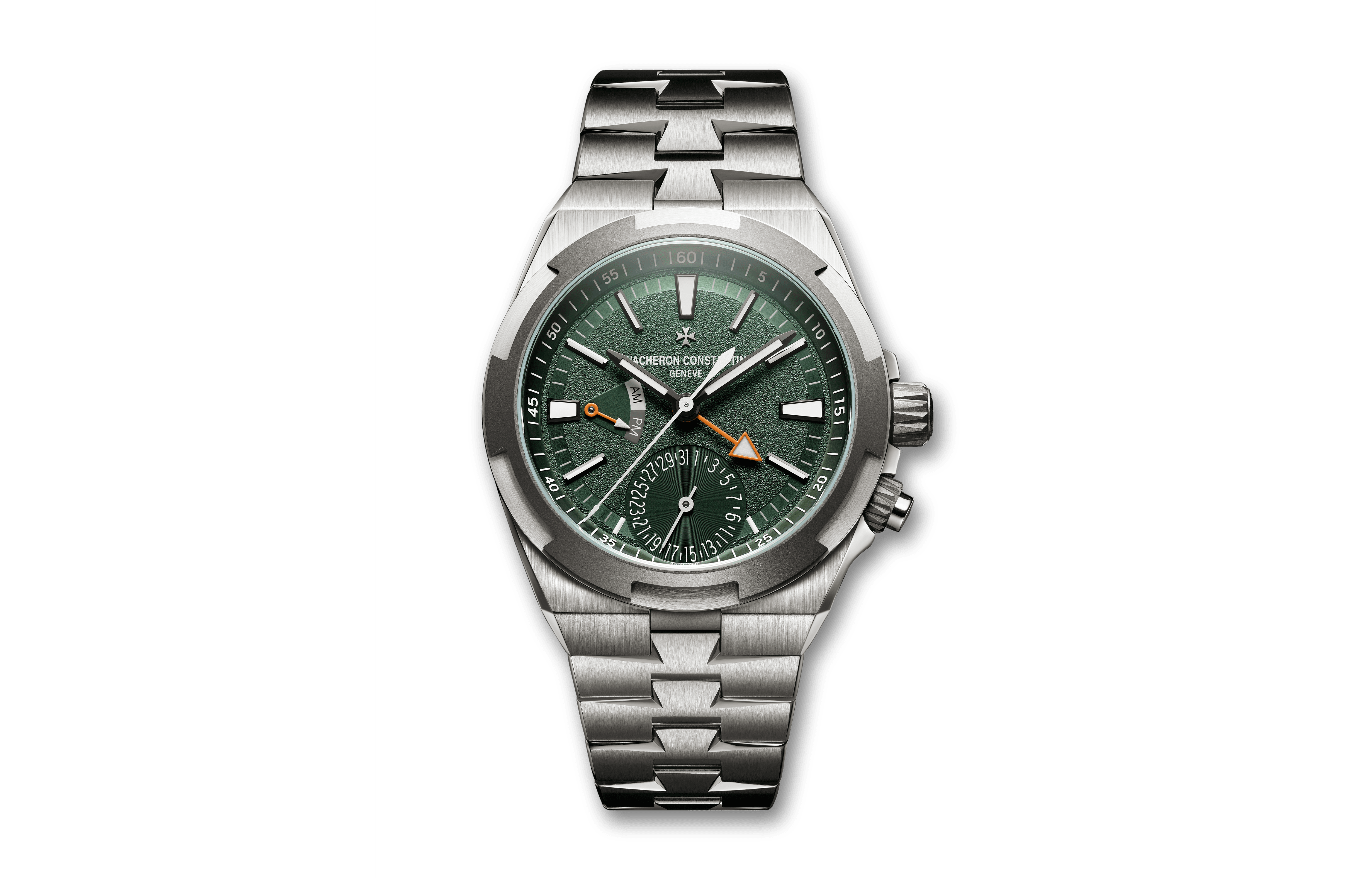
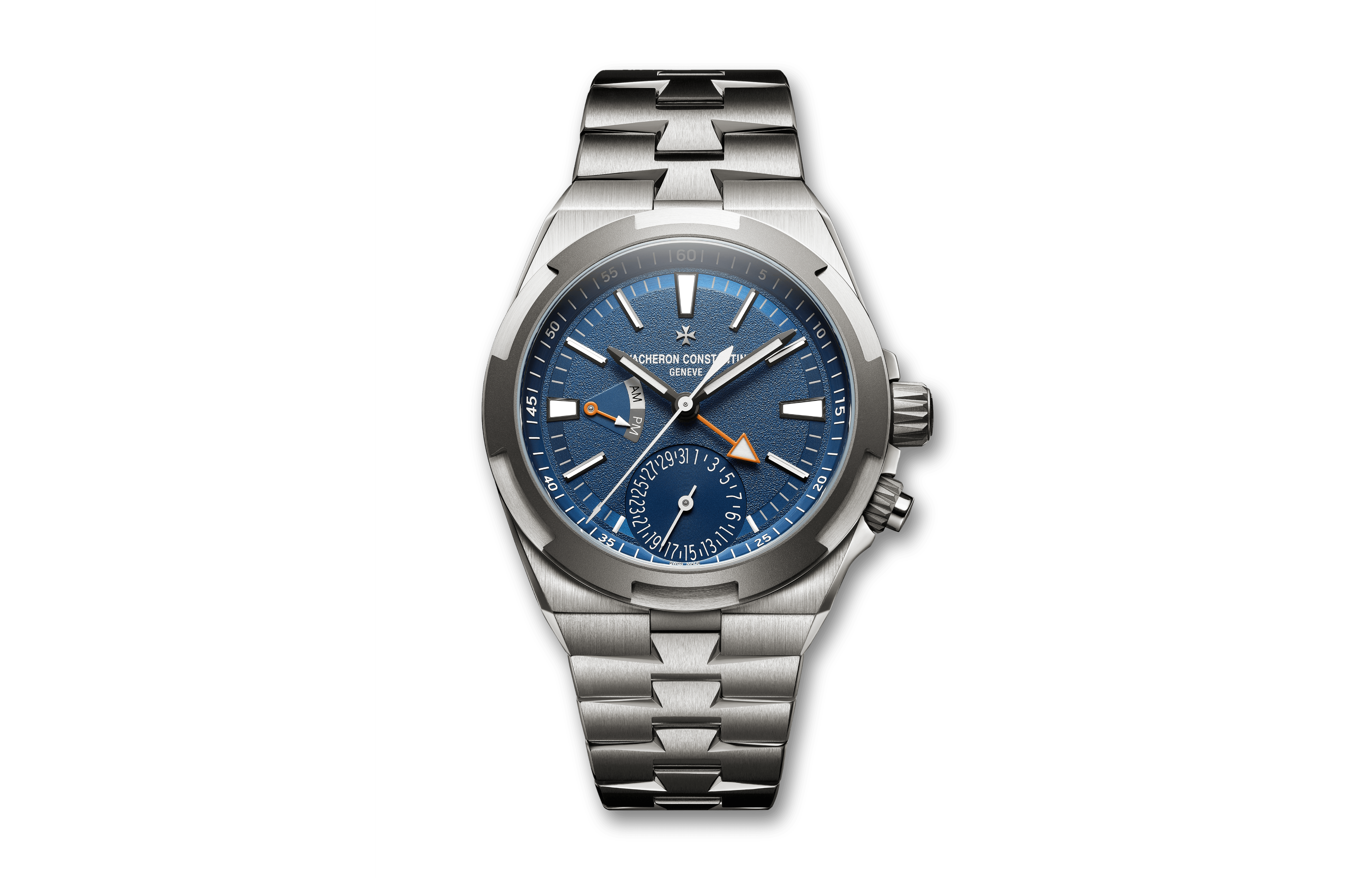
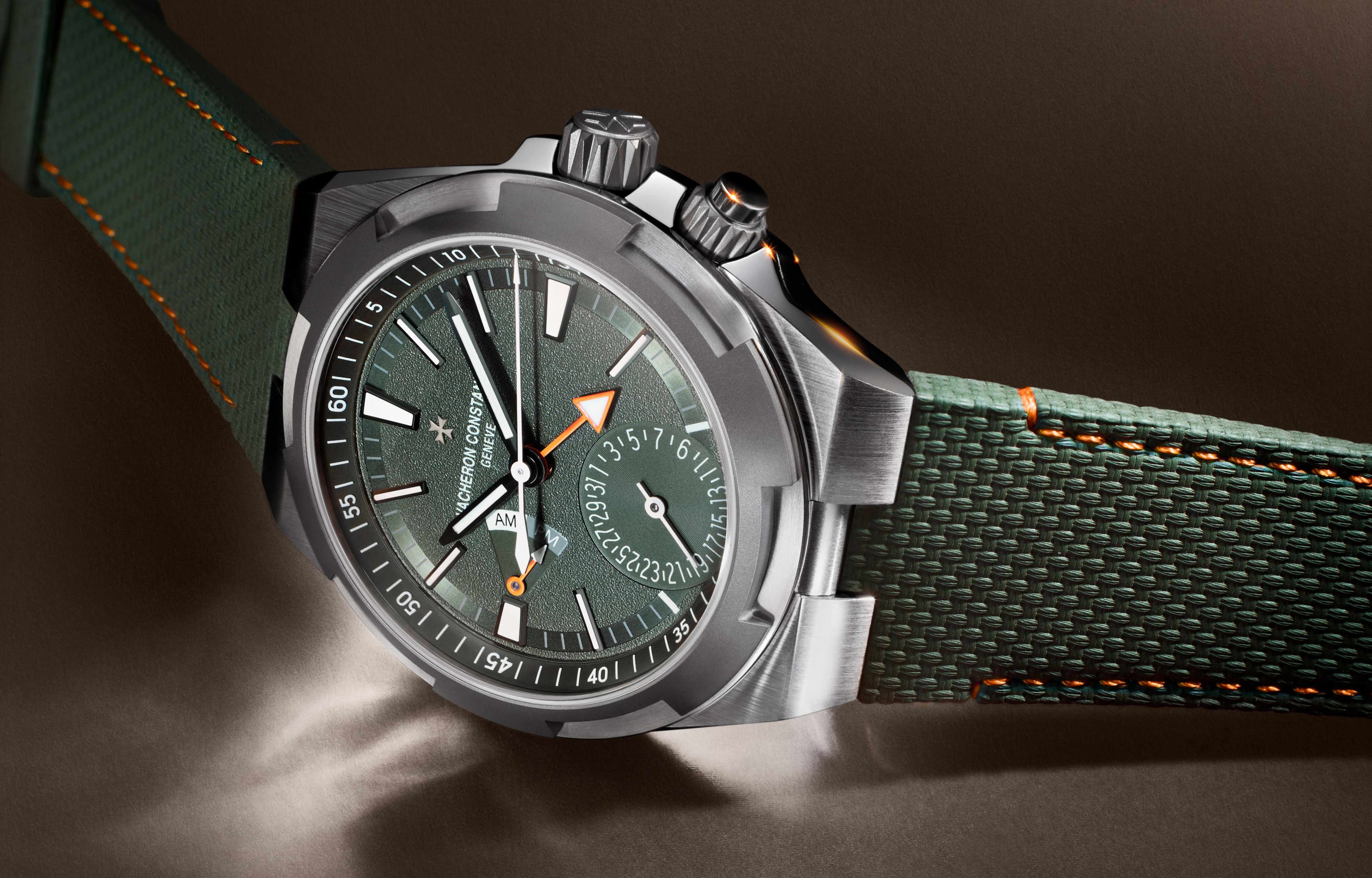
The collection is built around four distinct interpretations of direction itself. Each model corresponds to a cardinal point and a geographic imagination: icy silver-white for the North, deep blue for the East, verdant green for the West, and rich earth-toned brown for the South. Together, the watches form a modern horological compass - a poetic concept that could easily have become marketing theater had it not been executed with such restraint.
What is remarkable is how successfully the color philosophy integrates with the practical purpose of the watch. This is, after all, a dual-time complication. A watch fundamentally intended for individuals whose lives unfold across multiple cities, airports, cultures, and time zones.
For the investment banker flying from Singapore to London, the photographer chasing light across Patagonia, or the entrepreneur conducting midnight video calls between Geneva and New York, the notion of orientation is not abstract. It is a daily reality.
The Cardinal Points models simply give that reality a visual language.
The Shadow Of Everest
Every important watch has a story. The Cardinal Points collection benefits from having a genuinely good one. While this is a dial and case metal variant of the third generation Overseas Dual Time, it's actually a philosophical descendant of the titanium Overseas prototype developed for explorer and photographer Cory Richards during his 2019 ascent of Mount Everest. Unlike many adventure-watch collaborations - which often involve little more than a celebrity ambassador posing next to a mountain - Richards actually relied on the watch in one of the harshest environments on Earth.

That prototype eventually inspired the now highly coveted Overseas Everest editions introduced in 2021. Collectors have spent the intervening years wondering whether Vacheron Constantin would ever revisit the concept.
The answer is yes, but with considerably more ambition.
Rather than creating another limited edition destined to disappear into safes and secondary-market speculation, Vacheron Constantin has transformed the Everest experiment into a full production platform. The Cardinal Points models are not special because they are rare. They are special because they embody lessons learned from a watch that was actually used as intended.
That distinction matters.
In an industry increasingly populated by “desk-divers” and “boardroom GMTs,” authenticity remains surprisingly valuable.
Titanium Done Properly
Anyone can make a titanium watch. Making a titanium watch feel luxurious is significantly harder. Titanium’s virtues are well documented. It is lighter than steel, highly corrosion-resistant, hypoallergenic, and remarkably strong. Yet these advantages often come with aesthetic compromises. Titanium can appear flat. It can feel industrial. It sometimes lacks the visual richness associated with high-end finishing.
Vacheron Constantin addresses these challenges with an approach that borders on obsessive.

The 41mm case, integrated bracelet, bezel, and clasp are all crafted from grade 5 titanium, while select components receive contrasting anthracite-grey treatments. The result is a watch that simultaneously feels technical and refined. Satin brushing, polished bevels, and carefully controlled transitions generate a level of visual complexity that rewards close inspection.
The sensation on the wrist is almost disorienting.
Collectors accustomed to precious-metal sports watches will experience the same reaction when handling these new models: the eyes expect heft, but the wrist encounters lightness.
A Dial That Rewards Attention
Modern watch photography has trained enthusiasts to focus on dial color. The Cardinal Points collection deserves a deeper examination. What initially appears to be a straightforward colored dial reveals itself as a carefully layered composition of textures and finishes. The center section receives a grained treatment intended to minimize reflections. A circular satin-finished minute track adds contrast. The outer track incorporates a lacquered finish. The date register employs a snailed texture.
The effect is architectural rather than decorative.
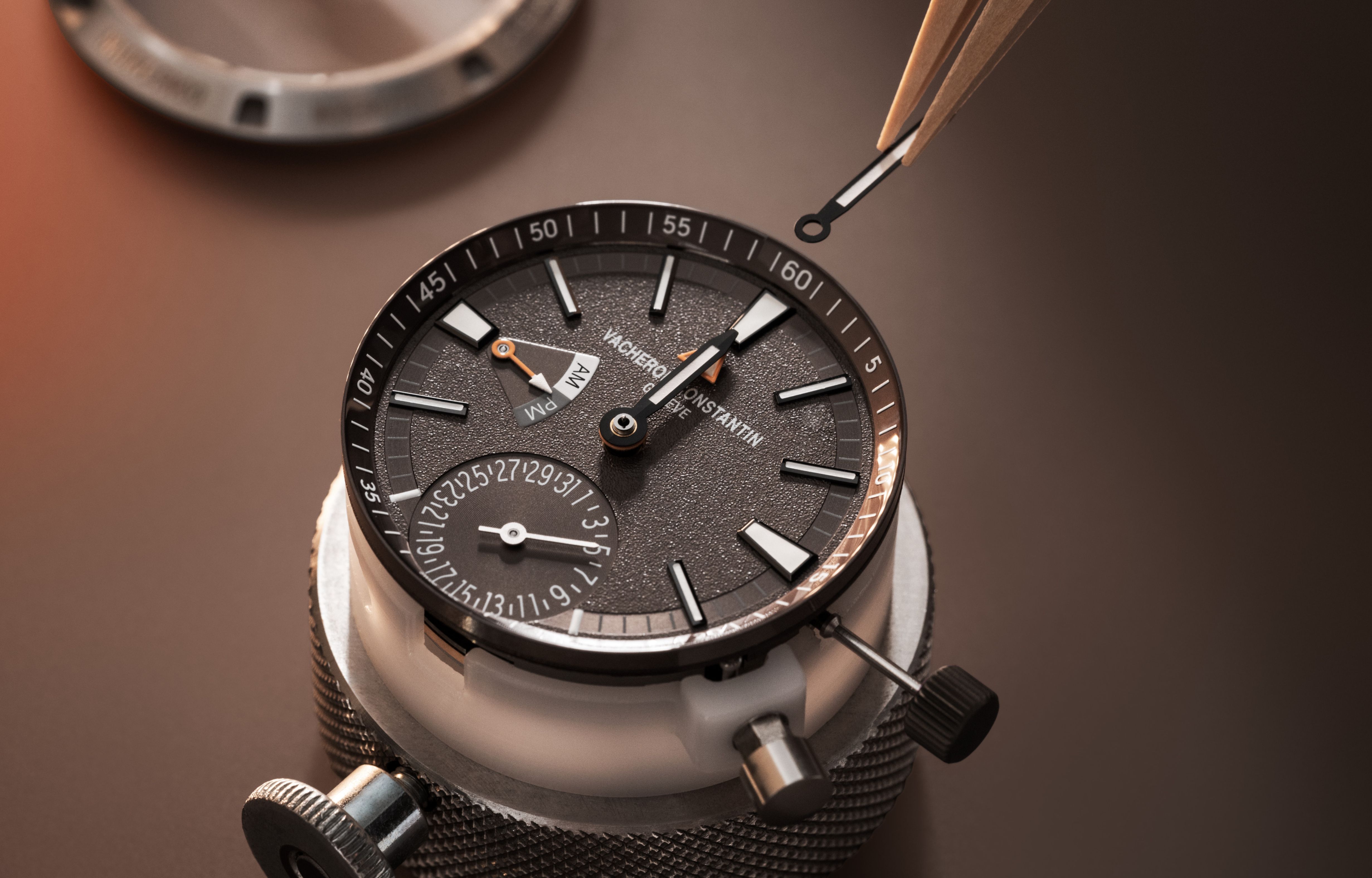
Light moves across the dial in stages, creating subtle changes in visual character throughout the day. Then there are the orange accents. Normally, bright orange hands on a watch from one of the Holy Trinity manufactures might sound like an executive decision made after too much espresso and not enough sleep.
Here, however, they serve a purpose.
The GMT hand and day/night indicator must be immediately distinguishable from local time indications. The orange coloration accomplishes precisely that, introducing both functional clarity and a dose of visual energy.
Understanding The Dual Time Mechanism
GMT complications are among the most useful functions in contemporary watchmaking, yet they vary enormously in execution. The Overseas Dual Time belongs to the category of practical traveler’s GMTs. The primary hour and minute hands display local time. A dedicated secondary hand indicates home time. An integrated day-night display allows the wearer to determine whether family, colleagues, or clients on the other side of the world are awake or asleep. The pointer date remains linked to local time, ensuring intuitive operation while traveling.
The brilliance lies not in complexity but in usability. Imagine landing in Tokyo after a thirteen-hour flight from New York. Your phone updates instantly. Your body certainly does not. The Overseas Dual Time allows you to maintain awareness of both worlds simultaneously: the city in which you currently stand and the city from which you have temporarily departed.
That capability becomes increasingly valuable as professional and personal lives become more globally distributed. The complication is not merely about tracking time zones. It is about maintaining relationships across them.
Caliber 5110 DT/3: Evolution Rather Than Reinvention
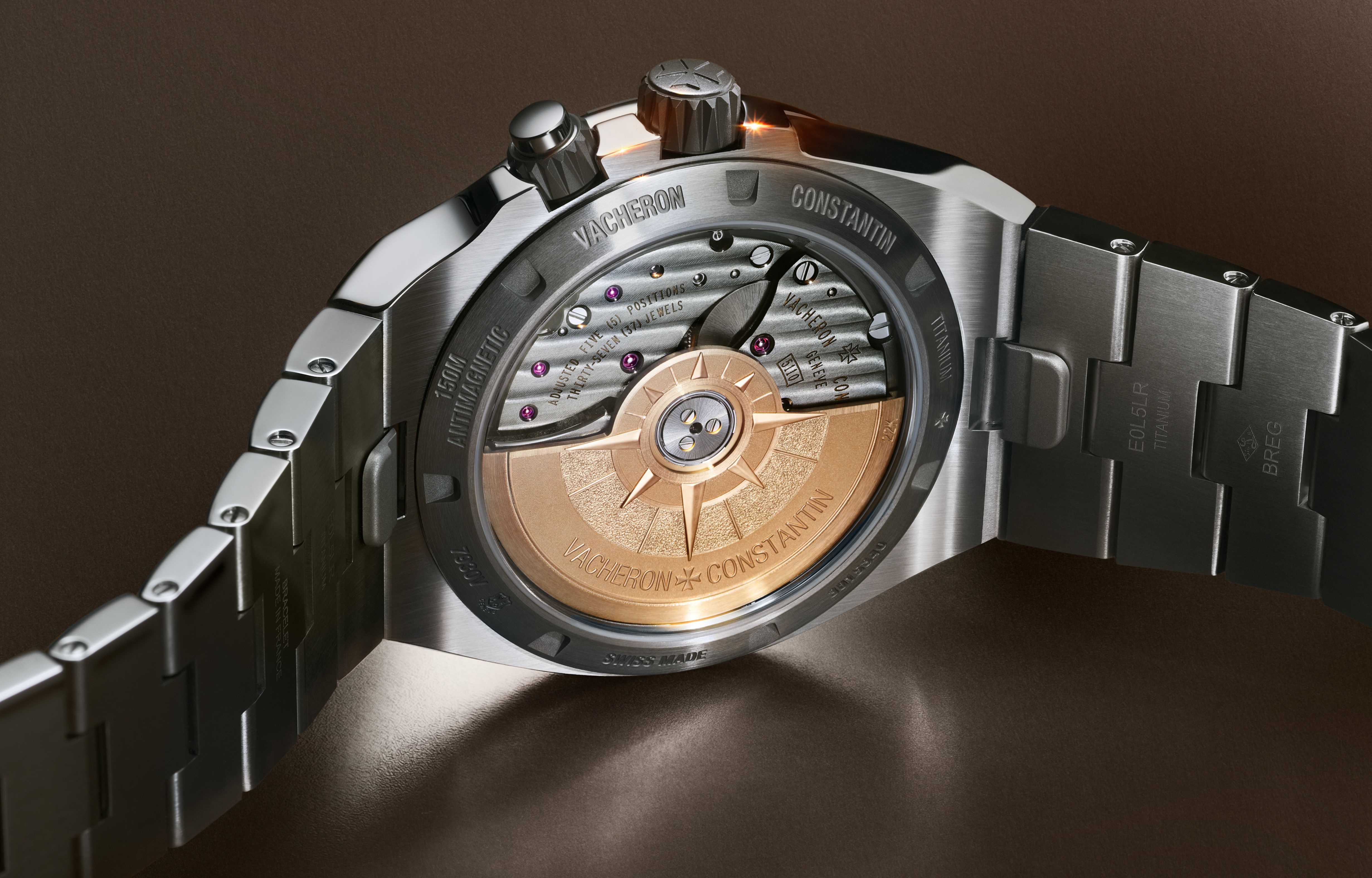
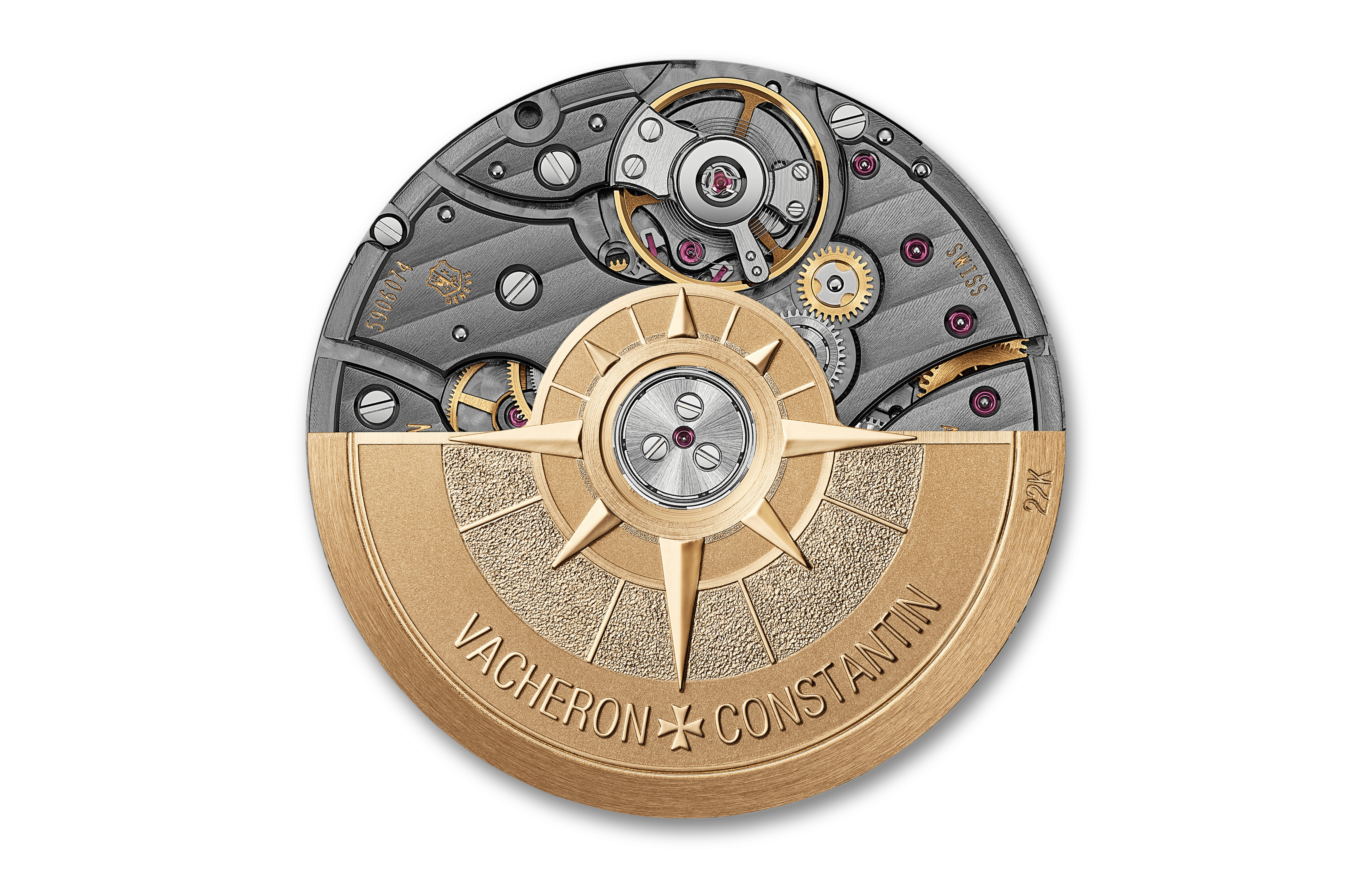
Inside the Cardinal Points beats the manufacture Caliber 5110 DT/3, an automatic movement that represents a thoughtful refinement of Vacheron Constantin's existing Dual Time architecture. The specifications are impressive without resorting to unnecessary theatrics: 234 components, 37 jewels, 4Hz frequency (28,800 vibrations per hour), approximately 60 hours of power reserve, Geneva Hallmark certification, and automatic winding via a gold oscillating weight.
What distinguishes the movement is not merely its technical competence but its balance. Many modern luxury-sports movements pursue specification-sheet supremacy. Longer power reserves. Higher frequencies. More silicon. More patents. More everything. The 5110 DT/3 instead prioritizes reliability, finishing, and practical functionality.
Its gold rotor receives an engraving inspired by a compass rose - a fitting detail for a collection centered on navigation and exploration. Visible through the sapphire caseback, it provides a reminder that even in an age of GPS satellites and atomic clocks, mechanical watchmaking still possesses the ability to tell stories through metal and motion.
A Strong Proposition
The Vacheron Constantin Overseas Dual Time Cardinal Points is not simply one of the strongest releases of Watches and Wonders 2026. It is one of the most complete expressions of what a modern luxury travel watch can be.
Its titanium construction improves comfort. Its dial architecture deepens visual engagement. Its Dual Time complication remains among the most practical in contemporary horology. Its manufacture caliber continues Vacheron Constantin's commitment to technical excellence and Geneva finishing standards. Most importantly, it advances the Overseas narrative without abandoning the collection’s core identity.
Many watches attempt to capture the romance of exploration. The Overseas Dual Time Cardinal Points accomplishes something rarer. It captures the reality of it. Not the postcard, not the advertisement. But the journey itself.


