MING And Its Alchemy Of Materials In Modern Watchmaking
 7 min read

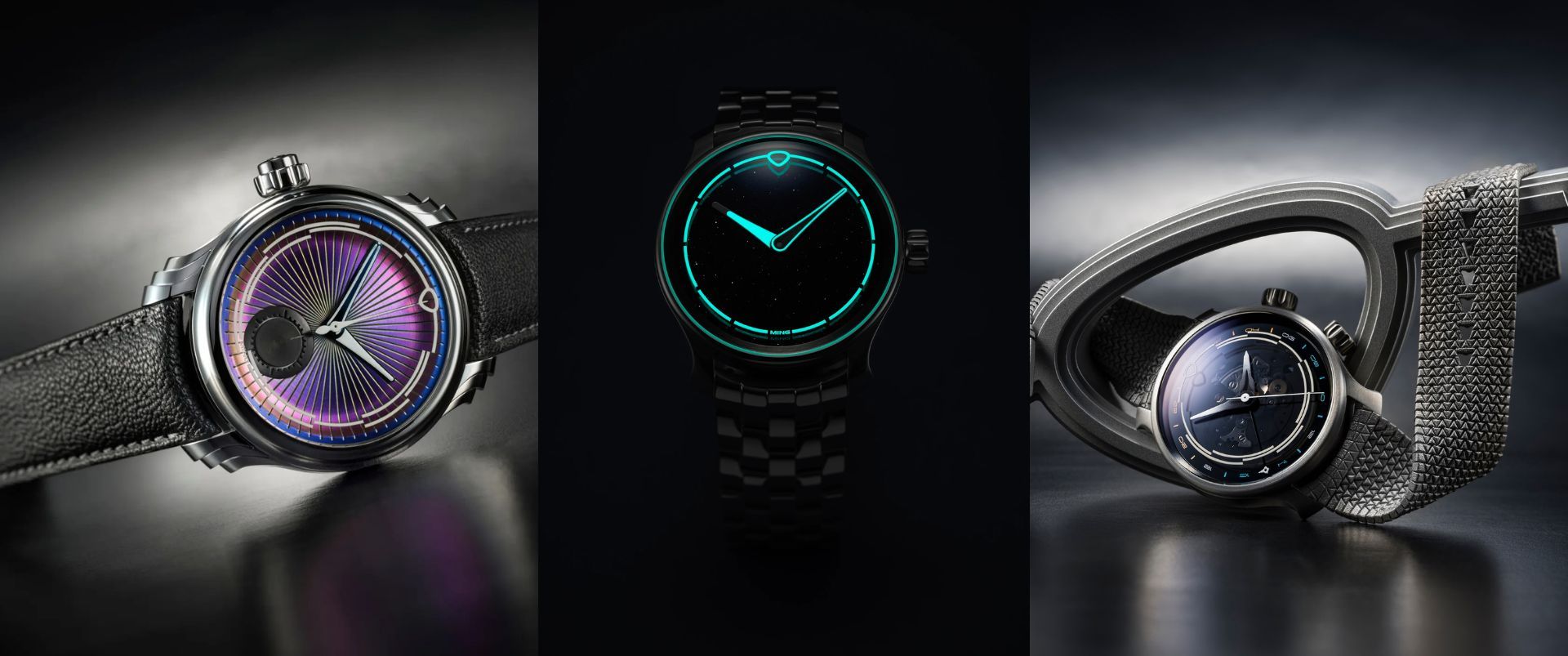
MING is no stranger to pushing the boundaries of manufacturing. At this point, the brand feels very much like a lab, where the consumer products are the experiments. Recently, we've seen multiple manufacturing experiments in dials, with the Iris and the 20.01 Series 5. And in recent years, Ming has come out with their own white-emitting lume, mind-blowing ultralight models, and lots of experimentation into the use of sapphire.
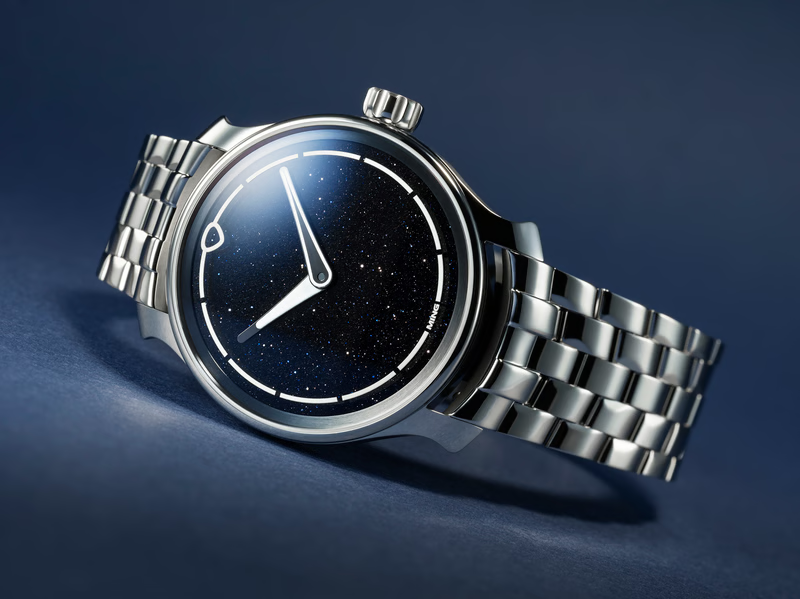
In a world where watchmaking is often framed by nostalgia and legacy, MING occupies a strikingly different space. Founded by photographer and collector Ming Thein, the brand does not look backward for validation. Instead, it builds its identity through an almost obsessive exploration of materials, modern manufacturing techniques, and an uncompromising focus on how a watch should feel on the wrist, in motion, and over time. What sets MING apart is not flamboyance or shock value, but a quiet confidence rooted in engineering intelligence. Each watch is conceived as a holistic object, where case, dial, crystal, movement, and even strap are developed with equal intent.
Redefining the Strap: The 3D Printed Polymesh
One of the clearest expressions of this philosophy is MING’s now-iconic 3D-printed Polymesh strap, a component that has redefined expectations of what a watch strap can be. Produced using advanced additive manufacturing techniques in Switzerland, the strap is created through selective laser sintering, allowing for a complex lattice structure formed as a single, seamless piece something unattainable through traditional moulding or machining.
It is an absolutely mind-boggling piece of metal, comprising 1,693 individual links and components, all hooked together without any pins or screws. The tang buckle, also 3D-printed in titanium, is articulated without any required assembly, save for the quick-release spring bars in the bracelet. The brand is very transparent about its collaboration with its suppliers for this effort, citing Sisma S.p.A in Italy and ProMotion SA in Switzerland for this fascinating effort. I mean, grade 5 titanium is already hard enough to machine, one can only imagine that 3D-printing from powdered grade-5 titanium is even more difficult. MING concurs, noting that powdered titanium in 3D printing is highly explosive unless manufactured in an inert gas environment.
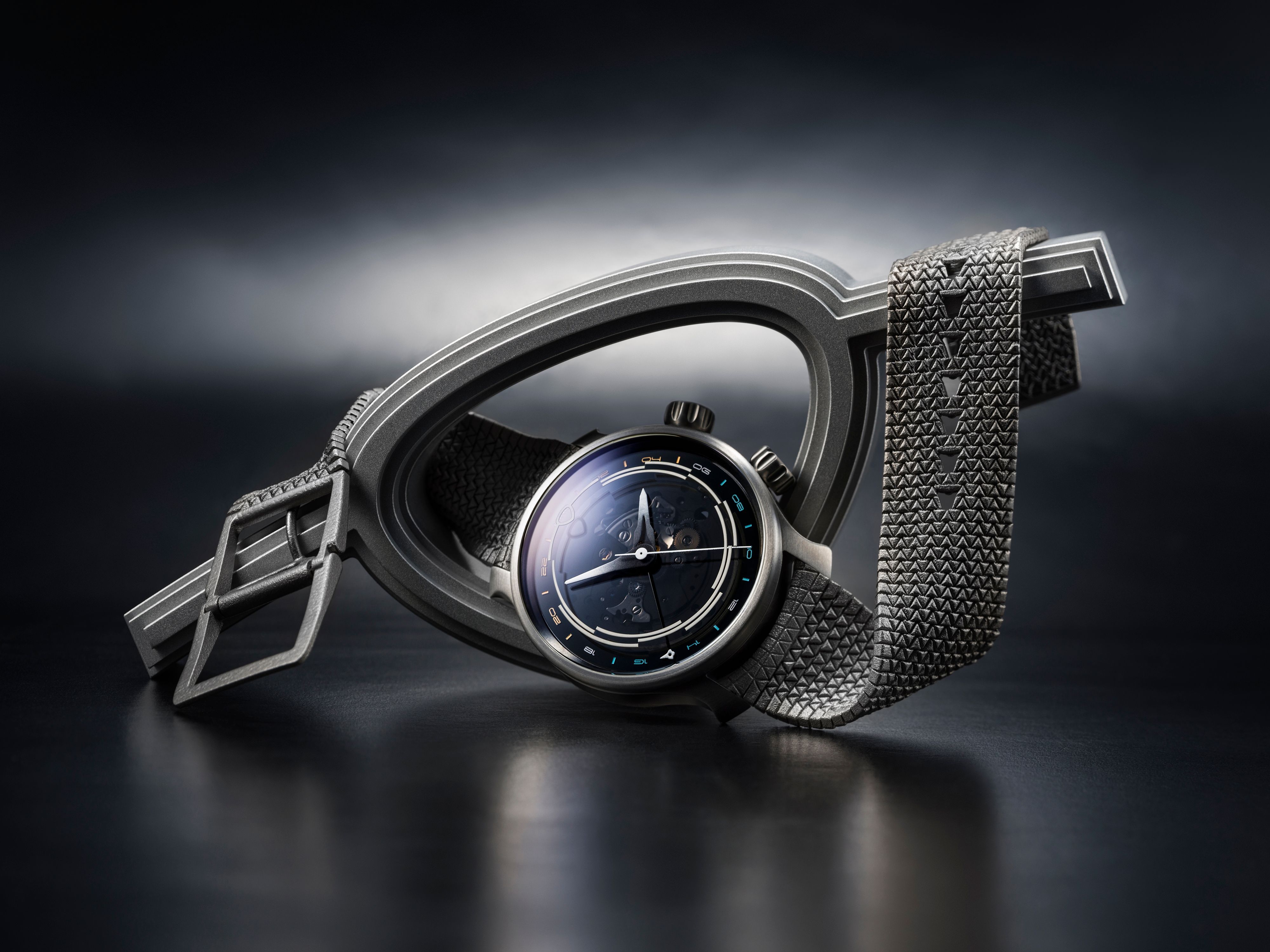
The process, as MING says, involves several hundred layers of sintering, with finishing required after to remove the layer lines and any surface imperfections so that it can all articulate smoothly. The end product sees the distance between individual parts as tight as 70 microns, with all of it needing to flow perfectly to achieve that perfect metal fabric-like drape. On the wrist, the Polymesh strap feels almost paradoxical. It is lightweight yet robust, flexible yet stable, and exceptionally comfortable even during extended wear. The lattice construction allows the strap to breathe, preventing moisture build-up and adapting naturally to wrist movement. In warm or humid climates, where rubber or leather straps often struggle, the Polymesh remains cool and unobtrusive. Its resistance to sweat, saltwater, and UV exposure underscores MING’s commitment to real-world wearability rather than theoretical performance.
In 2024, the 37.09 Bluefin swims away with the Sports Watch Prize at the Grand Prix d’Horlogerie de Genève, becoming the brand’s second GPHG trophy and proof that evolution, when done quietly and cleverly, can still make waves. This is a dive watch, yes, but not one that follows the usual script. Most dive watches shout their intentions with a big external rotating bezel. The Bluefin, instead, tucks the whole operation neatly inside. The bezel becomes the dial itself, executed in sapphire and flooded with Super-LumiNova X1. A sealed crown at four o’clock rotates the entire dial through a 60-click unidirectional mechanism. You can turn it underwater, no problem. There’s no pulling, no screwing, no fuss just a clever elimination of one more potential failure point.
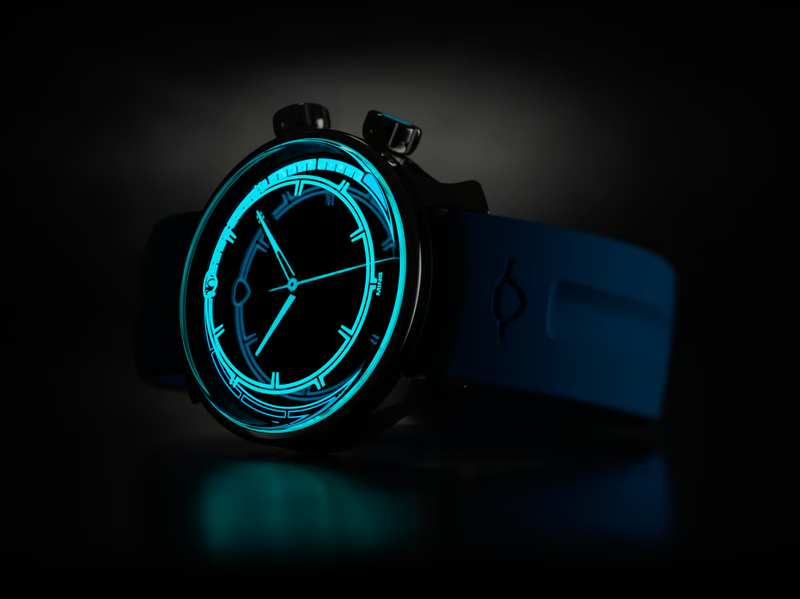
That deceptively calm dial took two years, several wrong turns and a lot of stubborn persistence to bring to life. The sapphire base is machined and laser-engraved, then treated with a proprietary double-layer, chromium-based metallisation. Only after that are the channels painstakingly filled with multiple layers of Super-LumiNova. Flip the watch and the colours subtly shift, creating a sense of depth that feels almost alive. Because the dial rotates, the Hyceram hour indices are fixed instead, living on the underside of the top crystal an elegant solution that also happens to look fantastic.
Strength Through Lightness: MING’s Mechanical Philosophy
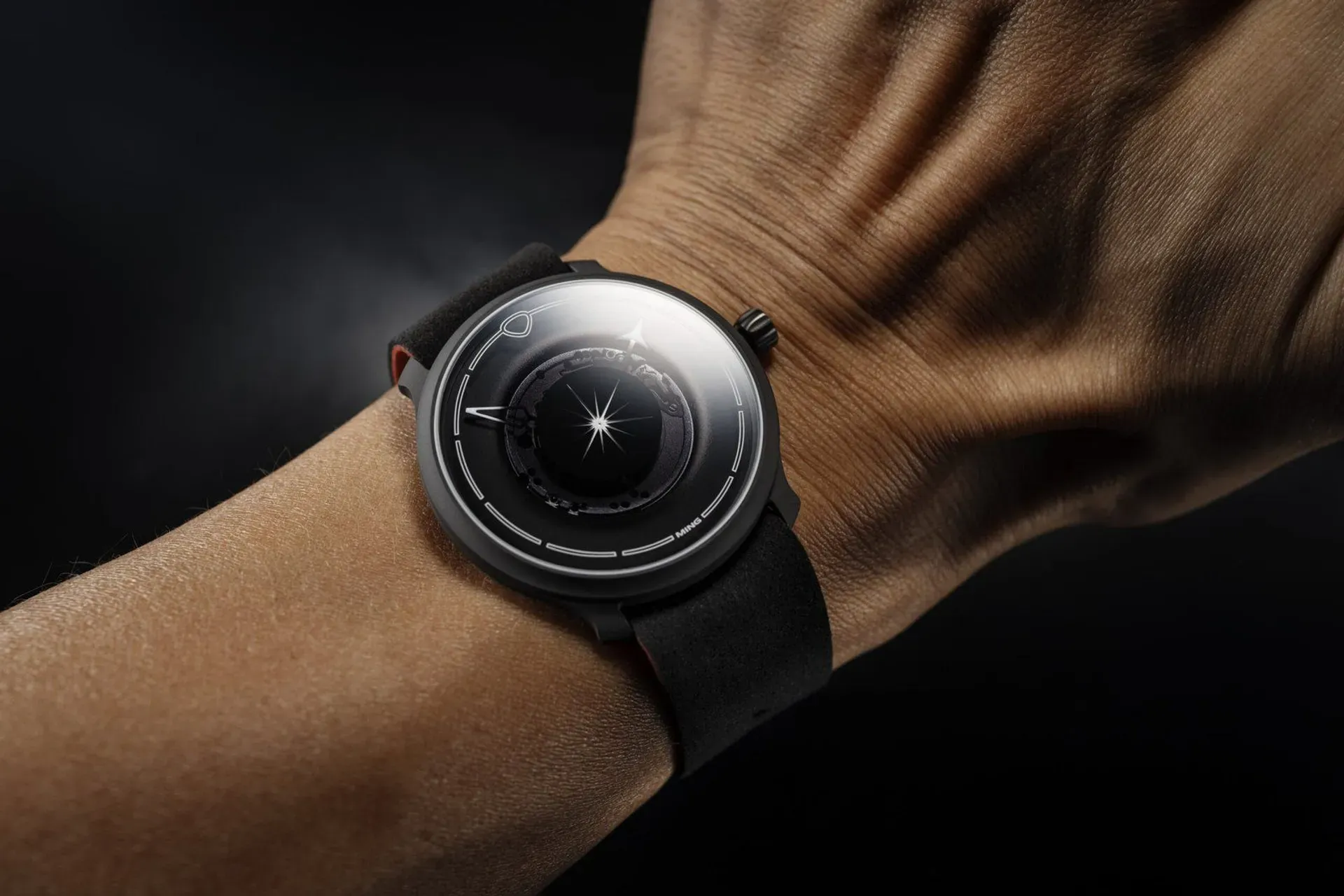
Rather than equating strength with mass or excessive complication, the brand approaches robustness through refinement and restraint. The frequent use of Grade 5 titanium is central to this thinking. Titanium offers exceptional structural integrity while remaining remarkably light, giving MING watches a distinct wrist presence that feels purposeful rather than imposing. Its natural resistance to corrosion and neutral thermal behaviour make it ideal for daily wear, while its muted surface finish aligns perfectly with the brand’s preference for understatement. Cases are precisely machined and often softly blasted, allowing them to absorb light rather than reflect it, enhancing both legibility and visual calm.
Mechanics Without Excess
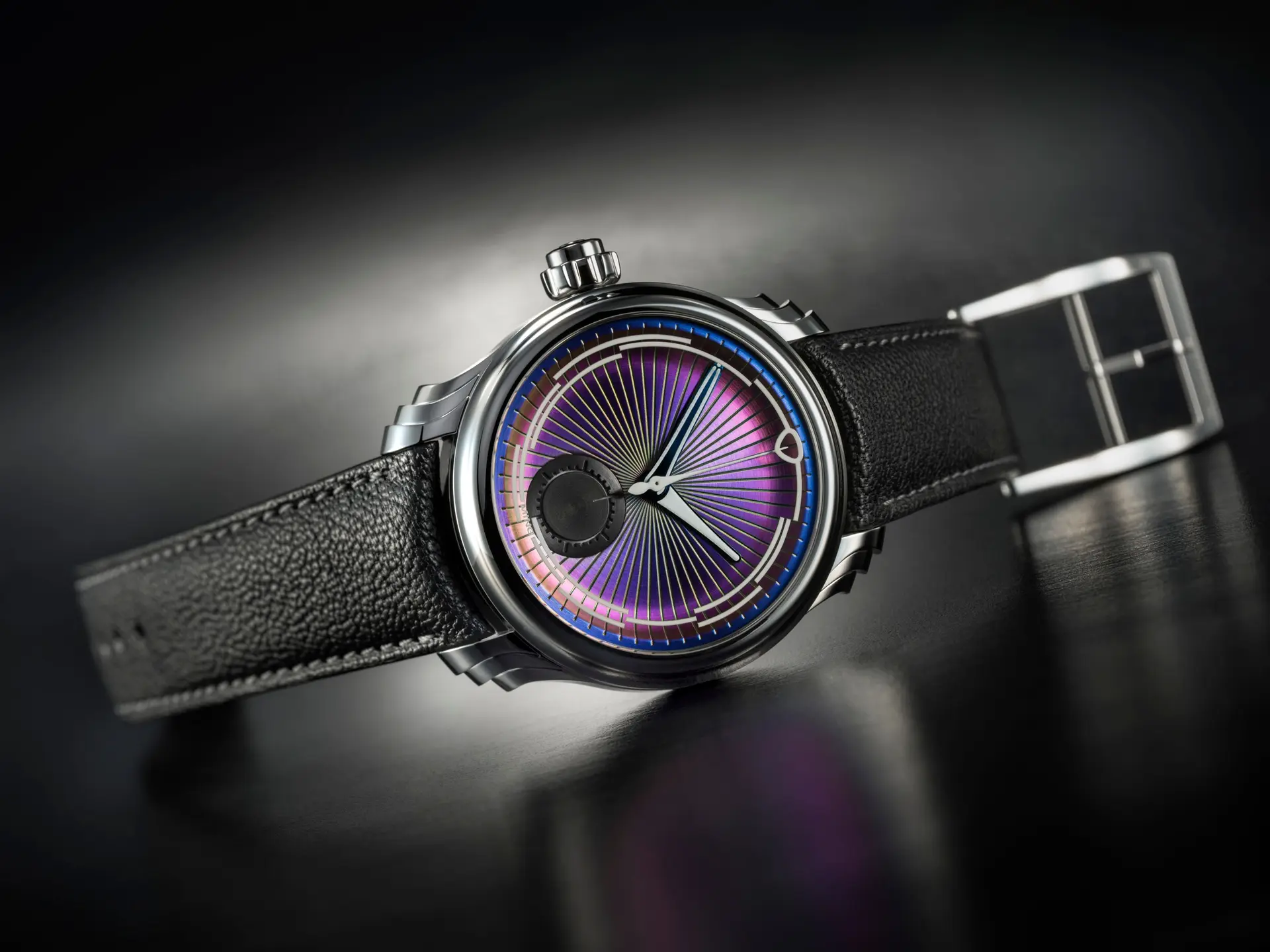
MING’s latest foray into the wonderfully weird world of complex dials comes in the form of the 20.01 Series 5 and yes, it’s one of those watches that makes you stop and ask, “Wait… what am I actually looking at?” Enter the fifth evolution of Ming’s AgenGraphe-powered chronograph, and suddenly it all clicks. This dial is a bold detour from Ming’s usual playbook of sleek sapphire dials and that mesmerising “inversion” light trick the brand is known for. Instead, the Series 5 goes big, graphic and unapologetically industrial. It’s a look that makes perfect sense paired with a central-totaliser chronograph almost like the dial was designed to flex its muscles rather than whisper elegance. Think sunburst dial, reimagined through an abstract, slightly brutalist lens. As with many Ming dials, this one isn’t just about looks it’s also a quiet mic-drop in manufacturing innovation. Because despite appearances, all that visual complexity isn’t layered, stacked or assembled. It’s carved. From a single, solid block of titanium.

Yes, really. In what Ming believes is an industry first, the entire dial is laser-milled from one piece of metal, creating those dramatic, sloping radial stakes with their intricate vertical and horizontal interlocking geometry. It’s the kind of micromachining achievement that makes you pause, whether or not it aligns with your personal taste. The dial is then PVD-coated in blue, before another laser process strips the coating from the raised stakes to reveal raw titanium beneath adding yet another layer of depth and contrast. Love it or question it, there’s no denying this dial feels like a proof of concept for what might come next. And if this is just the beginning, the future of watch dial design could get very interesting indeed.
Sapphire as a Design Medium
Beyond titanium and polymers, MING demonstrates exceptional mastery over traditional materials, particularly sapphire. Rather than treating sapphire crystal as a purely protective element, the brand uses it as an optical tool. Multi-layer sapphire constructions, combined with meticulous anti-reflective coatings and subtle metallisation, create a striking illusion of depth. Numerals appear to float within the dial, shifting with changes in light and angle, lending even the most minimalist designs a dynamic, almost ethereal quality. This visual complexity is achieved without adding physical thickness, allowing MING watches to remain slim, elegant, and supremely wearable.
Underlying MING’s material experimentation is a thoroughly modern approach to watchmaking. Precision CNC machining ensures micron-level tolerances, laser engraving delivers clarity and longevity, and modular construction improves serviceability while extending the life of each watch. These techniques are not used to replace craftsmanship, but to enhance consistency and quality. MING does not romanticise the past. Instead, it respects traditional watchmaking by adapting it to contemporary realities creating watches designed to be worn, serviced, and appreciated over decades.
The Quiet Revolution of Materials
MING’s watches are not declarations of excess. They are studies in thoughtful design, where materials are chosen for how they behave, age, and interact with the wearer. Whether through a 3D-printed Polymesh strap, a titanium case that disappears on the wrist, or sapphire dials that play endlessly with light, MING tells a story of innovation that unfolds slowly and rewards attention. In an industry defined by repetition, MING offers a compelling alternative one where the future of horology is shaped not by louder claims, but by a deeper understanding of materials and the confidence to use them differently.


