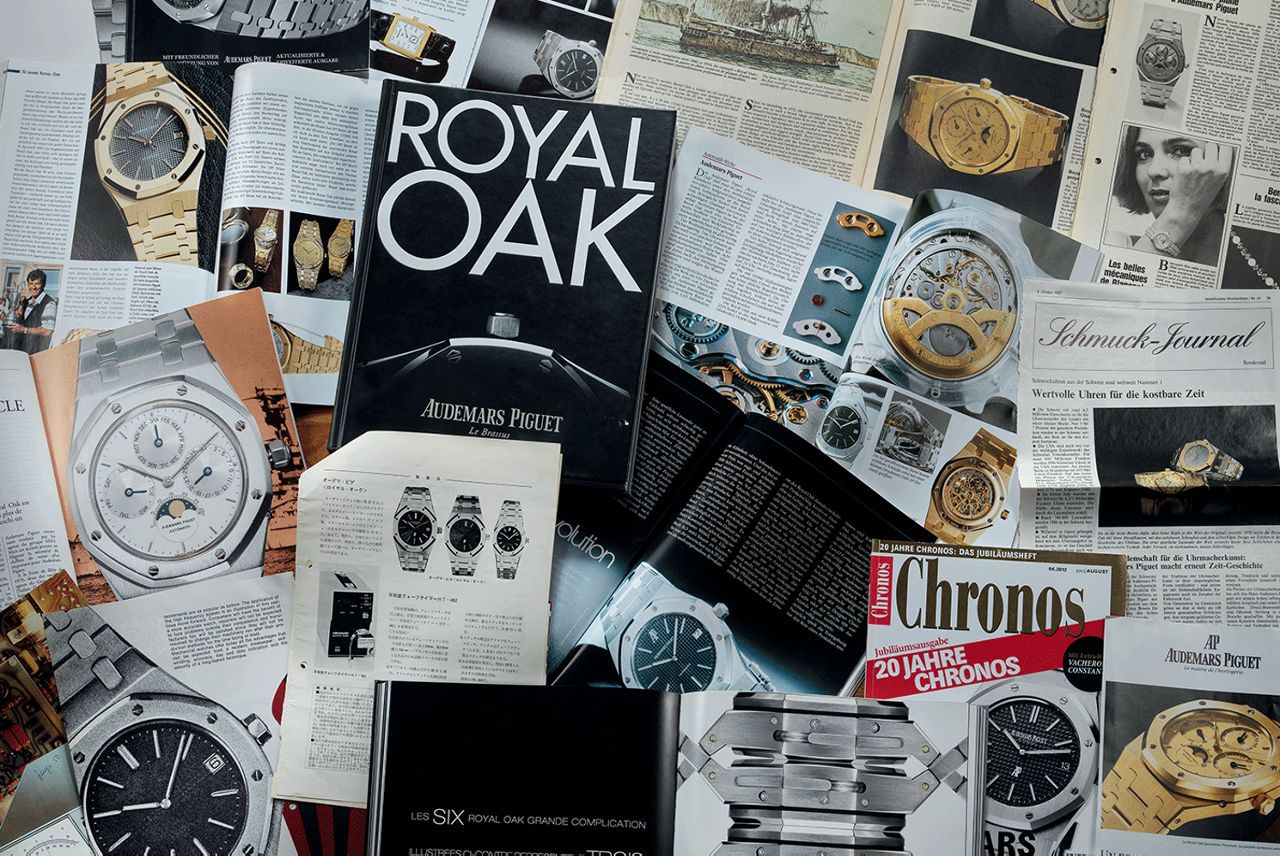
Back In The Room: What Audemars Piguet's Return To Watches & Wonders 2026 Means For The Whole Industry
 8 min read

After six years of going it alone, the Le Brassus manufacture walks back into Palexpo with a point to prove, a new collection of releases already in the wild, and the Holy Trinity finally reunited under one roof for the first time. Nothing about this return is accidental.
When Audemars Piguet announced in September 2025 that it would return to Watches & Wonders Geneva for the 2026 edition, the watch world's reaction was immediate and telling. Not surprise, exactly. More the satisfaction of a prediction confirmed, mixed with genuine curiosity about what the terms of return would reveal about where the manufacture stands today. Audemars Piguet left what was then still called the SIHH in 2019 alongside Richard Mille, declaring its intention to forge direct and personal relationships with collectors. It was a bold statement from a brand entering one of the most commercially successful periods in its history, and it was architecturally consistent with everything François Henry Bennahmias was building at the time: a direct-to-consumer distribution model, invitation-only AP Houses, the systematic dismantling of third-party retail relationships. The brand reduced its points of sale globally from 470 to just 99 over the course of that transformation. The logic was coherent. If you are selling exclusively through your own spaces, to clients you know by name, why pay for a stand at a trade fair?

The answer, it turns out, is the same reason you join any gathering of peers: because presence is itself a statement, and absence eventually becomes one too. When Audemars Piguet walked away from Geneva, the experiment in radical independence produced strong financial results. But it also produced a visibility ceiling. When the entire industry gathers under one roof and one of its most important manufacturers is absent, that absence is noticed. Eventually the question of what the absence signals becomes louder than any private event the brand might organize.
The manufacture achieved revenues of approximately CHF 2.38 billion in 2024, maintaining its position as the fourth largest Swiss watchmaker by sales while producing an estimated 50,000 timepieces annually. That figure, CHF 2.38 billion on 50,000 pieces, translates to an average selling price per watch of roughly CHF 47,600, a number that reveals the severity of the brand's upmarket repositioning more clearly than any press release. CEO Ilaria Resta confirmed that sales grew 10 percent in 2025, which would bring estimated revenues to approximately CHF 2.6 billion. This is not the performance profile of a brand that went it alone and struggled. It is the performance profile of a brand that went it alone and succeeded, and is now choosing to re-engage with the industry's collective stage from a position of genuine strength.
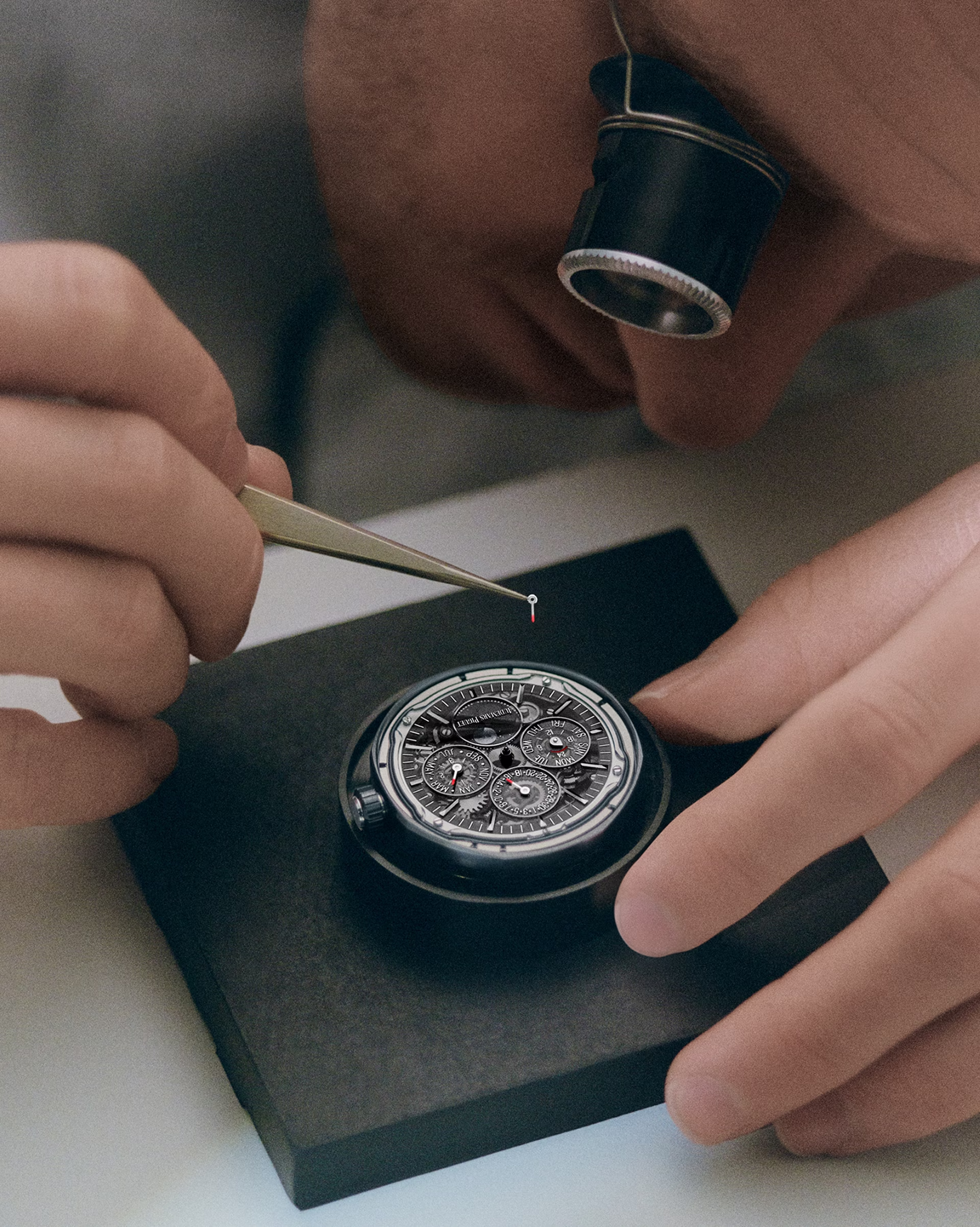
Resta describes the period under her leadership as one of no hype, with a quieter, more considered approach replacing the kinetic energy of the Bennahmias era. The Grand Prix d'Horlogerie de Genève in 2025 validated this direction explicitly. The Royal Oak Perpetual Calendar in sand gold won the Iconic Watch Prize, recognizing the Calibre 7138 for consolidating all calendar adjustment functions into a single crown, a movement that required five years of development. That prize did not reward spectacle. It rewarded the kind of sustained engineering discipline that produces movements you will still be using in 40 years. Audemars Piguet will not arrive at Watches & Wonders 2026 empty-handed. Its February releases established a clear creative brief well before the Palexpo doors open in April, and reading them carefully is the most reliable way to understand what Geneva will amplify.
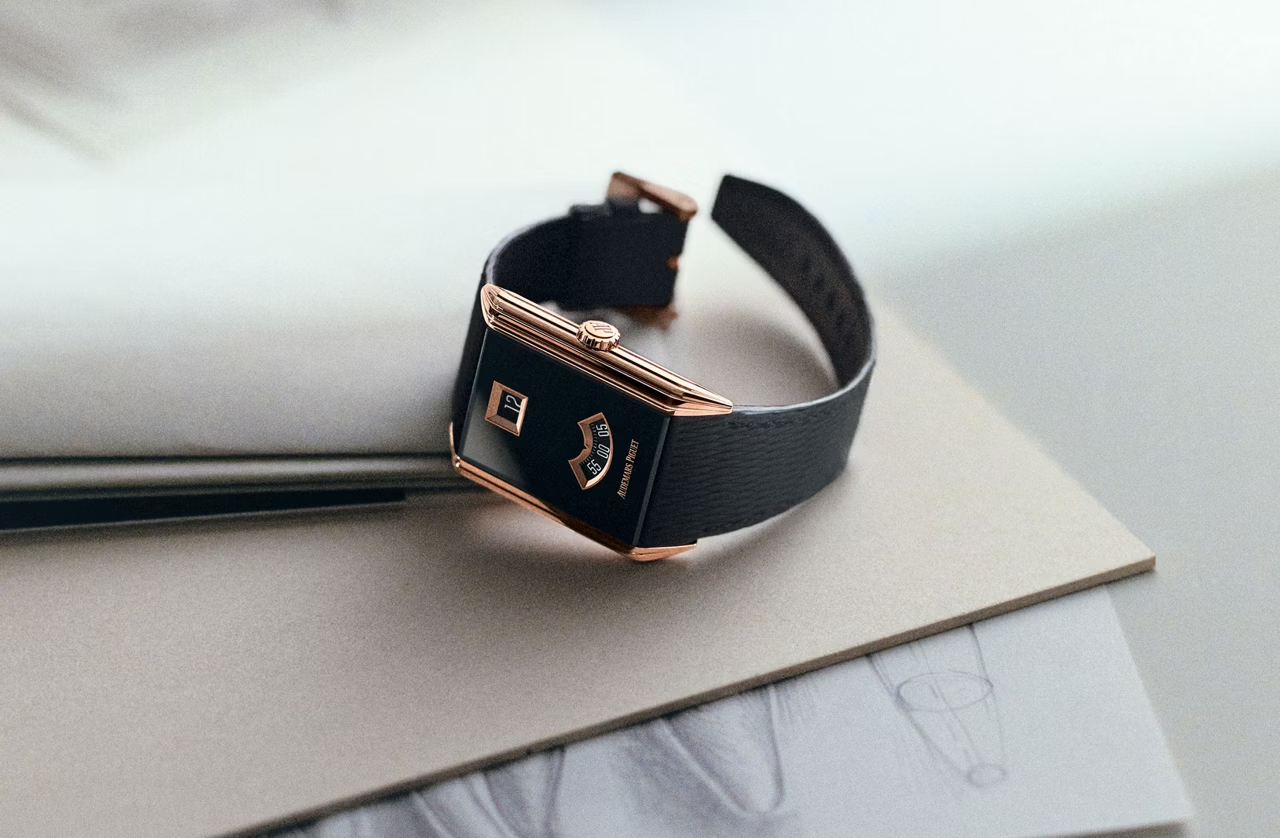
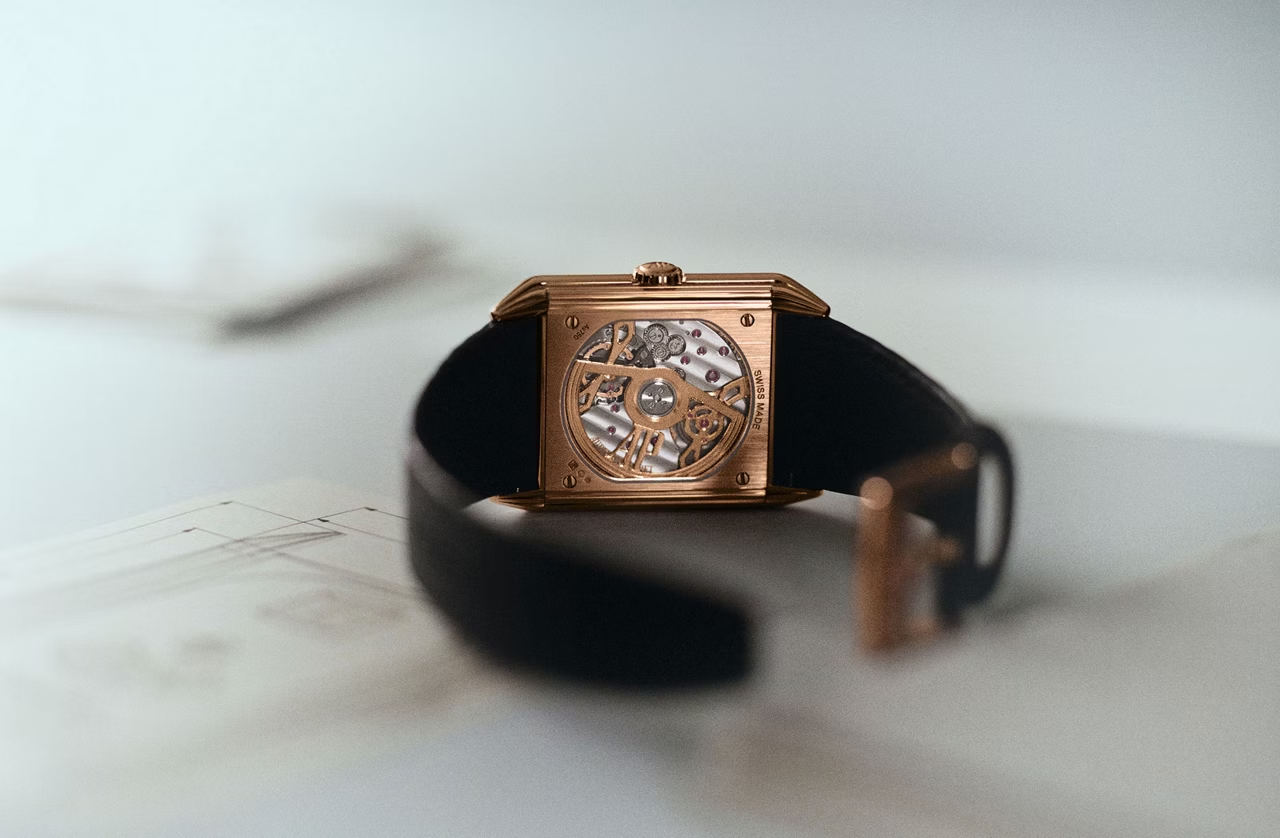
The headline piece was the Neo Frame Jumping Hour, and it is the most instructive release the brand has made in several years. The watch draws direct inspiration from the Pre-model 1271, a rectangular jumping hour watch produced in very limited numbers in 1929 and 1930. That original model stood out for its vertical gadroons, elongated proportions, and dual aperture display. Between 1924 and 1951, Audemars Piguet sold 347 timepieces with the jumping hour complication, including 135 with dual apertures. The new watch is not a reissue of any of them. It is a full re-engineering in contemporary materials, powered by Calibre 7122, the manufacture's first selfwinding jumping hour movement, derived from the thin automatic Calibre 7121 inside the Royal Oak Jumbo reference 16202, with the traditional hand mechanism replaced by a rolling minutes display and a patented shock resistance system protecting the jumping hours complication. The technical specifics matter here. The movement operates at 4 Hz, 28,800 vibrations per hour, with a 52-hour power reserve. The hours disc is crafted from titanium and the minutes disc from aluminium to reduce inertia. The case measures 47.1mm in length, 34mm in width, and 8.8mm in thickness in 18-carat pink gold, with a sapphire crystal bonded directly to the dial plate and screwed into the case, a solution developed specifically for this watch to achieve water resistance to 20 metres. Retail price: CHF 56,300. The watch is not limited. It is the beginning of a new collection that formally replaces the Re]Master series, and its name signals a direction: new architecture, historical reference, contemporary purpose.
Alongside the Neo Frame, February brought two openworked perpetual calendars housing the new Calibre 7139, the skeletonized evolution of the Calibre 7138 that earned the GPHG prize. Calibre 7139 debuts in two 41mm models: a Code 11.59 in white gold with a black ceramic middle case, marking the first time that collection has received an openworked perpetual calendar, and a Royal Oak in titanium with a Bulk Metallic Glass bezel and bracelet studs. The movement is 4.1mm thick, runs at 28,800 vibrations per hour, offers 55 hours of power reserve, and carries 423 components across 41 jewels. The all-in-one crown correction system, protected by two patents, allows every calendar function to be adjusted without tools or recessed correctors, including bidirectional adjustment if a correction is set too far ahead. The Code 11.59 version is priced at CHF 118,000.
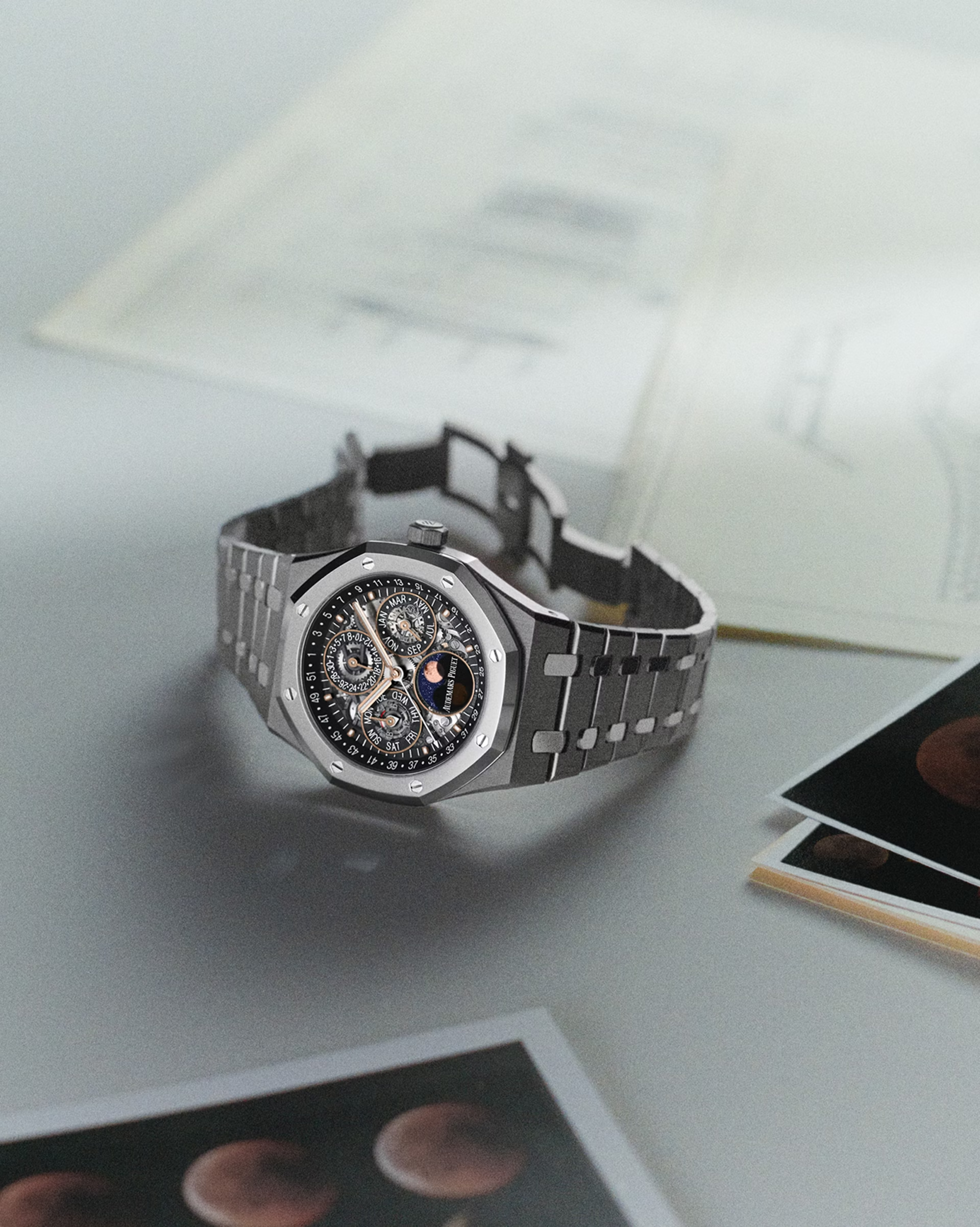
The Royal Oak in titanium and Bulk Metallic Glass is available on request. The Royal Oak Chronograph 38mm simultaneously entered a new era with an entirely in-house movement, Calibre 6401, developed over five years as the replacement for Calibre 2385, which had been in continuous use since 1997. The new movement introduces a vertical clutch system, a 55-hour power reserve, a more symmetrical dial layout, and for the first time in the 38mm collection, a sapphire caseback revealing the openworked 22-carat gold oscillating weight.

Taken together, the February releases describe a manufacture with a clear technical agenda. Every major movement family is being renewed from the ground up, with ergonomics and daily usability as consistent design criteria, and the Fab Lab architecture providing the organizational structure to pursue both complications and material innovation simultaneously. On the fair floor itself, Audemars Piguet will occupy a 1,200 square metre space in Hall 2 at Palexpo, positioned facing the entrance to the show, close to the Auditorium. The space will be deliberately open in order to attract a large number of visitors. This is a meaningful spatial decision. It places the brand in the position of welcoming guests into the fair rather than competing for attention midway through the hall. It communicates confidence without aggression.
The manufacture has also announced a series of public activations throughout Geneva as part of the Watches & Wonders In the City programme, including a presence at the historic Pont de la Machine. The theme Audemars Piguet has chosen for its return is the tradition of établissage, the historic Swiss practice of coordinating specialized external suppliers to produce finished timepieces, a tradition that defined Le Brassus watchmaking before vertically integrated manufacture became the industry standard. It is a shrewd frame. It positions the brand as simultaneously rooted in Swiss horological heritage and committed to the collaborative spirit that produced great watchmaking before any single house claimed to do everything independently.
What the stand itself will reveal in April is, in some respects, less important than what April collectively represents. For the first time, all three members of the Holy Trinity — Patek Philippe, Vacheron Constantin, and Audemars Piguet — will be present under one roof. This convergence matters beyond symbolism. It creates the conditions for genuine comparative scrutiny in real time, in a shared space, with the same audience. Each brand's choices will be read against the others. Patek's Nautilus anniversary narrative, Vacheron's Overseas evolution, and Audemars Piguet's portfolio renewal now compete for the same column inches, the same collector attention, and the same institutional credibility of Geneva's foremost fair. The 2025 edition of Watches & Wonders drew 55,000 visitors, up 12 percent year on year, with public day ticket sales rising 21 percent versus 2024. The 2026 edition brings 66 brands, up from 60. In the context of a broader Swiss watch market that faced meaningful headwinds from softening Chinese demand and global macroeconomic uncertainty through 2025, this expansion is a statement of industry confidence. The fair is growing precisely when prudent brands might be expected to contract.

Audemars Piguet's return is not merely a brand decision. It is a data point about what is and is not sustainable in luxury watchmaking's evolving distribution landscape. The Watches & Wonders return and the AP House Geneva opening, scheduled for November 2026, are not coincidental. They represent two parallel moves toward broader visibility: one into the industry's collective space, one into the most important city for Swiss watchmaking as a civilian and cultural destination. The brand is not retreating from its direct relationship model. It is layering a public presence on top of it, acknowledging that the two are not in conflict.
The broader lesson for the industry is something watch fairs have been trying to argue for several years: that the physical gathering still does something digital events and private brand days cannot. Audemars Piguet, one of the most commercially disciplined operations in high horology, has now affirmed this with its actions rather than its words. In April, Geneva will be the place where the year's watch conversation truly begins. After six years of arriving at the party after it started, Audemars Piguet is back at the door before it opens.


