Rexhep Rexhepi RRCHF: Name A Better Chronograph, We'll Wait
 1 min read

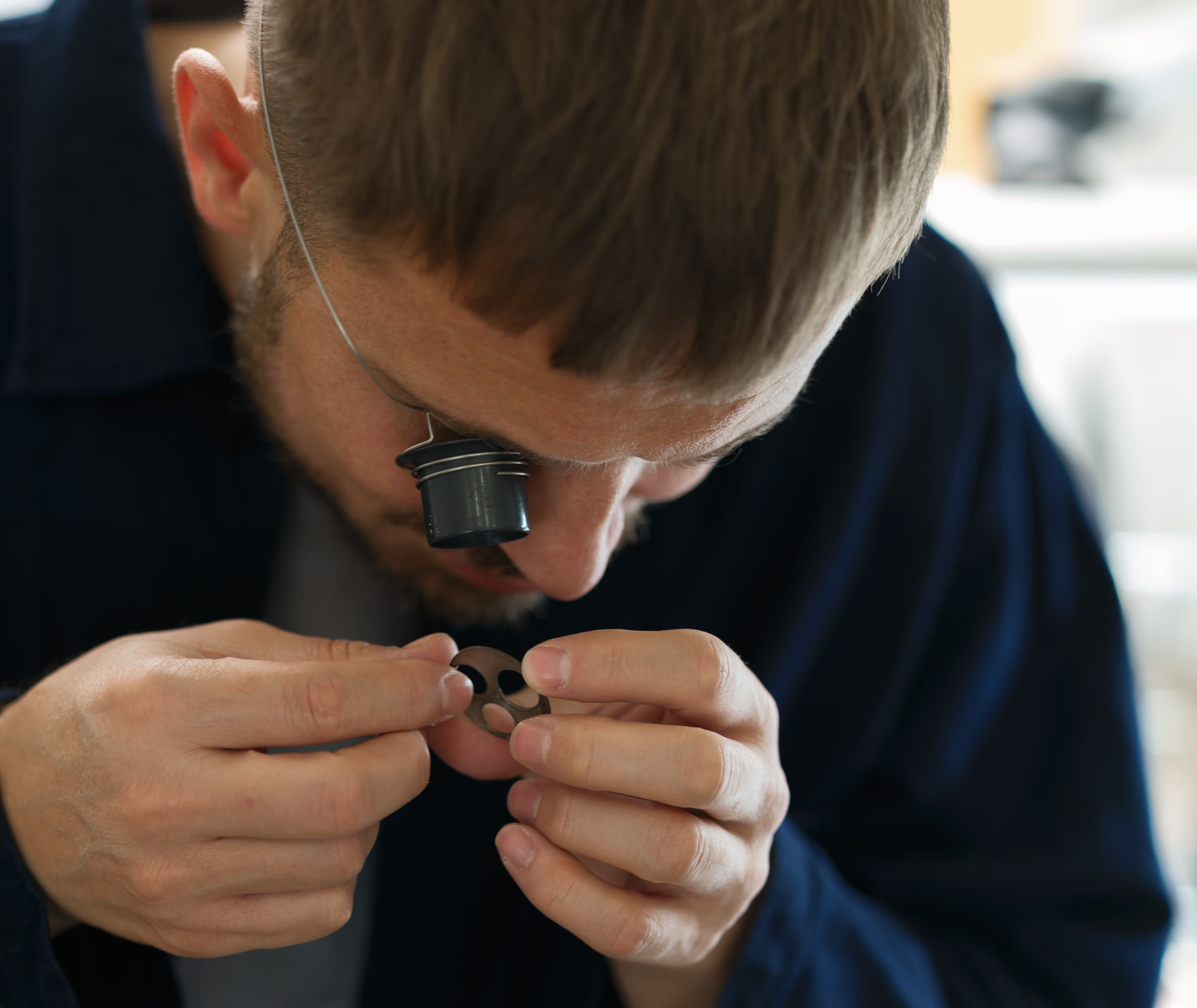
There is a building in Geneva's Old Town that most people walk past without a second glance. No signage loud enough to demand attention, no window display engineered to seduce. Inside, on a floor above the main workshop, Rexhep Rexhepi sits with a loupe casually resting on his head the way some people rest a pencil behind their ear. He places a watch on the table. This is the RRCHF - the Rexhep Rexhepi Chronograph Flyback -, and it is the most considered, most technically resolved, and arguably most significant new chronograph to appear from any independent watchmaker in at least a decade.
That is not a claim made lightly. The chronograph is watchmaking's most contested ground. Everybody makes one. Most manufactures have made dozens. The complication's long history means the reference points are severe: Patek Philippe's 2499 and 5004, the A. Lange & Söhne Datograph, the early F.P. Journe Chronographe à Rattrapante. Against that company, a new entry has to do more than function correctly. It has to say something. The RRCHF says something.
The Man and the Moment
To understand what the RRCHF means, you need to understand what Rexhep Rexhepi has been building toward since 2012, when his first watch emerged from the atelier he founded under the Akrivia name. He was in his late twenties then, a Kosovan-born watchmaker trained at Patek Philippe and later under case-making master Jean-Pierre Hagman. The watches that followed - the Chronomètre Contemporain I in 2018, the CC II in 2022, the Antimagnétique for Only Watch, the collaboration with Louis Vuitton - each one added another layer of capability and vocabulary to a maker who was quietly becoming one of the most important figures in contemporary independent watchmaking.
The RRCC I won the 2018 GPHG Men's Watch Prize. A pink gold example later sold at auction for USD 924,000. His watches have waitlists that run for years. His annual output is around 50 pieces, a number that remains essentially confidential, and one that he shows no interest in expanding. When someone with that record, that discipline, and that much accumulated workshop capability turns his hand to a chronograph flyback, it is not an ordinary product launch. It is a statement of intent.
The last major serial production reference from the atelier was four years ago. In that time, Rexhepi was not idle — he was building. Expanding his Geneva workshops. Establishing an in-house enamel atelier. Developing a new escapement. Designing and constructing an entirely original movement architecture. Every decision made in the intervening years fed directly into this watch.
The Approach: Watch First, Movement Second
Here is what separates the RRCHF from the overwhelming majority of fine chronographs at any price level: the movement was not built first. Most watchmakers, and this is the traditional method, the sensible method, begin with the movement and build the watch around it. Rexhepi reversed the process. He started with the watch. The dial. The case. The proportions. The way the three registers would sit on the face and speak to each other. Only once all of that was resolved did he develop a new flyback chronograph movement exclusively, irreversibly, for this one reference. This is not a modular system. It is not a base caliber that will be adapted into twelve future references, amortising development costs across a decade. The movement belongs to the RRCHF alone. Given that Rexhepi produces approximately 50 watches per year in total across all references, the scale of that investment is extraordinary. He was aware of this. "I know very well that I could price these watches much higher," he has said. "But I do not want to play that game."
The Dial: Two Centuries of Craft in 38.8 Millimetres
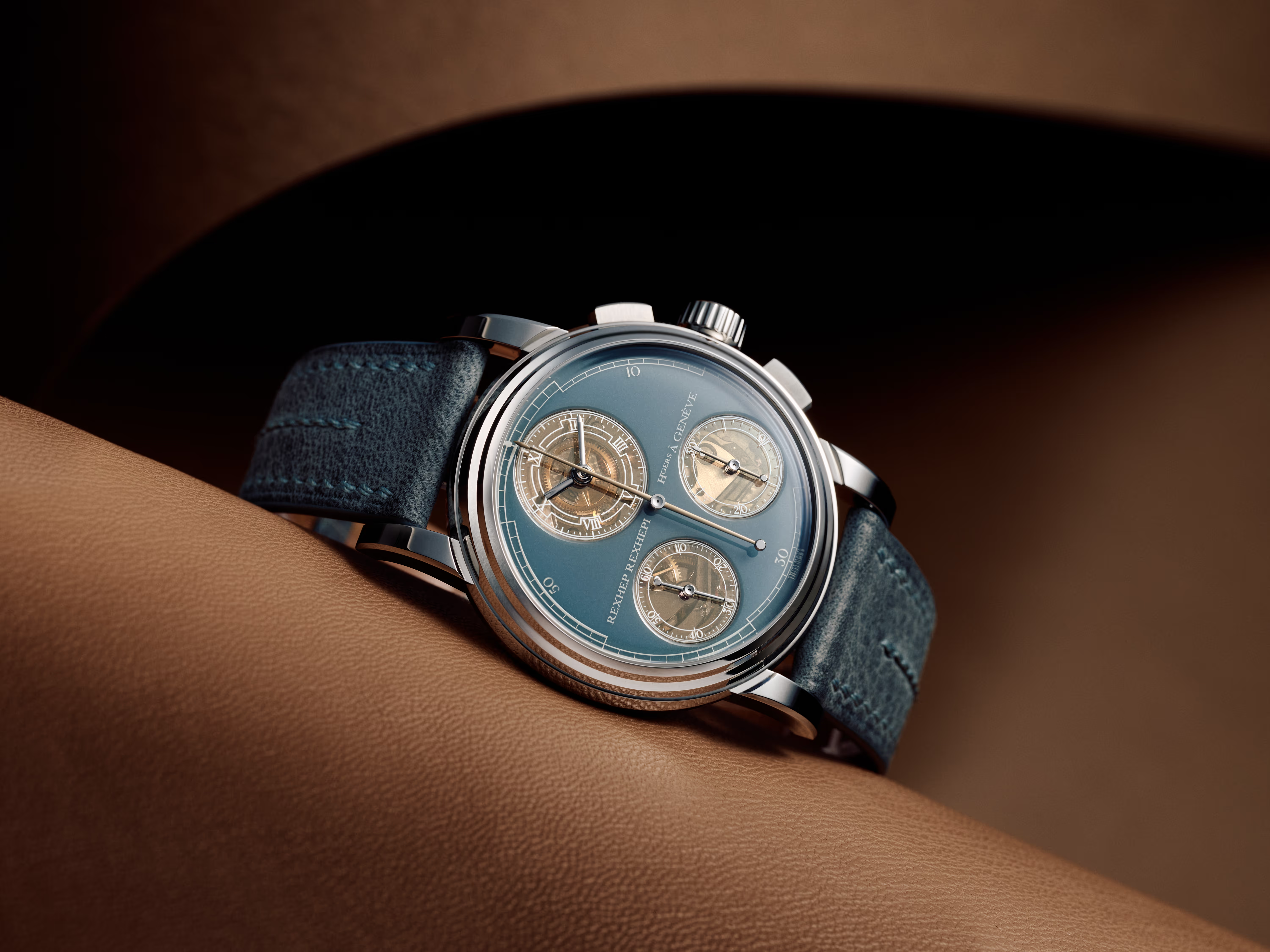
The first thing you see is the dial. It is immediately unusual, a three-register layout borrowed from historical pocket-watch chronographs, with the hours and minutes pushed to a subsidiary at 12 o'clock, the running seconds at 8, and the instantaneous minute totaliser at 4. The central stage belongs exclusively to the chronograph seconds hand: an extraordinarily long, slender needle that spans nearly the full diameter of the dial, needle-thin, counterweighted at the shorter end. It dominates the face the way a conductor dominates an orchestra.
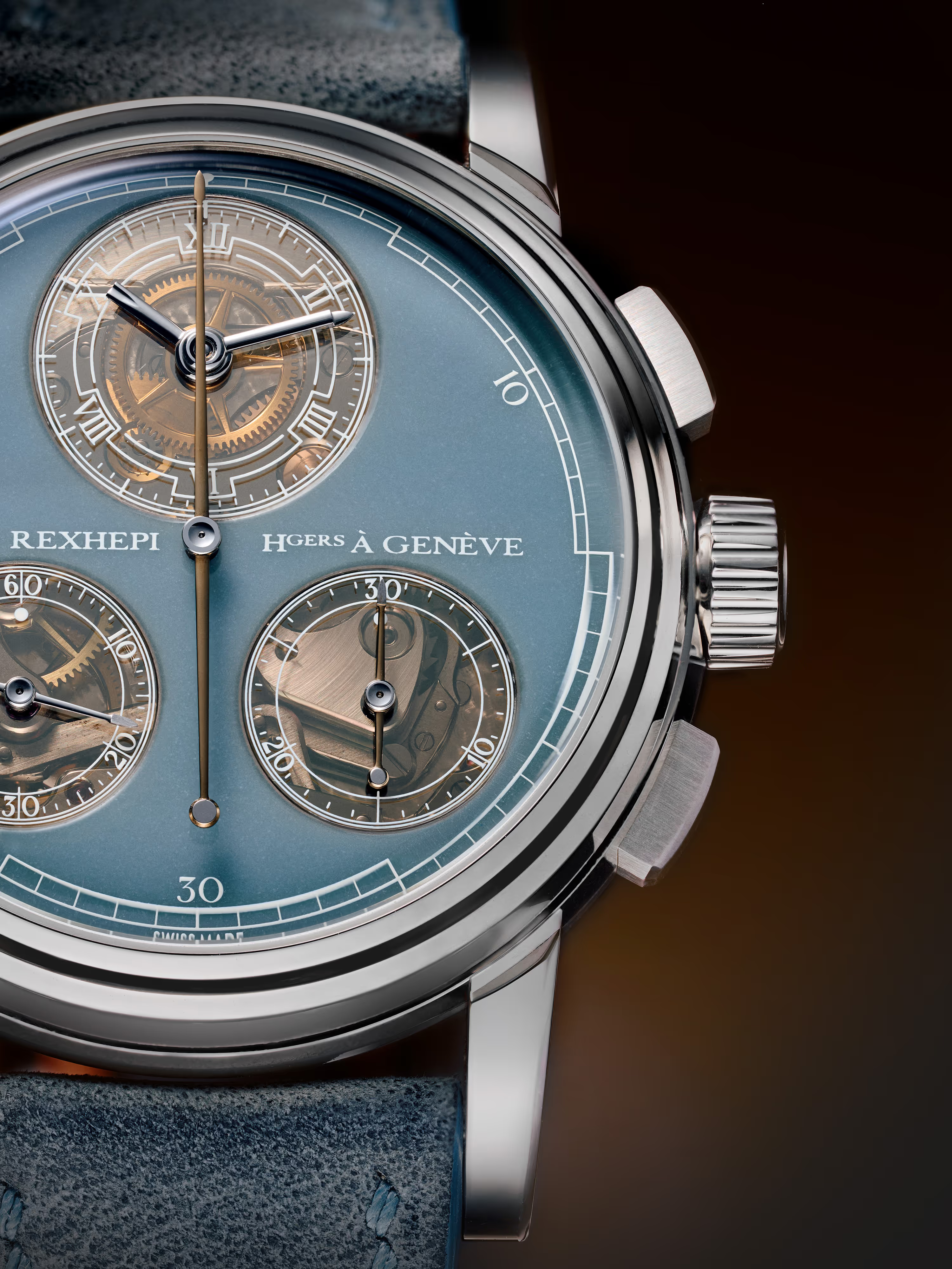
The base dial is Grand Feu enamel, fired in-house, this is the first Rexhep Rexhepi series production watch to feature enamel work entirely from his own atelier. In platinum, it is a storm blue that sits somewhere between midnight and deep sea, a colour that changes character under different light. In rose gold, it is black, absolute, deep, with the quality of lacquer but the depth of fired glass. Over this base, the three subdials are not enamel but tinted sapphire crystal, grey, transparent enough to reveal the movement working beneath. The tension between the two materials, centuries-old enamel fired in Geneva's oldest tradition, and modern sapphire crystal machined to micron tolerances, is entirely deliberate, and entirely resolved.
There is one detail on the dial that has not been seen before on any watch from any maker: the hour hand in the 12 o'clock subdial is polished with an almost indented cut-out, a sculptural intervention that, once noticed, cannot be unseen. It will probably be called the RR hand in time. The alternating scale markings on the dial borrow from the RRCC. The stepped hands were first deployed on the Chronomètre Antimagnétique to eliminate parallax error. Nothing is accidental. Every element connects backward to the Akrivia vocabulary while pushing it forward.
The Movement: 320 Parts, One Signature
Turn the watch over. The movement is immediately, unmistakably a Rexhep Rexhepi calibre - you could identify it across a room. The symmetrical architecture, vertically linear from barrel at the top to balance wheel at the bottom, is his house signature applied now to a complication rather than a time-only movement. The barrel and balance bookend a central wheel under a large bridge. Chronograph mechanisms are, by nature, asymmetrical - this is why traditional chronograph movements look as they do. Forcing symmetry onto this complication required the under-dial architecture and the visible side to be resolved simultaneously, constrained on both axes. It is harder. It is also more beautiful. The horizontal clutch is a deliberate choice Rexhepi made with full awareness of its limitations. A vertical clutch is technically superior in terms of accuracy at the moment of engagement. He chose horizontal because you can see it move. "It's more romantic," he says. That word, romantic, is not nostalgia. It is a design philosophy: a chronograph should be felt and watched, not merely measured.
The 320-component calibre runs at 21,600 beats per hour on hand-winding, delivering 72 hours of power reserve. The instantaneous jumping minute counter — a feature that makes elapsed time read more precisely because the minute advances all at once rather than crawling - required a separate energy storage and release system: springs charged progressively, released at exactly the right instant, braked to prevent overshoot. The tolerances involved in getting this right without robbing the movement of power are the kind that cannot be described in a press release. They have to be calibrated by hand, individually, watch by watch.
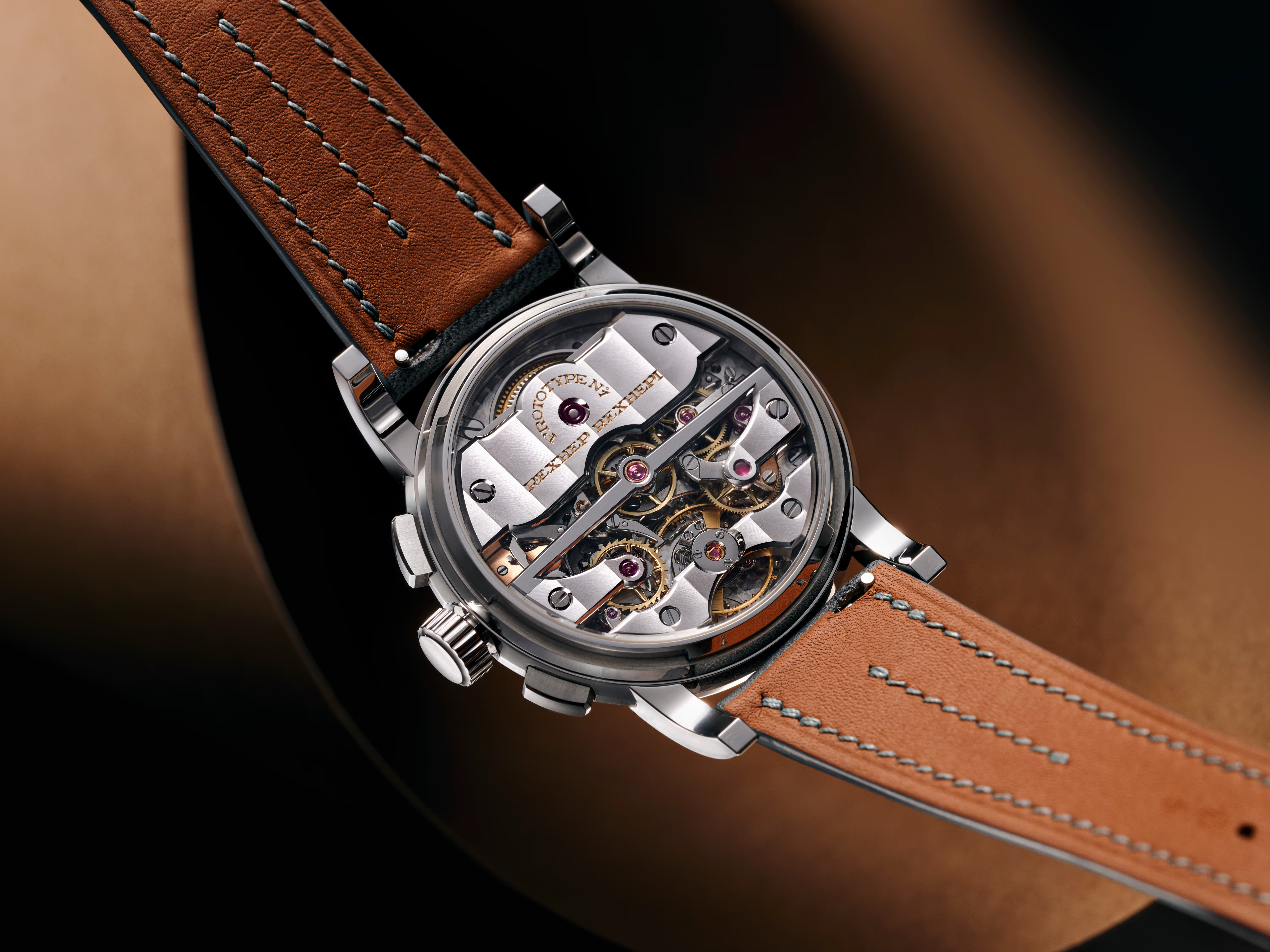
The finishing is of a caliber - in the older sense of the word, that has not been common in watchmaking since the era of Swiss pocket-watch ateliers. Broad, rounded bevels that can only be produced by hand. Côtes de Genève interrupted by a full-diameter black-polished bridge spanning the movement, not an oversight, but a statement, the kind of gesture that bends the rules of classical decoration while understanding them deeply enough to do so without breaking them. Poli-bercé. Circular graining. Polished inward angles. Thirty jewels. Each bridge and cock in maillechort, chamfered by hand before any machine touches them.
The Case: Proportion as Argument
At 38.8 mm across and 9.7 mm high, the RRCHF is one of the slimmest hand-wound flyback chronographs in production. The case is made entirely in-house, in platinum or 18-carat rose gold, the same price for both, with a stepped bezel more pronounced than in earlier Rexhepi references, and lugs refined from the RRCC to sit more elegantly at the wrist. The screwed caseback is fitted with a sapphire crystal, so the movement is available for inspection from both sides. The strap - light grey nubuck calf on the platinum, presumably dark on the rose gold, is hand-stitched in-house with a Norwegian centre stitch. Even this, the thing that touches your wrist, is made in the same block of Geneva workshops. The water resistance is 30 metres. Sufficient. This is not a sports watch. It is a dress chronograph of the highest order, worn with the understanding that what is on your wrist represents one of the most concentrated expressions of watchmaking craft currently available anywhere in the world.
The Comparisons
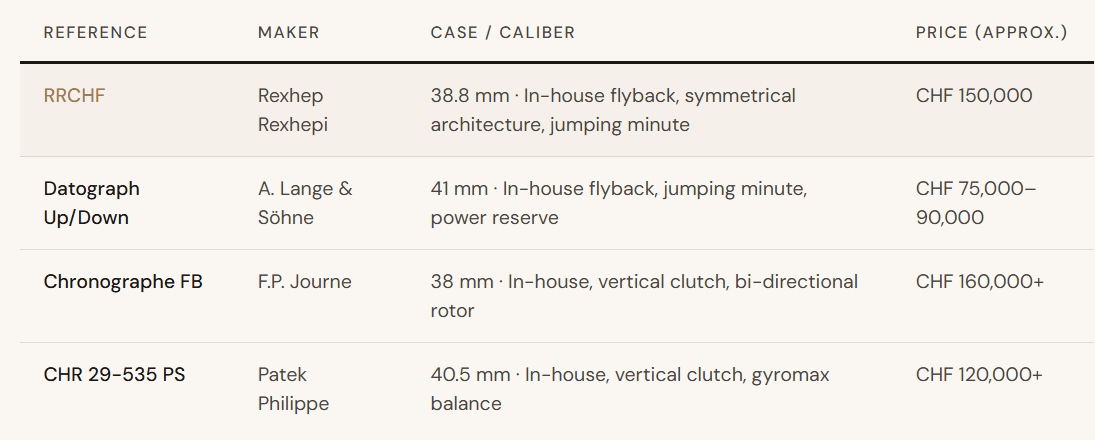
No serious discussion of the RRCHF can ignore the context in which it arrives. There are perhaps four or five chronographs in the contemporary market that operate at this level of execution and ambition. The comparison is not an exercise in ranking - each represents a different answer to the same question - but it is necessary because the RRCHF stakes its claim against the best.
Rexhep Rexhepi describes the RRCHF as a performance. Not in the sense of theatre, but in the sense of an athlete or a musician giving everything that years of preparation have built toward. "If I had made this watch two years earlier, or two years later, it would not be the same watch," he has said. "It reflects a moment in my life, my state of mind, and the experience I had at that time." That is a watchmaker's way of saying: this is the best I can do right now. It is also, implicitly, a promise that the next one will be something else again.
There are roughly 50 Rexhep Rexhepi watches made per year across all references. The RRCHF competes for slots within that figure. It will be allocated, not bought off a shelf. There will be people who wait years and do not receive one. Auction prices for the early pieces, if history is any guide, will eventually make CHF 150,000 look like a footnote. But none of that changes what the watch is, which is this: the most resolved, most personal, and most important chronograph that the independent watchmaking world has produced in a generation.