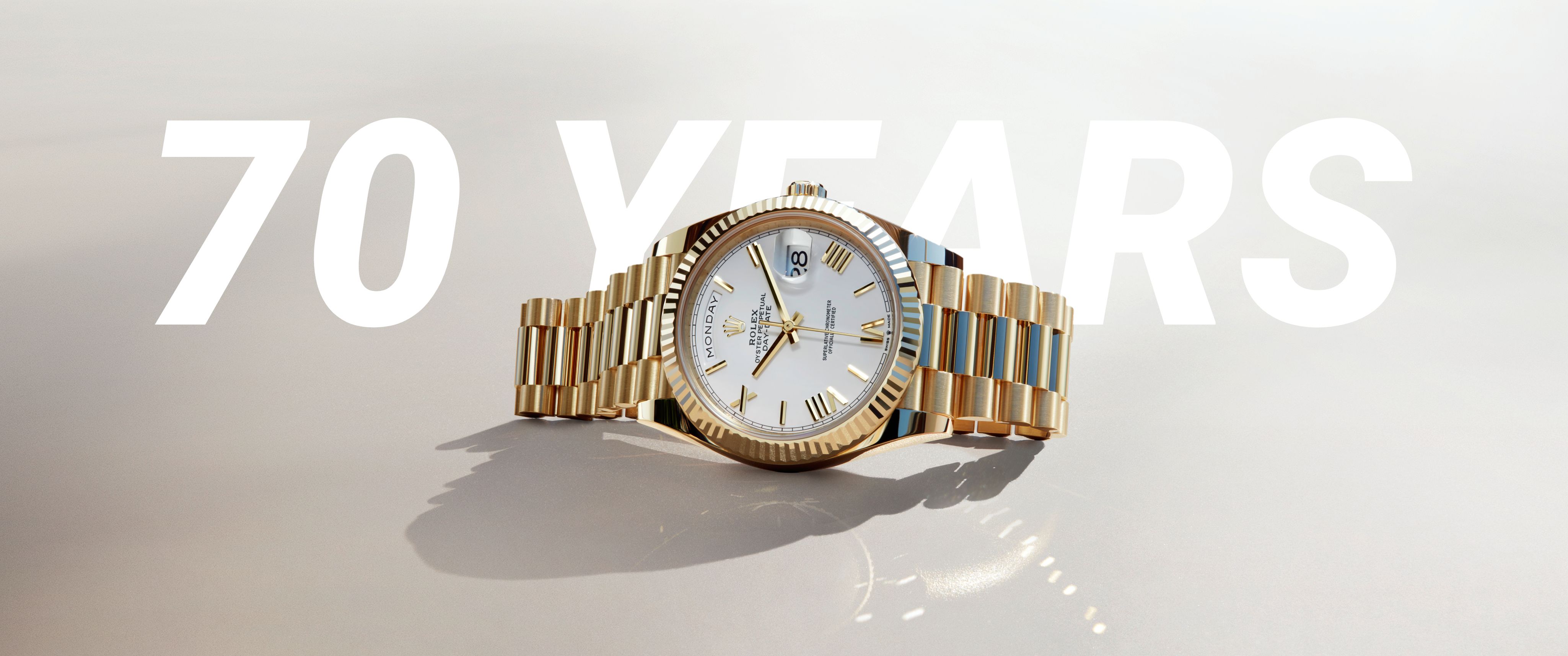
Complete History Of The Rolex Day-Date
 8 min read

When people talk about watches that define an era, the Rolex Day‑Date tends to occupy a peculiarly elevated place. It is neither a sports watch nor a tool watch, yet for more than seven decades it has served as the preferred wrist chronometer of statesmen, captains of industry, and cultural icons. Introduced in 1956, the Day‑Date did not simply add another complication to the catalog, it created a new archetype - the “power watch,” a self‑wound, double calendar, precious‑metal timepiece that telegraphs success at a glance.
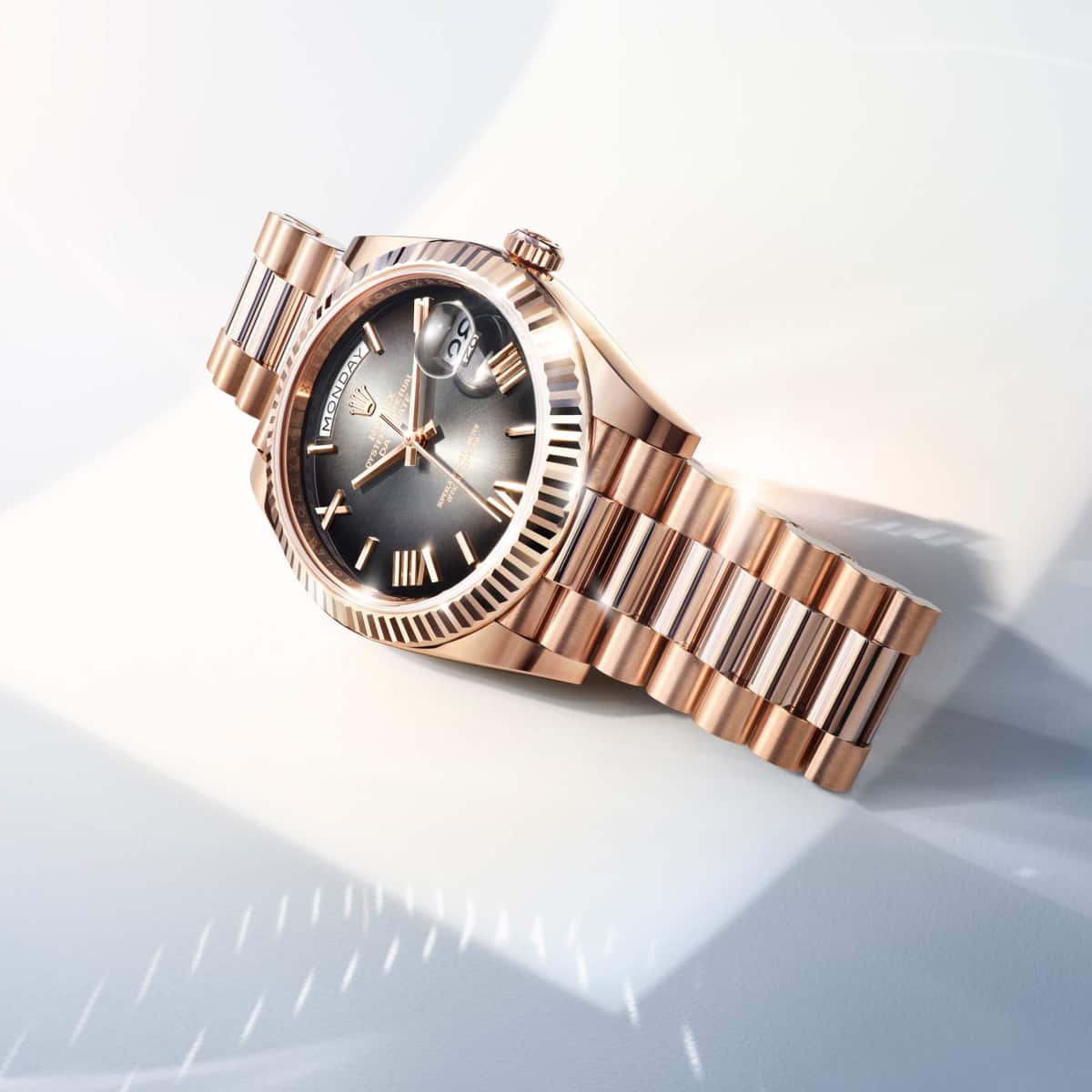
At its core, the Day‑Date remains a paradox: an exercise in conservative design that has somehow never aged out of relevance. The 36mm case, the fluted bezel, the three‑link President bracelet, the day‑and‑date display at 12 and 3 o’clock - each element has remained stubbornly consistent even as the world around it has changed. Rolex has updated materials, movements, and sizes, but the Day‑Date has never been reinvented. It has, instead, been refined.
In 2026, the Rolex Day-Date celebrates its 70th anniversary.
The Birth Of “The President” (Ref. 6510, 6511, 6611)
The Day‑Date story properly begins in 1956 with references 6510 and 6511, offered in 18‑karat yellow, pink, and white gold in 36mm Oyster cases. These watches replaced more complex calendar‑only pieces such as the Triple Calendar Moonphase ref. 8171 (“Padellone”) and its Oyster‑cased successor Ref. 6062 (“Stelline”), both of which had been discontinued by 1953. The Day‑Date, by contrast, was described as the “complicated one” in the Rolex line, even though its only complication was a day‑and‑date display.
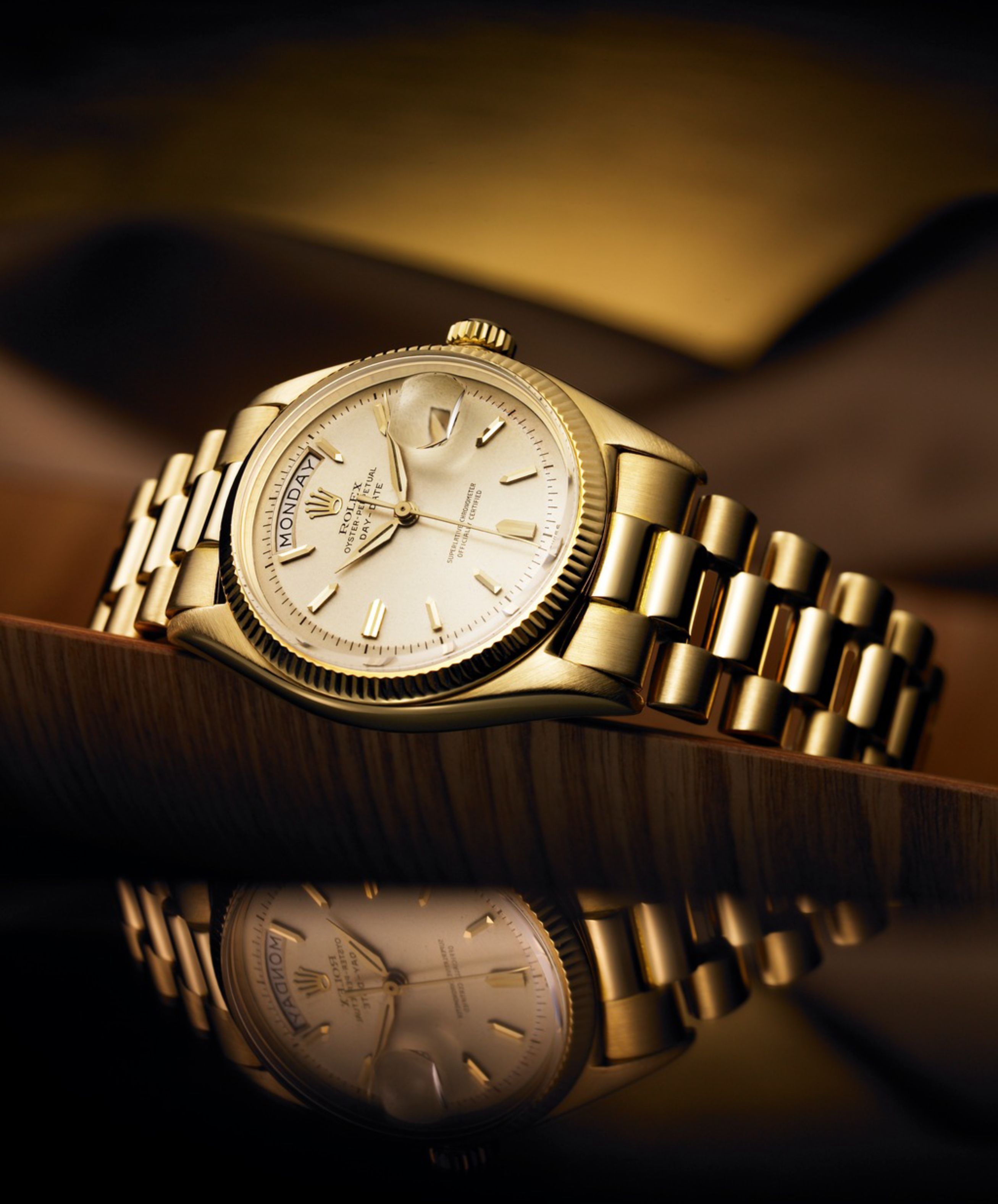
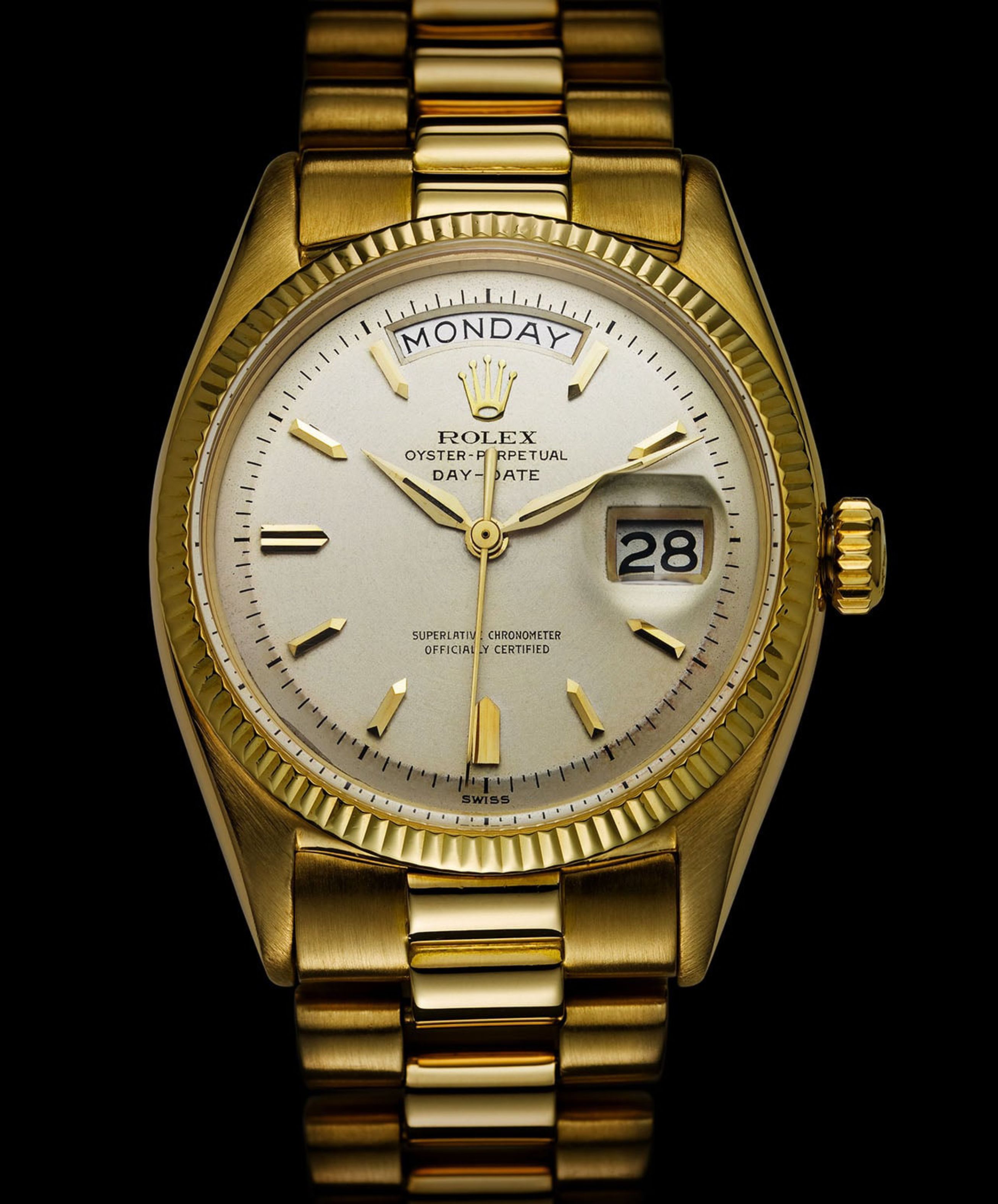
Crucially, the Day‑Date was the first wristwatch to show the day of the week spelled out in full in an arched aperture at 12 o’clock, alongside a conventional date window at 3 o’clock. The mechanism was described in Swiss patent CH322341A of 1955, as devised by Rolex engineer Marc Huguenin, whose earlier 1950 patent suggested a precursor to the final Day‑Date design. The Day‑Date was thus both a technical and a typographic statement: it brought the written word into the central zone of the dial in a way that would become the standard for almost every day‑date watch produced thereafter.
The Ref. 6510 featured a domed bezel and the Ref. 6511 a fluted bezel. Both used twin‑lock crowns with double O‑rings, giving 100 meters of water resistance - an unusually robust specification for a 36mm precious‑metal dress watch at the time. Black and champagne dials carried appliqué gold indices and Dauphine‑style hands, with a cyclops over the date similar to the Datejust. The early models were fitted with Jubilee bracelets, but a new three‑link “President” bracelet soon became the default.
These references were short-lived. A one‑year run was enough to expose mechanical issues with the day‑advancement mechanism, prompting the introduction of Ref. 6611 in 1957. That watch, powered by caliber 1055 with 25 jewels and 18,000 vph, also marked the first Rolex to carry the “Superlative Chronometer Officially Certified” designation on the dial, a phrase that would later become a house‑wide standard.
The Golden Age Of The Ref. 1803
By the early 1960s, the Day‑Date had settled into its classic form with the four‑digit 1800 series, most famously reference 1803. Announced circa 1959 - 1960 and produced until about 1976, the Ref. 1803 became the archetypal Day‑Date for collectors and the press alike. It retained the 36mm Oyster case, fluted bezel, and President bracelet, but its movement evolved from caliber 1555 to 1556, gaining a higher frequency of 19,800 vph in the mid‑1960s and a hacking seconds feature in 1972.
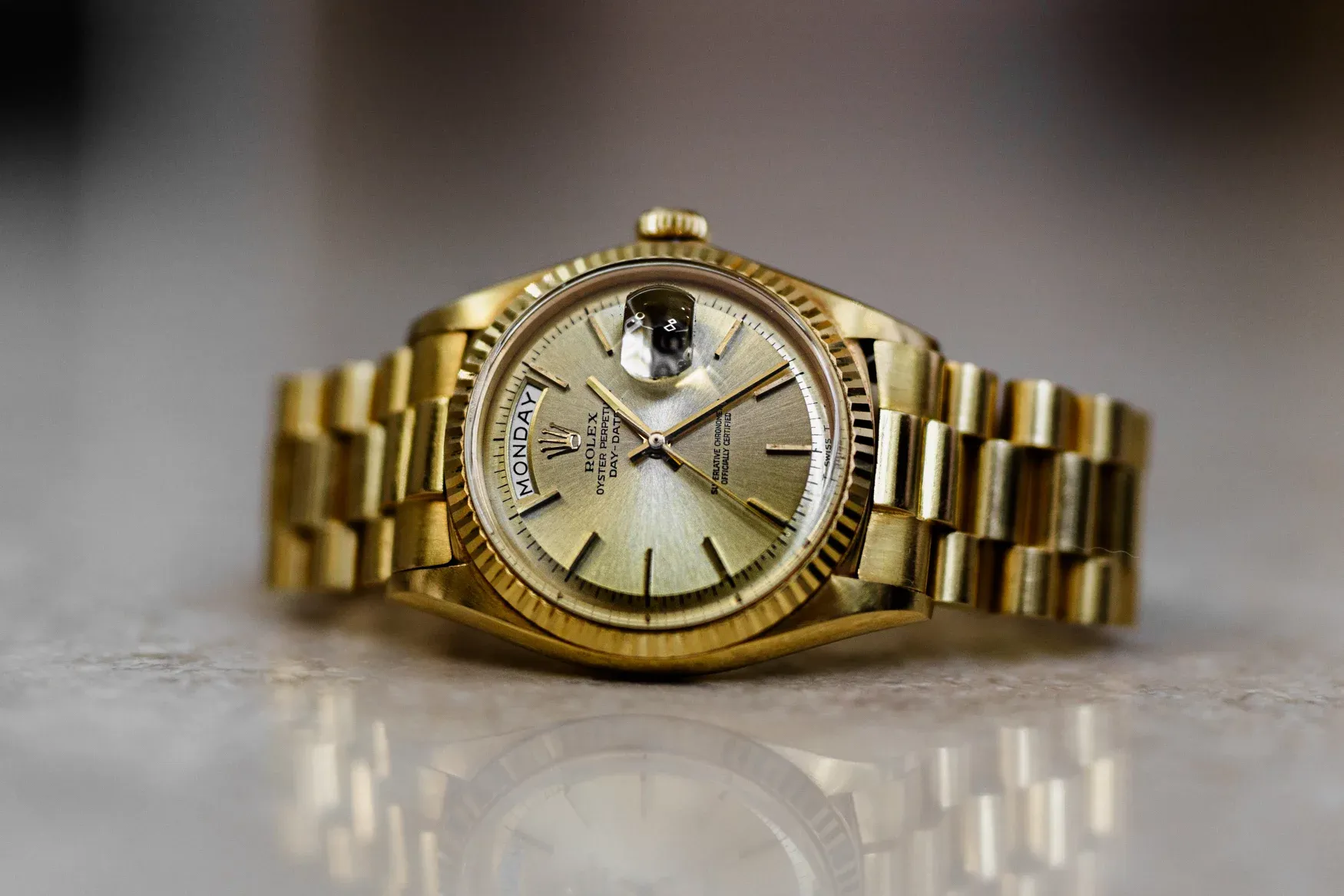
Visually, the Ref. 1803 was distinguished by its “pie‑pan” dial, whose outer edge slopes downward, giving the dial a slightly recessed, introverted character. This was the last Day‑Date generation to use this style before Rolex shifted to flat dials. The lugs remained narrow, the bracelet hollow, and the clasp hidden underneath the familiar “Crownclasp” coronet - a design detail that emphasized continuity around the wrist.
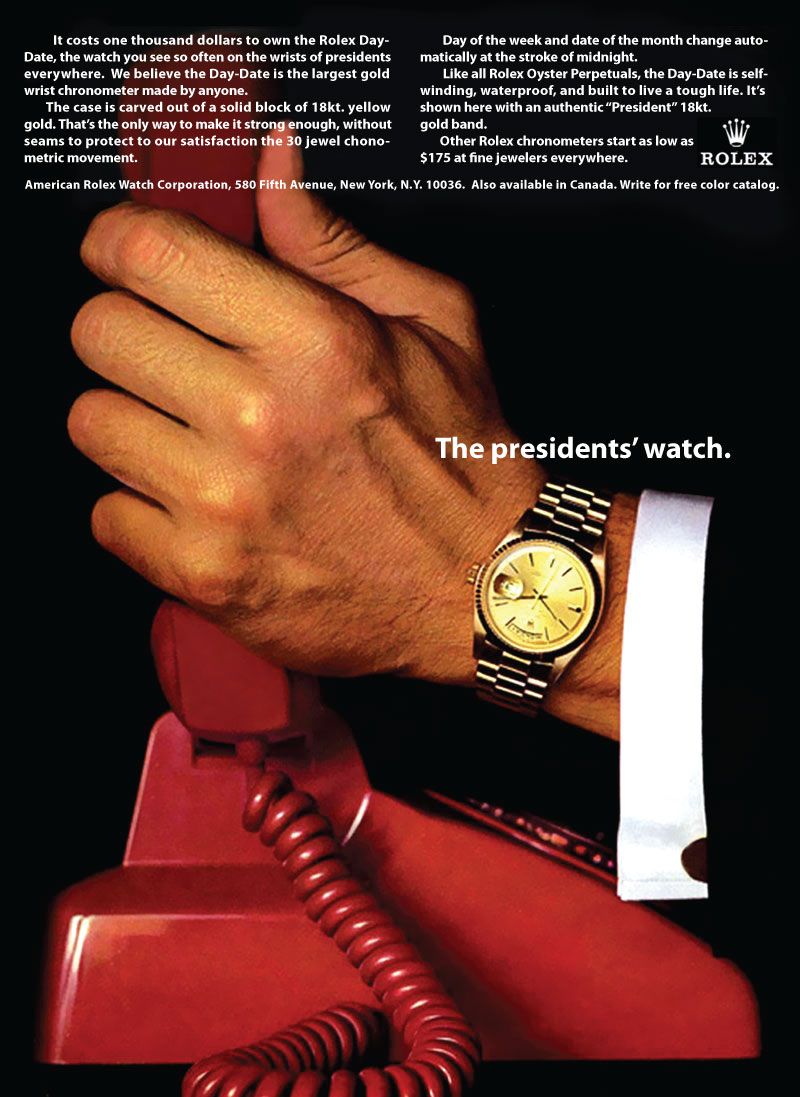
It was during this era that the Day‑Date began to accrue its political mythology. Photographs of Lyndon B. Johnson in the White House, his Rolex 1803‑series Day‑Date clearly visible, cemented the association of the watch with presidential power. By the 1960s, Rolex advertisements began to refer to the model as the “President’s Watch,” and the term “President bracelet” entered the lexicon, though the colloquial “Day‑Date President” conflated the accessory with the watch itself.
The Quickset Revolution And The Five‑Digit Era
The first major technical overhaul of the Day‑Date came in 1977 - 1978, when Ref. 18038 arrived as the first five‑digit Day‑Date. Under the hood lay caliber 3055, running at 28,800 vph and featuring a quickset function for the date - a “single quickset” in Rolex parlance, since the day‑of‑the‑week still had to be set by repeatedly advancing the hands through midnight.
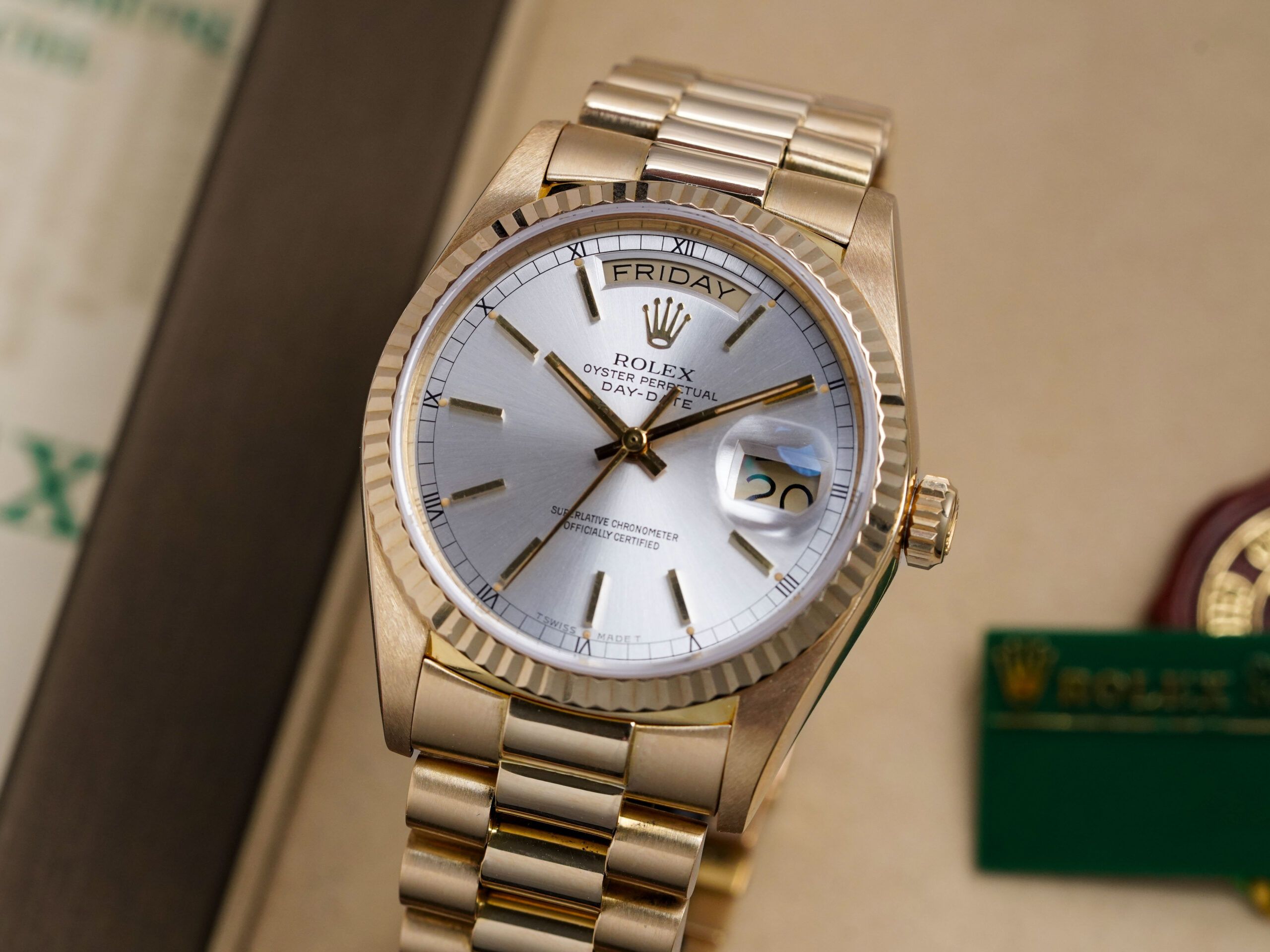
Aesthetically, the Ref. 18038 looked almost identical to the Ref. 1803, but three subtle changes were significant. First, the pie‑pan dial disappeared in favor of a flat dial, which optically expanded the dial area within the same 36mm case. Second, the acrylic crystal was replaced with a sapphire crystal, sharply improving scratch resistance and marking the Day‑Date’s transition to a more modern, low‑maintenance proposition. Third, the model’s codes and dial configurations became more tightly catalogued, as the final digit of the serial began to indicate metal and finish.
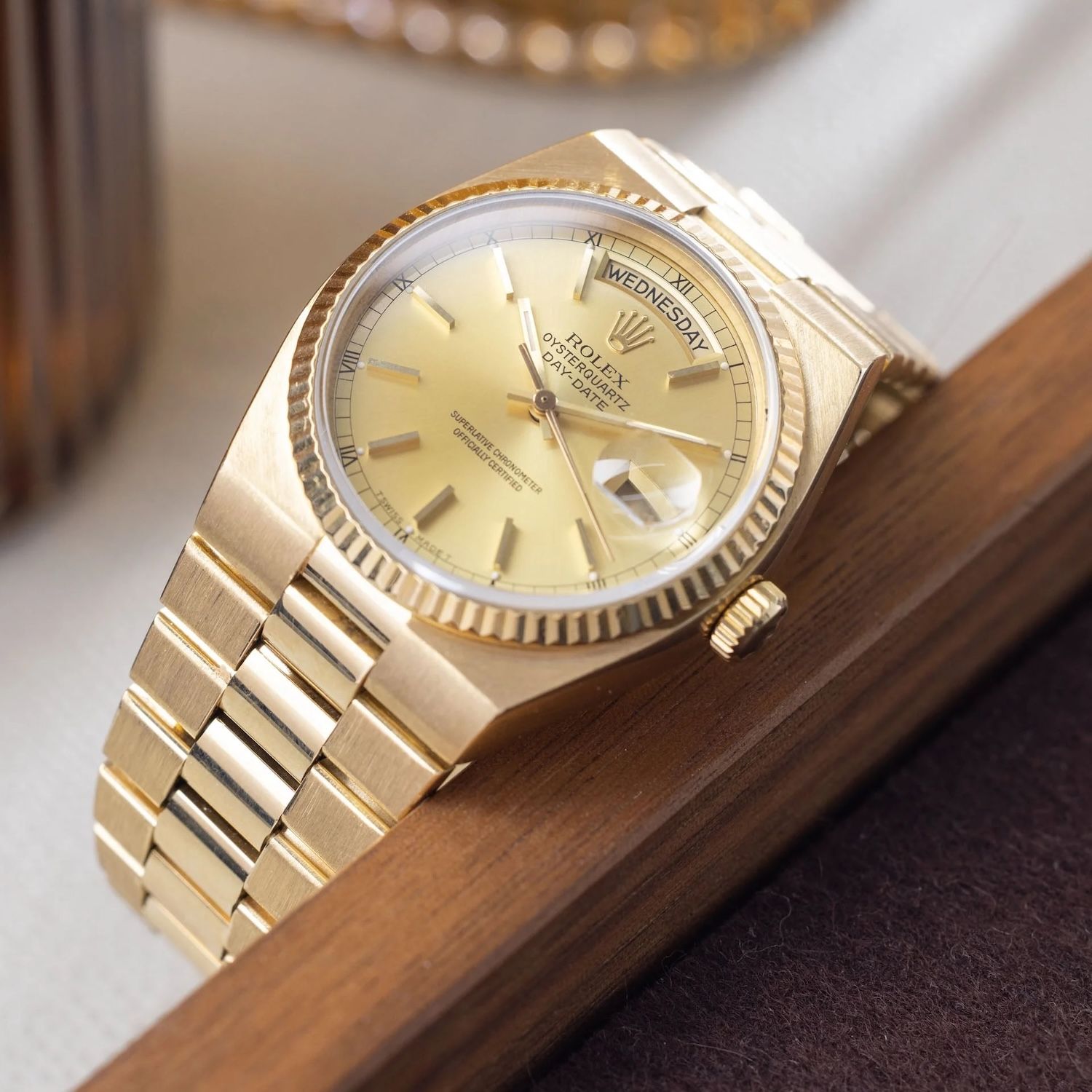
Alongside the mechanical Ref. 18038, Rolex introduced the Oysterquartz Day‑Date, notably Ref. 19018, powered by caliber 5055, a high‑accuracy quartz movement developed in‑house. Oysterquartz Day‑Dates featured a flatter, more integrated case and bracelet, along with “Superlative Chronometer Officially Certified” lettering, but the quartz line never supplanted the mechanical Day‑Date.
The Double Quickset And The Solid‑Link President
The Day‑Date’s second major leap came in 1988 with the introduction of caliber 3155 and the 18000‑series references such as Ref. 18238. This was the first Rolex movement to offer a true double quickset, allowing the wearer to adjust both the day and the date independently without spinning the hands. The escapement gained a double‑bridge construction, and the jewel count rose from 27 to 31, while the power reserve remained at 48 hours.
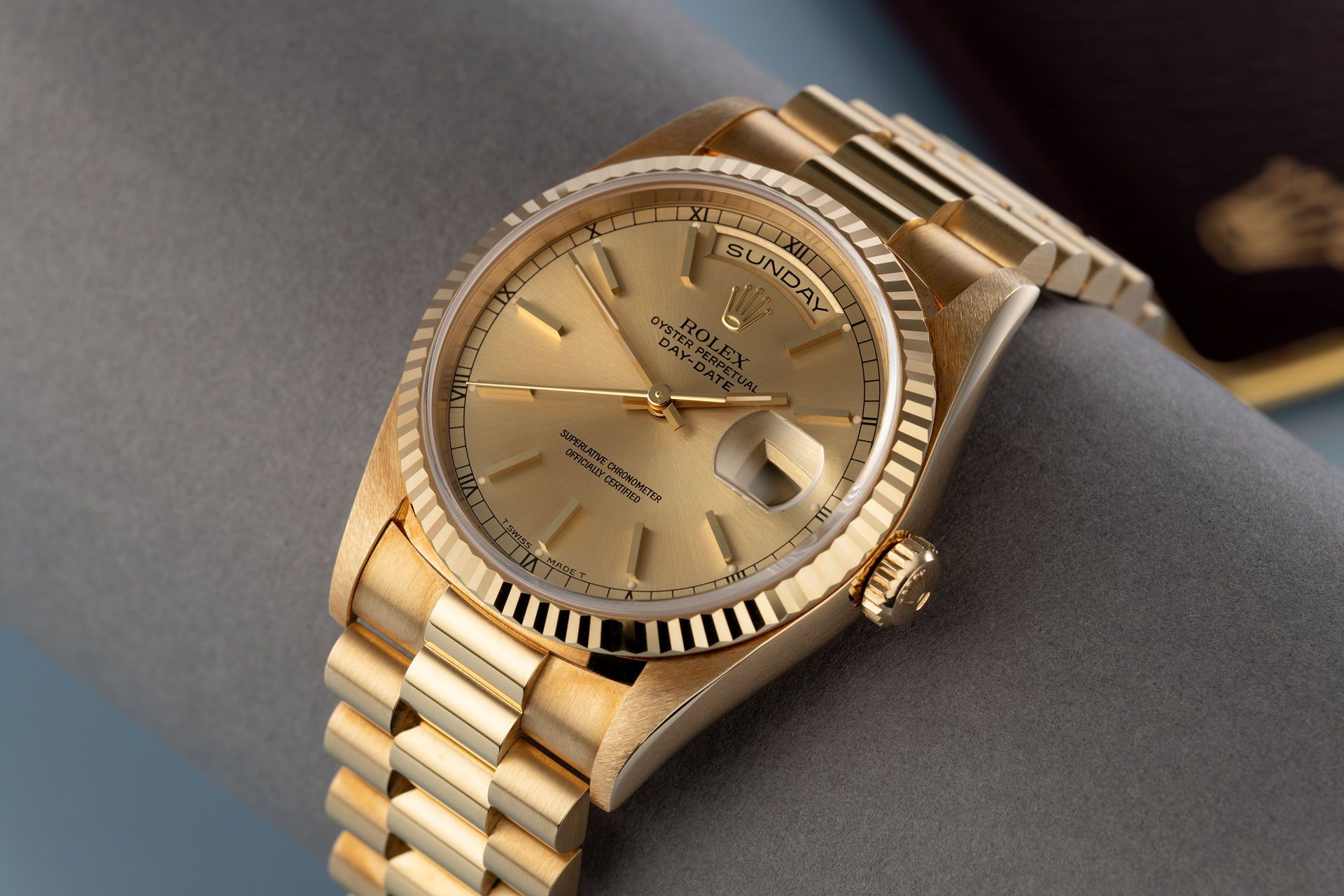
The Ref. 18238 and its siblings retained the 36mm footprint but subtly broadened the lugs, giving the watch a slightly more three‑dimensional presence on the wrist. The President bracelet meanwhile evolved from hollow links to solid construction, substantially increasing heft and precious‑metal content. Around the same time, Rolex began offering the Day‑Date on leather straps with special end‑links and a broader palette of gems, stones, and exotic dials, including the so‑called “Buckley” dials with large printed Roman numerals and the supremely collectible enamel “Stella” dials in vivid lacquer‑finished hues.
The 41mm Day‑Date II And The 40mm Sweet Spot
In 2008, to mark its 100th anniversary, Rolex introduced the Day‑Date II in 41mm, Ref. 218238, with a broader bezel and more pronounced lugs. Powered by caliber 3156, itself an evolution of 3155 and featuring a Parachrom hairspring and Paraflex shock‑protection system, the Day‑Date II was the largest Rolex ever to wear the President bracelet. It was also the first to deploy ceramic inserts between the bracelet links on platinum versions, a measure aimed at reducing the “stretch” that plagued older hollow‑link bracelets.
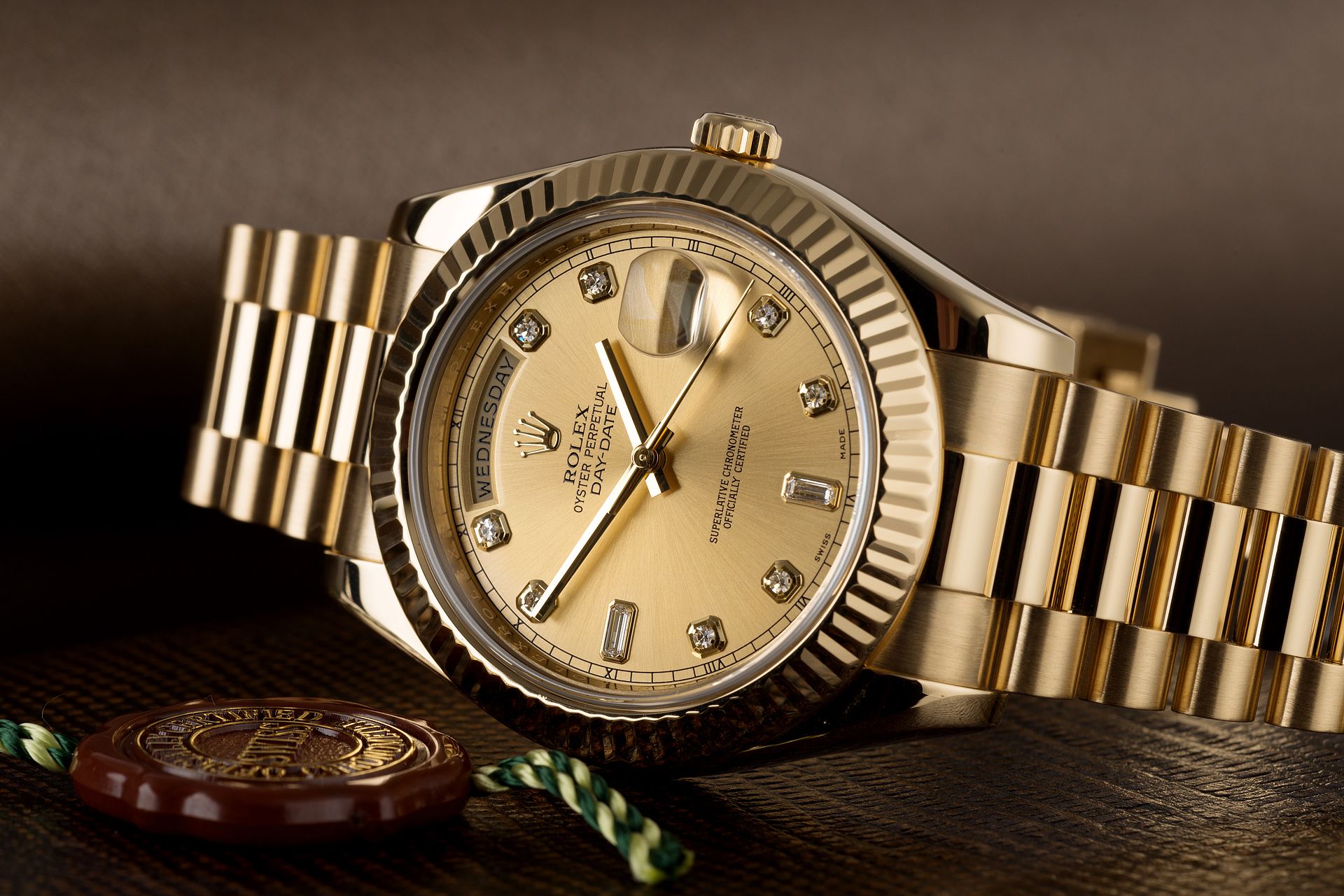
The Day‑Date II was short‑lived, however. Its added mass and more aggressive profile did not fully resonate with a clientele that valued the watch’s dress‑watch pedigree. In 2015, Rolex introduced the Day‑Date 40, Ref. 228238, with a 40mm case, slimmer bezel, and narrower lugs, closer in proportion to the 36mm Day‑Date. The solid‑link President bracelet, now with ceramic inserts across all metals, covered the transition from the old‑style bracelets almost entirely.
The Chronergy‑Era Day‑Date
The current generation of Day‑Date is defined by caliber 3255, introduced inside the 40mm models in 2015 and later extended to the 36mm Day‑Date launched in 2019. The 3255 features Rolex’s patented Chronergy escapement - an optimized lever escapement with a skeletonized escape wheel, reduced mass, and a revised geometry of teeth and pallet stones - alongside a Parachrom hairspring for improved anti‑magnetic performance. Power reserve was extended to 70 hours, and the movement retained the brand’s Superlative Chronometer standard of −2/+2 seconds per day.

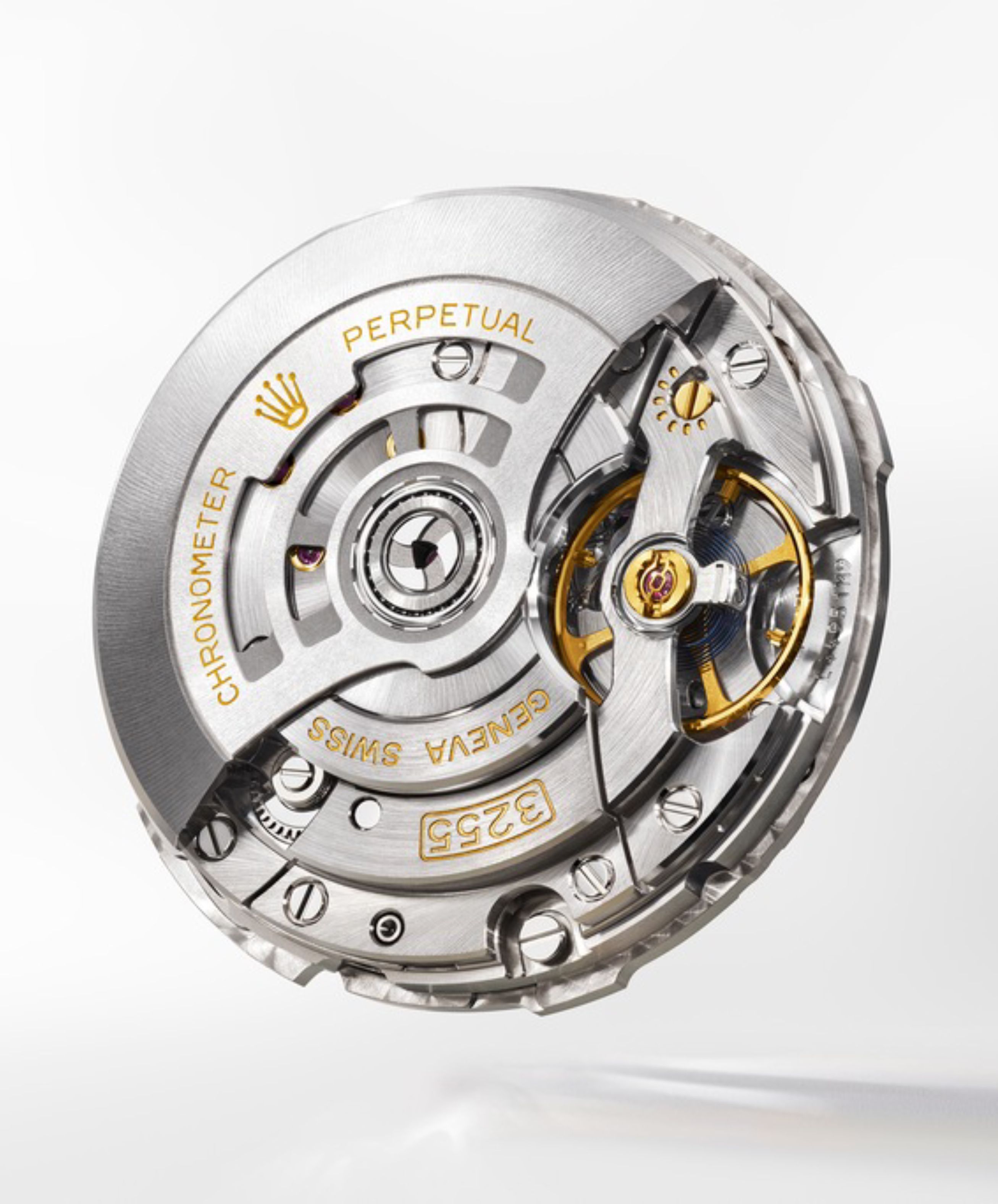
Across the catalog, the Day‑Date remains an exercise in dignified variety. 36mm and 40mm cases coexist, 18‑karat yellow, white, and Everose gold, plus platinum, offer a spectrum of hues, and the dial options span subdued sunburst finishes, gem‑set and stone dials, and laser‑etched patterns. The day‑wheel is available in 26 languages, a nod to the global élite for whom the Day‑Date has served as a sartorial punctuation mark for more than half a century.
Legacy: The Watch That Defines Success
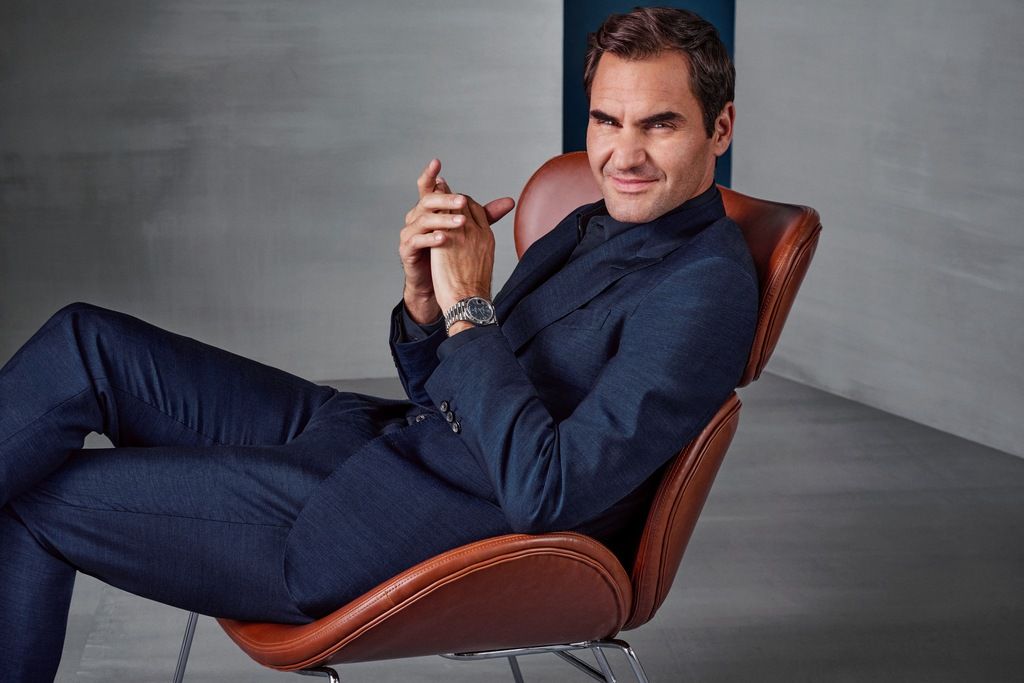
Over six decades, the Day‑Date has never wavered from its premise: a self‑wound, double calendar, 36mm (or 40mm) precious‑metal watch on a bracelet that hides its clasp in plain sight. It has been worn by presidents, sports superstars, and artists, and it has become shorthand for a particular kind of achievement - one that values discretion, heritage, and a quiet insistence on precision. Rolex may have more hyped steel sports watches, but if the brand has a single definitive statement of its philosophy, it is the Day‑Date.
For the collector, the Day‑Date offers a rare combination: historical continuity, technical evolution, and a near‑infinite matrix of dials, metals, and bracelets. From the Ref. 6611 to the gem‑set variations, the Day‑Date is as much a cultural artefact as it is a timekeeper - an elegant barometer of taste, status, and the enduring appeal of a watch that knew its identity from the very first day.
As the Day-Date turns 70 in 2026, the time’s definitely ripe for an update which could possibly arrive at Watches and Wonders 2026.


