Top 5 Microbrands To Discover In June 2026
 9 min read

A very interesting recent change in the watch industry has to be the increased persistence of microbrands and indies as the new “point of entry” into watch collecting. It’s increasingly the first place people go for their initial watch purchase. With the go-to brands that traditionally occupied the conventional first watch purchase space chasing premiumization and sort of lacking in the creative as well as technical content in their entry-level yield, the case for microbrands as now the makers of “interesting” products has become ever so strong.
The “niche” microbrands with quirky identities have stepped up when there’s a gradually declining creative impetus amongst the mainstream watch brands in the entry level segment and also the space being vacated by legacy manufacturers. What remains from the mainstream brands at the lower end feels like it exists just to check a box rather than to actually excite people.
That’s why there’s an ambition among new watch collectors to go straight to the independents or microbrands which are filling that space with worthwhile entry-level watches. A part of the reason for this has to be the pricing accessibility for what’s essentially a niche and exclusive product. Learn more about the rise of microbrands here.
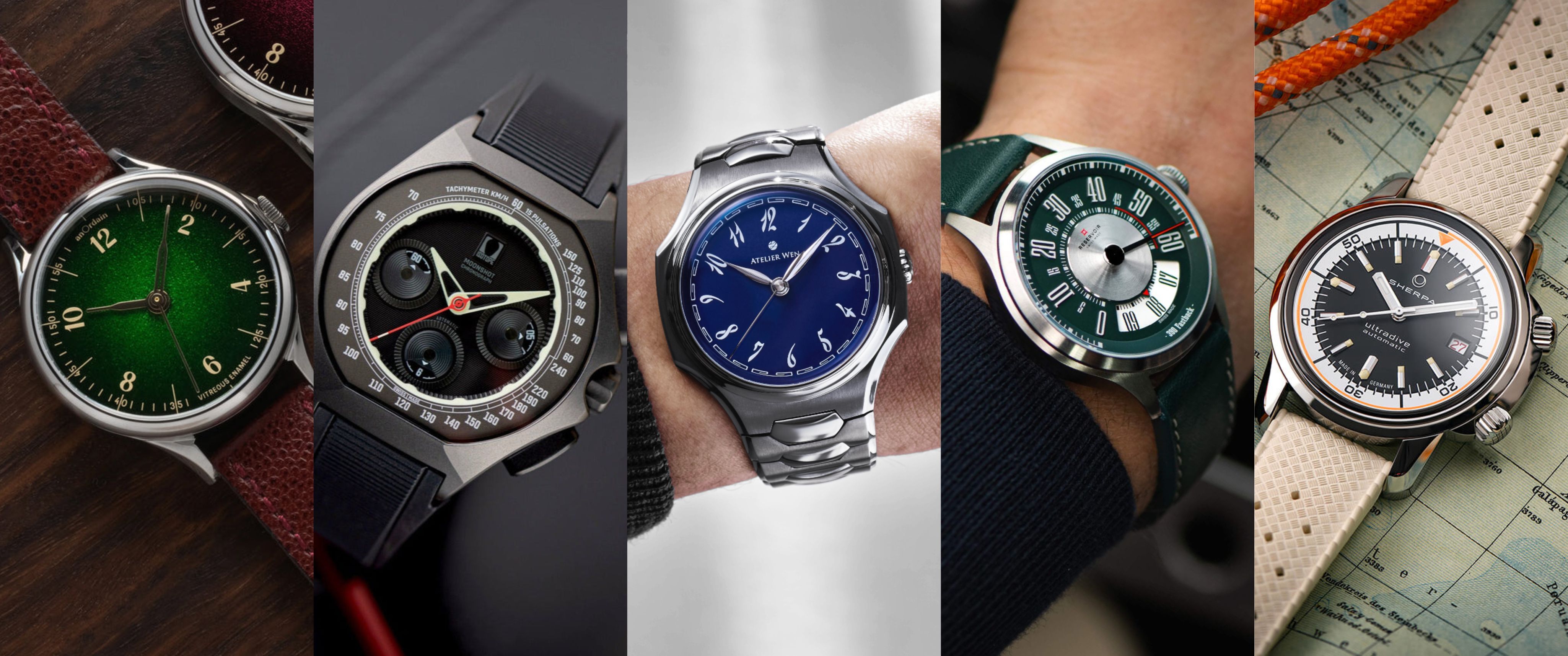
With that being said, let’s shift our focus on our monthly series covering microbrands with a spotlight on five.
Atelier Wen
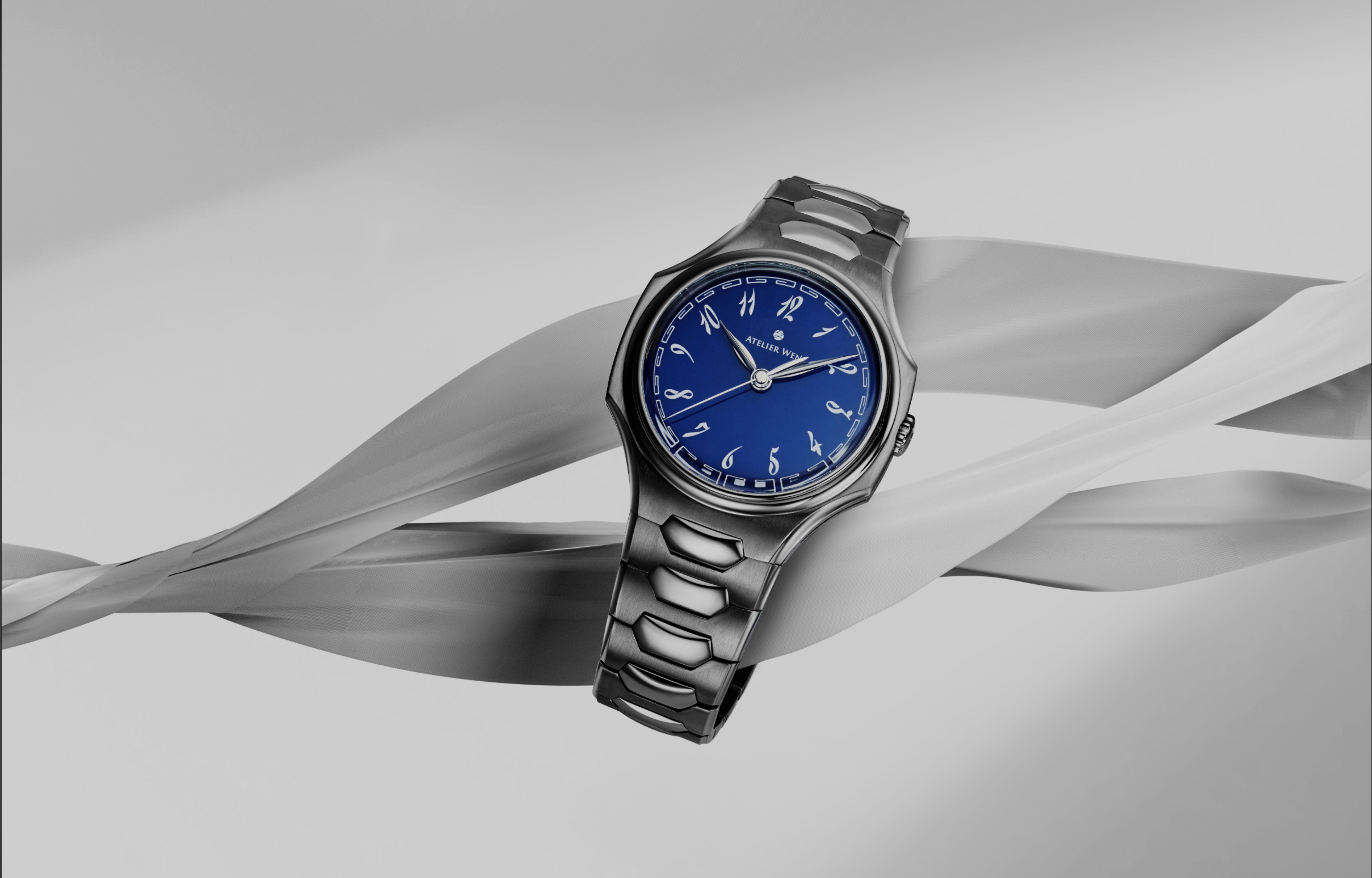
The rise, prominence and progression of Atelier Wen is a very valid indicator of what’s a major generational change in the watch industry, i.e. the rise of Chinese fine watchmaking. This Sino-French brand is the brainchild of two young Frenchmen based in China. Atelier Wen is one of the rare young brands that does not merely use China as a production basin, but as its central creative thesis - a “culture workshop” in the most literal sense of its name.
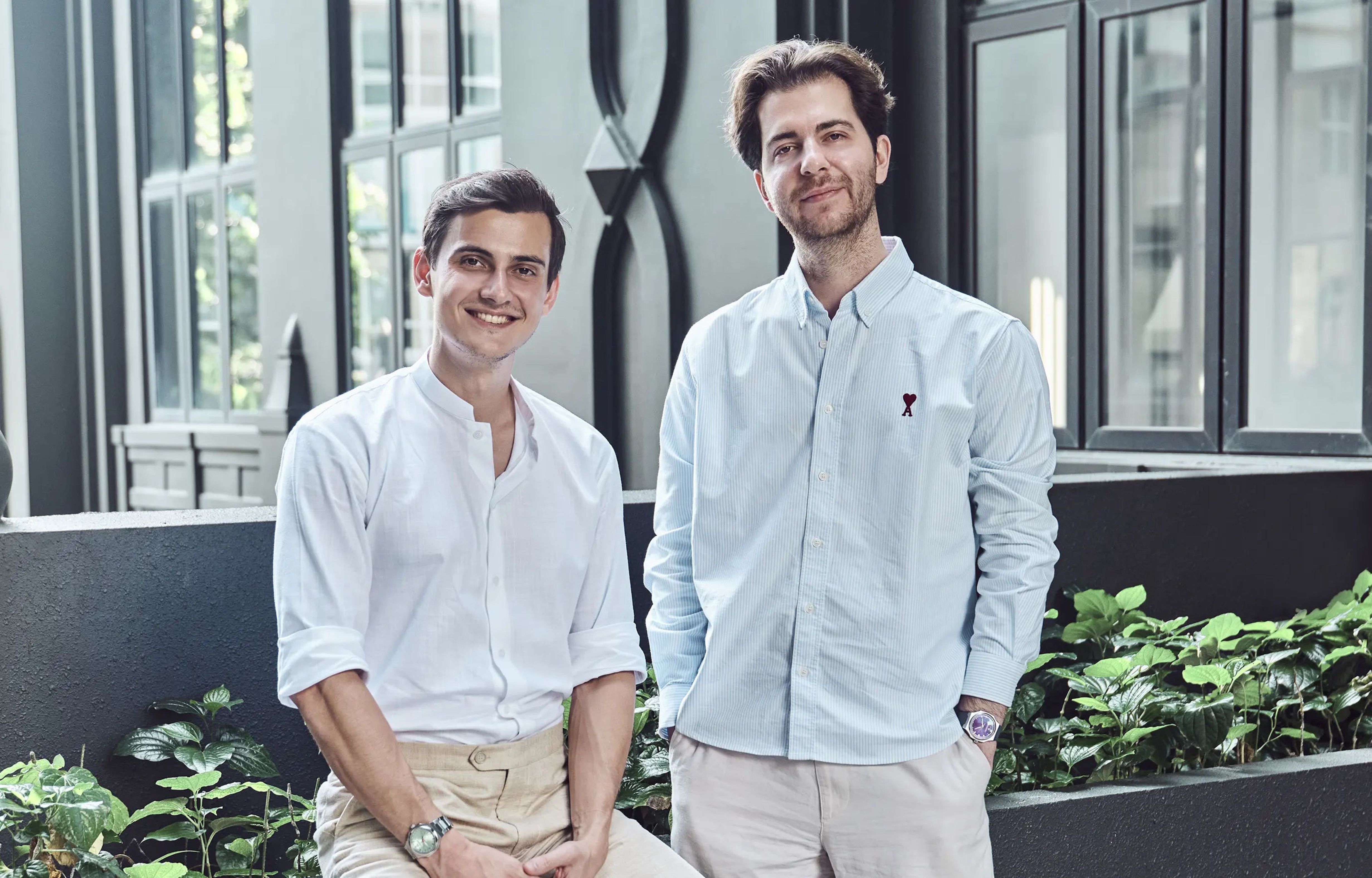
Founded in 2018 by French friends Robin Tallendier and Wilfried Buiron, the brand was born of frustration with the West’s dismissive view of Chinese watchmaking and a desire to present a “high quality timepiece with a Chinese soul.” Tallendier, a collector of Chinese mechanical watches since his teens and an advisor to the China Horologe Association, provides the horological vision, while Beijing‑based Buiron, a fluent Mandarin speaker educated at Peking and Tsinghua universities, drives execution and manufacturing.
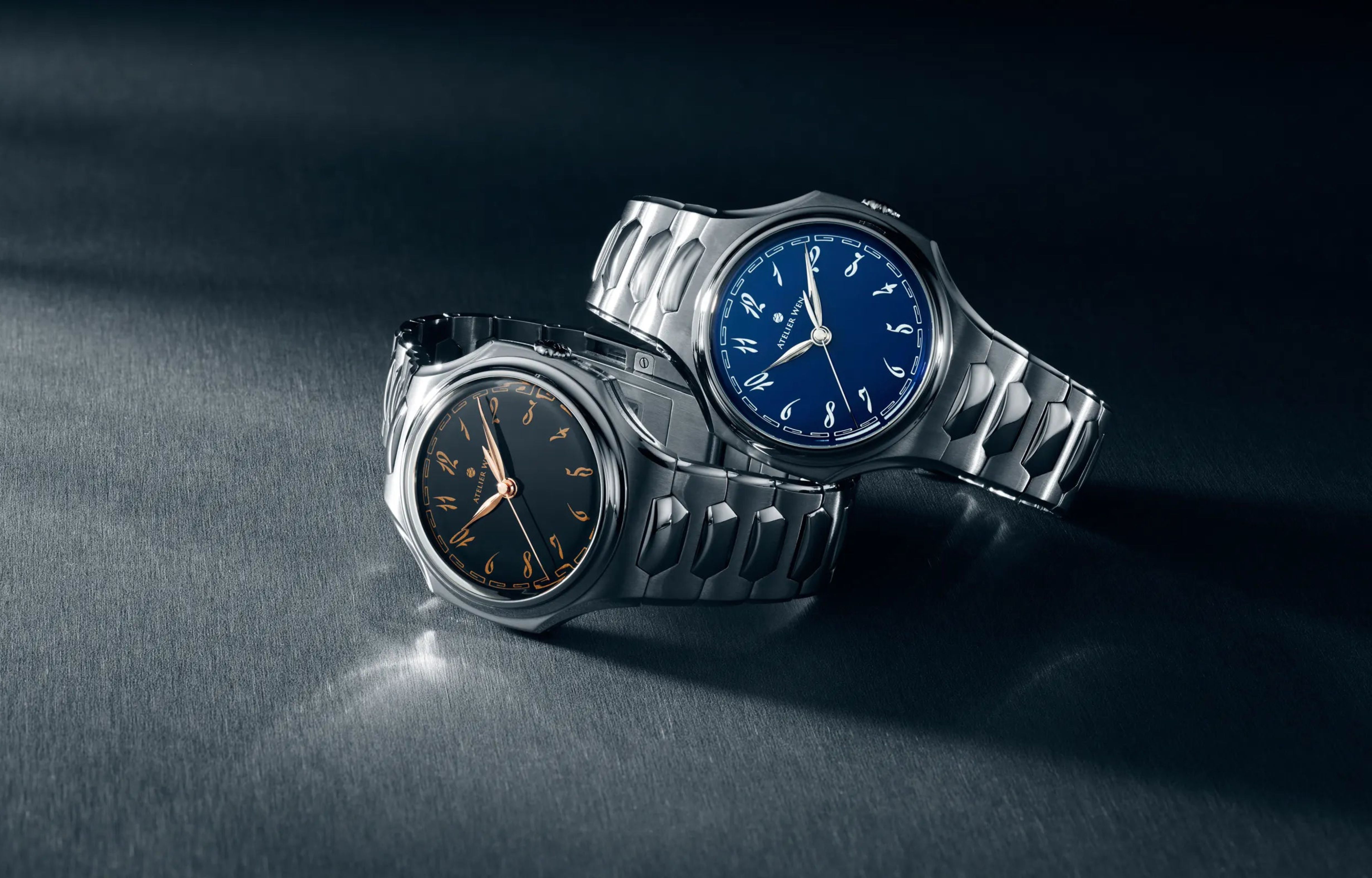
Their debut line, Porcelain Odyssey, launched on Kickstarter in October 2018 and reached its funding goal in under 30 minutes, introducing two 39 mm automatic models, Hao and Ji, distinguished by zirconium‑oxide porcelain dials fired at 1,400°C.
After that first series sold out and a reflective hiatus, Atelier Wen raised the stakes with Perception, opening pre‑orders on 18 April 2022 and selling out the initial batch within 16 hours, signaling the market’s readiness for a proudly Chinese expression of fine watchmaking. The current collection has since expanded around this philosophy, with Perception, Millésime, Inflection (99.9% pure tantalum case) and Ancestra forming a coherent family that systematically links advanced manufacturing, carefully chosen Chinese suppliers and deep cultural references. Read more about the latest Atelier Wen Perception release here.
What makes Atelier Wen so compelling is not simply that its watches are made in China, but that they insist on showing how good Chinese craftsmanship can be when it is asked to aim high - and then judged on its own, very modern aesthetic terms.
Isotope
Isotope is what happens when a lifelong sci‑fi dreamer decides that “microbrand” need not mean “derivative.” Founded in 2016 by José and Joana Miranda in Henfield, England, the independent marque has built a reputation for original design language, ethical production and a quietly obsessive approach to detail that belies its scale.
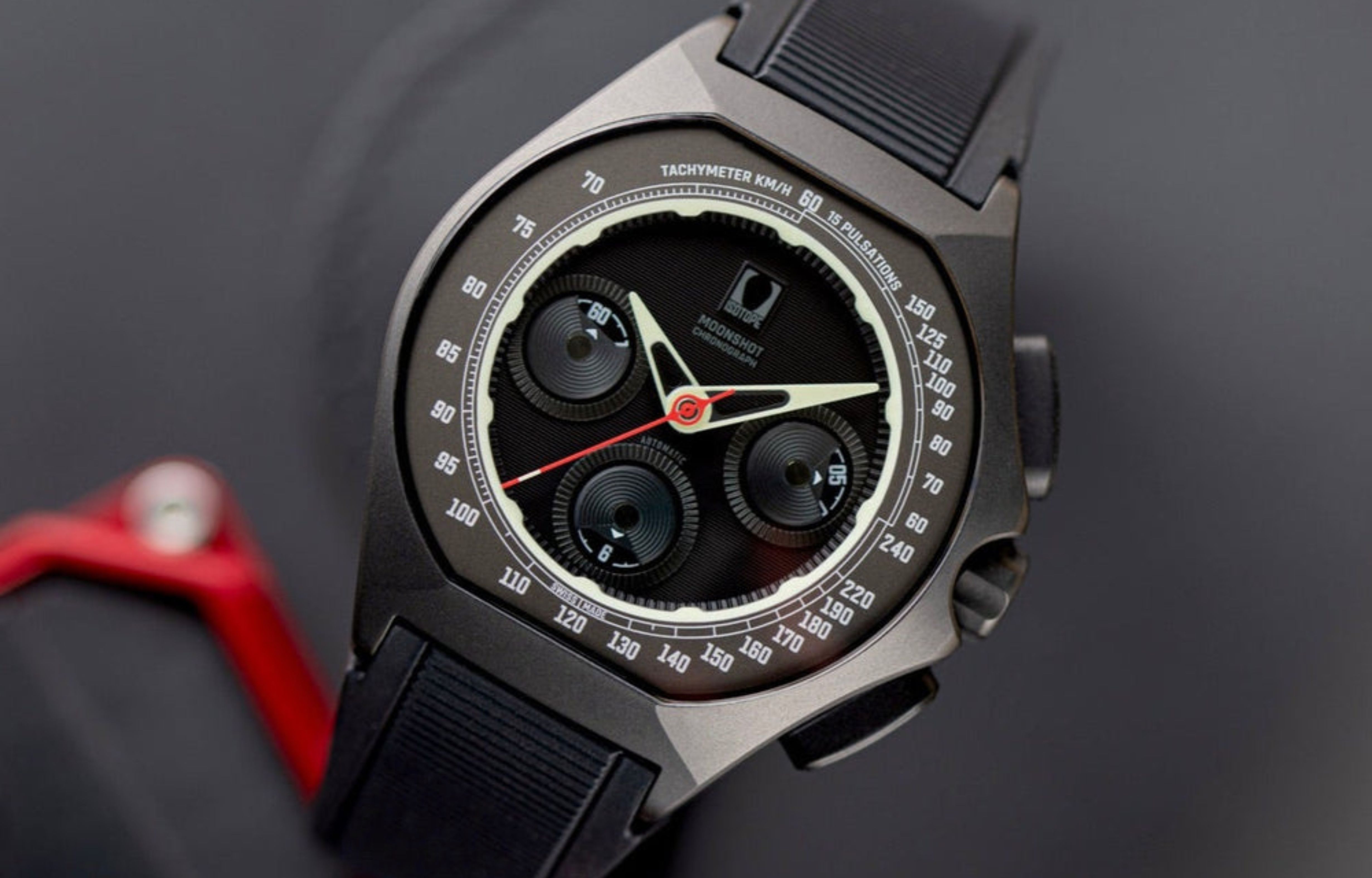
At the heart of Isotope’s identity is the “Egg of Columbus” philosophy: solutions that seem disarmingly simple once you see them, yet required someone to break the shell first. The brand’s now‑signature “Lacrima” droplet, inspired in part by the Max Bill kitchen clock of José’s childhood, anchors dials with a streamlined, natural form that is equal parts logo, motif and framing device for complications. Early on, Miranda channeled his frustration at the cost of Gerald Genta jump hours into his own answer: the Rider Jumping Hour, a 99‑piece Streamline Moderne‑inspired run whose six‑o’clock digital hour and teardrop dial instantly set the tone for what Isotope would become.
That design DNA evolved into the Goutte d’Eau compression‑style diver and, later, the Hydrium series, which took professional‑grade dive specs and rendered them in punchy, decidedly British colorways, from exit‑sign greens to graphic “Will Return” shop‑sign dials. On the travel side, the GMT 0º rethinks the complication with a central 24‑hour disc and a ring of 31 apertures, in the Terra Maris limited edition, a gradient brown “land” surrounds a light‑blue “sea” center, powered by a 4 Hz Swiss Landeron caliber in a 41.5 mm, 200 m steel case.

More recently, Isotope has pivoted deftly into métiers d’art. The Mercury collection, including the mirrored steel collaboration with Revolution, uses the brand’s architectural forms as a canvas for straw marquetry, vitreous enamel and cloisonné, while the Compax Moonshot chronograph replaces traditional sub‑dial hands with rotating three‑quarter discs that render elapsed time almost absurdly legible. Woven through it all is a distinctly pop‑cultural, art‑deco‑meets‑brutalist sensibility and an insistence on accessibility: original, story‑rich watchmaking that still feels within reach.
Reservoir
Reservoir is that rare contemporary marque whose design brief could have been drafted on the dashboard of a Spitfire or the instrument panel of a Le Mans racecar. Born in 2017, the brand set out to replace the polite three‑hand display with the visceral language of gauges: retrograde minutes sweeping an arc, a jumping‑hour aperture snapping forward every 60 minutes, and a power‑reserve that reads like a fuel indicator.
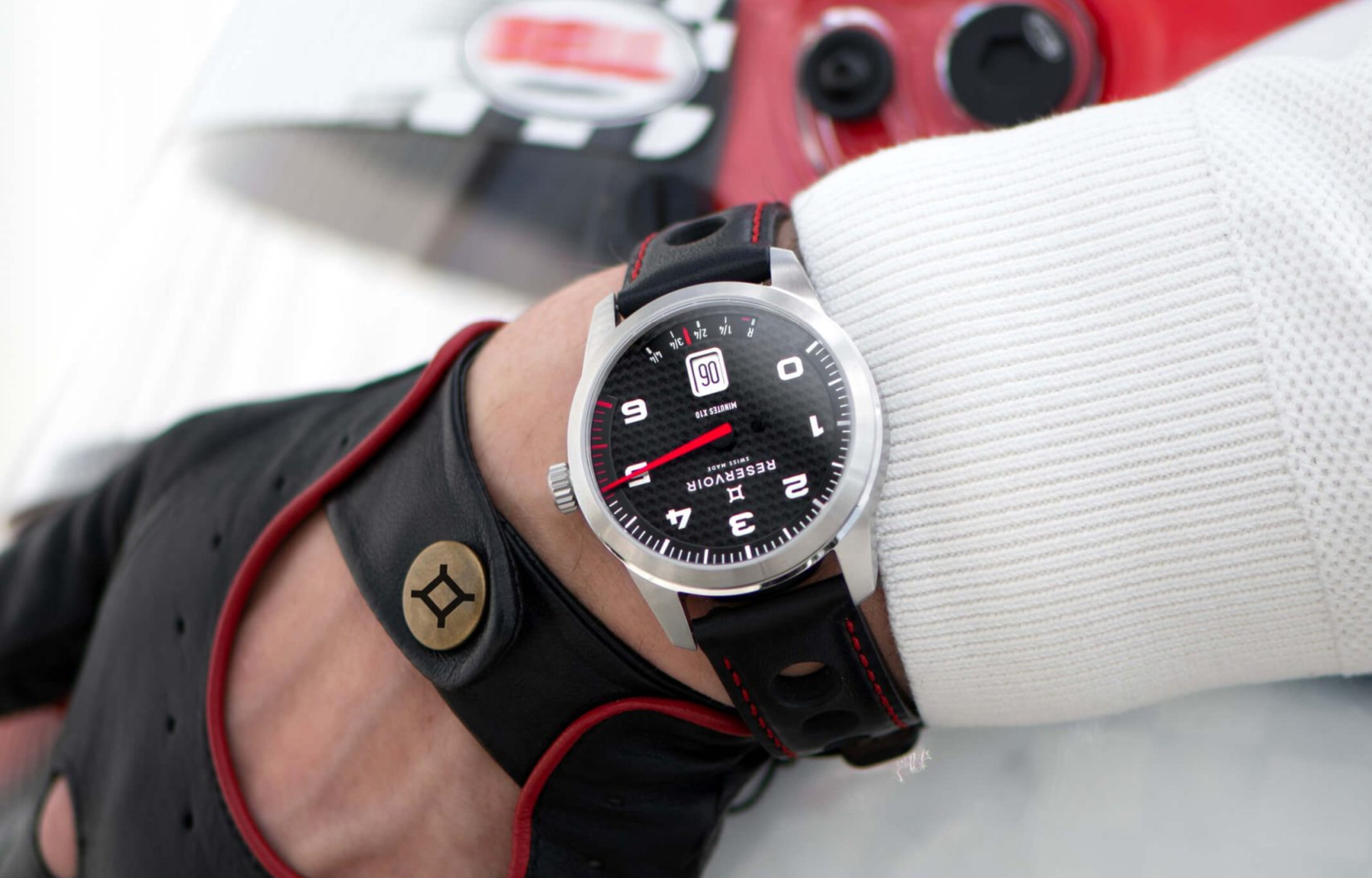
At the heart of Reservoir is founder François Moreau, a veteran of international banking. His obsession with mechanical instruments - speedometers, depth gauges, cockpit counters - became the brand’s north star, expressed in a Franco‑Swiss formula: French conceptual audacity, Swiss‑made execution in La Chaux‑de‑Fonds, and a proprietary module that turns an ETA or La Joux‑Perret base into a dashboard‑grade display.
Collections read like chapters in an analogue adventure. The GT Tour, Supercharged and Longbridge channel golden‑age motoring, from high‑performance racers to British icons, Battlefield and the D‑Day edition lean into WWII all‑terrain grit, Airfight and Black Sparrow climb into the cockpit, Tiefenmesser and Hydrosphere descend into the submarine and diver’s realm, Sonomaster transposes the concept into hi‑fi meters.
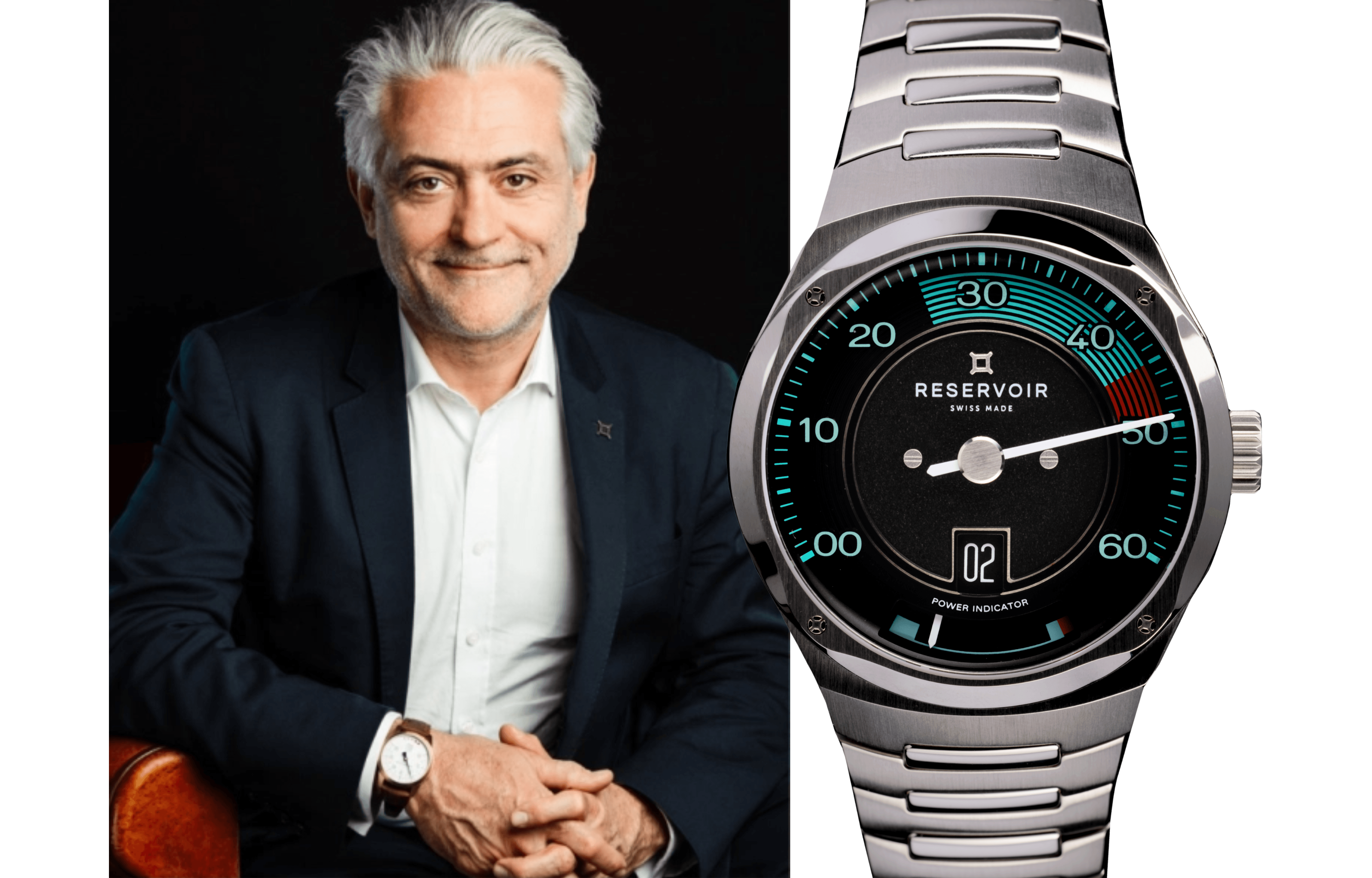
In 2026, Reservoir’s language evolved from dial‑driven to fully architectural with the Mark II series - integrated‑bracelet GT Tour, Kanister and Airfight Jet references in sharply faceted 41 mm steel, all powered by the RSV‑240 caliber, a La Joux‑Perret G100 base capped by a 113‑component Telos module delivering 56 hours of reserve. It is a cohesive, instantly legible design that treats the entire watch as an instrument, not just its face.
Technically, the concept has matured in lockstep. Early pieces relied on an ETA 2824 with a nearly 100‑part Telos module, managing the energetic violence of a retrograde minute hand and jumping hour with a security mechanism that tolerates anti‑clockwise crown action - no small feat in this complication set. The latest RSV‑240 retains the signature triad of retrograde minutes, jumping hours and power reserve, now with extended autonomy and an integrated display architecture that feels less like a clever module atop a generic case and more like a purpose‑built instrument from lug to clasp.
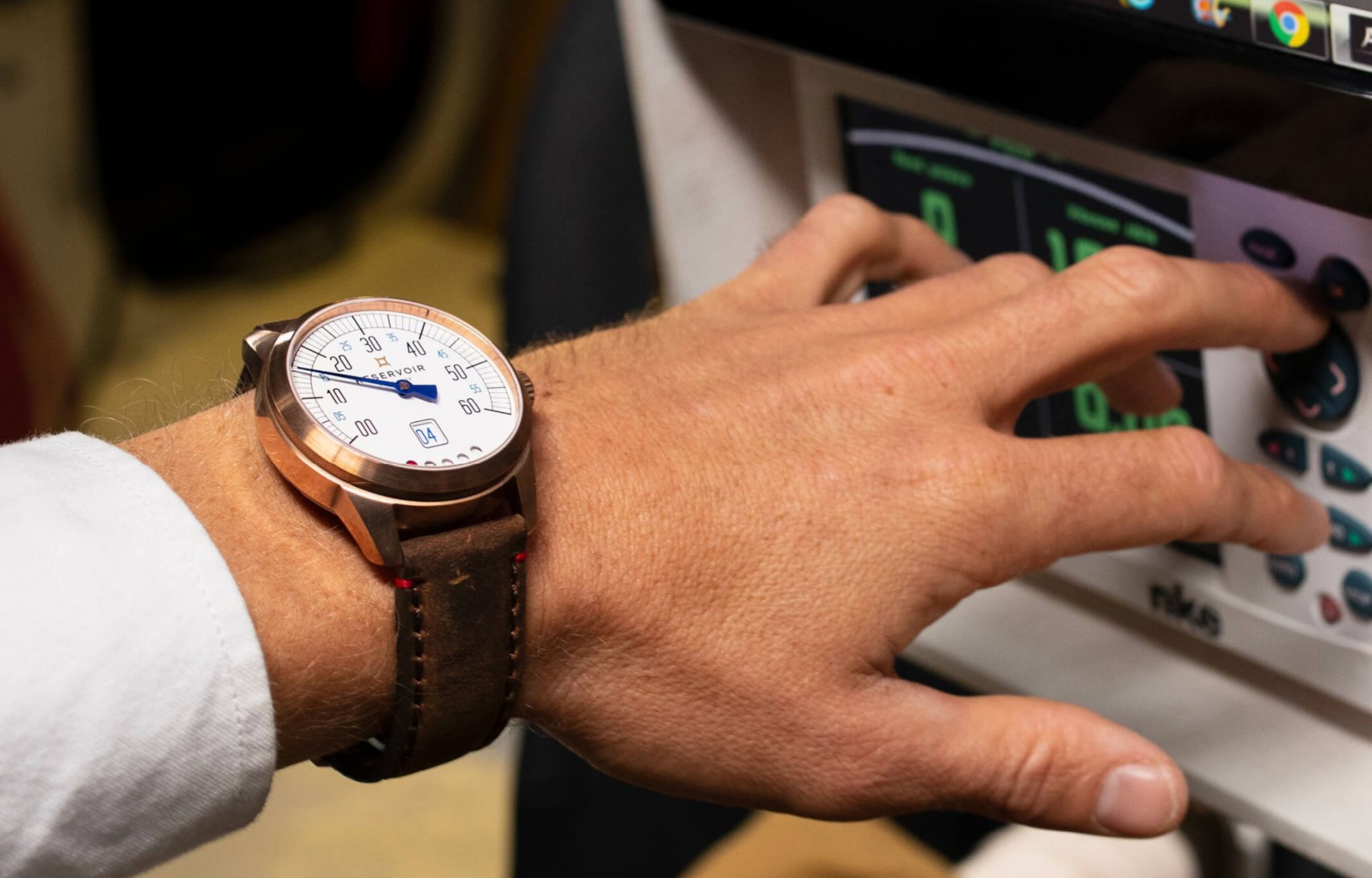
The brand has a catalogue that behaves like a family of precision tools rather than a diffuse collection of SKUs. Reservoir is placed squarely in the serious‑enthusiast segment, but the value proposition lies in character: a unified, patented display philosophy, strong industrial theming, and the rare feeling that your wristwatch is less a miniature clock than a live, mechanical tachometer for the passage of time.
anOrdain
In the Highlands of Scotland, designer Lewis Heath conceived a revolutionary vision: to resurrect the lost art of grand feu enamel dial watchmaking for the modern era. Founded in Glasgow in 2015, anOrdain emerged as Scotland’s first independent watchmaker specializing in hand-crafted vitreous enamel dials - a technique dating back centuries yet virtually extinct in contemporary watchmaking.
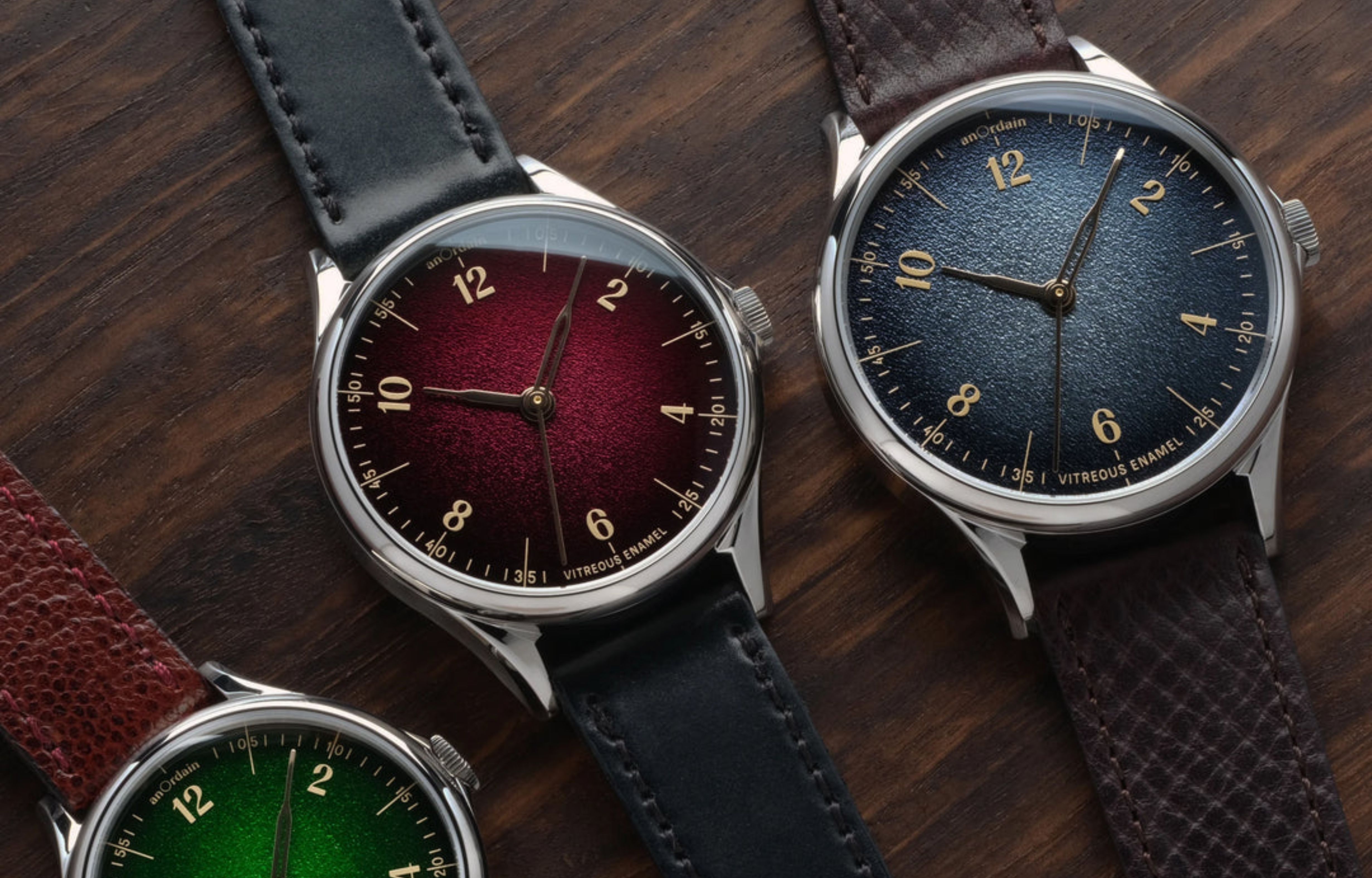
Heath, a goldsmith and designer with an obsessive passion for mechanical watches, taught himself the intricate art of enamel dial production, launching anOrdain’s inaugural collection in 2018 with the groundbreaking Model 1. This 35mm and 39.5mm field watch featured the world’s first fume enamel dial - an in-house gradient masterpiece - available at prices previously unattainable for such craftsmanship.
The brand’s portfolio now spans five collections with 71 models, including the elegant 36mm Model 2 (introduced 2019, updated MKII in 2022 with larger 39.5mm option), the sporty 38mm Model 3, and the recent Model 2 OT: Edition featuring a smoked fumé sector dial. By 2024, anOrdain relocated to a purpose-built Glasgow factory housing approximately 25 craftspeople, with waitlists extending to 2028.

Every anOrdain watch embodies Heath’s mantra: “the appeal of a good mechanical watch lies in its ability to operate independently of the modern world.” With double-domed sapphire crystals, 50-100m water resistance, and Sellita or in-house movements, anOrdain represents the perfect synthesis of Scottish heritage and contemporary design excellence - a true heritage crafts association member preserving vanishing techniques for tomorrow's collectors.
Sherpa
Sherpa Watches is the modern rebirth of a legendary 1950s Enicar dive series, masterfully revived by Swiss-born mechanical engineer Martin Klocke. Based in Meerbusch near Düsseldorf, Germany, Klocke founded Sherpa Watches GmbH in 2019, formally launching the brand at Watchtime Düsseldorf in Halloween 2021. The name “Sherpa,” synonymous with Himalayan mountaineering resilience, embodies reliability, willingness to perform, and unmatched durability.
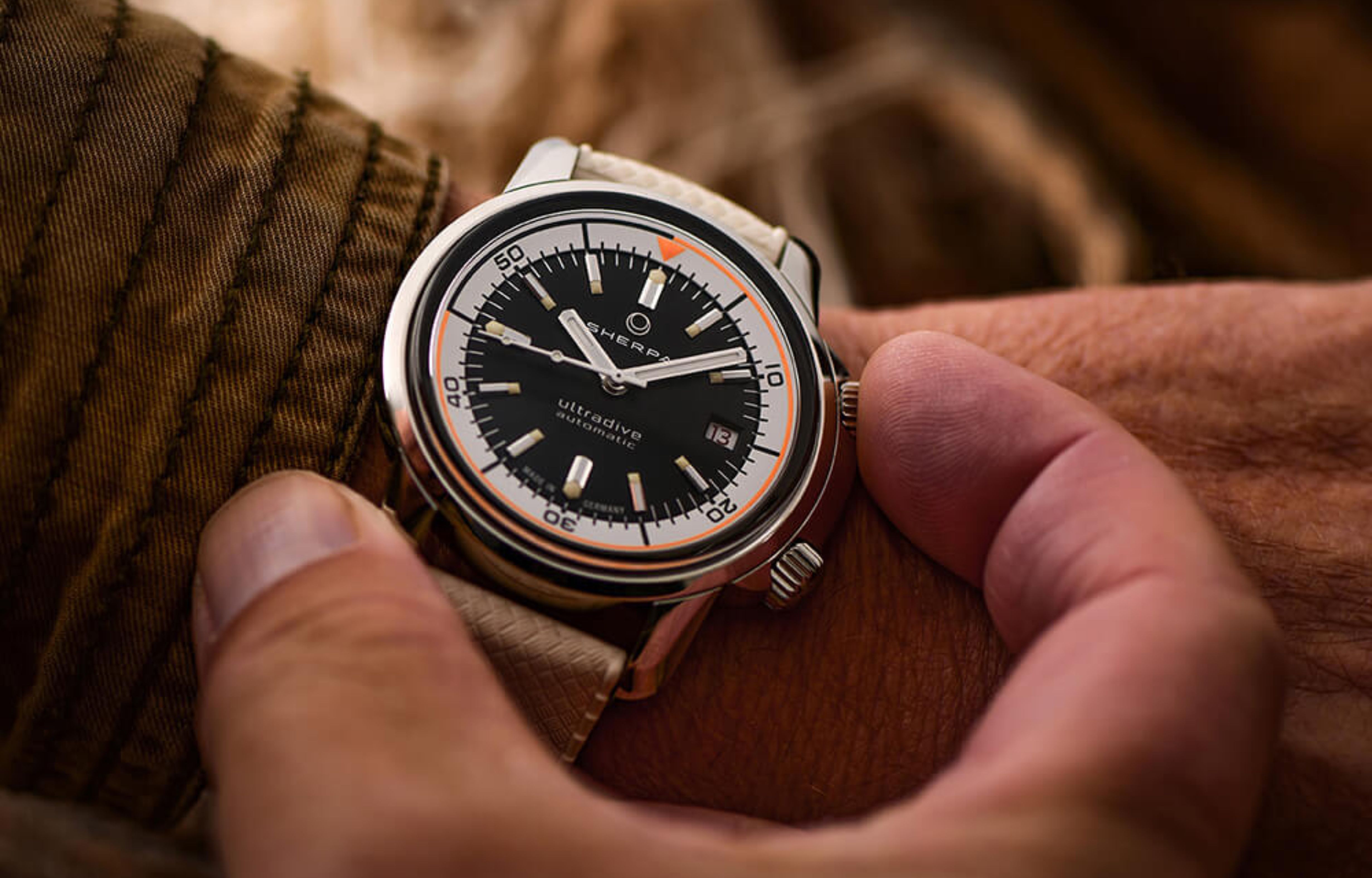
The brand’s inaugural collection features two meticulously engineered models: the OPS and the Ultradive, both available now. Rekindling a famous compressor design from the late 1960s, the Sherpa OPS (ref. 001/02/01) comes in black DLC-coated stainless steel, while the Ultradive (ref. 002/01/01) showcases polished stainless steel. Each watch boasts a 40mm diameter, 13.5mm thickness, 200m water resistance, and the custom Mantramatic MM01 automatic movement - based on Sellita’s SW200-1 with premium gilt finishing and a custom rotor.
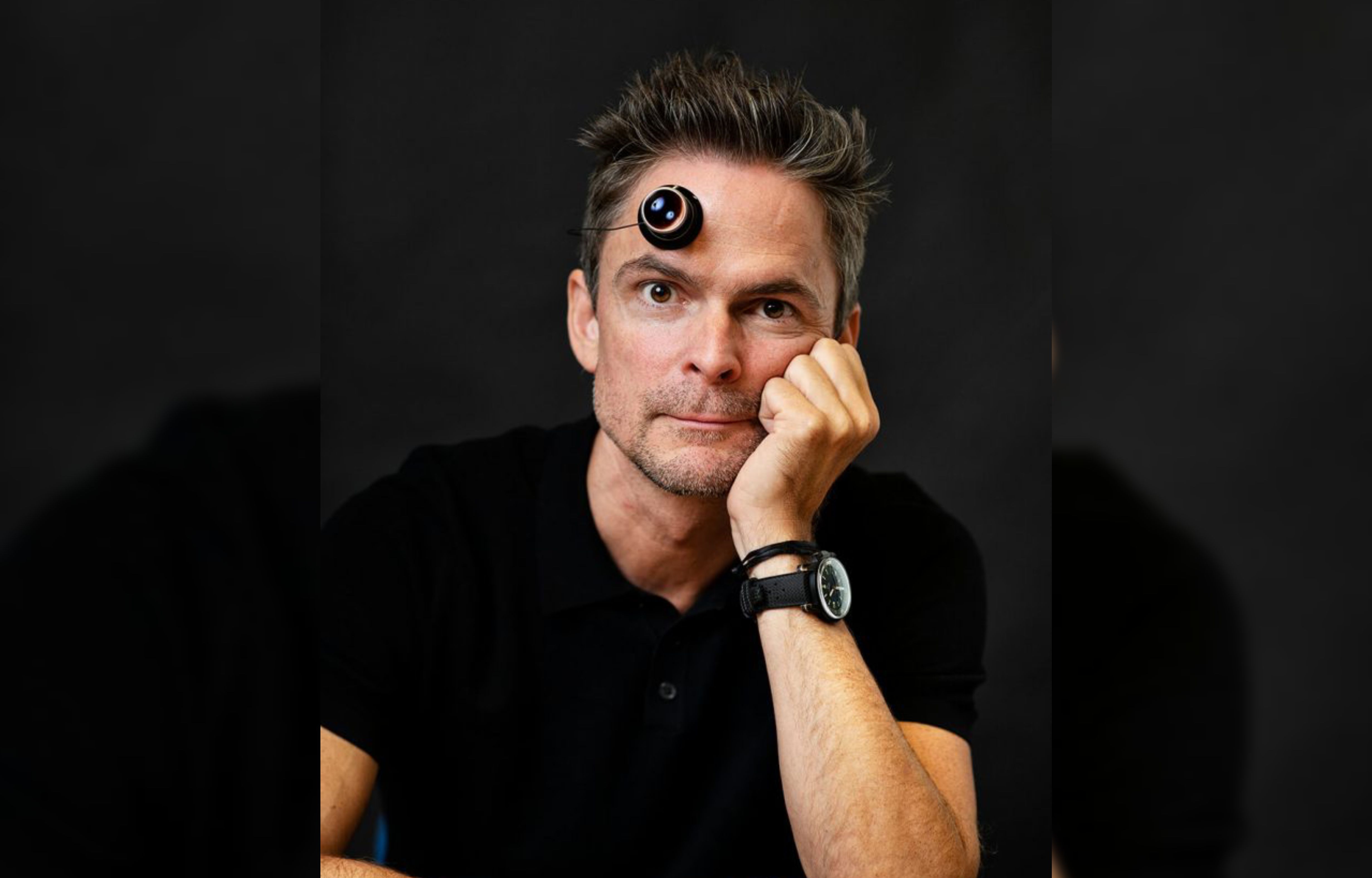
Klocke’s passion for historical dive watches drives Sherpa’s mission: honoring Enicar’s retro allure while integrating modern specifications like the EPSA-STOP bayonet compressor system and Monoflex crowns. With only 150 pieces produced per model, Sherpa delivers limited-edition excellence for collectors who demand both heritage authenticity and technical precision. This is not merely a watch brand - it’s a timeless expedition into horological mastery.
A Sea Change In Watchmaking
The monumental change discussed in the article’s intro is sustainable. The rise of microbrands isn’t a phenomenon that is going to inflate and ultimately pop. Microbrands are here to stay. We’ve already passed the watershed where a lot of emerging microbrands are now competent manufacturers, they now offer craft arts, some like anOrdain even have waiting lists, and they’re still doing it, in most cases, at accessible price points.
Explore our complete microbrands series here.


