Watches And Wonders 2026: L'Epée 1839 Brings A Gecko And A Race Car To Geneva
 6 min read

There is a version of horology that takes itself very seriously. Dress watches in precious metal with movements finished to standards that require magnification to appreciate. Complications that solve problems nobody practically has. Dials that communicate membership in a world most people will never enter. That version is real and it matters and it will always have its audience.
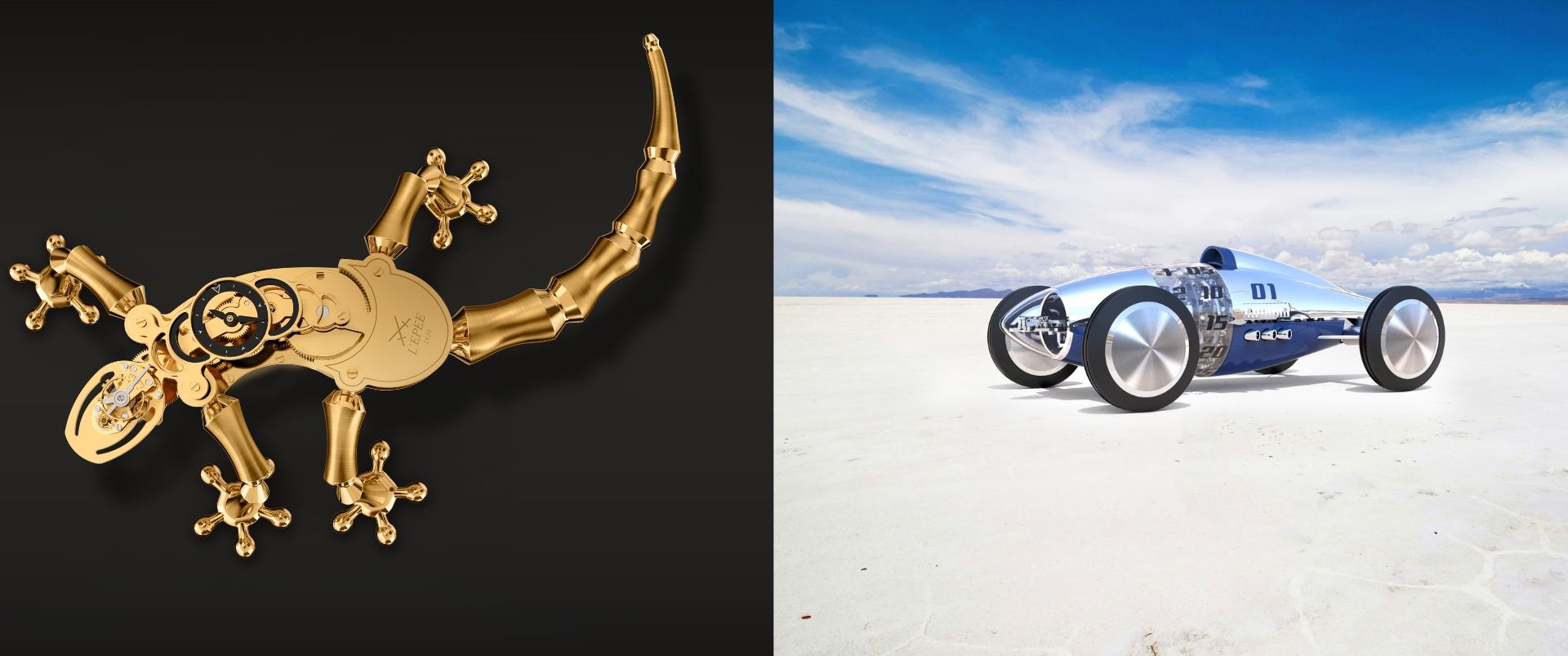
L'Epée 1839 operates in a different register entirely. The only manufacture in Switzerland specialising exclusively in high-end clocks, the Delémont-based firm has spent 186 years making objects that prioritise wonder over convention. The Concorde cabins ran on their wall clocks. The largest pendulum clock in the world is in the Guinness Book of Records because they built it. And at Watches and Wonders 2026, they have brought a gecko that tells time through its open skeleton movement and a belly tank racer that you wind by rolling it backwards across a table. Both are limited to 99 pieces. Both are completely serious objects made by people who take craft extremely seriously, even when the result is something that makes you smile before it makes you think.
The Gekko: A Living Sculpture That Clings to Your Wall
The premise starts with the animal itself. Geckos have survived on this planet for over 100 million years, outlasting climate shifts and continental drift through adaptability, patience, and a set of physical capabilities that still puzzle materials scientists and roboticists today. The millions of microscopic hairs on their toe pads create van der Waals forces strong enough to support their body weight on virtually any surface, including glass and polished metal, without any adhesive. They can detach and reattach their grip faster than any manufactured system yet devised. They regenerate their tails. They are, objectively, extraordinary organisms.
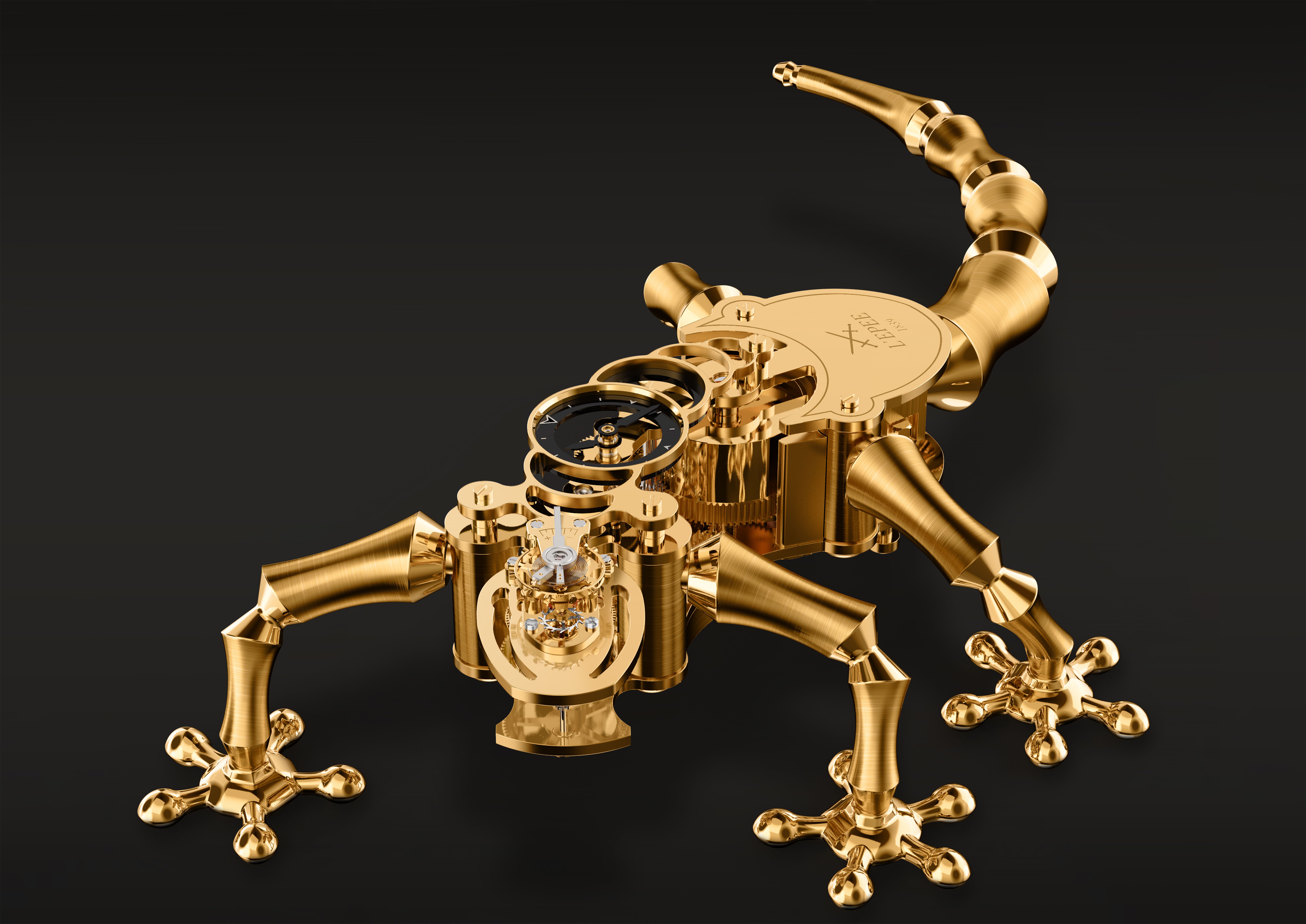
Designer Marie Siebenborn, who spent time at L'Epée 1839 during her studies before joining Longines, has taken that organism and translated it into a sculptural timepiece with a precision that goes beyond surface resemblance. The clock is 290mm long, 180mm wide and 66mm high, weighing 1.4 kilograms, in stainless steel and brass with lacquered elements. The body, legs and tail are finished by hand using a full vocabulary of in-house techniques including anglage, mirror polishing, satin finishing, circular satin finishing, sandblasting and polishing. These are not decorative choices made for visual effect. They are the same finishing decisions applied to the finest watch movements, applied here to the anatomy of a lizard, creating the play of light and shadow across the creature's form that makes it look, from certain angles, genuinely alive. The dial sits on the gecko's back, open and skeletonised, its structure evoking the texture of the animal's skin while revealing the movement beneath. Hours and minutes are displayed on two hands. The escapement sits at the head, positioned as Siebenborn puts it like the animal's mind, setting the rhythm of time with the same quiet vigilance the gecko itself embodies. The in-house movement runs for eight days on a full wind, beats at 18,000 vibrations per hour across 220 components with Incabloc shock protection.
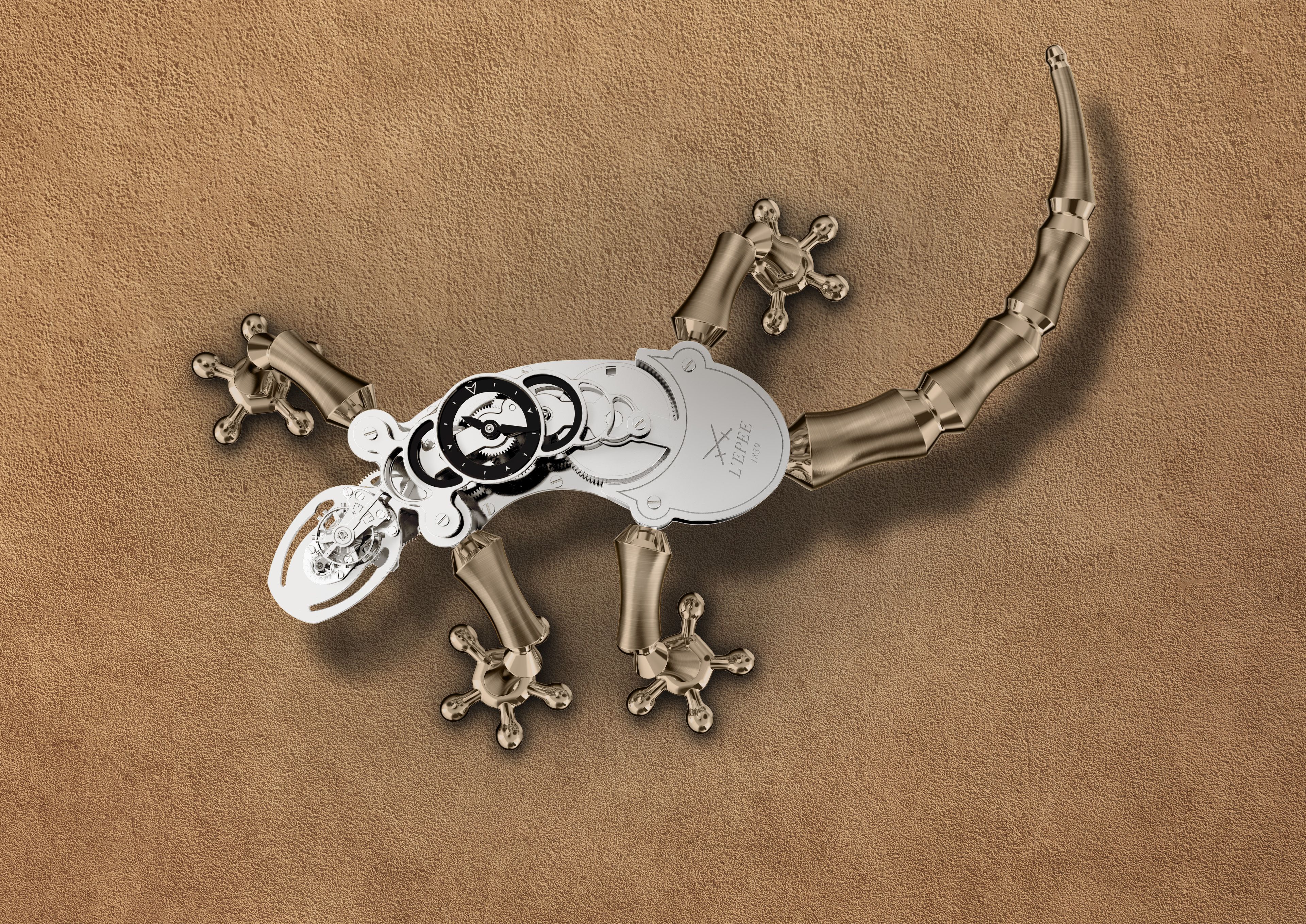
The winding mechanism is the detail that makes the whole thing cohere as an idea rather than just an object. You wind the clock by shifting the tail from side to side. In nature, the gecko's tail stores energy and detaches in moments of danger before regenerating. Here, the tail stores the energy that powers the movement. The act of winding is not a maintenance task. It is a ritual, a daily connection between owner and object that gives the piece a relationship most clocks simply do not offer.
In a further extension of the gecko's defining characteristic, the piece can be mounted on a wall in eleven different orientations, the creature climbing, stretching, or resting at any angle. The dial features a rotating ring adjustable with a dedicated tool, repositioning the hour markers to maintain legibility regardless of the gecko's orientation. The object adapts to its environment, exactly as the animal does. Available in three finishes: Full Gold-Plated, Black and Silver, and Champagne. Limited edition of 99 pieces each.
Belly Tank Racer: The Hot Rod That Winds Like a Toy Car
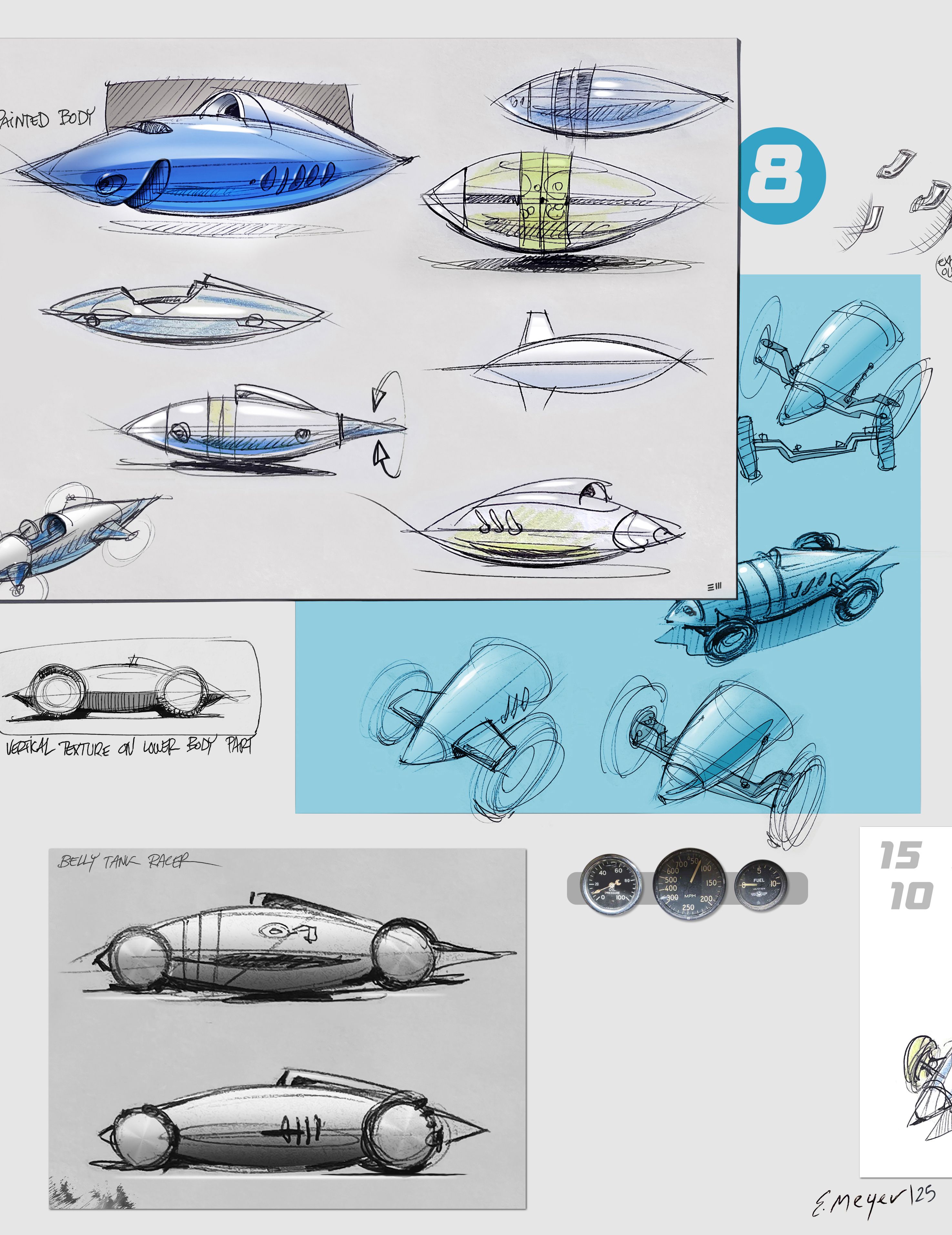
The history behind this piece is worth knowing because L'Epée 1839 has built the object around it rather than simply borrowing an aesthetic. In the years immediately following the Second World War, returning pilots in Southern California found themselves with access to vast quantities of military surplus, including the teardrop-shaped aluminium drop tanks that fighter jets had carried beneath their fuselages to extend range. These tanks were aerodynamically perfect by necessity, designed to minimise drag at speed. The pilots and their companions, gathering on the dry lake beds of El Mirage and later the salt flats of Bonneville, saw not surplus metal but ready-made race car bodies. They split the tanks open, reinforced the shells, squeezed inside lying almost flat, and drove them in straight lines as fast as they could go. Some hit 150 miles per hour. Some hit 200. These were backyard-built machines constructed from determination and ingenuity, and they were beautiful.
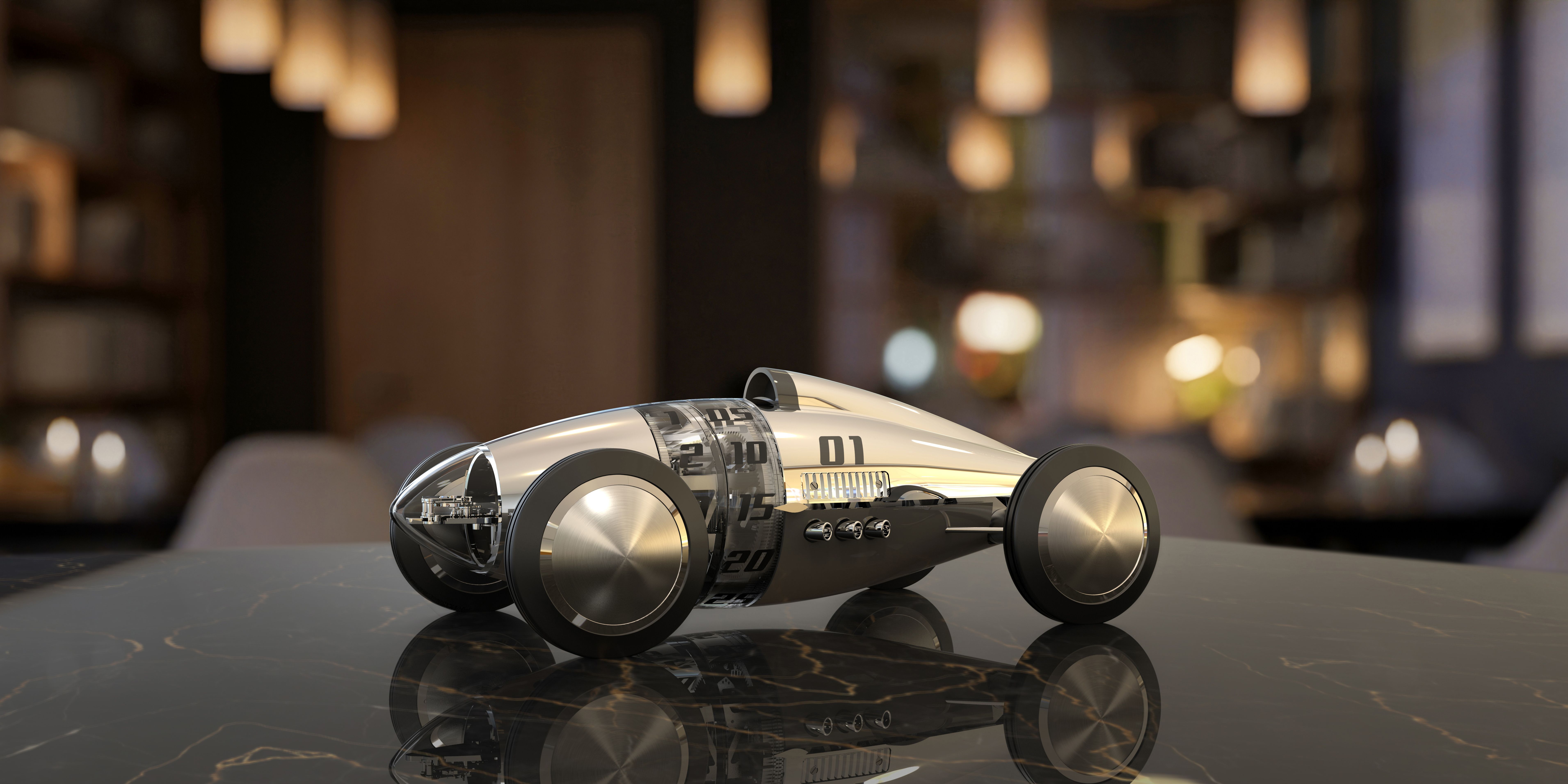
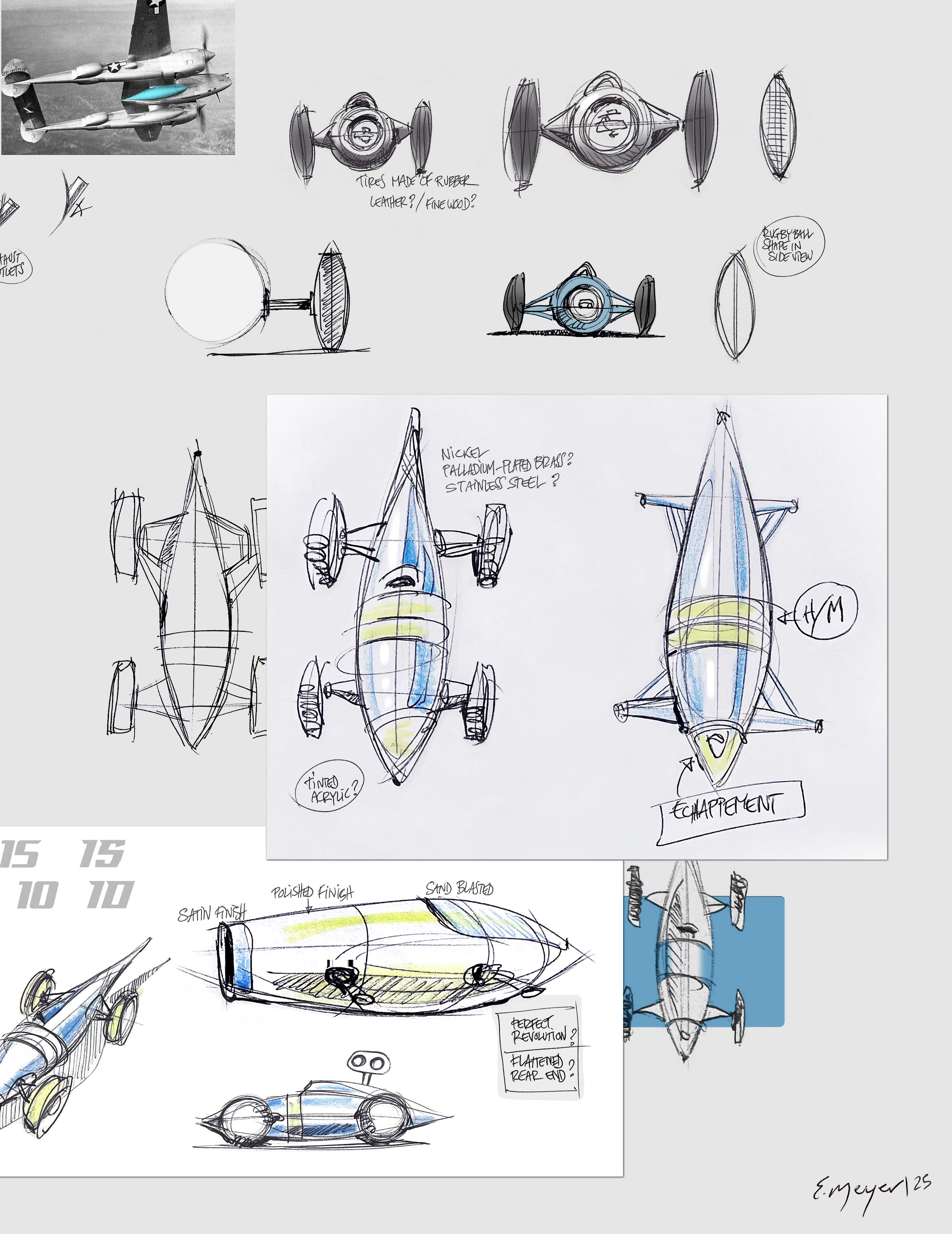
Designer Eric Meyer, whose studio has worked with Rolex, Swatch Group, MB&F and Nespresso among others, has taken that specific object and that specific history and built a clock from it. The result is 420mm long, 212mm wide and 123mm tall, weighing 5.4 kilograms. The upper and lower body are aluminium, the rims polished steel, the tyres soft rubber that gives the piece a physical authenticity when you handle it. The bodywork is lacquered in five colours: Blue, Green, Metallic Grey, Red, and Black. Each limited to 99 pieces.
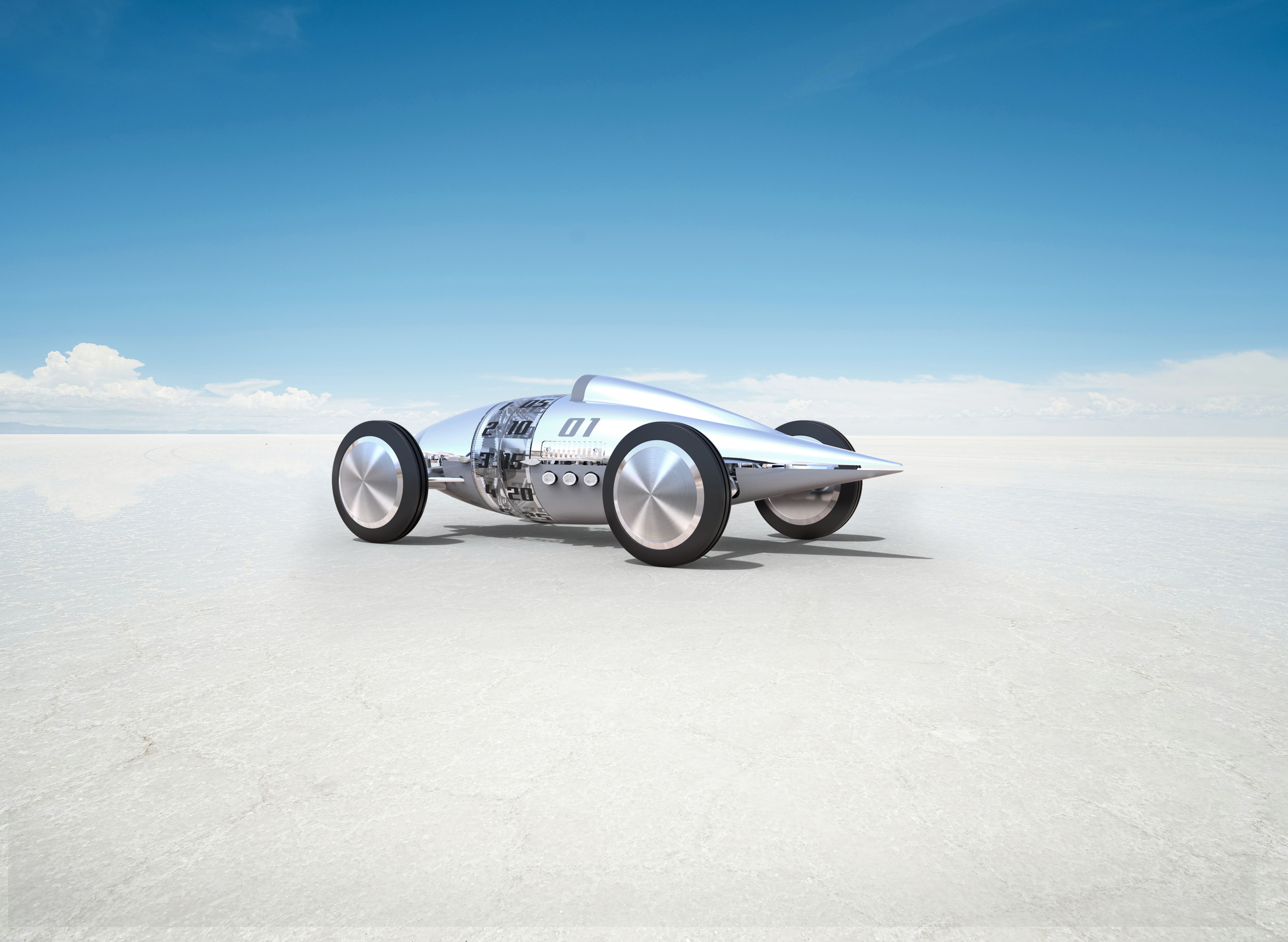
The movement sits inside the body with the escapement at the nose of the vehicle, positioned where airflow would first meet the machine, beating at the front of the object like a pulse. A sculpted V6 engine sits beside the driver's position. Time is displayed on two transparent rotating discs through which the movement is visible, the hours and minutes gliding across the visible mechanism beneath in a way that makes checking the time feel like looking through a cockpit window at something in motion. The winding mechanism is as considered as the Gekko's tail. You wind the Belly Tank Racer by pulling it backwards across a surface, the rear wheels turning to wind the movement exactly as a pullback toy car operates. Eight days of power reserve. 18,000 vibrations per hour. Incabloc shock protection. The movement is developed and manufactured in-house. Setting the time is equally intuitive: rotate the transparent minute disc upward with your fingers until the correct time appears between the two opposing markers. No tools, no crown, no instructions beyond the object's own logic.
Both pieces are limited to 99 editions per version, both run for eight days, both carry in-house movements finished to the standards L'Epée has maintained for 186 years, and both make you interact with them in ways that most timepieces, wrist or otherwise, never ask of their owners.
That last point is the important one. The watch industry at its most serious can become self-referential to the point of inaccessibility, where the knowledge required to appreciate a piece is itself a barrier to experiencing it. L'Epée 1839 makes objects that welcome you in immediately, through the winding ritual, through the physical interaction, through the delight of the premise, and then reward you further the more you look. The gecko winding mechanism is playful on first contact and technically considered on reflection. The belly tank racing history is accessible to anyone who has ever been interested in cars or ingenuity, and the movement engineering inside the aluminium body is as serious as anything behind glass in a watch case. Geneva has seen some extraordinary objects this week. These two are among the most purely enjoyable.


