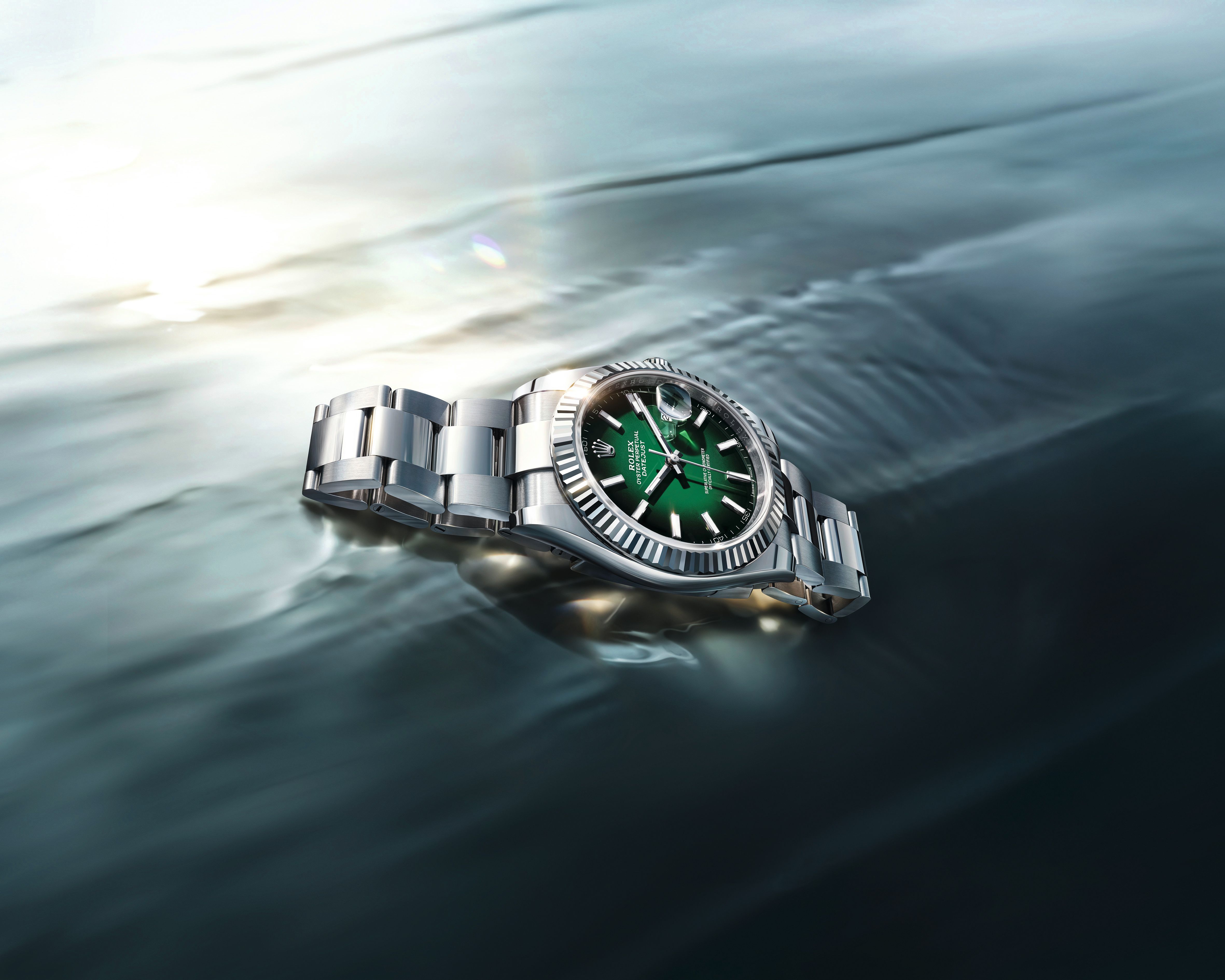
Watches And Wonders 2026: The Datejust 41 Gets a Green Ombré Dial, and Suddenly Everyone Is Looking Again
 6 min read

Here is a truth about the Datejust that the watch community has always known but rarely says plainly: it is one of the most important watches ever made, and it is also one of the easiest to overlook.
Launched in 1945, it was the first self-winding waterproof chronometer to display the date in a window on the dial. That sentence contains three separate firsts. In the years since, it has been worn by heads of state, jazz musicians, architects, writers, and approximately everyone's father at some point in the 1980s. It is so thoroughly woven into the fabric of what a watch is supposed to look like that it has become almost invisible through familiarity. The Datejust is the watch that taught most people what a watch was. And because of that, it takes real effort to see it fresh. This green lacquer ombré dial makes that effort unnecessary. You just look at it, and the Datejust becomes interesting again.
The Dial, Which Is the Whole Story
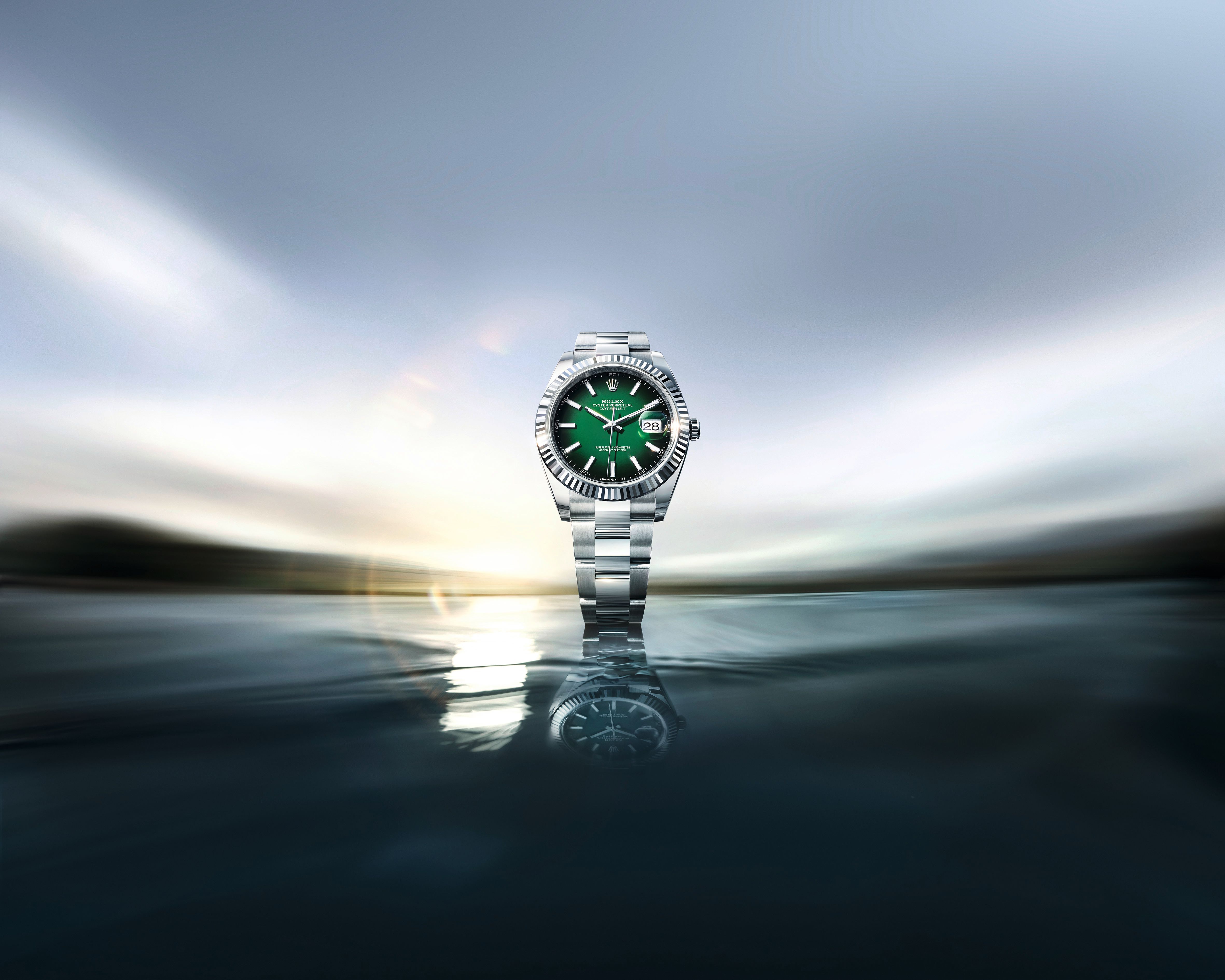
Rolex reintroduced ombré dials to its catalogue in 2019 and the response was immediate and decisive. The gradients caught people off guard in the best possible way, a brand not typically associated with expressive dial design suddenly producing surfaces that felt painterly and considered. Since then, ombré has become a recurring language in the OP and Datejust ranges, each iteration refining what the technique can do.
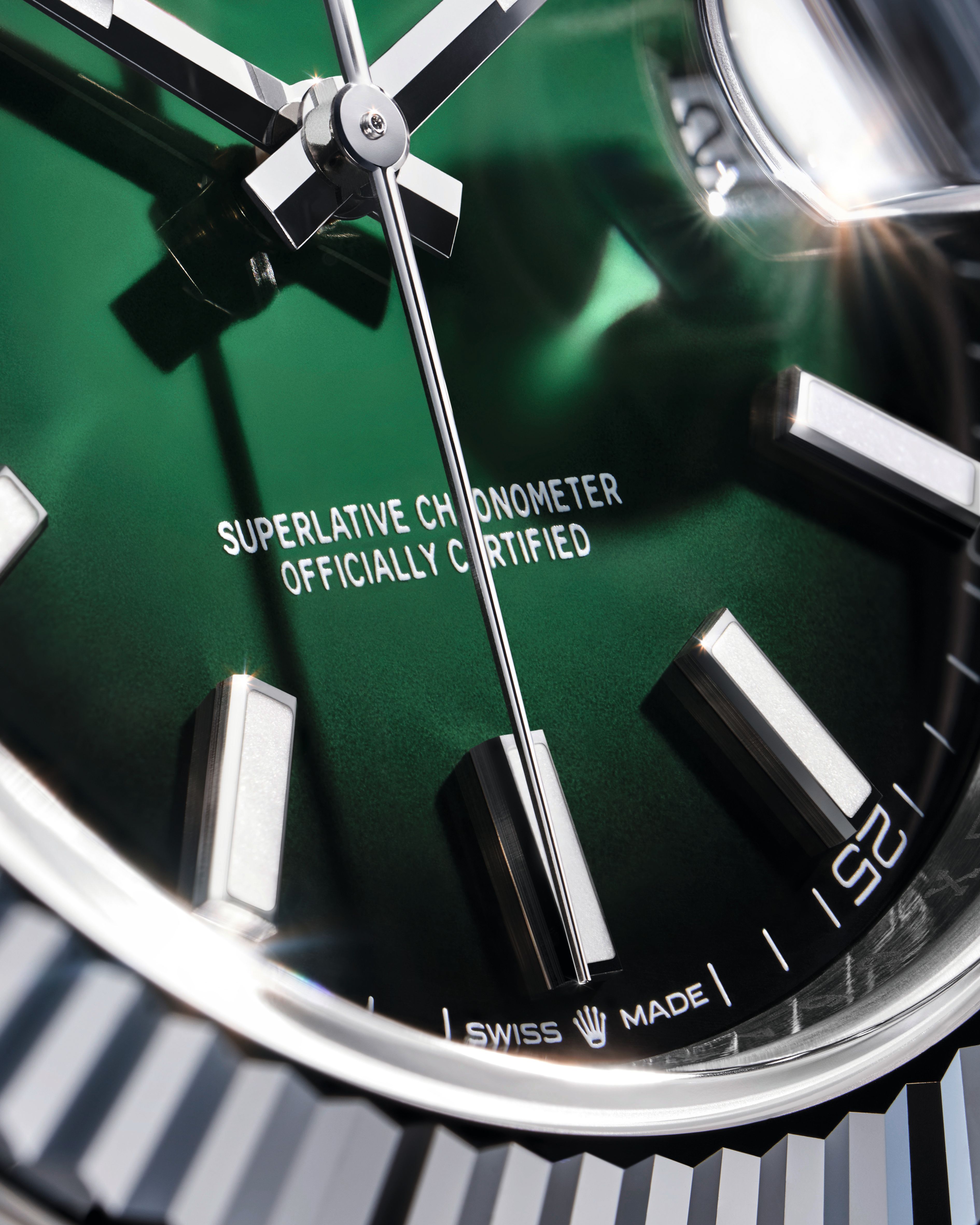
This version is a first in a specific and meaningful sense: it is the first ombré dial to be created entirely through lacquering, with no other colouring process involved. Green lacquer goes down on the base plate first, building the foundation colour. Then black lacquer is sprayed in concentric motions over it, the density of application controlling where the gradient deepens and where the original green holds its intensity. The result moves from a rich, saturated green at the outer edges of the dial inward toward a darker, almost shadowed centre, the colour pulling your eye toward the hands rather than away from them.
What makes the all-lacquer process significant is consistency and depth. Lacquer builds in layers, each one contributing to the final surface in a way that gives the colour a quality that other techniques cannot fully replicate. It is not quite translucent, but it has a richness that suggests depth rather than simply displaying it. The white inscriptions on the dial, the Rolex name, the Datejust text, the date numerals visible through the Cyclops lens, all read with unusual clarity against the dark graduated green, which is a practical benefit as much as an aesthetic one. The Chromalight hour markers glow blue in low light, which against a green dial is a combination that sounds like it should not work and somehow entirely does.
White Rolesor: The Case Configuration That Gets It Right
The material pairing here is white Rolesor, which means white gold for the fluted bezel and the winding crown, with the rest of the case and the Oyster bracelet in Oystersteel. It is the inverse logic of the yellow Rolesor OP41 centenary piece released alongside it at the show, and it demonstrates something about how Rolex thinks about the relationship between metal and dial.
Yellow gold against a green dial would be warm, almost verdant, a colour combination with its own logic but one that could tip into territory that asks too much of the wearer. White gold is cooler, more neutral, and against this particular green it acts as a frame rather than a participant. The fluted bezel in white gold catches light along its ridges and creates a precise boundary between the case and the dial without competing with what is happening inside that boundary.
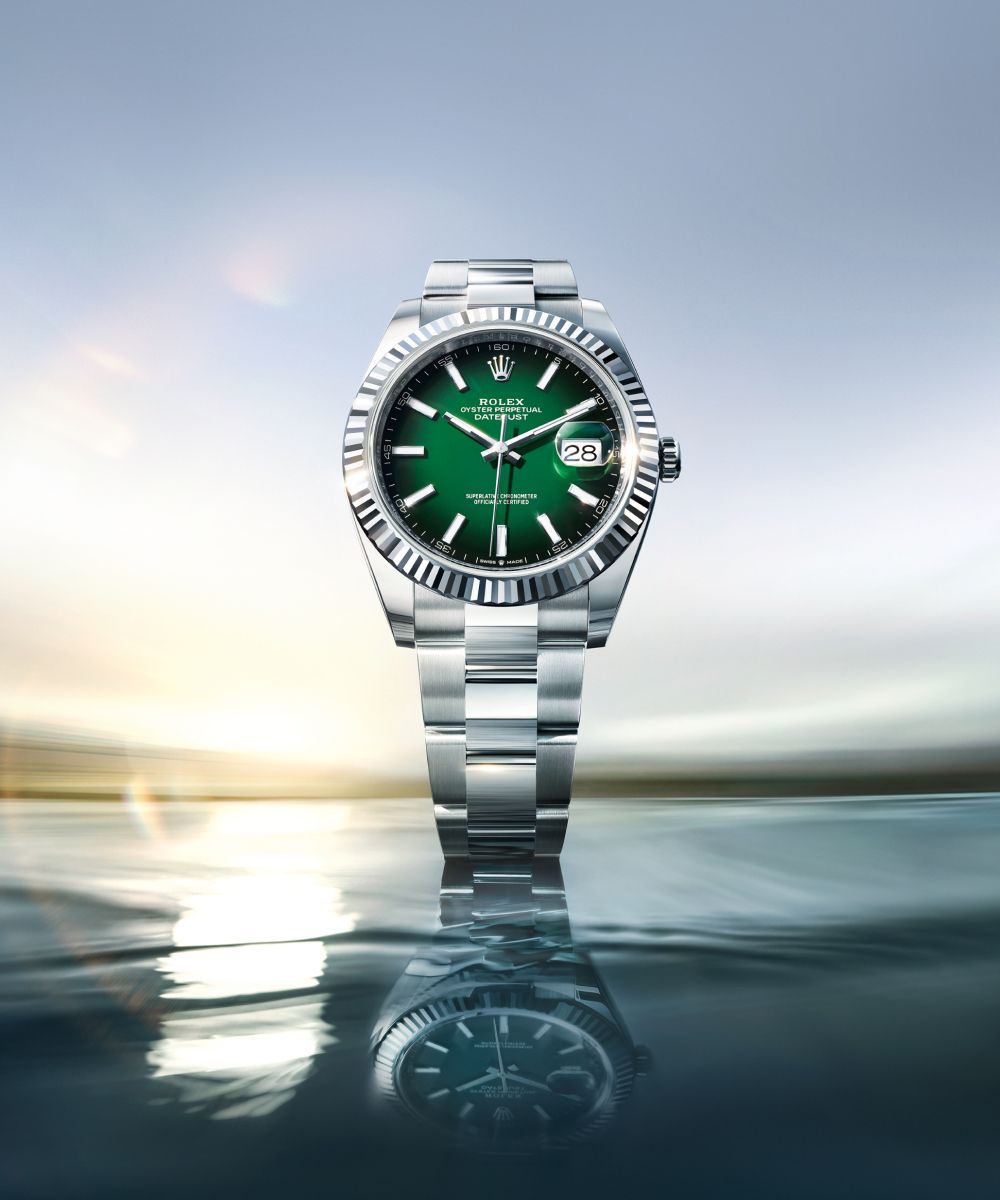
The bracelet in all steel keeps the wrist feel grounded and practical. This is a watch that could be worn to a board meeting or a dinner without the case configuration making a decision on your behalf. The fluted bezel is worth a moment of its own. It is one of the oldest and most recognisable details in all of watchmaking, introduced by Rolex in the 1920s originally as a functional tool for screwing down the caseback. The function was eventually absorbed by dedicated tools and the fluting became purely decorative, which is one of the more elegant transitions from utility to aesthetics in the history of the craft. On a white gold bezel it has a particular quality, the ridges are sharper than on yellow gold, the light they catch is cooler and more precise.
Calibre 3235 and Why It Matters More Than You Think
The movement in the Datejust 41 is calibre 3235, which Rolex introduced in 2020 as the successor to the long-running 3135. The headline difference was the Chronergy escapement, a redesigned geometry that Rolex developed entirely in-house and which delivers approximately 15 percent more energy efficiency than the previous design. That efficiency feeds directly into the power reserve, which extended from 48 hours on the 3135 to 70 hours on the 3235.
Seventy hours is three days, which means a Datejust worn Monday through Friday can be left on a nightstand over the weekend and picked up Monday morning still running. For a watch with a date function, that matters particularly, because stopping the watch means resetting not just the time but the date, and date complications have their own logic and their own quirks that owners learn over time. The longer you can go without stopping it, the less you have to think about it, which is exactly what a watch designed for daily life should aspire to.
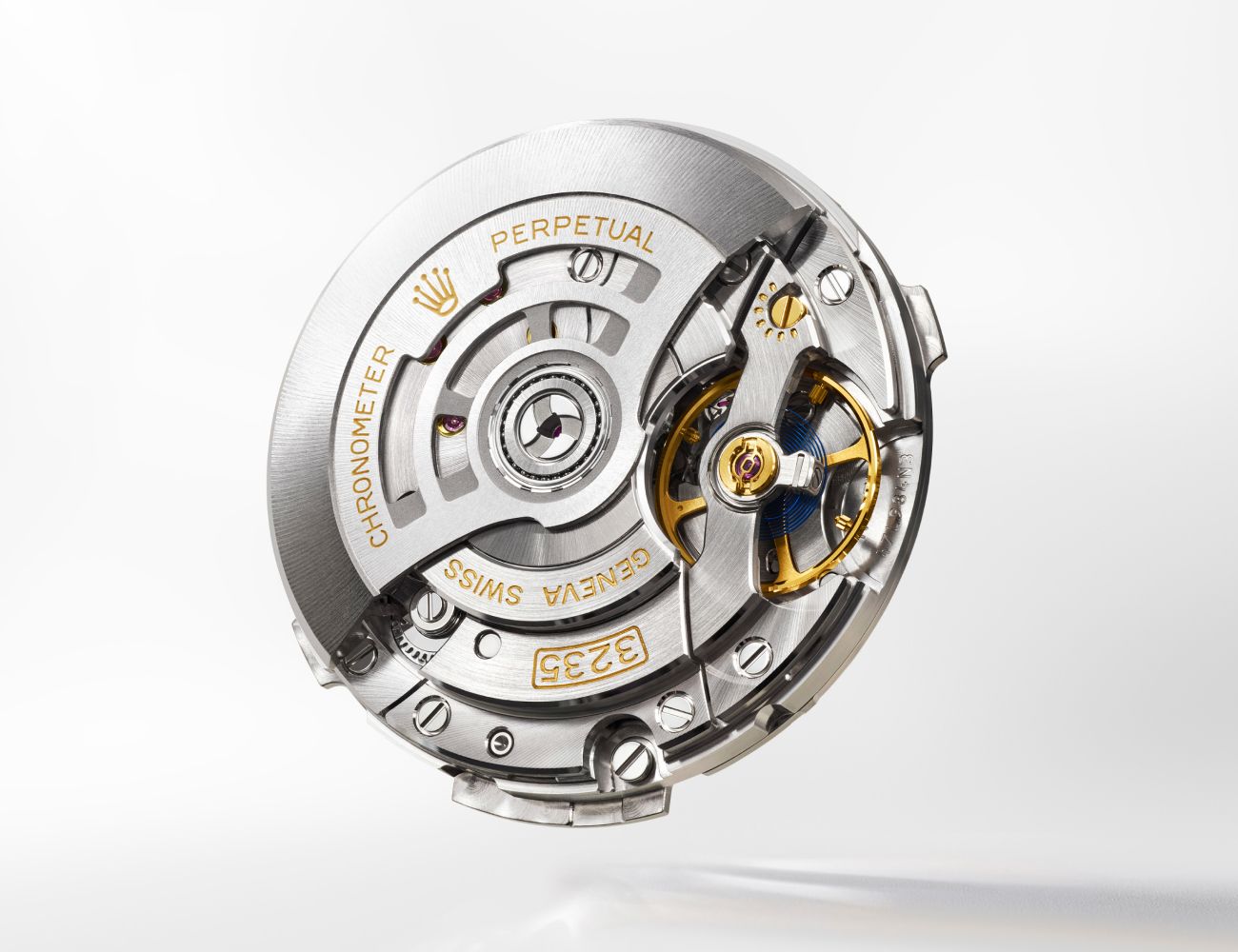
The Parachrom hairspring in paramagnetic alloy handles both magnetic interference and temperature variation with a stability that accumulates in practice into a watch that simply behaves. The Paraflex shock absorbers complete a movement architecture that has been engineered for the world rather than a laboratory. The 2026 Superlative Chronometer update, adding magnetism resistance, reliability and sustainability criteria to the certification, ensures this is the most rigorously tested version of the 3235-equipped Datejust ever sold.
What the Datejust Still Does That Nothing Else Does
There are watches that are better at being tool watches. There are watches that are more technically ambitious. There are watches that carry more cultural weight in certain specific communities. But there is no watch that does what the Datejust does in the register it occupies, which is to be simultaneously a precision instrument, a piece of design history, a daily companion, and an object with genuine resale depth across a wider range of contexts than almost anything else in watchmaking. The green ombré dial does not change any of that. What it does is remind you of it. It takes a watch that is so familiar it has become part of the visual furniture of luxury and makes it surprising again. You look at it and you think: this is a Datejust, and it looks like nothing I have seen on a Datejust before, and I understand immediately why it works.
That is a harder thing to achieve than releasing an entirely new reference. Rolex has done it by going deep into a technique rather than reaching for a new complication, by refining the ombré process to a point where the result is good enough to carry a watch with eighty years of visual history behind it. The Datejust does not need to justify itself. It has been justified for decades. But every so often it gets a dial that makes justification feel beside the point entirely, because you are simply too busy looking at it to think about anything else.
Priced at INR 10,82,000


