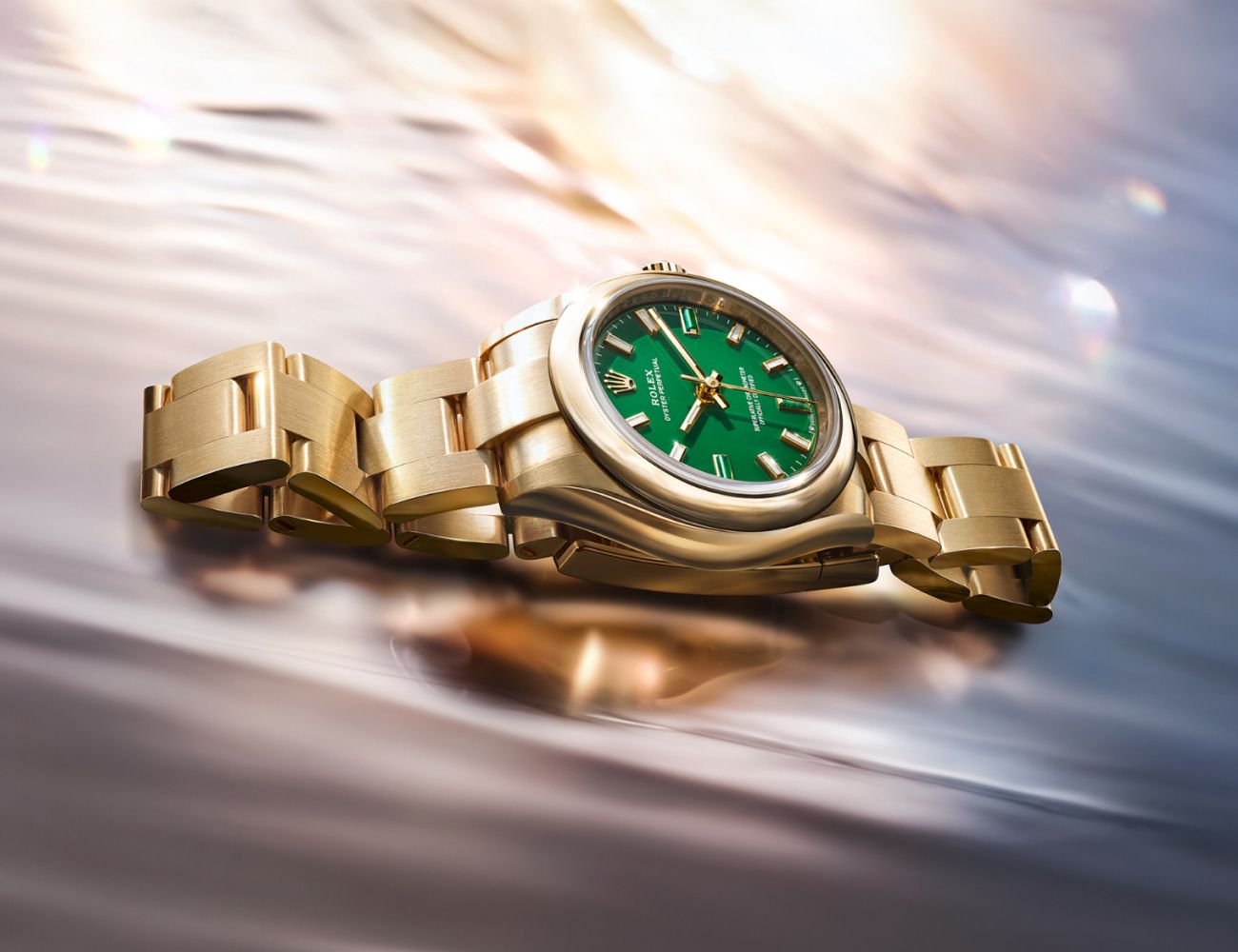
Watches and Wonders 2026: Rolex Oyster Perpetual 28 & 34 - Gold Gets Quiet, And That's Exactly the Point
 7 min read

Gold in watchmaking has a volume problem. It announces itself. It catches light in ways that steel does not, carries associations that steel does not, and for a significant portion of the market, that is precisely why it exists. The statement is the product. Wear it loudly or don't wear it at all.
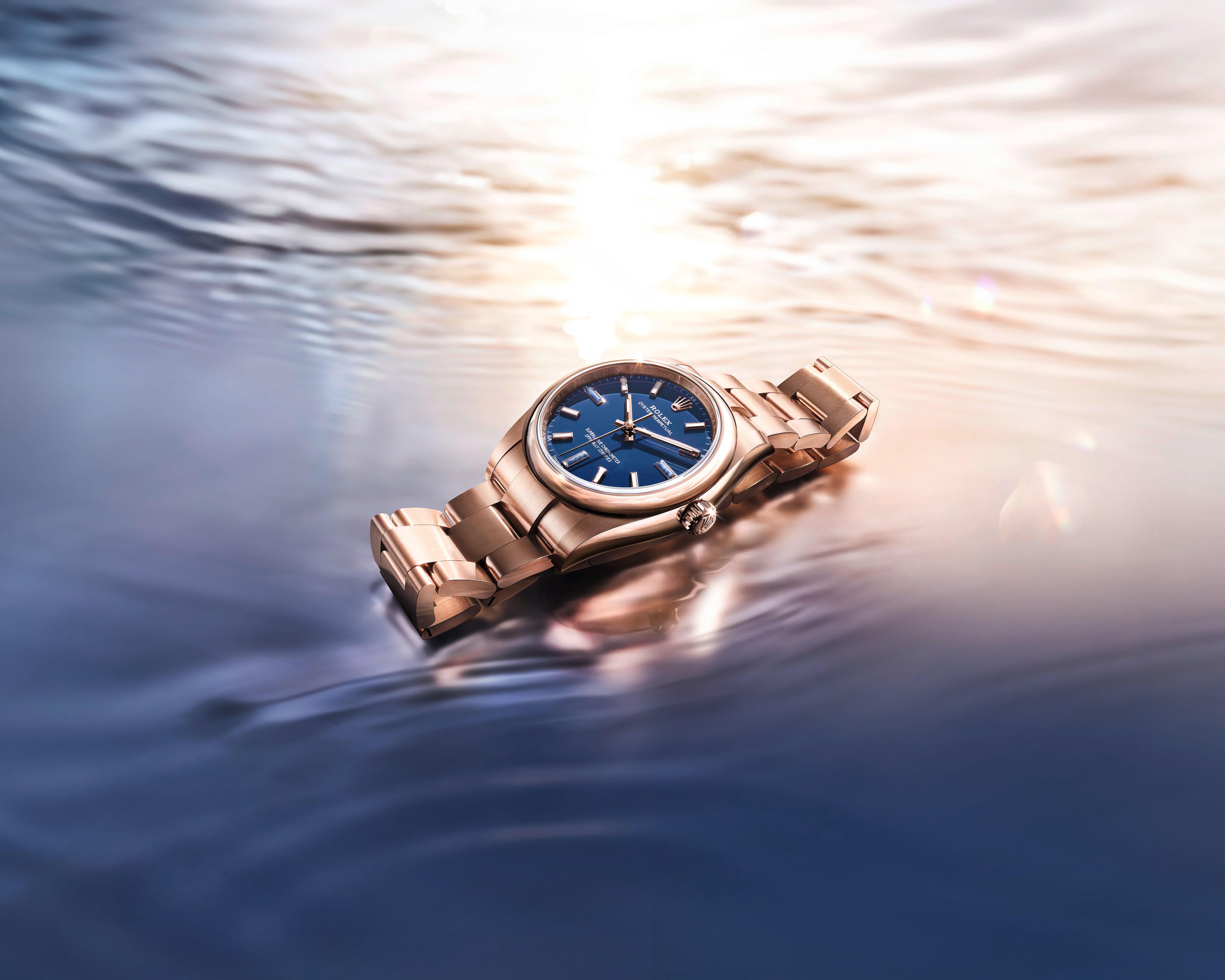
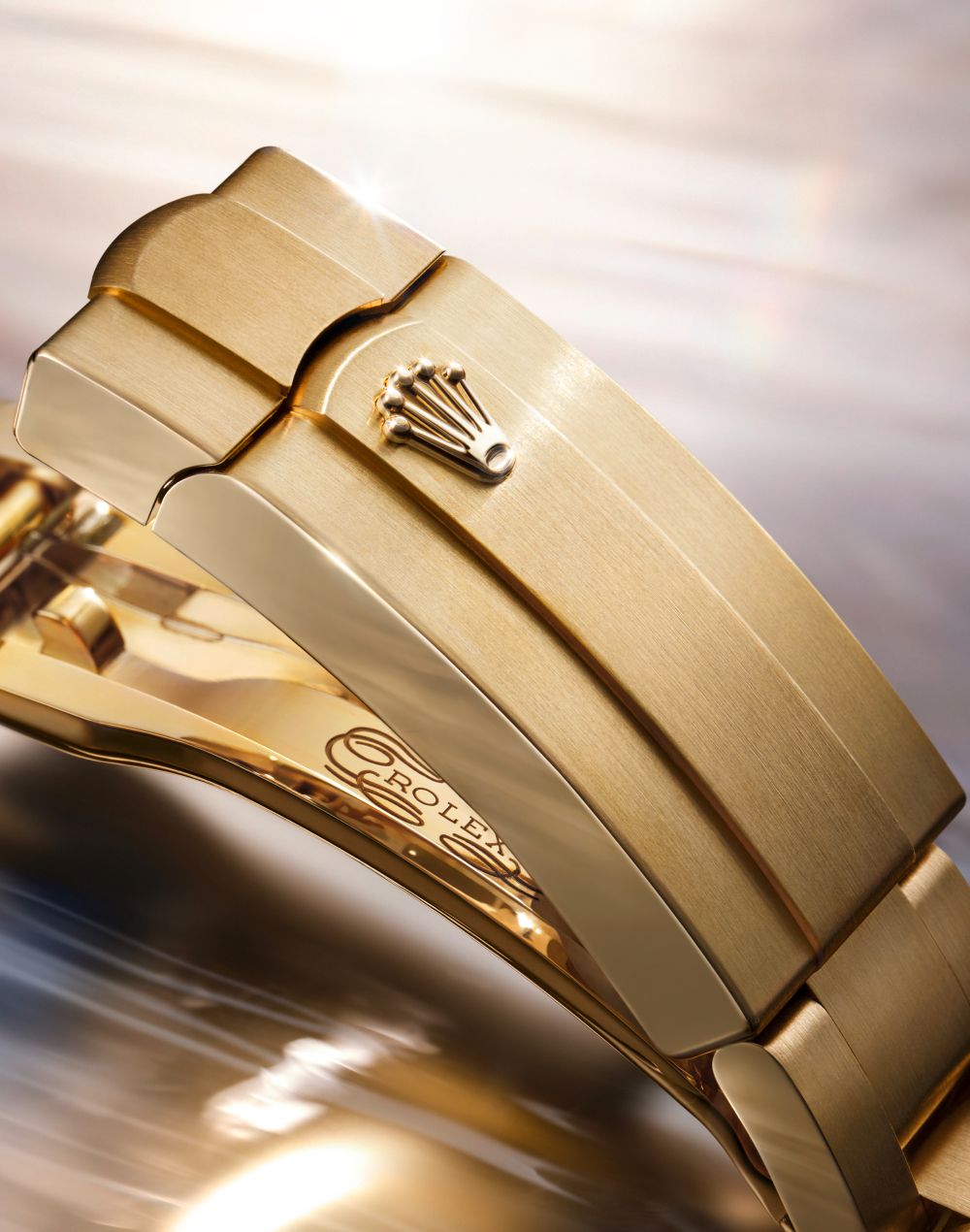
Rolex has spent the last several years quietly arguing against that idea, and these two watches are the clearest expression of that argument yet. The Oyster Perpetual 28 in 18 carat yellow gold and the Oyster Perpetual 34 in 18 carat Everose gold are not watches that shout. They are watches that reveal themselves slowly, to the person wearing them as much as to anyone observing them. The satin finish on both the case and bracelet, applied here to precious metal for the first time in the Oyster Perpetual range's history, is the decision that makes everything else possible. And the natural stone hour markers at 3, 6 and 9 o'clock, a genuine first for Rolex, are the detail that makes both watches worth examining very closely.
What Satin Finish Does to Gold
Polish and gold are natural partners. Polish amplifies the warmth and depth of the metal, turns it reflective, makes it perform under light in the way that justified its value across cultures and centuries. It is the obvious choice and it has been the dominant choice across fine watchmaking for as long as fine watchmaking has existed. Satin finish does something entirely different. It scatters the light rather than reflecting it, giving the surface a soft, almost matte quality that reads more as texture than as shine. On steel it creates a functional, purposeful aesthetic. On gold it does something more unexpected: it makes the metal feel intimate. Close. Like an object that belongs to the person wearing it rather than one performing for a room.
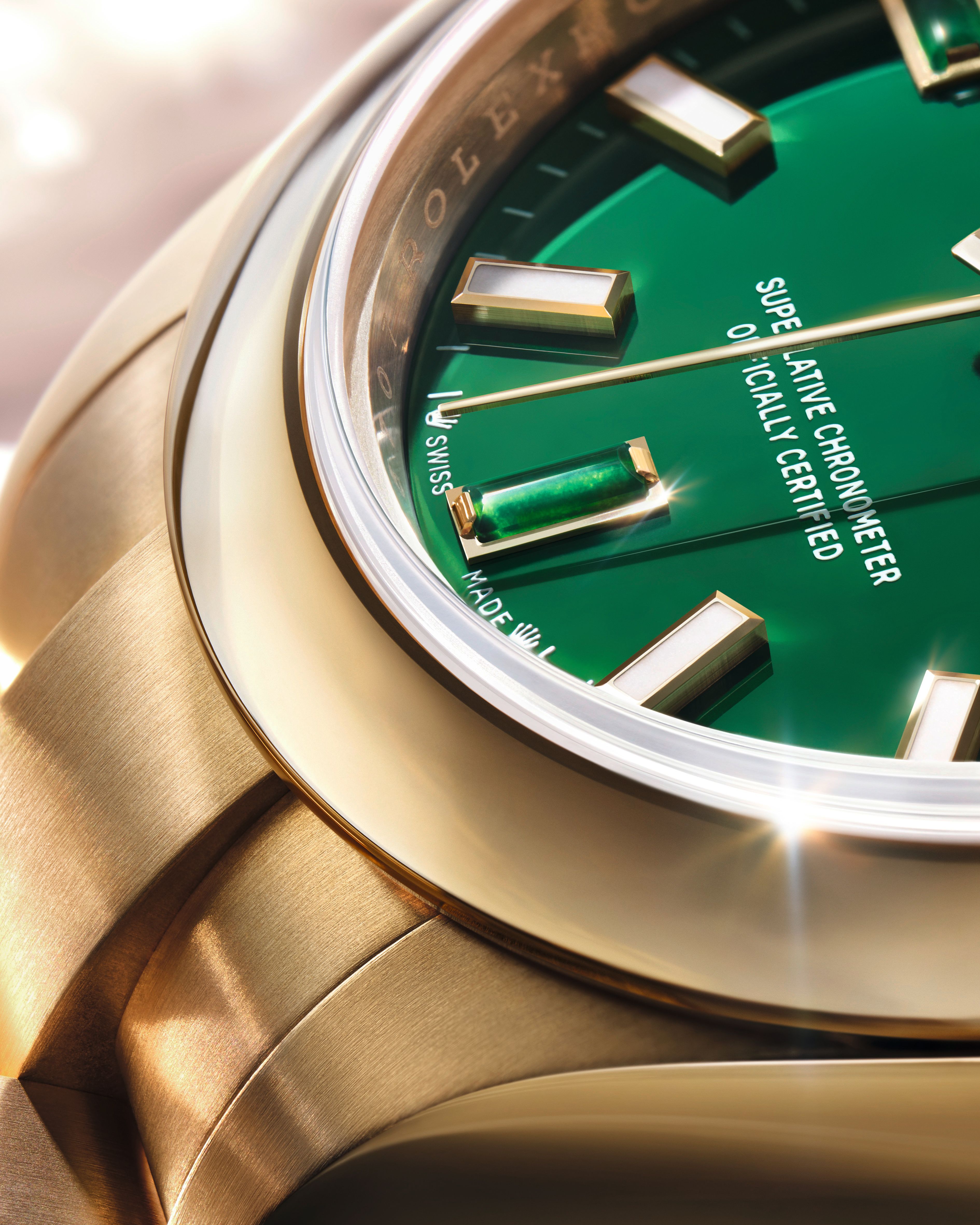
On the OP28 and OP34, the satin finish runs across the case and bracelet entirely, broken only by the polished domed bezel which catches the light in a single clean line above the dial. That contrast, soft satin body against polished bezel, is restrained but precise. The bezel gleams and everything else recedes, drawing your attention directly to the face of the watch rather than distributing it across the whole object. It is an elegant piece of visual editing, and it has never been done on a fully precious metal Oyster Perpetual before.
Rolex casts its own gold. It has its own foundry, produces its own alloys, controls the quality of the material from raw composition to finished surface. The 18 carat standard means 750 parts per thousand of pure gold, with the remaining proportion determining the colour. Yellow gold adds silver and copper. Everose, Rolex's patented pink gold formulation, adds a specific copper ratio that gives it a warmer, more sustained rose tone than conventional pink gold, which can fade over time. The decision to apply a satin finish to metals produced to this level of specification is not a casual one. It is a deliberate repositioning of what gold is supposed to communicate.
Heliotrope and Dumortierite: The Detail That Changes Everything
The natural stone hour markers are where these watches become genuinely interesting to anyone who cares about the history of the craft. On the OP28 in yellow gold, the markers at 3, 6 and 9 are cut from heliotrope, a stone presenting a range of deep greens with darker veining running through each piece. On the OP34 in Everose gold, the same positions carry dumortierite, a mineral characterised by shifting areas of light and dark blue that sit in the kind of tonal relationship that makes a dial feel like it has depth rather than surface.
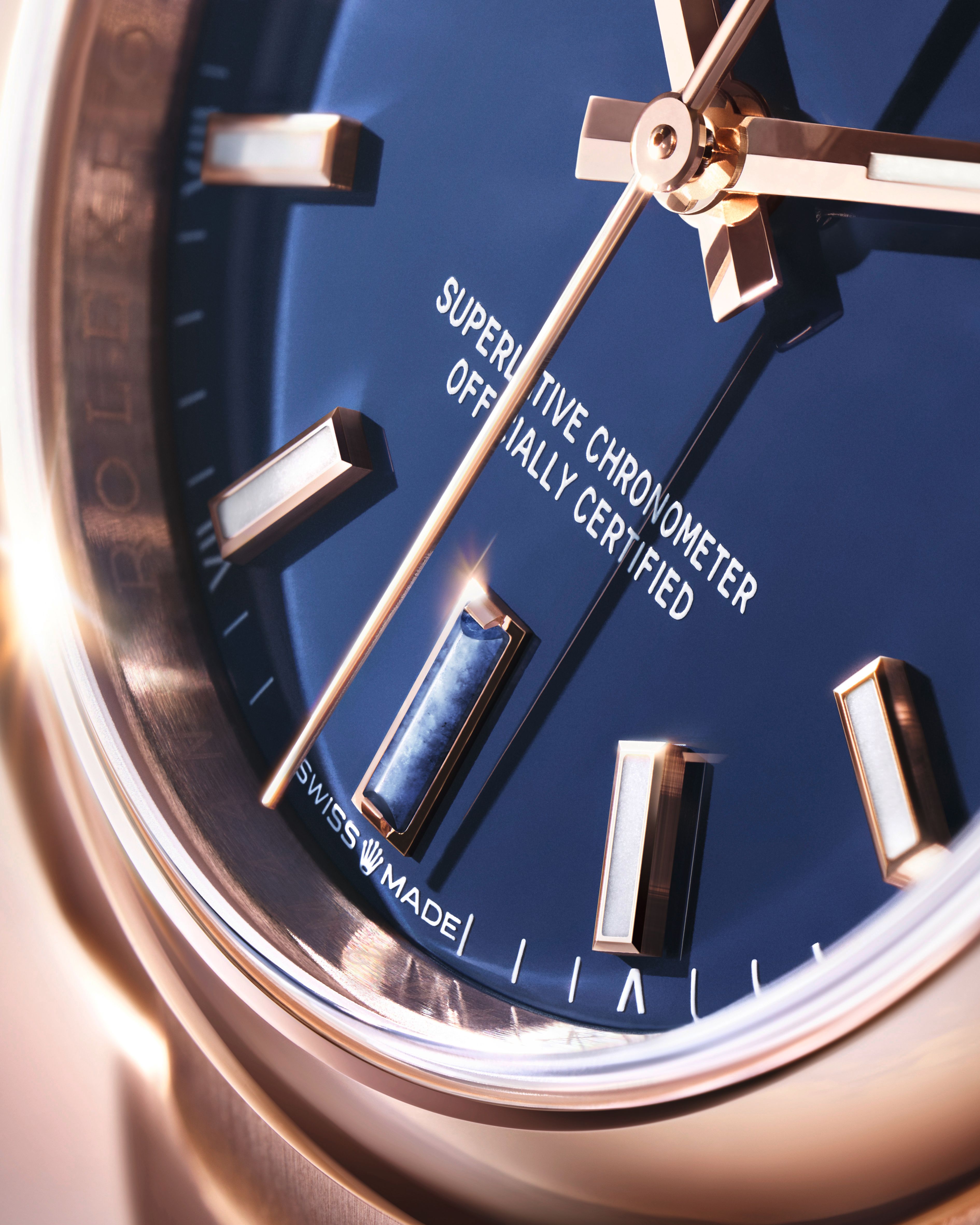
Both stones are cut with an ogive profile on their upper face, a gentle curved form that eliminates reflective glare while emphasising the individual markings within each piece. No two heliotrope markers will be identical. No two dumortierite pieces will carry the same distribution of light and dark. Every watch in this release is, at the level of these three hour markers, unique. That is not a marketing phrase. It is a material reality, and it is the kind of material reality that Rolex almost never traffics in, because Rolex's entire production philosophy is built around consistency and replicability. The introduction of natural stone markers, where variance is inherent and unavoidable, represents a genuine departure from that philosophy. It is also a nod to something Piaget understood in 1963 and has been demonstrating ever since: that the most interesting thing a dial can do is carry the irregularity of the natural world into a precision instrument. The combination of satin-finished gold and stone markers on these watches sits in direct conversation with that tradition, even if Rolex would not frame it that way.
The Green and Blue Lacquer Dials
The dial colours are not incidental to any of this. The OP28 carries a green stone lacquer dial, the Everose OP34 carries blue, and in both cases the colour was chosen to harmonise with the stone markers rather than simply provide contrast. The green of the heliotrope echoes and deepens in the green lacquer of the OP28 dial. The blue gradations of the dumortierite find their extension in the blue lacquer of the OP34. These are not separate design decisions that happened to land alongside each other. They are a coordinated material story, where dial colour, stone selection, gold alloy and surface finish all speak to the same sensibility. Yellow gold and green reads as warm, botanical, slightly Art Nouveau. Everose and blue reads as cool, oceanic, more contemporary. Two watches with identical architecture communicating genuinely different personalities.
Calibre 2232 and the Question of Movement
The movements in the OP28 and OP34 differ from the calibre 3230 found in the larger Oyster Perpetuals, and it is worth understanding what that means in practice.
Calibre 2232 uses a Syloxi hairspring rather than the Parachrom found in the 3230. The Syloxi is silicon, produced and patented by Rolex, with a geometry specifically designed to maintain isochronism across different positions. Silicon as a hairspring material is paramagnetic, meaning magnetic fields do not affect its rate, and it requires no lubrication, which improves long-term reliability. The escape wheel in the 2232 is nickel-phosphorus, also paramagnetic. The Paraflex shock absorbers carry over from the larger calibres. Power reserve comes in at approximately 55 hours rather than the 3230's 70, a consequence of the smaller movement architecture rather than any difference in engineering ambition.
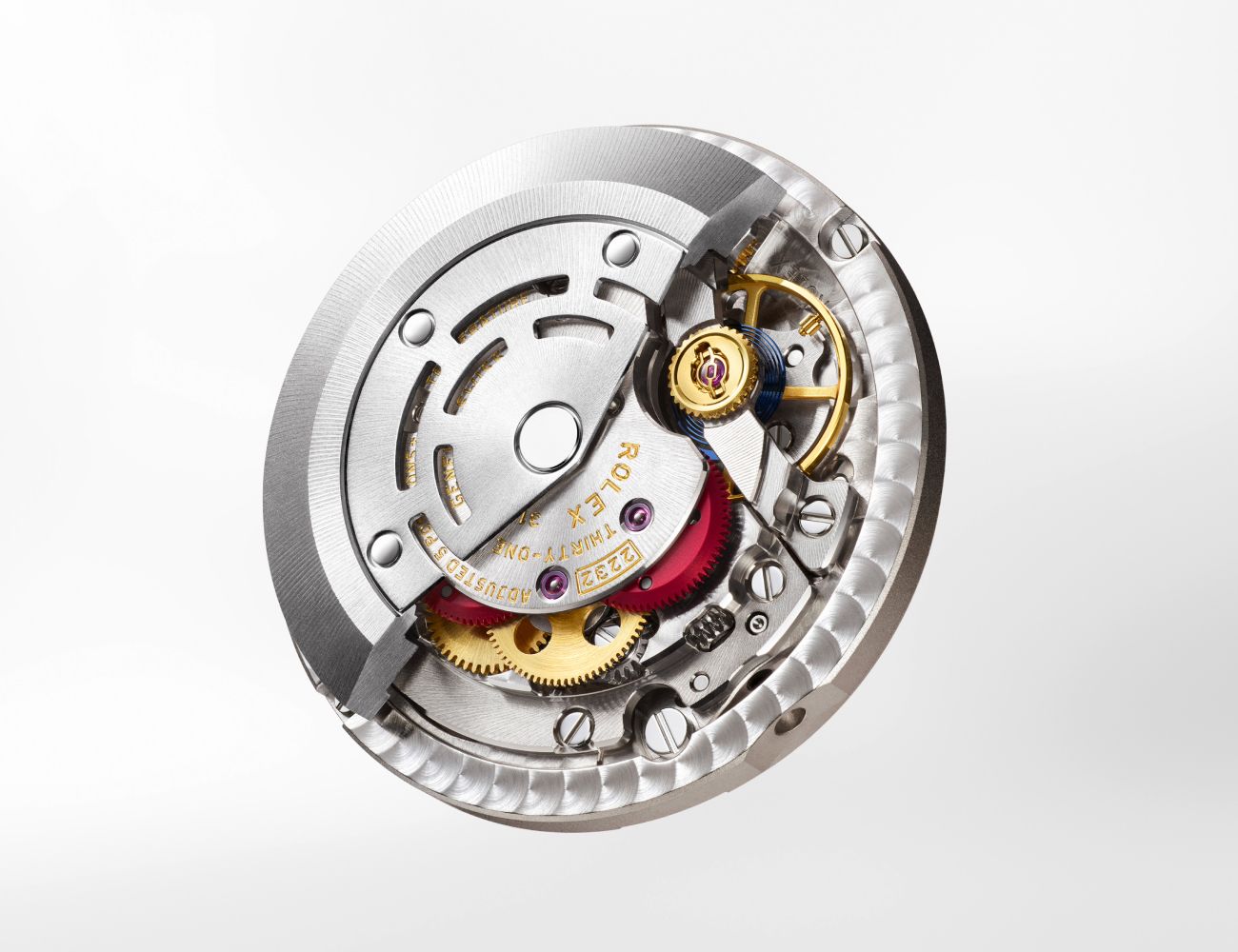
The 2026 Superlative Chronometer certification update, adding resistance to magnetism, reliability and sustainability testing to the existing precision, waterproofness, self-winding and power reserve criteria, applies to these watches as it does across the OP range. The minus 2 to plus 2 seconds per day standard, tested on the finished watch rather than the movement alone, remains the benchmark. In a fully gold case with a satin finish and stone markers, it is a benchmark that matters precisely because nothing about the exterior of these watches suggests they are first and foremost precision instruments. They are. The certification ensures you know it.
The Honest Case for These Watches
At a moment when gold prices are at record highs and the industry is wrestling with what precious metal means as a proposition, Rolex has released two gold watches that justify their material through restraint rather than ostentation. The satin finish earns the gold rather than simply displaying it. The stone markers justify the close attention these watches invite. The calibres inside perform to a standard that has nothing to do with how the cases look.
These are small watches by contemporary standards. The OP28 will sit beautifully on a smaller wrist. The OP34 occupies a size that was once the standard for men's dress watches and is now genuinely versatile. Neither is trying to make a case for itself through scale. What they are trying to say, and what they say effectively, is that the most considered version of gold is the version that makes you forget you are looking at gold and focus instead on the object itself. That is harder to achieve than the alternative. It requires confidence in the material, confidence in the craft, and the discipline to stop before you have said too much.
Priced at INR 27,86,100 (28MM) and INR 32,77,100 (34MM Yellow gold), INR 35,31,100 (34MM Everose Gold)


