Timeless Capital: Why Certain Watches Hold And Grow Their Value
 5 min read

In a world increasingly defined by digital abstraction and volatile financial instruments, the enduring appeal of a mechanical watch lies in its physical certainty. It is an object of weight, craft, and permanence. Yet beyond its emotional and aesthetic value, a rare category of watches has evolved into something more compelling: a tangible asset class. The notion that watches can function as investments is no longer confined to collector folklore it is now supported by hard data, transactional analysis, and the behaviour of a global secondary market.
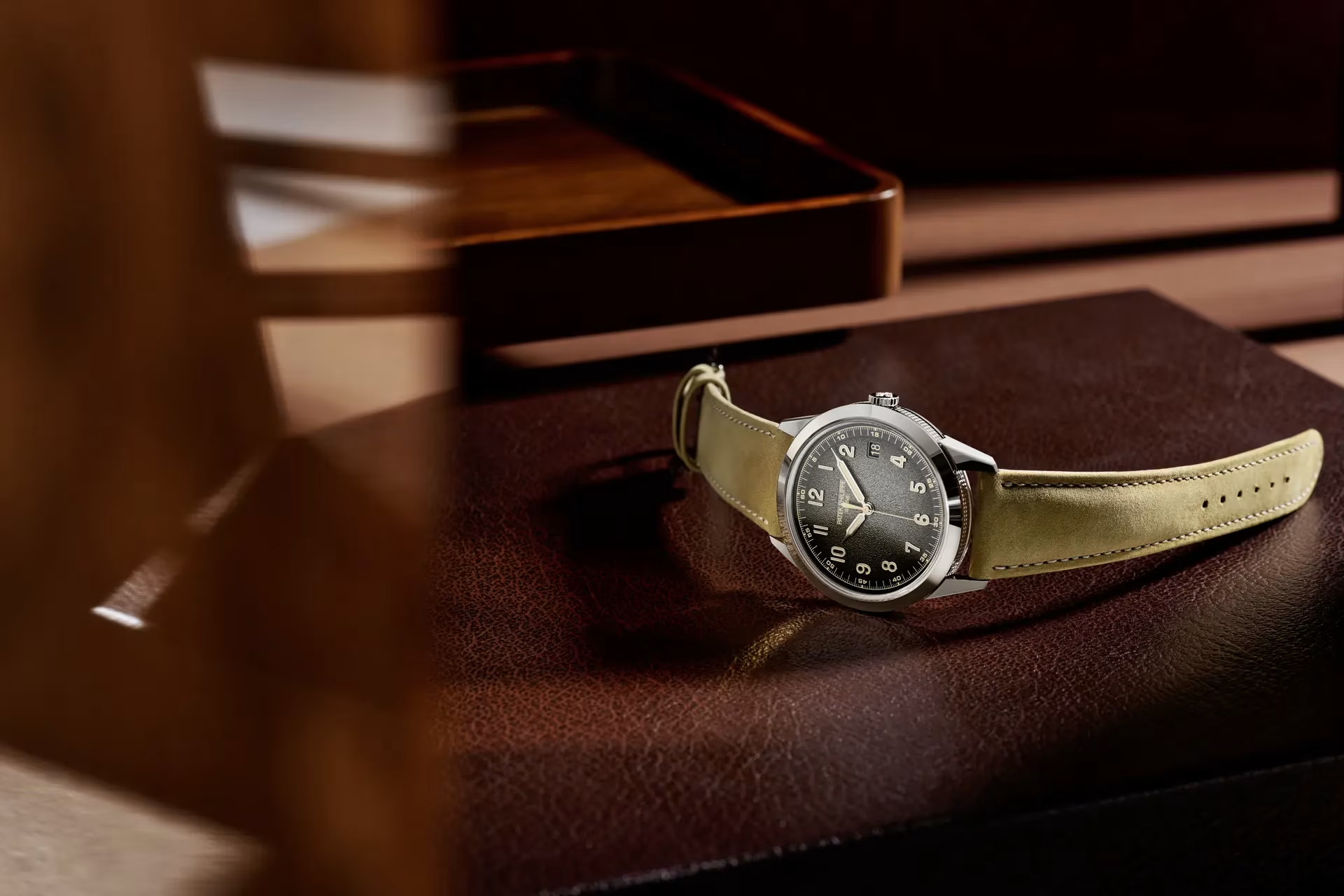
However, to treat watches as straightforward financial instruments would be a fundamental misunderstanding of the category. The reality is far more nuanced. Most watches depreciate. Only a select few hold their value, and an even smaller number appreciate in any meaningful way. What distinguishes these watches is not merely brand or price, but a convergence of scarcity, cultural resonance, and sustained demand over time.
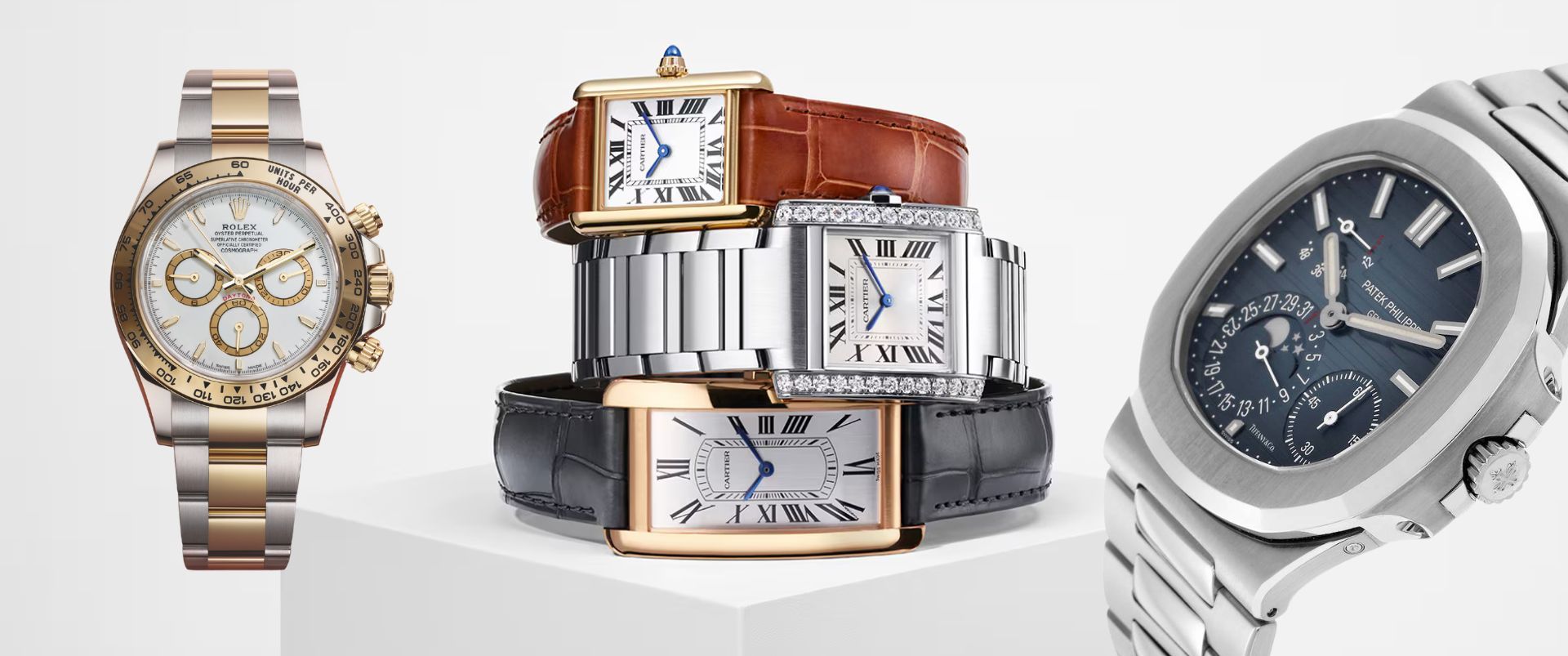
Recent data from Chrono24, the world’s largest marketplace for luxury watches, provides a revealing lens into this phenomenon. According to its long-term ChronoPulse Watch Index, luxury watches have appreciated by an average of 22.85% over the past five years, positioning them as a legitimate alternative asset when viewed over a longer horizon. This figure becomes even more striking when broken down by brand. Audemars Piguet leads the field with an average increase of nearly 65%, followed by Vacheron Constantin at over 52%, while Cartier and Patek Philippe have delivered gains of approximately 39% and 33% respectively. These are not isolated spikes driven by speculation, but sustained upward movements rooted in brand equity and collector demand.
Yet the market has not been immune to correction. After reaching a peak in early 2022, the secondary watch market experienced a decline of nearly 25% by late 2024, before stabilising. This correction was not a collapse, but rather a recalibration an essential shift from speculative frenzy to a more mature, collector-driven ecosystem. By 2024, prices had largely stabilised, with the ChronoPulse Index recording a modest 0.35% increase for the year, alongside a recovery in the latter half. Even in early 2025, where a short-term dip of around 3% was observed, the broader trajectory remained positive, with the market still up roughly 24–25% over five years.
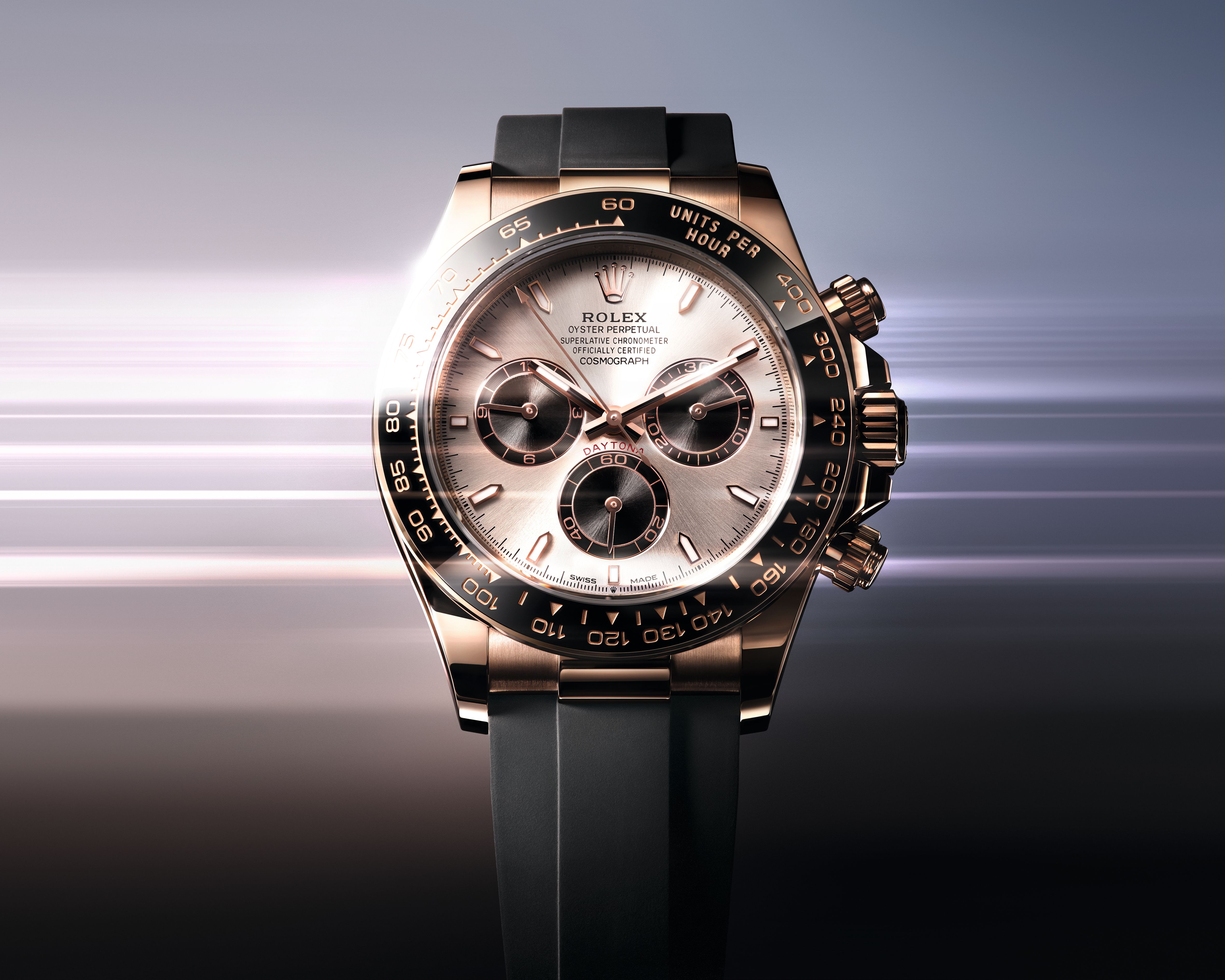
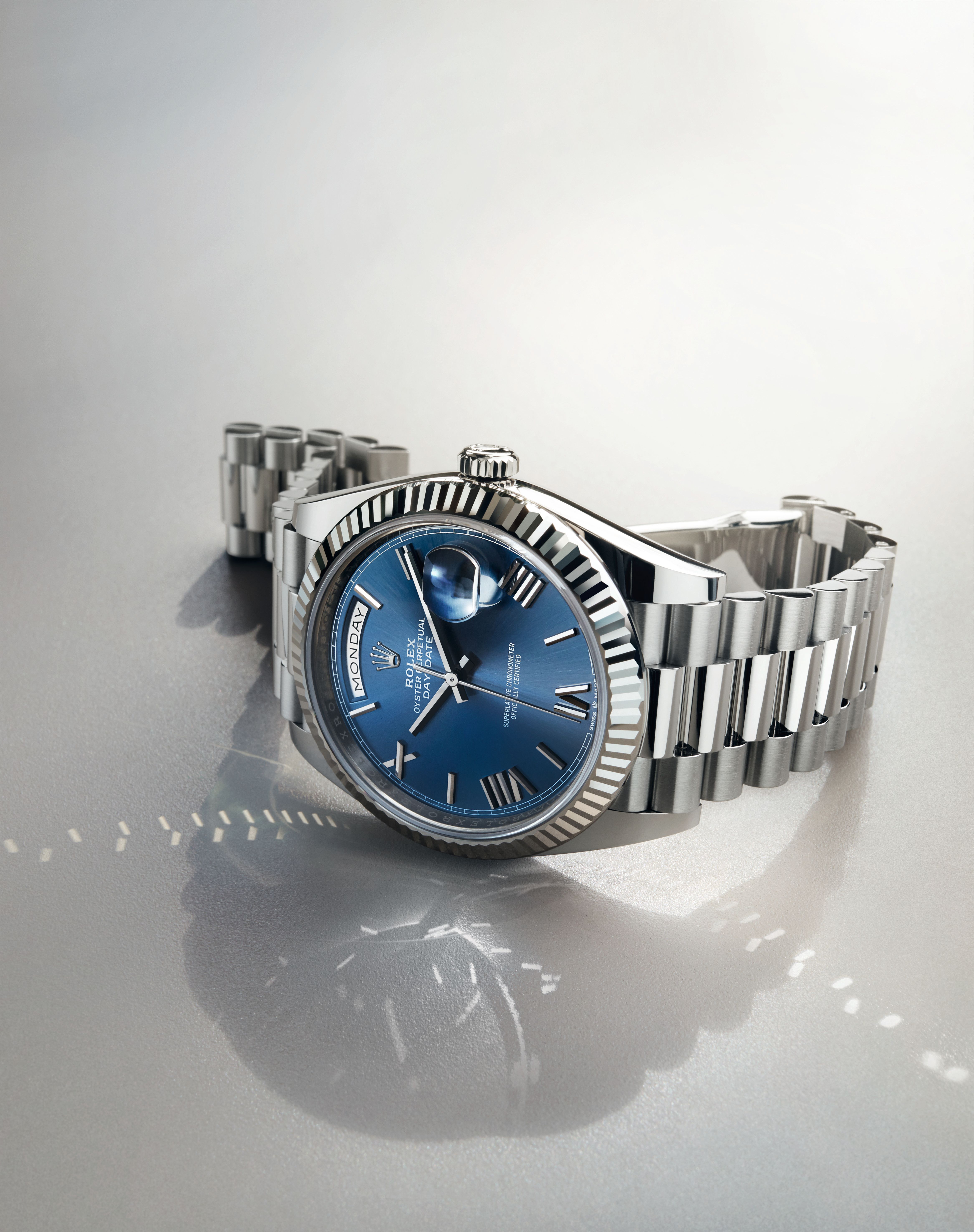
This data underscores a critical insight: watches behave less like speculative assets and more like cyclical luxury goods with long-term appreciation potential. Short-term volatility exists, but it is the enduring strength of certain brands and references that ultimately determines value retention. At the centre of this ecosystem remains Rolex, a brand that has effectively become the anchor of the secondary market. While its pandemic-era surge has cooled, its dominance has not diminished. Chrono24 data indicates that Rolex continues to lead in transaction volume, even as its market share has normalised in a healthier, more sustainable environment. More importantly, its resale performance remains exceptional. Independent resale analysis suggests that certain Rolex watches retain, on average, over 100% of their retail value, reinforcing their status as one of the most reliable stores of value in the luxury space.
Where Rolex represents stability, Patek Philippe represents legacy. Its relatively low production volume and emphasis on complicated watchmaking create a natural scarcity that translates directly into long-term desirability. The secondary market’s response to discontinued models like the Nautilus 5712/1A-001 illustrates this clearly. When production ceases, supply becomes fixed, but demand often intensifies resulting in rapid and sometimes dramatic appreciation.
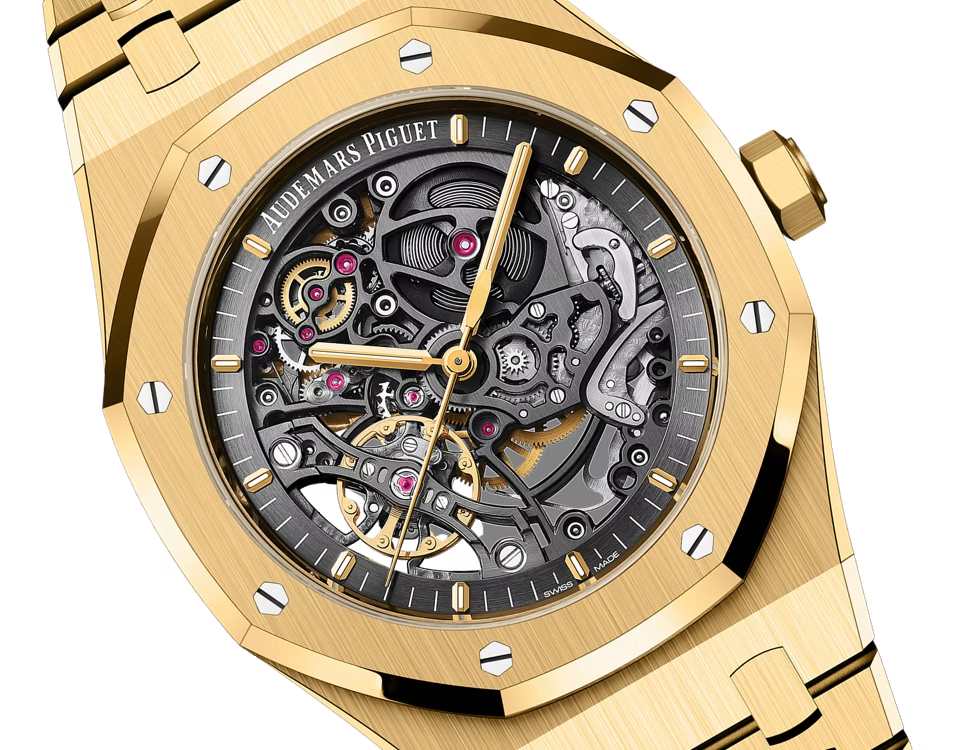
Meanwhile, Audemars Piguet occupies a unique position at the intersection of design and exclusivity. Its Royal Oak has transcended the category of watchmaking to become a cultural object, and the brand’s disciplined production strategy ensures that demand consistently exceeds supply. Chrono24’s data placing Audemars Piguet at the top of value appreciation charts is not coincidental it reflects a sustained imbalance between availability and desirability.
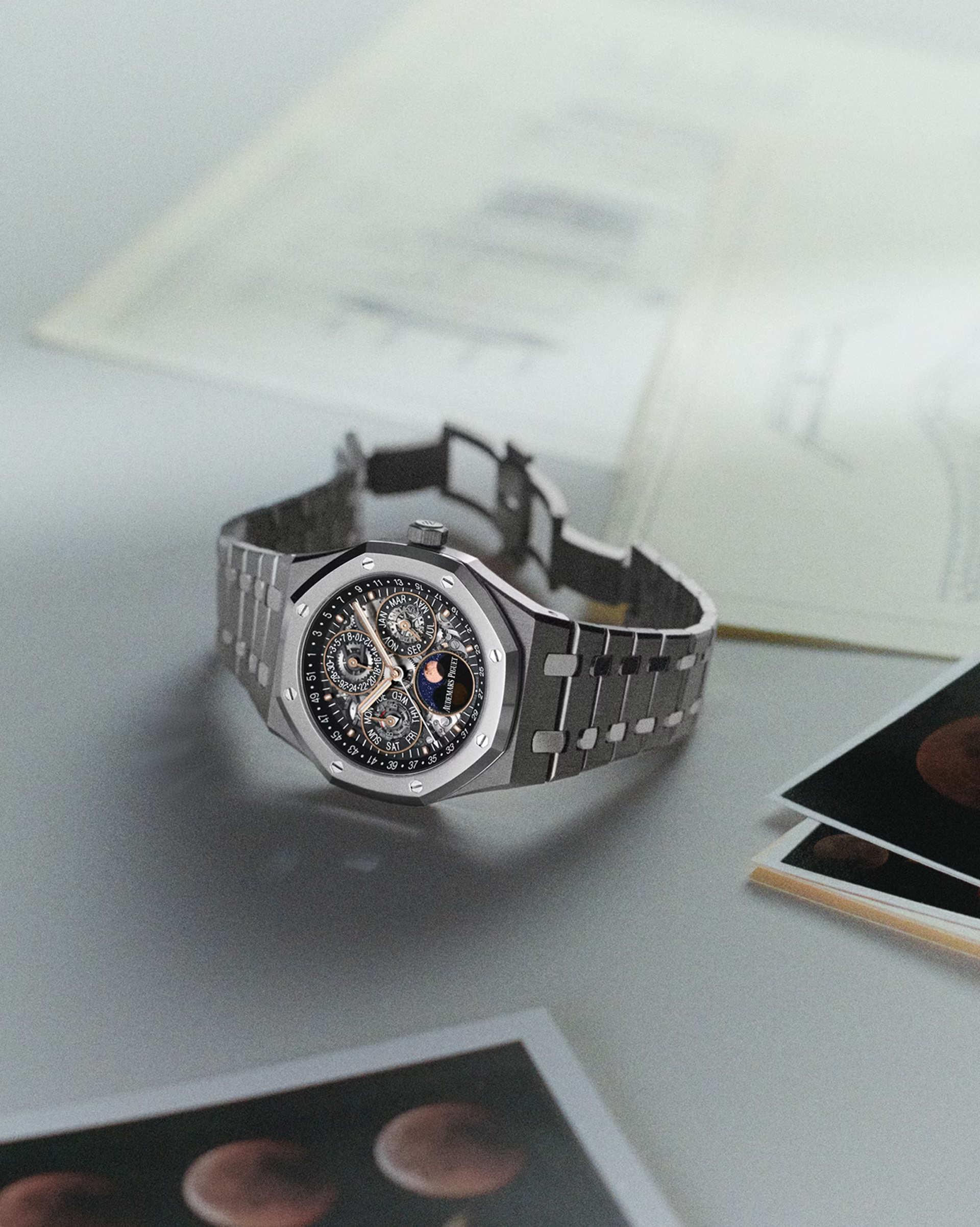
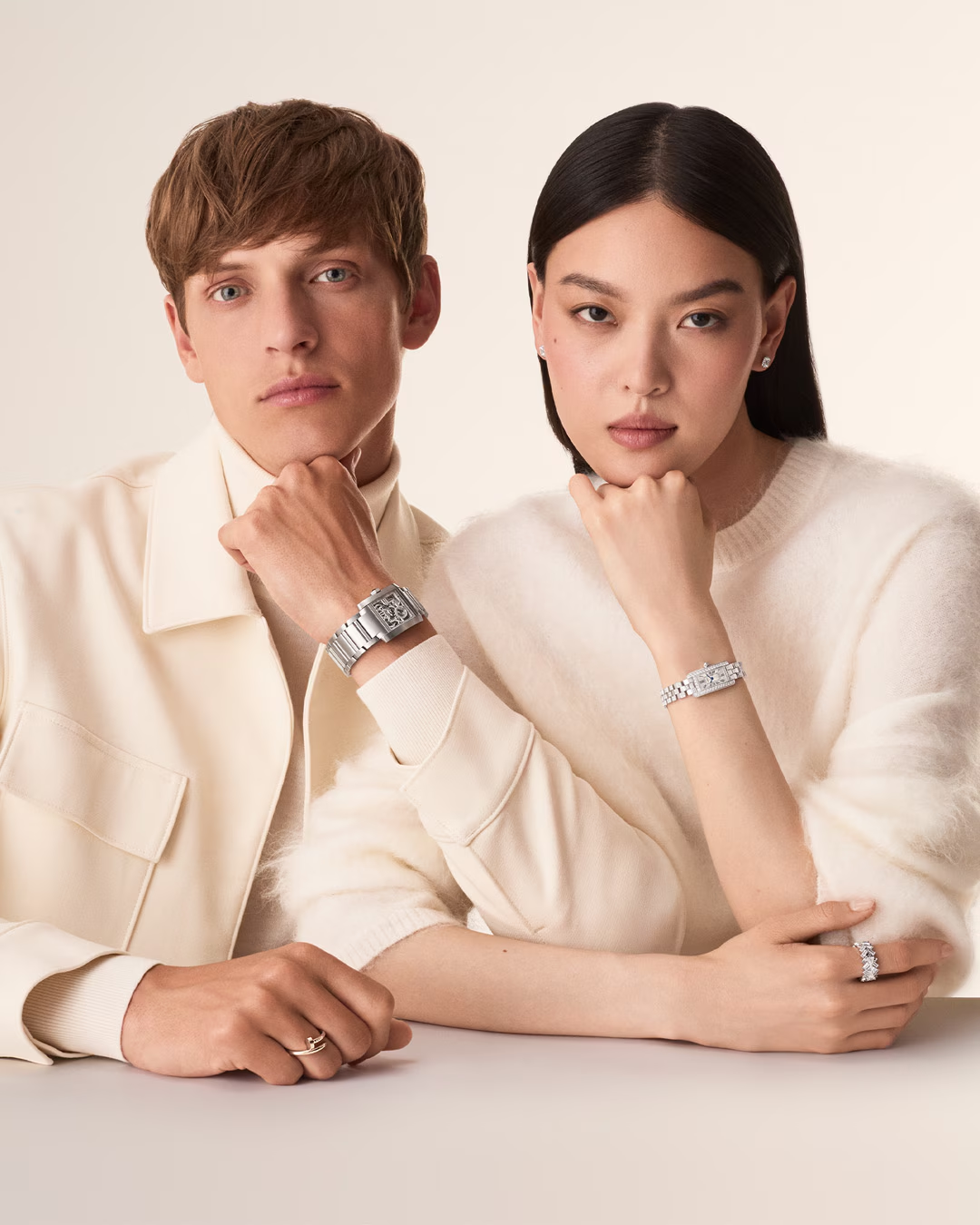
What is perhaps most interesting in the current market is the shift in what collectors value. The 2025 Chrono24 Market Review reveals a decisive movement away from purely sport-driven hype toward more refined, design-led watches. Demand for dress-oriented aesthetics has risen sharply, with rectangular cases increasing by over 9%, and complications such as moon phases seeing a surge of more than 15% in popularity. This evolution suggests that the next wave of investment-grade watches may not be the obvious steel sports models, but rather pieces that combine elegance with enduring design language.
This shift is also reflected in changing buyer demographics. Younger collectors, particularly Gen Z, are reshaping the market by prioritising design, wearability, and brand narrative over traditional notions of status. Their growing interest in brands like Cartier has contributed to a measurable rise in demand, with the brand experiencing significant growth in both market share and resale performance. The implication is clear: value is no longer dictated solely by legacy, but increasingly by cultural relevance.
At a structural level, the secondary watch market itself has matured into a powerful economic force. This scale has introduced a level of transparency that was previously absent, allowing collectors to track value trends with unprecedented precision. It has also reinforced the importance of condition, provenance, and completeness, as buyers become more discerning in an increasingly data-driven environment.
Despite this growing sophistication, the fundamental principles of value remain unchanged. Scarcity must be genuine, not manufactured. Design must be enduring, not trend-driven. Brand equity must be built over decades, not marketing cycles. And perhaps most importantly, demand must be organic, rooted in genuine appreciation rather than speculative hype.
What emerges from both data and observation is a market that is becoming more intelligent. The speculative excess of recent years has given way to a more measured, informed approach to collecting. Prices are stabilising, demand is diversifying, and the definition of value is expanding. Watches are no longer simply luxury accessories; they are cultural artefacts with financial dimensions. Yet the most important truth remains unchanged. The most successful watch collectors are not those who chase returns, but those who understand what they are buying. Financial appreciation, when it occurs, is often the byproduct of taste, knowledge, and timing not the primary objective.
In that sense, a watch that holds its value does more than preserve capital. It preserves meaning. It carries history, identity, and craftsmanship across time, existing in a space where utility and emotion intersect. And in a world of fleeting trends and digital ephemera, that may be the most valuable investment of all.


