Why A. Lange & Söhne Remains The Benchmark For Quiet Watchmaking Excellence
 8 min read

“Beautiful things don’t ask for attention.”
Spoken almost in passing in film The Secret Life of Walter Mitty, the line lingers because it articulates a truth that extends far beyond cinema. I’ve returned to that line often, because it captures something many of us instinctively recognise but rarely articulate. The most meaningful expressions of beauty don’t announce themselves. They don’t interrupt a room, demand validation or explain their worth. They simply exist: confident enough to wait for those willing to notice. That very thought comes to mind every time I spend time with an A. Lange & Söhne timepiece. There is nothing immediate about the experience. No visual drama, no attempt to seduce at first glance. Instead, the watch asks for patience. It reveals itself slowly through proportion, through finish, through decisions so considered they feel almost philosophical.
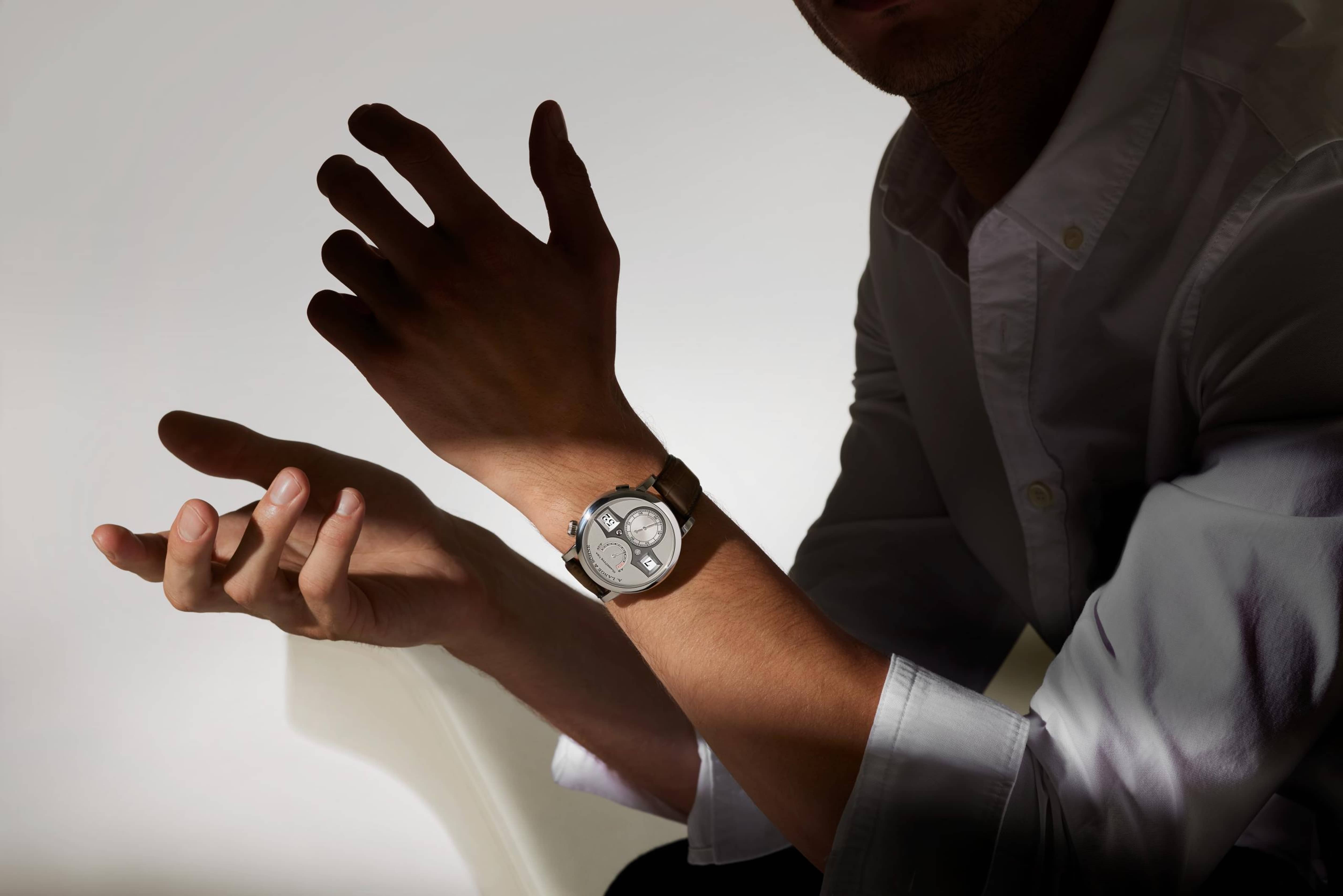
As is the case with restrained architecture or intricate craftsmanship where technique disappears behind outcome, A. Lange & Söhne’s watchmaking is defined by what it withholds rather than what it shows. Complexity is present but never performed. Every element has a reason to exist, and no element exists to be noticed. This is why A. Lange & Söhne has come to represent for me one of the clearest expressions of quiet luxury today. Not just in watchmaking, but as part of a wider cultural shift one that values discretion over declaration and depth over display. An A. Lange & Söhne assumes understanding.
The Saxon Idea of Correctness
Saxon watchmaking has always been governed by a different set of values than its Swiss counterpart. Where Switzerland historically embraced visibility with its signatures, prominent emblems and decorative flourishes, Glashütte developed a culture rooted in function, clarity and discipline. At A. Lange & Söhne, this manifests as an almost moral commitment to doing things the right way, even when the result is invisible.
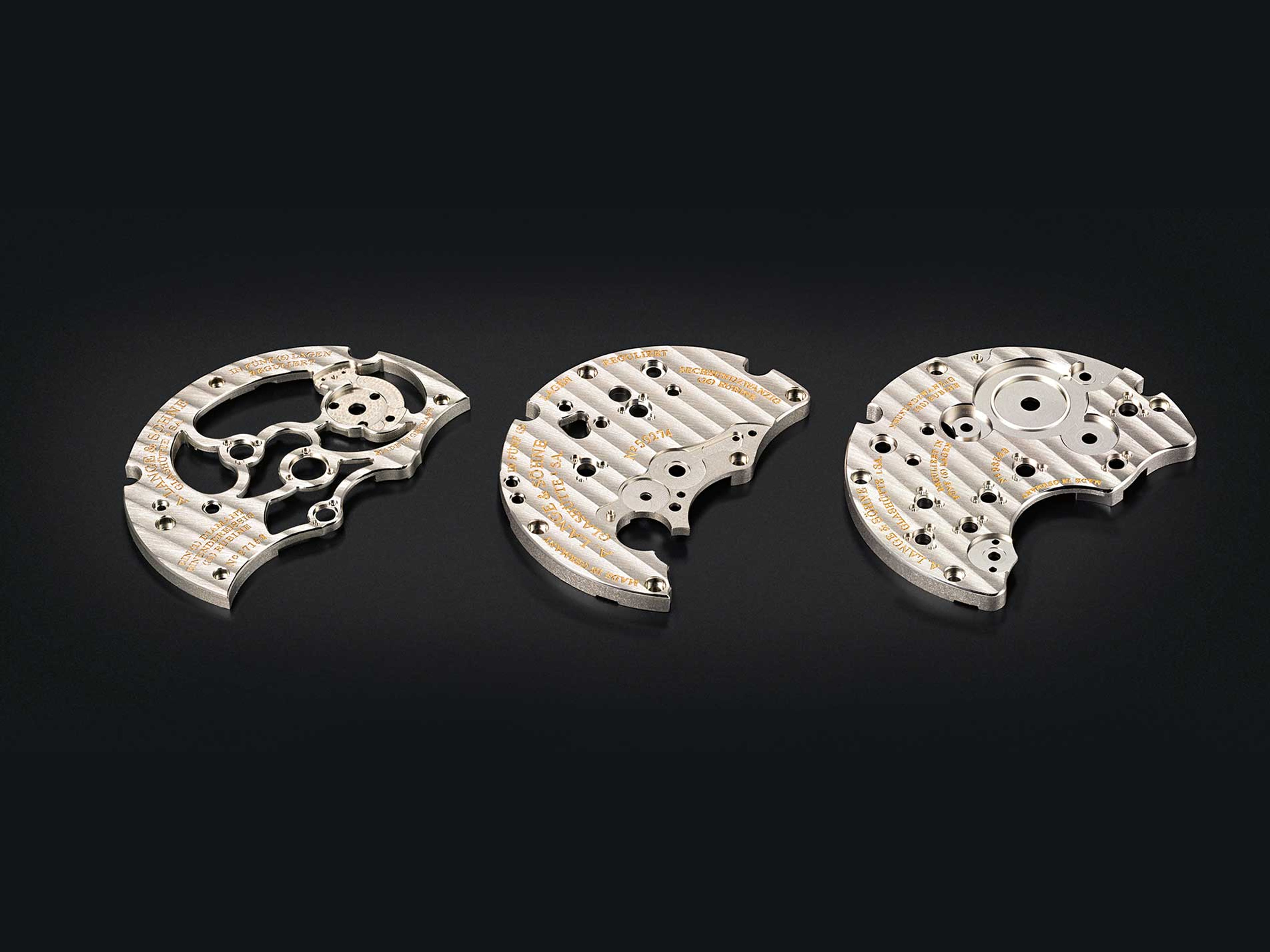
Take the German silver three-quarter plate. Reintroduced in 1990, the three-quarter plate is a typical hallmark of A. Lange & Söhne timepieces. With advanced milling and wire-EDM machines, it can be manufactured with supreme accuracy and tolerances expressed in thousandths of a millimetre. It is made of untreated German silver, an alloy containing copper, nickel and zinc, traditionally used by A. Lange & Söhne for all frame parts. The material is characterised by high stability and resistance to corrosion. In the course of time, it takes on a protective, gold-yellow patina and does not require any electrolytic anti-corrosive coating. It offers no immediate aesthetic advantage on the wrist. And yet the maison persists with it, because it provides structural stability and ages with character. It is a material chosen not for effect, but for conviction.
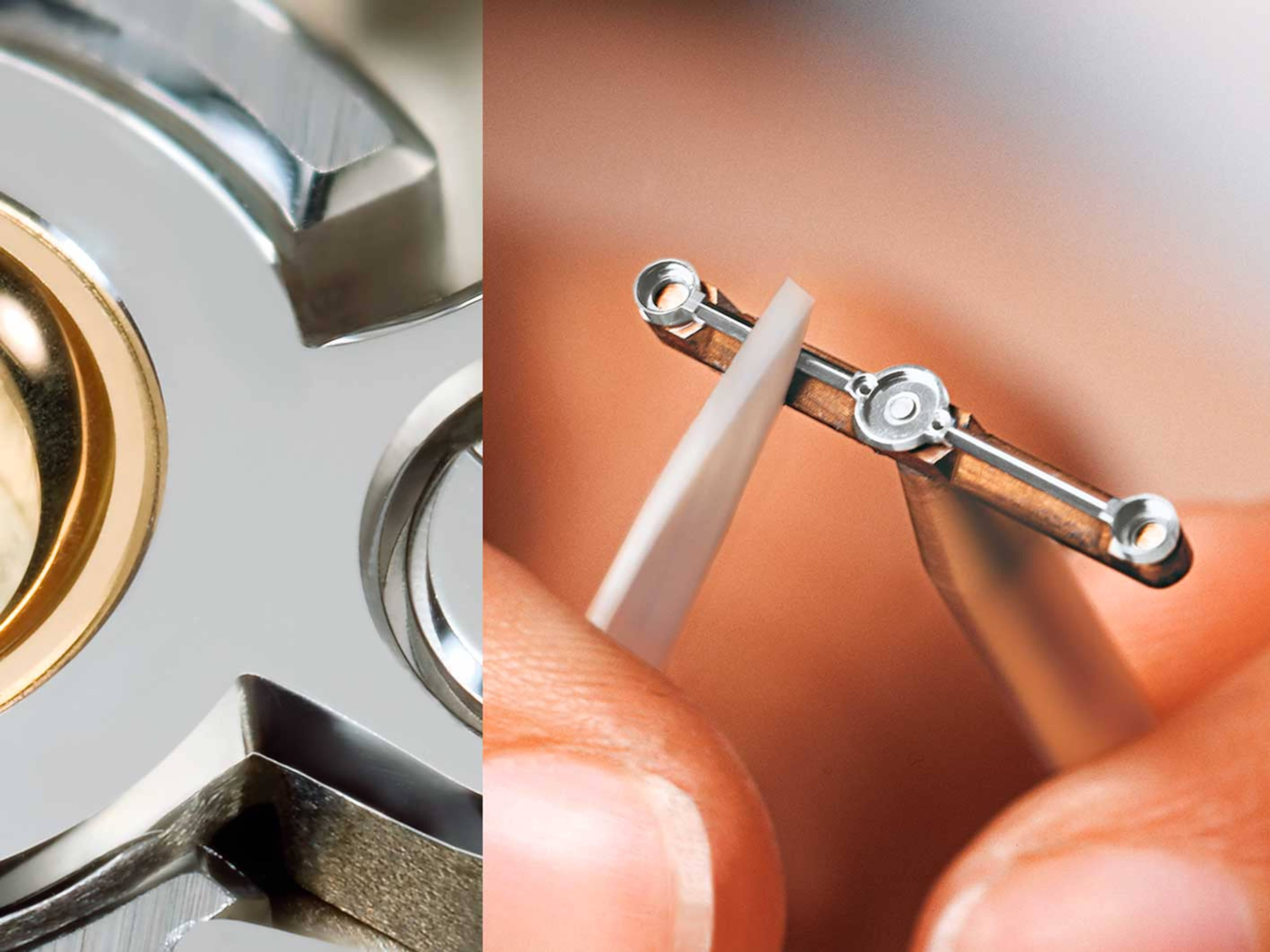
This mindset runs through every movement produced by the maison. Watch connoisseurs can identify an A. Lange & Söhne movement at first sight. Each component is decorated with its own specific type of finissage, whether or not it is visible through the sapphire-crystal caseback. No matter how small it might be, each part must comply with rigorous artisanal and aesthetic standards. It takes several months of practice just to perfectly execute a flat polished finish, while in chamfering, great emphasis is placed on assuring that the edges are not only bevelled to the same angle but also to the same width. A special type of finish is reserved for the balance cock: it is engraved with the Lange-style floral pattern that makes each Lange watch unique. Screws are heat-blued not to catch the light, but because that is how they should be treated. The philosophy is clear: if something exists, it deserves care whether or not it will ever be seen.
Dials That Refuse to Perform
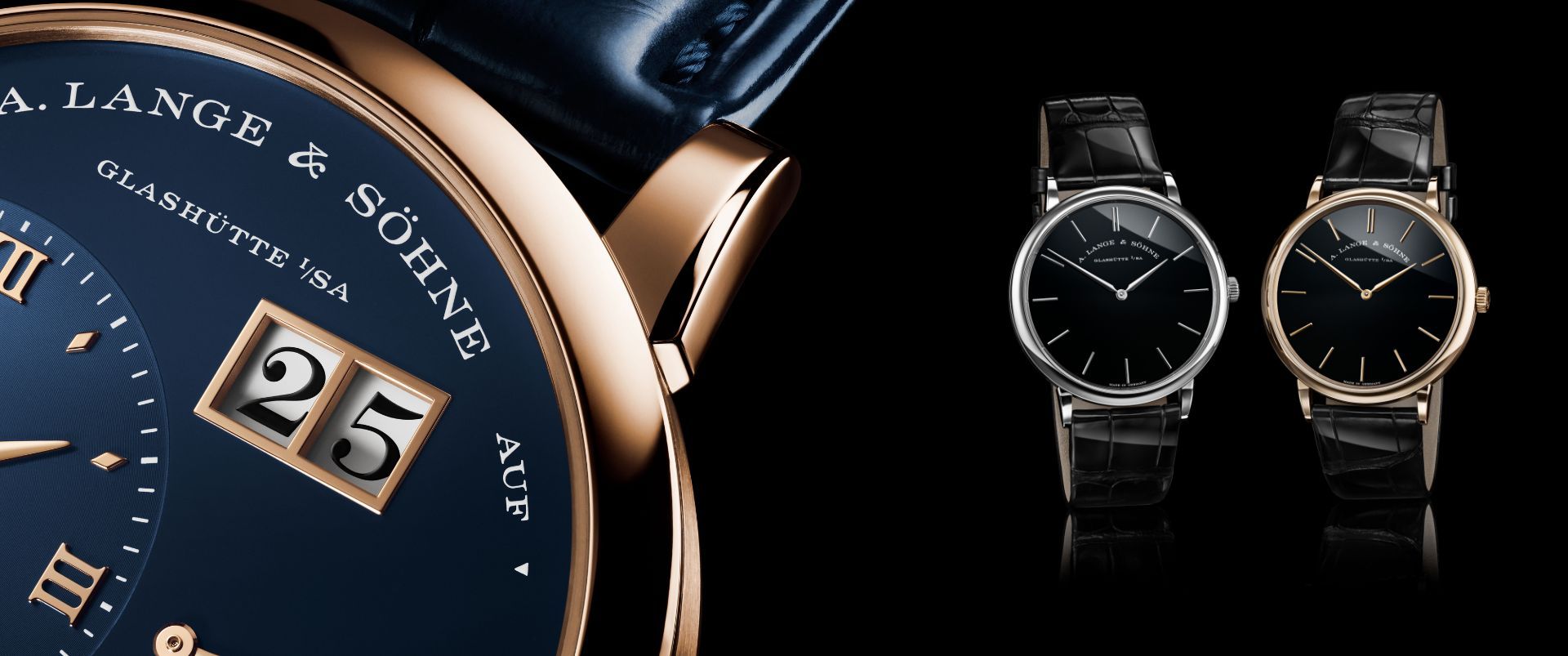
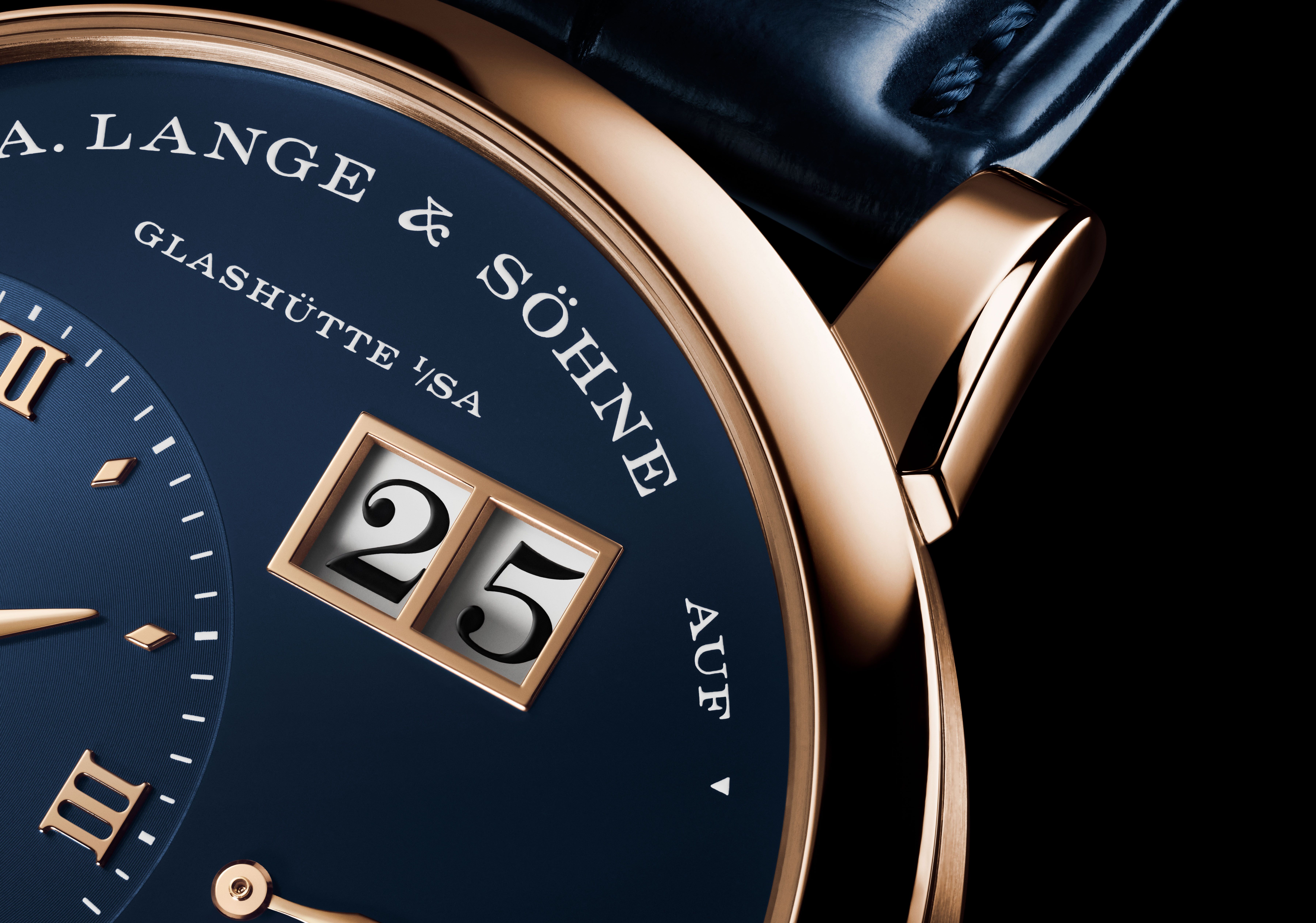
In an era where watch dials compete for attention through colour, texture scale and never seen before materials, A. Lange & Söhne's restraint feels almost radical. The brand’s most recognisable design element the outsize date is itself an exercise in functional clarity rather than visual drama. The Maison succeeded for the first time in integrating a date display of this format in a wristwatch. The date is indicated in a gold frame with numerals that are about three times larger than those in watches of comparable dimensions. This innovation not only makes the date much more legible, it also simplifies the setting process because the date is not adjusted with the crown as is customary. Instead, it can be conveniently advanced day by day with a rapid-correction pusher. Perfectly balanced, mechanically justified, and rooted in historical necessity it never reads as a logo.
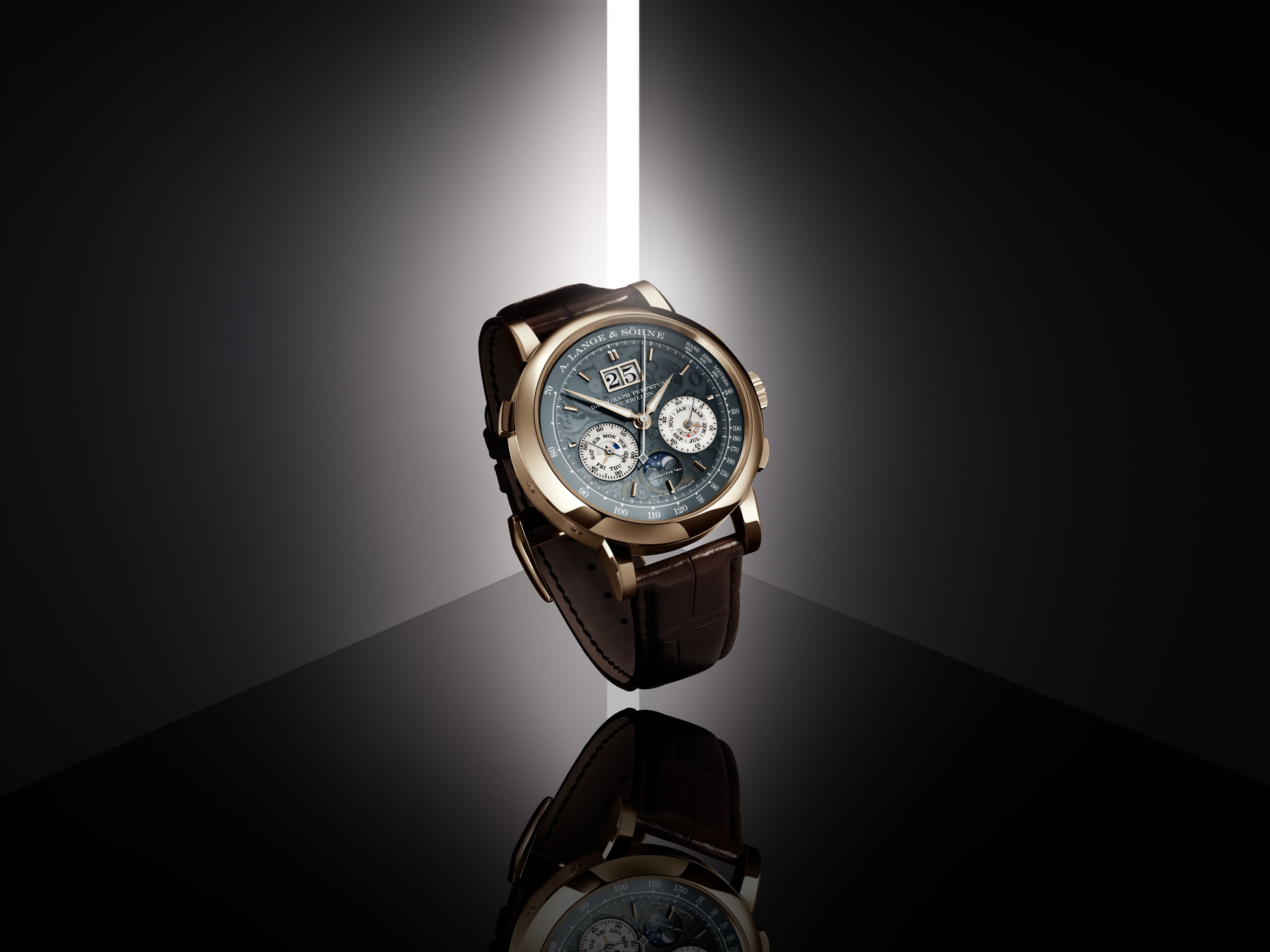
Even in watches of immense technical complexity the Datograph, the Zeitwerk, the Lange 1 Perpetual Calendar the dial remains calm. Information is organised hierarchically. Space is respected. Nothing shouts. The eye is guided rather than overwhelmed. This is where Lange’s philosophy aligns closely with restrained architecture or modernist design. Much like a well-designed building that reveals its brilliance through proportion rather than ornament, a Lange dial does not try to explain itself. It assumes literacy.
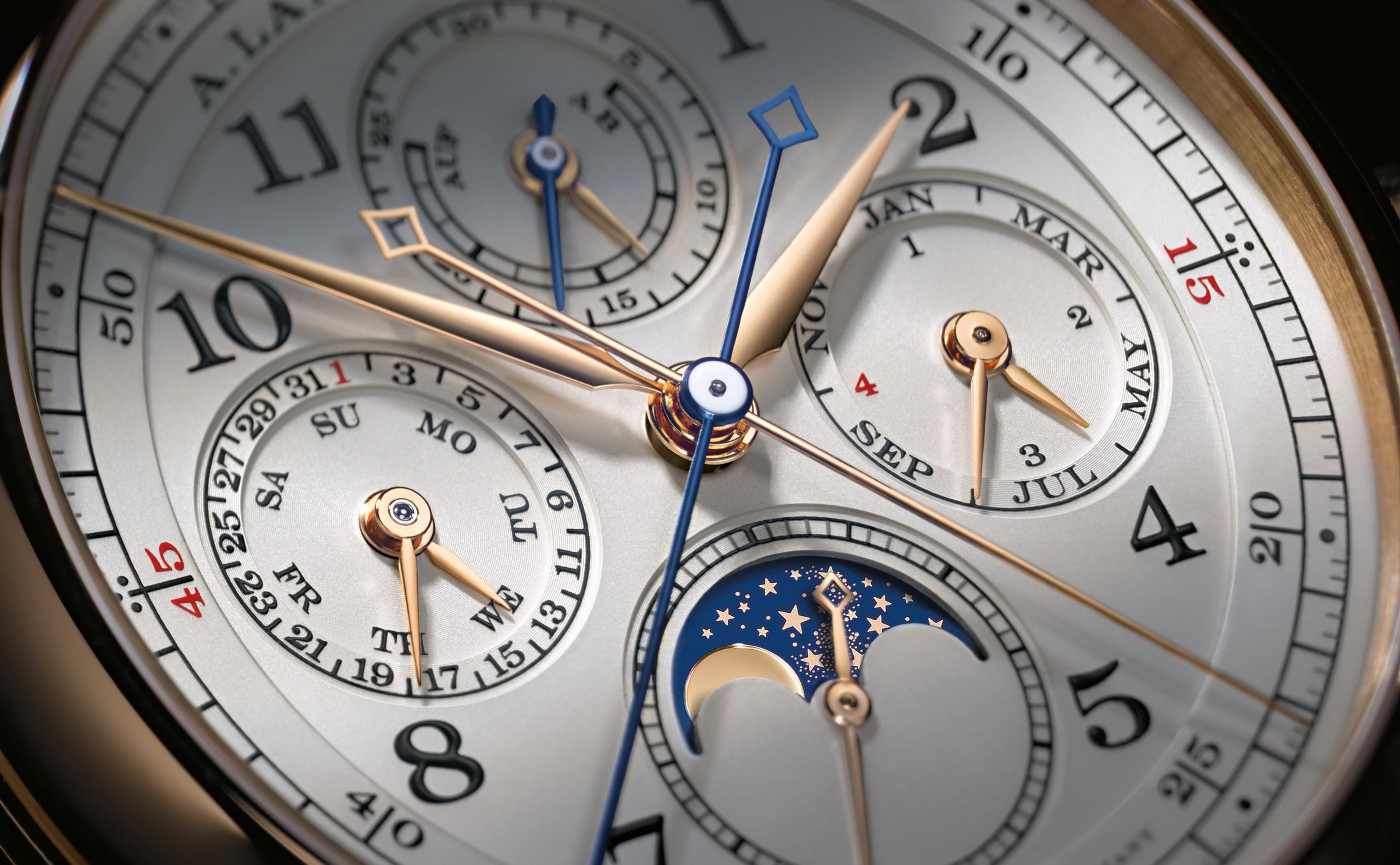
One of the most telling aspects of A. Lange & Söhne’s approach is how deliberately it avoids spectacle, even when it would be justified. The Datograph, widely regarded as one of the finest chronographs ever made, could easily have been designed to flaunt its complexity. Instead, its dial remains sober, almost severe. The same can be said of the Zeitwerk a mechanical marvel that reimagines time display entirely. Despite its conceptual audacity, it is executed with a seriousness that borders on humility. The innovation is profound, but never playful. A. Lange & Söhne does not dramatise complexity. It contains it. This refusal to perform is central to the brand’s understanding of luxury. True mastery, in this worldview, does not need amplification. It reveals itself through coherence.
Two-Fold Assembly
The watchmakers in Saxony have but one goal: the perfect timepiece. All processes and procedures are aligned with the ambition to again push the limits of feasibility just a bit beyond where they seem to be. One of the consequences is that at A. Lange & Söhne, every movement is assembled twice. It makes no difference whether it is a simple three-hand calibre or a complication. And there are convincing reasons to do that.
One of them is related to a special design feature – the three-quarter plate introduced by Ferdinand A. Lange in 1864. On the one hand, it enhances precision by stabilising the entire wheel train beneath a single bridge. On the other, it makes assembly more difficult because even an experienced watchmaker has to mount and remove it several times in succession until each individual arbor has just the right endshake.
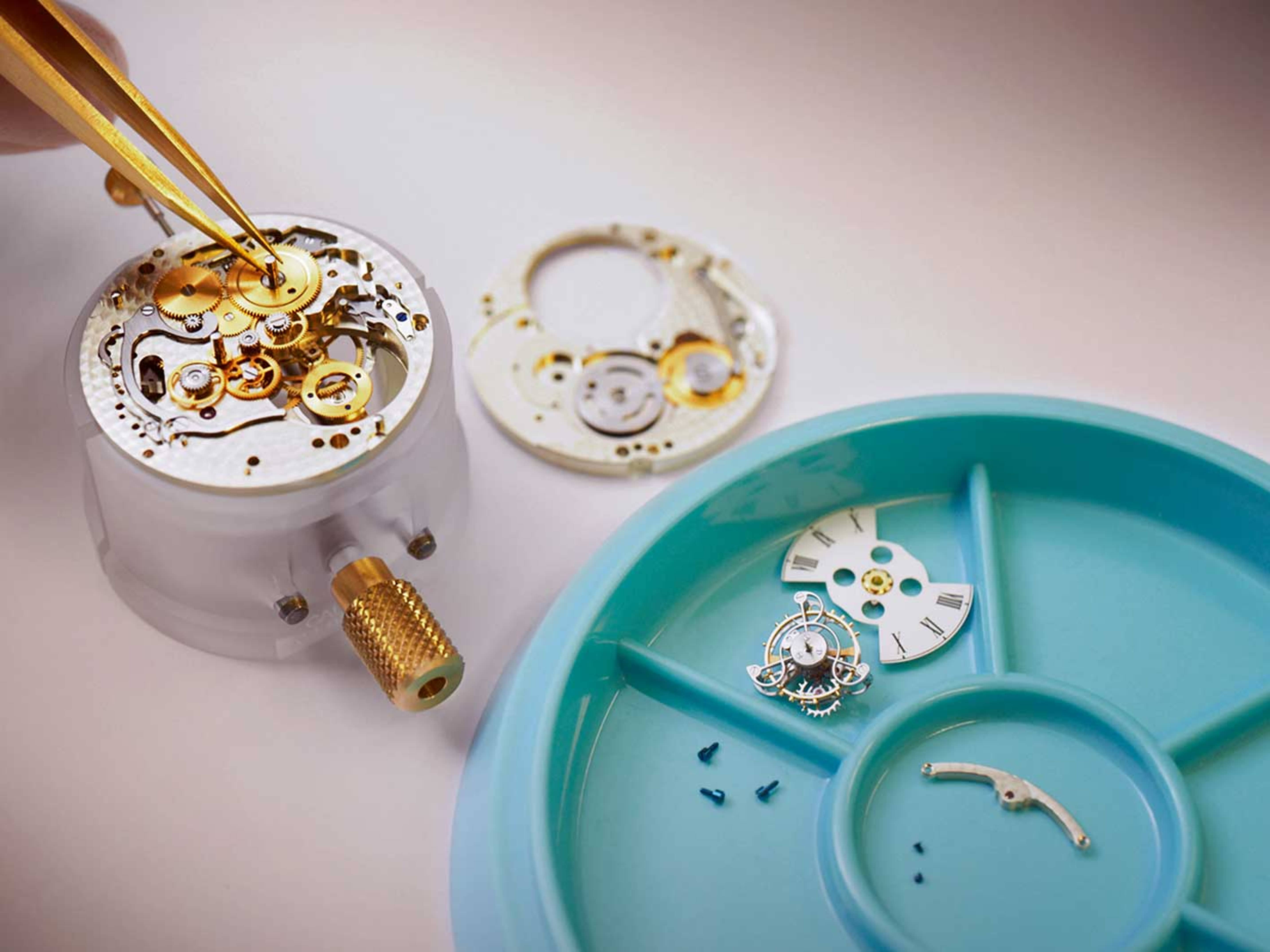
The other reason relates to the material of which the plate is made. At A. Lange & Söhne, all plates and bridges are made of German silver. It is responsible for the rigidity of the movement and in the course of time develops a warm, golden patina that protects its surface. That is why the material is left "untreated“. Unfortunately, it has a disadvantage: a very sensitive surface. Every fingerprint can leave a lasting blemish and tools like screwdrivers may cause scratches.
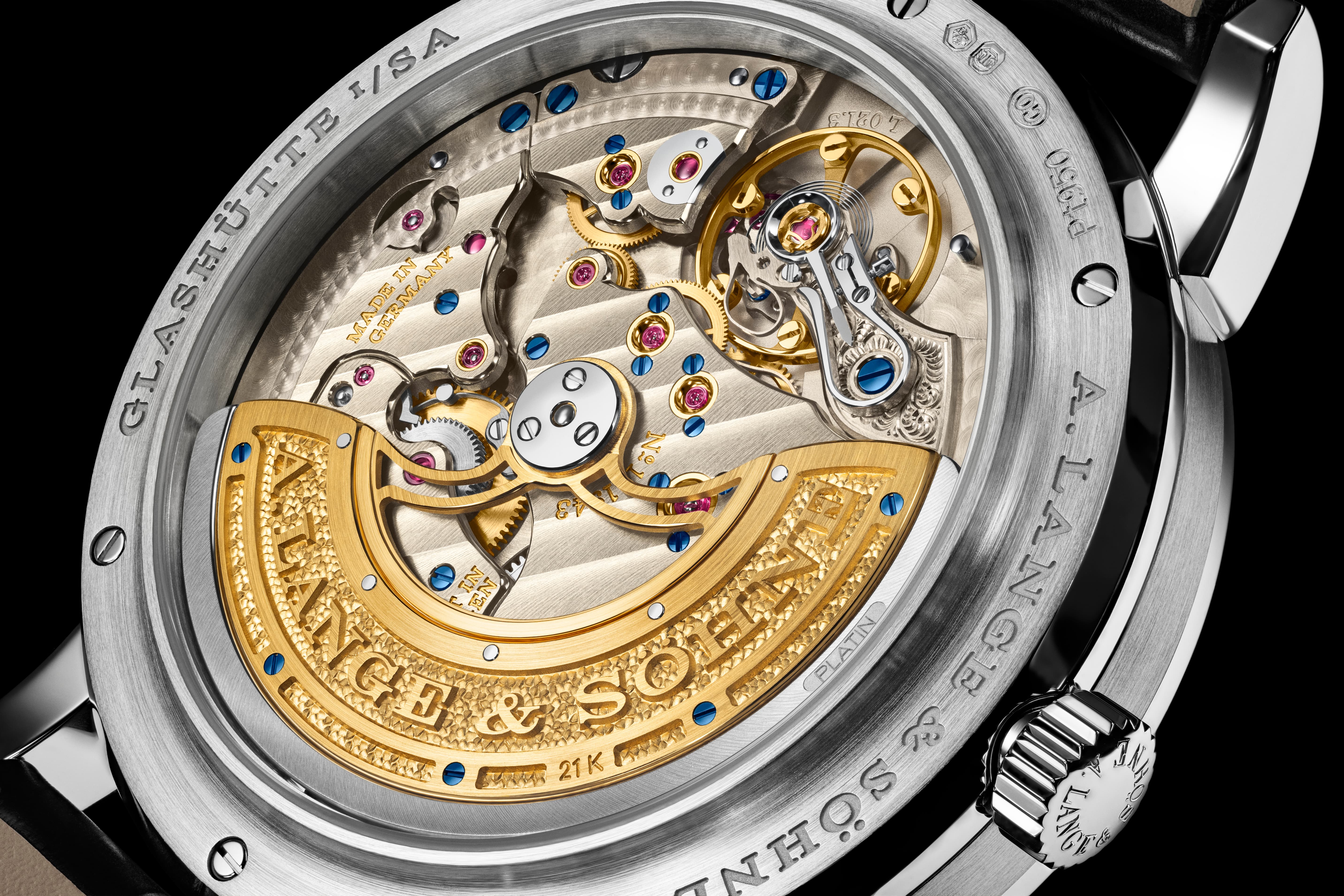
This is why at A. Lange & Söhne many hours are invested in assembling each movement with utmost virtuosity. Afterwards, the interactions of all mechanical parts are adjusted to the highest degree of perfection. But then, the movement is taken apart again. Now, all parts are painstakingly cleaned, and many of them are lavishly decorated and polished. Even parts that later remain unseen are enhanced in this way. The jig screws used to assemble the raw movement are now replaced with new, thermally blued screws. When the three-quarter plate has been decorated with the characteristic Glashütte ribbing and the last gold chaton has been mirror polished, the movement is reassembled for the second and last time and carefully lubricated at over 50 oil sinks and bearing points with up to eight different greases and oils.
The Private Pleasure of Ownership
A. Lange & Söhne’s strongly focuses on quality over quantity. Its 650 or so employees annually produce around 5000 watches in total. When many high-end Swiss manufacturers achieve numbers in excess of 50,000 watches per year, A. Lange & Söhne finds itself limited by the extreme levels of quality and finishing it achieves on the yield of 5000. That’s less than 10% of Patek Philippe’s 70,000 watches per year. Quality takes time. So, maintaining this level of finishing would be impossible at larger volumes. For A. Lange & Söhne however, this constraint isn’t limiting but rather a conscious choice that defines the brand’s strict adherence to high quality and decoration standards.
What makes A. Lange & Söhne particularly relevant today is that its philosophy extends far beyond watchmaking. Across disciplines architecture, travel, gastronomy, even fashion there is a growing fatigue with overt display. Quiet luxury has become less about price or rarity, and more about intention. Lange did not adapt to this shift. It anticipated it long before discretion became aspirational, A. Lange & Söhne was already practising it. The brand’s refusal to chase trends, scale production aggressively or dilute its identity has resulted in a coherence that feels increasingly rare.
Not Asking, But Expecting
For several generations, the watchmakers of A. Lange & Söhne have been pursuing one goal: To craft timepieces that represent the pinnacle of international watchmaking artistry. Walter Lange once said: "There's something that we should expect not only of our watches, but also of ourselves: to never stand still." This is an attitude that A. Lange & Söhne have adopted with respect of exceptional mechanical masterpieces but also when dealing with important topics such as sustainability and social responsibility. In that sense, the Walter Mitty line feels less like a quote and more like a guiding principle. Beautiful things never ask for attention. And the most enduring ones never have to.