Not Your Grandfather's Gold: How Watchmakers Are Reinventing The World's Oldest Precious Metal
 11 min read

If you have visited a jeweller in the last twelve months, you already know something has changed. 24-karat gold in India currently trades at around ₹15,400 per gram. 18-karat gold, the standard used in most luxury watch cases, sits at approximately ₹11,553 per gram. To put that in perspective that matters to a watch buyer: a modest 30-gram gold watch case now carries roughly ₹3.5 lakh worth of raw metal before a single jewel is set, a movement is installed, or a brand name is applied. From around ₹63 per 10 grams in the 1960s, gold has risen to ₹1.5 lakh per 10 grams in 2026, a journey that took six decades but has accelerated dramatically in the last two years alone. Globally, the metal surged 65 percent in 2025, its strongest annual gain since the late 1970s, and it hit a record high in January 2026. India felt every rupee of that move, compounded by a weakening currency that makes dollar-priced commodities more expensive in local terms.
For the watch industry, where gold has always been the default material of prestige, this creates a specific problem. When the raw material you have built your luxury identity around becomes significantly more expensive, you have two options: raise prices and hope the market absorbs the increase, or make the material do more. Do something with it that justifies not just its cost but its presence. Most serious watch brands have been quietly doing the second thing for years. The proprietary gold alloy, a formula developed and often patented in-house, has become one of the more interesting fields of materials engineering in watchmaking. The goal is almost always the same: take standard 18-karat gold, which is by definition 75 percent pure gold alloyed with up to 25 percent of something else, and make that 25 percent work harder. Harder in the literal sense, sometimes. More stable in colour over time. More resistant to scratching. More interesting to look at. Each brand has a different answer to the question of what better gold should be.
Here is what the leading answers look like, what is actually in them, and why any of this matters.
Jubilee Gold: Rolex, 2026
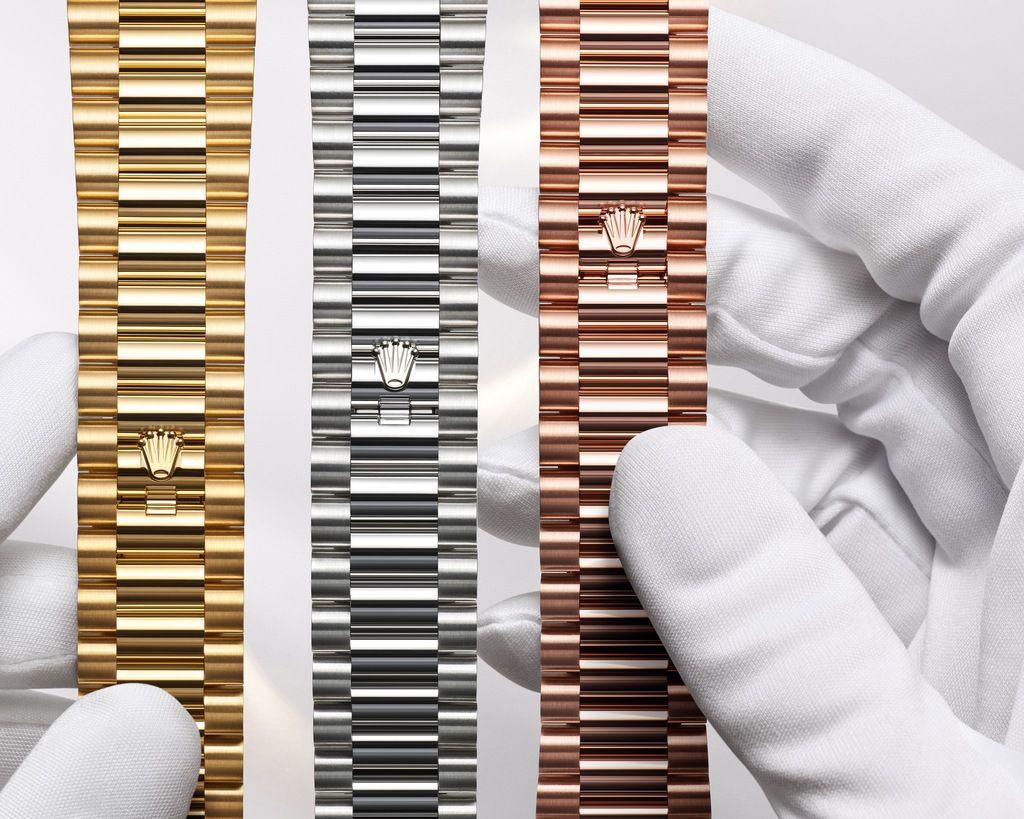
The freshest entry in this space, debuted at Watches and Wonders in April 2026 on a Day-Date 40 paired with a green aventurine stone dial. Rolex calls it their first new gold alloy in over twenty years, the last being Everose, introduced in 2005. The specific composition has not been disclosed, which is standard practice for Rolex, but the visual result is described as combining tones of tender yellow, warm grey, and soft pink. It reads as softer and less assertive than yellow gold, warmer than white gold, and more muted than rose gold. Something in between all three, shifting slightly depending on the light.
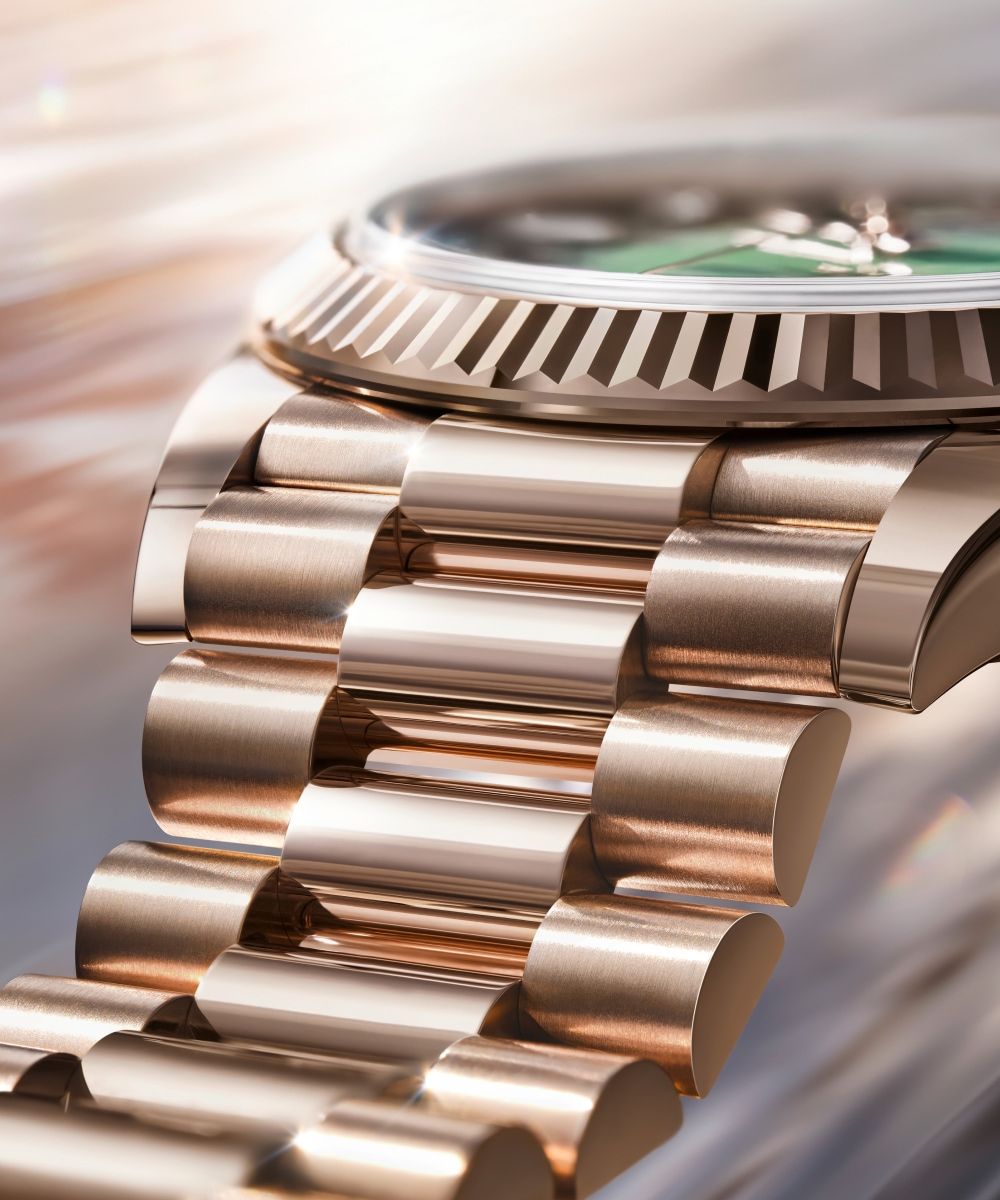
The timing is deliberate. The Day-Date turns 70 in 2026, and Rolex apparently decided that a significant anniversary warranted a new material rather than simply a new dial. The watch is an off-catalogue piece, meaning it will not be available through standard authorised dealer channels, and at approximately EUR 62,000 it is currently the only watch in existence carrying Jubilee Gold. Whether Rolex eventually extends the alloy across the broader collection is the obvious next question. Given that Everose is now one of their most widely used materials, the answer is probably yes, but for now it exists in exactly one reference on exactly one wrist at a time.
Everose Gold: Rolex, 2005
Worth understanding as the foundation because everything that came later in the proprietary rose gold category is responding to the same problem Rolex identified first. Standard rose gold gets its pink-red colour from copper, but copper is reactive. Expose it to salt water, UV radiation, and the chemistry of a human wrist over decades, and the copper oxidises. The colour fades back toward yellow. For a brand whose promise is that the watch you buy today should look identical in thirty years, this was unacceptable.
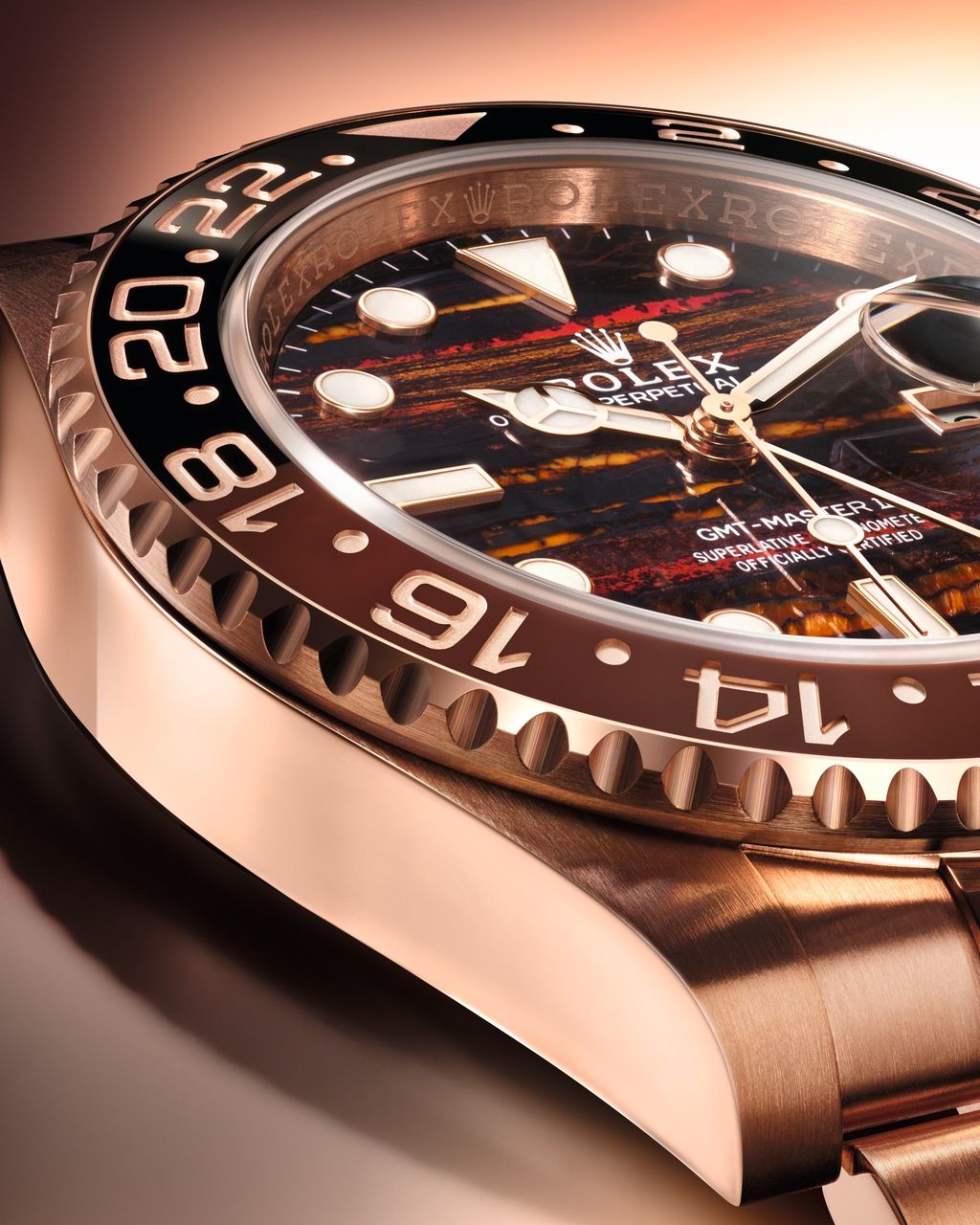
The Rolex solution was to add palladium and indium to the standard gold-copper alloy. The declared composition is at least 75 percent gold, around 20 percent copper, and traces of palladium and indium. The palladium stabilises the copper's colour chemistry so it does not migrate or oxidise under normal wearing conditions. Everose gold does not need rhodium plating to maintain its appearance, unlike standard white gold. The alloy is produced entirely in Rolex's own foundry in Plan-les-Ouates near Geneva, which is why the specific ratios remain a commercial secret. You cannot buy Everose gold. You can only find it on a Rolex.
Breguet Gold: Breguet, 2025
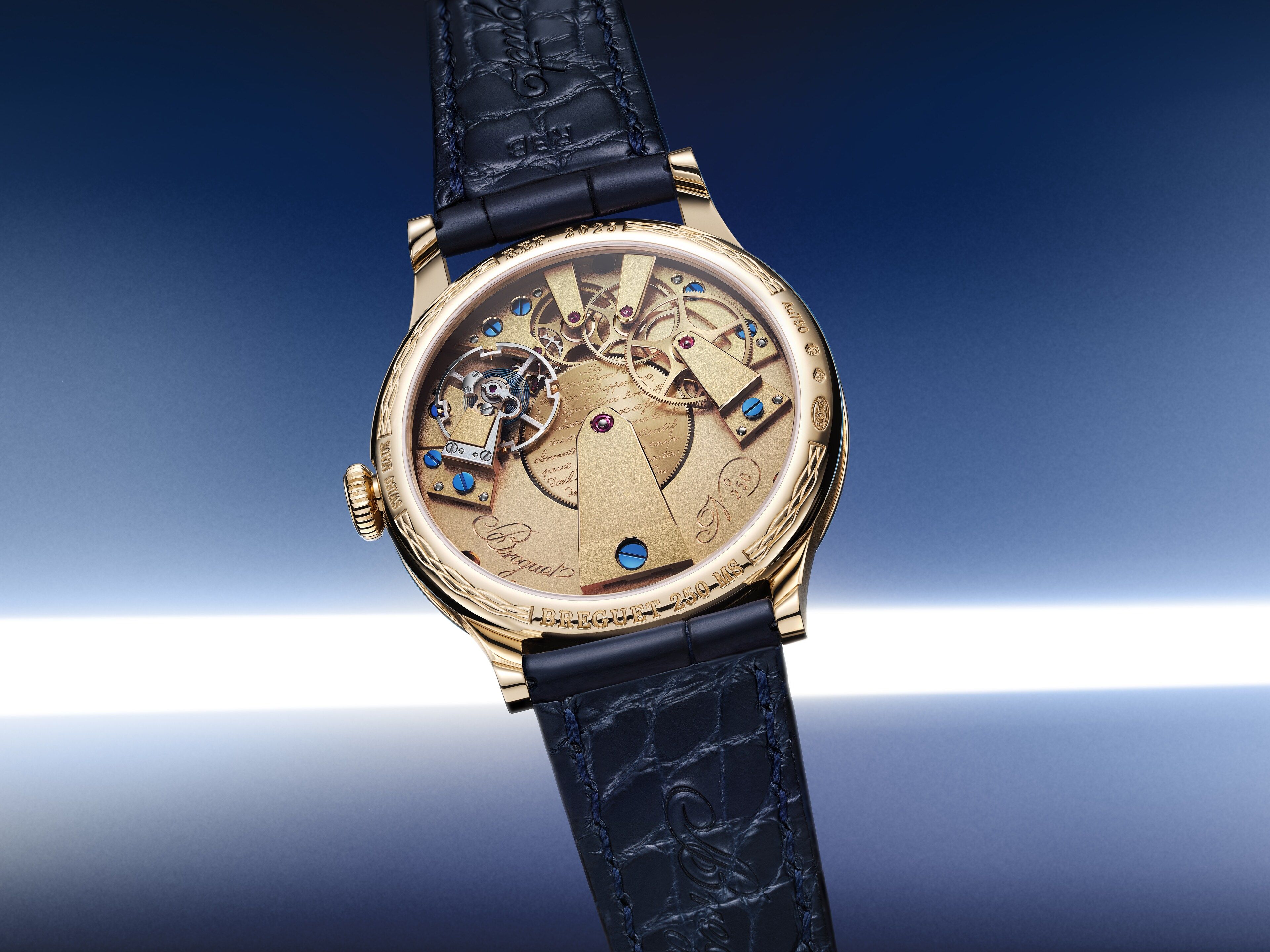
Launched for the maison's 250th anniversary on the Classique Souscription 2025, and something of a departure for a brand more associated with complication than materials science. The formula is actually disclosed: 75 percent gold, with the remaining 25 percent a mixture of silver, copper, and palladium. What distinguishes it is the inclusion of palladium rather than the more common nickel or zinc in the non-gold portion.
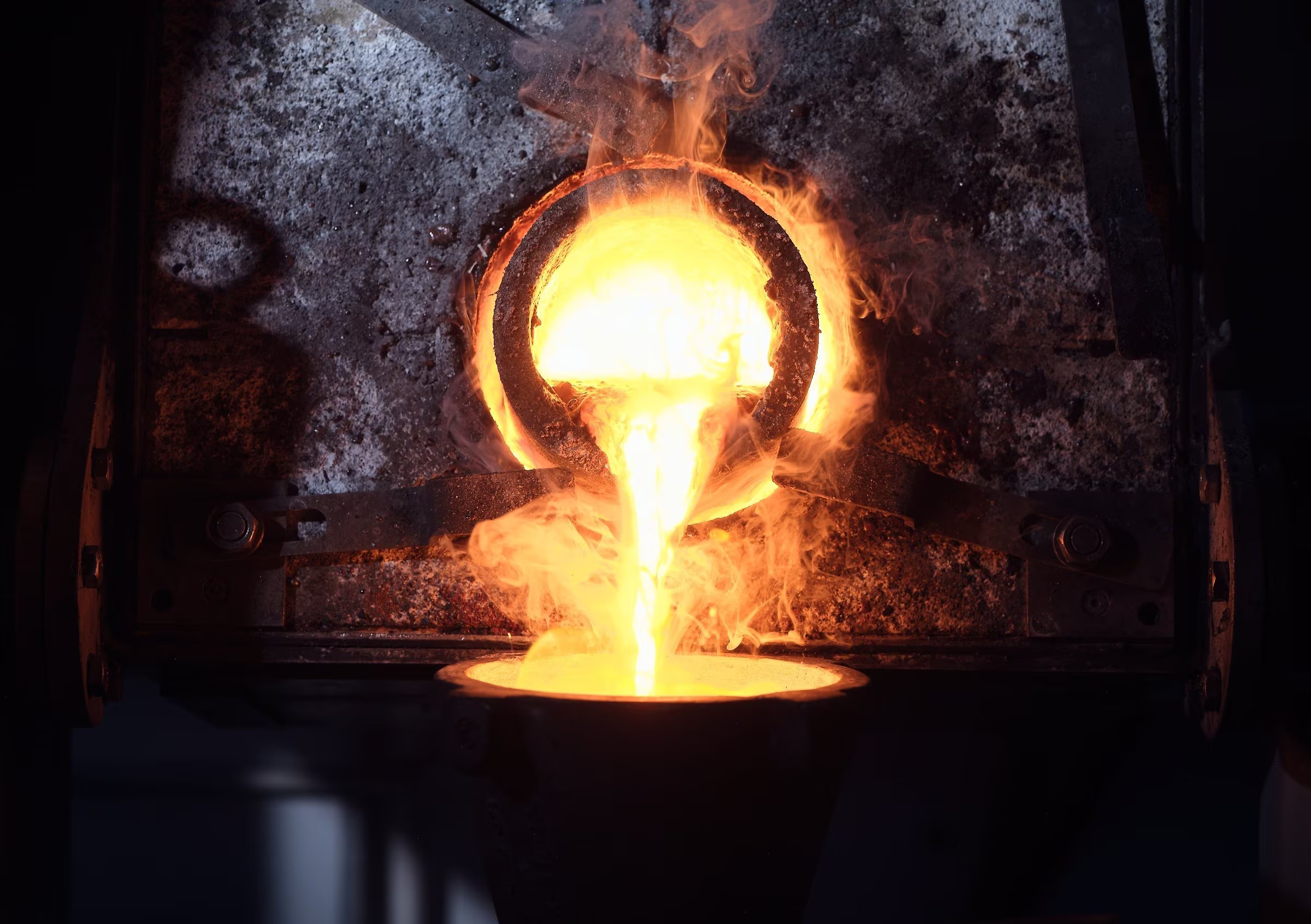
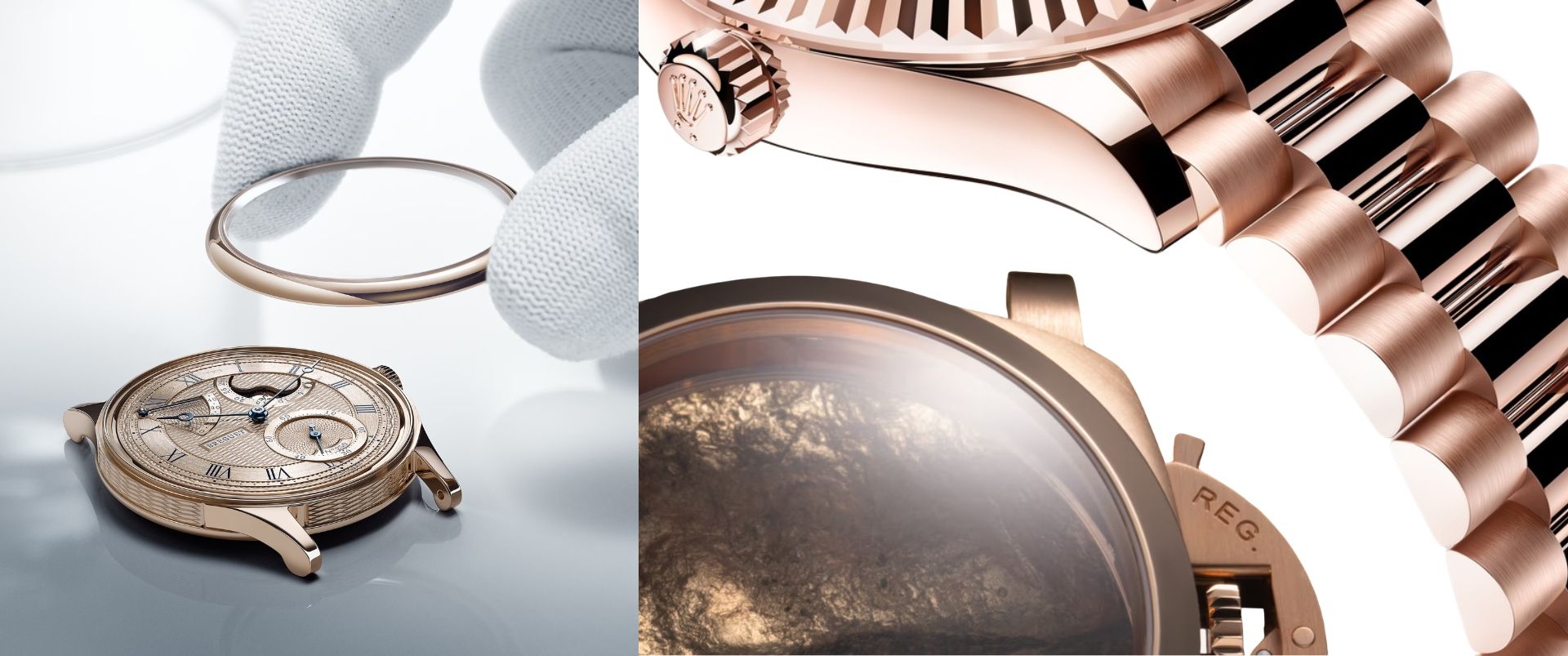
The effect is practical. Palladium improves resistance to oxidation and colour drift over time, the same logic Rolex applied to Everose, but applied to a slightly different base colour. Breguet gold sits somewhere between yellow and rose, described by the brand as inspired by the gold used by eighteenth-century watchmakers in Abraham-Louis Breguet's era. That is the aesthetic ambition: not to create something new, but to recreate something old with better chemistry. The alloy is produced in the brand's own workshops and appears not just on the case but on the movement bridges and plates, giving the inside of the watch the same warm tone as the outside.
Honeygold: A. Lange and Sohne, 2010
The hardest gold in common use in fine watchmaking, and arguably the most technically interesting. The alloy combines gold, copper, and zinc. The zinc content increases hardness dramatically. Honeygold is harder than platinum and roughly twice as hard as standard yellow gold. This matters because harder gold resists the microscopic surface damage from normal daily wear that makes most gold watches look lived-in within a few years.
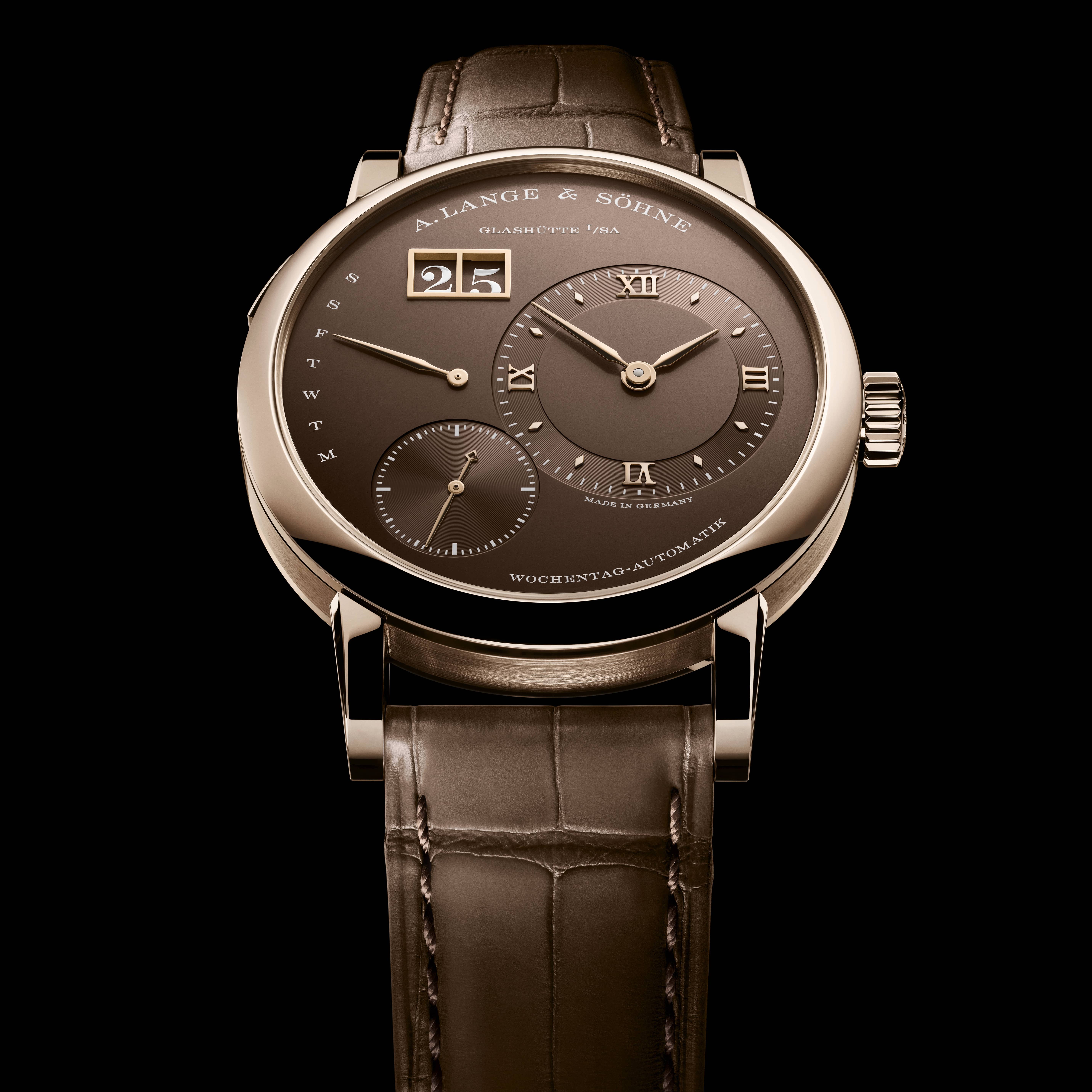
The catch is production. Only one foundry is capable of manufacturing this specific alloy, and it requires a minimum order of 50 kilograms. A typical watch case weighs around 80 grams. Fifty kilograms is therefore enough for approximately 625 cases, which is a meaningful number for most brands but a tight production constraint for a manufacture like Lange, which produces around 5,000 watches per year across all references. The logistical and financial weight of the minimum order, combined with the difficulty of machining a material this hard, means Honeygold appears only in specific references. The colour reads as slightly desaturated yellow with an amber warmth, closer to the liquid the name references than to the warm red of rose gold. It is not developed for colour. It is developed for durability.
Magic Gold: Hublot, 2011
The most structurally radical of these alloys, and genuinely unlike anything else in watchmaking. Standard 18-karat gold has a Vickers hardness of around 150. Standard 316L stainless steel sits around 200. Grade 5 titanium reaches approximately 300. Magic Gold measures around 1,000 Vickers. It is harder than steel and significantly harder than any conventional precious metal alloy, achieved not through a traditional alloying process but through something closer to a materials fusion.
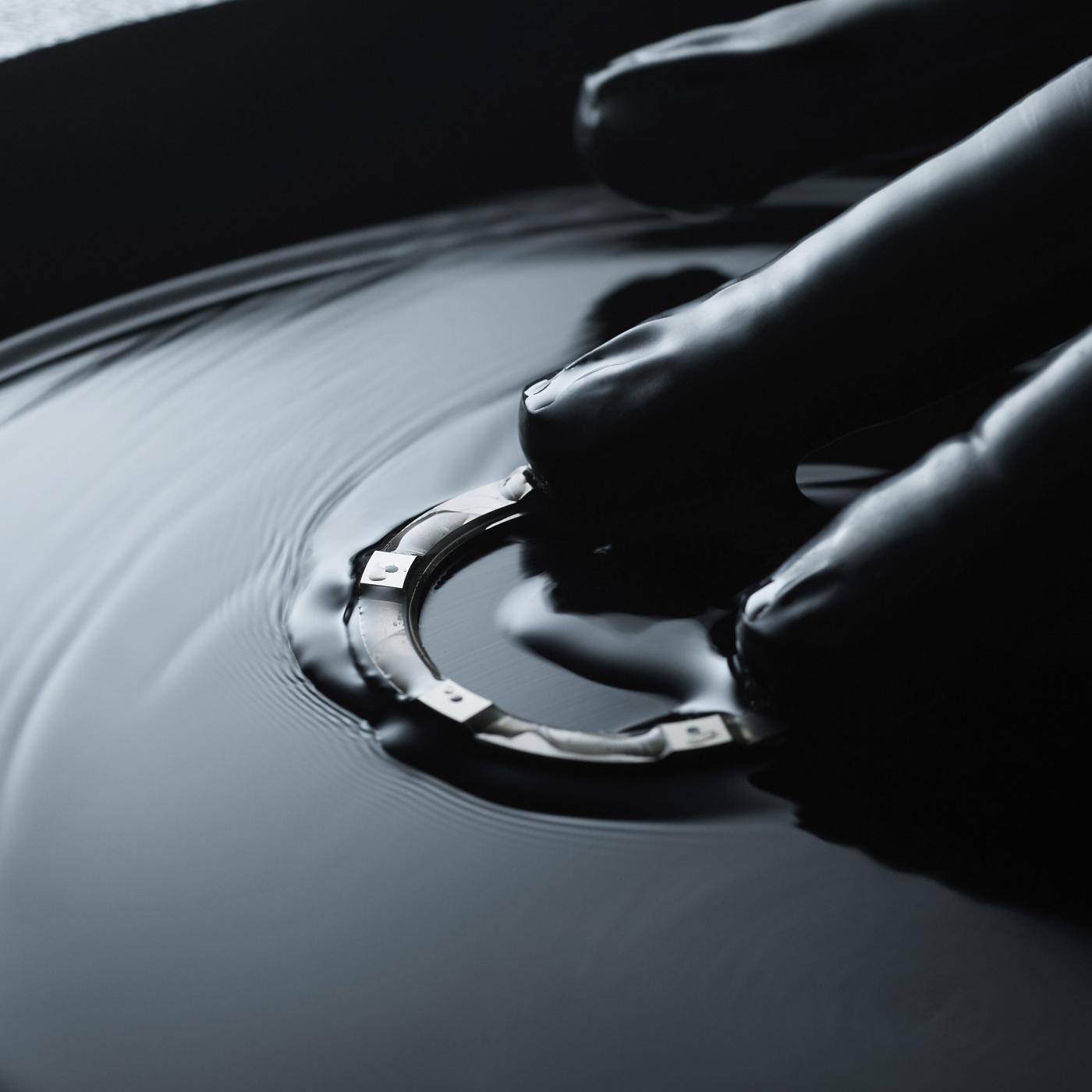
The process: boron carbide ceramic, one of the hardest substances on earth, is compressed under cold isostatic pressure of around 2,000 bar into a shape approximating the final watch case. It is then sintered at 2,200 degrees Celsius. Separately, 24-karat gold is heated to 1,100 degrees Celsius and injected under high pressure with inert gas into the ceramic matrix. The gold fills the voids in the ceramic structure. The result is still certifiable as 18-karat gold, meaning it contains at least 75 percent gold by weight, with the remaining 25 percent being boron carbide rather than the conventional metals. It can only be machined by diamond-tipped tools, lasers, or ultrasonic cutters. Hublot built a dedicated foundry in Nyon specifically to produce it, and at maximum capacity can manufacture approximately 300 to 350 Magic Gold watches per year. Jean-Claude Biver, then CEO of Hublot, famously demonstrated the material at its launch dinner by picking up a steak knife and attempting to score the case surface in front of the assembled press. The point was made.
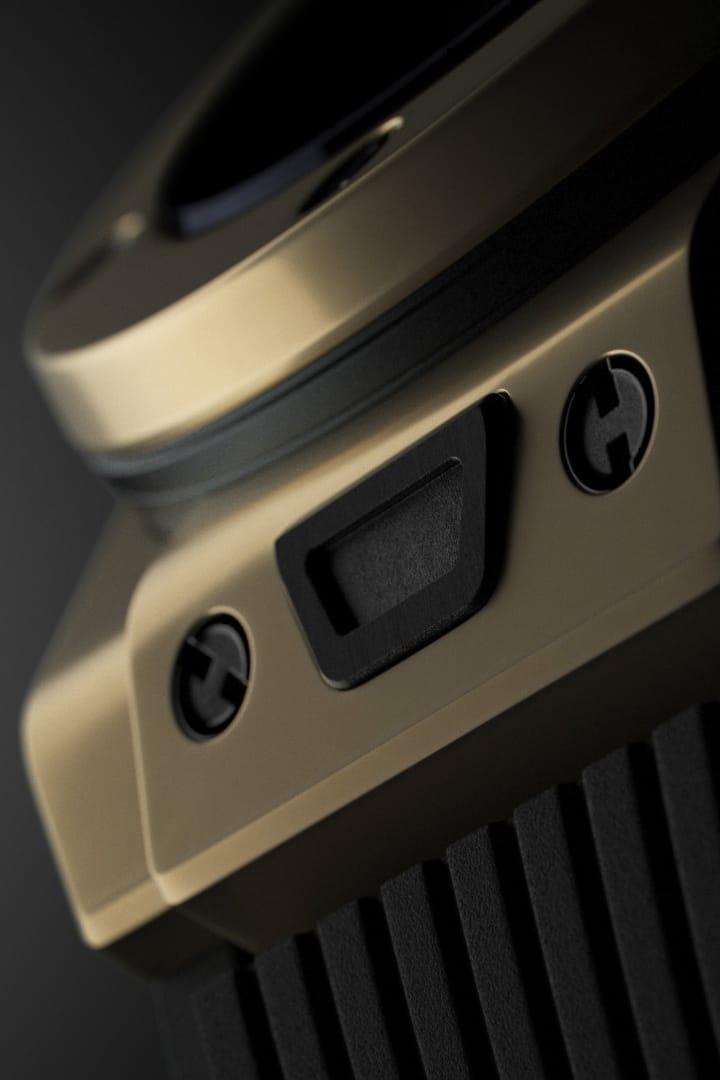
Goldtech: Panerai, introduced 2019
The most disclosed formula in this group, voluntarily revealed by Panerai: 75 percent gold, 24 percent copper, and 0.4 percent platinum. The high copper content, significantly above that of standard rose gold, is what produces Goldtech's characteristic deep reddish hue. It is more saturated and more intense than conventional pink gold, pushed closer to the warm end of the spectrum without becoming brassy or orange.
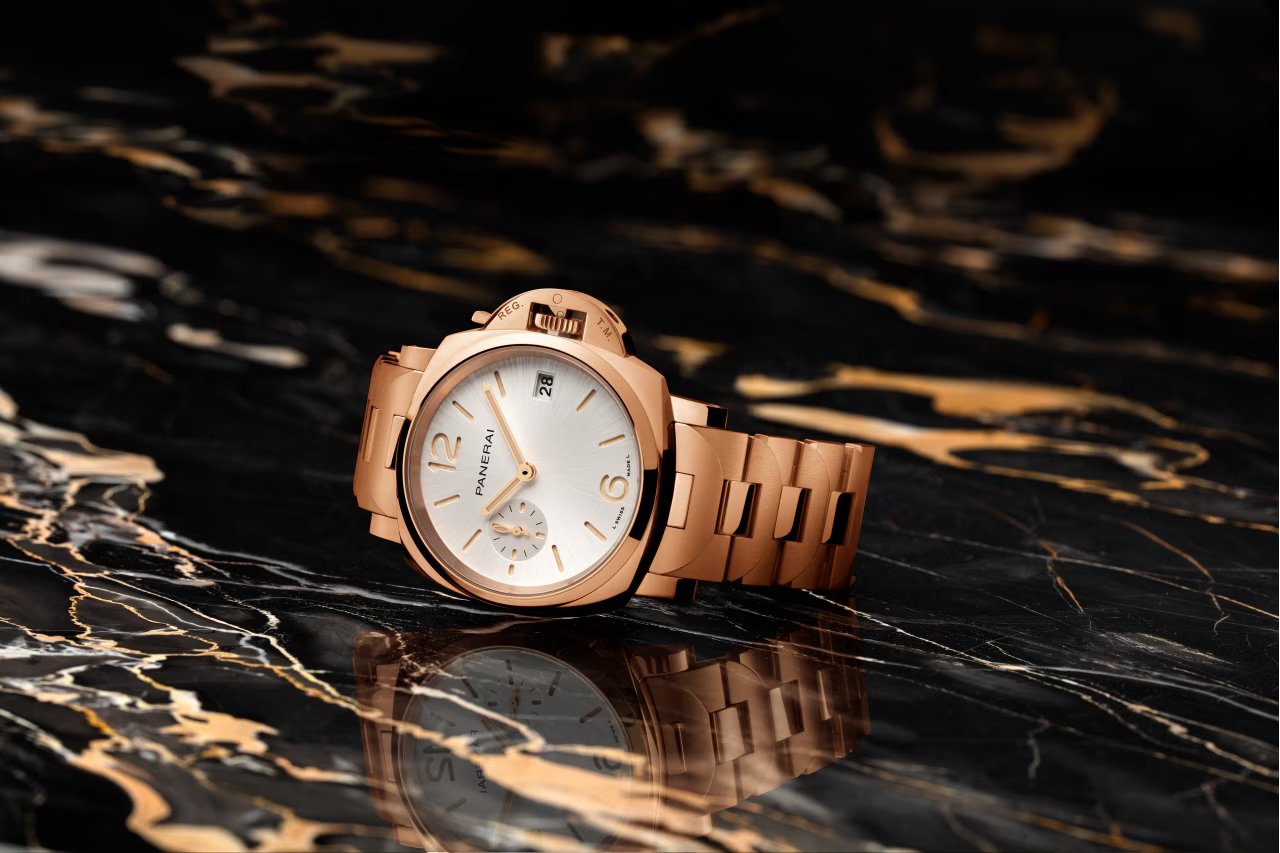
The platinum, though present in only a small fraction, is doing specific work. It acts as a chemical stabiliser for the copper, reducing the tendency of the high-copper alloy to oxidise and lose its colour over time. This is the same principle as Everose and Sedna, applied to a redder base. The result is an alloy that is both visually distinct from the field, immediately identifiable as something other than standard rose gold, and more durable in the long term. It appears across multiple Panerai references including the Luminor Marina, the Submersible, and the Luminor Due. Unlike some of the rarer alloys on this list, Goldtech is a production material used across a range of references rather than a special-edition story.
Moonshine Gold
The name tells you exactly what the colour is trying to do. Omega created Moonshine Gold in 2019 to mark the 50th anniversary of the Apollo 11 mission, inspired specifically by the colour of moonlight against a dark sky, that particular pale, cool luminescence that is neither white nor yellow but something quietly in between. The composition is 75 percent gold, 14.5 percent silver, 9 percent copper, and 1 percent palladium. The high silver content relative to standard yellow gold is what pulls the colour toward that softer, more muted tone. The palladium, present in a small fraction, stabilises the alloy against colour drift over time, the same logic Rolex applied to Everose and Panerai applied to Goldtech, deployed here in service of a completely different visual result.
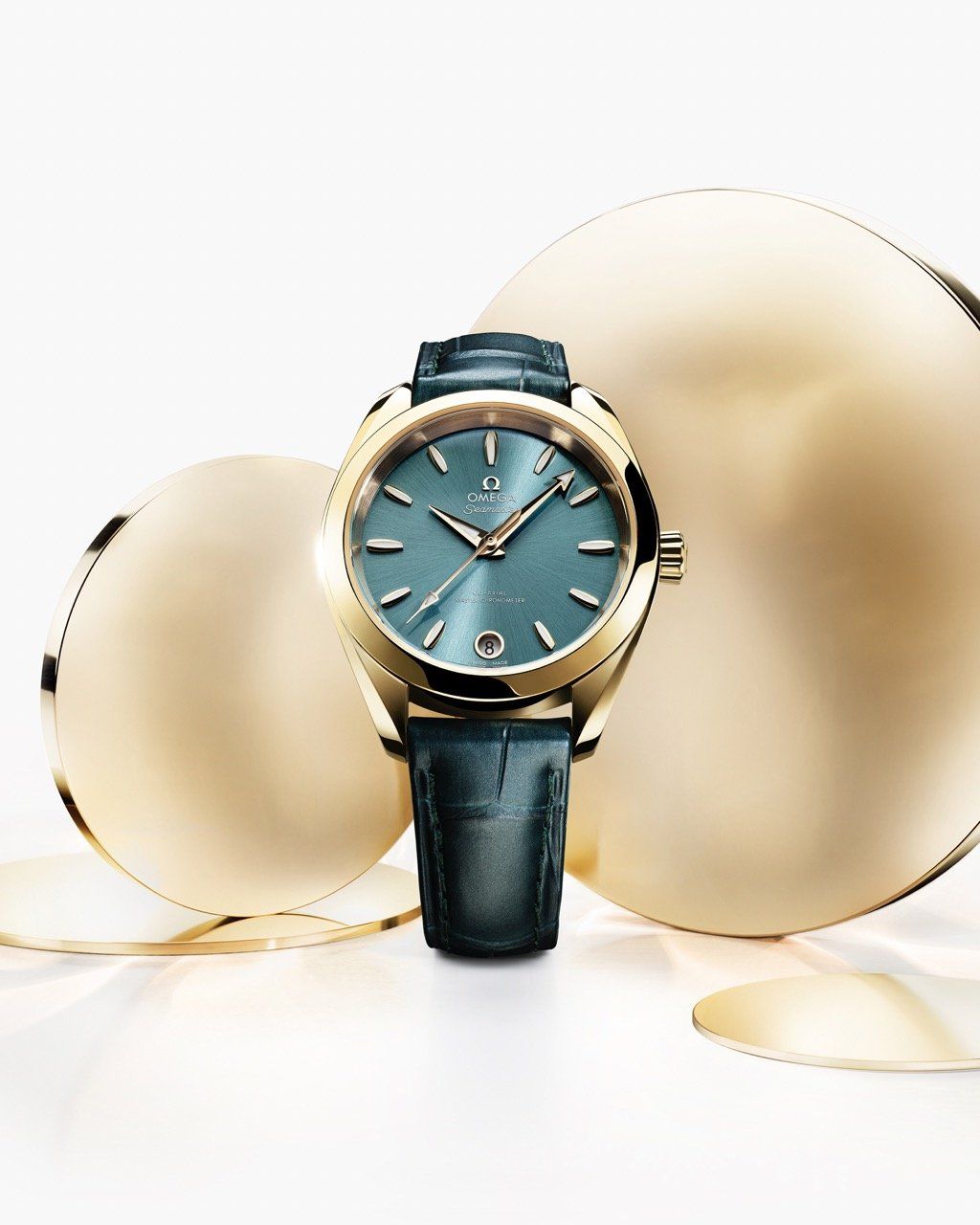
The effect on the wrist is a gold that reads as warmer than white gold but significantly less saturated than conventional yellow gold, closer in spirit to older vintage gold alloys that have aged and softened over decades. It does not announce itself. On the Speedmaster Moonwatch, where every surface decision is weighed against the watch's functional identity as a professional chronograph, that restraint is precisely the point. Moonshine Gold has since moved from the limited edition context of its 2019 debut into Omega's permanent collection across multiple references, including standard production Speedmaster Moonwatches. It now sits alongside Sedna and Canopus as the third pillar of Omega's proprietary gold programme, rose, white, and yellow, each reformulated to be more durable, more stable, and more visually specific than the conventional alloys they replace.
What the Others Are Doing
The proprietary gold arms race extends well beyond these five. Omega alone has four named alloys in current use. Sedna Gold, introduced in 2012, is their rose gold stabilised with palladium. Moonshine Gold, introduced in 2019 for the 50th anniversary of the Apollo 11 landing, is an 18-karat yellow gold with a deliberately paler, softer tone achieved by increasing silver content and reducing copper relative to standard yellow gold. Canopus Gold is their proprietary white gold, composed of gold, platinum, rhodium, and palladium, inherently white without needing rhodium plating. Bronze Gold is the outlier: a 9-karat alloy of 37.5 percent gold with palladium and silver, designed to develop a gentle patina over time without the green oxidation that conventional bronze produces on skin. Hublot also produces King Gold alongside Magic Gold: a more conventional rose gold with a higher platinum content than most, giving it a particularly warm, saturated red tone. Roger Dubuis has EON Gold. A. Lange and Sohne also produce pieces in standard rose and white gold alongside Honeygold.
Why This Matters Beyond the Marketing
The cynical reading of proprietary gold alloys is that they are primarily a branding exercise, a way to differentiate what is fundamentally the same precious metal across competing manufacturers. There is some truth to this. Several of these alloys are solving problems that are not urgent for most wearers. Standard rose gold does eventually fade toward yellow, but it takes decades and most owners will not notice or care. The more accurate reading is that with gold at historically unprecedented prices, the pressure to justify its use is real. A watch case in Honeygold, which will resist surface damage significantly better than standard gold, is a better object for the money over a long ownership period. A Magic Gold case that maintains a polished finish without needing refinishing is materially different from one that will show micro-scratches within months of daily wear. Goldtech that holds its deep red without fading is a different proposition from a standard rose gold that will look noticeably different in ten years.
Gold has risen more than 60 percent in five years, crossing the symbolic threshold of $5,000 per ounce in January 2026. At that price, the question of what gold can do, beyond simply being expensive, is no longer academic. It is what separates a thoughtful use of the material from a costly one. The brands engineering their own answers to that question are not just doing metallurgy. They are making an argument for why gold still belongs on a wrist in 2026, even at $5,000 an ounce. The argument is stronger when the material is better.


