When Complexity Yields Calm: The Meditative Logic of Genus Watches
 6 min read

In 1865, the German chemist August Kekulé arrived at one of the most consequential insights in the history of science not at a laboratory bench, but in a dream. As Kekulé later recounted, he saw atoms twisting and turning, forming a serpent that seized its own tail - an Ouroboros. He awoke with the realization that benzene (C₆H₆) was not linear but cyclic: a ring of carbon atoms bonded in perpetual continuity. The revelation resolved a fundamental chemical mystery and reshaped organic chemistry forever.
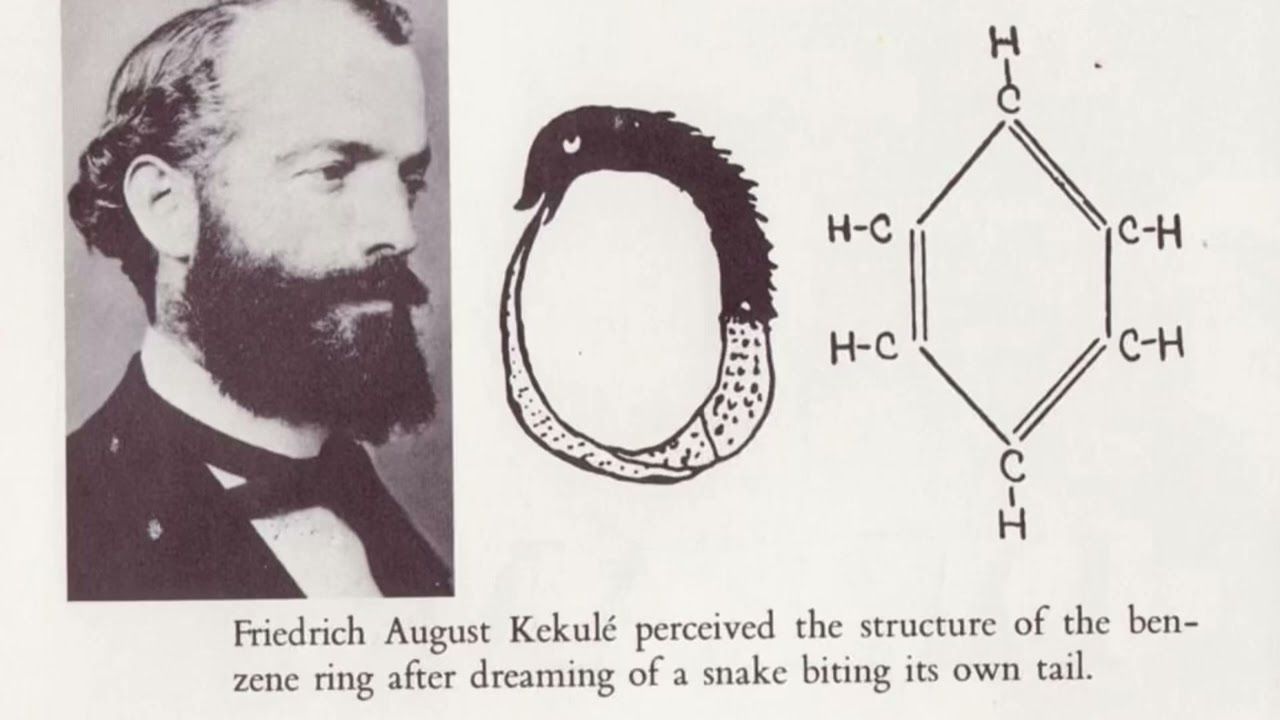
What matters here is not only the scientific breakthrough, but how it occurred. Order emerged from apparent chaos. Complexity resolved itself into elegance. The mind, released from conscious strain, perceived coherence where waking logic had stalled.
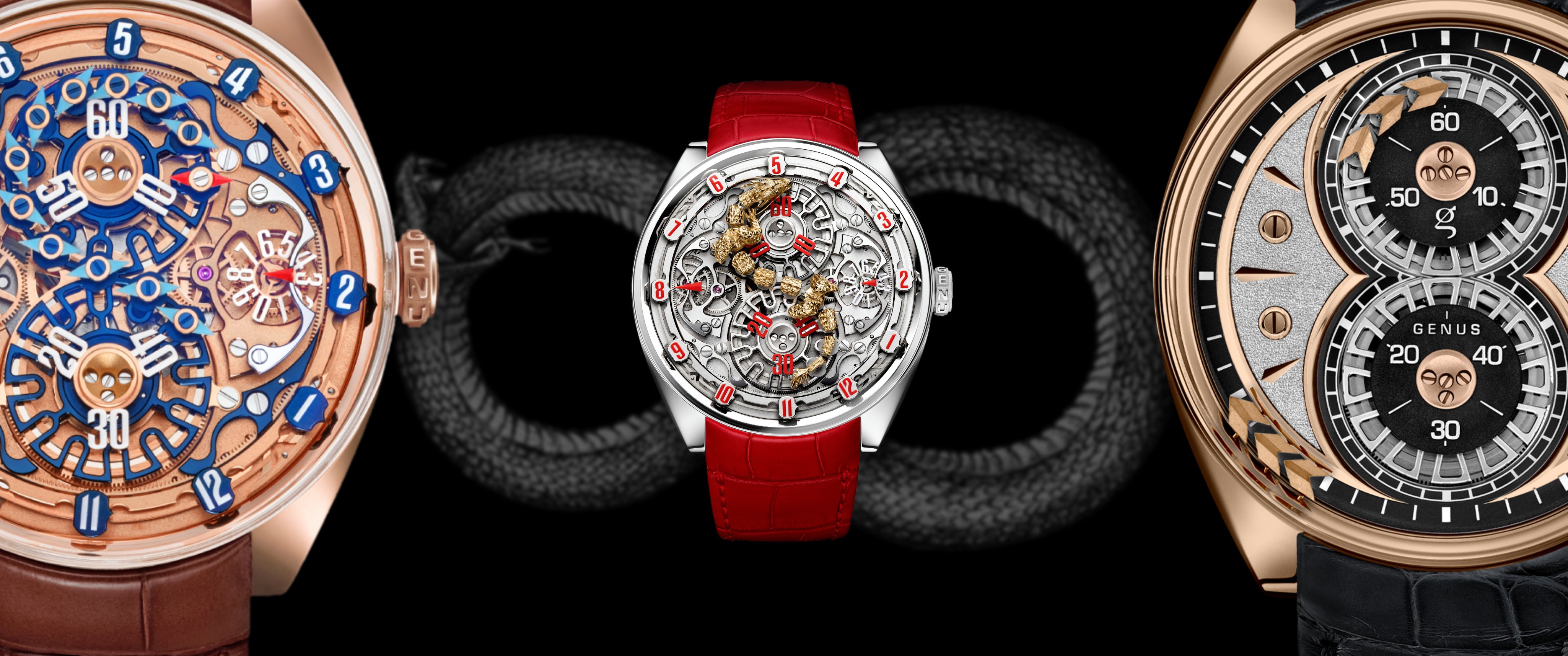
More than a century and a half later, a similar sensation arises via Genus watches which live in that same visual and psychological space: a ring of motion, elements circulating in orbital pathways, dragons and arrows tracing time in endless loops that feel less like complication and more like contemplation. These watches are mechanically intricate to the point of audacity, yet they induce calm rather than cognitive overload. They feel meditative. And that paradox - complexity experienced as serenity, is precisely their quiet triumph.
Complexity Versus Complication
Modern life is saturated with what we often mislabel as “complexity”: congested interfaces, layered notifications, inefficient systems, and processes that demand attention without offering meaning. This is not true complexity. It is complication - a tangle without purpose.
True complexity, by contrast, is cohesive. It is the difference between noise and music, between traffic and choreography. Nature exemplifies this distinction effortlessly: a murmuration of starlings, the Fibonacci logic of a nautilus shell, the self-regulating balance of an ecosystem. These systems are intricate, but not stressful. They reward attention rather than demanding it.

Psychological research consistently shows that humans find calm not in the absence of complexity, but in its legibility. When a system reveals internal logic - when each part belongs - our brains shift from vigilance to contemplation. Managed complexity soothes, unmanaged complication agitates. That’s why the right kind of complexity invites you in.
This distinction is crucial to understanding the emotional impact of Genus watches. Here, what could be chaos is rendered legible, predictable, and paradoxically calming.
The Gen(i)us Way Of Telling Time
Genus is an independent Geneva‑based watchmaker that set itself a deceptively simple brief: take time out of its traditional circular dial, and make it flow. The result is a mechanical grammar unlike anything else, yet internally consistent enough that, once learned, it reads as naturally as a three‑hand chronometer.
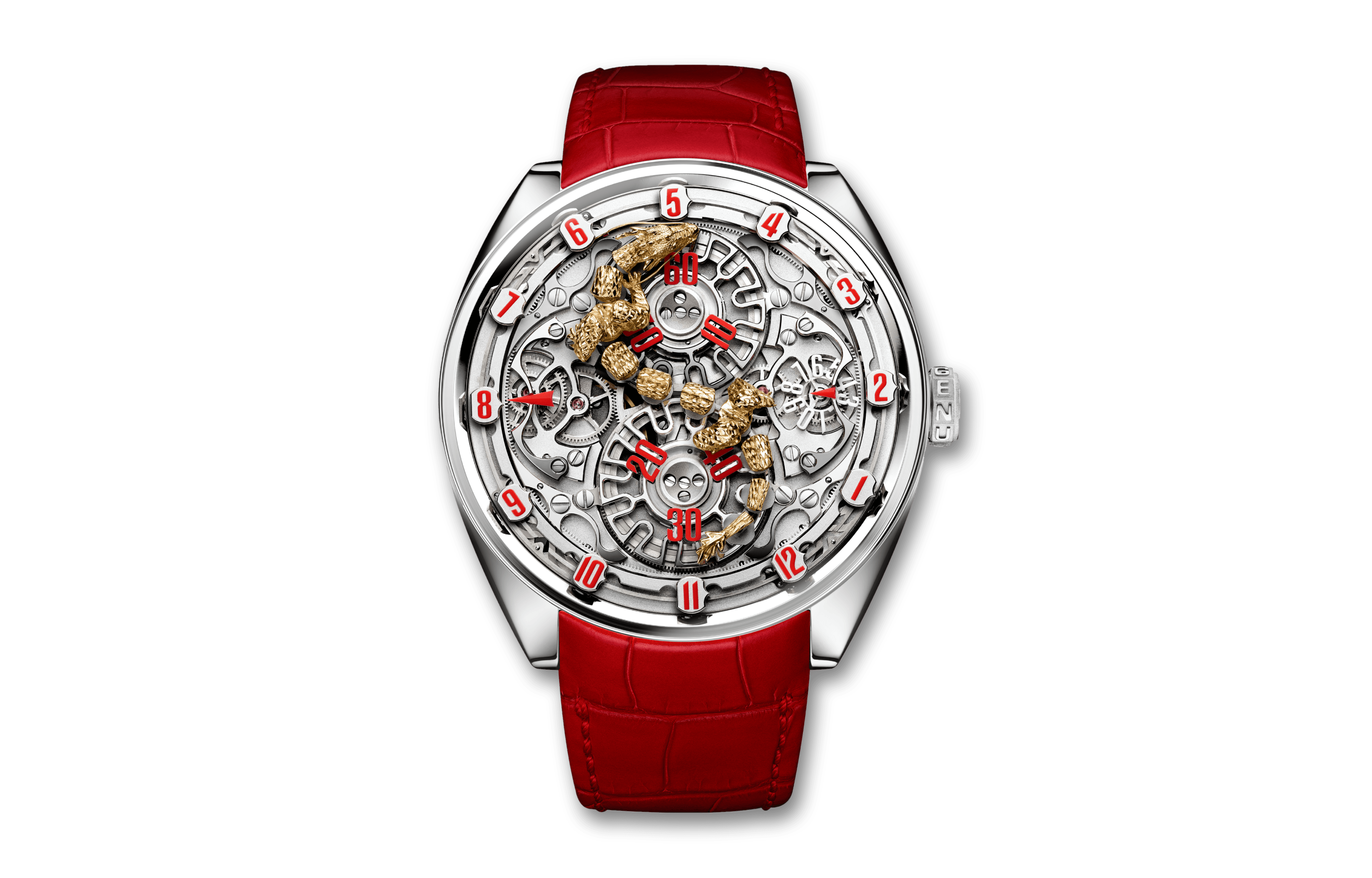
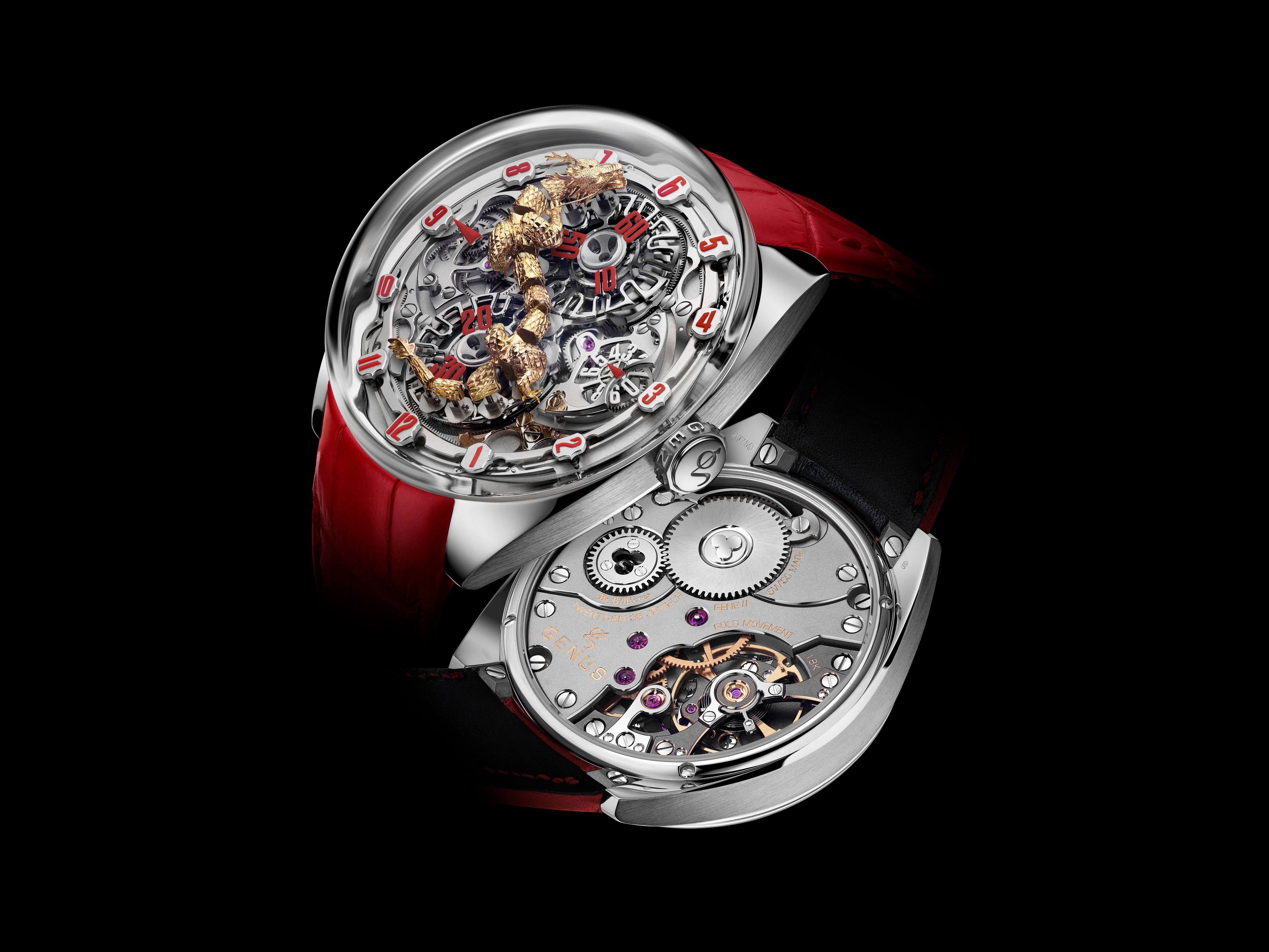
At the heart of its creations such as the GNS1.2 Dragon is a movement divided into two distinct but harmonized domains: one dedicated to generating and transmitting energy, the other to distributing and regulating it. The caliber 260xx‑2 is hand‑wound, with a large balance beating at 2.5 Hz, a Swiss lever escapement, approximately 50 hours of power reserve, and 390 components organized around this dual architecture.

Time is decomposed and reassembled across the dial in three layers of motion.
- Hours are shown by twelve peripheral satellites or indices that rotate both around the dial and about their own axes, a patented system that effectively makes the hour hand a procession of orbiting markers.
- The tens‑of‑minutes are represented by eleven free‑moving elements - stylized in some versions as an articulated dragon - circulating between two counter‑rotating focal points, again under patent.
- Exact minutes are read on a skeletonized 0-9 disc at roughly 3 o’clock.
This is one of the very few original alternate time displays that have no precedent.
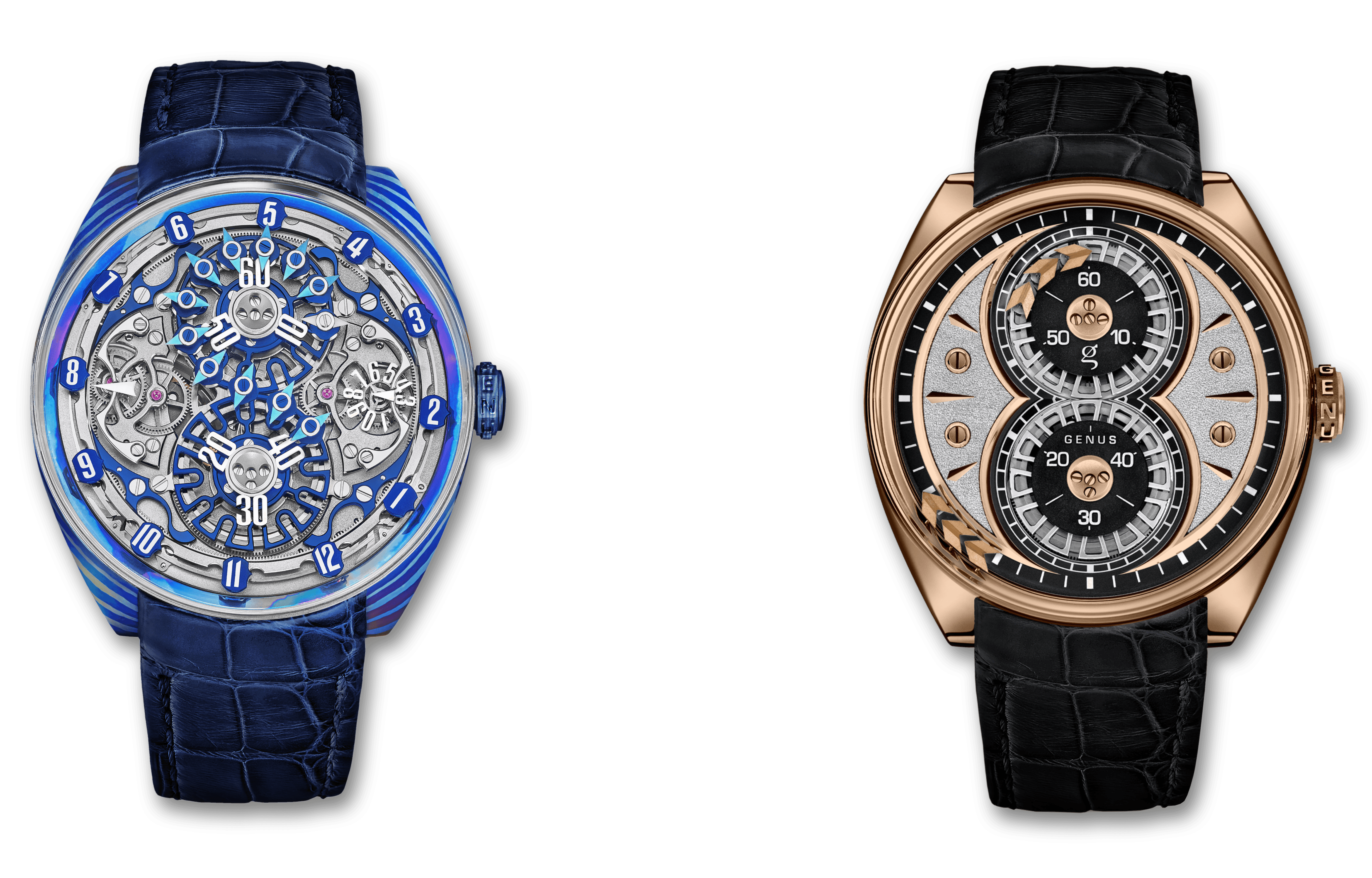
The brand deliberately tempers visual information in its second‑generation GNS2 models. Time is “put back in its traditional position,” with more solid dial surfaces and less exposed mechanisms. The orbital complication remains, now with a circumferential parade of arrows for the hours and a reduced number of elements for the tens‑of‑minutes. The presentation is calmer, more conventional. Complexity is not removed, it is reworked.
The Psychology Of Managed Complexity
Studies in psychology and organizational theory have long noted that humans experience reduced stress when interacting with systems that are complex but coherent. When cause and effect are perceptible - when patterns can be intuited even if not fully understood - the brain shifts into a state associated with mindfulness.
This is why people find calm in watching waves, flames, or clouds. These phenomena are endlessly variable, yet governed by consistent underlying principles. The mind engages without striving.
A Genus watch operates in the same cognitive space. You may not consciously track every mechanical interaction, but you sense the order beneath the surface. Time unfolds not in abrupt ticks, but in continuous transformation. The watch does not shout information - it offers it.
In a world dominated by alerts and interruptions, this kind of engagement feels almost radical.


Complexity As A Counterpoint To Modern Chaos
Ironically, it is precisely because modern life is so chaotically “complicated” that objects like Genus watches feel grounding. Daily systems often lack internal harmony: apps that update without improving, workflows that expand without clarifying, technologies that demand attention rather than earning it.
Against this backdrop, the Genus philosophy feels restorative. Here is a system of immense sophistication that does not ask you to manage it. It simply exists, complete unto itself.
You do not interact with a Genus watch to optimize productivity. You observe it. And in observing it, you are reminded that complexity need not be exhausting - if it is honest, purposeful, and well-resolved.
Art, Alchemy, and the Ouroboros
The Ouroboros has recurred across centuries of human thought: in alchemy, mythology, psychology, and art. It symbolizes unity, eternal return, and the reconciliation of opposites. It appears in the surrealist work of Salvador Dalí, where time melts and logic bends without breaking.
Genus watches feel like mechanical descendants of this tradition. They are not merely instruments for measurement - they are objects of reflection. The circular migration of their displays echoes the idea that time is not a straight line but a cycle - experienced, revisited, and renewed.
In this sense, reading time on a Genus watch becomes a small contemplative act. You do not glance and move on. You pause. You watch the system express itself.
The Calm of Understanding Without Control
One of the subtler pleasures of a Genus watch is that it does not require serious technical aptitude from its wearer. You are not meant to decode it fully. You are meant to trust it.
This is psychologically significant. Modern stress often arises from the illusion that we must control every system we interact with. Genus offers an alternative posture: attentive acceptance. The watch works whether or not you understand every detail. Its calm is independent of your intervention.
That, perhaps, is the deepest reason these watches feel meditative. They model a relationship with complexity that is rare today - one based on respect rather than domination.

When Complexity Finds Its Stillness
Kekulé’s dream mattered because it revealed that beneath bewildering data lay a simple, beautiful order. Genus watches operate on the same philosophical plane. Their mechanisms are dense, unconventional, and technically daring - but their effect is quietly soothing.
They remind us that complexity, when managed with intelligence and integrity, does not overwhelm. It reassures. It anchors. It invites contemplation.
In watching a Genus watch trace its endless orbits - head approaching tail, motion without anxiety - we rediscover a truth modern life often obscures: calm is not the absence of complexity, but the presence of meaning within it.
And sometimes, the most profound form of mindfulness comes not from simplifying the world, but from witnessing a complex system that knows exactly what it is doing.