How Otsuka Lotec’s No. 8 Reinvented The Way Watches Tell Time
 6 min read

In recent years, a small number of independent watchmakers have begun questioning whether there is only one way to tell time. Among the most inventive of these voices is the Japanese brand Otsuka Lotec, founded by designer Jiro Katayama. With the launch of the Otsuka Lotec No. 8, the brand takes its philosophy even further introducing a watch that effectively invents a new mechanical language for reading time.

For more than a century, the wristwatch has relied on a familiar visual grammar: two hands rotating across a dial, occasionally accompanied by a seconds hand or a date window. Even the most sophisticated complications rarely depart from this fundamental structure. Rather than relying on hands and indices, the No. 8 presents time through a system inspired not by traditional horology but by analogue recording equipment. The watch translates the tactile controls and moving components of vintage mixing consoles into a three-dimensional mechanical display. The result is less a conventional watch dial and more a miniature instrument panel one that transforms the simple act of telling time into a dynamic mechanical experience.
From Studio Console to Watch Dial
Otsuka Lotec has long drawn inspiration from vintage measuring devices, such as electrical meters and industrial instruments. For the No. 8, however, Katayama looked in an entirely different direction: the mixing consoles used in classic recording studios. In particular, the watch references the REDD.37 tube mixing console once used at Abbey Road Studios, the legendary recording space associated with bands such as The Beatles. Known for its rows of switches, knobs and faders, the console represents a pinnacle of analogue engineering where mechanical interaction and visual clarity were essential to the recording process.
Katayama was drawn not only to the console’s industrial aesthetic but also to the way its components move and interact. By translating these elements into watchmaking mechanisms, the No. 8 creates a dial that echoes the layout of studio equipment while remaining unmistakably mechanical.
Rethinking How Time Is Read
The No. 8 does not simply reinterpret the appearance of audio gear it transforms the way time itself is displayed. Instead of hands sweeping across a dial, the watch uses three separate mechanical elements to communicate hours, minutes and seconds.
The Hour Channel: Hours are displayed through a mechanism known as the Hour Channel, a jumping-hour display inspired by the channel selector switches on mixing consoles. Just as those switches move decisively between positions, the hour indication jumps instantly to the next number at the top of the hour. This abrupt mechanical transition provides a striking contrast to the motion of the minute display.
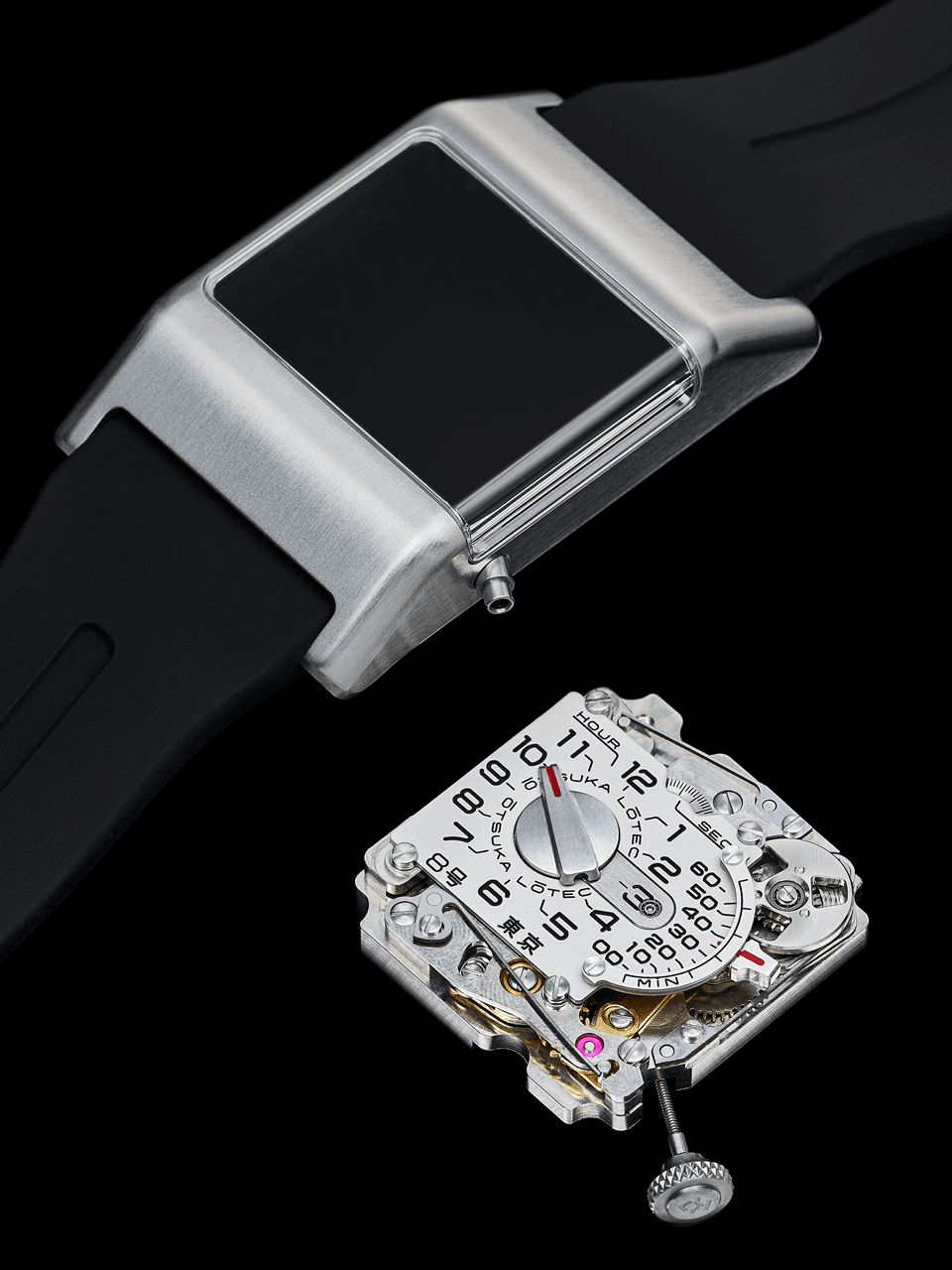
The Minute Fader: If the Hour Channel defines the watch’s structure, the Minute Fader provides its theatre. Designed to resemble the sliding fader controls used on mixing boards, this retrograde minute display travels along a linear track from zero to sixty minutes. At the end of the hour, it returns to the starting position. What makes the mechanism extraordinary is the way this return occurs. Rather than snapping back instantly as most retrograde displays do the Minute Fader glides slowly back to zero, its motion controlled by a flywheel. The effect recalls the steady rotation of tape reels on vintage recording machines. The slow reset creates a moment of anticipation every hour, transforming the passage of time into a miniature mechanical performance.
A Hidden Seconds Disk: Completing the display is a seconds disk positioned at the top centre of the dial. Partially concealed behind the main display elements, it provides continuous motion without disrupting the dramatic interplay between the hour and minute mechanisms.
A Three-Dimensional Dial Architecture
One of the most striking aspects of the No. 8 is the dial’s layered construction. The display is built in two levels, with the minute fader physically passing between them. This architecture gives the watch a strong three-dimensional presence and emphasises the mechanical nature of its display. The dial appears almost like a miniature piece of equipment rather than a flat watch face. Viewed from the side, the movement of the fader between the dial layers becomes visible an effect enhanced by the extended crystal that flows down along the case sides.

The case design reinforces the watch’s instrument-inspired character. Crafted from 316L stainless steel, the case is finished entirely in satin brushing, creating a utilitarian aesthetic reminiscent of laboratory or studio equipment. Its lugs are angled both at the top and bottom, producing a trapezoidal profile when viewed from the side.
Despite measuring 31 mm in diameter, the watch wears larger than expected thanks to its 47.8 mm lug-to-lug length. At 10.8 mm thick, it also becomes the thinnest case currently produced by the brand. The No. 8 introduces another first for Otsuka Lotec: it is the first model fitted with a rubber strap, paired with a newly designed buckle created specifically for this case.
Engineering a New Way to Display Time
Inside the watch beats a MIYOTA 90S5 automatic movement, heavily modified with an in-house module developed by Otsuka Lotec. This module contains 62 components, nearly twice as many as those used in earlier models. Among them are micro ball bearings produced by MinebeaMitsumi, which support the movement of the display system. The most unusual engineering challenge lies in the retrograde minute mechanism. To achieve the slow, controlled return of the fader, the watch employs a spring similar to those used in automotive speedometers rather than a traditional watch component. Working together with the flywheel, this spring regulates the tension of the retrograde motion, ensuring that the minute display glides back smoothly rather than snapping into place.
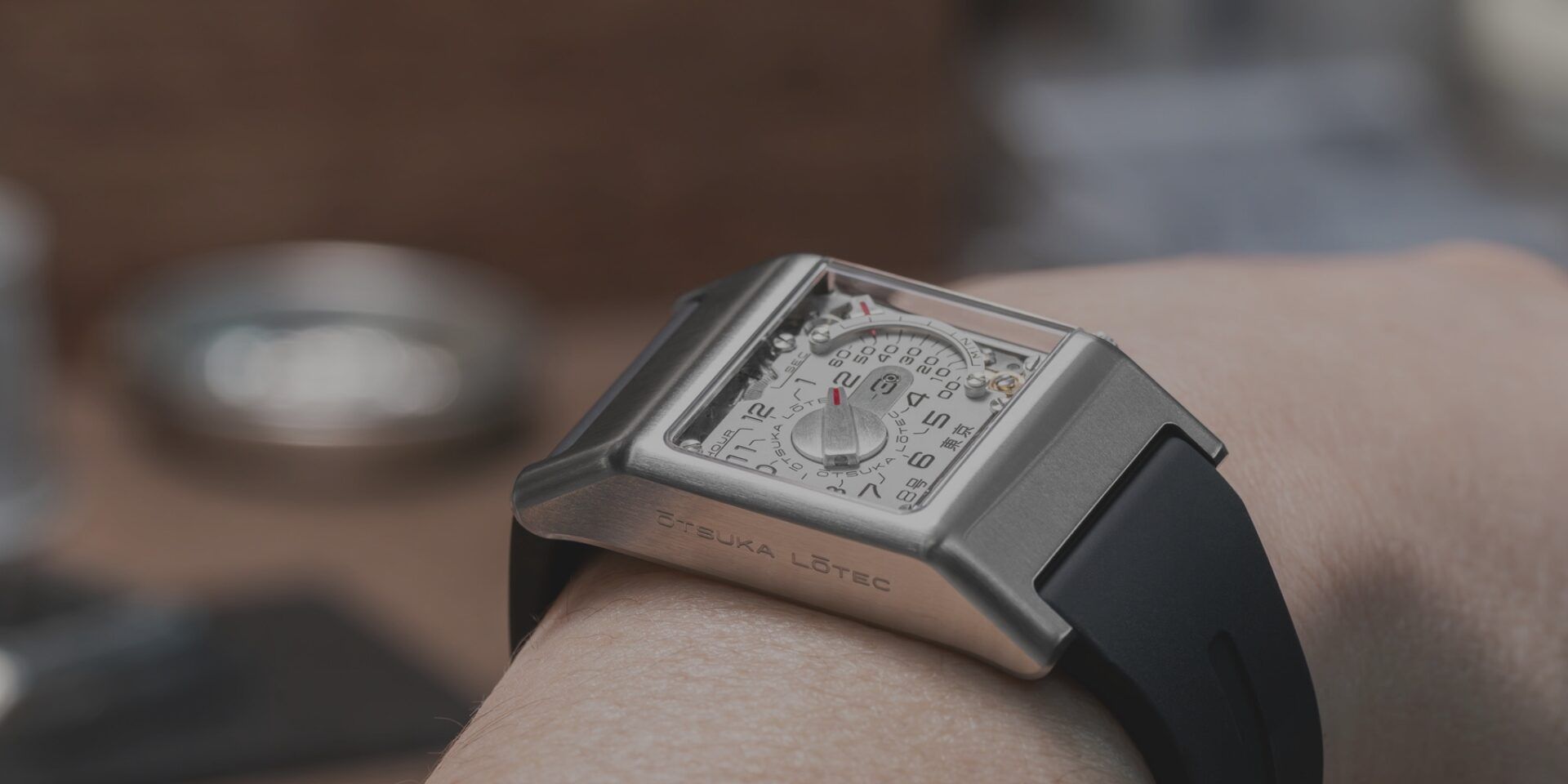
The defining experience of the No. 8 is not simply reading the time but watching it unfold mechanically. As the minute fader approaches the end of its track, the mechanism prepares for its hourly reset. The flywheel begins regulating the motion, allowing the fader to drift slowly back toward zero. At precisely the same moment, the Hour Channel jumps forward to the next hour. The contrast between the slow, controlled motion of the minutes and the instantaneous jump of the hour creates a uniquely dynamic display one that encourages the wearer to pause and observe. In this sense, the watch achieves something rare in modern horology: it transforms the act of telling time into an engaging mechanical spectacle.
Watching Time in Motion
For centuries, watches have communicated time in essentially the same way. The No. 8 challenges that tradition by introducing a display that feels entirely new one that blends the logic of mechanical engineering with the visual language of analogue audio equipment.
In doing so, Otsuka Lotec demonstrates that innovation in watchmaking does not always require new materials or extreme complications. Sometimes, it simply requires the courage to rethink how time itself is read. And in the case of the No. 8, that reinvention arrives in the form of a watch that behaves less like a dial and more like a machine quietly performing its mechanical choreography once every hour.