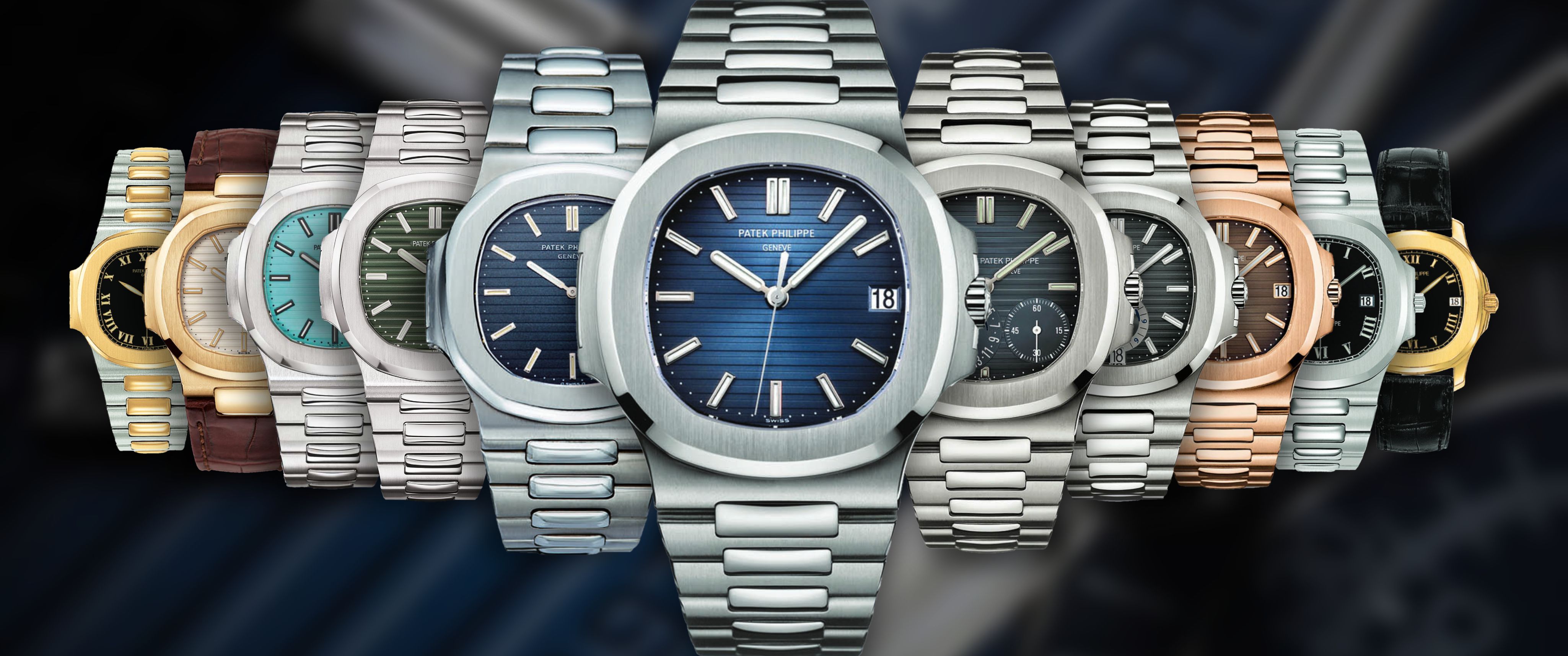
Complete History Of The Patek Philippe Nautilus
 7 min read

It happens a lot in the world of personas and charismatic personalities that a CEO becomes larger than the company, the player becomes bigger than the team, the politician becomes bigger than the party and the actor with marquee value becomes bigger than the film. When a parallel is sought in the world of watches for where a product takes precedence over its actual maker, the case of the Nautilus and Patek Philippe is usually drawn.
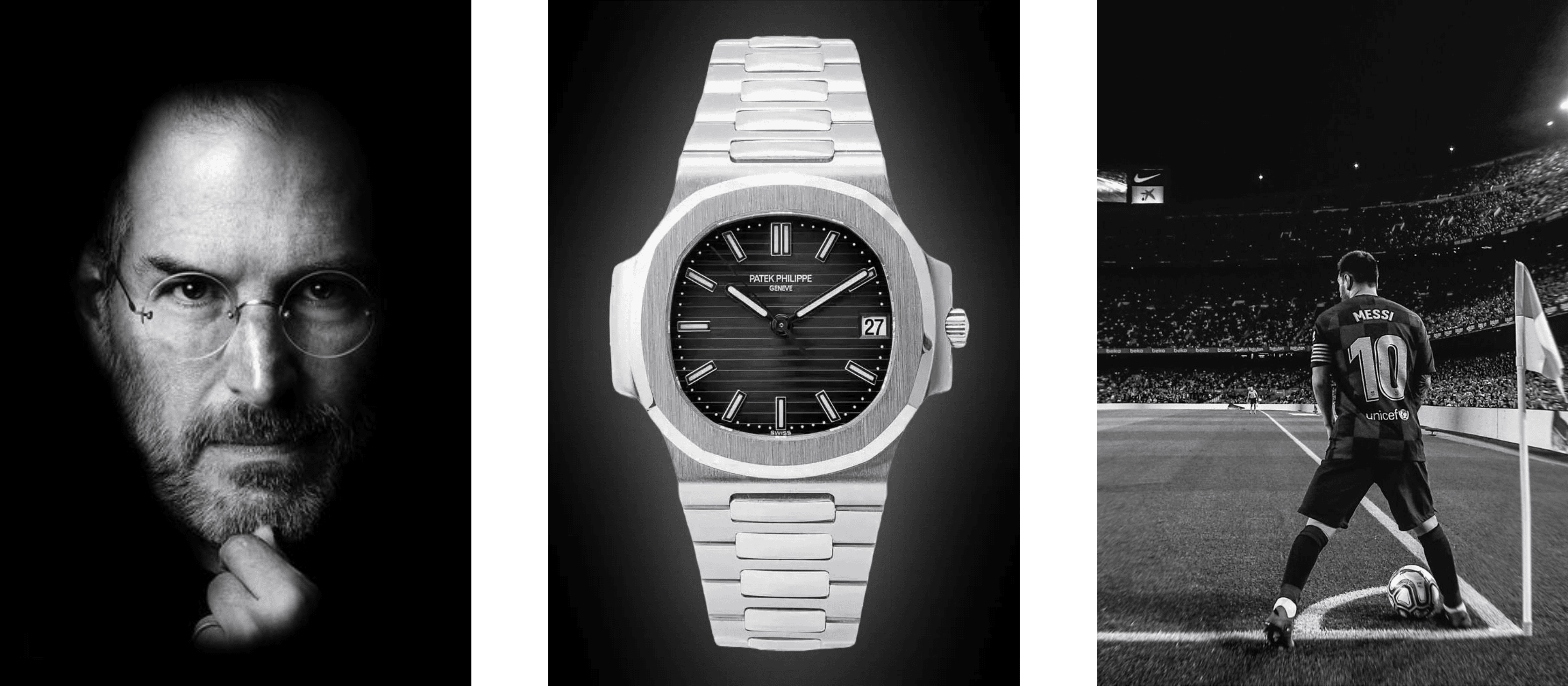
The Nautilus is a classic example of a watch that became a victim of its own popularity and to prevent it from overshadowing its maker’s renown, Patek Philippe was compelled to retire a few of its iterations, including the most popular ones.
But how actually does a product become so big that it starts to outgrow the brand and, in a way, becomes the core perception of anything related to that brand.
We’ll get to know the above via the complete history of the Patek Philippe Nautilus.
Origins: Steel, Shock, and Gérald Genta
By the early 1970s, the Quartz Crisis had gutted demand for expensive mechanical watches, and Patek Philippe’s catalog was still dominated by precious‑metal complications and Calatravas. Audemars Piguet’s Royal Oak (1972) had just suggested a new category - an aggressively priced, ultra‑finished, steel “luxury sports watch” and Patek needed an answer.
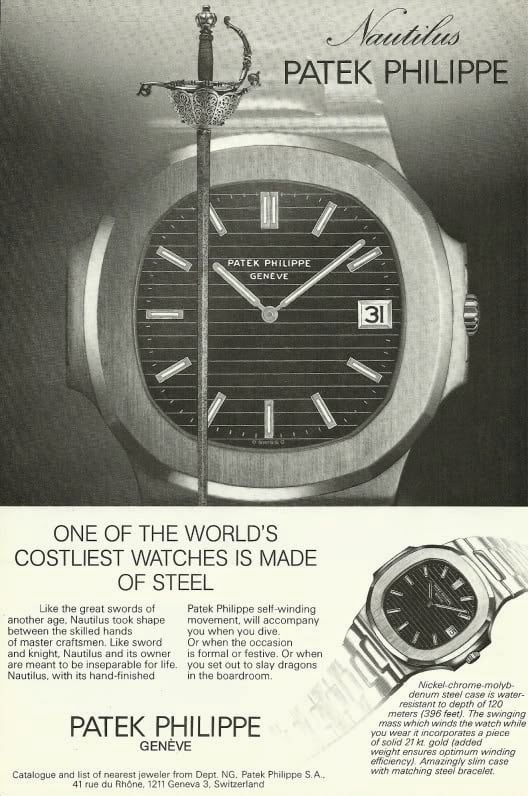
Gérald Genta, already the architect of the Royal Oak, found that answer over dinner at Basel: inspired by a ship’s porthole, he sketched an octagonal bezel with softened corners, flanked by “ears” that recalled watertight hinges. The result was the Nautilus, named after Captain Nemo’s vessel in Jules Verne’s “Twenty Thousand Leagues Under the Sea,” and launched with advertising that boasted, with deliberate provocation, that “one of the world’s costliest watches is made of steel.”
The Original “Jumbo”: Reference 3700 (1976 - 1990)
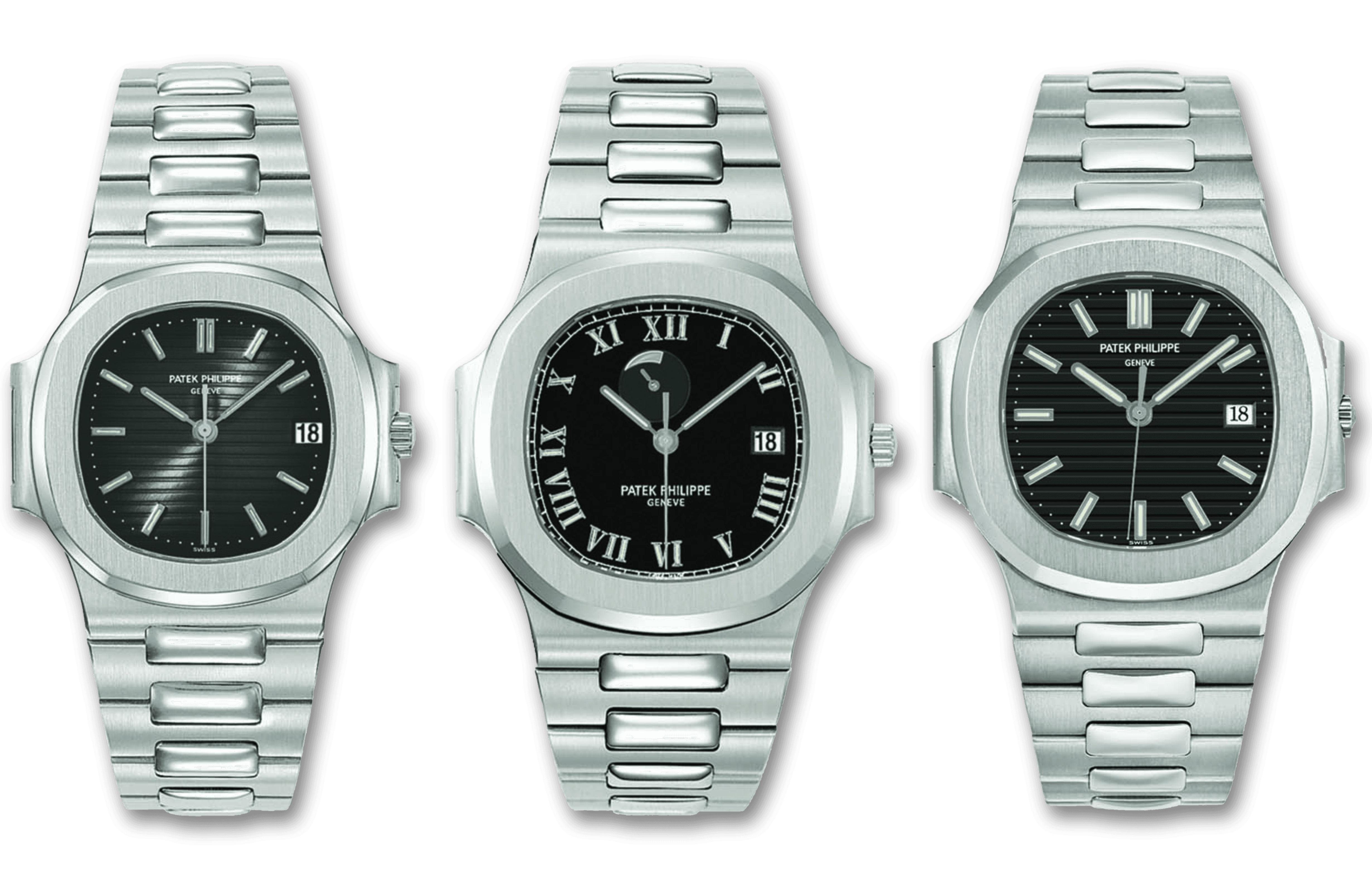
The first Nautilus, reference 3700/1A, was radical not just in tone but in hardware. Its 42 mm “Jumbo” case (measured ear‑to‑ear) was immense by the standards of 1976, yet only about 7.5-7.6 mm thick thanks to the ultra‑thin caliber 28‑255 C, Patek’s version of the legendary Jaeger‑LeCoultre 920. A monobloc central container with a front‑loading movement, closed by a bezel module and lateral screws hidden in the “ears,” delivered 120 m water‑resistance - serious engineering disguised as sculpture.
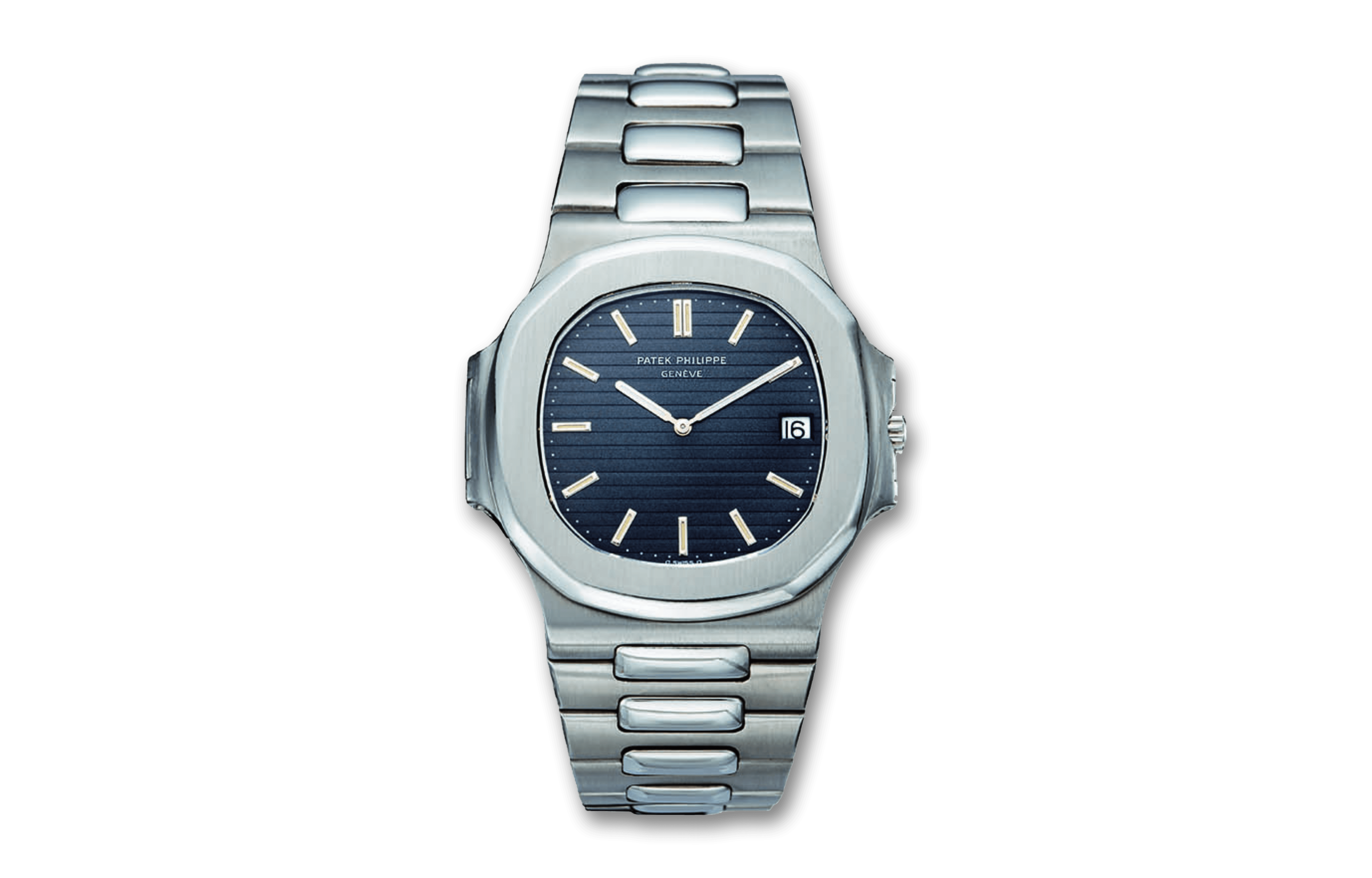
The dial defined the Nautilus’s visual DNA: a horizontally ribbed, charcoal‑blue surface in solid gold, with minimalist baton hands and markers and a lone date window at three. The integrated bracelet, with H‑links and slimmer central links, completed the sense of a single, continuous form wrapping the wrist.
Although the steel 3700/1A is the canonical version, the reference quickly expanded into the two‑tone 3700/1AJ, yellow‑gold 3700/1J, rare white‑gold 3700/1G (around a few dozen pieces) and a unique platinum 3700/1P.
From Single Model to Family: 3800, 4700, 3710, 3711, 3712
The Nautilus’s second act began not with more size, but with restraint. In 1981, Patek introduced the mid‑size reference 3800 at 37.5 mm, visually almost a scaled‑down 3700 but powered by Patek’s own central‑seconds caliber 335 SC. By 1980 Patek had already added a 27 mm ladies’ quartz Nautilus, reference 4700, followed by the 33 mm quartz 3900.
Complications arrived in 1998 with ref. 3710/1A (Comet), which combined a return to the 42 mm Jumbo case with a power‑reserve indicator at 12 and Roman numerals on a matte black dial. Two transitional references 3711/1G (2004) and 3712/1A (2005) closed the pre‑anniversary era.
2006: The Modern Nautilus Era
For the Nautilus’s 30th anniversary, Patek chose not a commemorative plaque but a complete re‑architecture of the line. Four references launched in 2006 defined the modern era:
- 5711/1A: the steel time‑and‑date “Jumbo”
- 5712 (in steel and rose gold): moon‑phase, power reserve and date
- 5980/1A: the first Nautilus chronograph
- 5800/1A: a renewed mid‑size three‑hander
5711/1A - A New Benchmark
The 5711/1A is often treated as the 3700’s direct heir, but its personality is distinctly contemporary. The case grew slightly to about 40 mm (43 mm ear‑to‑ear), the “ears” were gently curved to echo the bezel, and the bracelet’s central links were flattened for a more architectural profile. The case construction switched to a conventional three‑part layout with a screw‑down sapphire back, still rated to 120 m but easier to service.
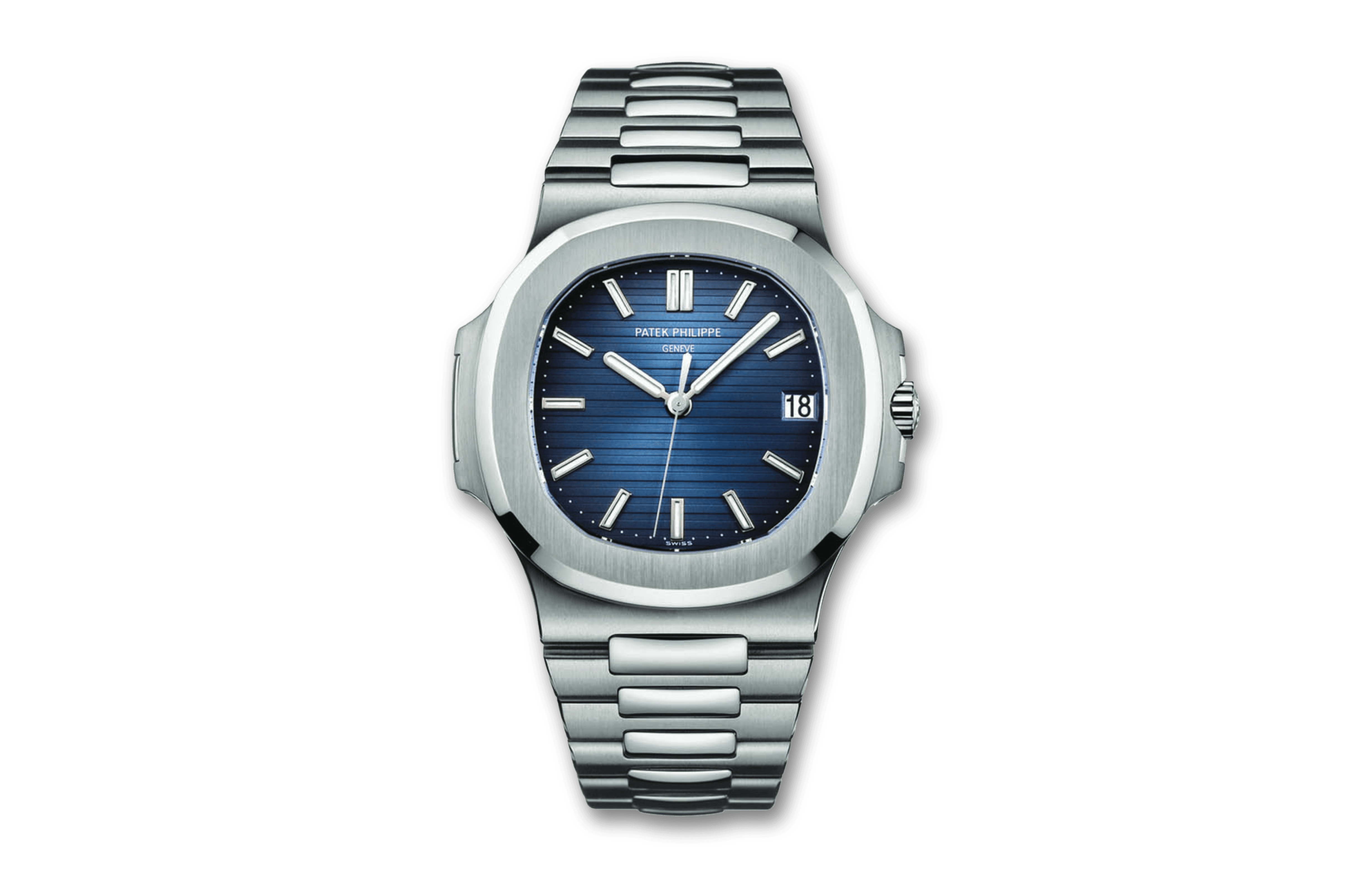
Inside, the JLC‑based 28‑255 C gave way to Patek’s in‑house center‑seconds calibers: initially 315 S C, then the higher‑beat 324 SC with Spiromax silicon balance spring, and finally the 26‑330 SC with hacking seconds and a nickel‑phosphorus third wheel made by LIGA to eliminate seconds‑hand backlash. A central seconds hand altered the watch’s visual rhythm and required a slightly thicker movement, yielding an 8.3 mm cased height that still reads as elegantly thin.
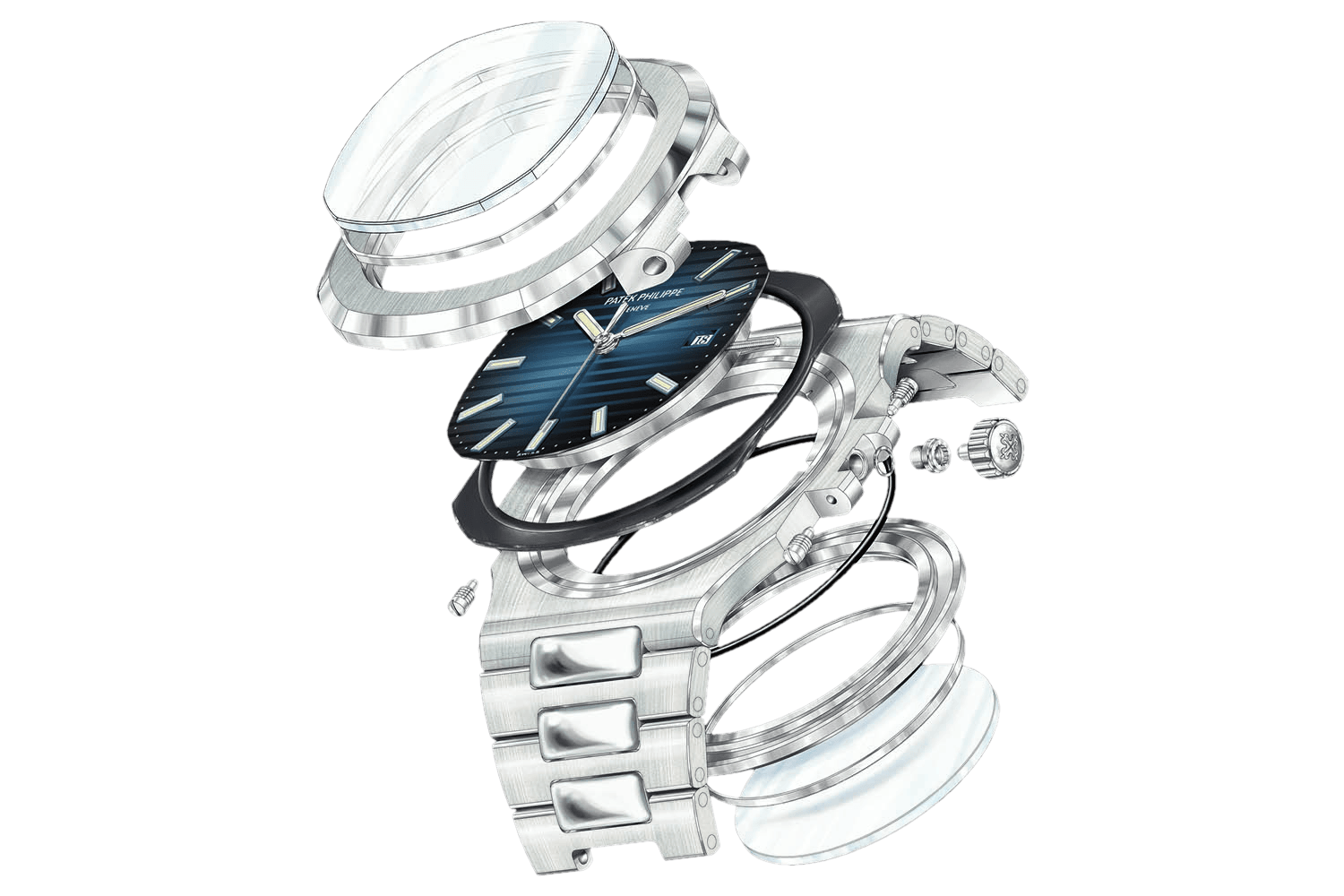
The dial preserved the ribbed texture but added a pronounced blue‑to‑black gradient and bolder, faceted indices that follow the bezel’s curve, a small change that makes the watch feel more three‑dimensional on the wrist.
5712 - Asymmetry Perfected
The 5712 translated the short‑run 3712 into the new case architecture, with curved ears, three‑part construction and a slightly larger footprint. It kept the caliber 240 PS IRM C LU, so the dial retained its distinctive off‑center small seconds and moonphase/date, but details were refined: the date/moon sub‑dial enlarged and the typography straightened for easier reading, and a small marker at 7 disappeared to clean up the layout.
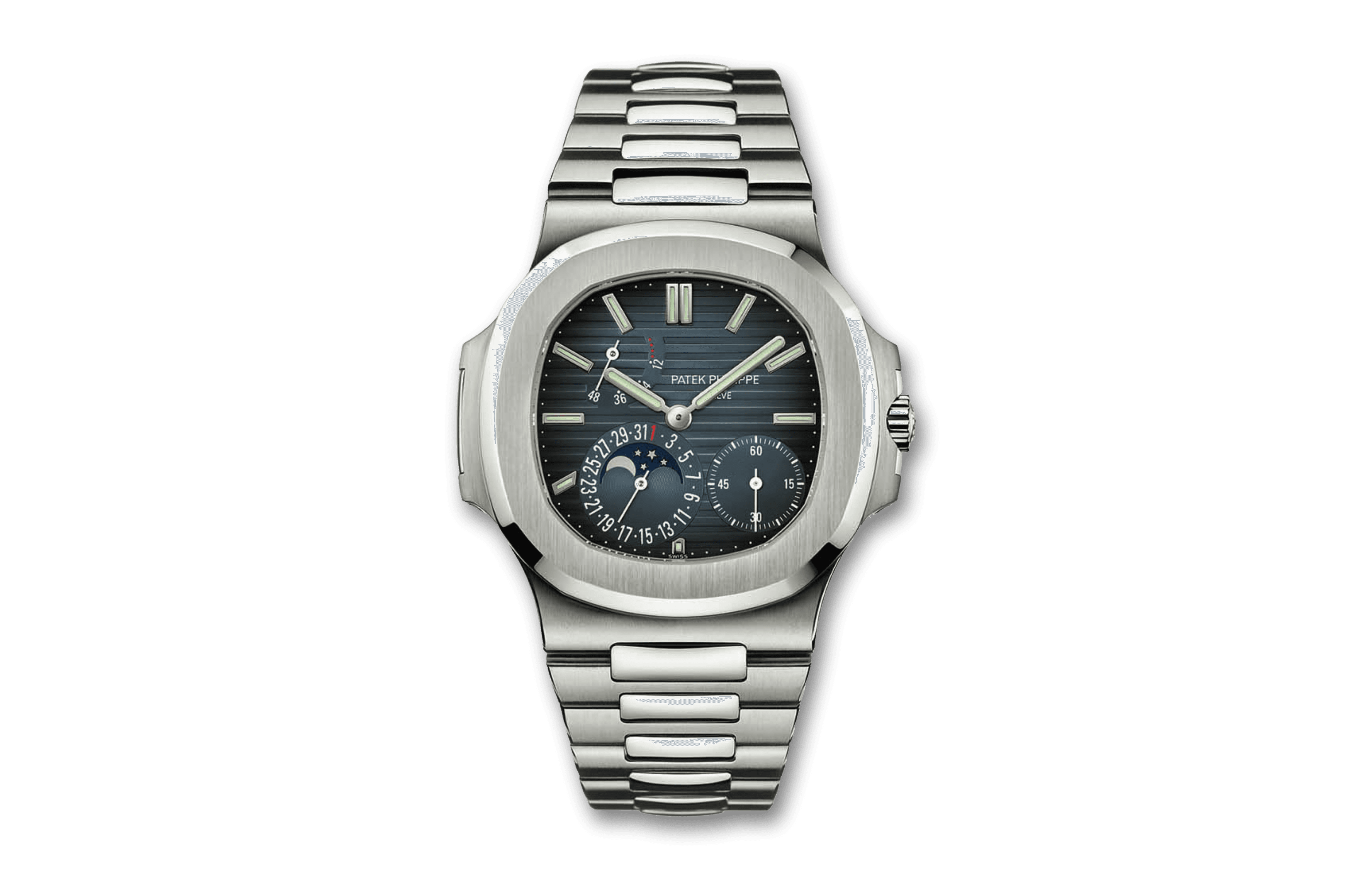
Steel on bracelet (5712/1A) became the connoisseur’s Nautilus, while the rose‑gold 5712R on leather, with the first “hybrid” case/bracelet structure (solid mid‑case and first link, strap attached to that), underlined how far from the 1976 tool‑watch ideal the model had journeyed. The steel 5712/1A was retired in 2025.
5980 - The Nautilus as Chronograph
Reference 5980/1A gave the Nautilus its first in‑house automatic chronograph, the integrated, column‑wheel, vertical‑clutch caliber CH 28‑520 C. Patek exploited the movement’s architecture to the full via a single co‑axial 60‑minute and 12‑hour counter at six and a central chronograph seconds hand.
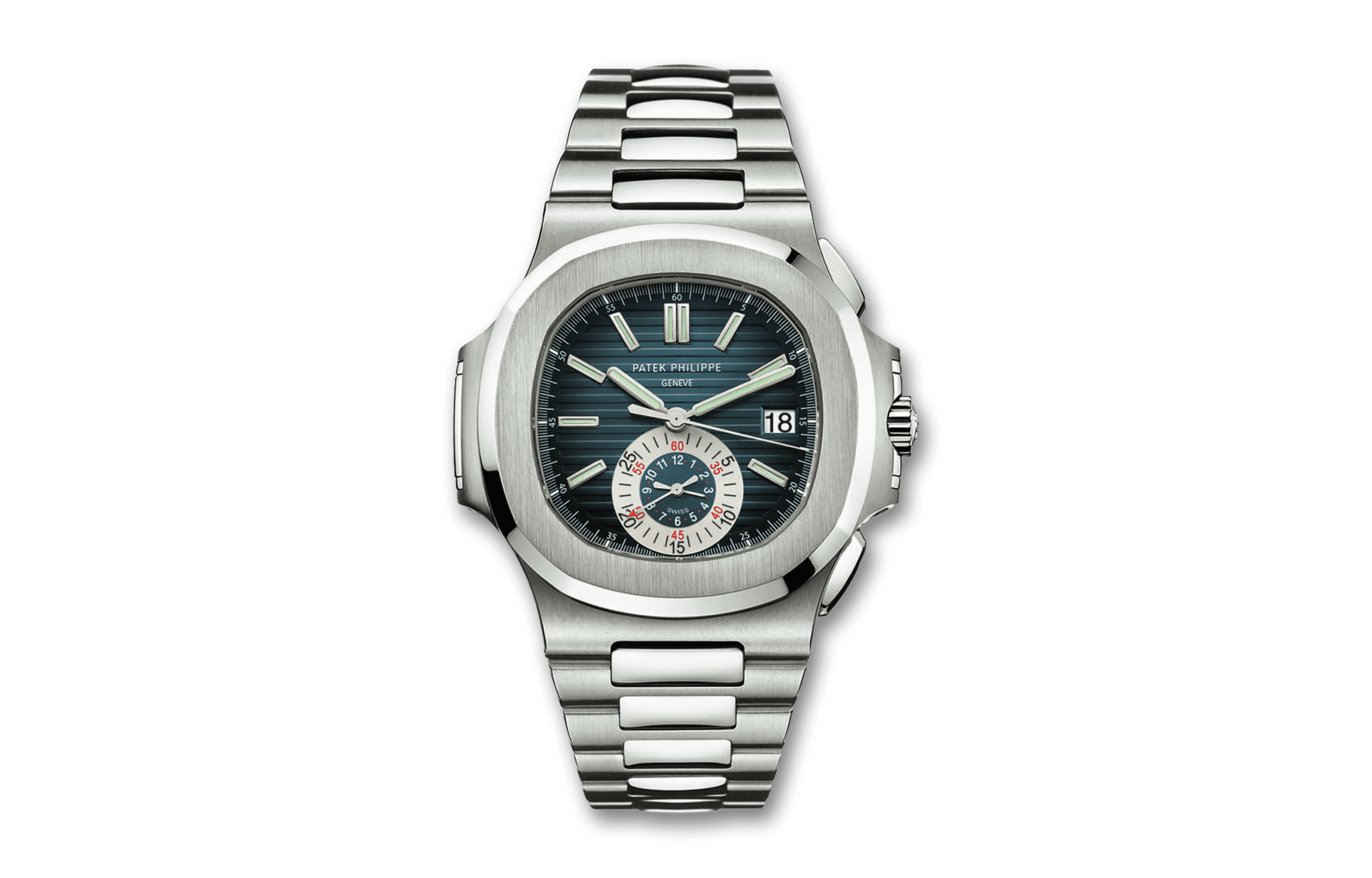
The case swelled modestly, to about 40.5 mm x 12.1 mm, but remained recognizably Nautilus, including 120 m water‑resistance. Later, steel gave way to rose gold (5980/1R), two‑tone (5980/1AR) and, for the 40th anniversary in 2016, the oversized white‑gold 5976/1G.
5800 - The Overlooked Classic
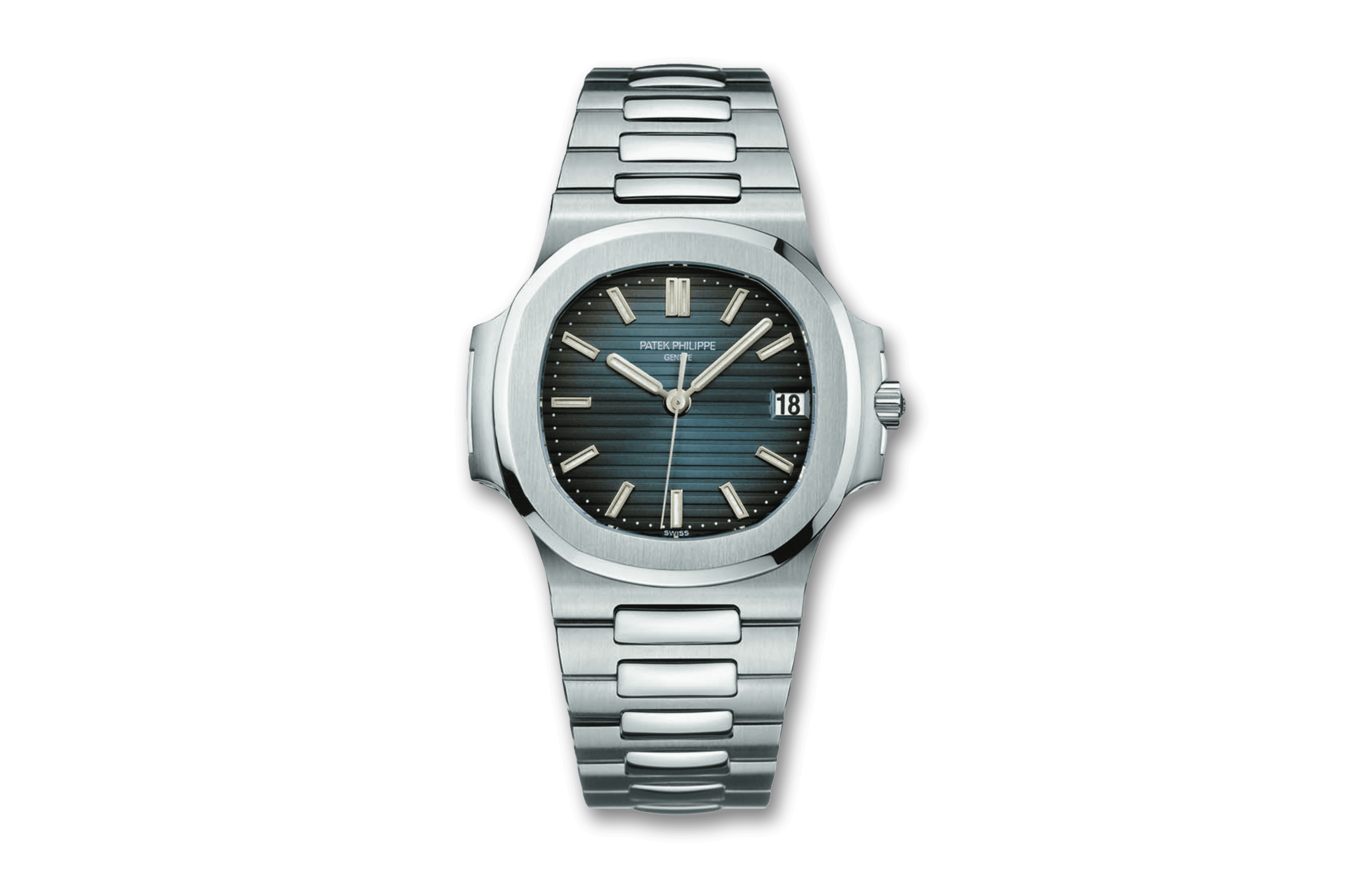
If the 5711 was the people’s grail, the 5800/1A was the insider’s pick: a 38.4 mm mid‑size Nautilus that looked almost exactly like a reduced 5711 but retained a monobloc case with integrated sapphire back and the caliber 330 SC. It was produced only from 2006 to 2009.
Complication Era: 5726, 5990, 5740 and Beyond
Once the core modern line was established, complications followed in quick succession.
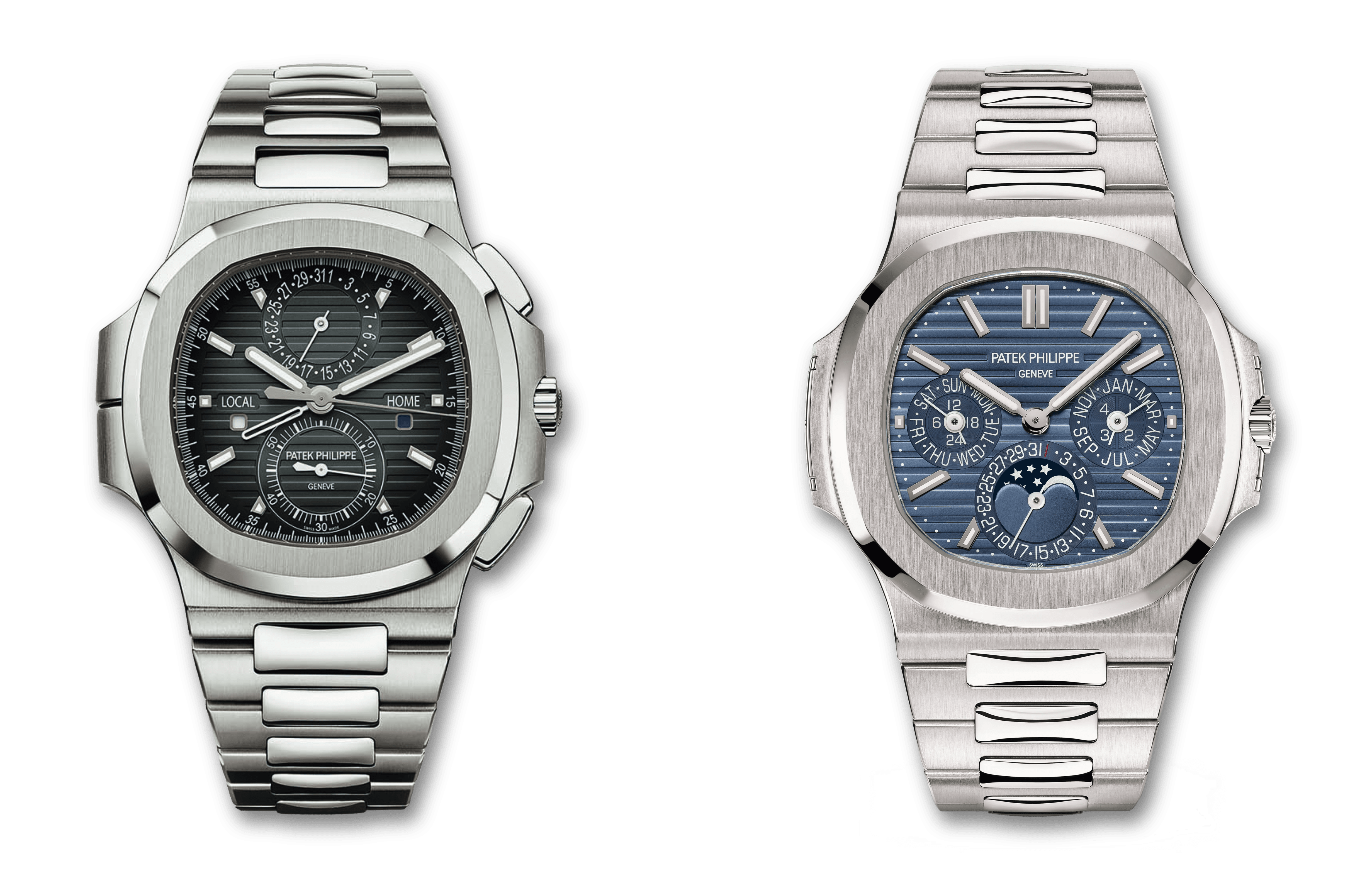
In 2010 came the annual‑calendar Nautilus, reference 5726, the dual‑time chronograph Nautilus ref. 5990/1A arrived in 2014 as the successor to the steel 5980 and by 2018, while the demand for the Nautilus was white‑hot, Patek chose that moment to install its most aristocratic complication: the perpetual calendar in the reference 5740/1G.
Alongside these headline pieces, the ladies’ line evolved into the 32-35 mm 7010 and 7118 references, with softer “wave” dials and, increasingly, gem‑set bezels; together with the quartz and automatic variants, they completed the transformation of Nautilus from edgy experiment to fully tiered family.
Mania, Mythology, and the Post‑5711 Future
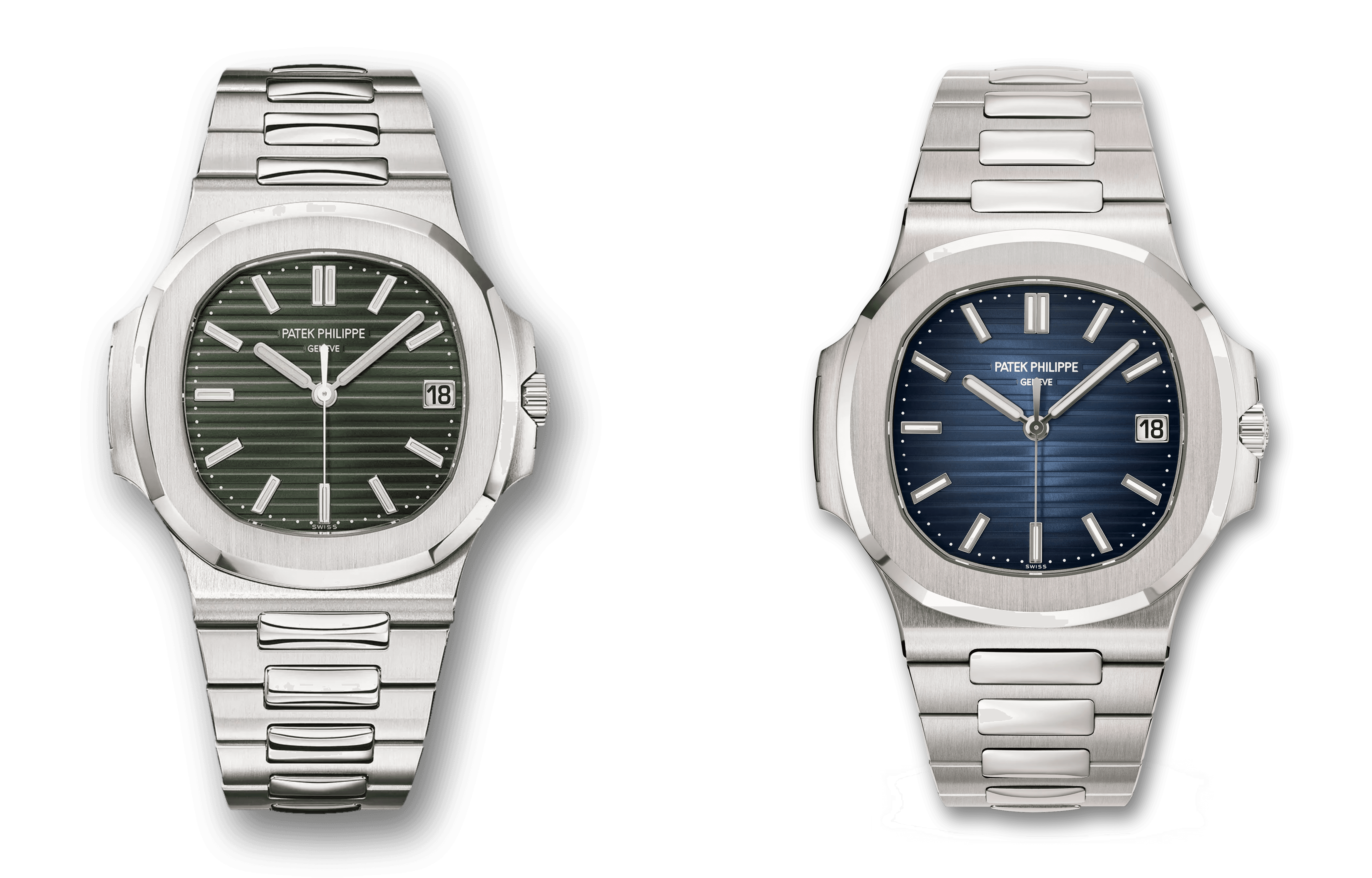
By the time the Nautilus turned 40 in 2016, waiting lists for the 5711 in steel were already being measured in years. The anniversary platinum 5711/1P and white‑gold 5976/1G were produced in limited numbers and sold briskly, but it was the line’s farewell act that truly reset expectations: the olive‑green 5711/1A‑014 and the Tiffany‑blue‑dial 5711/1A‑018, the latter limited to 170 pieces to mark 170 years of partnership with Tiffany & Co.
Patek formally retired the 5711 in 2022 and introduced its spiritual successor, the white‑gold 5811/1G, with a two‑part case construction evocative of the original 3700 and a slightly larger 41 mm diameter.
Now, fifty years after Genta sketched a porthole and a pair of “ears” on blue paper, the Nautilus still does what it did in 1976: it challenges assumptions about what a Patek Philippe can be, and where the frontier between sport and formality, steel and gold, utility and indulgence, ought to lie. That enduring tension - between ruggedness and refinement, between apparent simplicity and genuine technical sophistication, is what has carried the Nautilus from “too big, too expensive, and made of steel” to its current status as the most coveted integrated bracelet steel sports watch on the planet.


