Dressed In Gold And Fire: Piaget Turns Up The Glamour On The Limelight Gala
 5 min read

There are moments in watchmaking when time seems secondary. When what truly matters is light, movement and presence. The latest Limelight Gala creations from Piaget belong unapologetically to that realm. They do not whisper refinement; they radiate it. Born of the Maison’s fearless 1970s glamour and reimagined for a modern audience fluent in both heritage and bold self-expression, these new interpretations blaze with colour, texture and virtuoso craftsmanship. Gold is engraved to mimic the sinuous allure of snake skin. Grand Feu enamel burns in a vivid orange intensity. Diamonds shift from crystalline white to deep cognac in a meticulously orchestrated dégradé. This is jewellery watchmaking at its most theatrical and most assured. A study in seduction where every curve, every carved groove and every calibrated stone is designed not merely to catch the light, but to hold it captive.
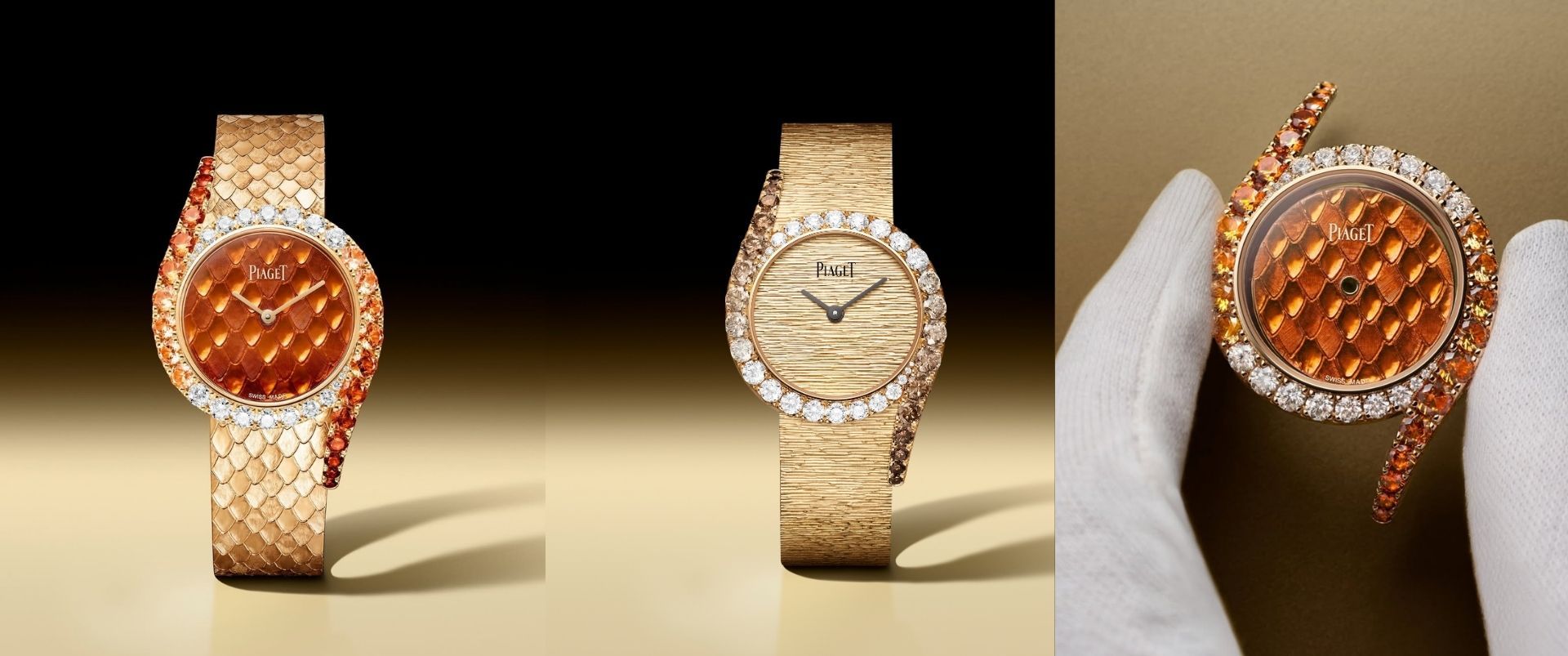
One model radiates with a vibrant orange Grand Feu enamel dial, layered over engraved gold designed to evoke the sinuous texture of snake skin. The other embraces a more nuanced sophistication, pairing the Maison’s signature Decor Palace engraving with warm rose gold and a refined gradient of cognac diamonds. Together, they reaffirm the Limelight Gala as both a jewellery statement and a technical showcase.
Born in the Spirit of the Seventies
The Limelight Gala is more than a timepiece it is a cultural artefact. Introduced in 1973, it emerged at a moment when Piaget was redefining the very idea of the jewellery watch. Just four years earlier, the Maison had unveiled its groundbreaking 21st Century Collection, a bold fusion of watchmaking and high jewellery that captured the spirit of a new, liberated generation.
Designed by Jean-Claude Gueit and presented in the opulent setting of the Gstaad Palace, the Limelight Gala distilled this creative momentum into a more refined, yet equally expressive form. It quickly became synonymous with the glamorous world of the Piaget Society Yves Piaget’s circle of artists, celebrities and tastemakers who defined the jet-set culture of the era. Unlike the dramatic cuff watches and swinging sautoirs that preceded it, the Limelight Gala offered a more versatile elegance. Conceived as a piece that could transition effortlessly from cocktail hour to formal evening, it embodied a new kind of femininity confident, independent and quietly seductive.
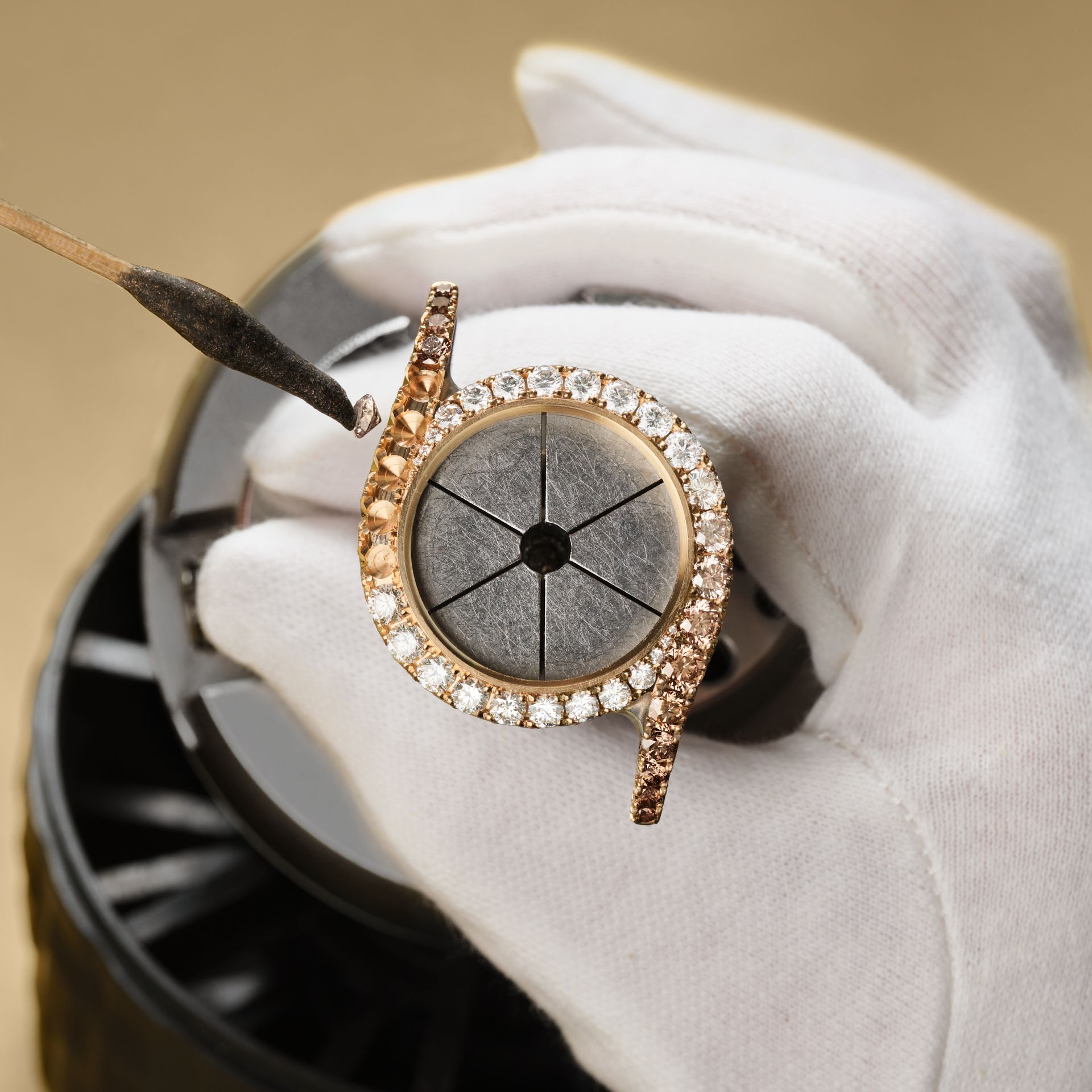
At the heart of the Limelight Gala lies Piaget’s enduring design philosophy: the play of shapes. Here, functional elements are transformed into aesthetic statements. The lugs, traditionally structural, become fluid extensions of the case, set with diamonds and designed to blur the boundary between watch and bracelet.
The original oval case was framed by streams of marquise-cut diamonds that appeared to escape their confines, flowing asymmetrically along the wrist. This deliberate disruption of symmetry introduced movement and sensuality, giving the impression of gemstones in motion. It is this tension between structure and freedom, geometry and fluidity that defines the Limelight Gala. Even today, the cascading lines of diamonds remain one of its most recognisable signatures, embodying Piaget’s ability to balance elegance with audacity.
A Bracelet Like a Second Skin
True to its identity as the “House of Gold,” Piaget approaches the bracelet not as a supporting element, but as an integral part of the experience. Each Limelight Gala bracelet is meticulously articulated to achieve exceptional suppleness, allowing the watch to drape around the wrist with the softness of fabric.
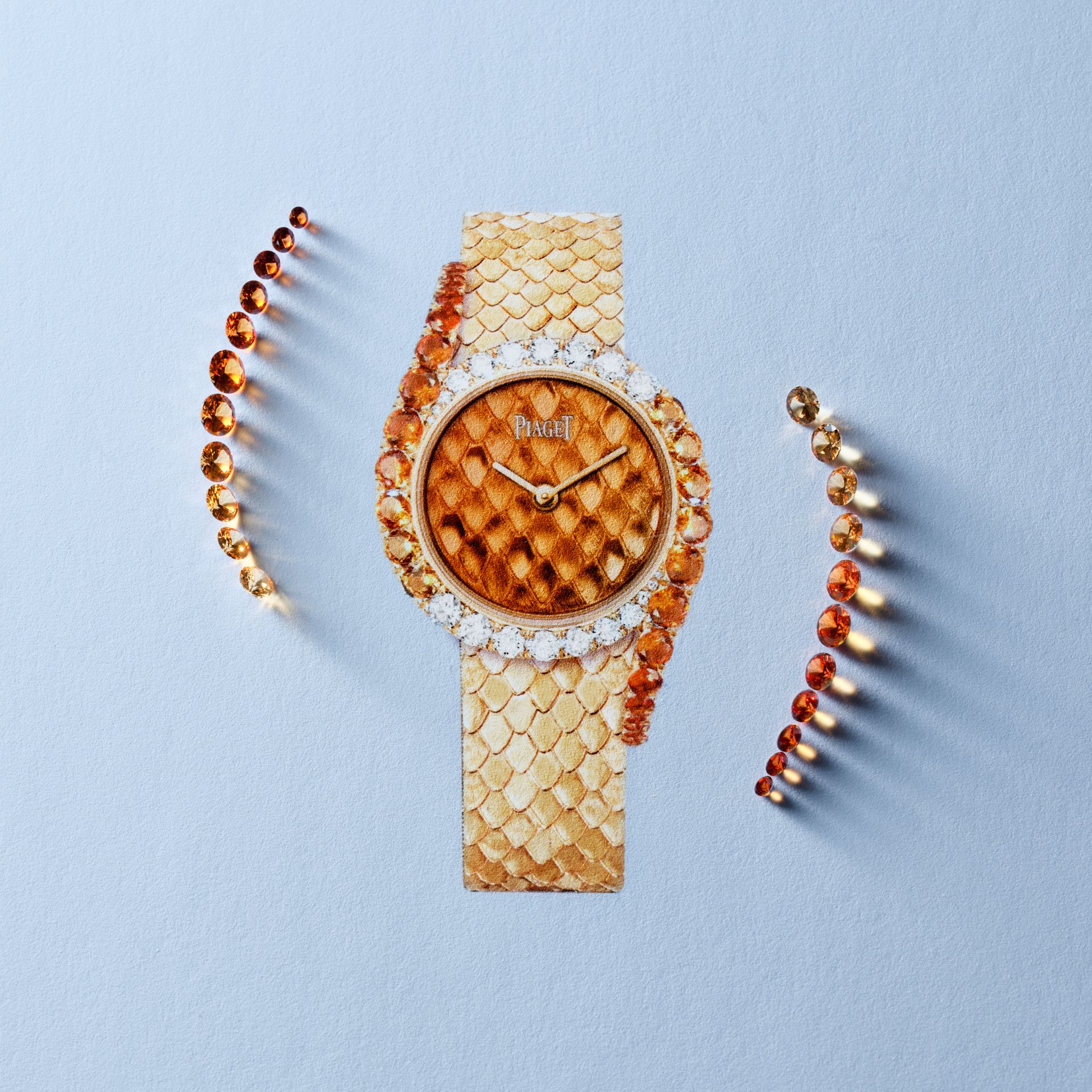
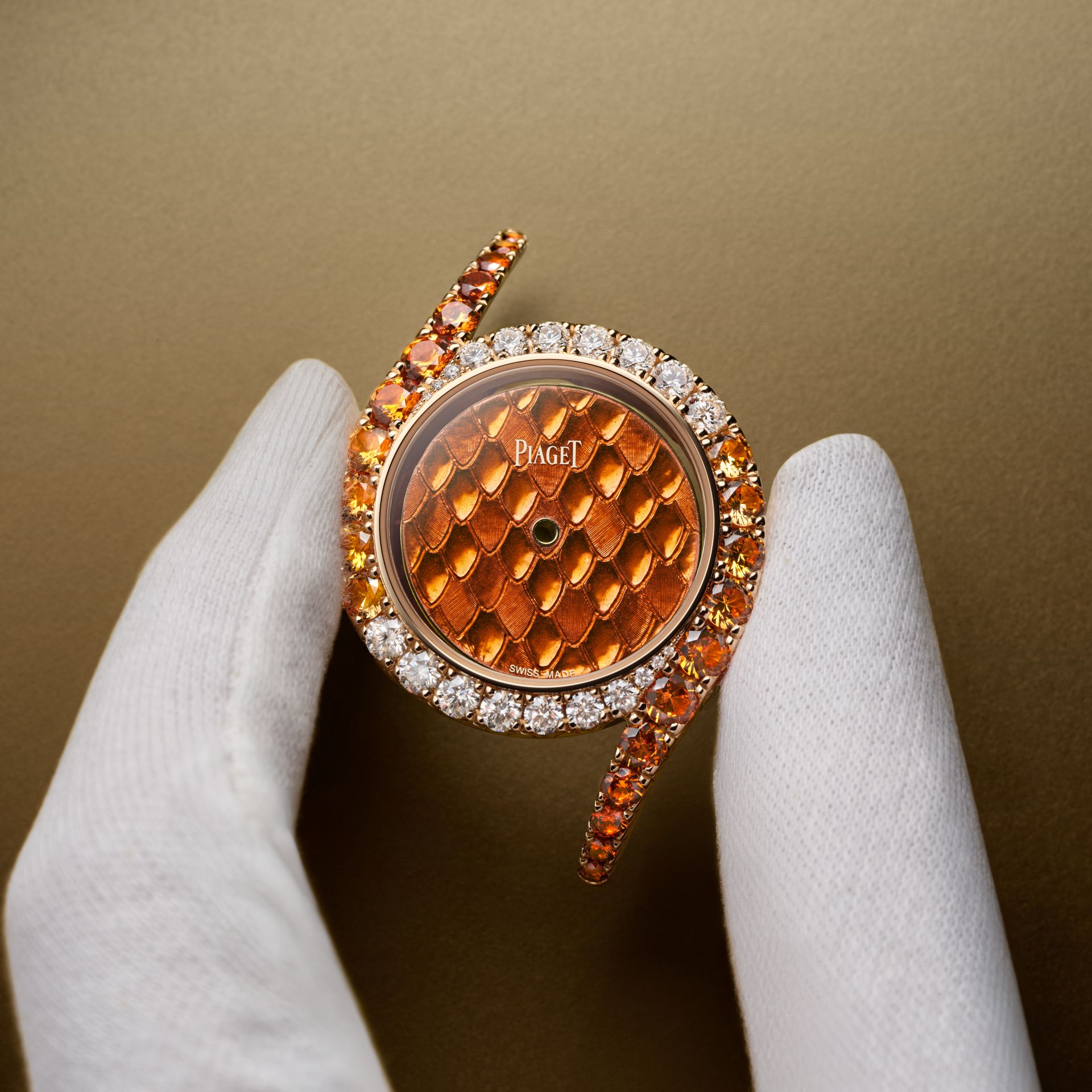
This tactile quality is central to the watch’s appeal. It does not merely sit on the wrist it moves with it, echoing the fluidity of its design. The result is a piece that feels as sensual as it looks, reinforcing its role as both jewellery and timepiece. The 2026 interpretations push this philosophy further through a bold exploration of colour and artisanal technique. The first model is unapologetically expressive. Its orange Grand Feu enamel dial is rich, luminous and intense and set against a gold base engraved to replicate snake skin. This highly specialised engraving technique, first introduced by Piaget in 2019, creates a trompe-l’oeil effect of depth and movement, mimicking the undulating scales of a reptile. Surrounding the dial, diamonds flow into a gradient of spessartite garnets, their warm, sunset tones extending seamlessly into the engraved gold bracelet.
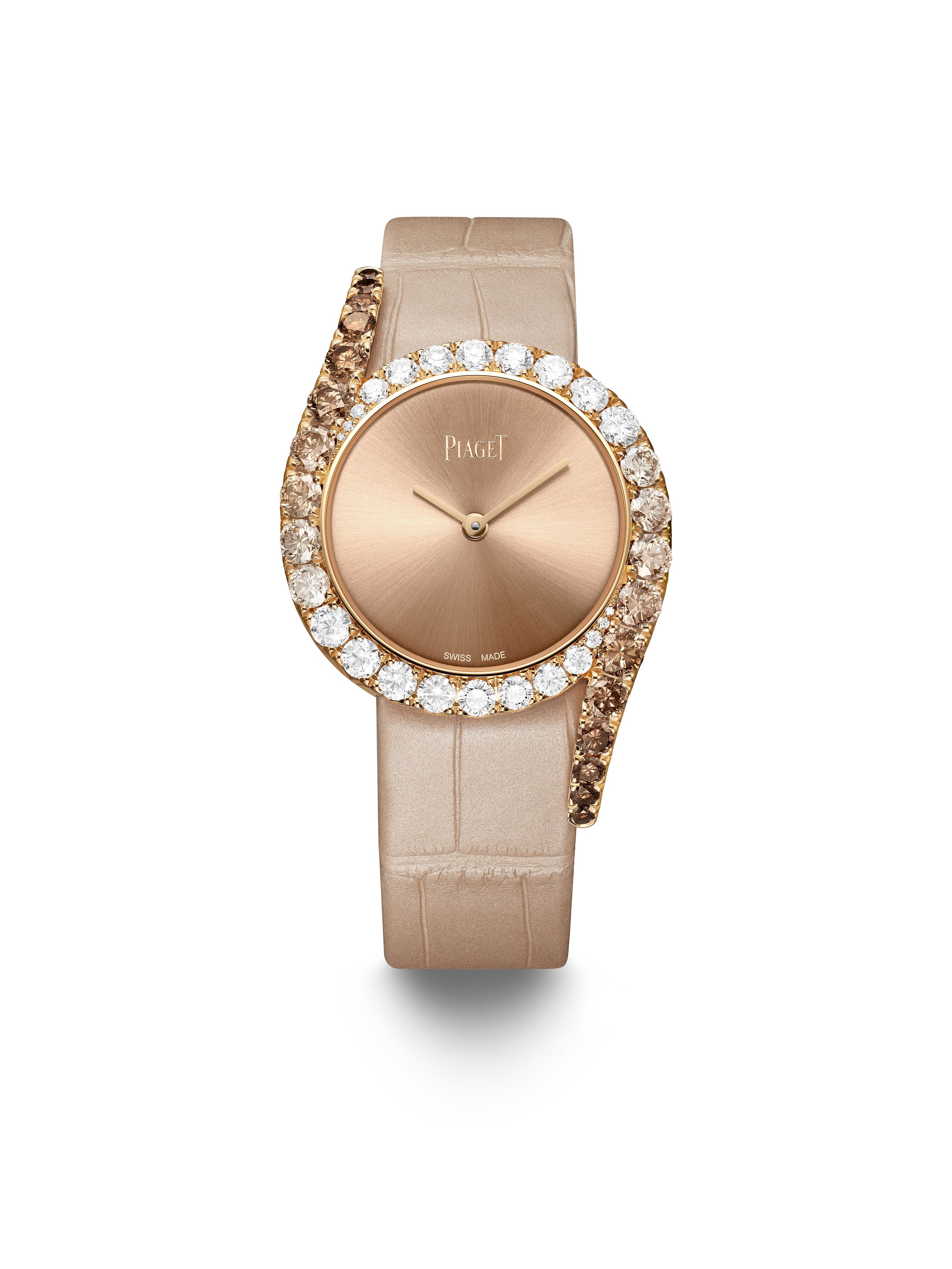
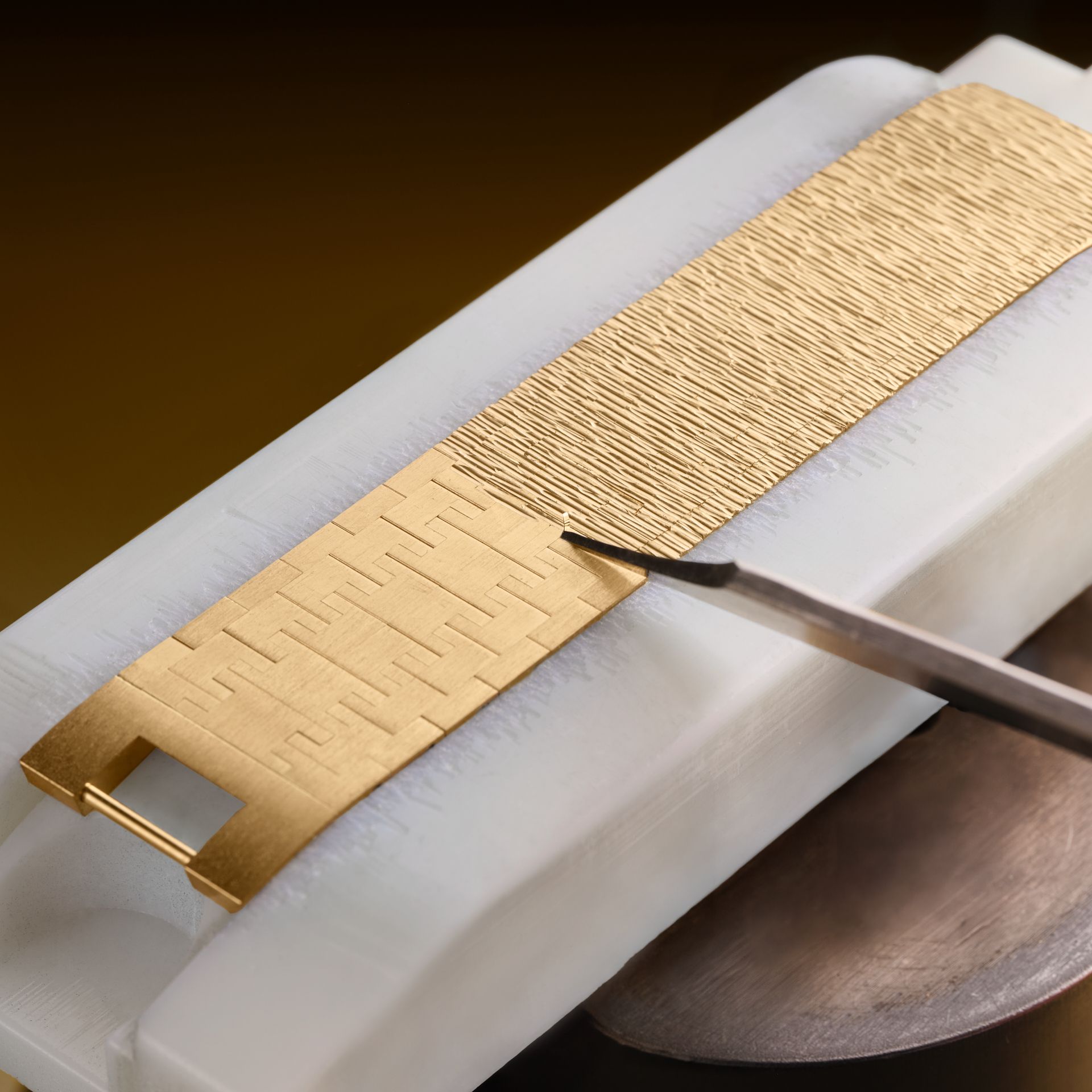
The second model offers a more restrained, yet equally compelling expression. Here, Piaget revisits its iconic Decor Palace engraving, a technique first developed in 1961 and later immortalised in the 21st Century Collection. Inspired by guilloché yet executed entirely by hand, this engraving transforms gold into a textured canvas of light. Each line is incised individually using a burin, with the artisan controlling pressure, angle and rhythm to create a unique pattern. No two surfaces are identical. The resulting texture captures and reflects light with remarkable subtlety, enhanced in this model by a delicate gradient of white to cognac diamonds.
Craft as Signature
Across both creations, the setting of gemstones is as considered as the engraving itself. The gradual transition of colour whether in spessartite garnets or cognac diamonds demands an acute sensitivity to tone and nuance. Each stone is selected and positioned with precision, creating a seamless dégradé effect that feels both natural and intentional. This is where Piaget’s mastery of Métiers d’Art becomes evident. Beyond technical skill, these watches require patience, intuition and an artist’s eye. They are not assembled; they are composed.
More than five decades after its debut, the Limelight Gala continues to evolve without losing its essence. It remains a study in contrasts structured yet fluid, expressive yet refined, rooted in heritage yet constantly renewed. In these latest interpretations, Piaget does not simply revisit an icon; it amplifies it. Through colour, texture and craftsmanship, the Limelight Gala once again captures the spirit of its origins while speaking confidently to the present. A watch designed for evenings, certainly but one that, like all true icons, transcends time altogether.