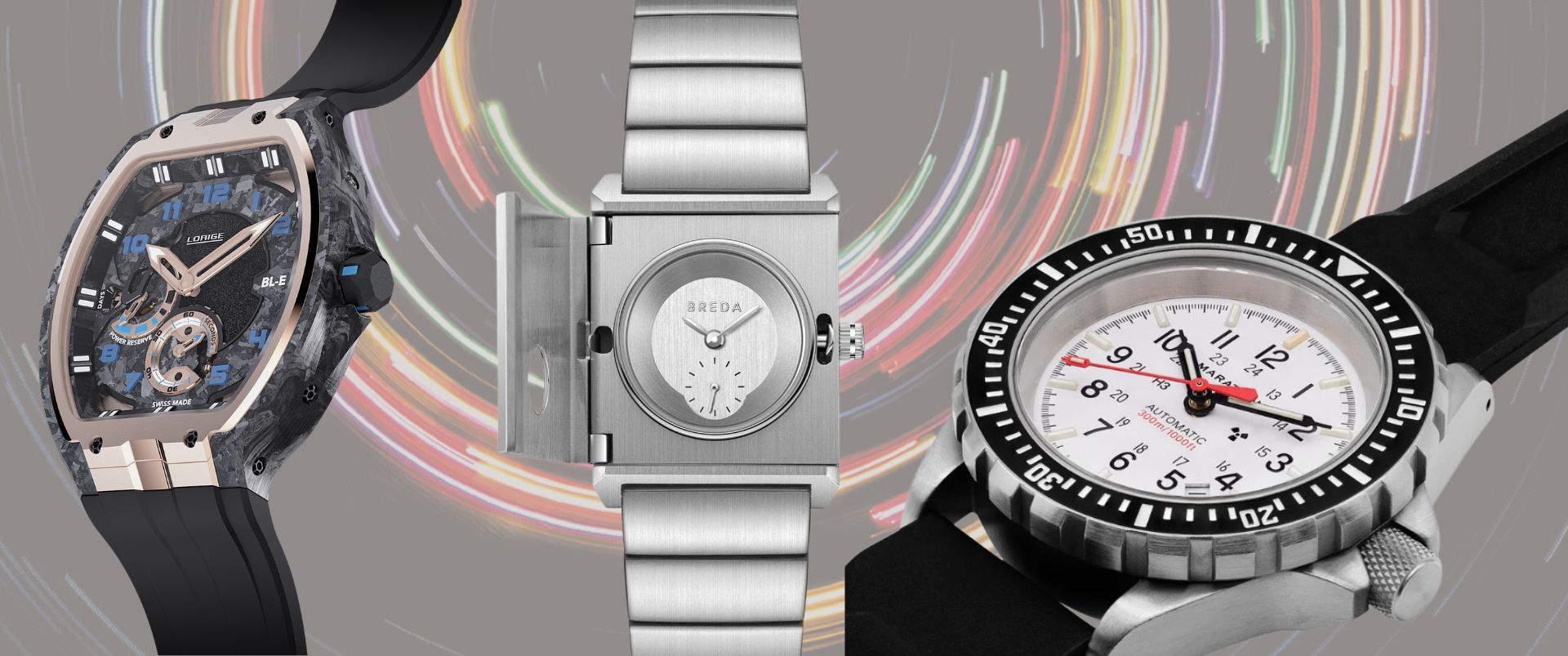
Beyond Watches & Wonders: The Most Unusual Timepieces Found Elsewhere In Geneva
 7 min read

Every April, Watches & Wonders dominates the conversation. The world’s largest watch fair delivers blockbuster launches, heritage revivals and headline-making complications from the industry’s biggest names. Yet for seasoned collectors, Geneva’s most intriguing discoveries are often found just outside the main halls. Across satellite showcases such as Time to Watches, hotel suites and independent presentations, smaller brands are producing some of the boldest ideas in modern horology. Free from committee-led design and commercial caution, these makers are experimenting with materials, formats and storytelling in ways the mainstream rarely attempts. This year, while Watches & Wonders delivered scale, it was the fringe events that delivered surprise.
Lorige: Motorsport Reborn as Horology
French independent brand Lorige continues to carve out one of the most distinctive identities in watchmaking. Rather than merely drawing inspiration from racing, Lorige integrates actual motorsport history into its watches by sourcing and recycling used brake discs from competition cars.
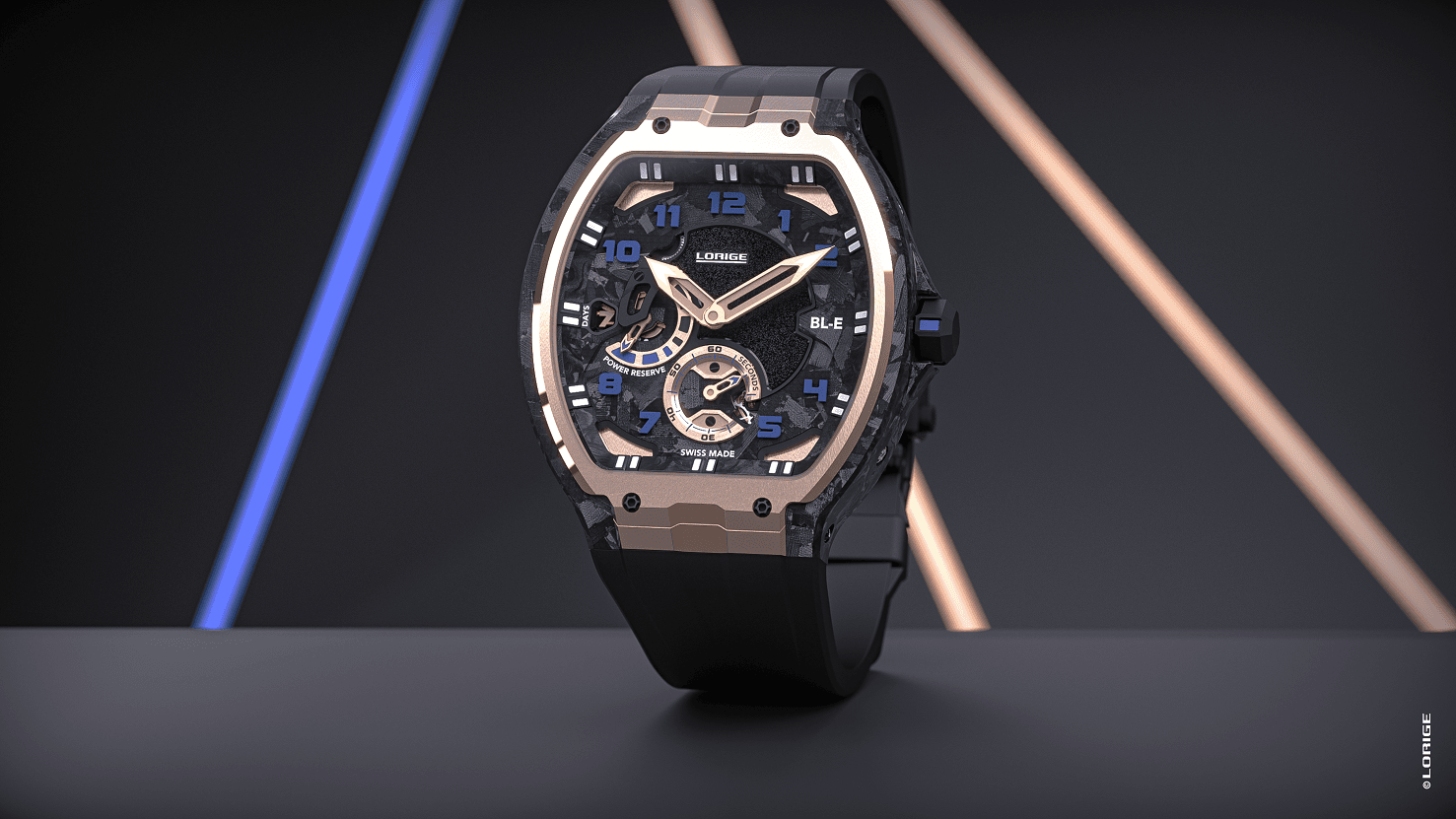
Unveiled as the centrepiece of the brand’s showcase at Time To Watches 2026, the Bleu Asphalte Gold Edition drew immediate attention. Its bezel and caseback, rendered in warm 5N rose gold, introduce an unexpected elegance to Lorige’s inherently rugged design language. Yet, the watch remains anchored in its origins. The case is crafted from the brand’s patented Carbon/Carbon composite which is derived from carbon brake pads subjected to temperatures of up to 900°C on some of the world’s most demanding circuits. Each case is unique, carrying within it the physical imprint of a race once run.
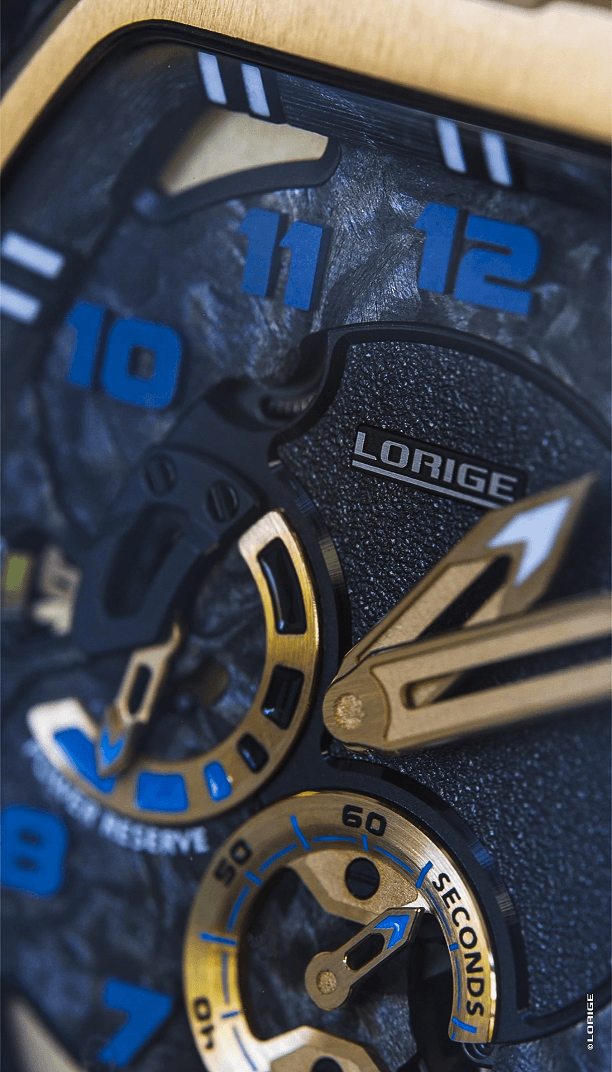
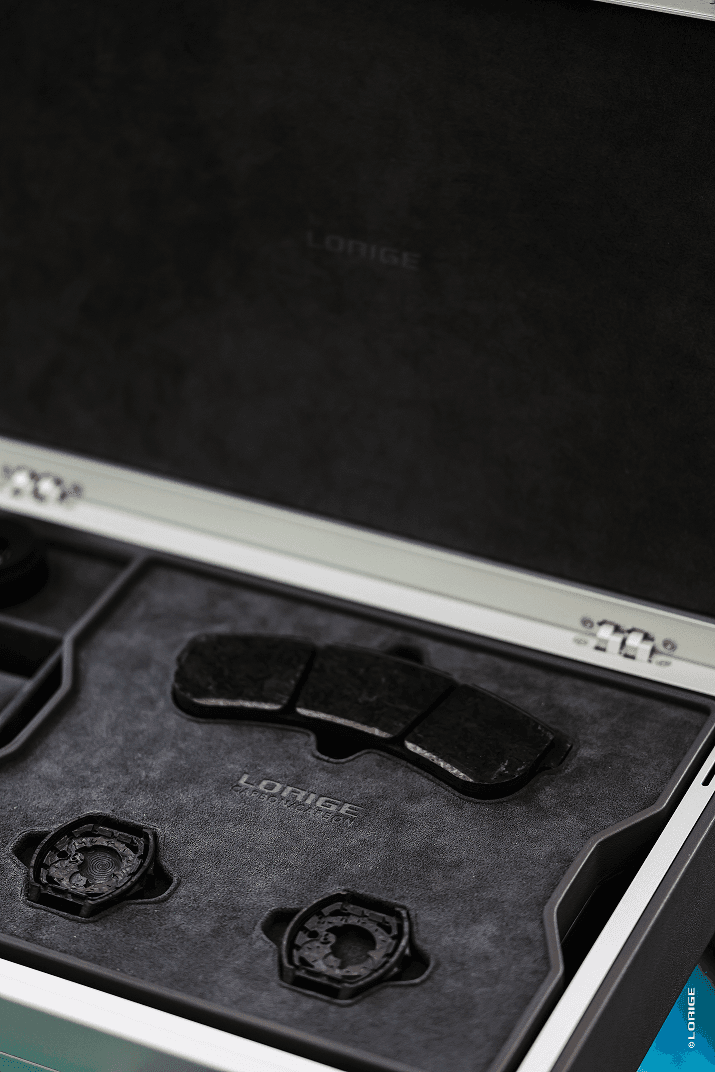
Inside, the LOR-DB02 calibre continues this dialogue between performance and refinement. Executed in a striking duo-tone aesthetic, it features a micro-blasted black PVD main plate and bridges, contrasted by rhodium-plated Geneva stripes and meticulous hand chamfering. It is a movement that rewards close inspection revealing its complexity only to those who look beyond the surface. The narrative extends further through its material provenance. The Carbon/Carbon components used here originate from brake pads that powered the Heart of Racing Valkyrie No. 23 to a podium finish at the 2025 Petit Le Mans. Bleu Asphalte lacquer accents echo the car’s distinctive livery, reinforcing the watch’s direct connection to the track. The result is not a timepiece inspired by motorsport, but one intrinsically shaped by it preserved in titanium, gold and carbon. The BL-Evolution Bleu Asphalte Gold Edition stands as one of the purest expressions of Lorige’s philosophy: a watch that carries history, not just time.
Marathon Watch Company: Hardcore Tool Watches
Founded in 1939 and still family-owned, Marathon occupies a unique position in contemporary watchmaking. While it rarely courts the limelight, its credentials are unusually robust: the brand has been a long-standing supplier of timing instruments to Allied forces since the Second World War, producing watches built to military specifications rather than market trends. In an environment like Time to Watches where storytelling is as critical as design this kind of provenance resonates deeply.
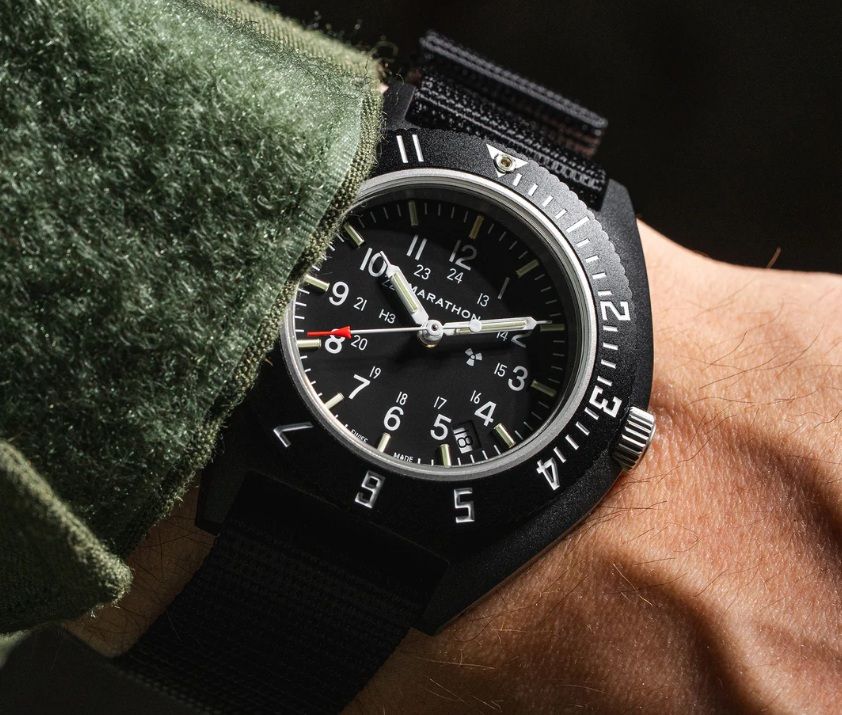
The Marathon Pilot’s Navigator encapsulates that philosophy. Originally developed in 1986 in collaboration with Kelly Air Force Base, it was conceived as a mission-first instrument: a quartz-powered pilot’s watch engineered for absolute reliability under extreme altitude variation. That foundational brief remains unchanged, and it is precisely this consistency of purpose that gives the modern Navigator its relevance.
The newly issued 41mm NAV-D does not attempt to reinvent the category; instead, it refines it with pragmatic precision. Its CeraShell® case Marathon’s proprietary composite of bio-sourced polymer and ceramic powder speaks to a broader shift among independent brands toward material innovation that is both functional and forward-looking. Lightweight yet robust, it underscores a key advantage smaller players bring to the table: the ability to experiment without legacy constraints.
Inside, the ETA F06.115 HeavyDrive quartz movement delivers an accuracy of ±10 seconds per year, reinforcing Marathon’s long-standing commitment to uncompromising precision. The upgrades are subtle but meaningful an aluminum bezel engineered for better tactility, a radially mounted tritium tube within the bezel pip for enhanced durability, and improved ergonomics through refined lug tapering. These are not cosmetic interventions; they are iterative improvements rooted in real-world use.
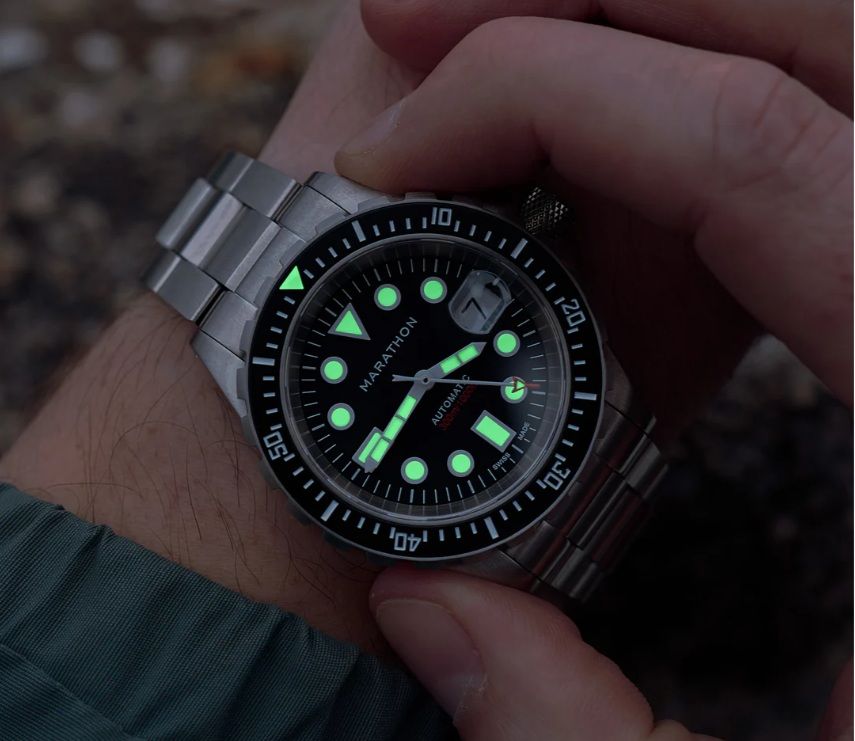
This is where brands like Marathon make their impact. At Time to Watches, they shift the conversation away from complication for complication’s sake, and back toward utility, longevity, and credibility. Features such as self-illuminating tritium gas tubes unchanged in principle for decades outperform more fashionable alternatives by offering constant legibility without reliance on external light sources. Similarly, the watch’s ability to withstand pressure changes at altitudes exceeding 35,000 feet is not a marketing flourish, but a requirement born from its original military brief. The NAV-D, Swiss-made and Canadian-designed, stands as a reminder that innovation in watchmaking is not always about reinvention. Sometimes, it is about refining a tool so precisely that it continues to perform, decades after its inception, exactly as intended.
Breda: A New Way Of Telling Time
In a market often bound by convention, BREDA continues to carve a distinct identity one that treats time not as a rigid measurement, but as a deeply personal experience. The brand’s design language draws from familiar archetypes, yet reinterprets them with a contemporary sensibility that feels both intimate and immediate.
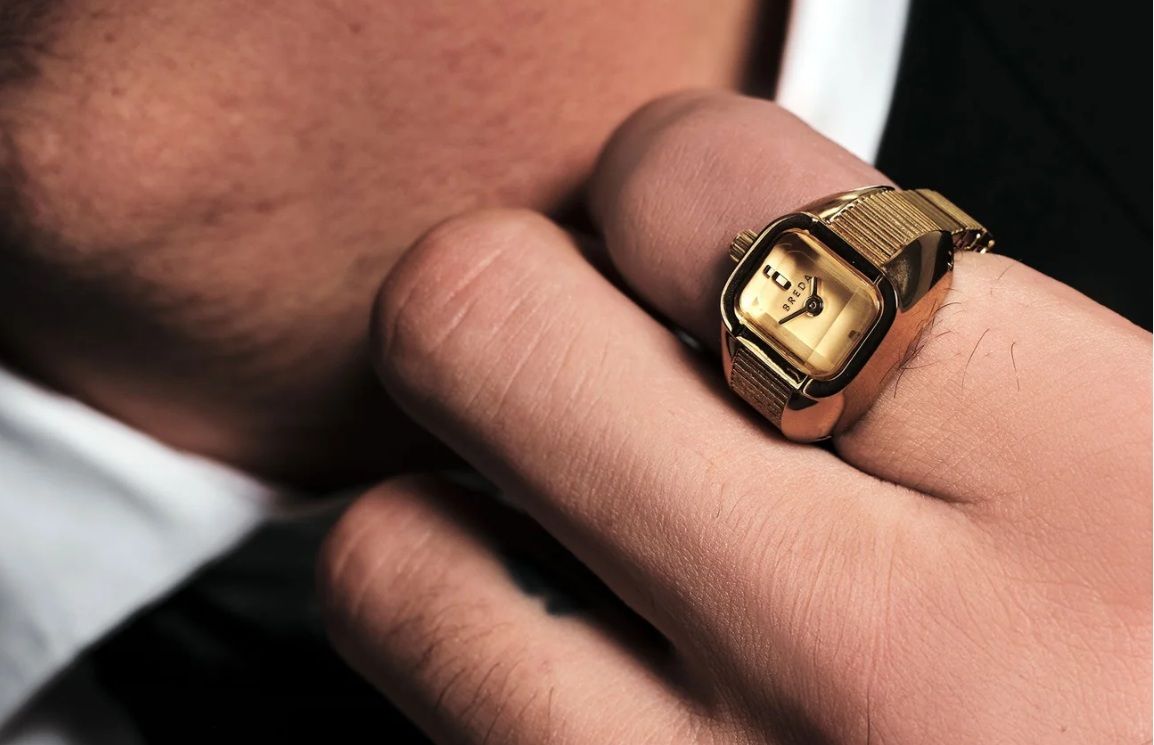
At the heart of BREDA’s philosophy is a conscious move away from traditional binaries. Its genderless approach challenges long-standing industry norms, opening up space for fluidity, self-expression and design-led innovation. This is watchmaking that prioritises individuality over categorisation where the object becomes an extension of the wearer, rather than a prescribed identity.
Equally central is BREDA’s belief that quality should be democratic. Craftsmanship and considered design are not positioned as luxuries, but as expectations accessible, wearable and meaningful. Each piece is conceived not just as an accessory, but as a companion to personal narrative, evolving with the wearer over time. Inspired by the interplay of night and time, The Nocturne Time Ring reflects the essence of nocturnal beauty. Composed of a 18K deep gold-plated stainless steel soft-edged 16mm rectangular case and features a flame-colored crystal that meets gold ridges following through the expandable band.
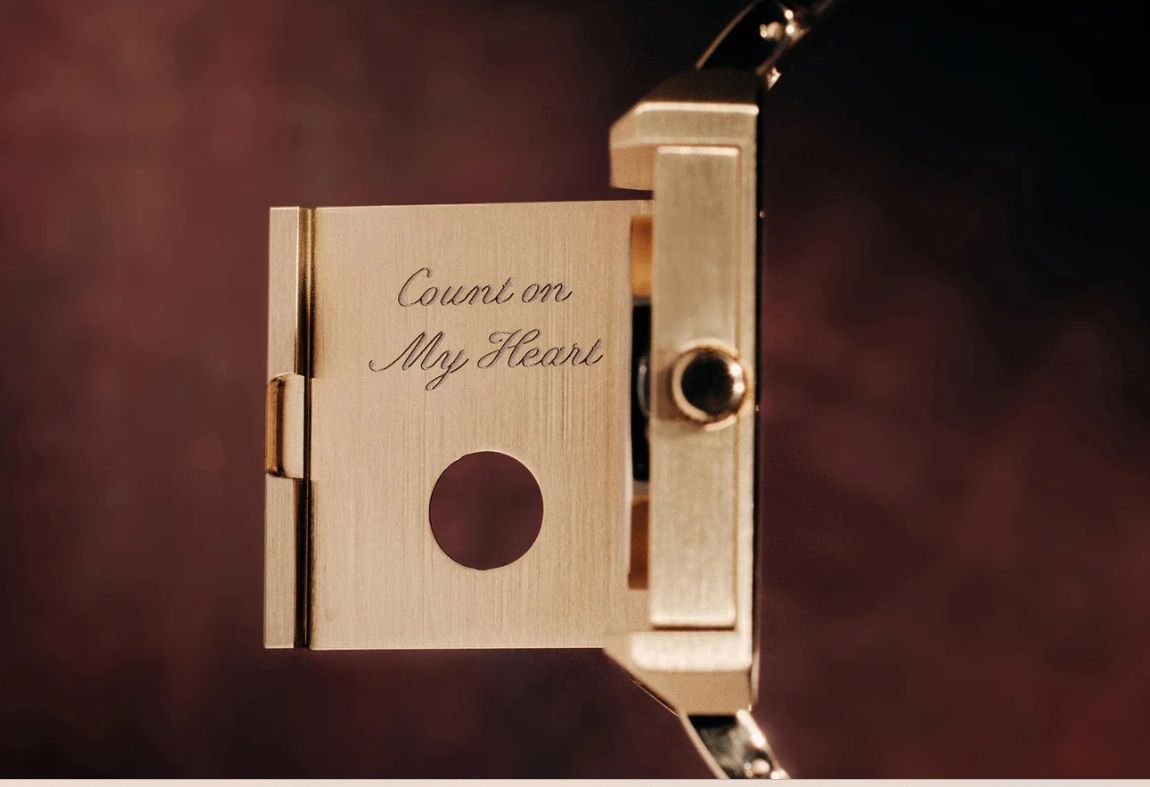
The Pulse (Locket) is a timepiece that reframes the very idea of what a watch can hold. Conceived as both an object and a repository of memory, it merges function with sentiment in a way that feels quietly radical. Encased in a compact 26mm form, the Pulse (Locket) departs from traditional time display. A subtle front-facing aperture reveals the movement of the seconds hand marking time as a continuous flow rather than a segmented count. Crafted in 18K gold-plated stainless steel and powered by a Japanese Miyota quartz movement, it retains the bracelet-forward design language of the original Pulse, secured with a seamless push-button clasp.
But it is the locket form that defines the piece. Designed to open and close, it introduces a duality of expression what is revealed, and what remains private. In a first for the brand, engraving is offered on both the exterior and interior surfaces, allowing for a layered form of personalisation. Names, dates, or quiet inscriptions transform the watch into a vessel of meaning, carried close to the pulse both literally and metaphorically. With the Pulse (Locket), BREDA moves beyond timekeeping into something more enduring. It is not simply about measuring moments, but about preserving them creating a keepsake where time and memory coexist, accumulating significance with every wear.
Geneva’s Real Treasure Hunt
What links these brands is not size or geography, but mindset. They are not trying to out do the legacy brands. Instead, they ask different questions. Can a brake disc become a luxury object? Can time be worn on a finger? Can hands disappear entirely? Can display mechanics become art? These questions matter because they push horology forward. Independent brands often act as the industry’s research lab testing ideas, aesthetics and values that larger maisons may later adopt.
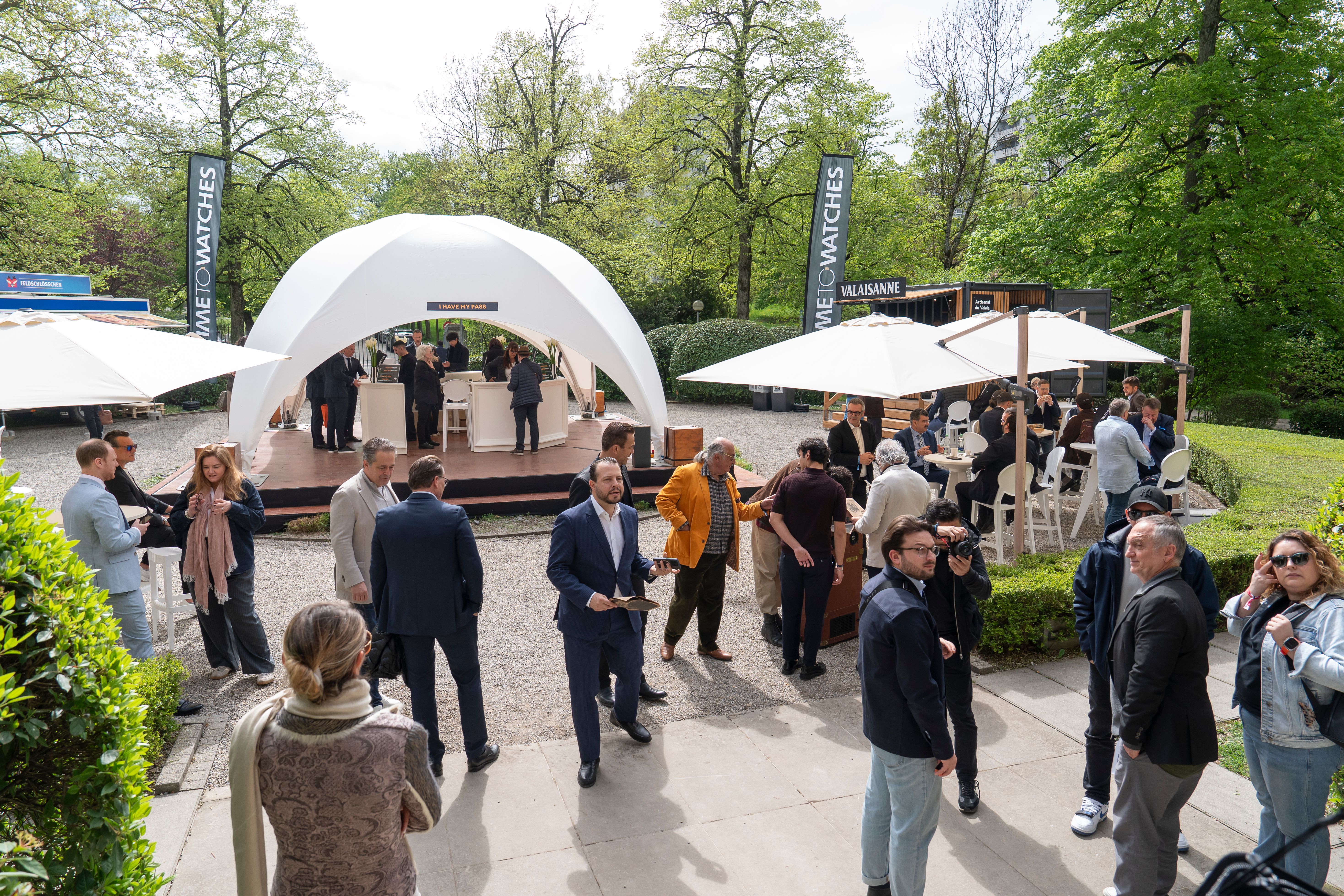
Time to Watches has grown into a serious destination in its own right, with more than 85 brands exhibiting in 2026 and an expanded village-style concept near Palexpo. For collectors willing to look beyond the obvious, it has become one of Geneva Watch Week’s richest hunting grounds. 2026 also saw the launch of Chronopolis, a unique show for indepdepdent brands that gives them a platform to showcase their creativity. Because while the biggest launches may happen inside Watches & Wonders, the most memorable ones are often found just outside the door.


