Watches And Wonders 2026: Audemars Piguet's Établisseurs Collection Unveiled
 7 min read

Before the Royal Oak. Before the integrated bracelet and the octagonal bezel and the Gerald Genta sketch on a napkin that changed the industry's direction permanently. Before any of that, Swiss watchmaking in the Vallée de Joux operated on a different model entirely.
Établissage was not a factory system. It was a network of specialists, each working from their own workshop, each contributing a specific skill to a single object that no one of them could have produced alone. The engraver worked on the engraving. The lapidary worked on the stone. The watchmaker worked on the movement. The établisseur coordinated them, understood each discipline well enough to hold the vision together, and assembled the final piece with full responsibility for the result. It was a collective practice rooted in individual mastery, and it produced objects of a complexity and beauty that the industrialised manufacture model, for all its advantages in consistency and scale, has never quite been able to replicate. Most of it disappeared over the course of the twentieth century. The economies of scale that built the modern Swiss watch industry were incompatible with the pace and particularity that établissage demanded. The specialists either joined manufactures and narrowed their work, or they retired and took their knowledge with them. The craft did not die all at once. It dissolved, slowly, into the production logic that replaced it.
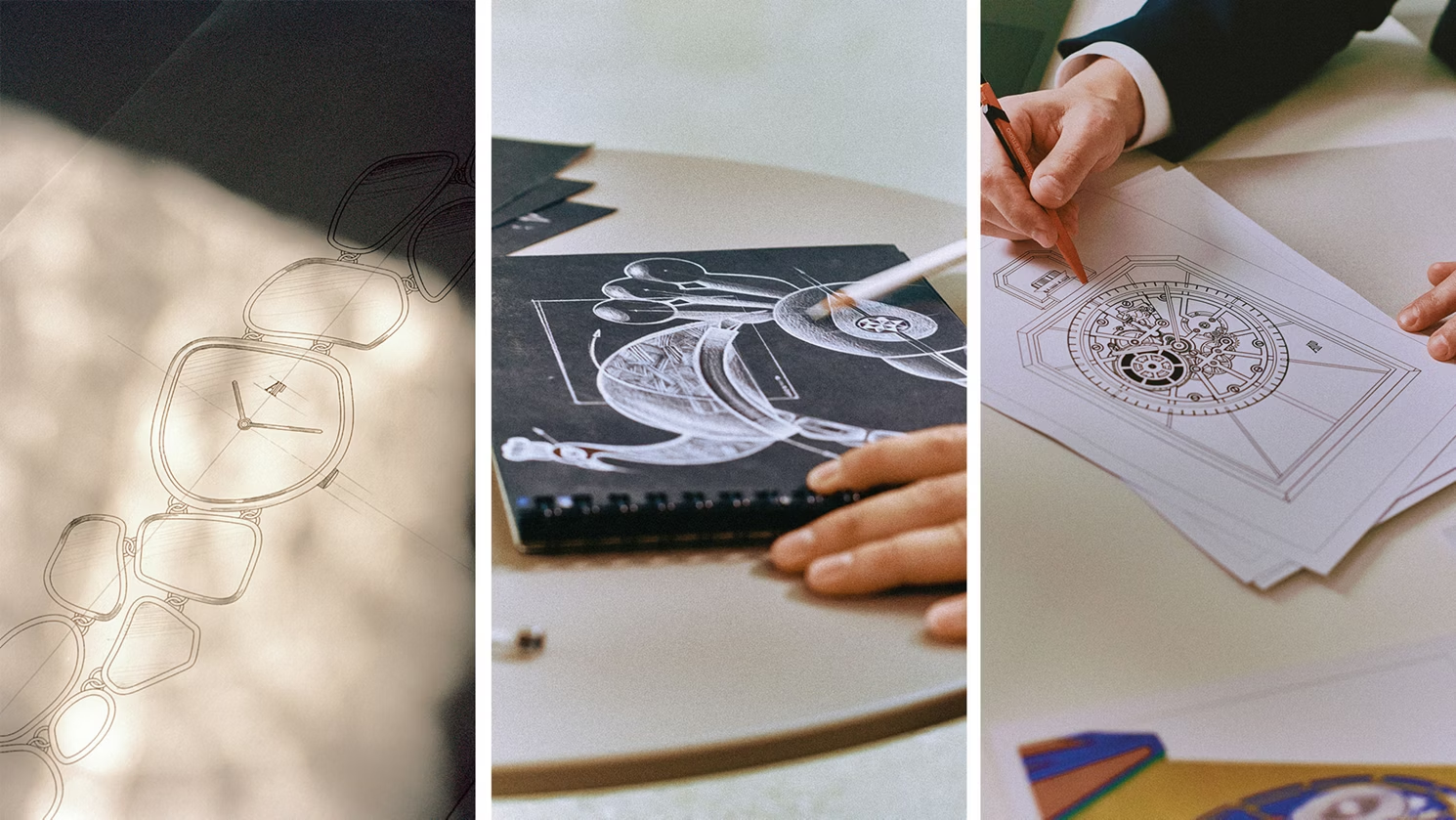
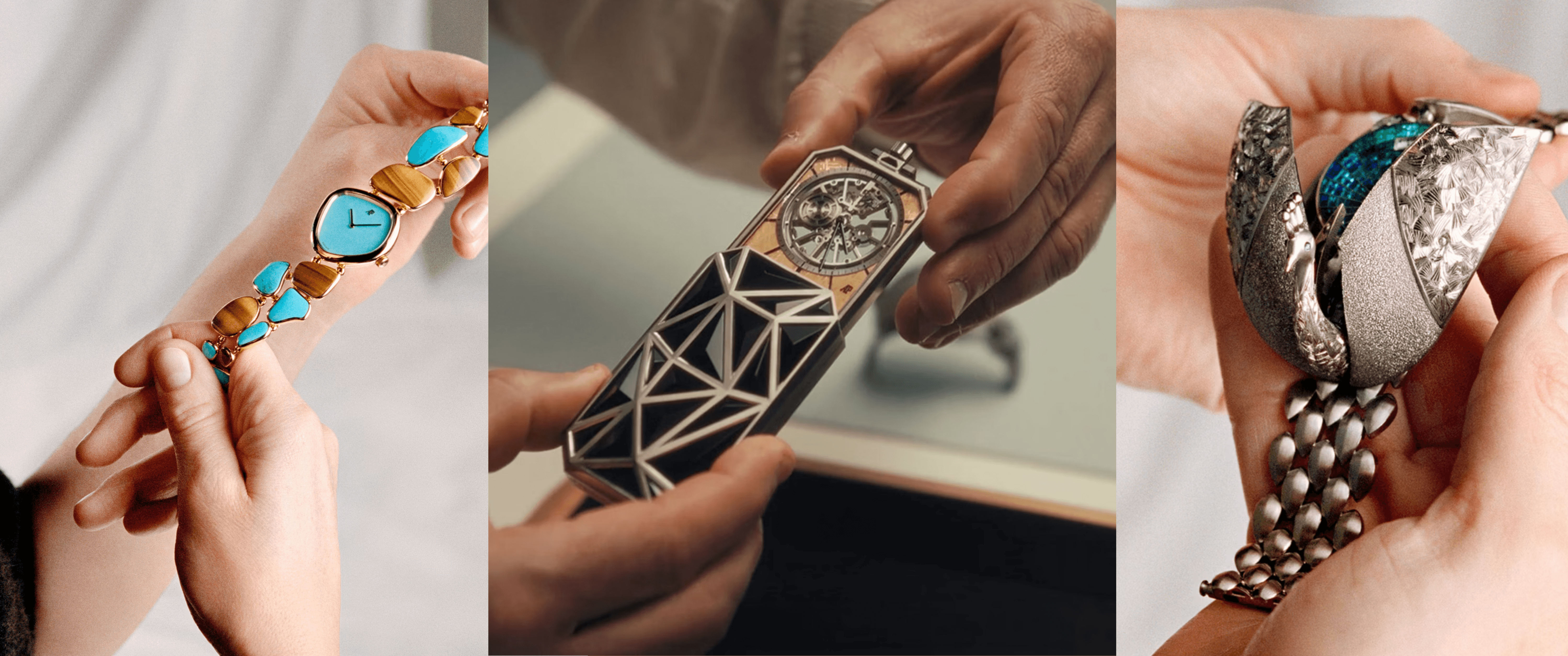
Audemars Piguet, working from within the Musée Atelier in Le Brassus, has spent the last several years attempting to reverse that dissolution. The Atelier des Établisseurs brings engravers, lapidaries, watchmakers, designers, jewellers and specialists in crafts that are genuinely at risk of vanishing under one roof, gives them genuine creative freedom, and asks them to make things that could not exist anywhere else. Every piece that emerges is assembled start to finish by a single watchmaker, in direct homage to the établisseurs who gave the atelier its name. At Watches and Wonders 2026, three new creations arrive from that atelier. Each one starts from a completely different premise. Each one arrives at something that no committee could have designed and no production line could have made.
Établisseurs Galets: The Lake as a Dial
The Vallée de Joux has shaped Swiss watchmaking in ways that go beyond geography. The isolation of the valley, its brutal winters and the particular patience they demanded of its inhabitants, is part of why the watchmaking tradition that developed there became what it is. The Galets piece takes that relationship between place and craft literally. Galets are the water-smoothed stones found at the edges of the Lac de Joux, shaped over centuries by the movement of water against rock until their edges become rounded and their surfaces polished by forces that no human hand could replicate at the same scale or patience. The dial is cut from natural stone, carrying the individual markings and variations that make every piece unique. The bracelet links are pebble-shaped, hand-finished in 18 carat yellow gold, mirroring the organic forms of the lakeshore stones in a precious metal that transforms the reference without sentimentalising it. The case follows the same logic of soft, curved geometry, housing Calibre 3098, hand-finished to follow those curves with a precision that the unconventional form makes considerably more difficult than a standard movement finishing exercise.
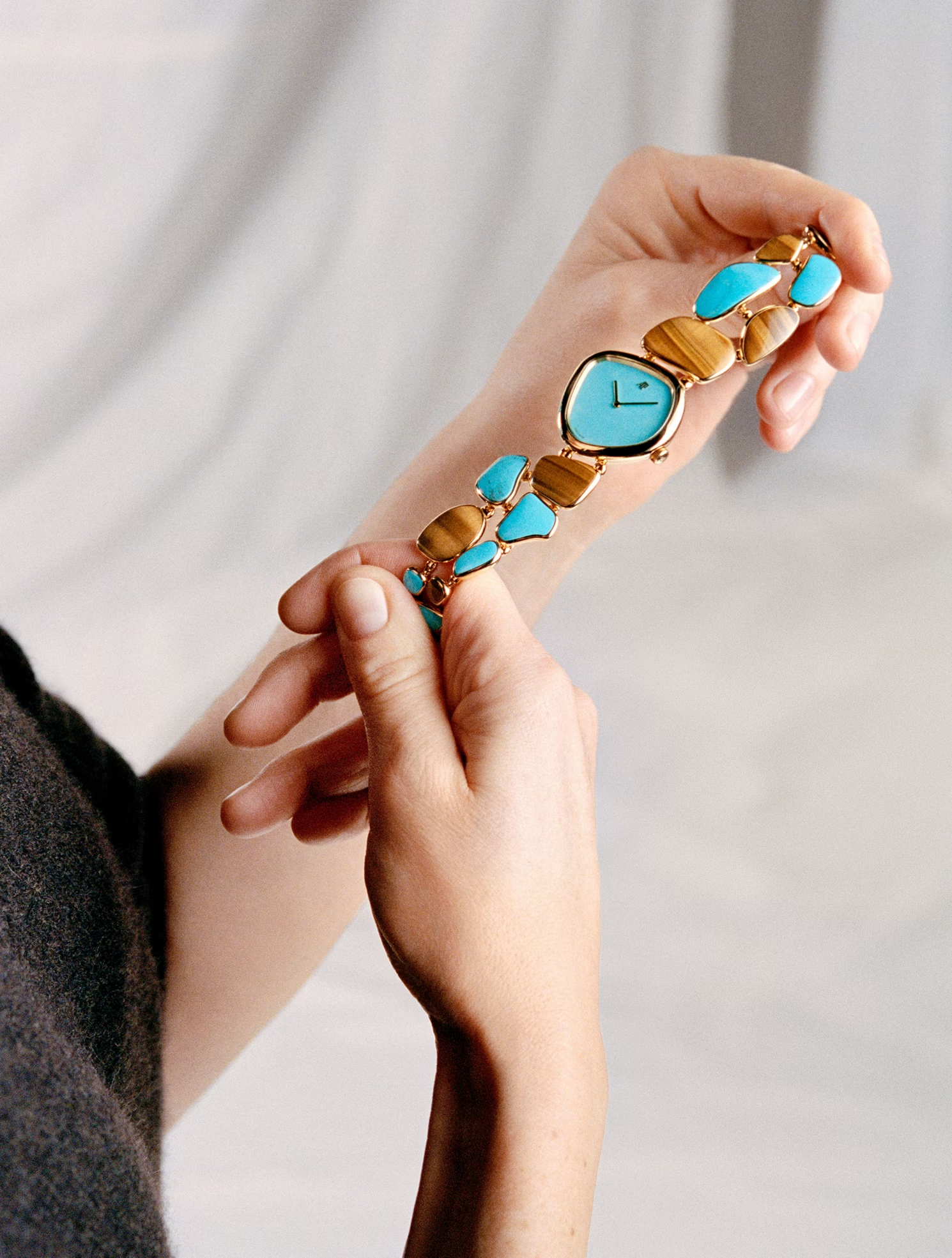
What makes the Galets compelling is its restraint. It does not explain itself. It takes the physical language of a specific place and translates it into a watch with total fidelity, trusting the object to communicate without assistance. That kind of confidence is rare. It is also, when it works, unmistakable.
Établisseurs Peacock: Automaton, Haute Joaillerie and a Secret
The secret watch, a jewelled object that conceals its timekeeping function behind a decorative surface that opens to reveal the dial, has a history in fine watchmaking stretching back centuries. The format exists at the intersection of jewellery and horology, where the primary experience is the reveal rather than the reading of time.
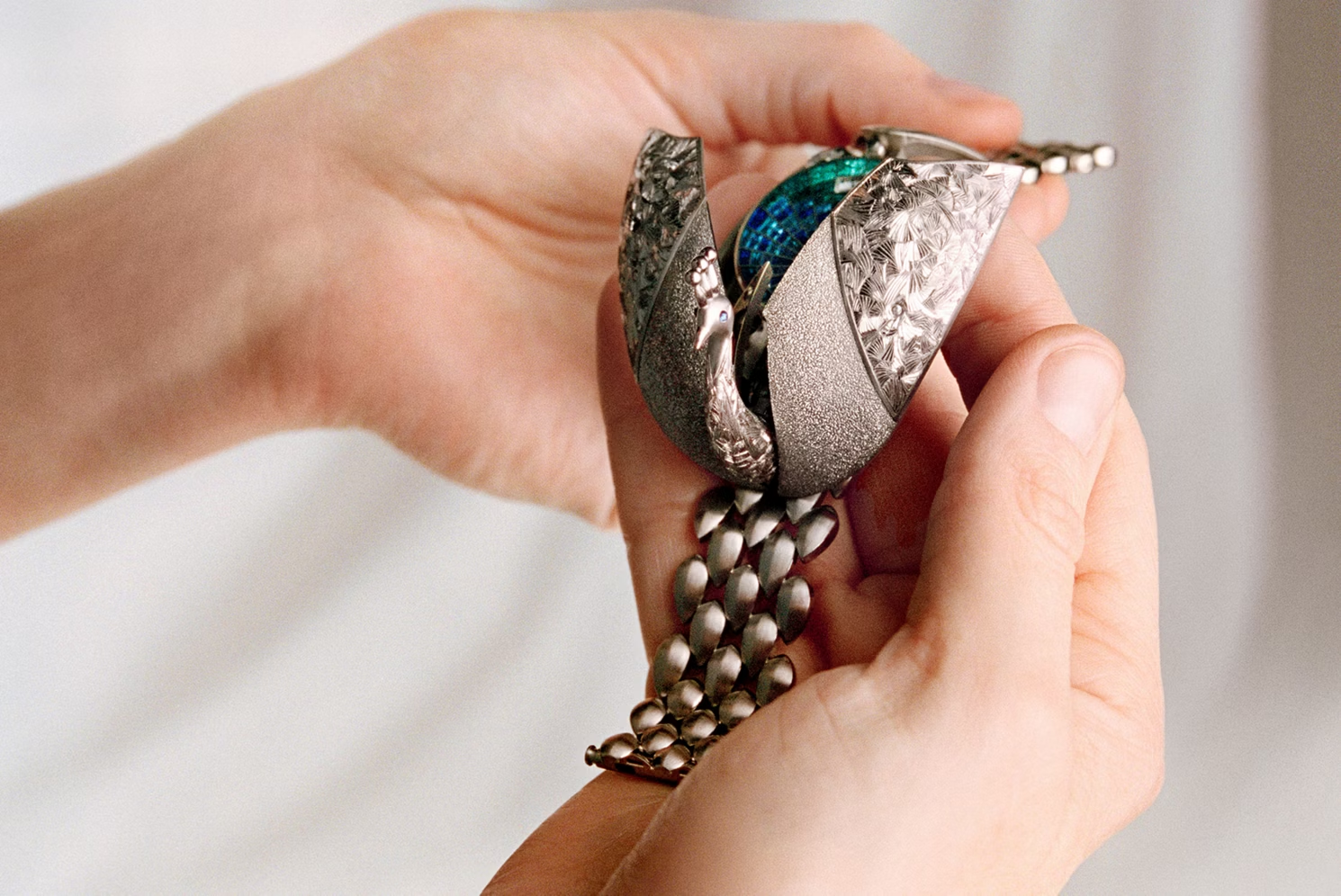
The Peacock takes that format and pushes it considerably further. The case is white gold, shaped like a beetle, and opens with a push to reveal a peacock hand-sculpted in translucent enamel. The enamel work is not background decoration: the peacock is built up in three dimensions, its feathers layered in translucent material that allows light to pass through them the way it passes through actual feathers, shifting as the angle of view changes. Beneath it, Calibre 3098.2 drives a dragging-hour display, the hour marker travelling continuously across the dial rather than jumping, adding a sense of perpetual motion to an object already defined by transformation. The bracelet continues the feather motif in hand-crafted gold, each element worked individually by hand.
The Peacock earns its register because the mechanical complexity beneath the enamel surface matches the ambition of the surface itself. The automaton opening mechanism, the three-dimensional enamel sculpture, and the calibre underneath are all operating at the same level. That coherence is what the établissage tradition demands: every specialist at the edge of their capability, no single discipline dominating and the others merely serving it.
Établisseurs Nomade: Time as a Portable Object
The Nomade is the piece that most directly challenges the premise of what a watch is supposed to be. It does not commit to the wrist. A secret push-piece reveals a sliding inner case that opens onto a natural stone dial and a hand-skeletonised Calibre 7501, whose openworked bridges create an interplay of light and shadow that shifts with every change in angle. The piece can be carried in a pocket, displayed as a miniature object, or worn as a pendulum on an artisanal gold or titanium chain. The skeletonisation of Calibre 7501 is done by hand with a fine saw, removing material from the bridges and plates in a process that resists automation because the character of the result depends entirely on the judgment of the person doing the cutting. Each bridge opening is unique. Each edge carries the trace of the hand that made it. The natural stone dial, like the Galets, carries the markings of a specific and irreplaceable piece of material.
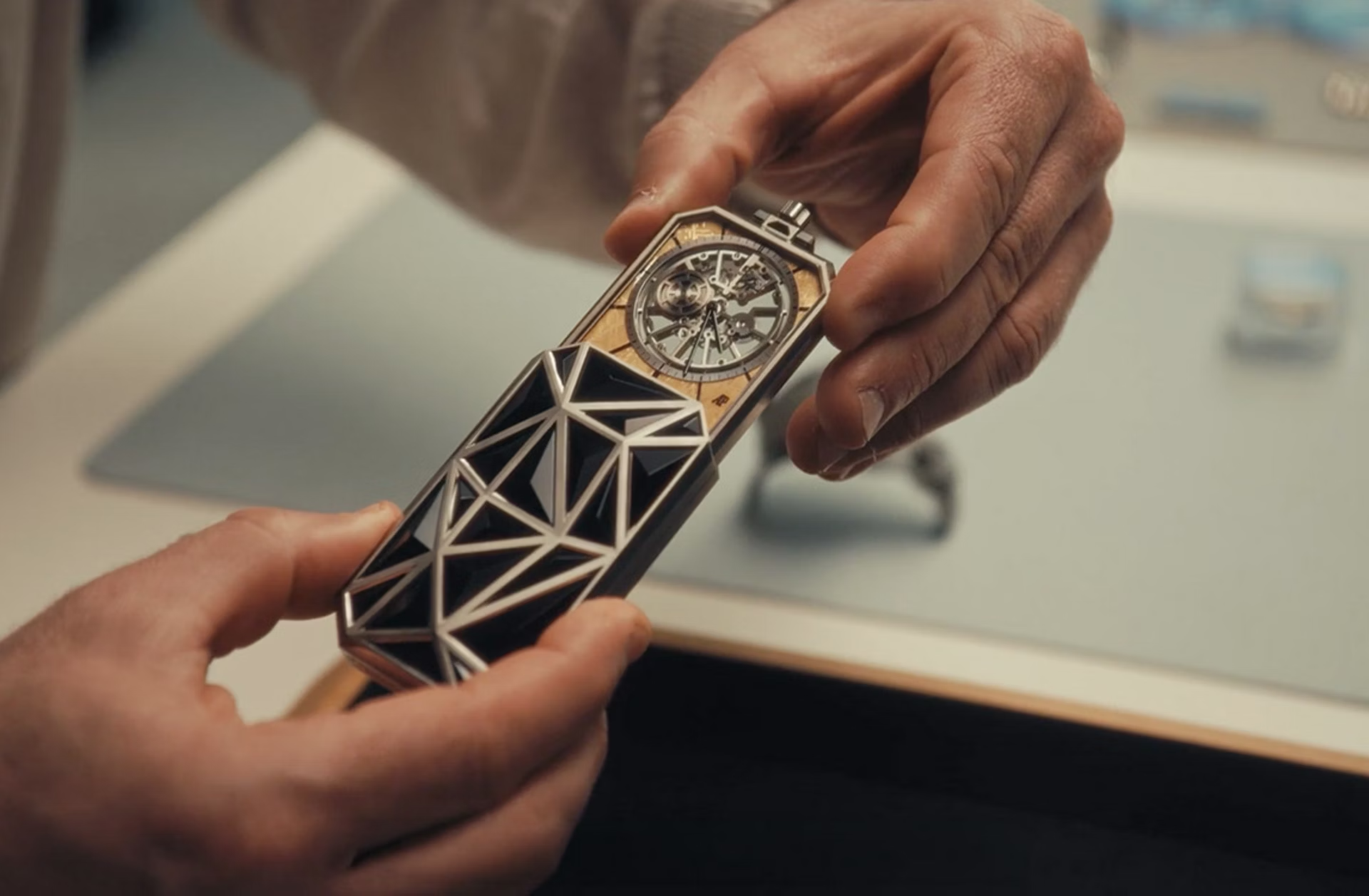
What the Nomade proposes, without insisting on it, is that the most interesting version of a watch might be one that finds its own relationship with the person who carries it rather than defaulting to the wrist. That is an unusual idea in an industry that has spent a century standardising the format.
What the Établisseurs Collection Is Really About
These three pieces will be read by some as Audemars Piguet's version of a high jewellery collection, ultra-limited objects for collectors who want something beyond the standard catalogue. That reading is not wrong. But it misses the more important story. The crafts being preserved in this atelier, hand skeletonisation with a fine saw, artistic engraving, stone cutting at dial-work precision, three-dimensional enamel sculpture, automaton mechanism construction, are genuinely endangered. The number of people who can do these things at the required level is small and not growing. The commercial structures of modern watchmaking do not naturally sustain them because they are slow, expensive and resistant to the quality control that production demands. Without deliberate institutional support, they continue to dissolve in exactly the way they have been dissolving for the last hundred years.