Watches And Wonders 2026: Hermès Opens Every Watch Up And Shows You What's Inside
 7 min read

Hermès has always had a different relationship with time than most watch brands. Where others measure it, organise it, chase its precision with obsessive rigour, Hermès treats it as something more poetic. An object, as the house puts it, rather than a constraint. Something to be felt and experienced rather than merely read off a dial. That philosophy has produced, over the years, some of the most imaginatively conceived watches in the industry, pieces that take the machinery of timekeeping and route it through the lens of a house that was, and remains, fundamentally in the business of making beautiful things.
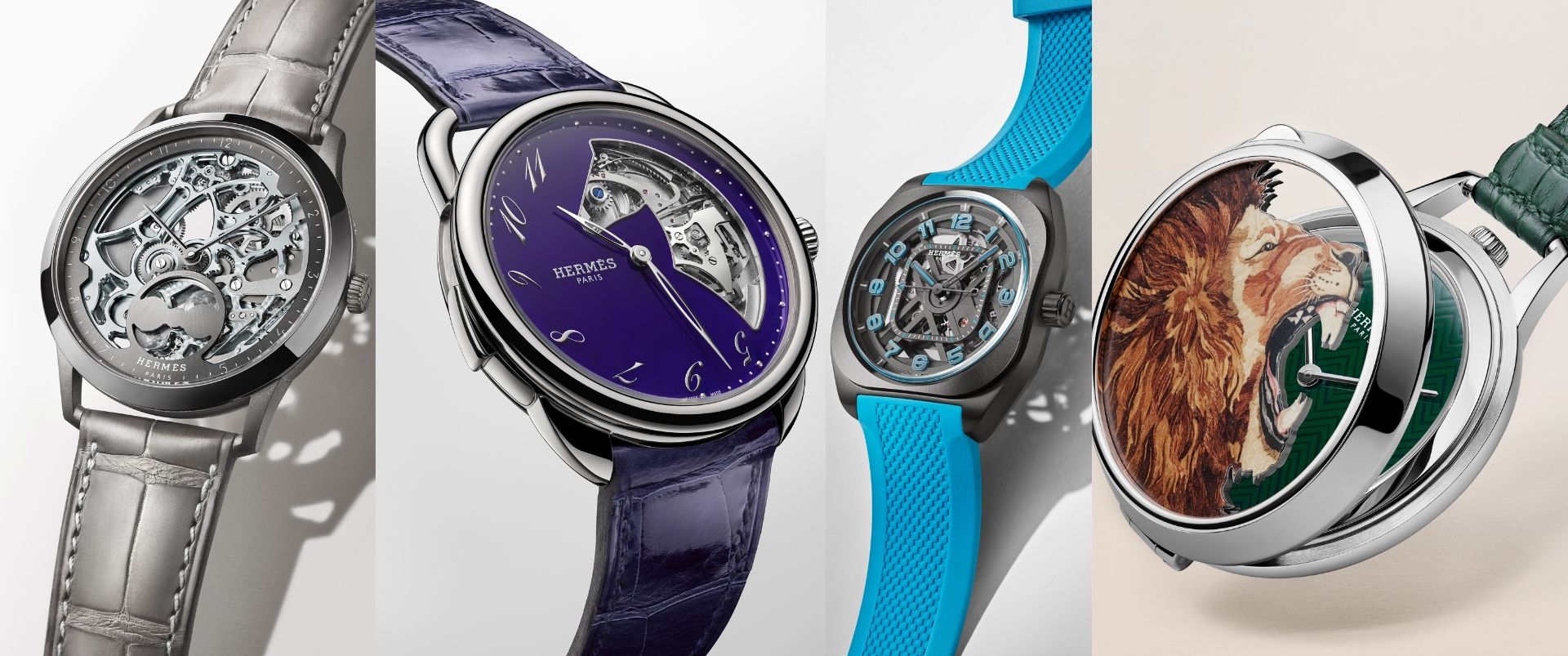
In 2026, that philosophy finds its expression through a single connecting idea across the entire collection: transparency. The movement structure revealed. The gears visible. The architecture of time made into something you look into rather than simply at. Skeletonisation is not a new technique in watchmaking, but what Hermès does with it across these four releases is something more considered than mere openwork. It is a consistent creative argument, applied differently in each case, that the mechanism itself is as interesting as anything you could put on top of it.
Hermès H08 Squelette: Architecture You Can See Through
The H08 arrived in 2021 as one of the more confident new case designs from any manufacture in recent memory. That cushion shape, simultaneously round and square, with its satin-brushed titanium and graphic proportions, was an immediate statement that Hermès was serious about watchmaking on its own terms rather than simply producing fashionable objects with movements inside them. The H08 Squelette takes that design and strips away everything that was hiding the movement.
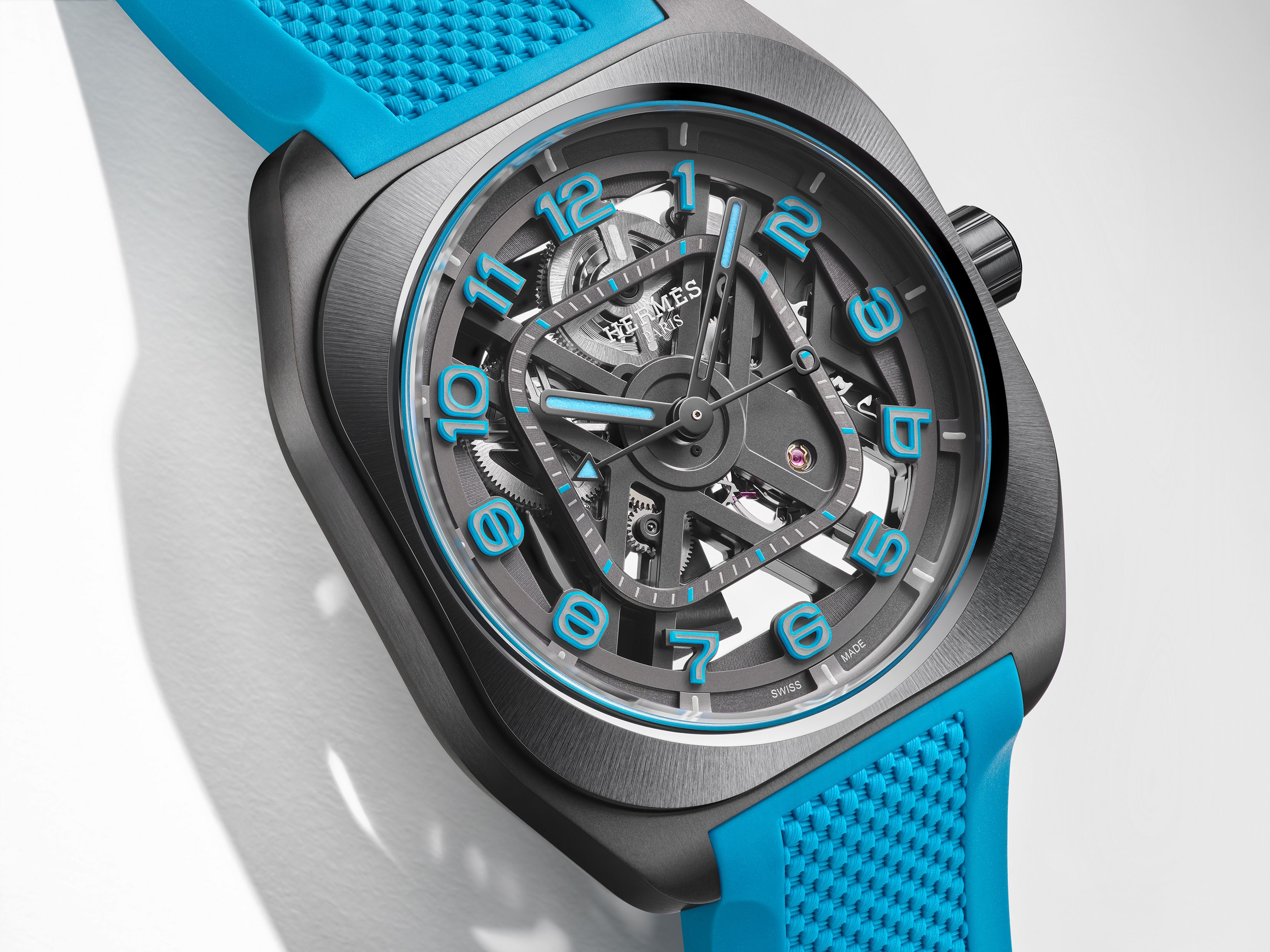
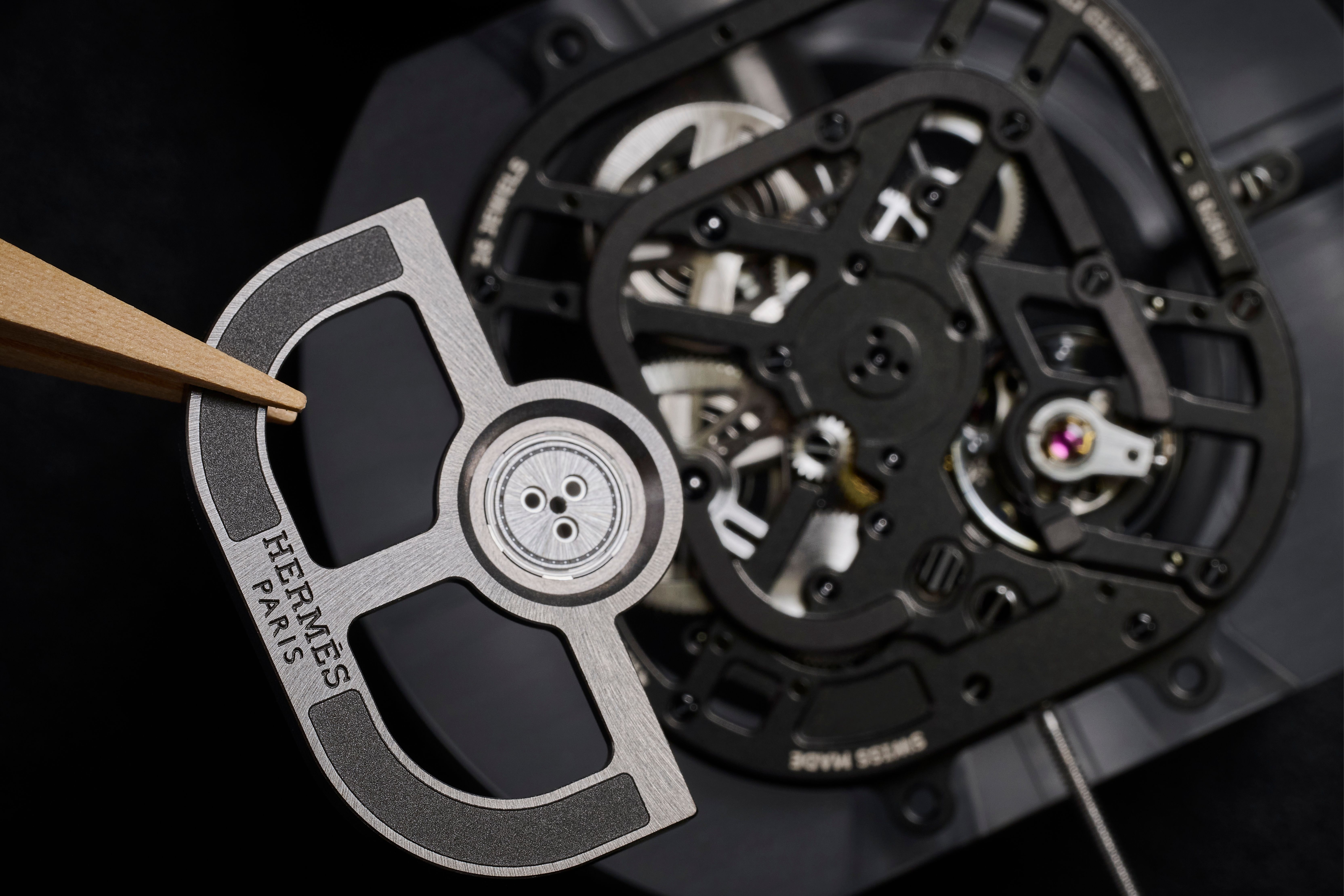
The calibre inside is the new H1978 S, a skeletonised version of the H08 movement built specifically for this application on a PVD-treated titanium mainplate and bridges. At 168 components, beating at 28,800 vibrations per hour with a 60-hour power reserve, the movement is engineered to be seen. The mainplate and bridges have been opened to create what reads from the front as an architectural interplay of vanishing lines and interlocking gears, drawing the eye through successive layers of mechanism toward the beating heart of the watch. It is uncluttered despite its complexity, which is the hardest thing to achieve in skeletonisation: the temptation is always to fill every available surface with decoration, and the discipline here is to leave space for the eye to travel.
The case is matt DLC-treated satin-brushed titanium with a sunburst satin-brushed black ceramic bezel and mirror-polished chamfers, 39mm in the cushion shape, water-resistant to 10 bar. It comes in two versions with woven-patterned rubber straps, one in a deep blue that picks up the Super-LumiNova on the hour markers, one in black. The blue version in particular uses the contrast between the graphically complex skeletonised movement and the blue hour markers to create a dial that reads with unusual intensity for a watch that has essentially removed its own dial.
Arceau Samarcande: A Horse's Head Hides a Minute Repeater
If the H08 Squelette is about the clarity of revealed mechanism, the Arceau Samarcande is about revelation as theatre. The Arceau line, designed by Henri d'Origny in 1978 with its distinctive stirrup-inspired asymmetrical lugs, has always carried the equestrian spirit that runs through everything Hermès makes. Here the horse is not merely an inspiration. It is the dial.
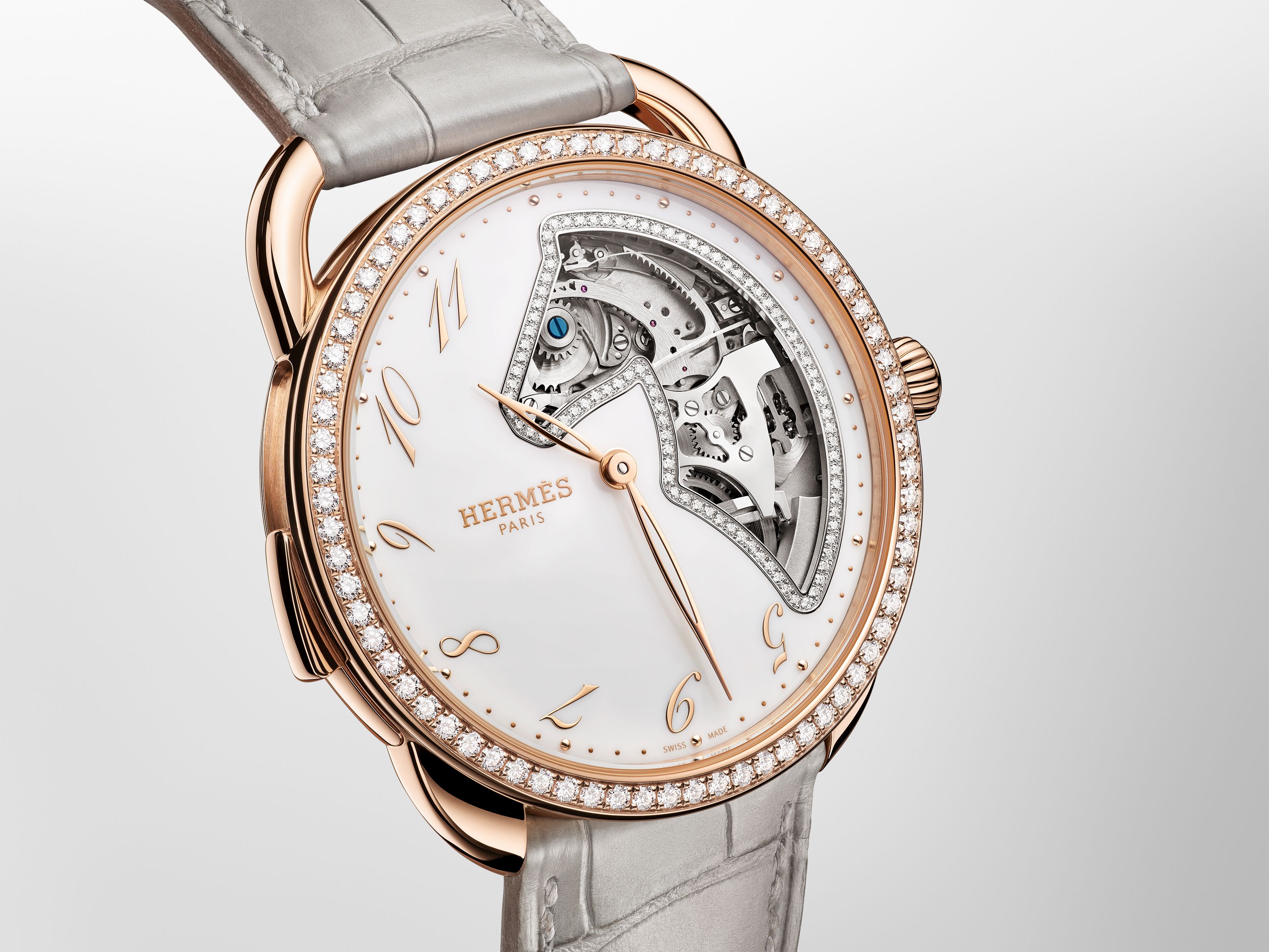
The Saint-Louis crystal dial has been openworked to form a horse's head in cut sapphire crystal, or in the gem-set versions, in diamond-set rhodium-plated sapphire crystal. The horse's eye gazes outward from the centre of the watch while its head, formed by the cutout, reveals the skeletonised movement behind it. The game of hide-and-seek this creates, movement visible through the horse's silhouette, horse visible through the gem-setting, is exactly the kind of layered visual experience that Hermès constructs with the confidence of a house that thinks in images as naturally as it thinks in mechanisms.
The movement behind all of this is the H1297, a manufacture calibre and an extraordinary one: 339 components, 40 jewels, self-winding via a micro-rotor, with a minute repeater complication. At 21,600 vibrations per hour with a 48-hour power reserve, it is among the most complex movements Hermès has ever produced, and the sapphire crystal caseback reveals not just the movement architecture but the minute repeater hammers and the micro-rotor, finely adorned with the Duc attelé motif. When the repeater sounds, time rings out through the mechanism you can see. That is the complete Hermès proposition: function and poetry in the same object, inseparable.
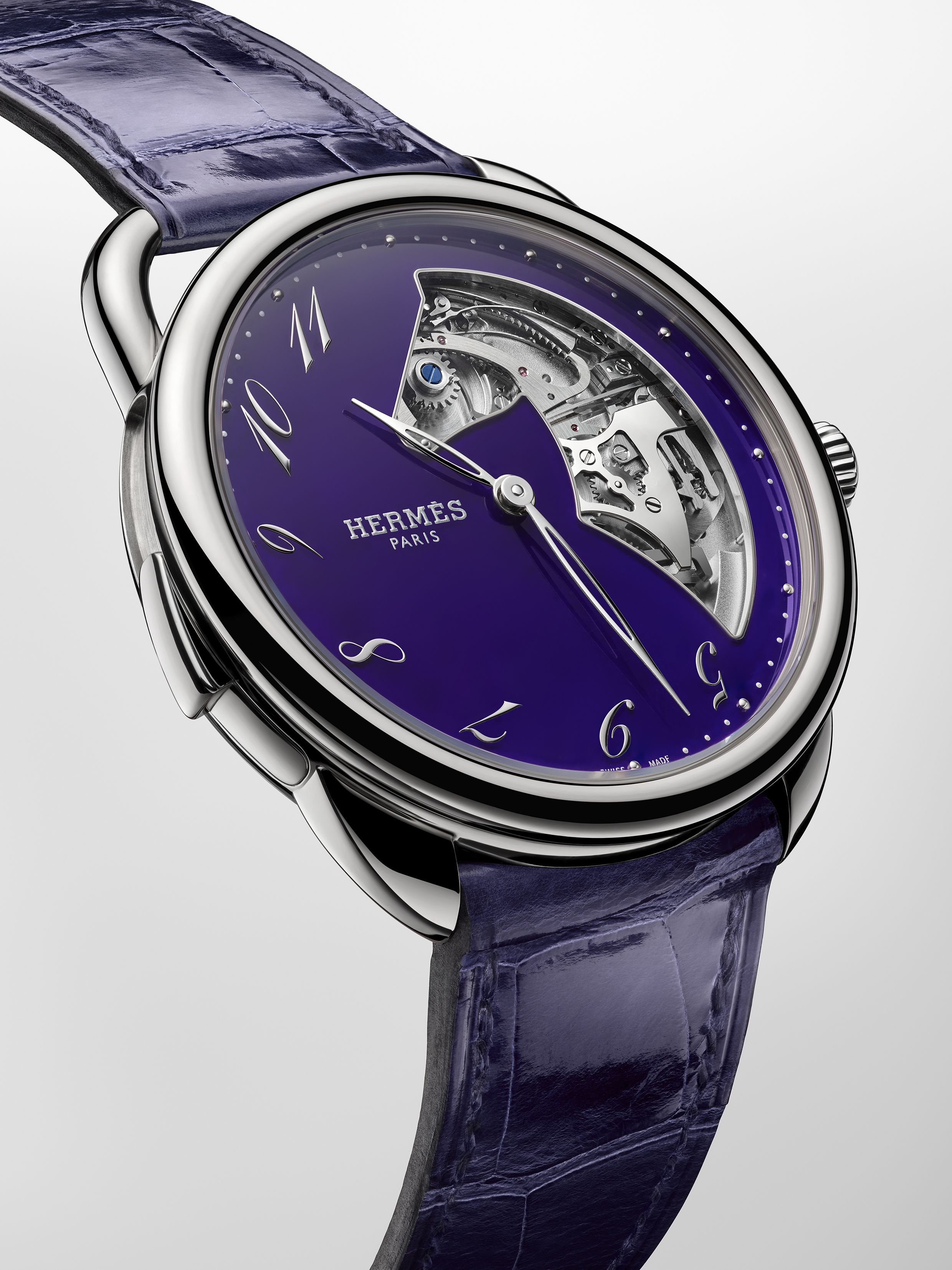
The case is 38mm in white or rose gold, with multiple strap options in alligator and calfskin from the Hermès leather workshop, each chosen to complement the specific dial colourway. The gem-set versions extend the jewellery register into the bezel, framing the horse's head with diamonds that catch and scatter light across the already visually complex dial surface.
Slim d'Hermès Squelette Lune: The Moon Through an Open Movement
The Slim d'Hermès has always been the most quietly ambitious watch in the collection. Philippe Delhotal's 2015 design, with its round case and angular lugs, has a purity of proportion that makes it the ideal canvas for the kind of artistic expression Hermès's Métiers d'Art team does so well. The Squelette Lune takes that canvas and opens it to the moon.
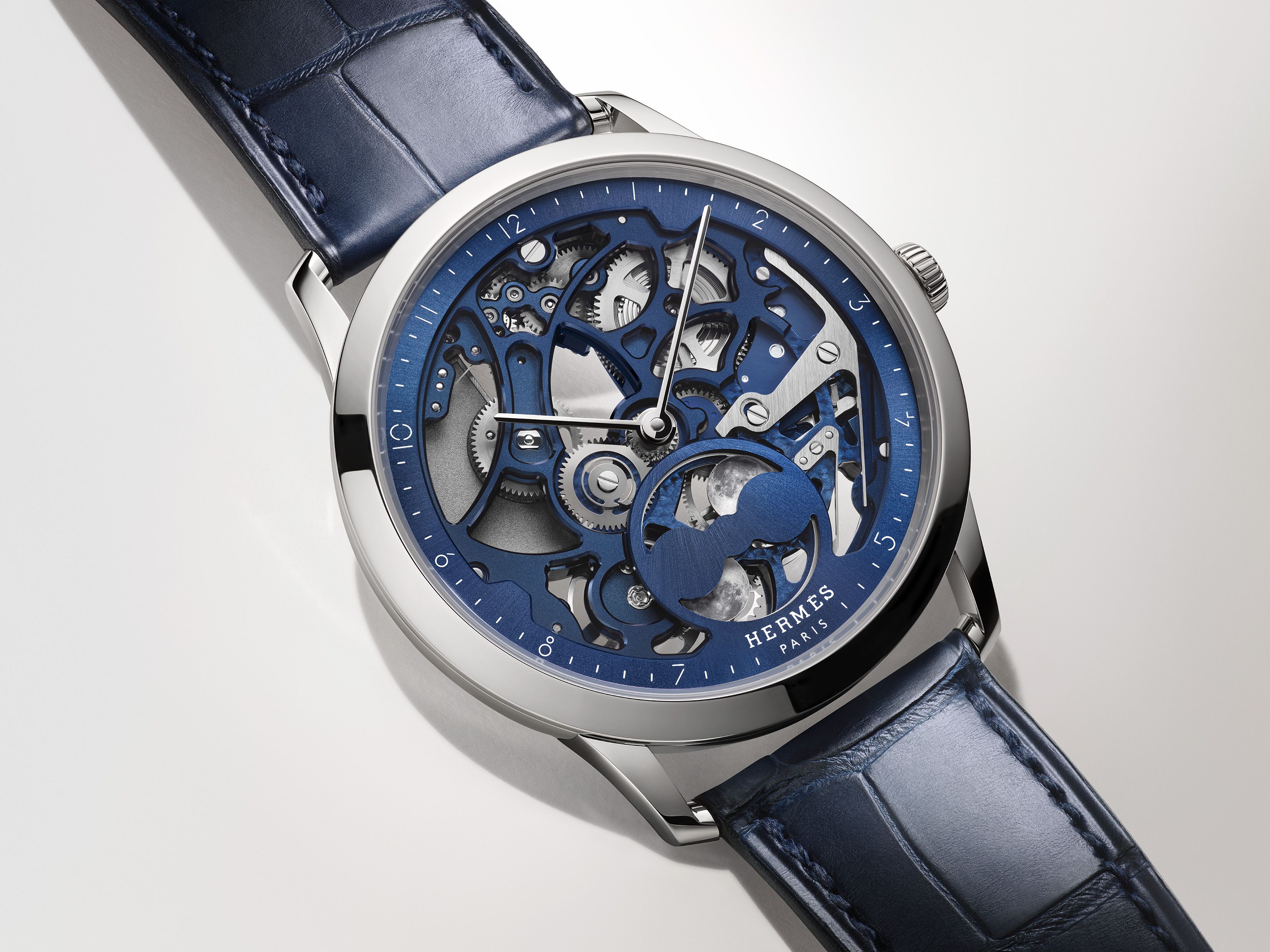
The H1953 calibre is extra-thin, 30mm in diameter and 3.57mm thick, with a micro-rotor and a double moon phase complication at 6 o'clock that tracks the lunar cycle from both the Northern and Southern hemispheres simultaneously. The movement has been skeletonised with hand-chamfered, bead-blasted bridges that create a surface texture visible to the naked eye, each bridge edge carrying the trace of the hand that finished it. The dial is openworked in black gold or blue, and the moon phase display sits within this skeletal landscape like a small celestial object in a mechanical sky.
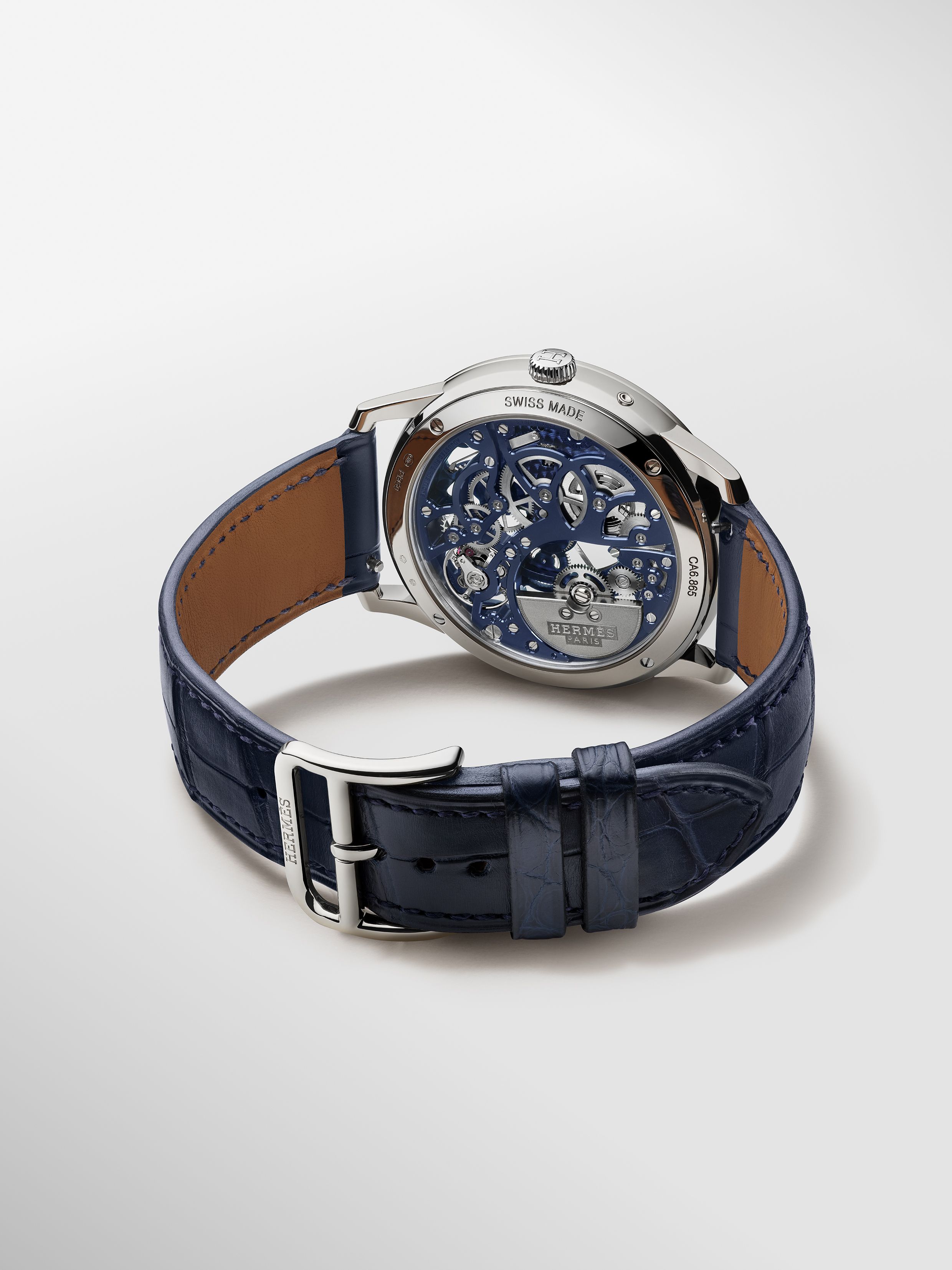
The case comes in two versions: satin-brushed DLC-treated titanium with an anthracite DLC bezel, and polished 950 platinum with a polished platinum bezel, both at 39.5mm. The titanium version in vert d'eau is the more wearable proposition in a conventional sense. The platinum version carries a formality and a weight that suits the complexity of what is happening inside it. Both come on alligator straps in colours chosen to extend the palette of the dial rather than simply coordinate with it.
Slim d'Hermès Pocket Roaaaaar!: A Lion in Ten Woods
Outside the skeletonisation theme but entirely consistent with Hermès's conviction that time is an object to be carried and experienced, the Slim d'Hermès Pocket Roaaaaar! is the most purely joyful piece in the 2026 collection and one of the most technically intricate.
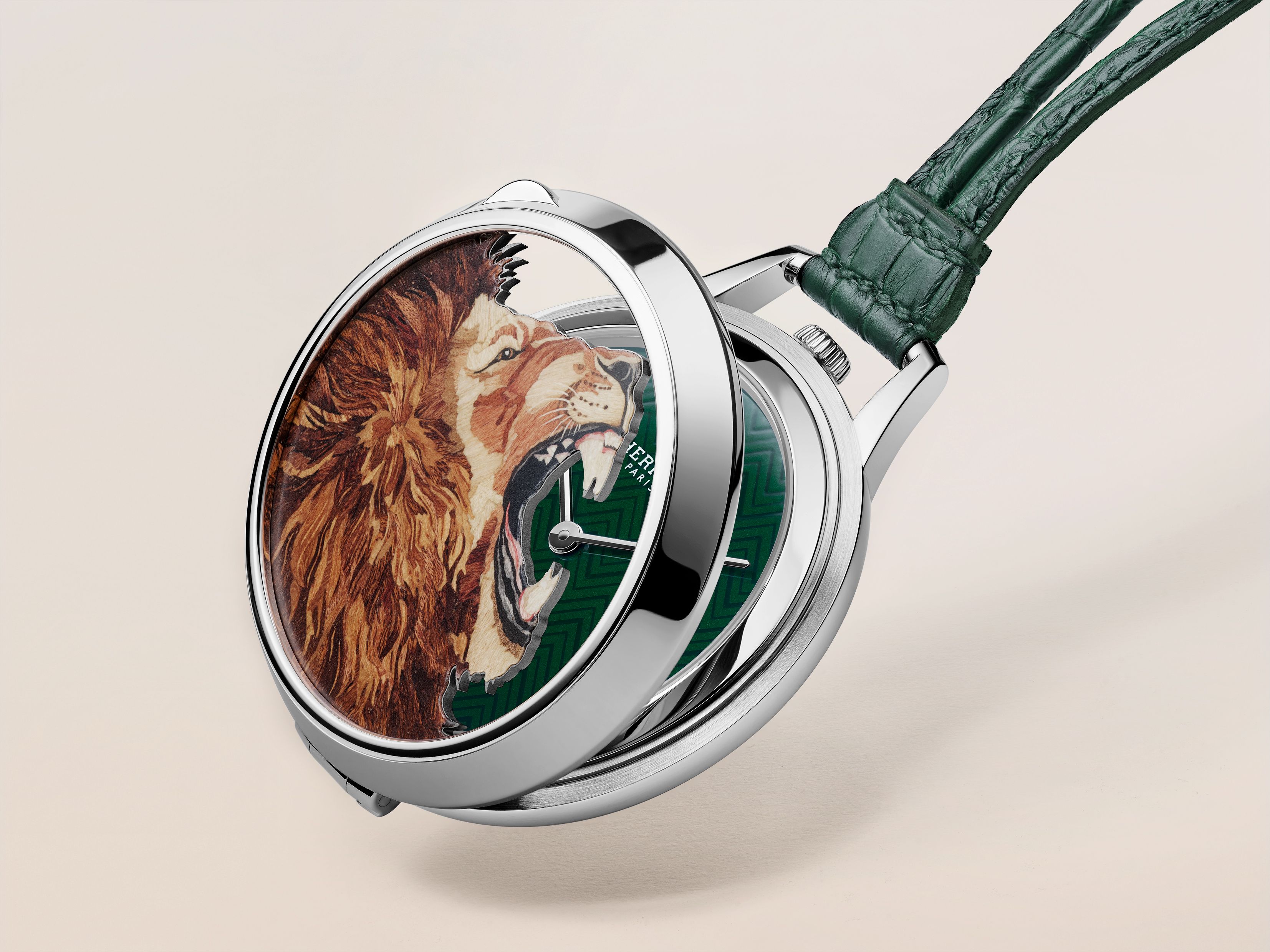
The Roaaaaar! design originated as a silk scarf motif by British artist Alice Shirley, depicting a roaring lion with its mouth wide open. Hermès has translated that image into wood marquetry on the openworked cover of a pocket watch, a form factor the house has always used to demonstrate that timekeeping does not have to live on the wrist to be an object of desire. Ten species of precious wood, including amaranth, burl, bubinga, tulipwood and maple, were selected specifically for their natural hues rather than cut and stained to fit. The artisan miniaturised the original design, matched each section of the animal's mane and coat to a wood whose natural colour already approximated the required tone, cut each piece into tiny fragments, assembled them like a jigsaw puzzle, sanded the surface flat and varnished the whole thing to a depth that makes the completed animal look as if it has dimension rather than surface.
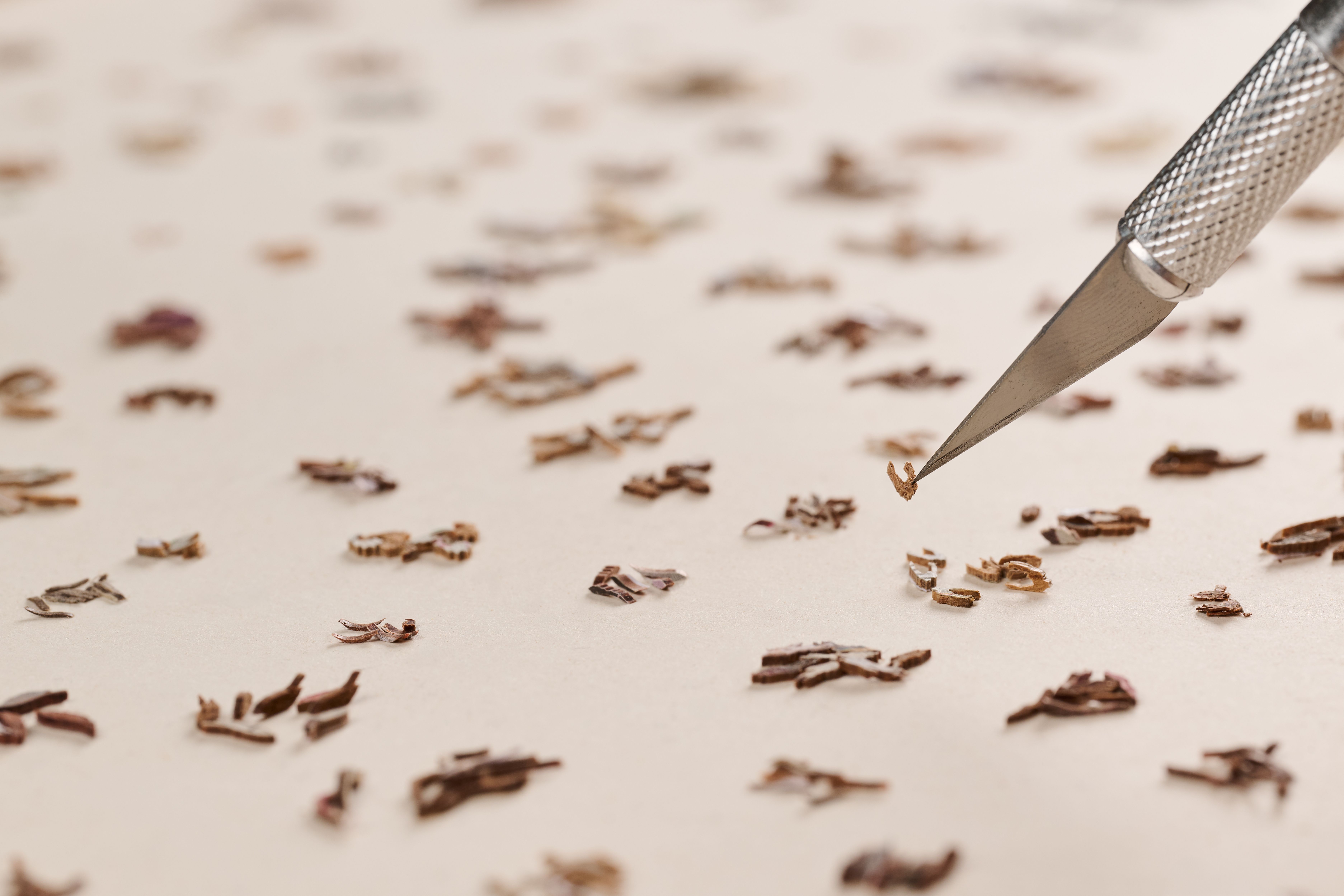
The openworked cover, when held partially closed, provides a glimpse of the enamel dial beneath: a herringbone pattern in vert cyprès or bleu saphir, created in grand feu at over 800 degrees Celsius, the coloured glass powder fired onto the engraved white gold base and fused permanently into the metal. Through the lion you see the herringbone. Through the herringbone you see the H1950 ultra-thin movement with its 48-hour power reserve. The pocket watch is presented with a cord strap and matching alligator pouch, the leather work done in-house. It is limited to three pieces in each colour.
What Hermès Is Saying With All of This
These four pieces are very different objects. A sport-adjacent titanium watch with a graphic skeletonised movement. A high jewellery minute repeater with an equestrian motif carved into its dial. An ultra-thin moon phase in platinum. A pocket watch with a lion made of ten different woods on its cover. They share no aesthetic and very little technical vocabulary.
What they share is a way of thinking about what a watch is for.


