Watches And Wonders 2026: Rolex Invents A New Gold And Rebuilds The Daytona From The Outside In
 8 min read

Some years Rolex arrives at Watches and Wonders with refinements. Incremental improvements, new dial colours, subtle technical updates dressed in the vocabulary of evolution. Those years matter, because incremental at Rolex means something different than incremental anywhere else. But then there are years when Rolex arrives with something that stops you mid-sentence. A new gold alloy. A Daytona that has never looked like this before. Materials combined in ways that required patent applications because nobody had done them before. This is one of those years.
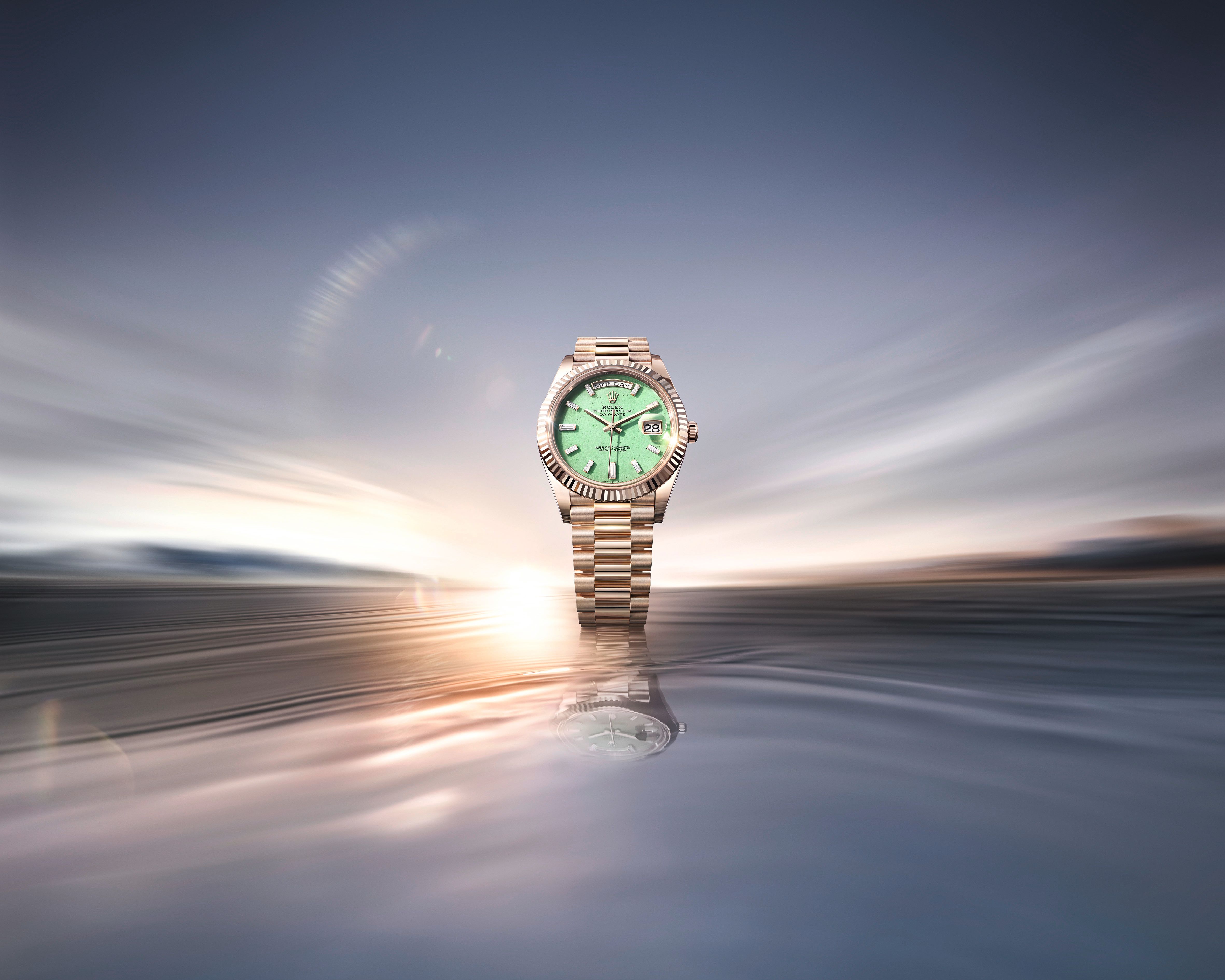
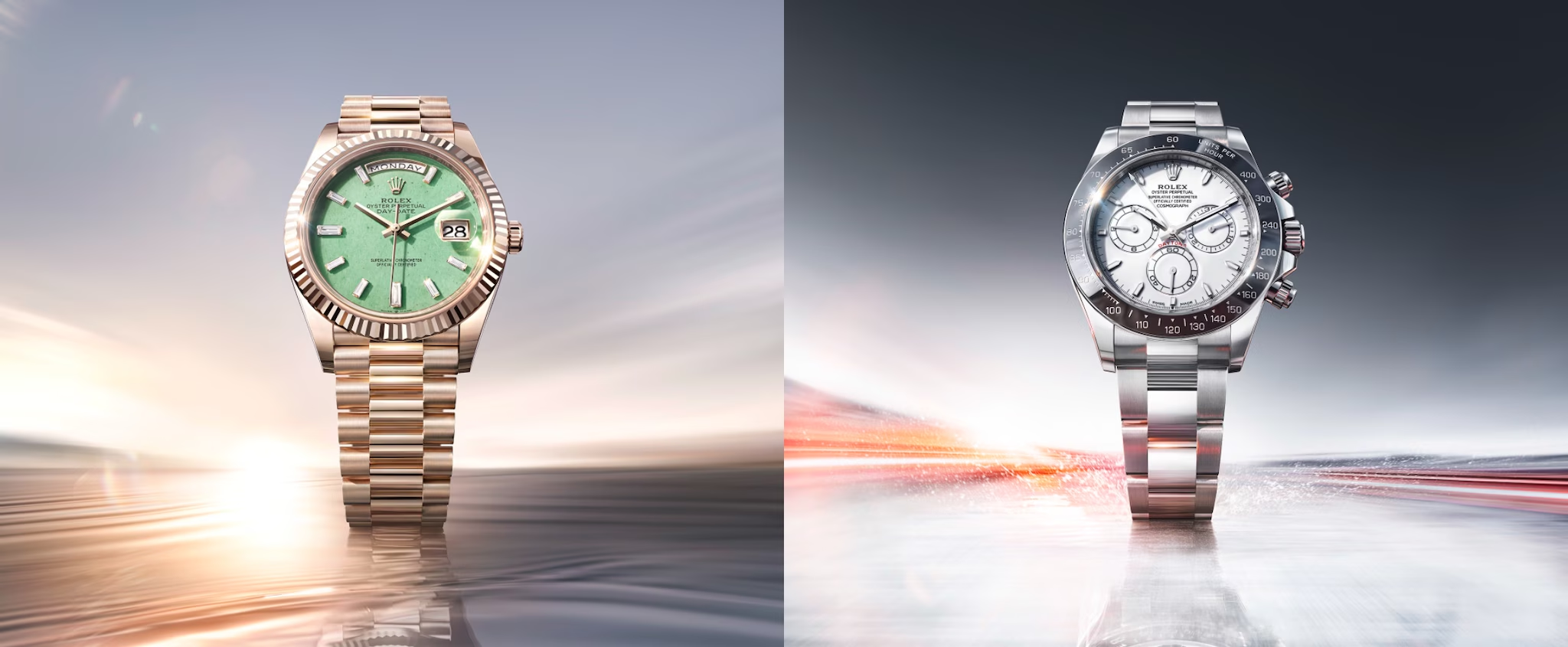
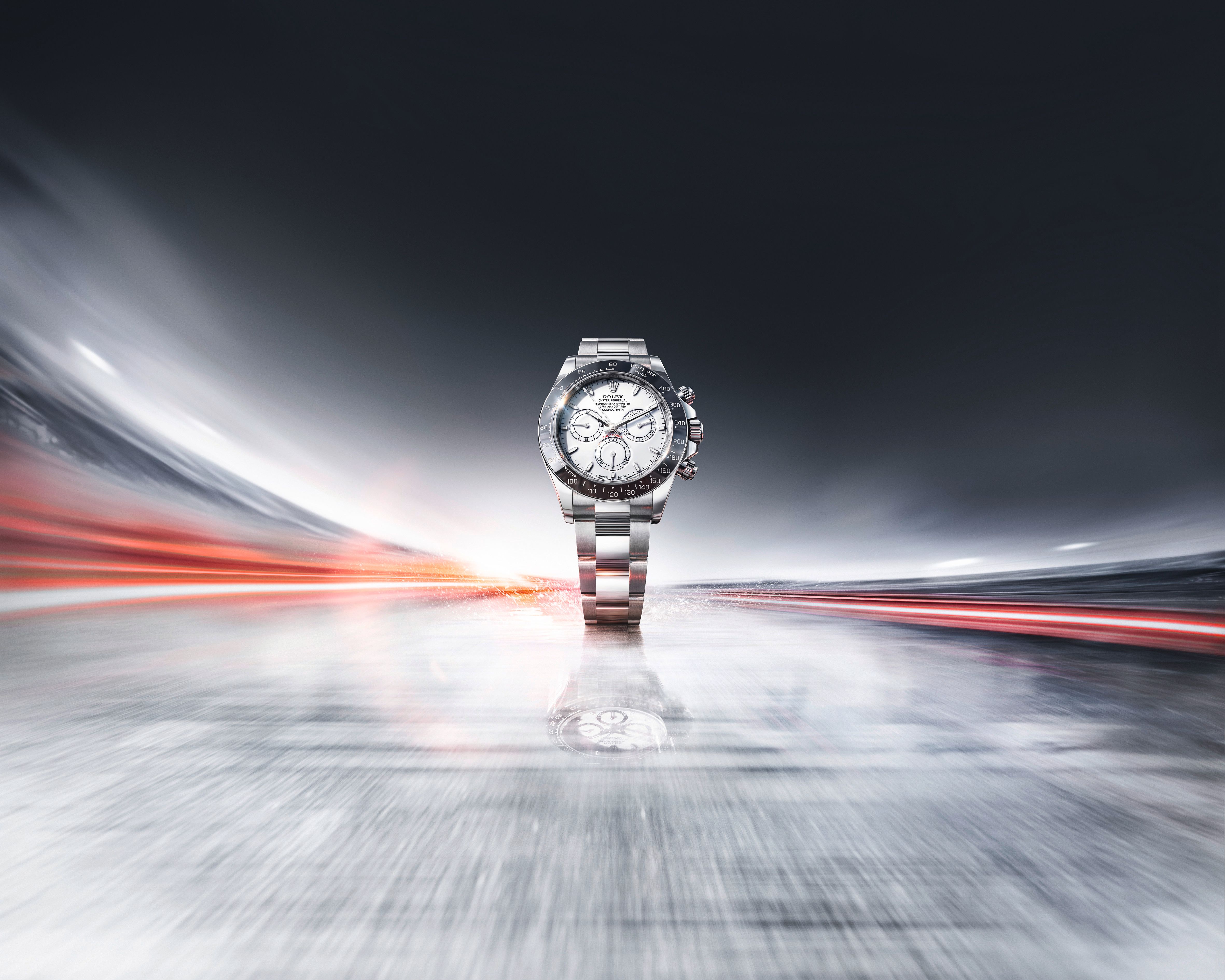
Two watches carry the weight of it. The Day-Date 40 in Jubilee Gold, which introduces an entirely new 18 carat alloy that Rolex developed and produced entirely in-house, and the Cosmograph Daytona in Rolesium, pairing Oystersteel and platinum for the first time in the model's history, with a grand feu enamel dial fired onto ceramic rather than metal and a bezel made from a ceramic compound that does not exist anywhere else in watchmaking. Together they represent something Rolex does rarely and deliberately: the expansion of what its materials can be.
Jubilee Gold: What It Takes to Invent a New Metal
The Day-Date has always been Rolex's most uncompromising statement about precious metal. Launched in 1956, it has never been made in anything other than 18 carat gold or 950 platinum. It has never worn a steel bracelet. It has only ever carried the President bracelet, which is itself reserved exclusively for the Day-Date and precious metal versions of the Datejust. The watch exists in a register of its own within the catalogue, and every decision Rolex makes about it is made against that context.
Jubilee Gold is a new 18 carat alloy, conceived, developed and produced entirely within Rolex's own foundry. The brand has operated its own gold foundry for years, casting and shaping its own alloys in-house, which gives it a degree of control over the composition and quality of its precious metals that most manufactures simply do not have. Yellow gold, white gold and Everose gold are the three alloys that have defined the Rolex precious metal vocabulary for decades. Jubilee Gold is the fourth.
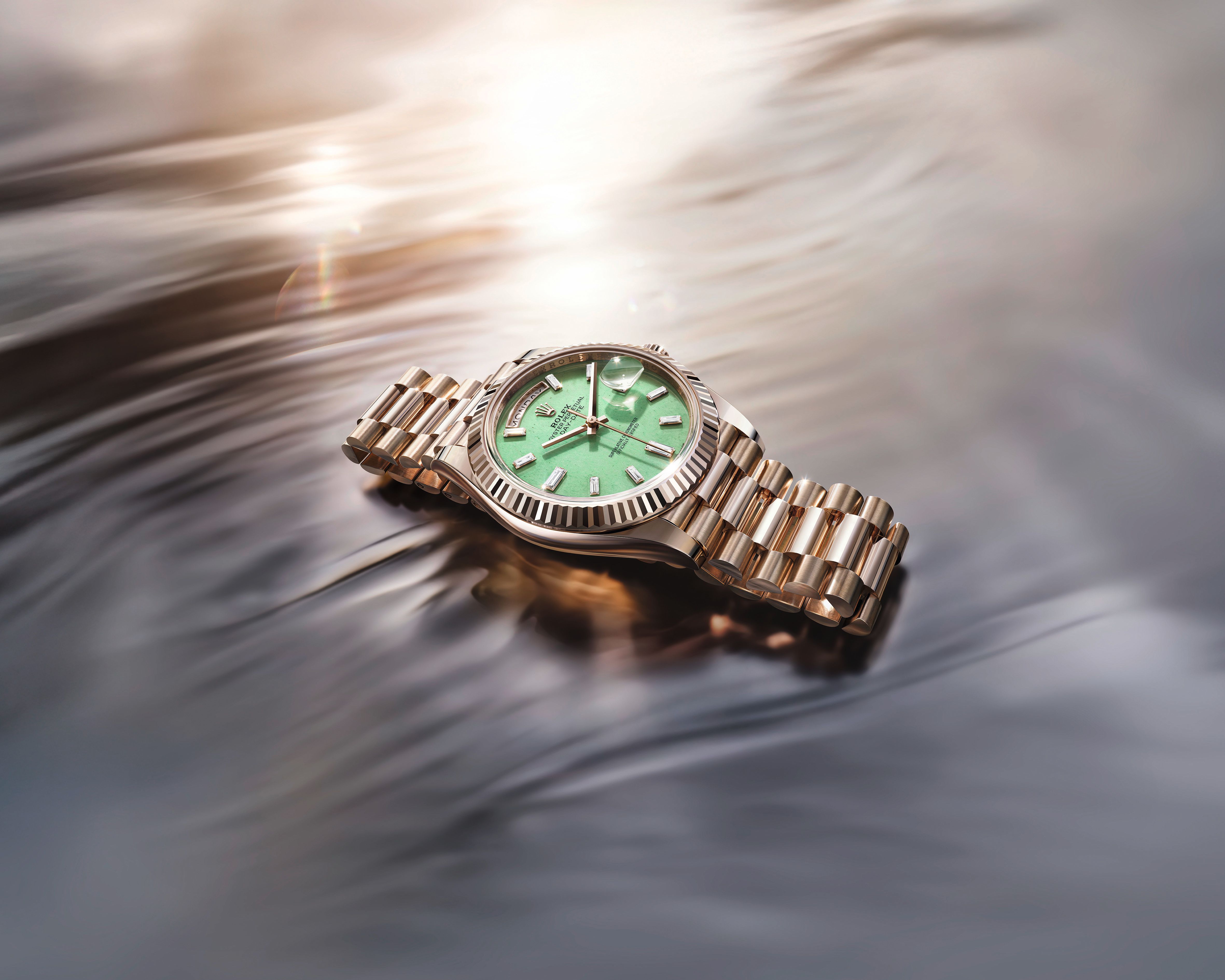
The colour is described as blending tones of tender yellow, warm grey and soft pink. That description sounds like marketing language until you understand what it means technically. The precise proportions of the alloying elements, the silver, copper and other additions that determine the character of an 18 carat gold, produce a hue that is warmer than white gold but less saturated than yellow gold, with a pink undertone that reads differently depending on the light. It is not a colour you can photograph accurately, which is the truest thing you can say about a precious metal: the experience of it resists documentation.
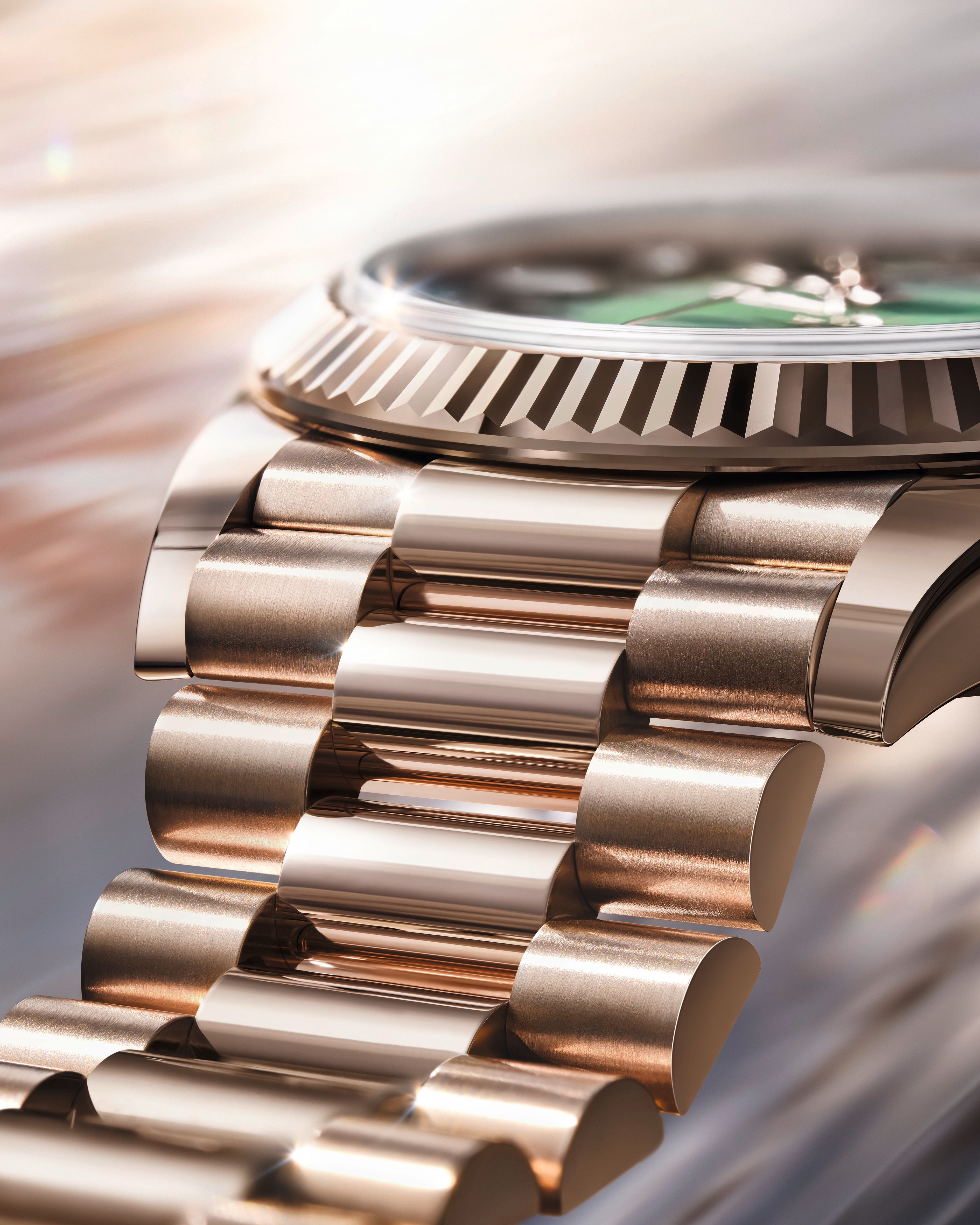
The Day-Date 40 in Jubilee Gold is paired with a dial cut from bright green aventurine, a natural stone in the quartz family whose surface carries mineral inclusions that catch and scatter light in a way that no lacquer or enamel can replicate. Against Jubilee Gold, the green aventurine creates a combination that would be impossible to predict from a description and entirely convincing in person. The hour circle of ten baguette-cut diamonds provides structure without dominating. The fluted bezel and President bracelet in the same Jubilee Gold complete an object that feels genuinely new despite sitting within one of the most familiar design architectures in watchmaking.
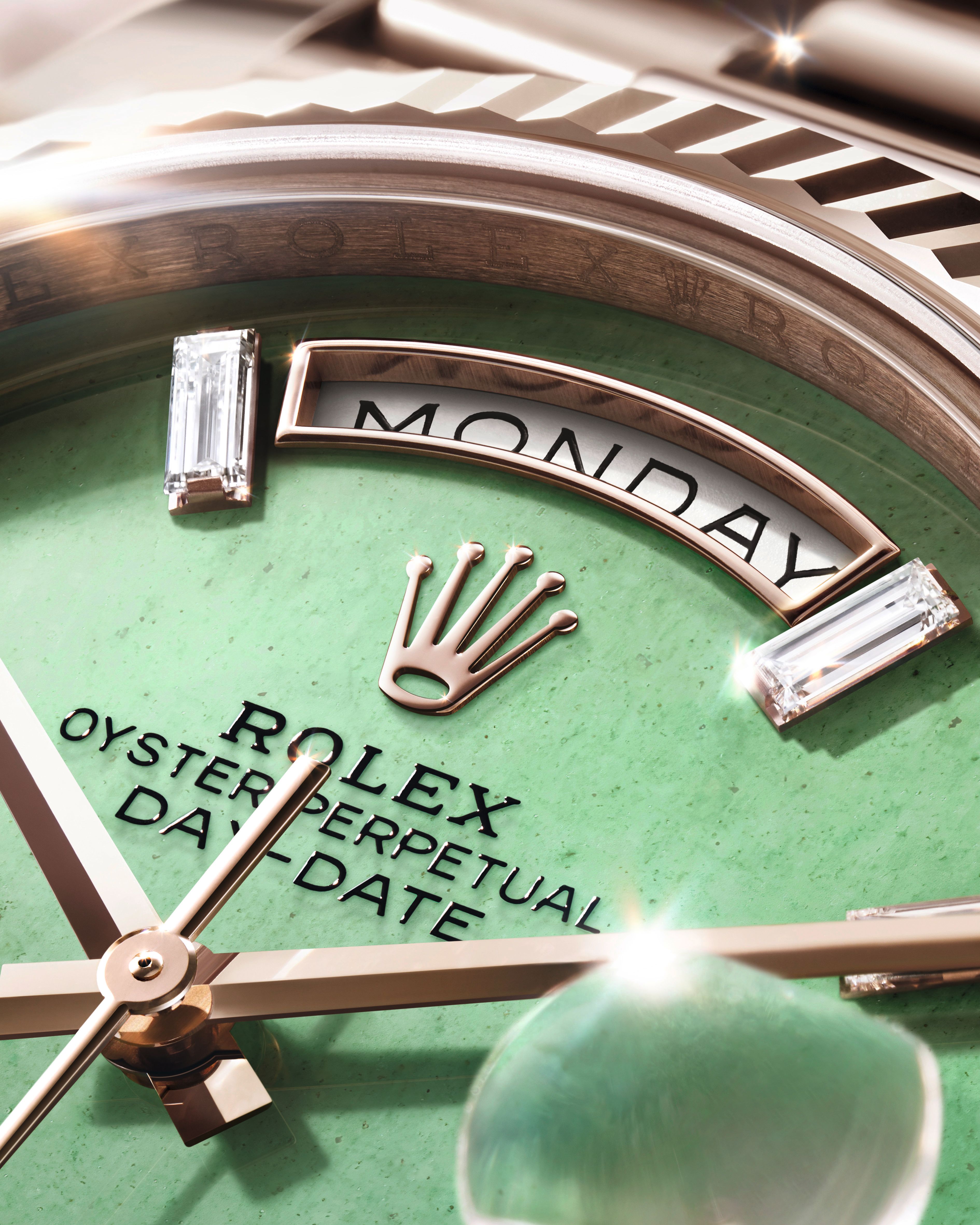
Calibre 3255 powers it. Seventy hours of power reserve, the Chronergy escapement, the Parachrom hairspring, the Paraflex shock absorbers. The most technically accomplished movement Rolex makes for a calendar complication, carrying a day display in 26 languages alongside the date. Under a new alloy and an aventurine dial, it is easy to forget that the movement inside is also exceptional. It should not be forgotten.
The Daytona That Rolex Has Never Made Before
The Cosmograph Daytona was introduced in 1963 for professional racing drivers, which tells you something important about how Rolex approaches tool watches: with absolute seriousness about the tool. The tachymetric scale on the bezel exists to calculate average speeds. The chronograph pushers lock against the case to protect against water ingress. Every design decision traces back to a functional requirement, which is why the Daytona has remained visually coherent across more than six decades of production while other chronographs have reinvented themselves repeatedly.
This version does something the Daytona has never done. It pairs Oystersteel with platinum rather than with gold, creating a Rolesium configuration that is a first for the model. Platinum appears on the case back ring, the band encircling the Cerachrom bezel, and the PVD coating on the tachymetric scale graduation. The rest is Oystersteel. The result is a watch that carries the cool, slightly blue-grey quality of platinum in specific locations, against the warmer, more neutral tone of polished and brushed steel. It is a combination that is harder to read at a glance than yellow or Everose Rolesor, which is precisely its appeal. It rewards attention rather than demanding it.
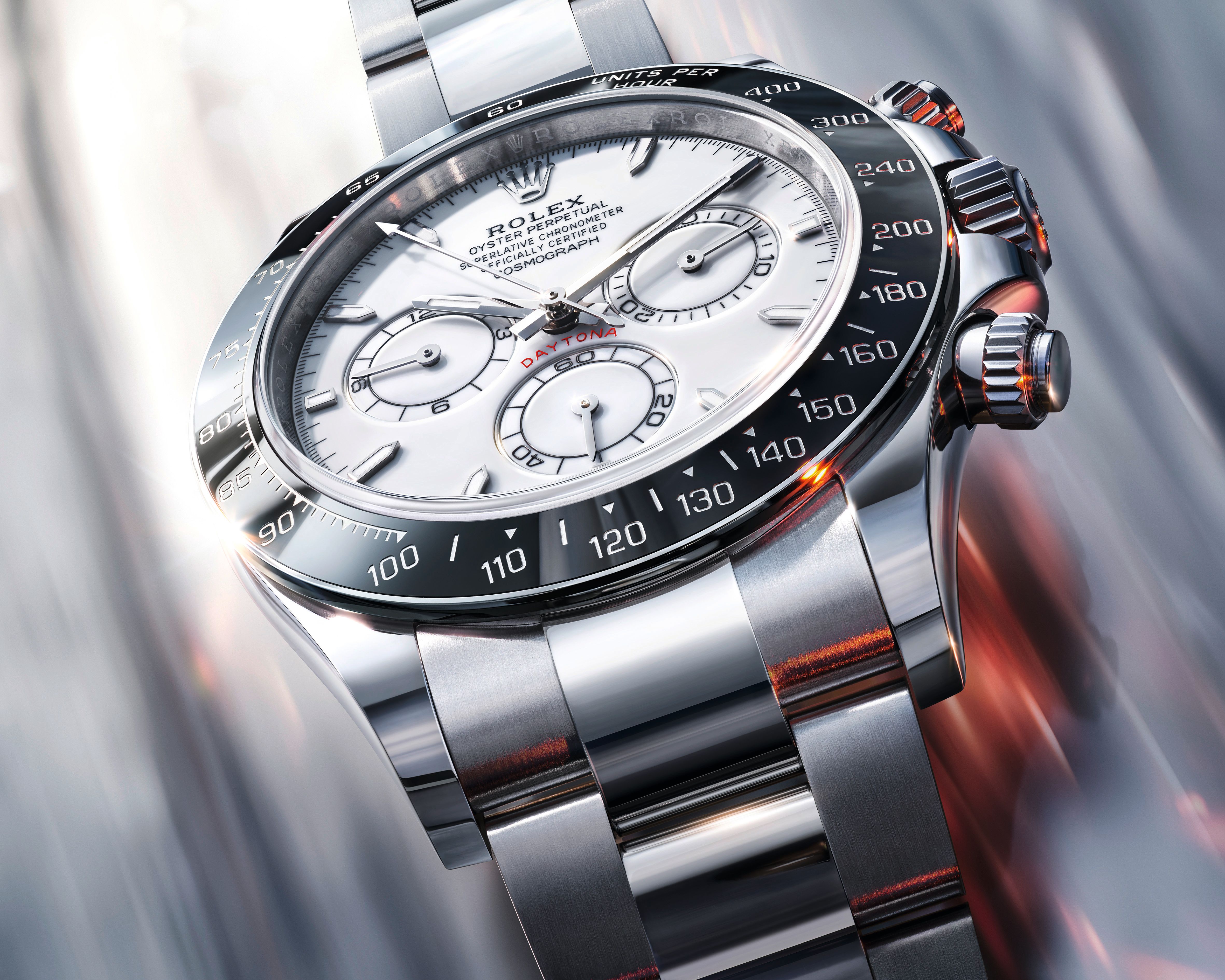
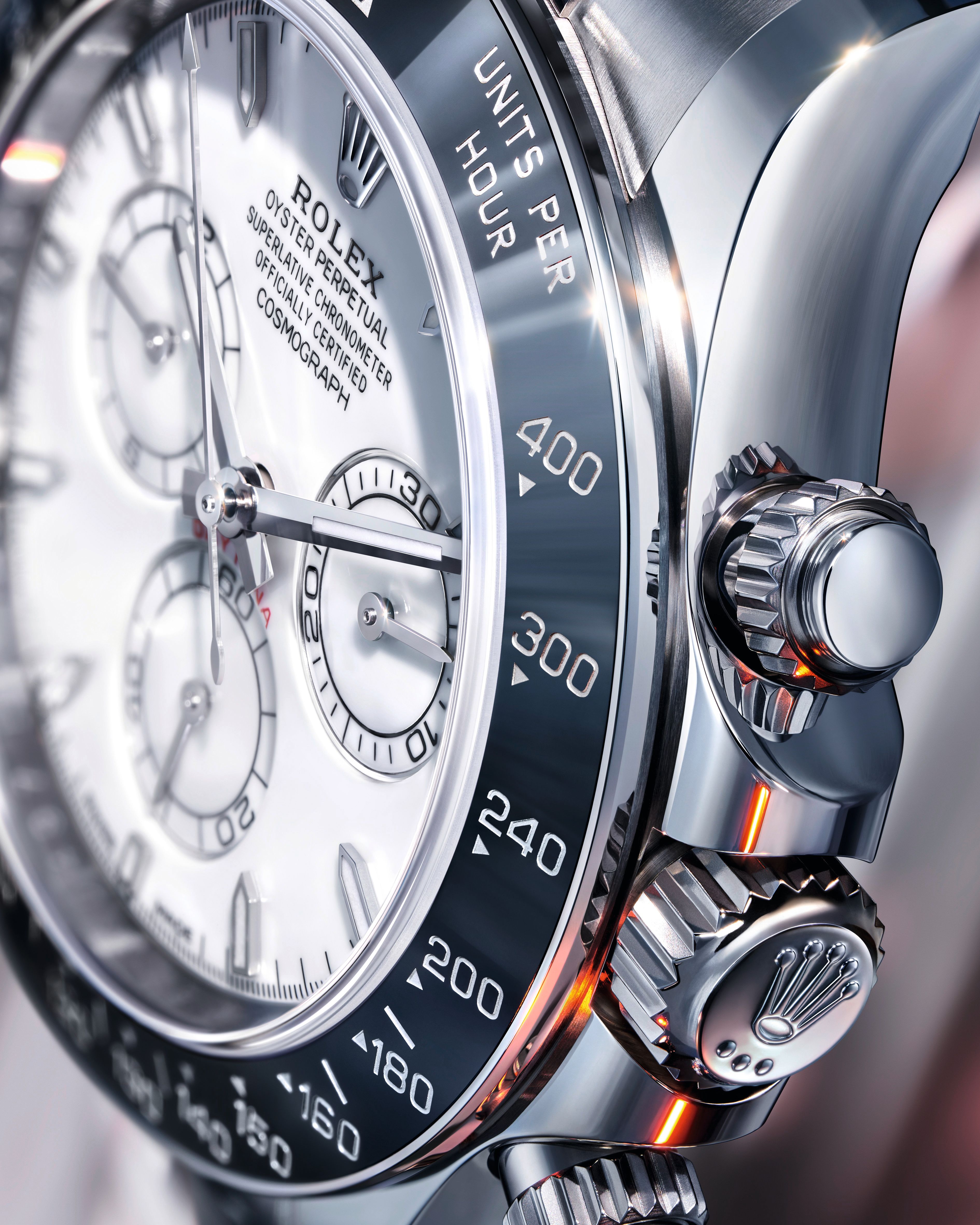
The anthracite Cerachrom bezel is the detail that will generate the most discussion among people who follow materials closely. To achieve the metallic gleam Rolex wanted, the ceramic had to be reformulated. Standard Cerachrom is zirconia-based. This version adds tungsten carbide to the compound, a material used in industrial cutting tools and aerospace applications for its extreme hardness and distinctive metallic surface quality. A patent application has been filed for the specific formulation. The result is a bezel that does not look like ceramic, does not look like steel, and does not look like anything that has appeared on a Daytona before. It looks like something new, which is because it is. The tachymetric scale on this bezel has been redesigned to reference the original 1963 model, with horizontal numerals rather than the angled presentation that became standard in later versions. The font is contemporary. The numerals appear suspended in the graduation, which sounds like a subtle typographic choice until you hold the watch and realise it changes how the entire bezel reads. Less functional instrument, more considered object. Both things simultaneously.
Grand Feu Enamel on Ceramic
The white enamelled dial is where this watch becomes extraordinary. Grand feu enamel is one of the oldest techniques in decorative arts. The name refers to the high fire required to vitrify the enamel: powder mixed with water, applied to a surface, then fired in a kiln at over 800 degrees Celsius. The enamel fuses to the base, creating a surface with a depth and luminosity that no painted or lacquered dial can approach. It is also irreversible. Every firing is a commitment, and the high temperatures involved mean that the slightest impurity or inconsistency in the application can cause cracking, bubbling or colour shift. Dial rejection rates for grand feu enamel are significant. It is a technique that resists industrialisation, which is why so few manufactures working at Rolex's volumes attempt it at all.
The standard grand feu process applies enamel to a metal base. Rolex has done something technically unprecedented here: the enamel has been fired onto ceramic plates, one for the main dial and three for the subdial counters, which are then mounted to a brass base after the firing phase. Ceramic and enamel expand at different rates under heat. Getting them to survive the firing process together without cracking or delaminating required the development of an entirely new production process. Rolex does not state how long that process took to develop. The fact that it filed a patent application for the bezel ceramic alone suggests this watch represents a significant period of material research.
The result is a dial of extraordinary whiteness and clarity, because ceramic provides a purer, more neutral base than metal for the enamel to adhere to. The white reads differently than any lacquered white dial you have seen, with a warmth and translucency that is immediately apparent and immediately difficult to explain to someone who has not seen it in person. The transparent caseback on this version is not a standard Daytona feature, which makes its inclusion here a specific statement.
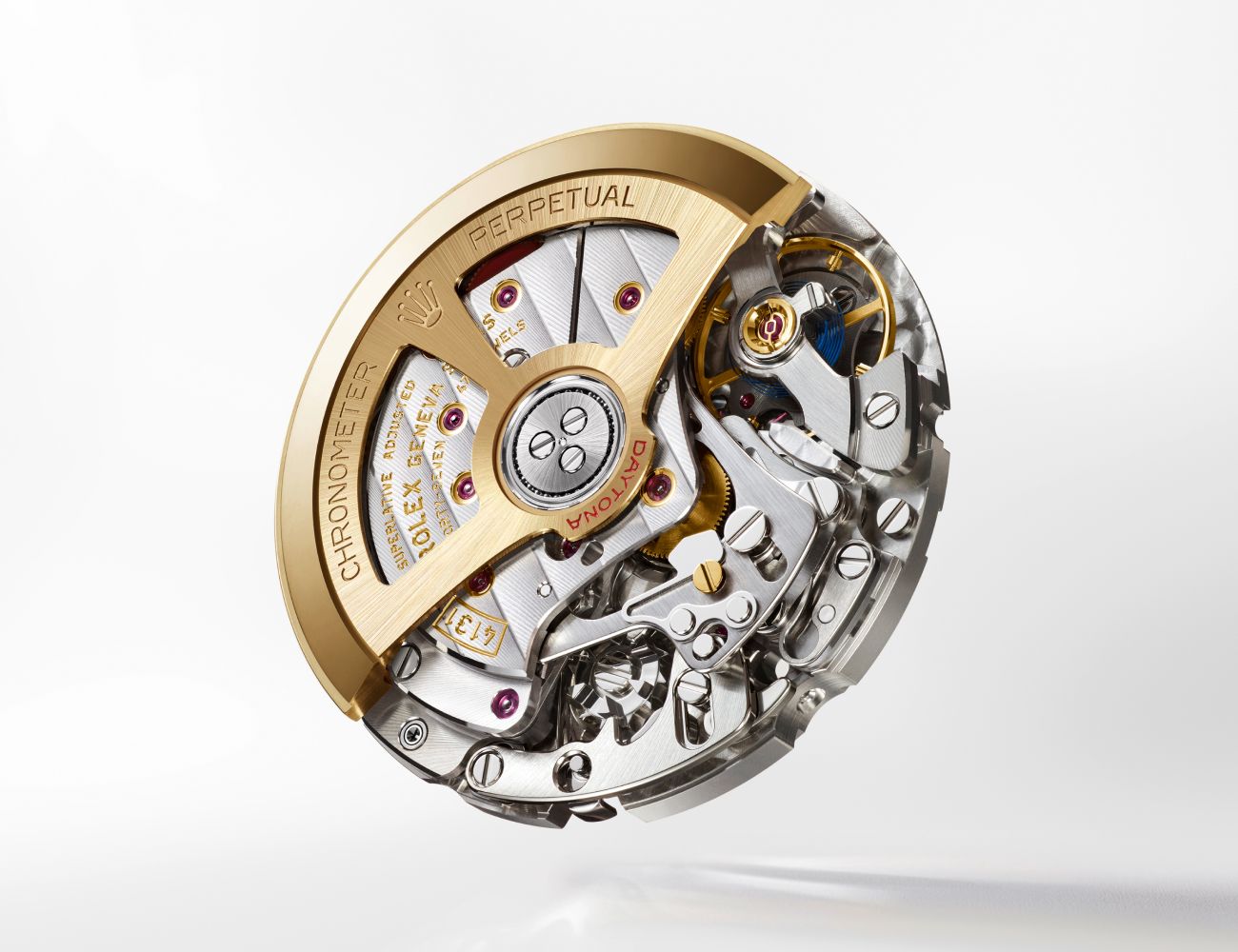
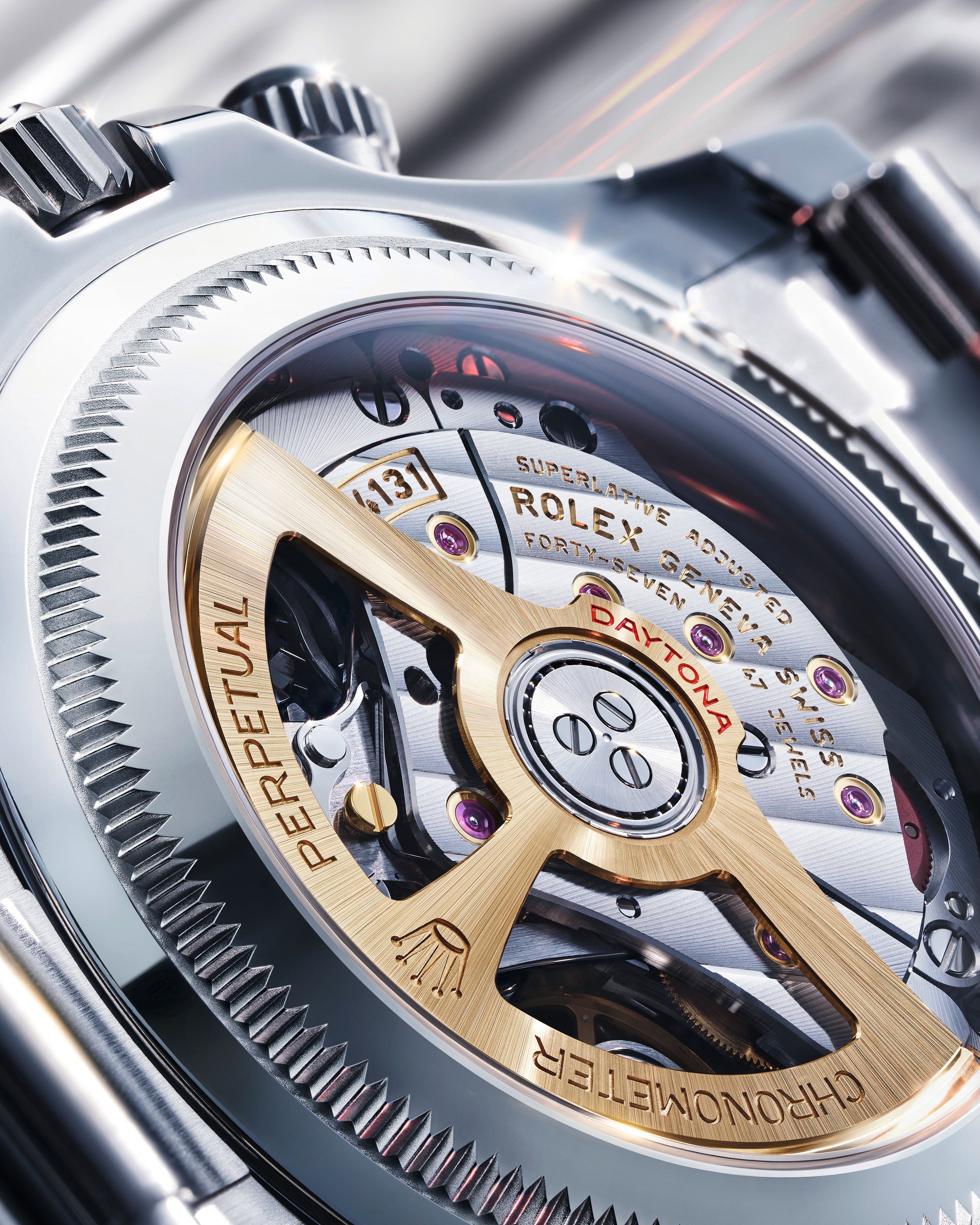
Through the sapphire crystal you can see calibre 4131, the movement that powers all current Daytonas, with its Rolex Côtes de Genève decorated bridges and its cut-out oscillating weight in yellow gold. The gold rotor against the cool grey and platinum tones of the exterior creates a warmth at the heart of the movement that echoes the Jubilee Gold of the Day-Date in an entirely different context. It is a detail that feels intentional. In a release built around the creative possibilities of new material combinations, a yellow gold rotor visible through a sapphire caseback on a steel and platinum watch is exactly the kind of quiet audacity Rolex is capable of when it is operating at its best.
What These Two Watches Say Together
There is a version of this Rolex release that gets written as two separate stories: a new gold alloy on the Day-Date, a materially ambitious Daytona. But reading them alongside each other reveals something more coherent than that.
Both watches represent Rolex doing something it almost never does, which is to admit that the existing palette of materials is not sufficient for what it wants to say. Jubilee Gold exists because yellow gold, white gold and Everose gold could not produce the specific tone and effect Rolex was looking for. The tungsten carbide ceramic and the grand feu enamel on ceramic exist because no existing combination of materials could produce the Daytona Rolex was imagining. These are not watches that came from the brief of meeting market demand or refreshing an existing reference. They came from somewhere more interesting and more difficult: the desire to make something that has not been made before, using materials that did not exist in watchmaking before Rolex developed them.