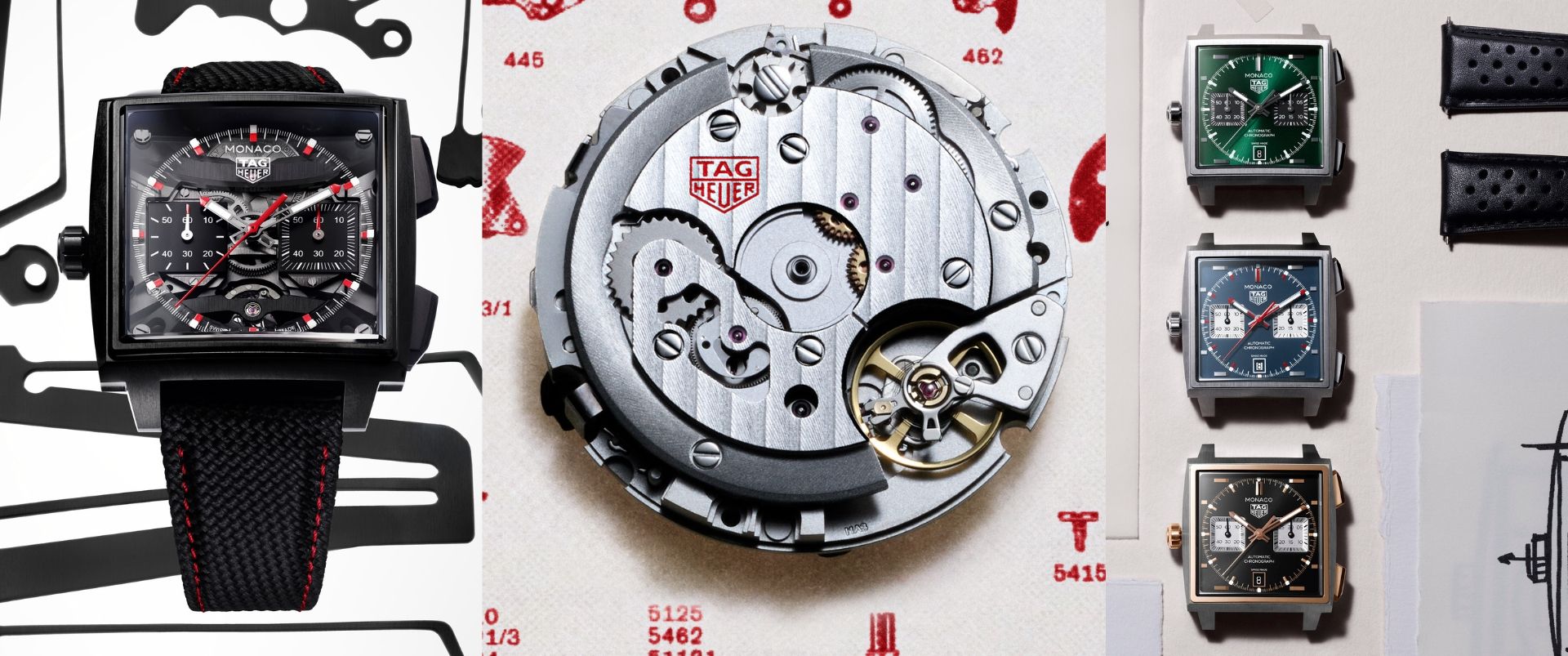
Watches And Wonders 2026: TAG Heuer’s Monaco Gets Two Very Different Second Acts
 8 min read

There are perhaps five watches in the history of this industry that can genuinely claim to have changed what a wristwatch could look like. The TAG Heuer Monaco is one of them. When it arrived in 1969 as the reference 1133, it did something no watch had done before: it put an automatic chronograph movement inside a square, water-resistant case. The crown went on the left because the architecture of the Calibre 11 demanded it. What began as a mechanical necessity became a design signature that collectors have argued over, coveted, and paid enormous premiums for across more than five decades.
The Monaco was not an immediate commercial triumph. Its initial production run lasted roughly five years before the line was discontinued. It returned in 1997, and the world caught up with what it had been too conservative to appreciate the first time. Today, the blue-dialled reference 1133B worn by Steve McQueen in the 1971 film Le Mans is arguably the single most culturally resonant watch TAG Heuer has ever made. At Watches & Wonders 2026, TAG Heuer is presenting two distinct Monaco releases that operate at entirely different price points, with entirely different intentions. Understanding the distance between them is the key to understanding what the brand is trying to accomplish this year.
The New Monaco Chronograph: Getting the Fundamentals Right
The more accessible of the two launches is the new TAG Heuer Monaco Chronograph, and it deserves attention on its own terms rather than simply as the cheaper option in a two-watch announcement. The previous generation Monaco, the one reintroduced in 1997 and evolved over subsequent years, was a somewhat loose interpretation of the original. The square shape was retained, but many of the design details that made the reference 1133 architecturally interesting had been smoothed away or reinterpreted at a remove. TAG Heuer acknowledged this themselves when they began a more deliberate return to the original reference during the development of the Monaco Split-Seconds Chronograph in 2024.
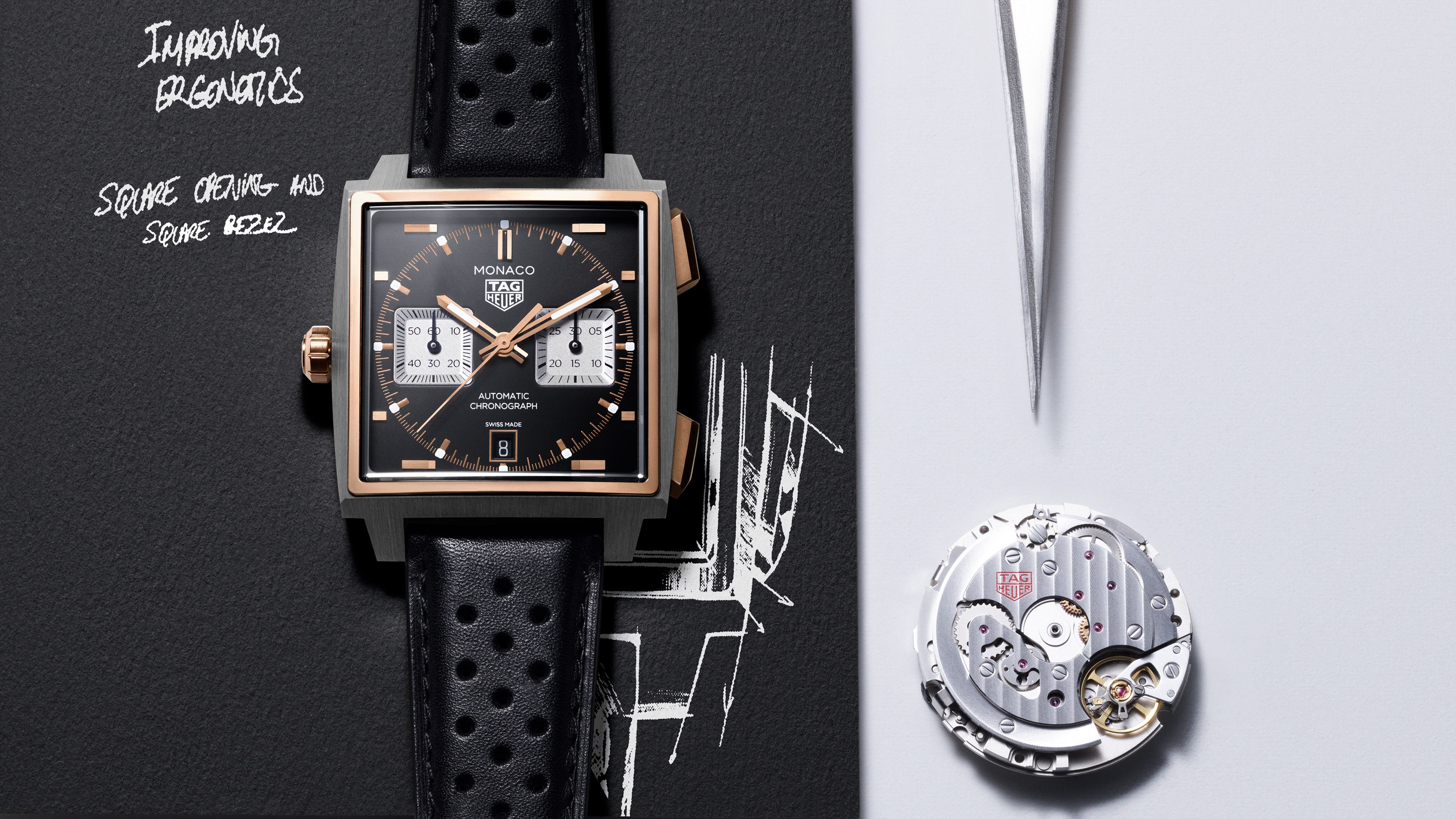
That process of rediscovery now flows into the standard chronograph line. The new Monaco Chronograph is, at 39mm in grade 5 titanium, a more considered object than its predecessor. The sapphire crystal has been brought closer to a genuinely square form. The caseback is a smaller circular section that curves outward toward the edges, a direct reference to the original construction that also meaningfully improves how the watch sits on a wrist. TAG Heuer has been frank about the ergonomic work invested here, and it shows. The watch feels less like a slab and more like something that belongs on an arm. The dial layout across all three variants follows the bi-compax configuration, with running seconds at nine o'clock, a minute chronograph counter at three, and a date aperture at six. This arrangement is a deliberate reference to the original Calibre 11 layout, something TAG Heuer has underlined in naming the new movement the Calibre TH20-11. The crown, of course, remains at nine o'clock.
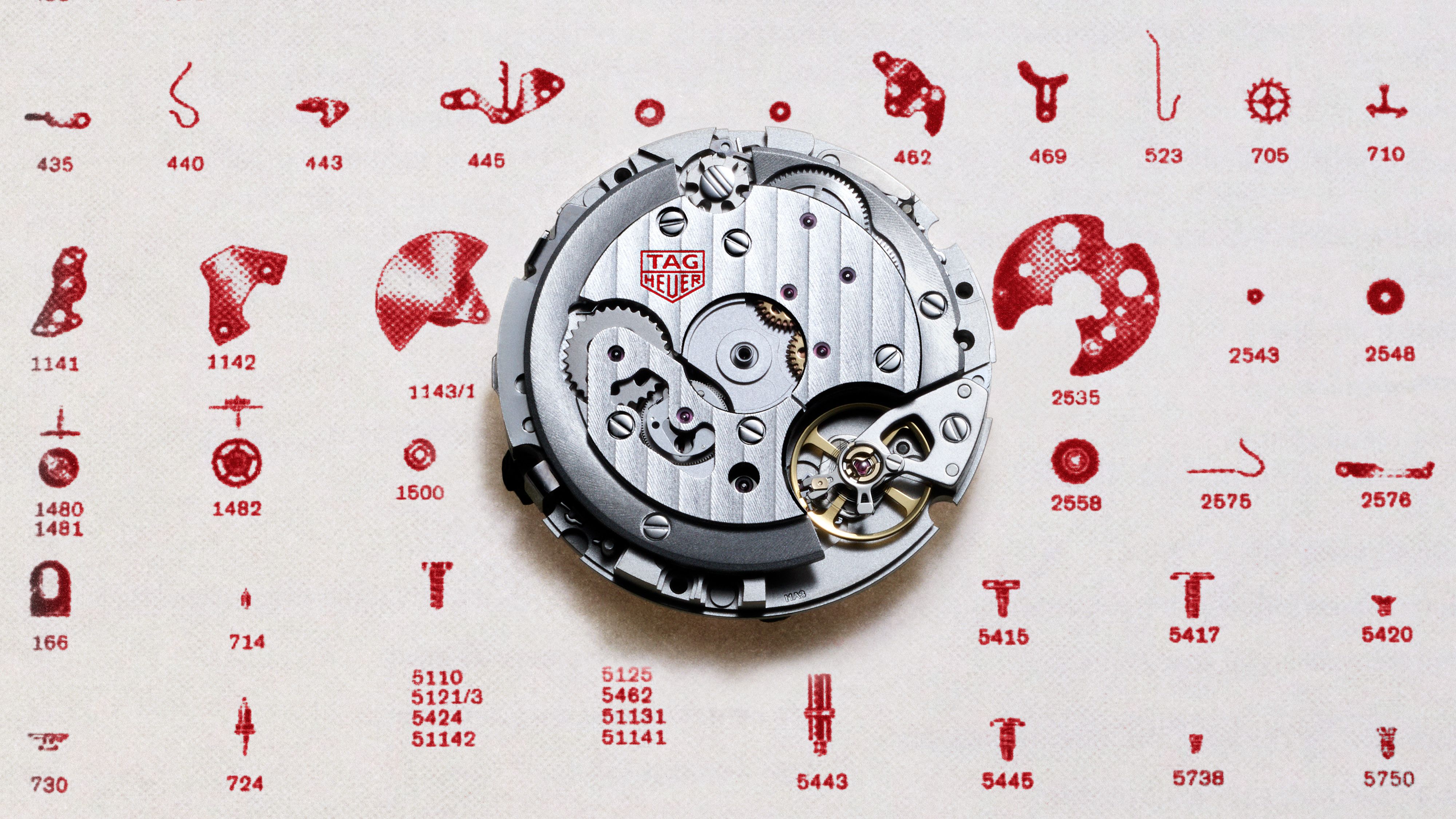
The movement itself represents one of the more substantive upgrades in this release. The TH20-11 is derived from the in-house Calibre TH20-00, which has powered several Monaco and Carrera references in recent years. The development team has spent considerable time reconfiguring and validating this new iteration, and the headline result is an 80-hour power reserve paired with a five-year warranty. For a watch positioned at 9,350 USD, that combination of in-house movement, proper reserve, and warranty coverage represents a clear-eyed acknowledgment that the market has grown more demanding. Three dial treatments are offered. The blue opaline with silver subdials is the one that most directly references the McQueen connection, and it will inevitably be the most commercially significant. A sunray-brushed dark green dial draws on British Racing Green associations, and it reads as a quieter, more personal option for those who want something less immediately legible as a Monaco. The third variant pairs a black opaline dial with a two-tone case: grade 5 titanium for the body and caseback, 18K 5N rose gold for the bezel, crown, and pushers. At 13,050 USD in North America versus 9,350 for the steel-only variants, the rose gold treatment will find a specific audience. All three sit on perforated calfskin leather straps with a newly designed titanium folding clasp.
The typography on the dial has been refined across all variants. The spacing and sizing of the "MONACO" signature, the sub-register markings, and the relationship between applied indices and printed text now feel purposeful rather than inherited. This is one of those details that reads immediately as care, without requiring any technical explanation.
The Monaco Evergraph: An Entirely Different Argument
If the Monaco Chronograph is about restoring coherence and integrity to the standard line, the Monaco Evergraph is something else entirely. It is a technical provocation wrapped in an expanded interpretation of the same square case, and it comes at a price point that places it squarely in conversation with the upper tier of Swiss complicated watchmaking. The central claim of the Evergraph is the Calibre TH80-00 and its compliant chronograph mechanism. This requires some explanation, because the term "compliant mechanism" is not yet part of the standard horological vocabulary, and it deserves more than a press-release summary.
A conventional chronograph mechanism relies on levers and springs to govern the three functions: start, stop, and reset. These components pivot, flex, and engage with column wheels or cams to coordinate the chronograph's actions. They are effective, proven, and refined over more than a century. They are also subject to wear at their pivot points, and their tactile character can vary as tolerances change over years of use. The compliant mechanism in the Calibre TH80-00 removes virtually all of these traditional components. In their place are two flexible bistable elements, produced using LIGA technology, a high-precision microfabrication process adapted from semiconductor manufacturing. One element governs start and stop. The other governs reset. These components flex between two stable positions rather than pivoting on a conventional axis. They were developed over five years within TAG Heuer's LAB division.
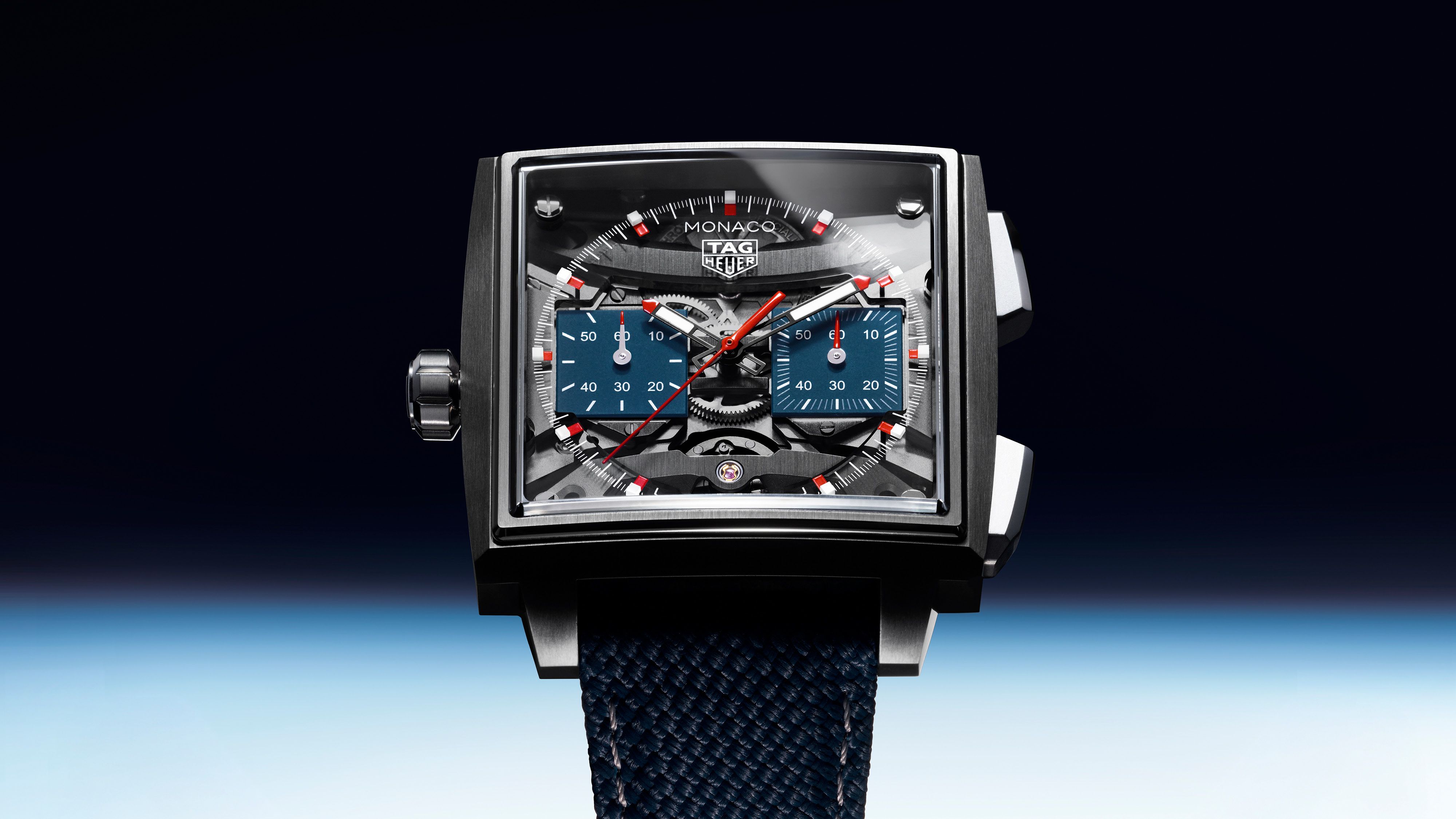
The practical consequence of this architecture, if the engineering holds under real-world conditions, is that the actuation character of the chronograph does not change over time. The force required, the feedback through the pusher, the crisp transition between states: all of this should remain consistent whether you are pressing the pusher for the first time or the ten thousandth. That is a genuinely meaningful claim for a chronograph that will be worn and used, not stored in a drawer. The movement was developed in collaboration with Vaucher Manufacture Fleurier, the same partner involved in the Calibres TH81-00 and TH81-01 found in the Monaco Split-Seconds and Carrera Split-Seconds. The construction is inverted: the barrel, gear train, and TH-Carbonspring oscillator are displayed from the dial side, while the traditional view through the caseback reveals the finishing and the shield-shaped rotor. The TH-Carbonspring replaces a conventional balance spring with a carbon-composite element, providing inherent resistance to magnetic fields without the need for shielding. The movement beats at 5Hz, carries COSC certification, offers a 70-hour power reserve, and comes with a five-year warranty.
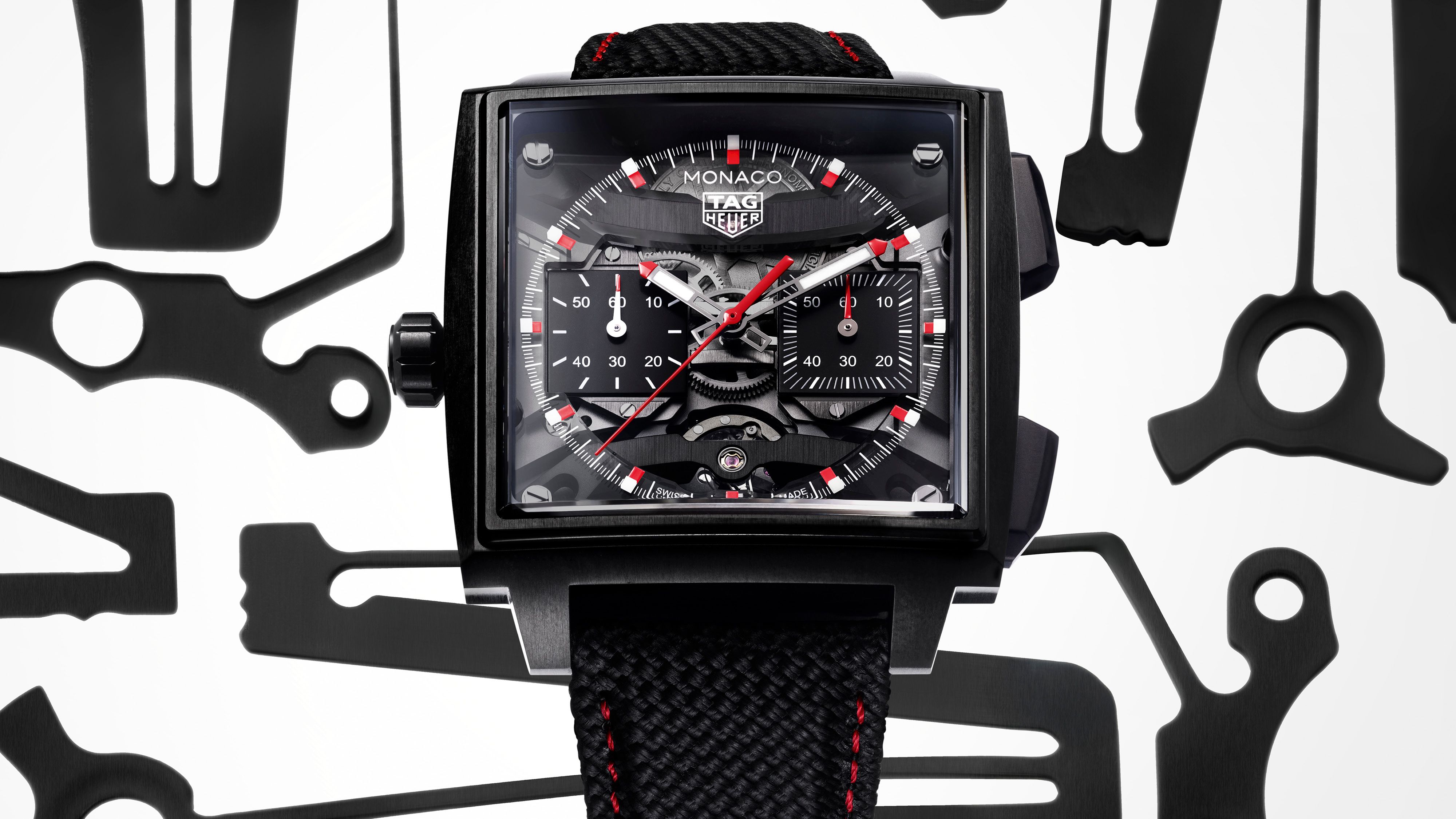
The case design follows the same return-to-origin philosophy applied to the standard Chronograph, tracing its silhouette back to the reference 1133. At 40mm in grade 5 titanium, it is slightly larger than the standard Monaco. Sweeping arches within the movement connect structurally to the case architecture, and the transparent acrylic dial creates the impression that the two subsidiary counters, running seconds at nine and chronograph minutes at three, are suspended within the case space. The tapered profile creates an optical thinness that photographs cannot fully convey. In hand, the faceted case edges give it a brutalist, monolithic quality. Two executions are offered. The first is natural titanium with blue subdial counters, a direct reference to the 1133B and its McQueen legacy. The second is black DLC-coated titanium with red accents, referencing TAG Heuer's motorsport palette. Both sit on rubber straps with textile embossing, the blue variant with grey stitching, the black with red. Pricing is 25,000 USD in North America, available from April 2026.
What Separates These Two Watches, and Why Both Matter
The risk with a two-tier announcement like this is that one watch ends up diminishing the other. That does not happen here, because the Monaco Chronograph and the Monaco Evergraph are not competing for the same buyer or making the same argument. The Monaco Chronograph is a watch for the person who has wanted a Monaco and found reasons to hesitate: the ergonomics, the perceived distance from the original, the question of whether an in-house movement was present. Those objections have been addressed with genuine engineering work rather than marketing repositioning. At 9,350 USD, it is a serious chronograph with a legitimate movement, a five-year warranty, and a case design that finally does justice to the reference 1133.
The Evergraph is a different proposition. It asks whether a fundamental component of the chronograph, the mechanism that governs its three most critical functions, can be reimagined from first principles. The five years of development, the LIGA-manufactured bistable elements, the collaboration with Vaucher: these are not marketing embellishments. They are the substance of the claim. Whether that claim holds across a decade of use rather than a press introduction is a question only time can answer, but the engineering argument is coherent and the execution is thorough.
TAG Heuer has, in a single announcement, addressed two different conversations simultaneously. One is about accessibility, craft, and respect for the Monaco's original design language. The other is about whether one of the oldest mechanisms in watchmaking still represents the best available solution to the problem it was designed to solve.
Both questions are worth asking. The answers, in 2026, are these two watches.
TAG Heuer Monaco Chronograph at a Glance
Movement: Calibre TH20-11, in-house automatic, 80-hour power reserve, 5-year warranty
Case: 39mm, grade 5 titanium (blue and green variants) / titanium and 18K 5N rose gold (black variant)
Complications: Hours, minutes, seconds, chronograph, date
Strap: Perforated calfskin leather, titanium folding clasp
Water resistance: 100 metres
Price: From 9,350 USD (blue/green)/ INR 863551 approximately; 13,050 USD (black/rose gold)/ INR 1205278 approximately
Availability: April 2026
TAG Heuer Monaco Evergraph at a Glance
Movement: Calibre TH80-00, compliant chronograph mechanism, TH-Carbonspring oscillator, 5Hz, 70-hour power reserve, COSC-certified, 5-year warranty
Case: 40mm, grade 5 titanium (natural finish) / grade 5 titanium with black DLC coating
Complications: Hours, minutes, seconds, chronograph
Strap: Rubber with textile embossing, titanium folding clasp
Water resistance: 100 metres
Price: 25,000 USD/ INR 2308962 approximately
Availability: April 2026


