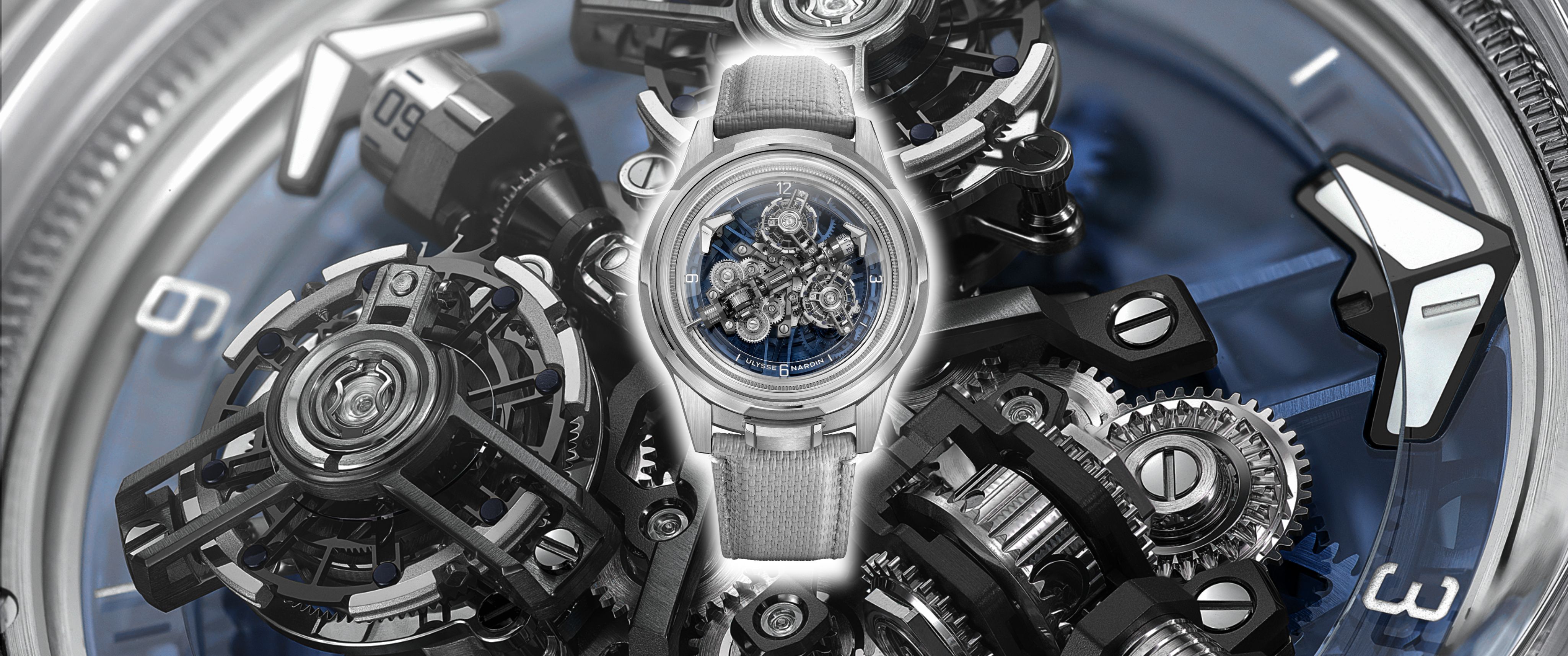
Watches And Wonders 2026: Ulysse Nardin’s Super Freak Is The Most Complicated Time-Only Watch
 7 min read

There is a peculiar moment in watchmaking when a brand stops competing with its peers and starts wrestling with the laws of physics. For Ulysse Nardin, that moment arrived not in a hushed boardroom, but in a blinding flash of mechanical hubris twenty-five years ago with the original Freak. That watch, which dared to remove the crown and use the movement itself as a hand, was a declaration of war on convention.
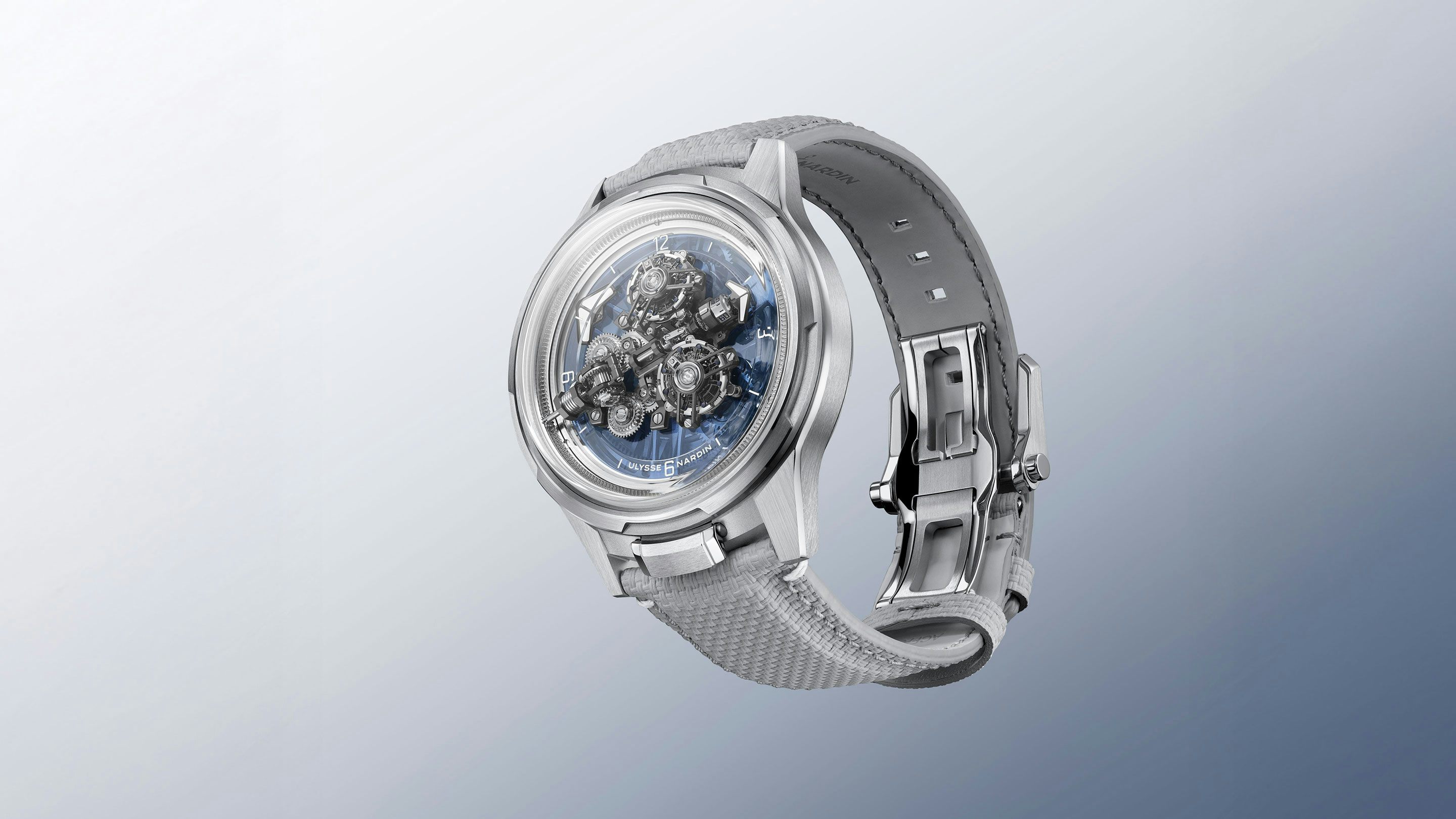
Now, at Watches and Wonders 2026, Ulysse Nardin has detonated its next logical impossibility: the Super Freak. Officially designated reference 2520-500LE-3A-BLUE/3A, this is not merely a new iteration of an icon. It is, as the Manufacture states with uncharacteristic understatement, "the most complicated time-only watch ever made."
Let that sink in. In an era of minute repeaters, perpetual calendars, and celestial charters, the most complex beast in the room tells you only the hour, minute, and, for the first time in Freak history - the seconds. But how you read those three simple data points is where sanity ends and genius begins.
The Genesis Of Insanity
To understand the Super Freak, you must first understand the obsessive lineage. Ulysse Nardin has spent 180 years chasing precision, from 4,300 chronometry awards to marine chronometers that served as the mechanical GPS of the 19th century. But the modern era, catalyzed by Rolf Schnyder and the polymathic Dr. Ludwig Oechslin in 1985, was about something else: re-invention.
The original Freak of 2001 introduced silicon to watchmaking. The Freak S of 2022 introduced a vertical differential. But the Super Freak, the result of four years of dedicated R&D and 35 patented inventions accumulated over a quarter-century, is the culmination of all that came before. It is the Freak to end all Freaks.
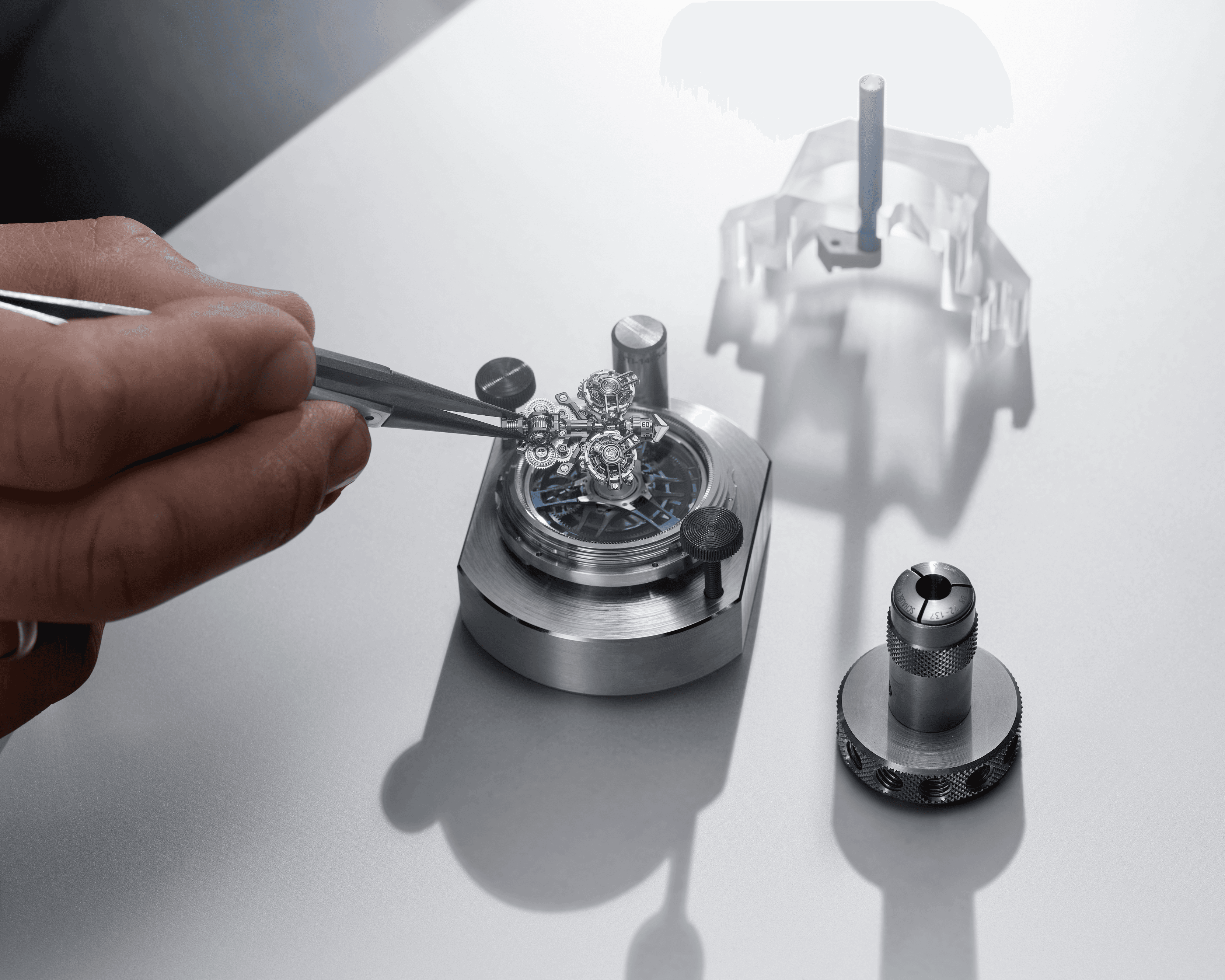
At its heart beats the new Manufacture caliber UN-252, a self-winding powerhouse composed of 511 components. To put that in perspective, a traditional three-hand movement might contain 150 parts. But quantity is irrelevant here; it is the kinetic density that astounds.
The Ballet Of The Inclined Twins
Let us walk the dial - or rather, the "minute bridge." Because in the Freak universe, there is no dial. The movement is the face. And the face is a hurricane.
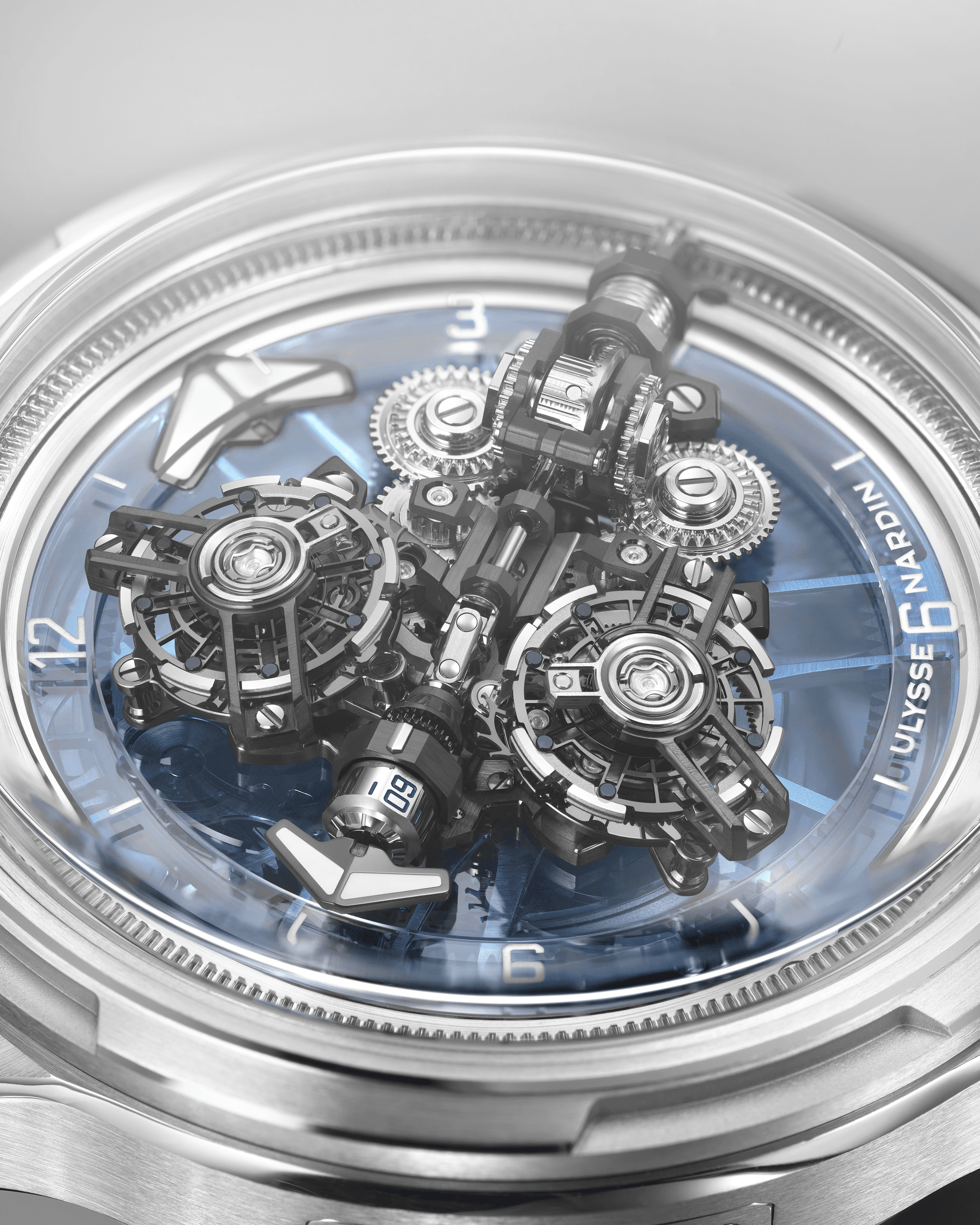
The most immediately arresting feature is the double flying tourbillon. But these are not your grandfather's tourbillons. Each cage is inclined at 10 degrees, and they rotate in opposite directions, completing one full revolution every 60 seconds. They are "flying" because the cage is anchored only at its base, there is no upper bridge, creating an illusion of levitation. This minute bridge, composed of 327 components, weighs a mere 3.5 grams, i.e. 30% lighter than the Freak S’s bridge, thanks to extensive use of grade 5 titanium.
Why Two? And Why Inclined?
In a conventional watch, positional errors average out. Here, by mounting two independent regulators on a flying carousel that rotates once per hour, the Super Freak averages the rates of two distinct oscillators. The result is a stability that approaches the theoretical ideal. The 10-degree inclination allows for a visually arresting architecture while optimizing the center of gravity.
Lukas Klee, the movement developer at Ulysse Nardin’s La Chaux-de-Fonds atelier, notes that the primary challenge was energy. "Powering two tourbillons demands far more energy than a conventional display," he explains. "We needed a winding system that could capture the ghost of a wrist movement."
Enter the Grinder.
The Grinder And The Gimbal
Most automatic systems are levers. The Grinder is a turbine. Patented by Ulysse Nardin, this oscillating weight is mounted just 0.12 mm thick, effectively doubling the angular stroke. Imagine a bicycle with four pedals instead of two, every micro-motion of the wrist is harvested. It is, by a significant margin, the most efficient automatic winding system in the industry. It has to be, because two tourbillons and a carousel are voracious consumers of energy.
But the true "how did they do that?" moment arrives with the introduction of a seconds display. In a normal watch, you add a gear train. In the Freak, where the entire movement rotates, adding a seconds hand required rethinking the transmission of energy from a moving platform to a fixed indicator.
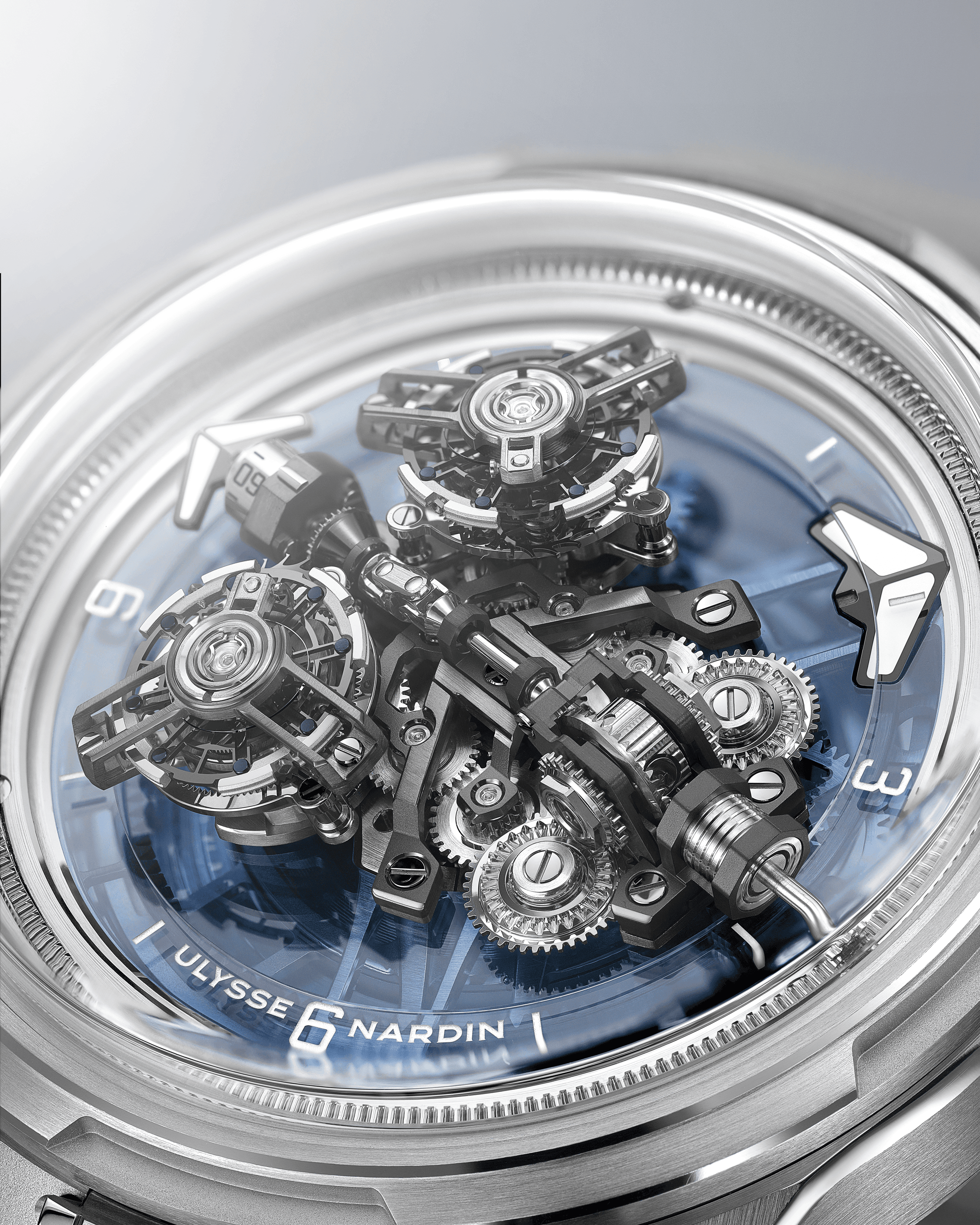
The solution is the world's smallest gimbal system. Measuring just 4.8 mm and composed of 11 components, this miniature marvel is derived from maritime compass stabilization technology. It receives energy from the differential and transmits it to a cylindrical seconds indicator, regardless of the carousel's position. It is mechanical telepathy.
Complementing this is the world's smallest vertical differential (5 mm, 69 components including eight ceramic ball bearings). While the Freak S used a descending axis, the Super Freak reverses to an ascending axis, visually opening the movement to create a "mechanical show." This differential averages the rate of the two tourbillons; without it, the slight variances between the two escapements would cause the watch to gain or lose time.
The Material Science Fiction
Ulysse Nardin has always treated the materials lab as a playground. In 2001, they were the first to use silicon. In 2007, they patented Diamonsil - diamond-coated silicon. The Super Freak integrates 10 silicon components, including two balance wheels, two hairsprings, and two Diamonsil escapements.
These diamond-coated escapements are engineered to withstand over 155 million impacts per year, operating at 18,000 vibrations per hour. The hardness of diamond meets the flexibility of silicon. It is a material synthesis that allows the watch to run without lubrication, eliminating a primary source of chronometric decay.
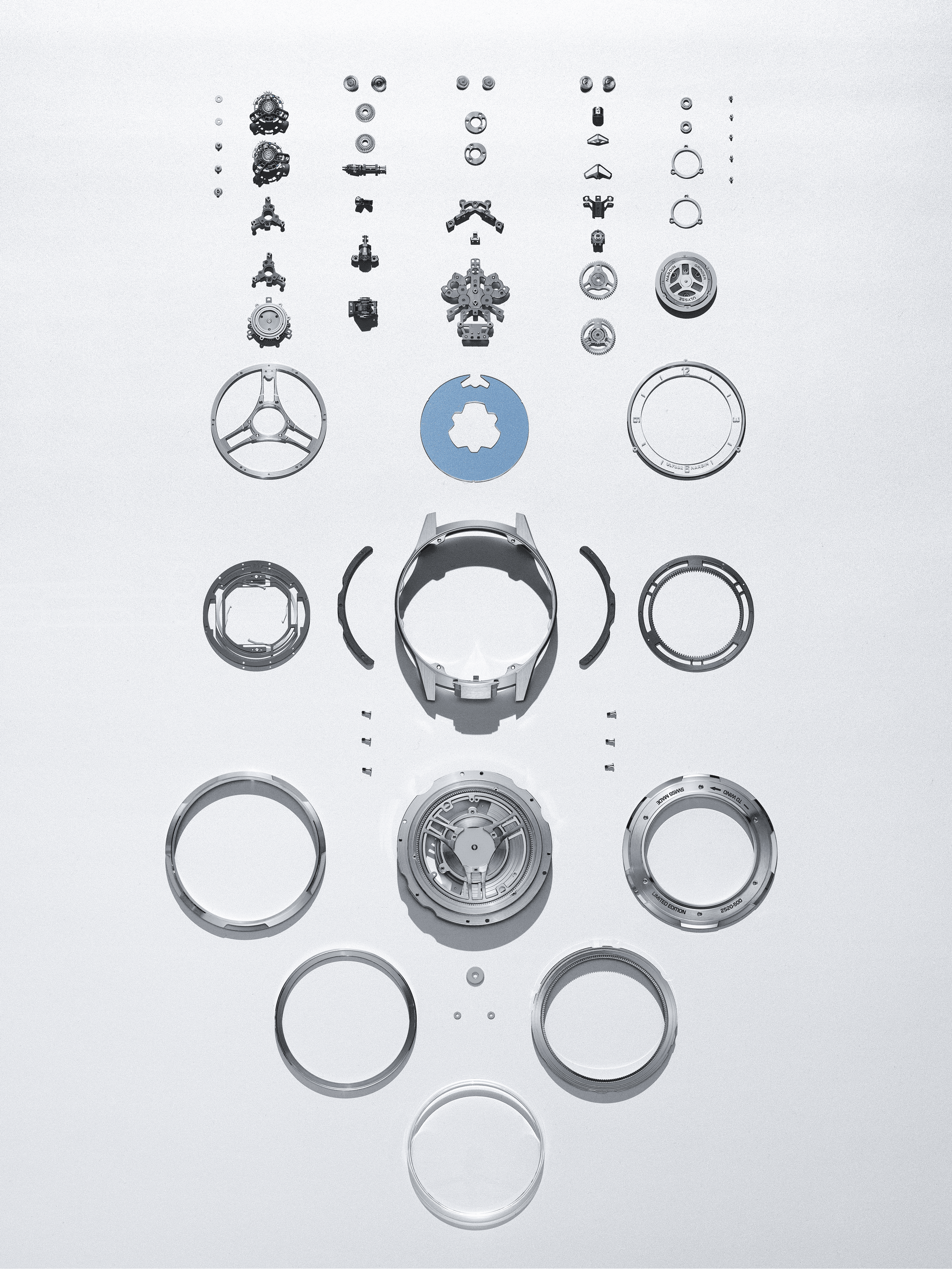
And then there is the Nanosital hour disc. Rendered in a transparent, light-blue hue (a nod to the maritime heritage with a cyber-violet undertone), this polycrystalline material is optically transparent yet harder than standard glass. For the first time, you can see the automatic engine through the hour indicator. The hour disc rotates once every 12 hours, and the Super-LumiNova indices appear to float on a ghost of blue sapphire.
The Craft Of Chaos
For all its high-tech bravado, the Super Freak is profoundly human. 97.46% of the movement is in motion, only 13 of the 511 components remain fixed. Yet, paradoxically, over 70% of those moving components are finished by hand.
Because the material is titanium (harder, lighter, and less forgiving than brass), hand-decoration is a crucible. A single titanium bridge can take twice as long to finish as a brass one. The artisans in Le Locle use traditional tools, leather buffs, needle files, wooden sticks, to execute straight-graining and manual sandblasting. The result is a contrast between the cold, clinical precision of the silicon and the warm, imperfect soul of the human hand.
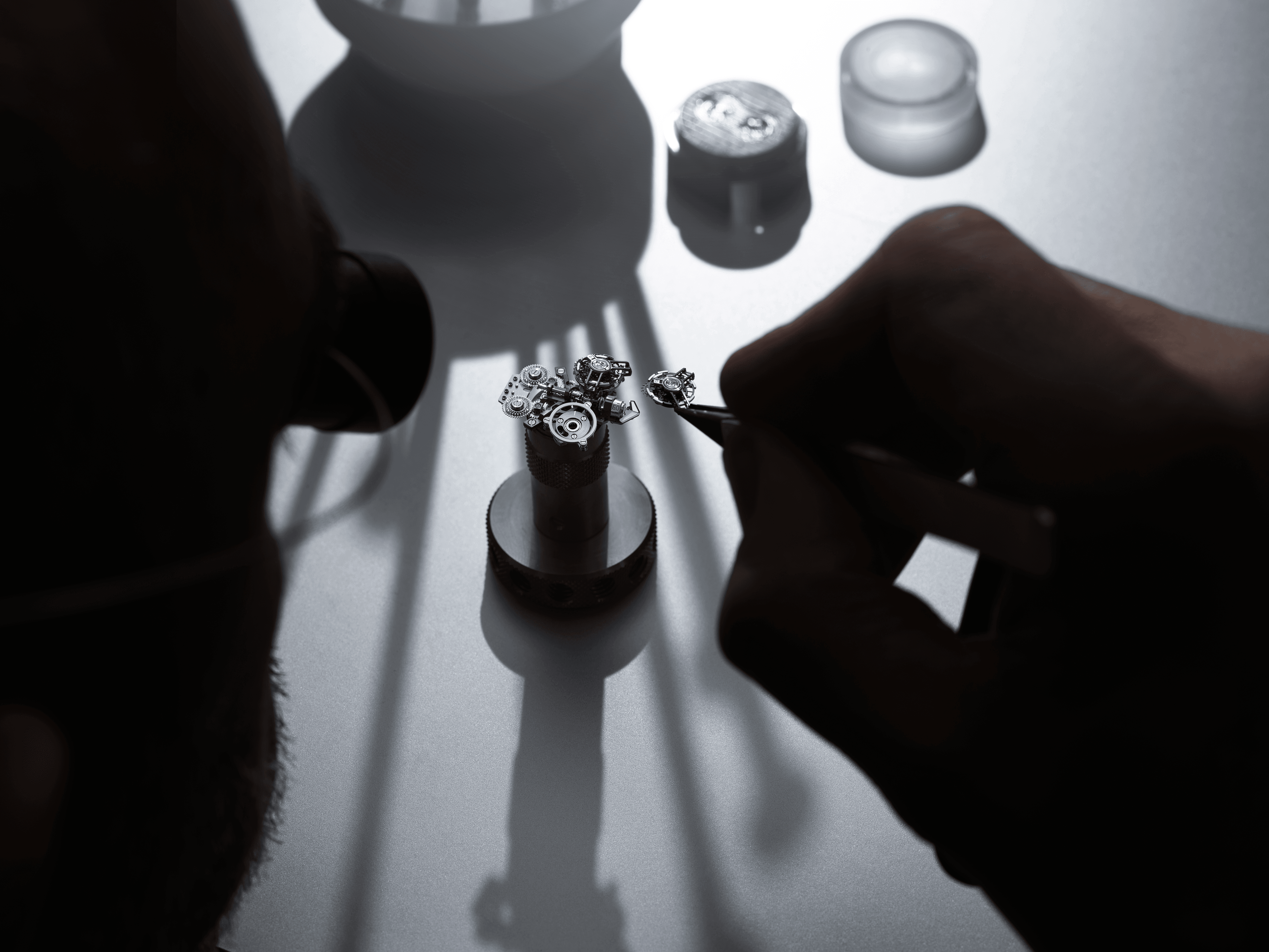
Assembly occurs in the Haute Horlogerie Atelier in La Chaux-de-Fonds. Each of the 60 pieces (a limited edition, referencing the 180-year legacy plus the 25-year Freak journey) is assembled from start to finish by a single artisan. It requires 60 hours of manual assembly followed by five days of rigorous testing. Each watchmaker oversees the after-sales care, ensuring that the hand that builds the watch is the hand that heals it.
Wearing The Impossible
On the wrist, the 44mm white gold case (smaller and more ergonomic than the 45mm Freak S) sits surprisingly flat. The perceived height is just 12.2mm, though the overall architecture reaches 16.54mm. The bezel-locking system has been reengineered to be sleeker, almost invisible.
To set the time, you rotate the bezel. To wind it, you interact with the caseback. There is no crown. There is no traditional dial. There is only the hypnotic, slow-motion carousel of two inclined tourbillons spinning in opposite directions, their diamond hearts beating at 2.5 Hz, while the entire assembly rotates majestically once per hour.
The price? CHF 320,000, which for sixty very lucky people, is the entry ticket.
The Verdict
The Super Freak is an elaborate thesis statement. It argues that the time-only wristwatch is not a solved problem, but an infinite canvas. Where other brands add complications to prove complexity, Ulysse Nardin has instead multiplied the complexity of the fundamentals.
It is the world’s first automatic double tourbillon. It is the first Freak with a seconds display. It houses the smallest gimbal and the smallest differential in existence. And yet, it is utterly, defiantly, a time-only watch.
In an industry often content to re-gild historical lilies, the Super Freak is a reminder of what happens when a manufacture with 180 years of legacy and 25 years of R&D decides to burn the blueprints and start from the spinning, diamond-coated, anti-magnetic core of time itself.
I call it the logical endpoint of the "Hyperwatch." It is the most intellectually honest, mechanically outrageous, and beautifully insane new watch of 2026. Long live the Freak.


