Audemars Piguet Introduces The 150th Heritage Pocket Watch With A Universal Calendar
 5 min read

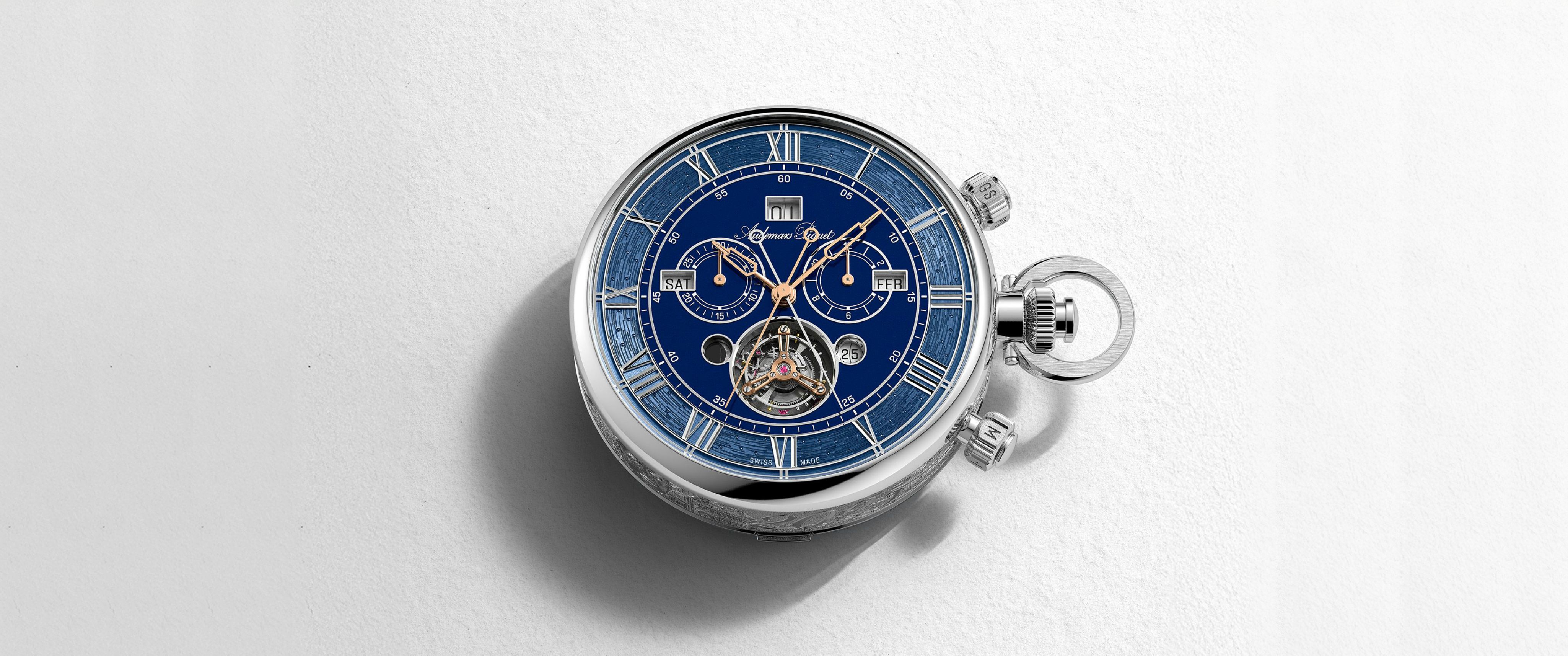
When everything and everyone is obsessed with an evolution towards what’s hype-definitive, Audemars Piguet has chosen to give us something far more anachronistic, and far more revealing of what the brand thinks watchmaking is actually for: a 50mm, hand‑wound, platinum pocket watch that attempts nothing less than to reconcile our civil, lunar, and sacred calendars in the palm of your hand. The 150th Heritage pocket watch is not just one of AP’s most mechanically ambitious objects to date, it is a philosophical statement about how a modern manufacture can treat complexity as a foundation rather than a flex.
A Third Pillar In AP’s Grand Complication Lineage
Audemars Piguet has been here before, at the bleeding edge of mechanical density in a pocket format. In 1899, the L’Universelle became a reference point for ultra‑complicated watchmaking. In 1921, the so‑called Grosse Pièce further stretched what a portable mechanical object could contain, and for decades those two pieces effectively defined the ceiling of AP’s pocket‑watch aspirations.
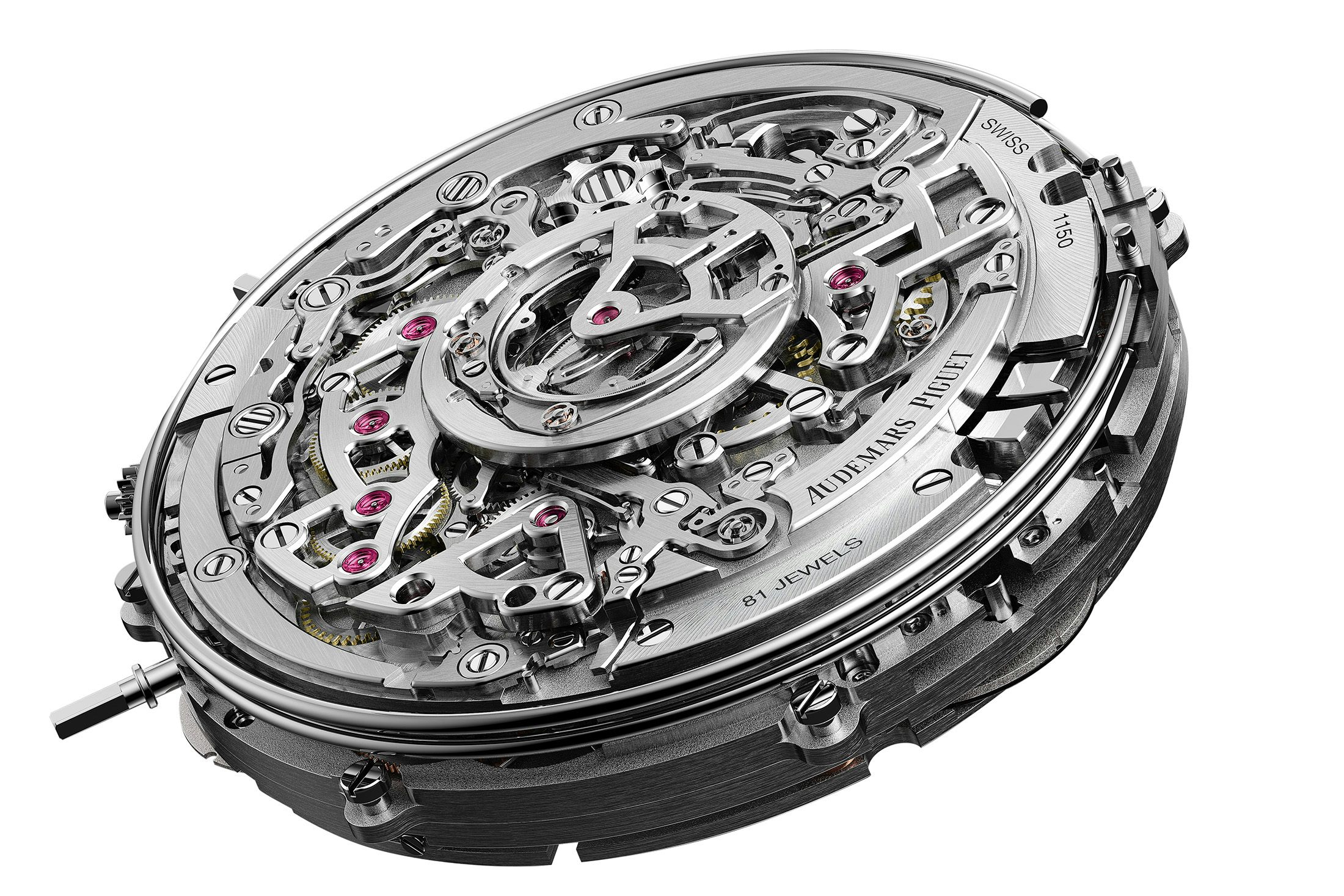
The 150th Heritage is conceived explicitly as the third pillar in that lineage. Its new hand‑wound Caliber 1150 builds on the architecture of the automatic Caliber 1000 used in the 2023 Code 11.59 Universelle RD#4, retaining the core grammar of grand complication - Grande Sonnerie, minute repeater with Supersonnerie, split‑seconds flyback chronograph, flying tourbillon, and semi‑Gregorian perpetual calendar, while re‑engineering the movement for pocket use. AP speaks of 47 functions and 30 complications when the watch and its caseback “Universal Calendar” are taken together, a figure that surpasses both L’Universelle and the Grosse Pièce and positions this watch as one of the most mechanically loaded objects the brand has ever produced.
Architecture: A 50mm Object Meant to Be Used
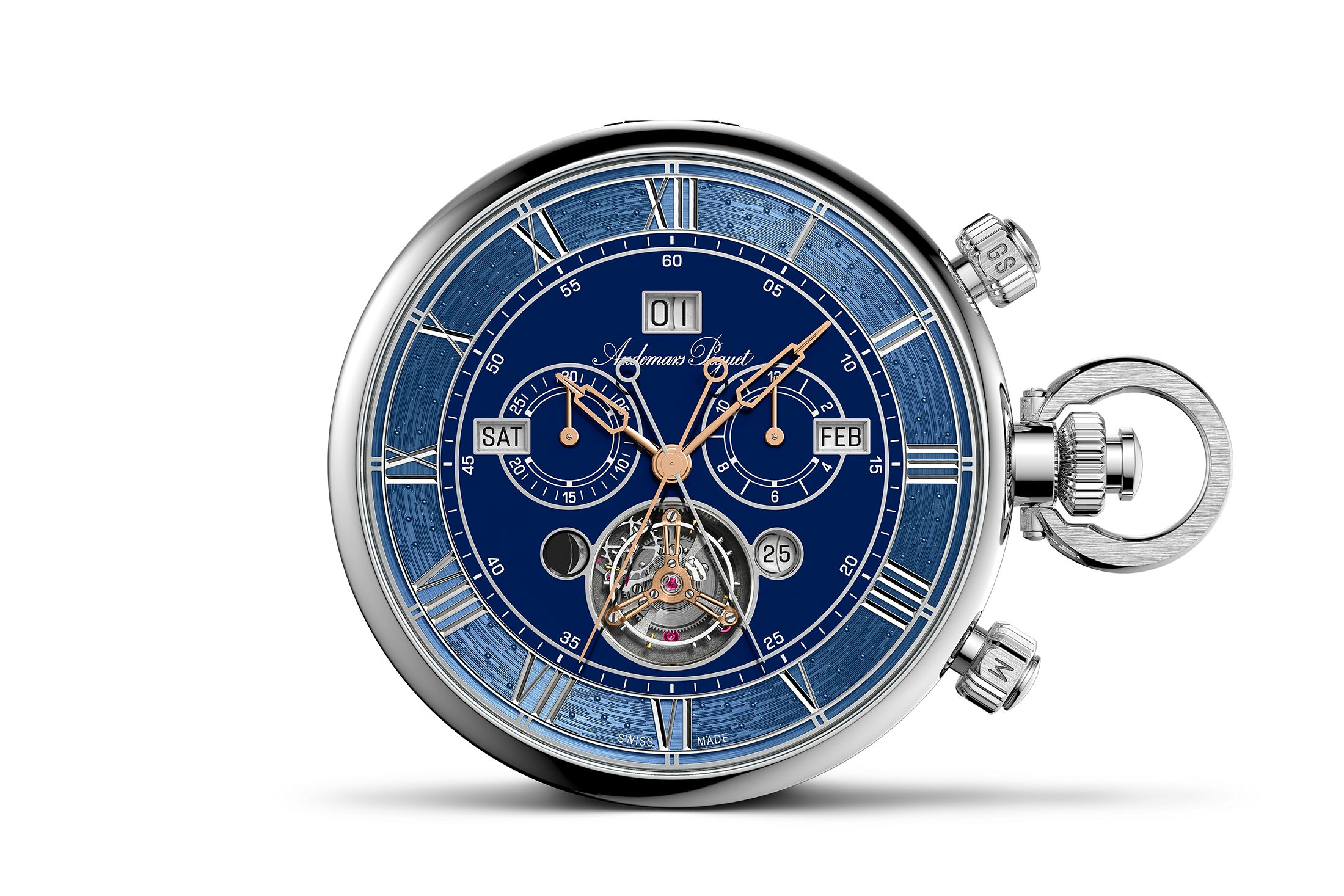
On paper, the numbers sound almost comically excessive: a 50mm platinum case, 23.4mm thick, containing a 1,140‑component movement and a mechanically programmed, free‑standing calendar calculator in the hinged back. In the hand, however, the watch has clearly been designed around how a human actually holds, rotates, and manipulates a heavy pocket watch.
All of the core controls are clustered on one side of the case, their positions defined by extensive 3D modelling and real‑world testing to avoid accidental activation and to make every interaction feel intentional. The result is an object whose volume and mass are used in service of acoustic performance and legibility, not simply as a means to complicate.
Caliber 1150: RD‑Series Thinking In A Pocket Watch
If the exterior is an essay in ergonomics, Caliber 1150 is a concentrated digest of AP’s RD‑series research applied to a pocket‑watch format.
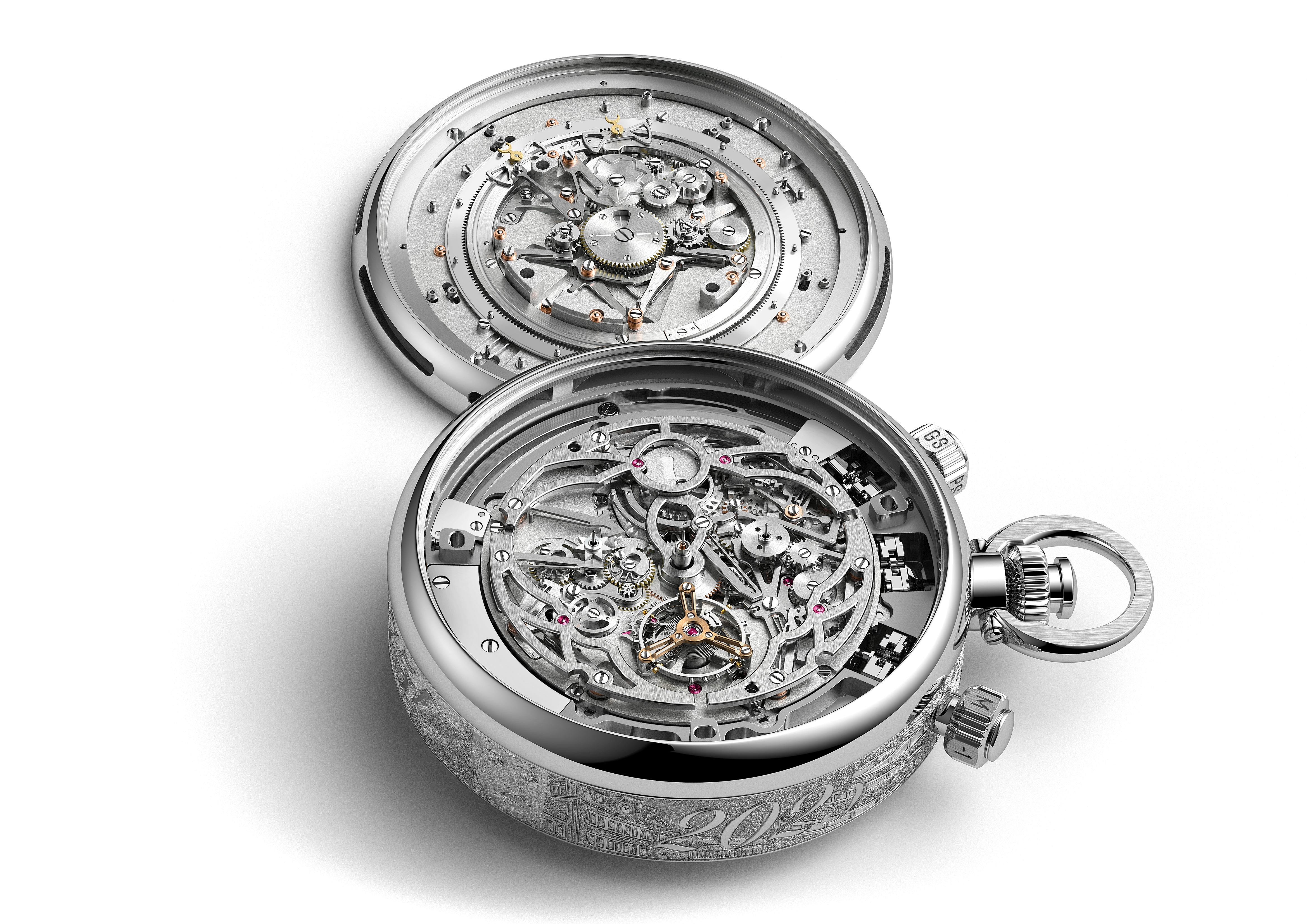
Starting from the automatic Caliber 1000 of RD#4, AP removed the rotor and automatic winding train, converting the movement to manual wind and re‑arranging activation mechanisms to suit the new control layout. Even shorn of its rotor, the caliber remains an 8.8mm‑thick island of high complication with 90 jewels, 1,140 components, a 60‑hour minimum power reserve, and a 3 Hz beat rate.
The headline mechanisms are familiar from RD#4 but gain a different character off the wrist. It features a true Grande and Petite Sonnerie with on‑demand minute repeater, a lateral‑clutch, flyback, split‑seconds chronograph with semi‑instantaneous minutes and dragging hours, a flying tourbillon at 6 o’clock, and a semi‑Gregorian perpetual calendar. Everything is arranged so that the density of function does not overwhelm legibility: large calendar apertures, tone‑on‑tone chronograph registers, and an overall hierarchy that feels closer to an instrument than a baroque showpiece.

The Universal Calendar: A Mechanical Atlas Of Time
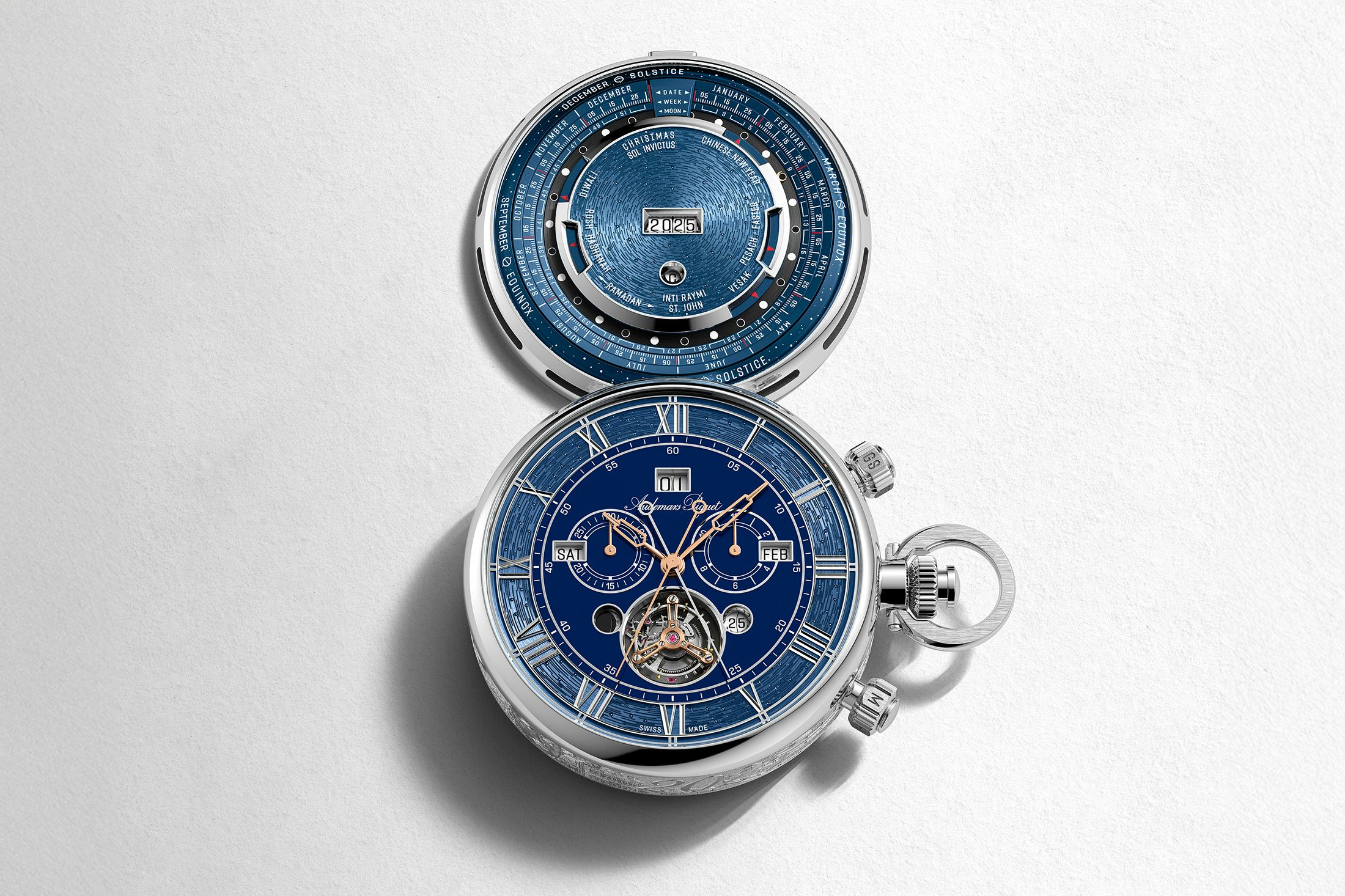
What truly sets the 150th Heritage apart from the long history of complicated pocket watches is not the movement but the disc of mechanical cosmology hidden in its back. AP calls it the “Universal Calendar,” but strictly speaking, it is an independent mechanical calculator. It is neither powered by, nor synchronized to, the going train of Caliber 1150, instead, it is advanced manually via a fluted, bidirectional wheel integrated into the caseback.
- Once a year is selected, the module mechanically resolves the relationships between:
- The Gregorian civic year (1900–2099), with leap‑year status.
- Lunar phases, aligned to dates for that year with a 250‑year accuracy horizon.
- Seasonal markers: solstices and equinoxes.
A suite of solar, lunar, and lunisolar observances: Christmas (Sol Invictus), Saint John’s Day (Inti Raymi), the beginning of Ramadan, Diwali, Rosh Hashanah, Pesach, Vesak, Easter, and Chinese New Year.
Technically, you could remove the Universal Calendar and Caliber 1150 would still function as an ultra‑complicated watch. Conceptually, though, the module is the heart of the piece: a mechanical diagram of how human cultures have chosen to inhabit astronomical time, rendered in titanium‑toned discs, blue enamel, and red markers.
Métiers d’Art And The Language Of Form
None of this would matter quite as much if the 150th Heritage were not also a deeply tactile, visually coherent object. AP has leaned hard into métiers d’art here, but in a way that supports the watch’s astronomical theme and anniversary brief.
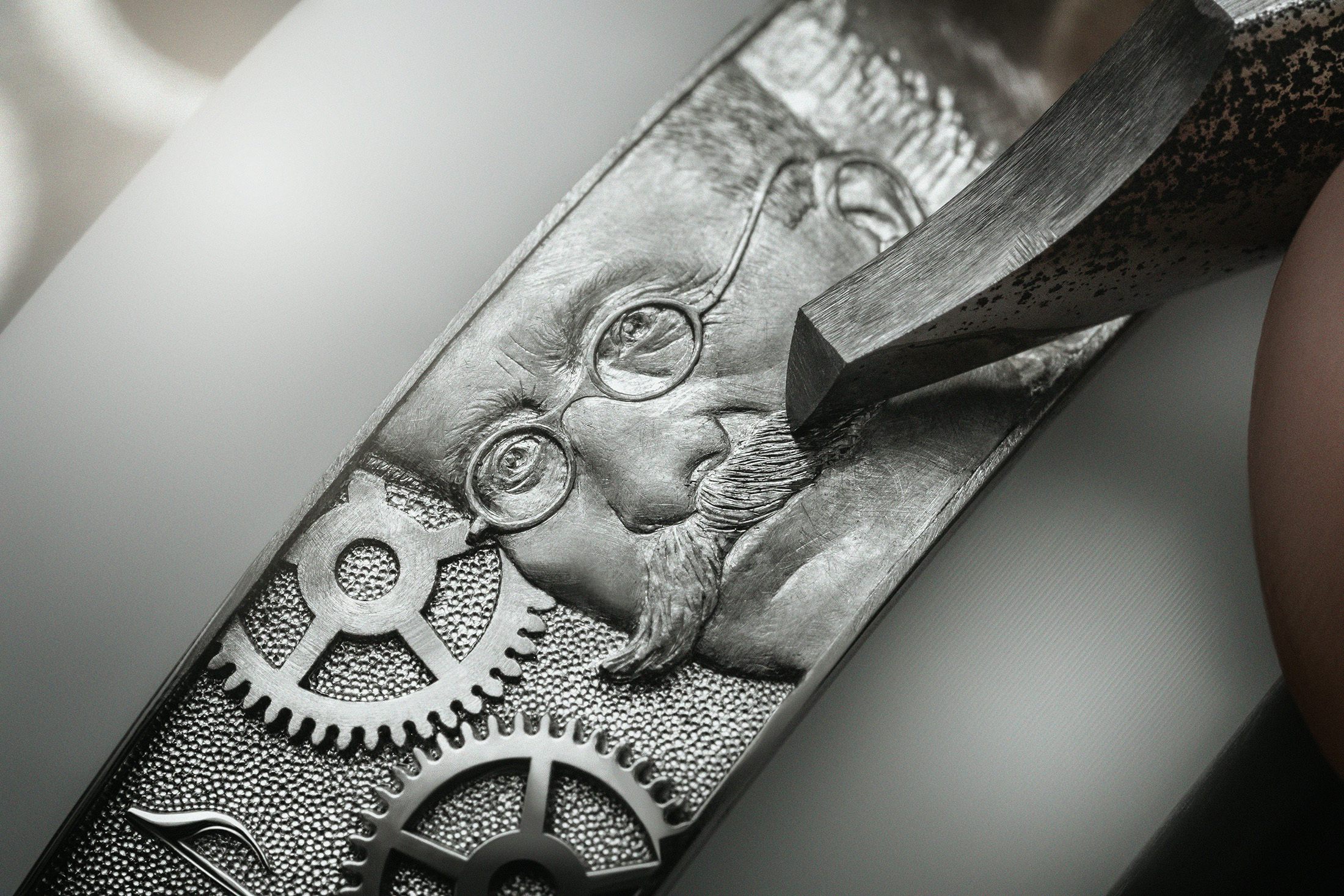
The 50mm platinum case is fully hand‑engraved, no small feat given platinum’s reluctance to the burin, with a narrative that runs from the landscape of the Vallée de Joux to portraits of founders and depictions of the original workshop and current manufacture buildings. The dates of AP’s founding and the 150th anniversary, marked in 2025, are engraved along the flank, made possible by the compact grouping of pushers and correctors.
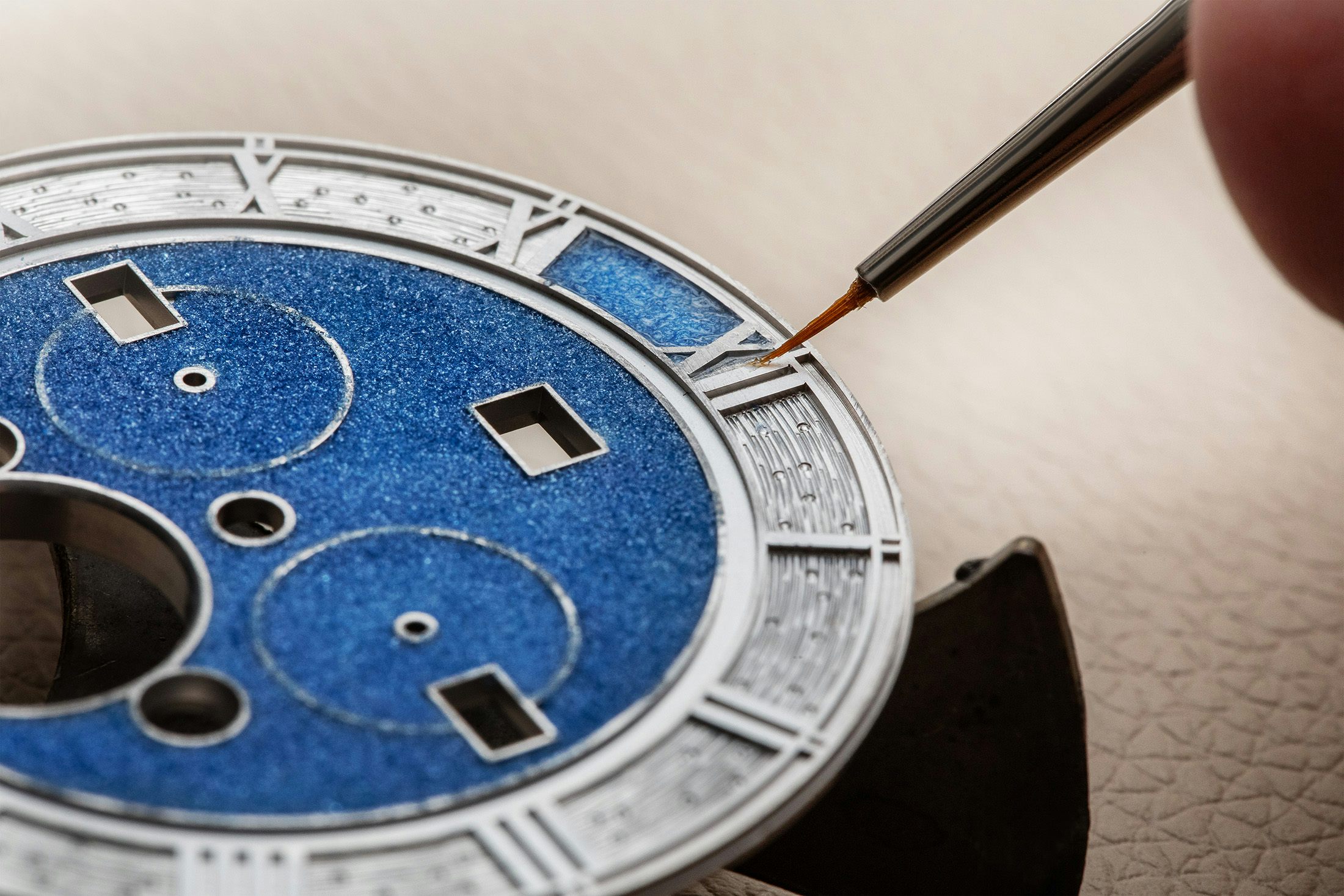
On the front, an 18‑carat white‑gold dial is coated in translucent blue grand feu enamel, applied in multiple firings. Hand‑engraved Roman numerals in white gold which float over a field of engraved star trails make the dial furniture. Flip the watch over and the Universal Calendar’s dial continues the same star‑trail motif, its engraving filled with blue enamel. Completing the ensemble is a hand‑made platinum chain of roughly 40cm with twisted‑rope motif links and spring‑ring clasps - a deliberate nod to traditional chain‑making that also feels completely contemporary, as suited for a jewellery‑driven look. Production is limited to ten pieces in total: two unique examples in platinum and eight additional pieces in 18‑carat white gold will be crafted.
In sum, the 150th Heritage is that rare modern grand complication that feels both historically literate and forward‑looking: a pocket watch that refuses to be a museum prop, instead inviting its owner to actively navigate the weave of calendars, cultures, and celestial cycles.