When Breguet Goes All In: A 39mm Minute Repeater And A Grande Sonnerie Pocket Watch
 8 min read

There's celebrating a milestone, and then there's what Breguet just did. As the Manufacture closes out its 250th anniversary year, it's delivered two watches that make most brands' commemorative efforts look like participation trophies. The first is a pocket watch so complicated it took over 20 years to get back to making one like it. The second is a minute repeater that's somehow water resistant, smaller than before, and runs for three days straight. Both are drenched in Bleu de France enamel, both are made in Breguet gold, and neither is playing it safe.
The Pocket Watch That Remembers Everything
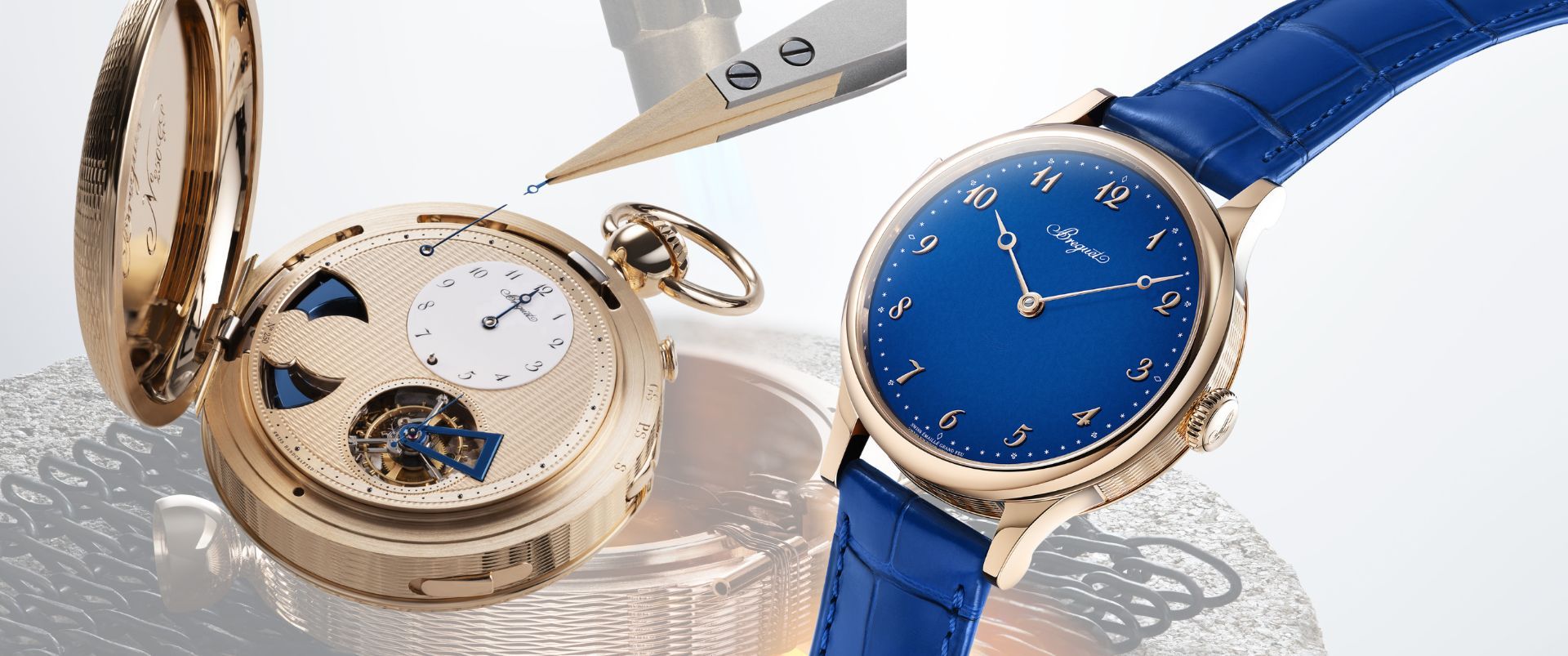
Pick up the 1905 and the first thing you notice is the density. This isn't wristwatch construction. It's pocket watch architecture, which means bridges you can actually see doing work, a movement laid out for visual clarity, and finishing that assumes someone will open the case and look. The regulator display puts hours off center at 12 o'clock, sweeping over grand feu enamel with petit feu black enamel numerals. The central minute hand crosses a guilloché pattern called Quai de l'Horloge, horizontal waves named after the Parisian street where Breguet opened shop in 1775.
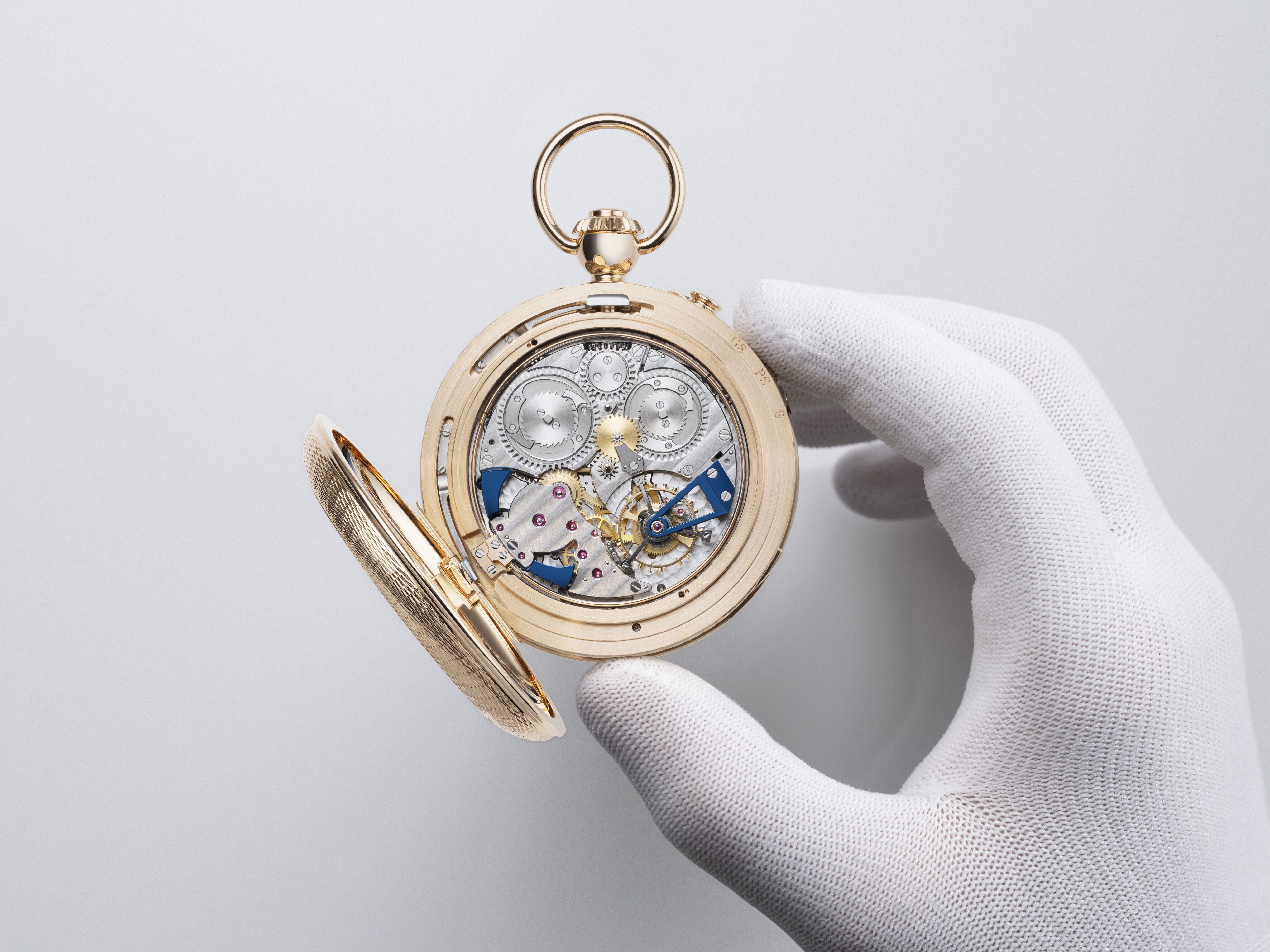
The pattern references Île Saint Louis and Île de la Cité, the two islands where that workshop still exists in the 1st arrondissement. Look closely and you'll see the minute hand is uncommonly long, hovering over a dedicated minute track. The seconds read from the blued hand fixed to the tourbillon cage. Turn it over and the movement is reversed. Most striking mechanisms sit dial side, where they gather timing information. Breguet moved everything to the back, exposing the full quadrature of the minute repeater and grande sonnerie through the caseback. Every component shows hand finishing: drawn lines, beveling, stretching. The striking barrel bridge carries the Petit Trianon motif, created specifically for this anniversary from interlacing patterns visible at Versailles. Only the blue hammers appear on the dial side.
This construction required developing new guilloché techniques. Traditional guilloche machines work on flat or slightly curved surfaces. The edges of the 1905's covers are three dimensional, curving in ways that shouldn't accept engine turning. Breguet's craftsmen figured out how to apply the Quai de l'Horloge pattern anyway, decorating surfaces that would typically receive polish or engraving. The grande sonnerie itself operates across three modes: grande sonnerie chimes hours and quarters automatically, petite sonnerie chimes hours only, and minute repeater strikes on demand even in silent mode. Managing tempo across all three scenarios is where the magnetic regulator comes in.
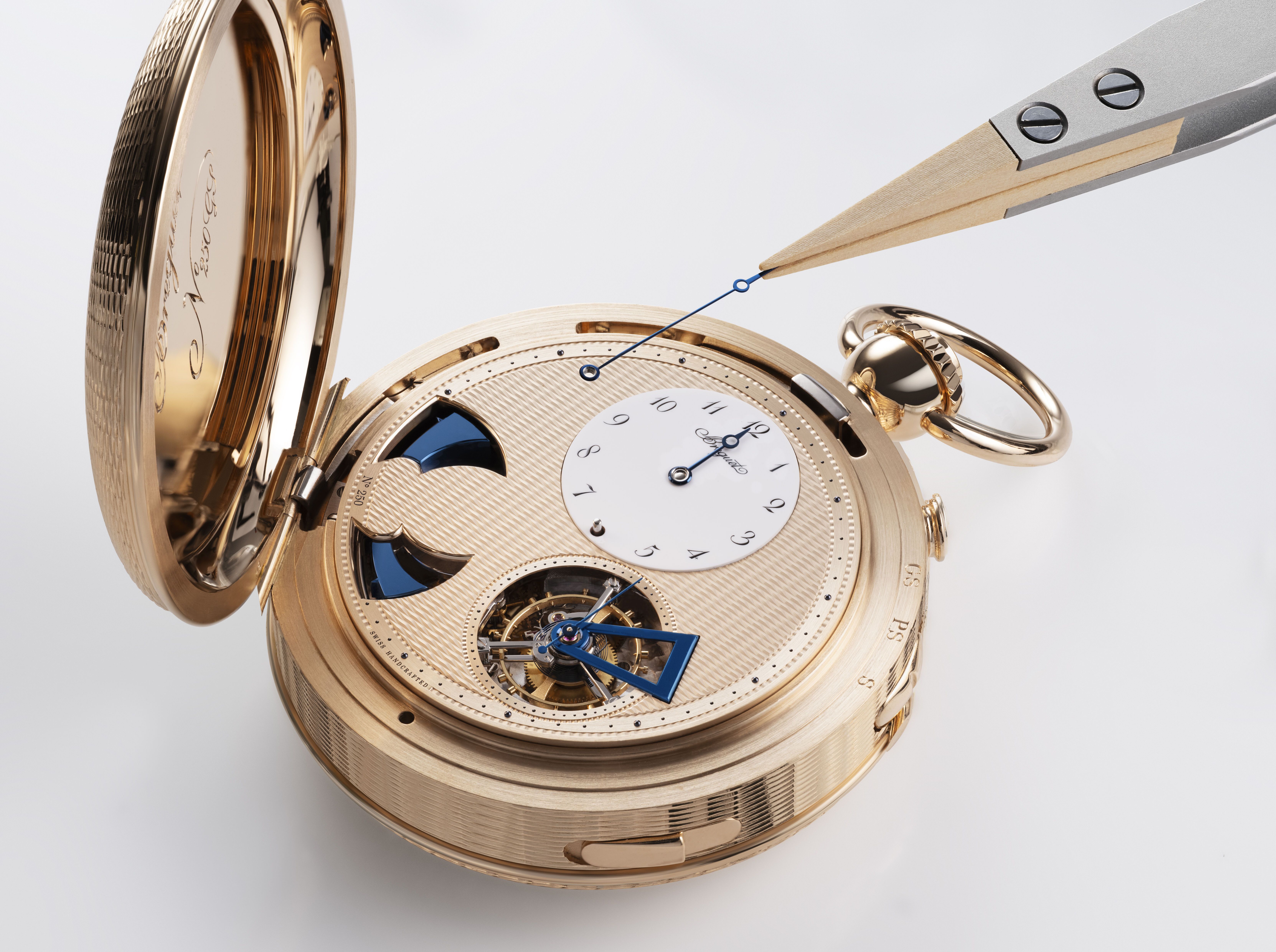
Most regulators are mechanical, using physical contact to control hammer frequency. Breguet designed a magnetic system instead. Metal arms rotate between fixed magnet networks, inducing Foucault currents inside the conductive material. These currents create their own magnetic field opposing the original magnets, generating an electromagnetic brake. Faster rotation produces stronger resistance. Slower rotation reduces opposition. The result is constant tempo regardless of energy level in the barrel. The system is contactless and completely silent, protected by two patents that echo Breguet's original gong spring innovations. Centrifugal force moves the conductive arms outward under the magnets, slowing rotation. At lower speeds, springs pull the arms inward, reducing brake intensity. It's elegant in the way mechanical solutions often aren't, removing friction from an equation that depends on consistency. Assembly takes over six months after the movement is roughed out. First assembled raw, then fully decorated, then put into operation. That timeline explains why Breguet hasn't made a grande complication of this type in over 20 years. The institutional knowledge required to build one efficiently disappeared, and recovering it meant starting almost from scratch.
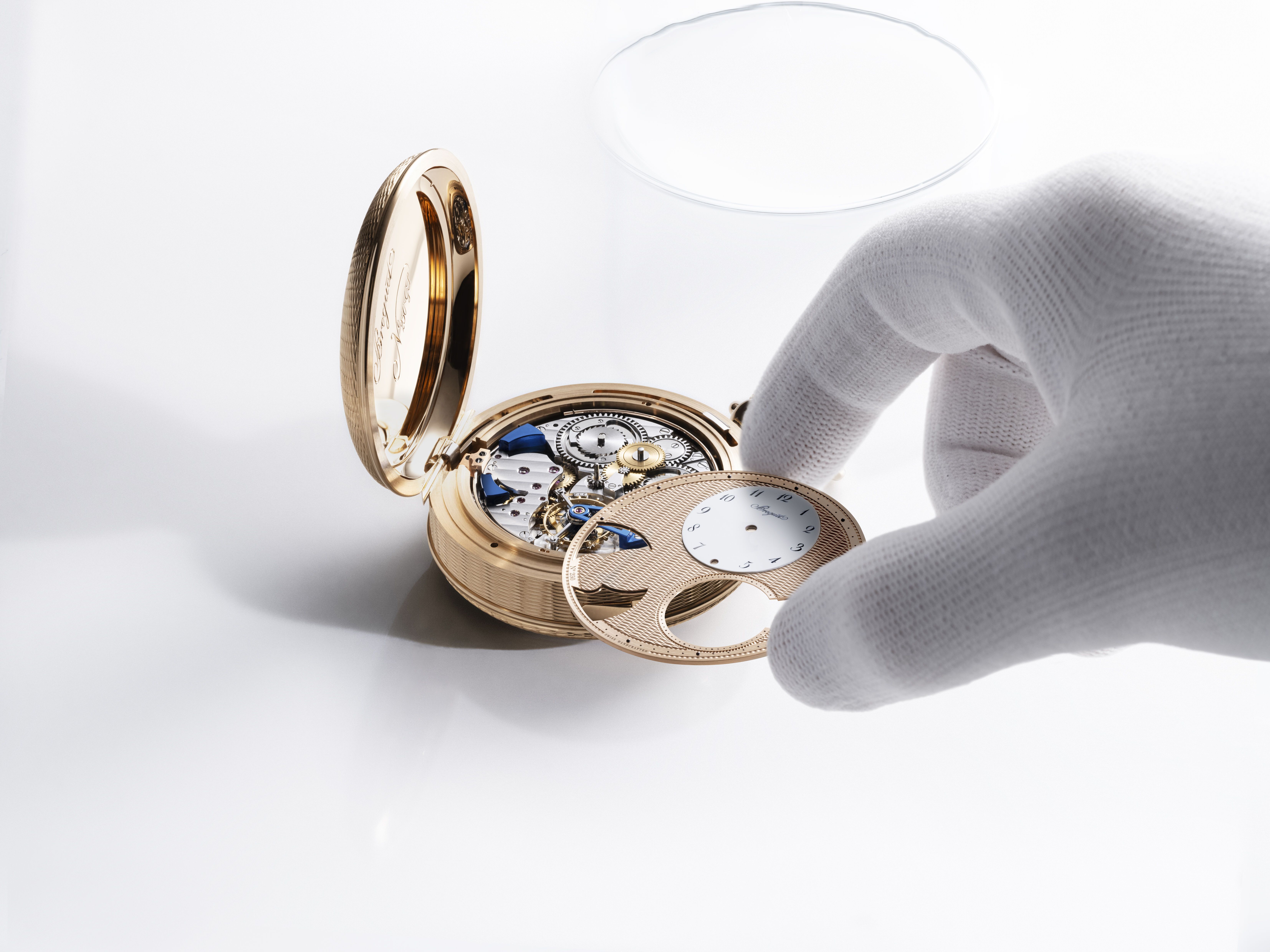
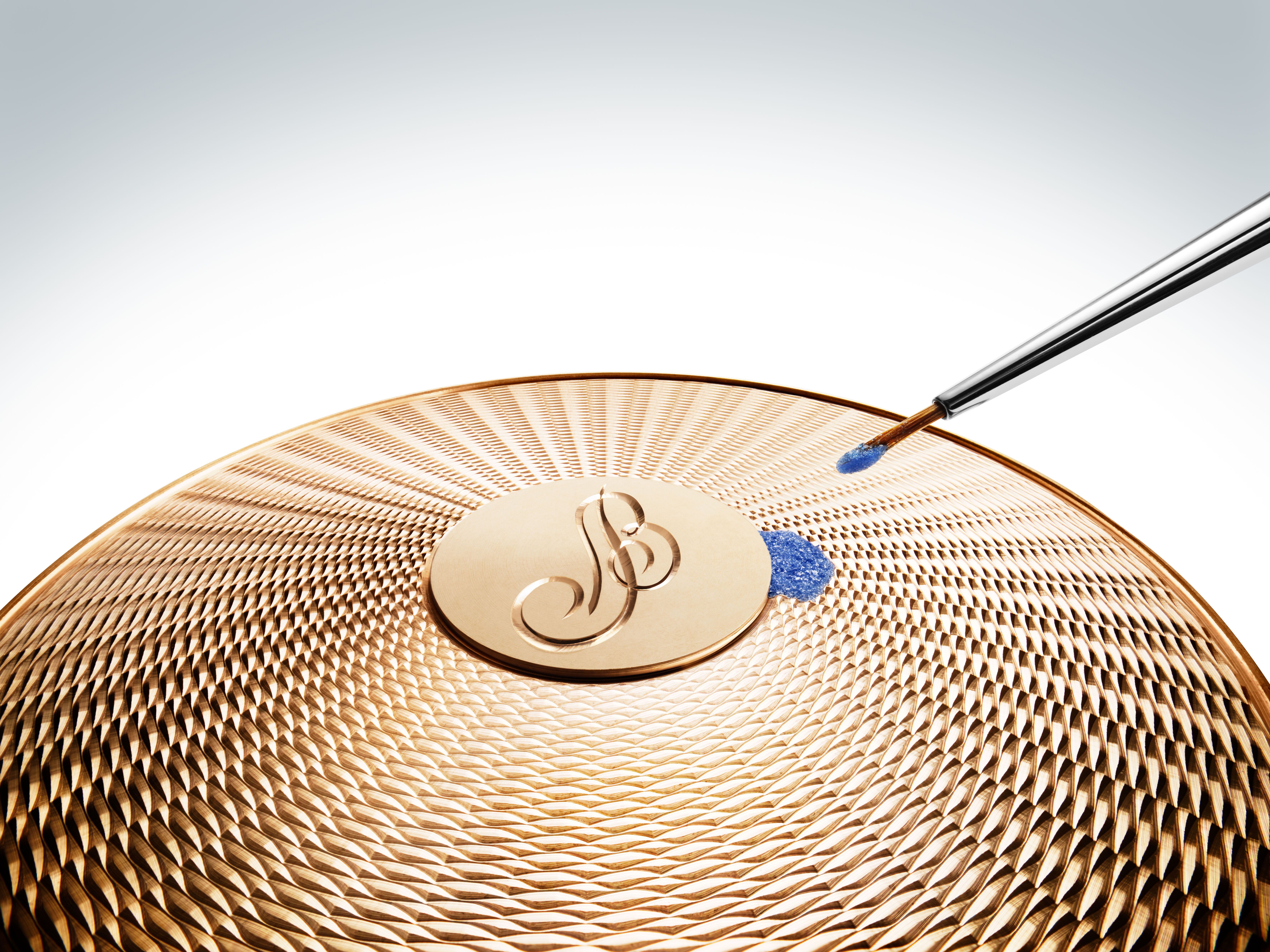
The Bleu de France enamel shows up everywhere. Hand engraved into the case, representing the Seine's course through Paris. On the back, fully covering the guilloché Quai de l'Horloge pattern. This color traces back to Louis XIV and the court at Versailles, where Breguet would eventually build his reputation. It appears in enamel tact watches from the early 19th century, and you can still see it on French historical monuments, including the Place Vendôme where the Breguet boutique stands. The dial carries Breguet's signature twice. Visible at 12 o'clock, secret at 6 o'clock, engraved flush with the enamel by pantograph. That tool was recently acquired from the estate of George Daniels, the watchmaker who spent his career studying and honoring Breguet's methods. The connection feels appropriate for an anniversary piece this ambitious.
The presentation case might be the most extravagant detail. It's made from the last remaining wood available from Marie Antoinette's oak tree, planted in 1681, damaged in the 1999 storm, finally felled in 2005. Crafted in marquetry following the geometry of the French Pavilion at Petit Trianon, each element was selected from the heart of the wood for natural color variations as it aged. A resonance plate inside uses wood from the Risoud forest in Vallée de Joux, the same source for the finest violins. Only one tree in ten thousand offers perfect resonance. The Breguet gold chain that comes with the watch has fastenings guilloché with the Quai de l'Horloge motif, extending the decorative language beyond the watch itself. This will only be produced on request, Breguet's way of saying the production schedule depends entirely on finding clients willing to wait.
A Minute Repeater That Actually Functions
The 7365 lands in your hand differently. At 39mm and 13.2mm thick, it's nearly a full millimeter thinner than the 2023 steel Type XX releases and 3mm smaller in diameter than previous Breguet minute repeaters. This is meaningful sizing for a complication that typically demands space for hammers, gongs, and the activation mechanism. The new caliber 1896 replaces the 567.2, which will become a collector's item as it phases out. Everything is Breguet gold now: case, movement, even the white gold gongs that are gilded with Breguet gold and attached directly to the patented case. This material continuity matters because sound transmission depends on harmonic resonance across components. Breaking that chain with different metals introduces inconsistencies. The gold gongs are patented separately, confirming Breguet considers this a technical advancement rather than aesthetic choice.
The balance wheel runs at 3Hz, 21,600 vibrations per hour. That's a meaningful increase from the previous caliber, improving precision and stability while allowing faster recovery from external shocks. The optimized gear train, escapement, and barrel push power reserve to 75 hours, which is genuinely impressive for a minute repeater. Most struggle to reach 50 hours because the striking mechanism drains energy even when inactive. Silicon appears in the escapement: spiral, anchor, escape wheel. This makes the regulating organ non magnetic by nature, certified by the Breguet hallmark to resist fields around 600 gauss. Silicon also handles temperature variations better than traditional materials, maintaining the active length of the balance spring regardless of whether you're in air conditioning or direct sun.
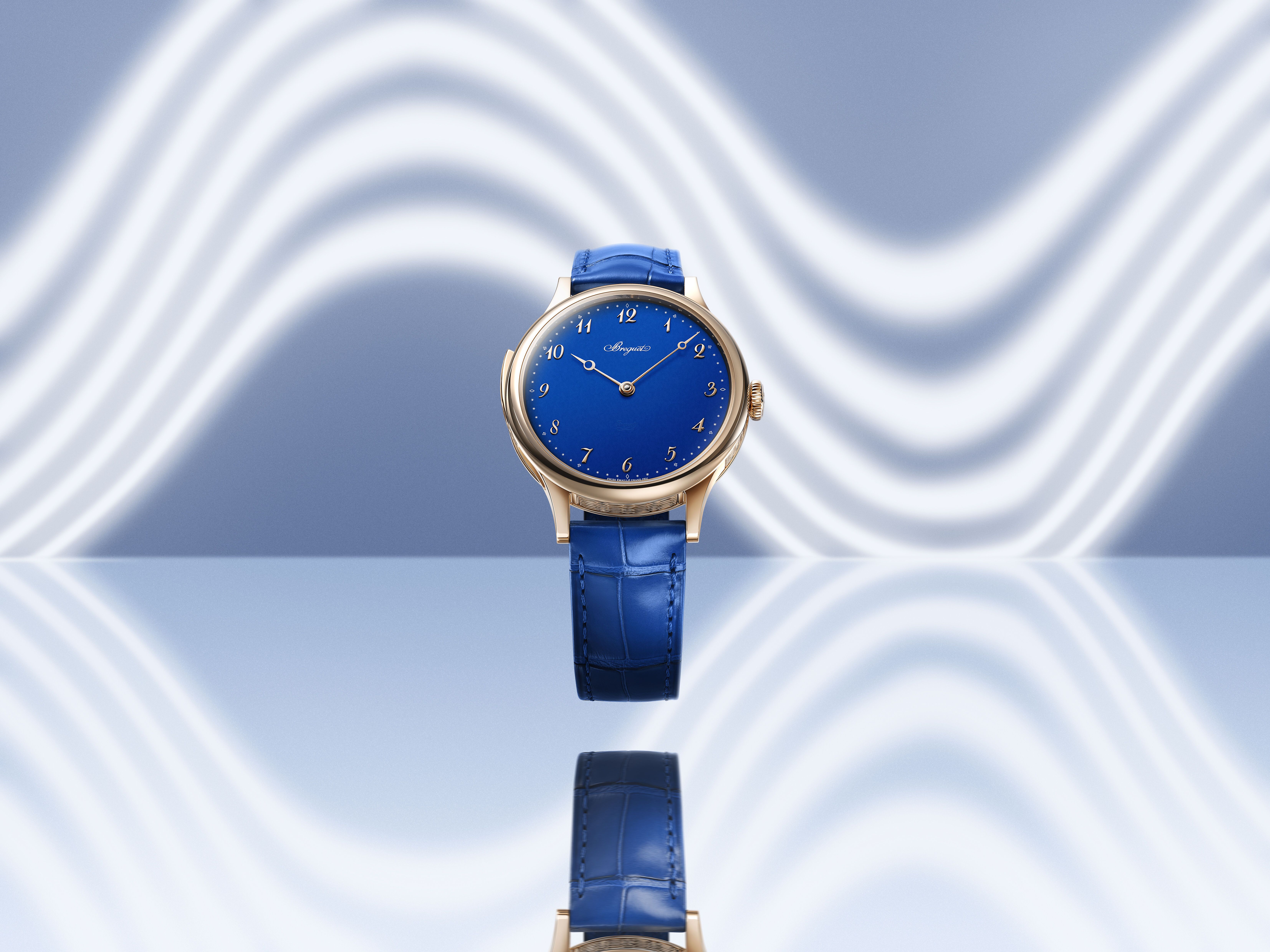
Every sound produced by activating the gongs undergoes testing in an anechoic chamber at the manufacture. They measure harmonic tuning, melodic tuning of the gongs, chime duration, and acoustic level. The harmonic tuning follows patent EP4012511, filed by Breguet. The result is the first minute repeater certified by the Breguet Hallmark with individually certified precision of plus or minus two seconds per day on the finished, assembled watch. Water resistance to 3 bar, 30 meters, required rethinking the complication activation lock. That's the most vulnerable point in any minute repeater case, where the slide must maintain clearance for operation while preventing moisture ingress. Gaskets solve the problem here, making this the first water resistant minute repeater Breguet has produced. It won't survive a dive, but it won't die from washing your hands either.
The dial is Bleu de France grand feu enamel, the first time Breguet has developed this shade for modern production. The white gold base receives multiple firings to build up the enamel layers, each one requiring precise temperature control to avoid cracking or color shifts. Applied Breguet numerals in polished Breguet gold sit proud of the surface. Hollowed out apple shaped hands in blued steel sweep across the dial. The master's signature appears at 12 o'clock, secret signature at 6 o'clock.
The lugs are new, part of a broader design shift in the Classique line. They're longer and straighter than previous references, creating visual continuity with the Souscription that opened Breguet's anniversary year. The fluted case middle shows machine work polished to a mirror finish. Every edge is defined, every surface considered.
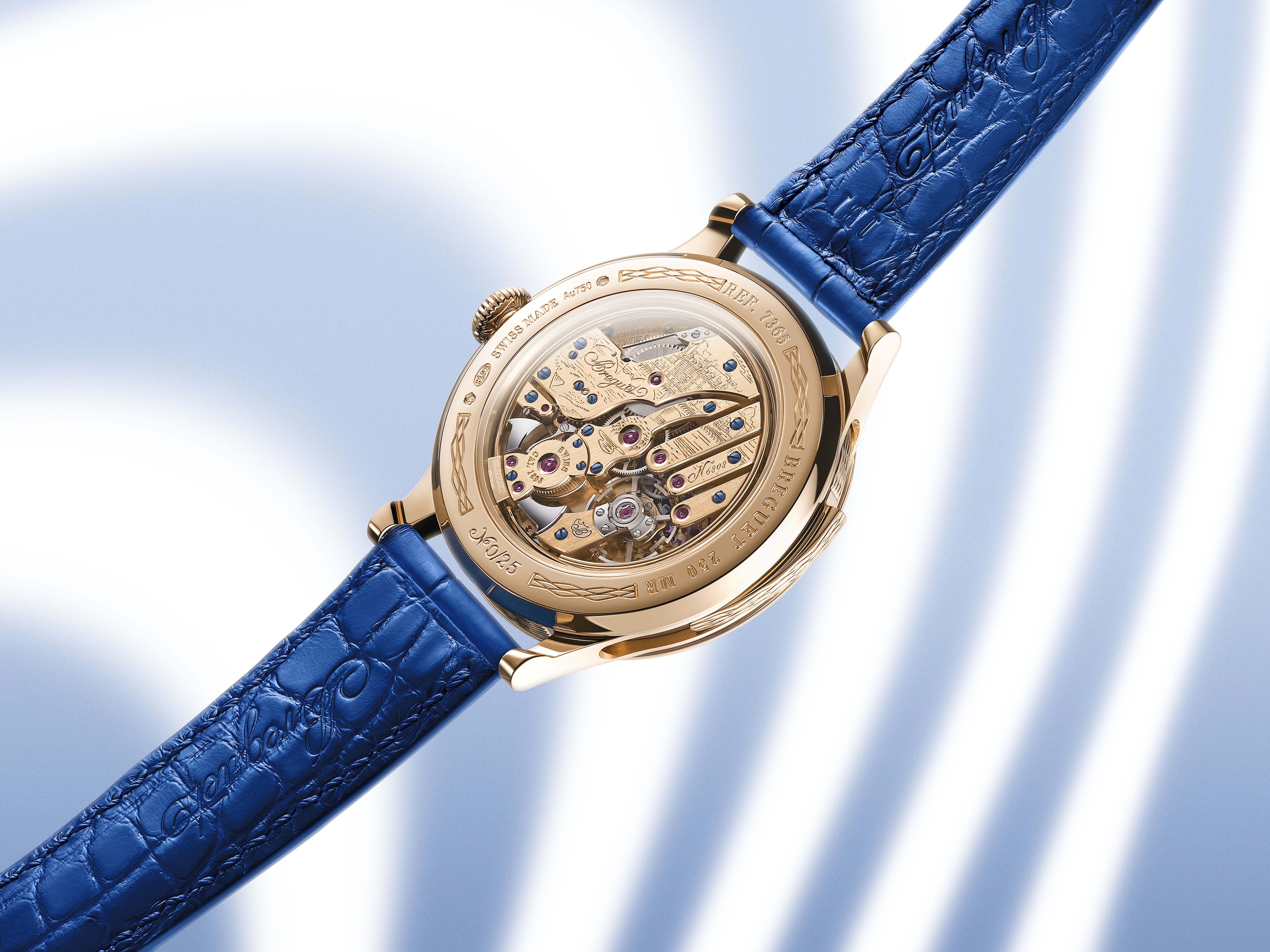
Turn it over and the movement engraving tells two stories simultaneously. The upper section depicts Quai de l'Horloge in Paris: building facades, riverbanks, Pont Neuf connecting both sides of the Seine. The lower section shows Vallée de Joux landscape, fir trees, morning mist, Dent de Vaulion at center. The scene mirrors the Parisian view as if reflected in water, connecting Breguet's heritage in both locations. Each piece receives hand engraving with its individual number and the Breguet hallmark on the balance bridge. The presentation case draws from the red Moroccan leather cases Breguet used in the 1800s, redesigned for the 250th anniversary and individually numbered. It's a detail that matters more than it should, but that's always been true of Breguet's approach to packaging.
What This Actually Means
Most anniversary watches are reissues with special dials or limited-run variants of existing references. Breguet built a 532-component pocket watch with a magnetic regulator and a water-resistant minute repeater with a silicon escapement. These aren't variations. They're statements about what the manufacture can still do when it decides complexity matters more than commerce.


