Baume et Mercier Hampton: The Understated Rectangle That Refuses to Disappear
 5 min read

The watch industry operates in cycles. Shapes that once dominated market conversations fade, then return with renewed conviction. We've watched round cases reclaim dominance after decades of experimentation. We've seen cushion cases whisper their vintage appeal before retreating. Yet some designs persist not because they follow trends, but because they embody something more fundamental than fashion. The Baume et Mercier Hampton belongs to this rarer category. Where the Cartier Tank draws from military armor and the Jaeger-LeCoultre Reverso solves a polo player's problem, the Hampton arrived in 1994 with quieter ambitions. No origin story involving wartime ingenuity. No clever mechanical solution to protect crystals. Just a rectangular case that understood proportion better than most.
Context Matters: The Rectangle in Modern Horology
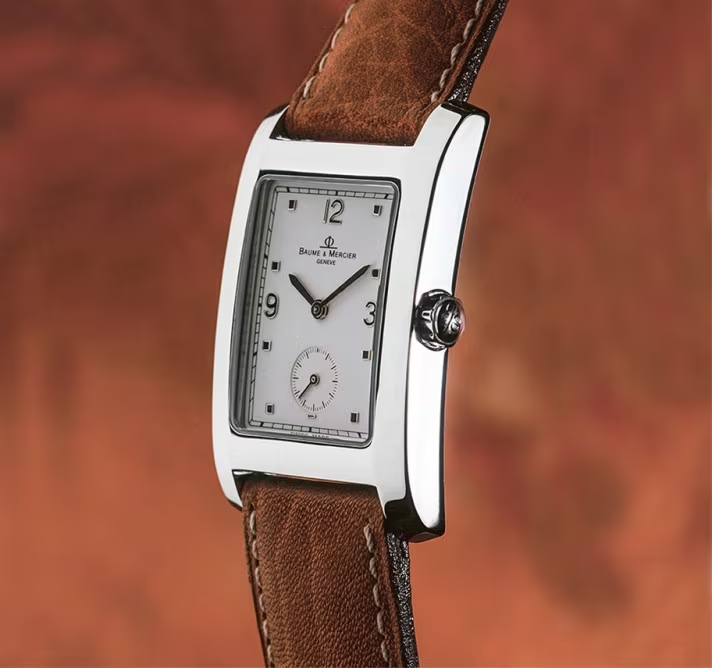
Recent market data tells a revealing story. Chrono24's 2024 analysis showed rectangular and tonneau-shaped cases gaining significant ground, driven largely by Cartier's success. The Santos and Tank have become instruments of desire, not merely timepieces. WatchGecko's 2025 predictions note that after years of rectangular watches being dismissed as difficult to sell, manufacturers are reconsidering their stance. One British microbrand reported their rectangular model as their bestseller. This isn't nostalgia. It's recognition that round cases, for all their mechanical logic and historical dominance, can feel predictable. The rectangle offers something different: a deliberate choice to prioritize proportion and visual rhythm over convention. Yet here's where the Hampton distinguishes itself. While Cartier commands premium prices and immediate recognition, and Reverso justifies its cost through complication and heritage, the Hampton occupies more contested territory. It launched at a moment when Baume et Mercier needed to signal a new direction. The brand had produced rectangular cases in the 1940s, but the 1994 Hampton featured something novel: a convex, wrist-hugging profile that felt contemporary rather than archival.
The Art Deco Foundation That Actually Matters
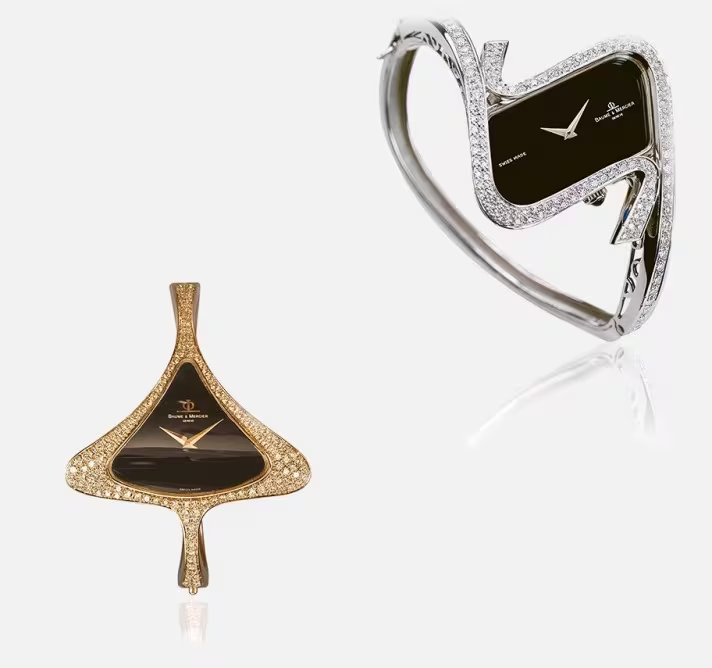
Every rectangular watch claims Art Deco lineage. Most of those claims amount to marketing convenience. The Hampton's connection runs deeper, rooted in the brand's 1964 adoption of the Greek letter Phi as its emblem. Phi represents the golden ratio, that mathematical relationship between elements that creates visual harmony. For a watchmaker to build an entire design philosophy around this proportion isn't just historical window dressing.
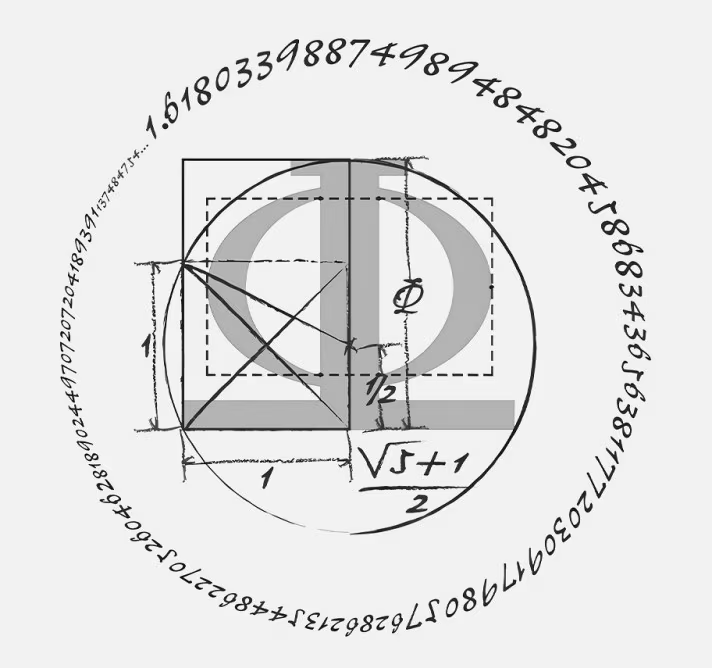
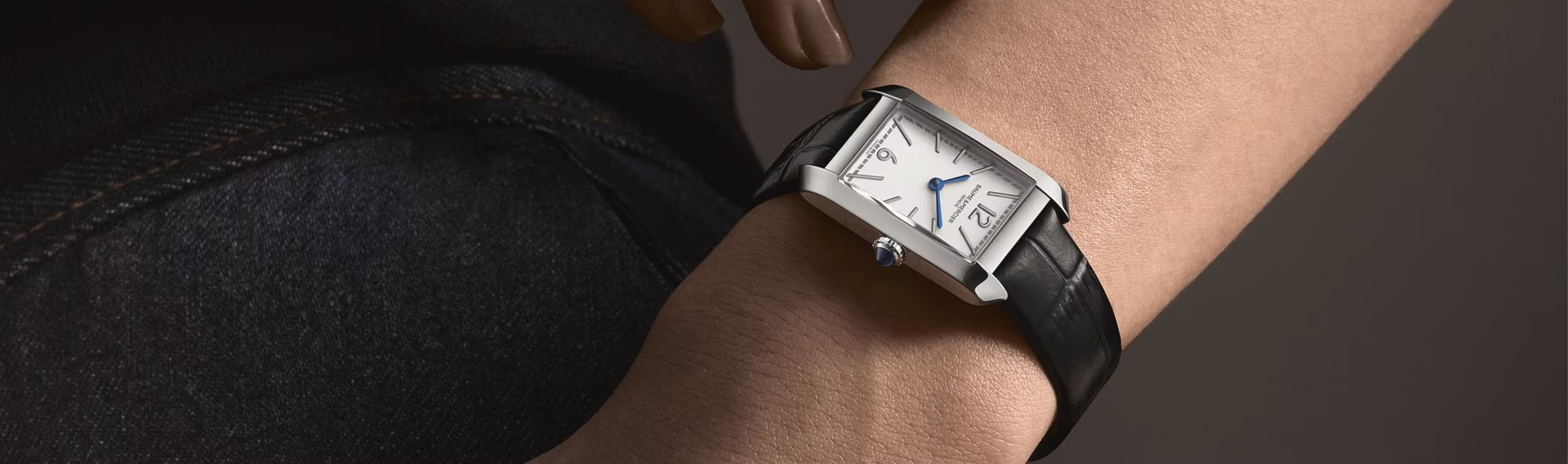
The Hampton's case measures its success in millimeters. The slender profile, the rounded corners, the curved lugs that flow into the bracelet or strap. These aren't arbitrary choices. They're the result of understanding that a rectangular case demands more careful consideration than a round one. Get the proportions wrong, and the watch feels awkward on the wrist. Get them right, and the geometry becomes invisible. You simply notice that the watch looks correct. The 2020 refresh brought three case sizes to accommodate different wrists, acknowledging what many brands still resist: not everyone needs the same proportions. The dial, protected by a domed sapphire crystal, features contemporary Arabic numerals and sword-shaped hands. These elements trace back to the brand's 1960s designs, but they avoid the trap of vintage pastiche. This is reference, not reproduction.
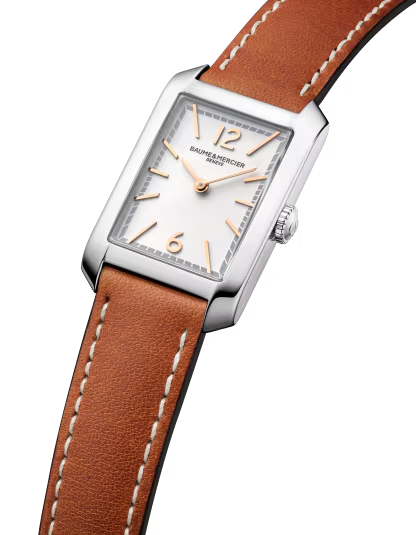
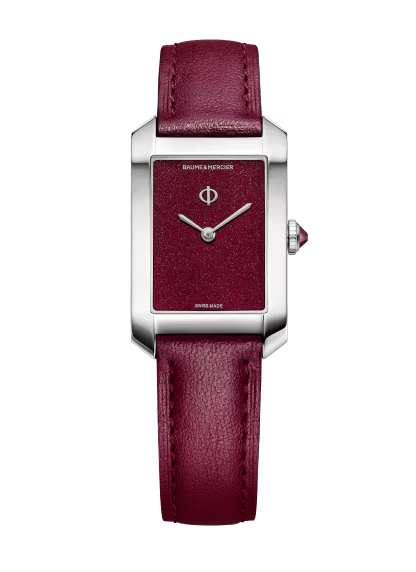
The current Hampton collection makes specific choices. Quartz movements power the smaller references, while automatic movements drive the larger cases. This is honest positioning. A dress watch of this proportion doesn't require mechanical complexity to justify its existence. The sapphire caseback on automatics shows off the movement, while quartz versions use a closed back. Different tools for different purposes. The bracelet integration deserves attention. The three-row satin-polished metal option achieves what many rectangular watches fumble: it maintains the geometric language of the case without feeling heavy. The polish catches light along straight planes, creating subtle variations in how the watch presents itself throughout the day. Leather options include alligator straps with square scales for the men's collection, while the women's references come with interchangeable calfskin straps in eleven colors. This isn't revolutionary, but it's practical. Water resistance hits 50 meters. This is a dress watch. You can wash your hands. You shouldn't go swimming.
The Pierre Soulages Edition: When Art Direction Works
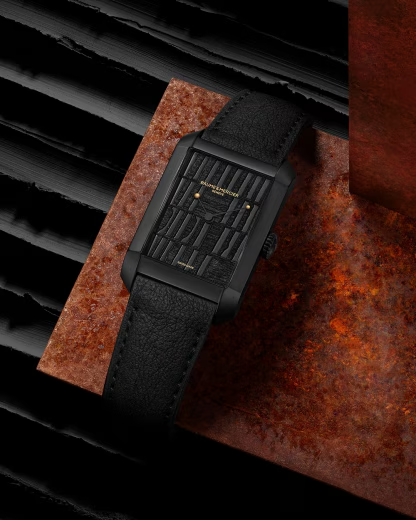
In 2021, Baume et Mercier created something genuinely interesting with their Pierre Soulages collaboration. The Hampton's rectangular dial served as canvas for a miniaturized interpretation of Soulages' "Outrenoir" paintings, those textured black surfaces that manipulate light through pure monochrome. Limited to 328 pieces for the Soulages Museum's 10th anniversary, the edition featured a black dial with guilloché patterns that referenced the artist's technique of creating light through darkness. Two gold dots marked the hand tips, Soulages' specific request to marry black and gold. The strap used cellulose and apple leather, addressing the museum's sustainability requirements. This wasn't a typical artist collaboration where a signature gets slapped onto a standard dial. The Hampton's rectangular format actually suited the translation of Soulages' work into watchmaking scale.
The Uncomfortable Truth About Value
Let's address what sits beneath most Hampton discussions. At retail, the collection positions itself significantly below the Tank and Reverso. This creates an identity problem. Is the Hampton an accessible alternative to more prestigious rectangles, or does it stand on its own merit? The answer frustrates simple categorization. Used market data shows Hampton values remain stable but unremarkable. You won't find collectors chasing early 1994 models with the fervor they reserve for vintage Tanks. The watch doesn't generate secondary market excitement. But it also doesn't collapse in value the way many modern dress watches do. What you're buying is competent design at a price that doesn't demand justification. The finishing is clean without being exceptional. The proportions work without breaking new ground. It's a rectangle that knows its limitations and operates comfortably within them.
The Hampton occupies an odd space in 2025's rectangular renaissance. It lacks the Tank's instant recognition and the Reverso's mechanical ingenuity. It doesn't appear on celebrity wrists or feature in auction house catalogs with breathless estimates. What it offers instead is something more prosaic but arguably more useful: a well-proportioned rectangular case that costs significantly less than the icons it shares shelf space with. Recent market trends suggest growing appetite for shaped watches beyond the usual suspects. Independent brands are reporting strong sales of rectangular models. Established manufacturers are reconsidering old assumptions about what sells. In this context, the Hampton's persistence becomes more interesting. It has survived three decades not through innovation or marketing genius, but through understanding that some designs work simply because they get the fundamentals right. The watch industry doesn't need another rectangular icon. What it can use are solid implementations of classic proportions at prices that don't require mortgage applications. The Hampton fills that role without apology or pretension. It's a rectangle that knows it isn't the Tank. And perhaps that self-awareness is exactly what makes it relevant.