Did You Know? EPOS Watches Co-Invented One Of The Most Iconic Chronograph Movements In History
 5 min read

When James Aubert founded his watch company in the Vallée de Joux in 1925, he wasn't just another Swiss watchmaker setting up shop. He was a co-inventor of the Landeron 48, one of the most revolutionary chronograph movements ever made. Over 3.5 million units of this cam-actuated movement were produced between 1937 and 1970, powering everything from military watches to elegant dress chronographs. This wasn't some incremental improvement to existing technology. It was the movement that made Swiss chronographs affordable for regular people for the first time. That heritage lives on in today's EPOS brand, which traces its lineage directly back to Aubert's original company. The connection runs deeper than just history. It's in the DNA of how EPOS approaches watchmaking: innovative complications, mechanical mastery, and making sophisticated horology accessible.

A Brand That Refused to Die
The quartz crisis of the 1970s killed most Swiss mechanical watchmakers. EPOS's original company, James Aubert SA, went bankrupt along with thousands of others. But in 1983, when everyone else was chasing battery-powered watches, Peter Hofer bought the company's remaining assets and did something audacious. He bet everything on mechanical watches. Think about that timing. Digital watches were the future. Quartz was precision. And here was Hofer, insisting that hand-wound and automatic movements still mattered. He wasn't wrong. He was just early. By the time Swiss mechanical watches roared back in the 1990s, EPOS had a decade of uninterrupted development behind them. Their slogan, "Artistry in Watchmaking," wasn't marketing speak. It was a mission statement forged in the fire of nearly going extinct.

The Watch That Shows Its Back on the Front
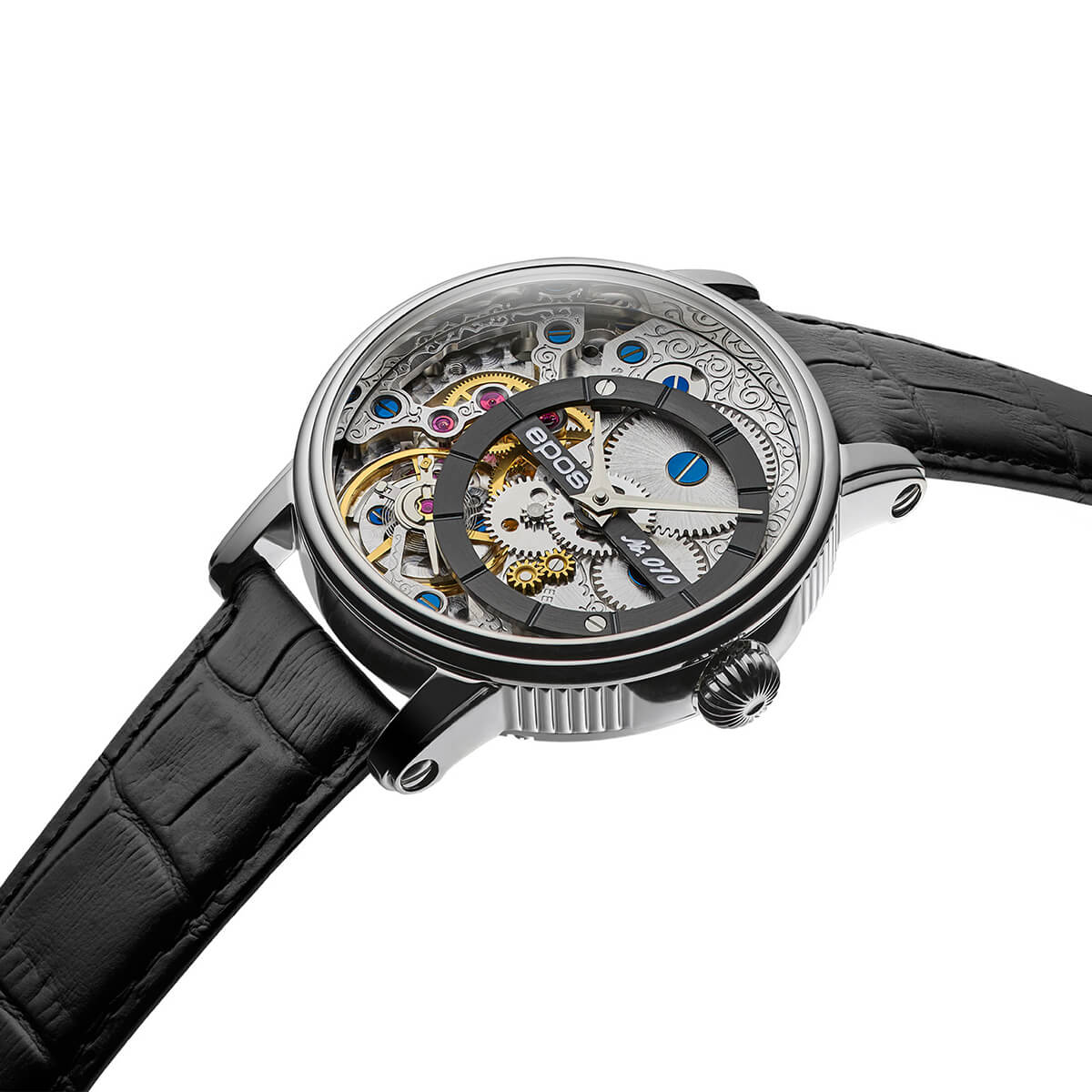
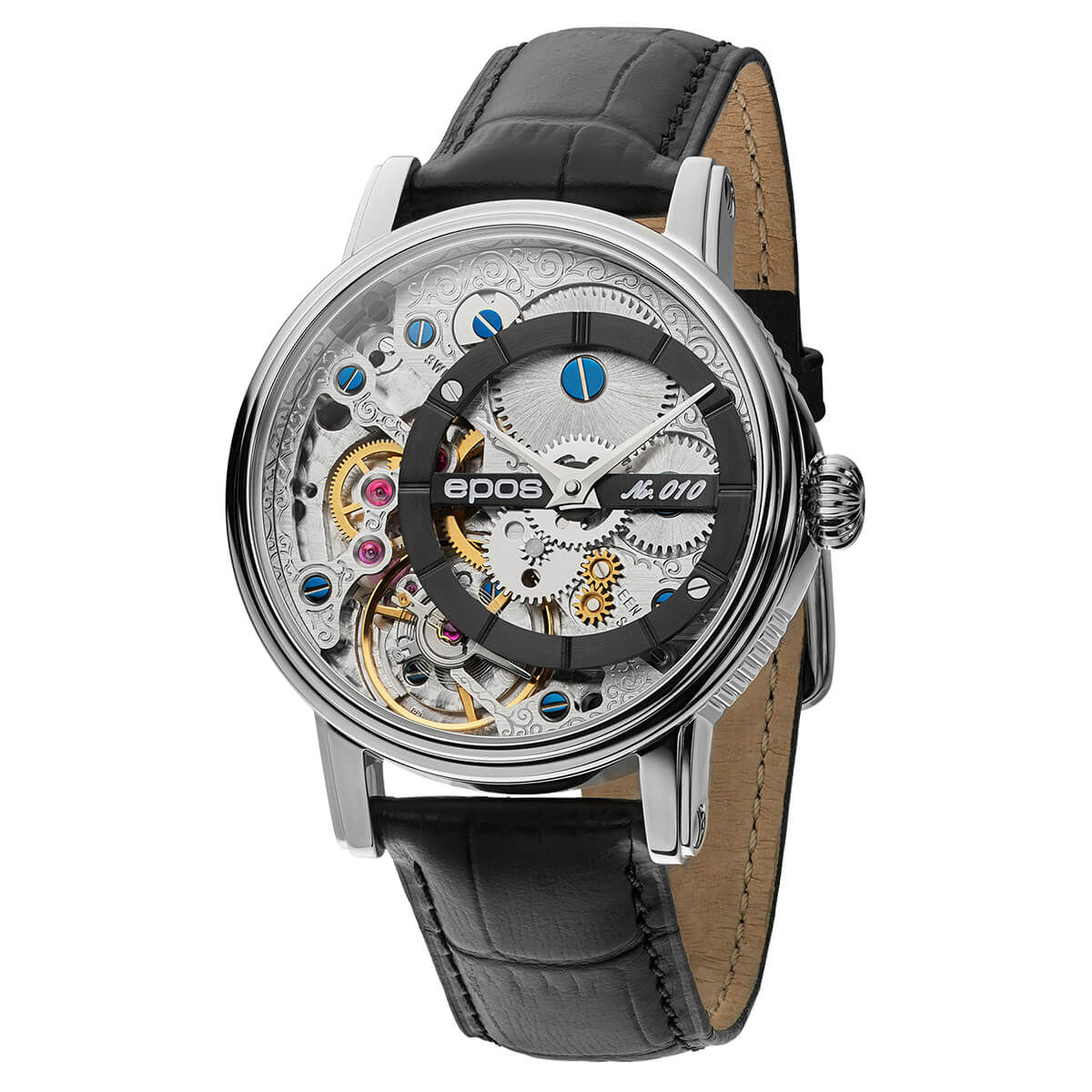
In 2017, EPOS released the 3435 Verso, and it remains one of their most distinctive pieces. The concept is brilliantly simple: they took the proven Unitas 6497 movement and flipped it upside down. What you normally see through the case back, the balance wheel, bridges, and gear train, is now on the dial side. The actual timekeeping display is on what would normally be the case back. This isn't just clever engineering for its own sake. It creates a watch that's half skeleton, half functioning timepiece, with the small seconds hand functioning as a pulsometer on the reverse side. For under $2,000, you get to see the mechanical ballet that usually hides behind the scenes. It's the kind of accessible innovation that defines EPOS's approach to serious watchmaking without the luxury markup.
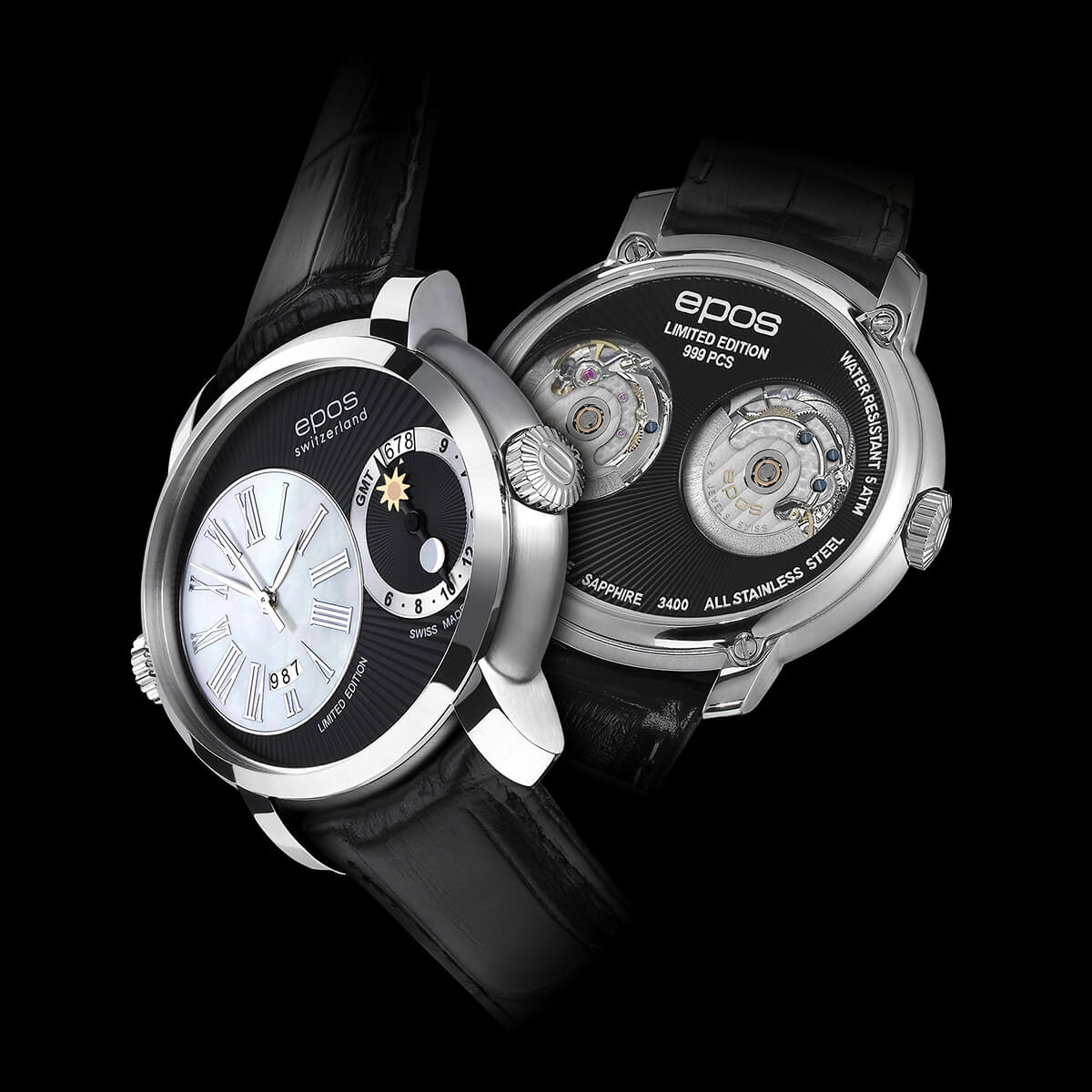
In 2010, EPOS created something no one had done before: the 3400 GMT with a reversed 24-hour indication for the second time zone. This watch houses two complete ETA 2671 movements working in tandem. One displays conventional time at 9 o'clock. The other shows a counter-clockwise 24-hour display at 3 o'clock, complete with its own date window. Yes, you read that correctly. Counter-clockwise. The second time zone literally runs backwards from normal, making it instantly distinguishable at a glance. Each movement is fully decorated with Côtes de Genève finishing, beveled and polished bridges, and the limited edition number engraved on the rotor. The oval case accommodates twin crowns at 3 and 9 o'clock, each controlling its respective movement. This kind of complication is typically the domain of haute horlogerie brands charging five or six figures. EPOS put it in a watch priced for serious enthusiasts rather than oligarchs.
The India Connection: Where Mechanical Appreciation Runs Deep
India has one of the world's most sophisticated watch-collecting communities, and there's a reason EPOS resonates here. The brand's philosophy aligns perfectly with how Indian collectors approach horology: valuing genuine mechanical expertise over badge prestige, appreciating complications that demonstrate real watchmaking skill, and seeking pieces that represent authentic craftsmanship rather than marketing hype. The appetite for mechanical watches in India has exploded over the past decade. While smartwatches dominate volume sales, the market for automatic and manual-wind Swiss timepieces has grown substantially.
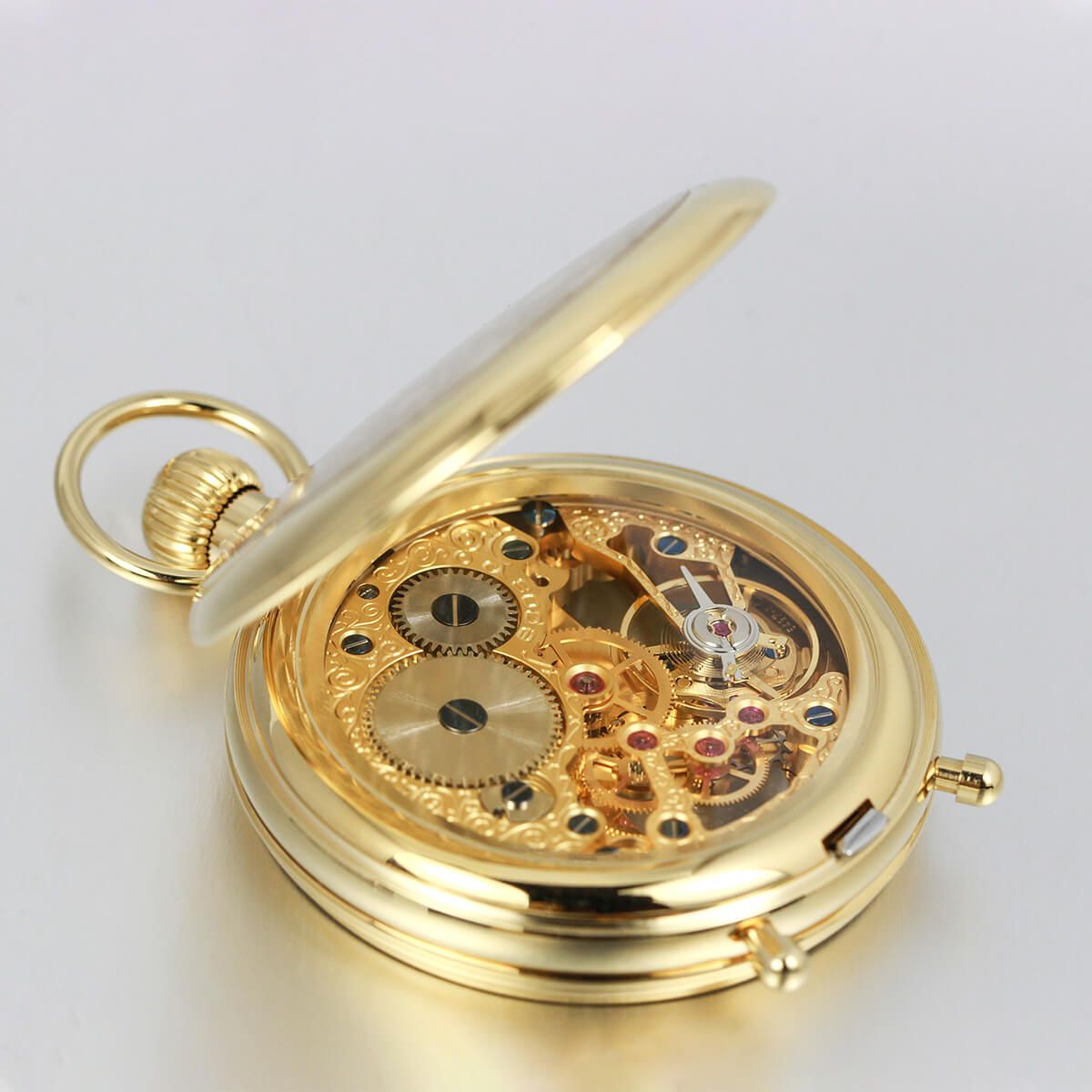
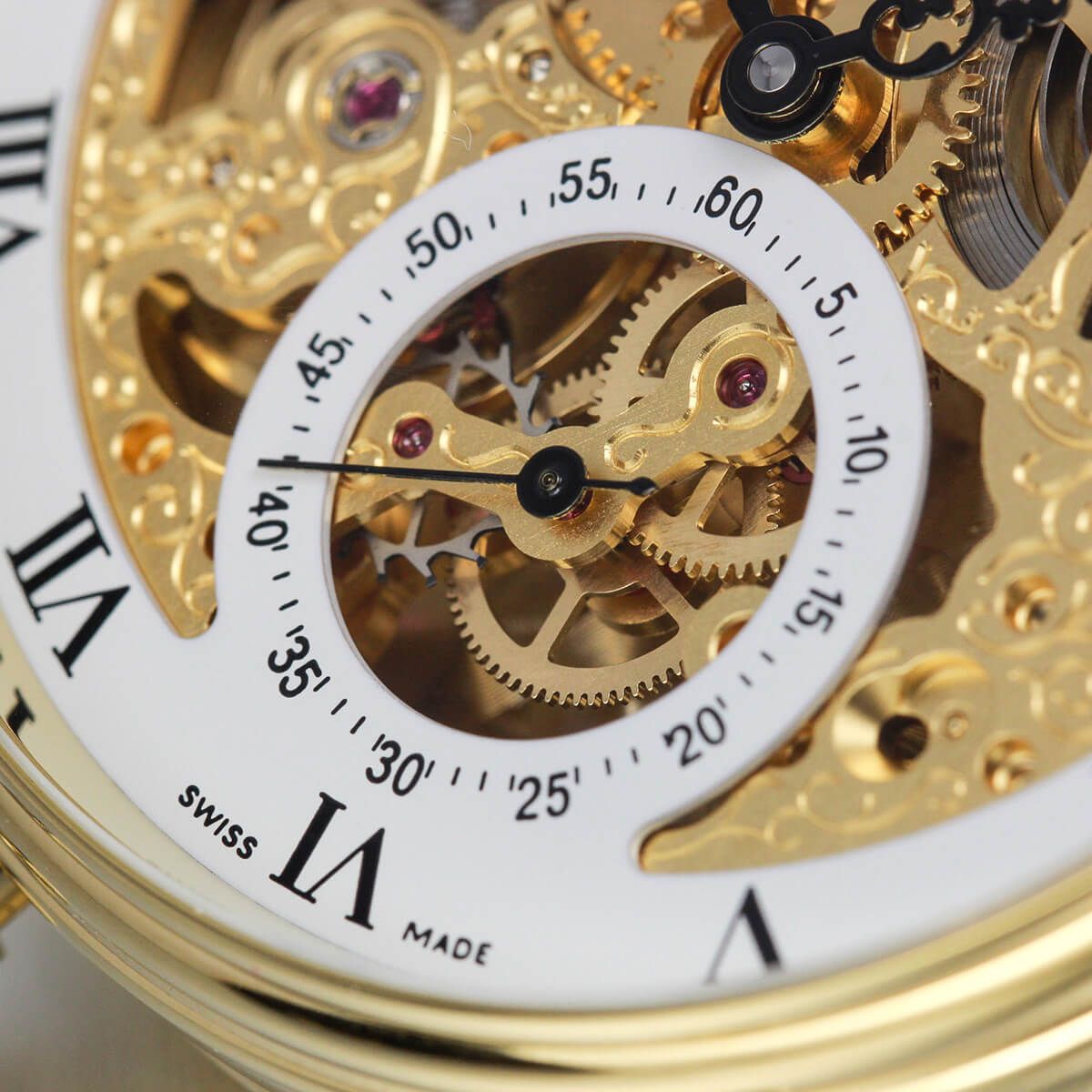
Indian collectors have shown a particular appreciation for brands that offer serious watchmaking at accessible price points, exactly the space EPOS occupies. Cities like Mumbai, Delhi, and Bangalore have thriving watch enthusiast communities where EPOS's combination of Swiss manufacturing standards, genuine complications, and reasonable pricing makes perfect sense.
Switzerland's watchmaking relationship with India goes back centuries, with Swiss timepieces first arriving during the British Raj as symbols of prestige and precision. Today, that legacy continues with Indian collectors who can distinguish between marketing and genuine mechanical merit. EPOS, with its roots in the cradle of Swiss watchmaking and its commitment to making sophisticated movements accessible, fits naturally into this tradition.
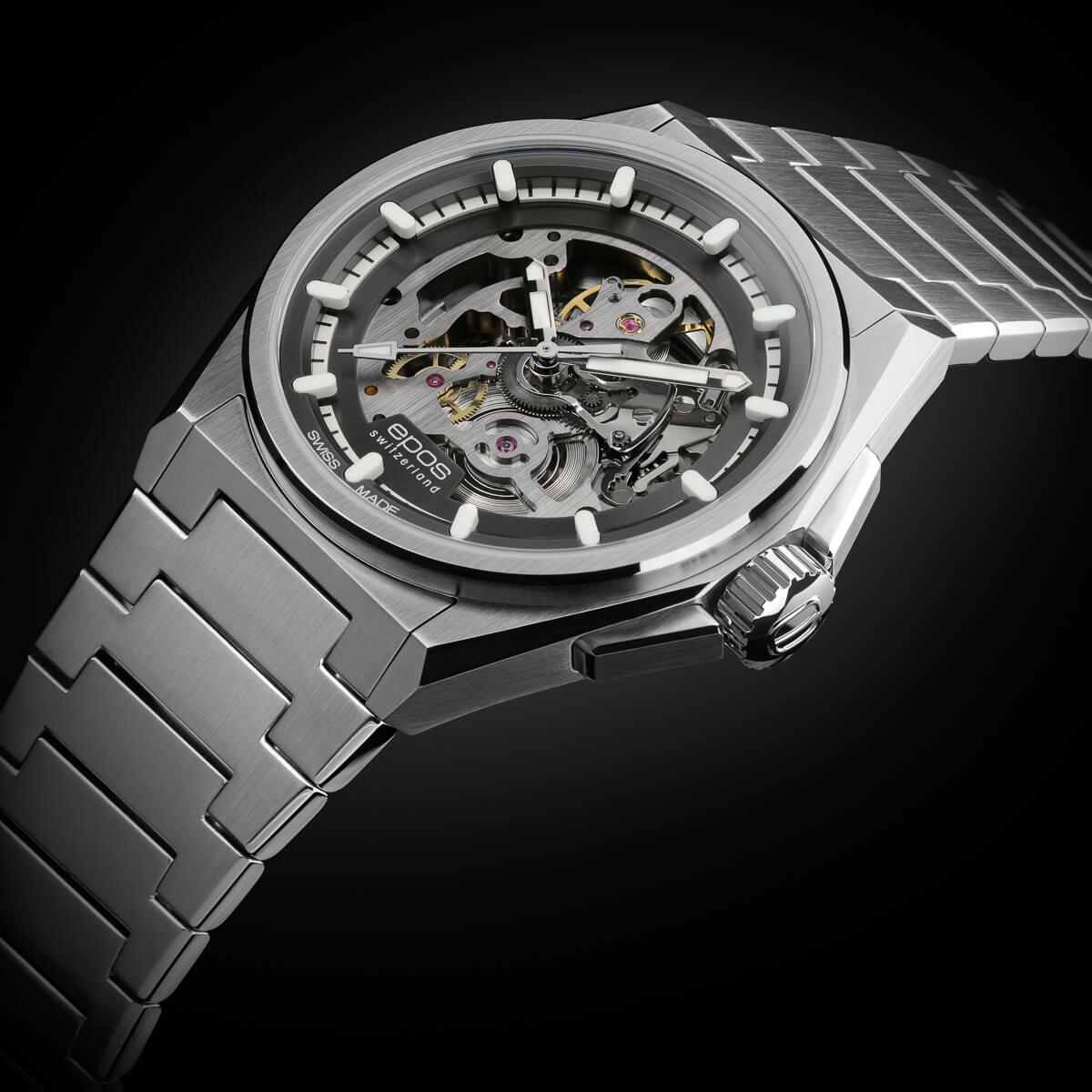
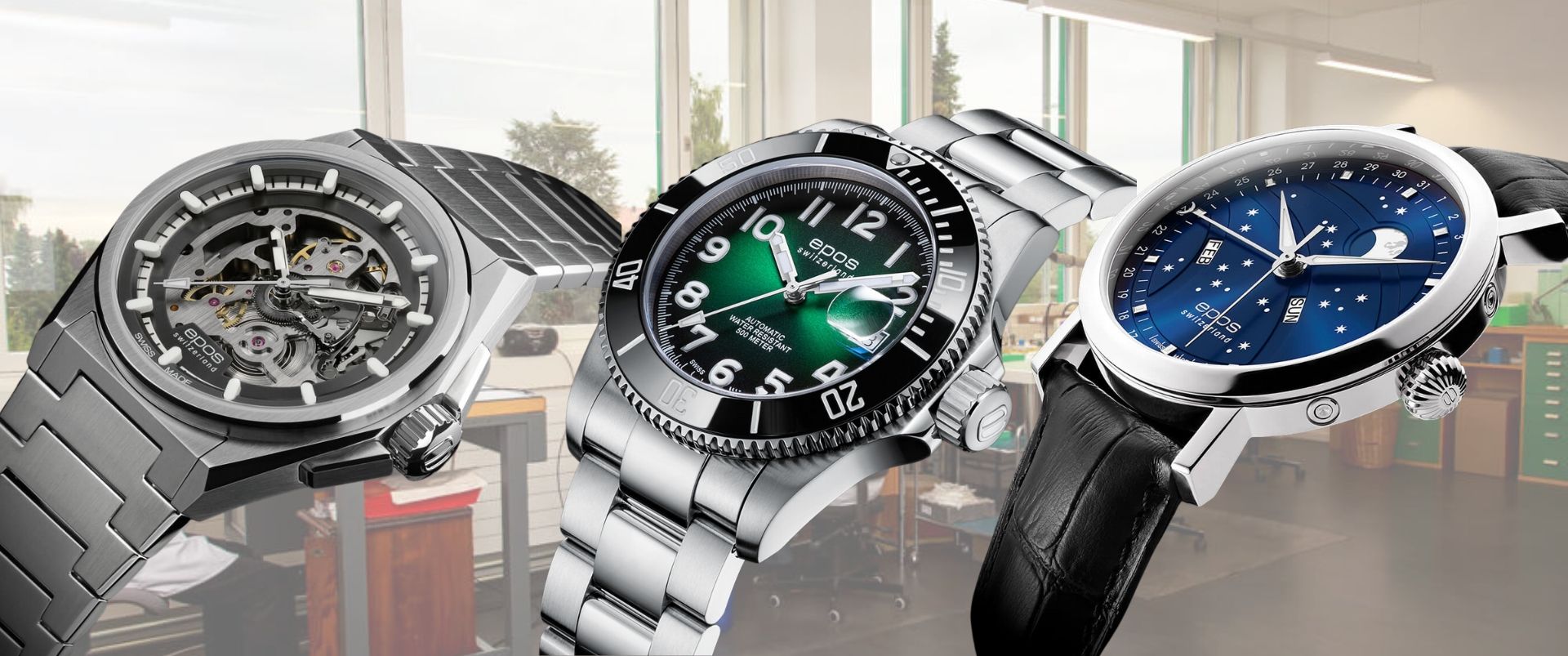
Every EPOS watch is manufactured in Lengnau, Switzerland, using movements from renowned suppliers like ETA, Sellita, and Unitas. But here's what sets them apart: they don't just drop stock movements into cases and call it done. EPOS modifies, decorates, and adds complications to base calibers. They hand-assemble and individually test every watch before it leaves their facility. Their collections span from the skeleton watches of the Originale series, which reveal gorgeously decorated automatic movements, to the professional dive watches of the Sportive line rated to 500 meters with helium valves and ceramic bezels. The Oeuvre D'Art collection showcases complications like big moon phases and jumping hours. Each line represents genuine watchmaking rather than fashion-branded timekeeping.
Watchmaking That Spans Generations
When Peter Hofer revived EPOS in 1983, he worked closely with Jean Fillon, who had been James Aubert's son-in-law and the driving force behind many of the brand's innovations going back decades. In 2002, Hofer passed the company to the Chonge-Forster family, who continue running it today with the same principles: sophisticated mechanical masterpieces at fair prices.
This generational continuity matters. It means EPOS isn't chasing quarterly profits or quarterly trends. They're playing a longer game, building watches that last decades and developing complications that push mechanical boundaries without requiring collectors to mortgage their homes. For those who care about what's inside the case, what engineering went into making the movement tick, and whether the brand represents genuine Swiss watchmaking traditions, EPOS delivers. They're not the loudest name in the room, but they might be one of the most accomplished brands you haven't heard enough about yet.
Catch them live at India Watch Weekend 2026 as they would be there amongst other brands as well!


