From Proving Ground To Permanent Record: Rolex Oyster Turns 100 Part 2
 6 min read

The Oyster survived the quartz crisis, outlasted its competitors, and became the architecture beneath the most recognized watches in history. The century of what it built is the harder story to tell.
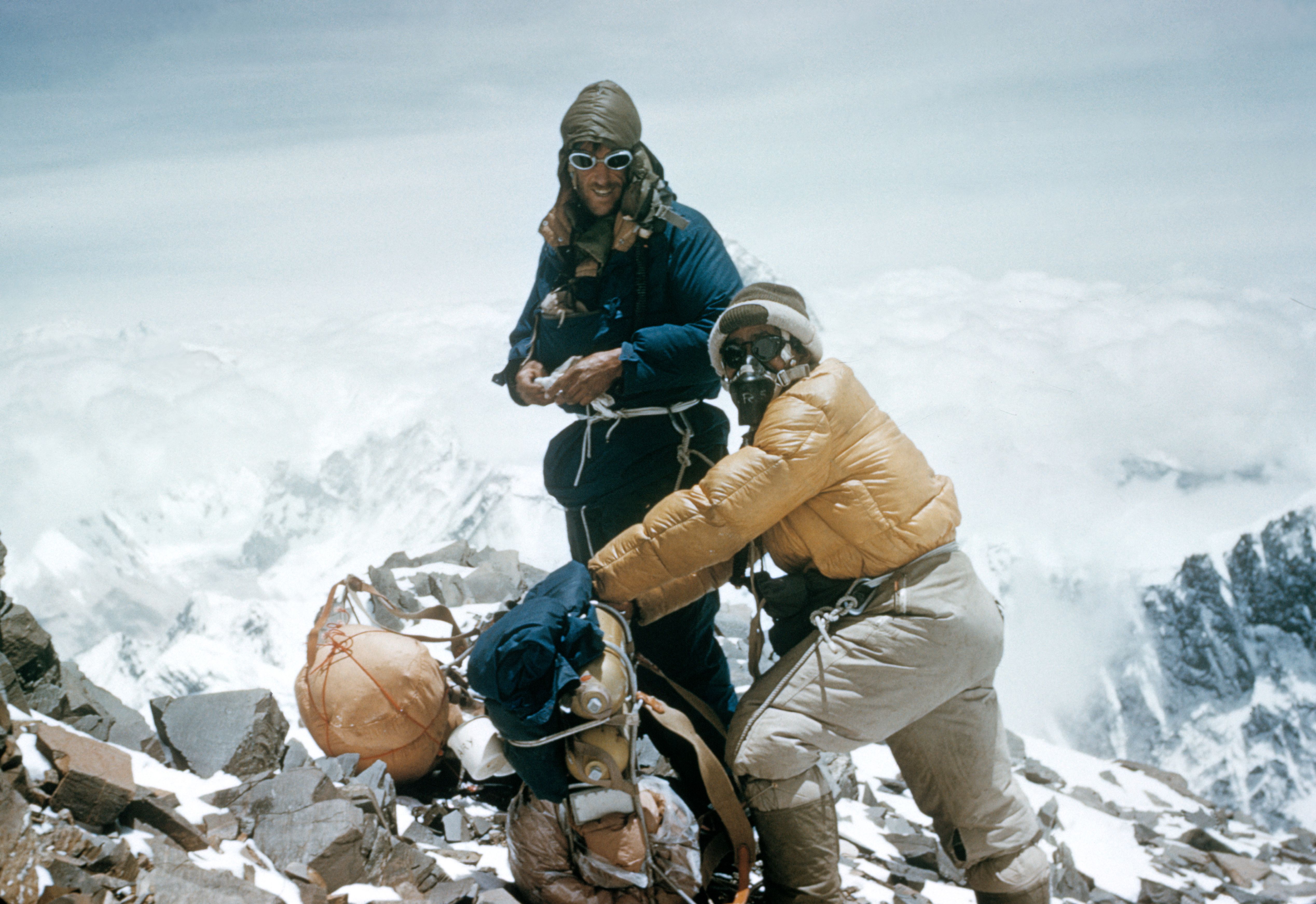
The transition from instrument to icon is rarely planned. It accumulates, gradually and then decisively, through the weight of evidence that a thing works. By the end of the 1940s, the Rolex Oyster had accumulated that evidence across the full breadth of extreme human endeavour. It had been worn at the summit of Everest in 1953, when Sir Edmund Hillary and Tenzing Norgay reached the top as part of a British expedition equipped with Oyster watches, and expedition leader Sir John Hunt reported that the watches "performed splendidly." In January 1960, attached to the exterior of the bathyscaphe Trieste as Swiss oceanographer Jacques Piccard and U.S. Navy Lieutenant Don Walsh descended 10,916 metres into the Mariana Trench, an experimental Oyster known as the Deep Sea Special withstood pressure equivalent to more than one tonne per square centimetre and kept perfect time for the entire dive. Piccard's telegram to Wilsdorf read: "Happy to announce to you your watch as precise at 11,000 metres as on surface."
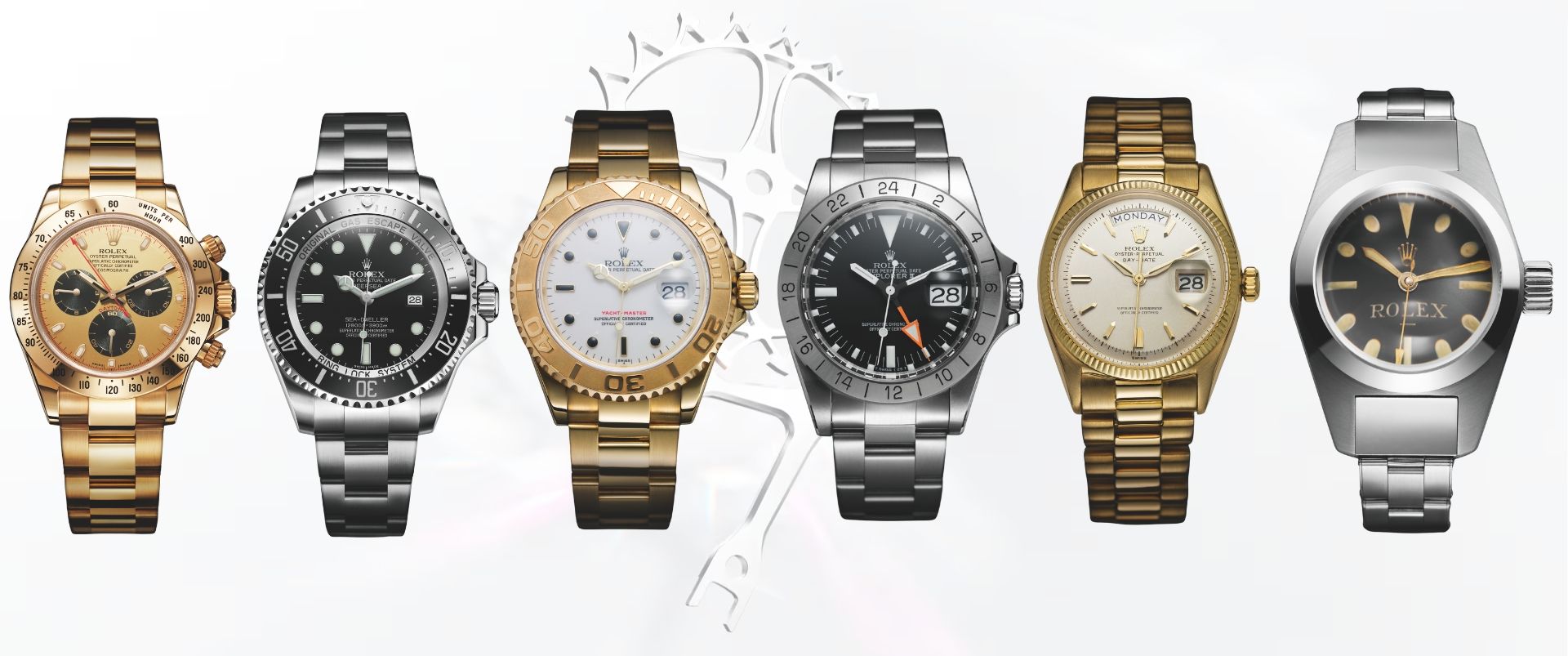
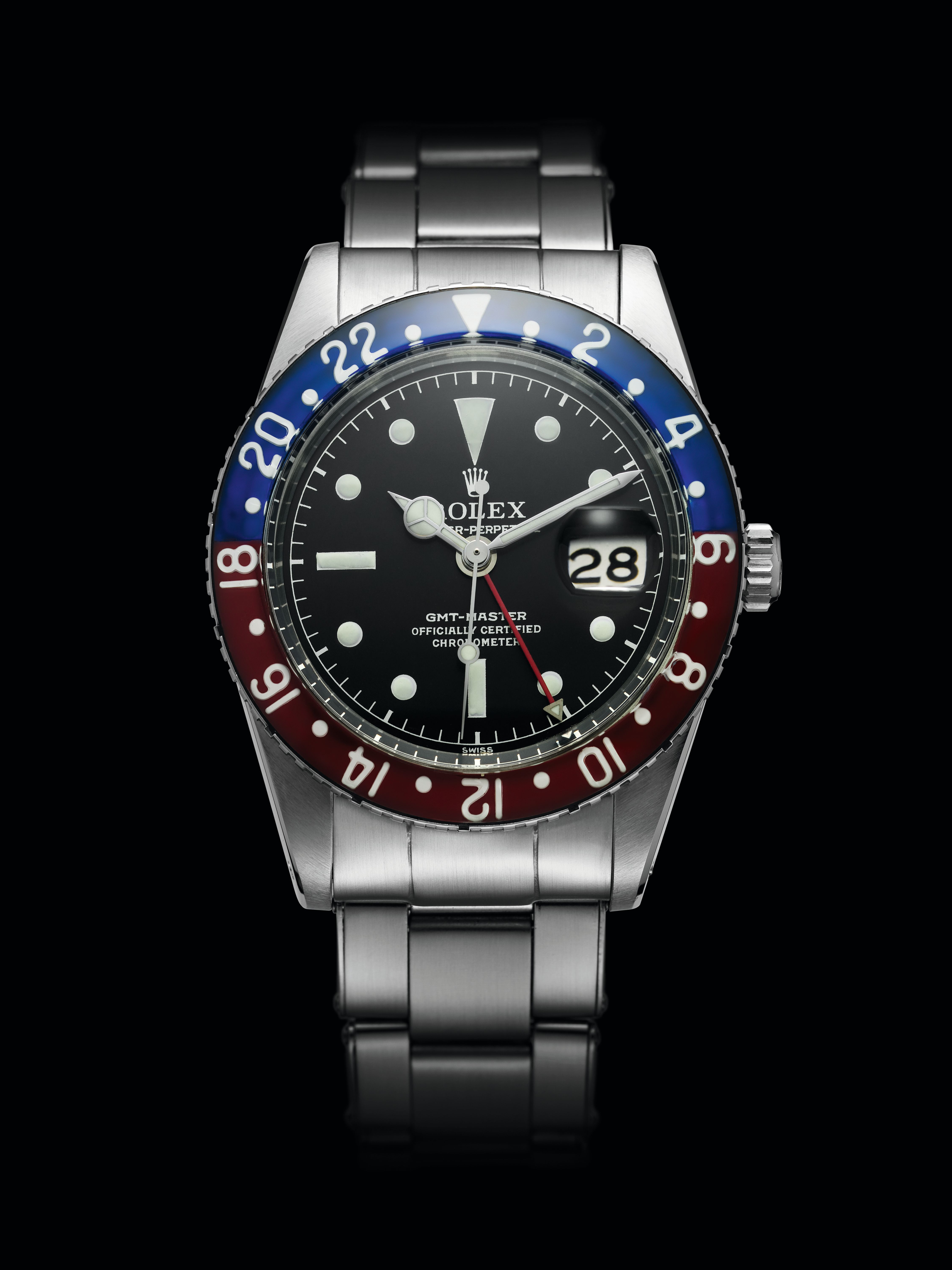
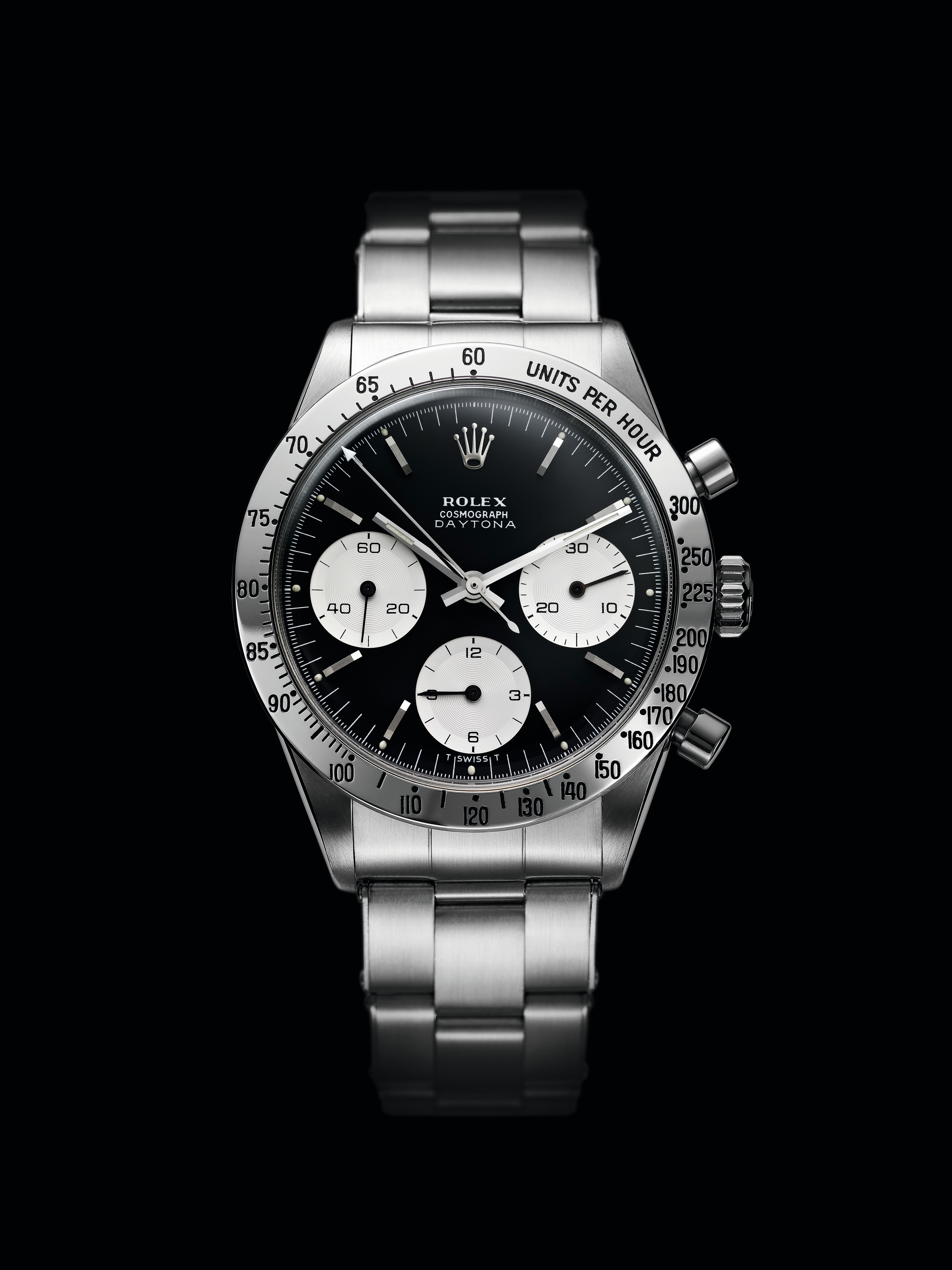
The watches that emerged from those demonstrations were not commemorative objects. They were working tools that had simply proved themselves in conditions beyond what any reasonable test could simulate. From that proof grew the Professional collection, a category of tool watches that Rolex launched systematically through the 1950s and 1960s: the Explorer in 1953, released in the immediate aftermath of the Everest expedition; the Submariner the same year, the first divers' wristwatch guaranteed waterproof to 100 metres; the GMT-Master in 1955, developed in collaboration with Pan American World Airways for pilots who needed to read two time zones simultaneously; the Cosmograph Daytona in 1963, built for professional racing drivers; the Sea-Dweller in 1967, designed with the pioneers of saturation diving and fitted with a patented helium escape valve. Each watch addressed a specific professional need. Each one became, over time, something considerably more than the need it was built to answer.
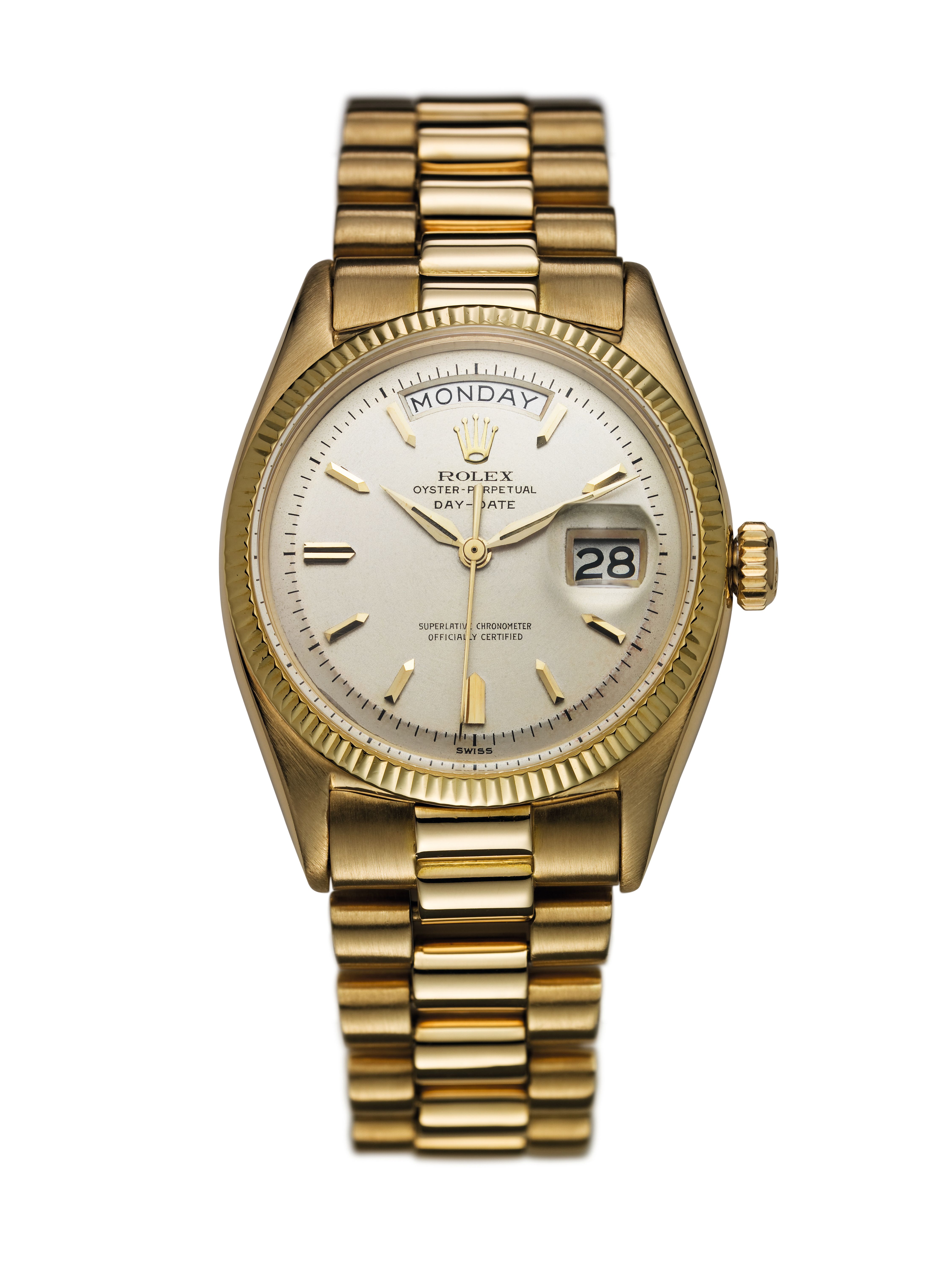
The Datejust, launched in 1945 to mark the brand's fortieth anniversary, had already shown how the Oyster architecture could carry elegance as confidently as utility. The first self-winding waterproof chronometer wristwatch to indicate the date in a window on the dial, it consolidated in a single object everything the Oyster Perpetual platform had made possible, and added a new layer of civilian aspiration. Wilsdorf considered it a masterpiece. The Day-Date arrived in 1956: the first calendar wristwatch to display the day of the week spelled out in full, made only from 18-carat gold or 950 platinum, worn by political figures and directors and visionaries across every subsequent decade. The President bracelet, created specially for it, remains among the most recognizable watch bracelets ever made.
Through the 1970s and 1980s, Rolex made strategic decisions that in retrospect defined the century. When quartz technology arrived in the late 1960s, the brand participated actively in the development of the first Swiss quartz movement. In 1977 it launched the Oysterquartz, equipped with an entirely in-house quartz calibre. But Rolex chose, fundamentally, to remain faithful to the mechanical watch. While many of the Swiss industry's largest names pivoted toward quartz and suffered the consequences of the correction that followed, Rolex held its course. The mechanical watch was not a technology the brand was willing to abandon. It was the domain of excellence that Wilsdorf had established, and the Oyster case made it defensible. A mechanical movement inside a hermetically sealed, Superlative Chronometer-certified case was a proposition that quartz could not replicate on the terms that mattered most.
The 1990s brought vertical integration. Under Patrick Heiniger, who succeeded his father André in 1992, Rolex purchased its principal suppliers and grouped all activities in Geneva and Bienne across four industrial sites specifically built or remodelled for the purpose. From that point forward, the brand controlled the production of every essential component: movement, case, bracelet, and dial. The gold alloys poured in its own foundry. The ceramic for the Cerachrom bezels, introduced in 2005, developed and manufactured in-house and virtually impervious to scratches, with colour unaffected by ultraviolet rays. The Parachrom hairspring, launched in 2000, made from an exclusive alloy of niobium, zirconium, and oxygen, insensitive to magnetic fields and up to ten times more accurate than a traditional hairspring under shock. The Chronergy escapement, introduced in 2015, improved the efficiency of the Swiss lever escapement by 15 percent. The power reserves that once measured 38 hours now extend to 70.
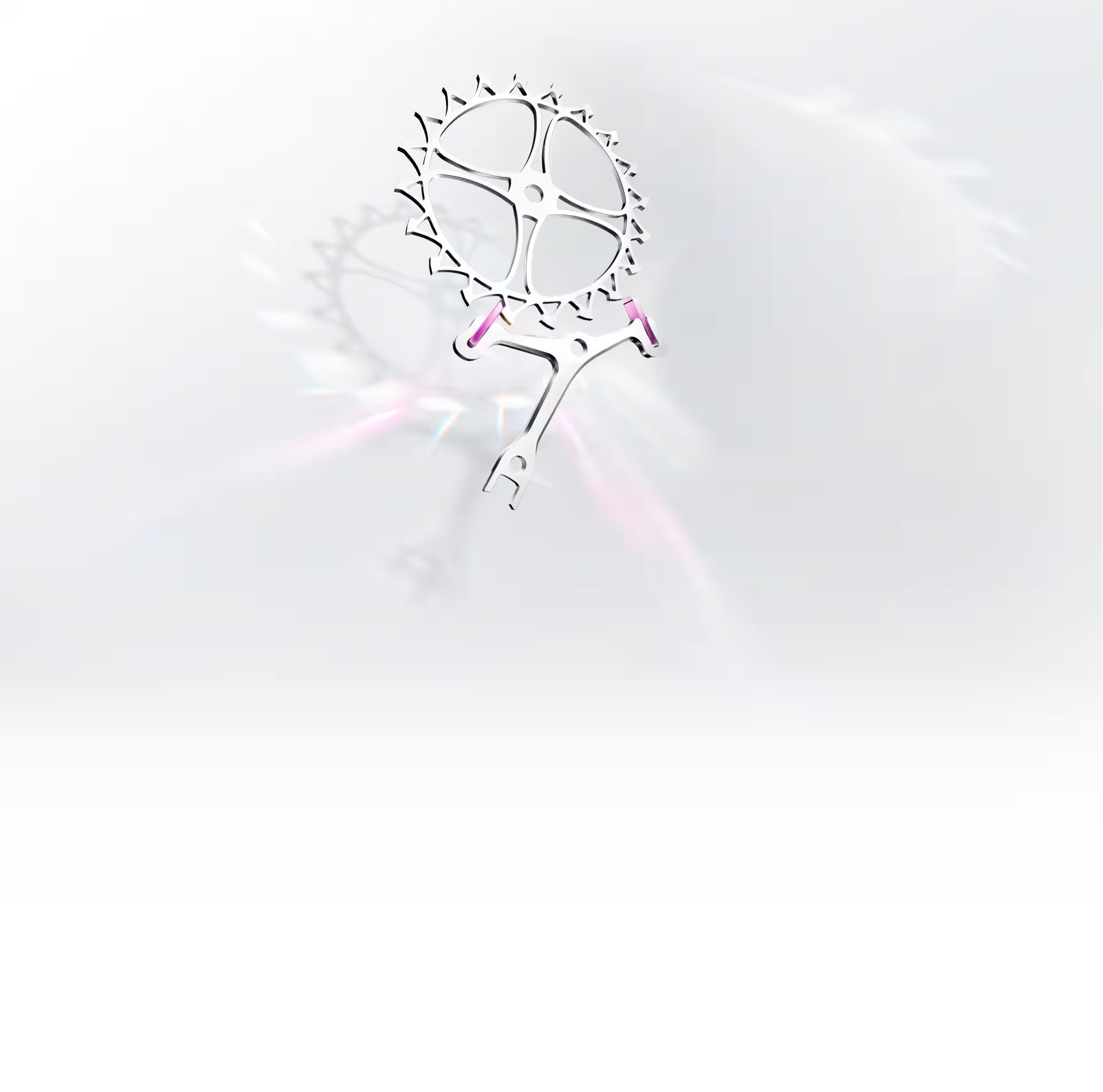
In 2015, Rolex redefined the Superlative Chronometer certification, the in-house standard that had sat above the COSC chronometer certificate since the late 1950s. The new certification applied to the fully assembled watch after casing the movement, covering precision, power reserve, waterproofness, and self-winding. The precision standard for a Rolex Superlative Chronometer was set at minus 2 to plus 2 seconds per day after casing: significantly tighter than the minus 4 to plus 6 seconds per day that COSC requires of the movement alone. It was the certification reformulated not as a marketing statement but as a technical commitment, applied to every single watch leaving the workshops, symbolized by the green seal attached to each piece and backed by an international five-year guarantee.
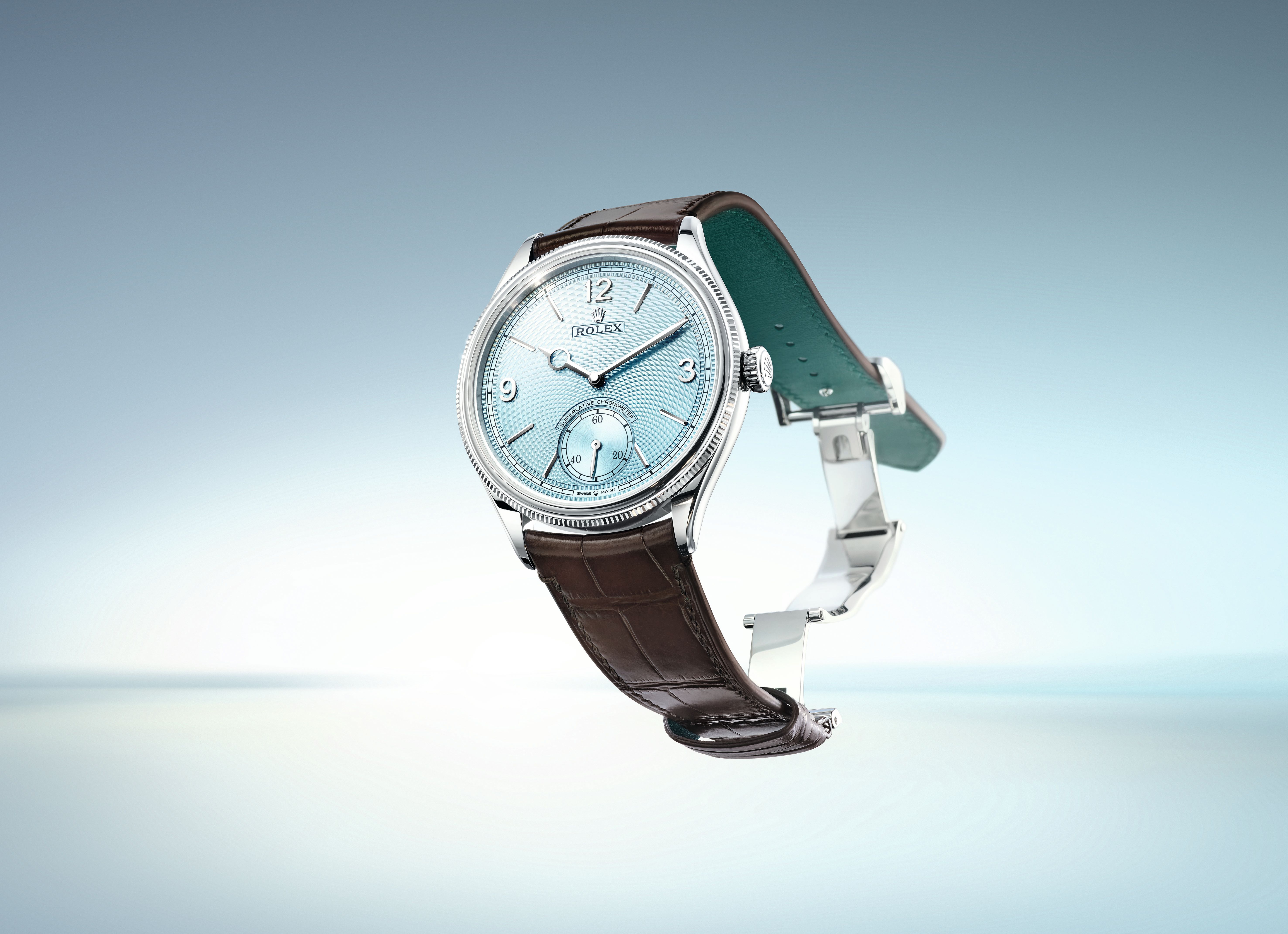
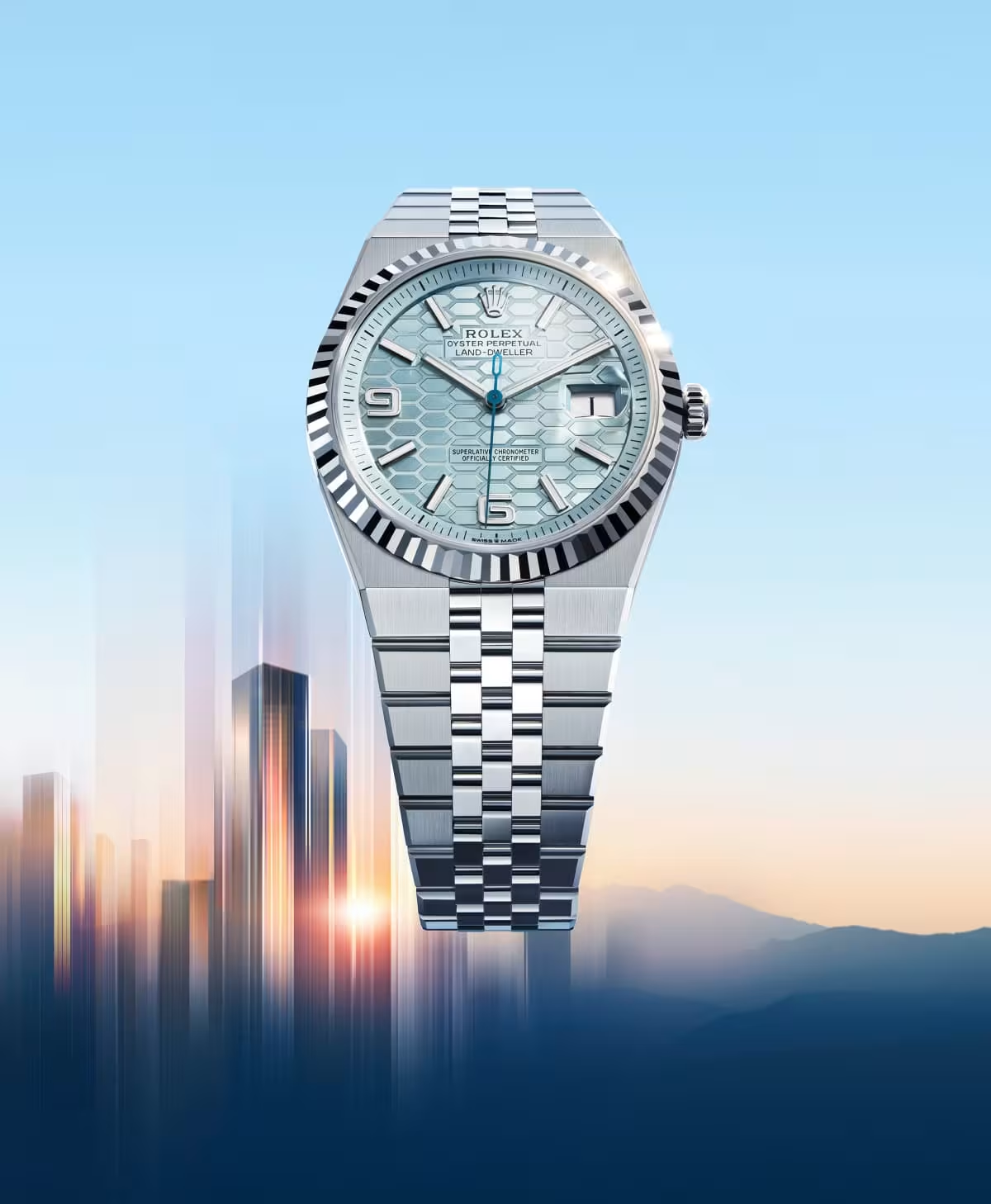
The Perpetual collection, launched in 2023 with the reference 1908, introduced a new register: the traditional dress watch built entirely within the Oyster Perpetual tradition, its name paying direct homage to the year Wilsdorf invented and registered the word Rolex. The calibre 7140 within it became the first Rolex movement to combine the Syloxi hairspring and the Chronergy escapement, its cut-out gold oscillating weight visible through the transparent caseback. Then, in 2025, came the Land-Dweller: a contemporary integrated-bracelet watch powered by calibre 7135, running at 5 Hz on the new Dynapulse escapement, the thinnest movement in recent Rolex production, paired with a new bracelet named the Flat Jubilee that merges seamlessly with the Oyster case. It was, by any honest measure, the most technically ambitious watch the brand had introduced in years.
One hundred years after the Oyster's launch, the architecture Wilsdorf created in 1926 remains the foundation beneath every watch the brand produces, with the exception of the Perpetual 1908 dress watch. The screw-down crown, the sealed case back, the hermetic environment that keeps the movement protected across decades and across the full range of conditions human life produces: these are not period features of a vintage design. They are the structure every modern Rolex depends on, refined continuously across a century but recognizable in its logic from the beginning. Hans Wilsdorf told his technical assistants in those early years: "We must succeed in making a watch case so tight that our movements will be permanently guaranteed." The Oyster was the answer. The century since has been the proof.


