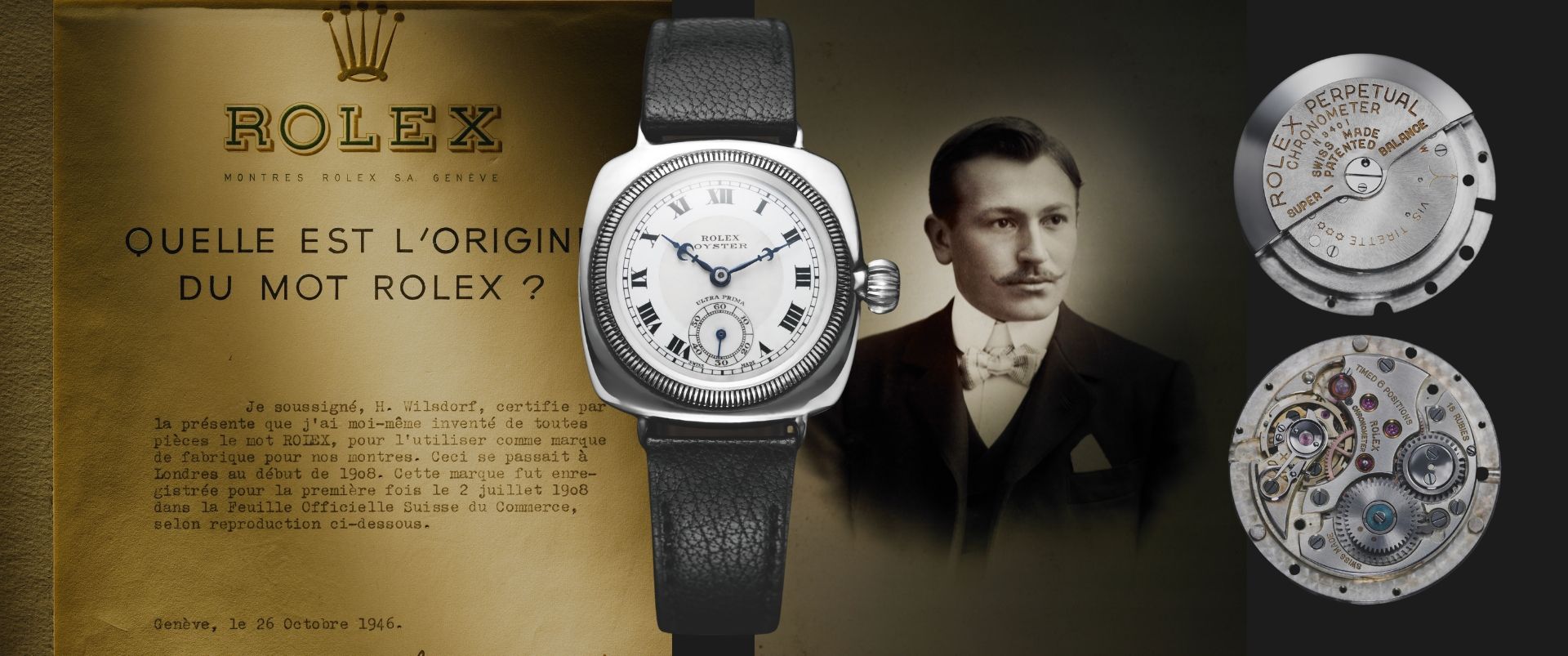
The Case That Changed Everything: Rolex Oyster Turns 100
 6 min read

In 1926, Hans Wilsdorf solved a problem the entire watchmaking world had declared unsolvable. One hundred years later, every serious wristwatch still owes something to what he built.
In the early years of the twentieth century, the wristwatch had a credibility problem. It was smaller than the pocket watch, less precise, less durable, and widely regarded as a piece of jewellery rather than a serious instrument. Most professional watchmakers considered its limitations structural. The movement required for a wristwatch was, by definition, small and delicate, ill-equipped to withstand the shocks and vibrations of a working wrist. Dust and moisture would compromise its mechanics. Accuracy, in so confined a case, was considered barely achievable. "Watchmakers all over the world remained sceptical as to its possibilities," Wilsdorf wrote later, "and believed this newfangled object was bound for failure." He disagreed. And in disagreeing, persistently and with engineering rigour, he changed the history of the object.
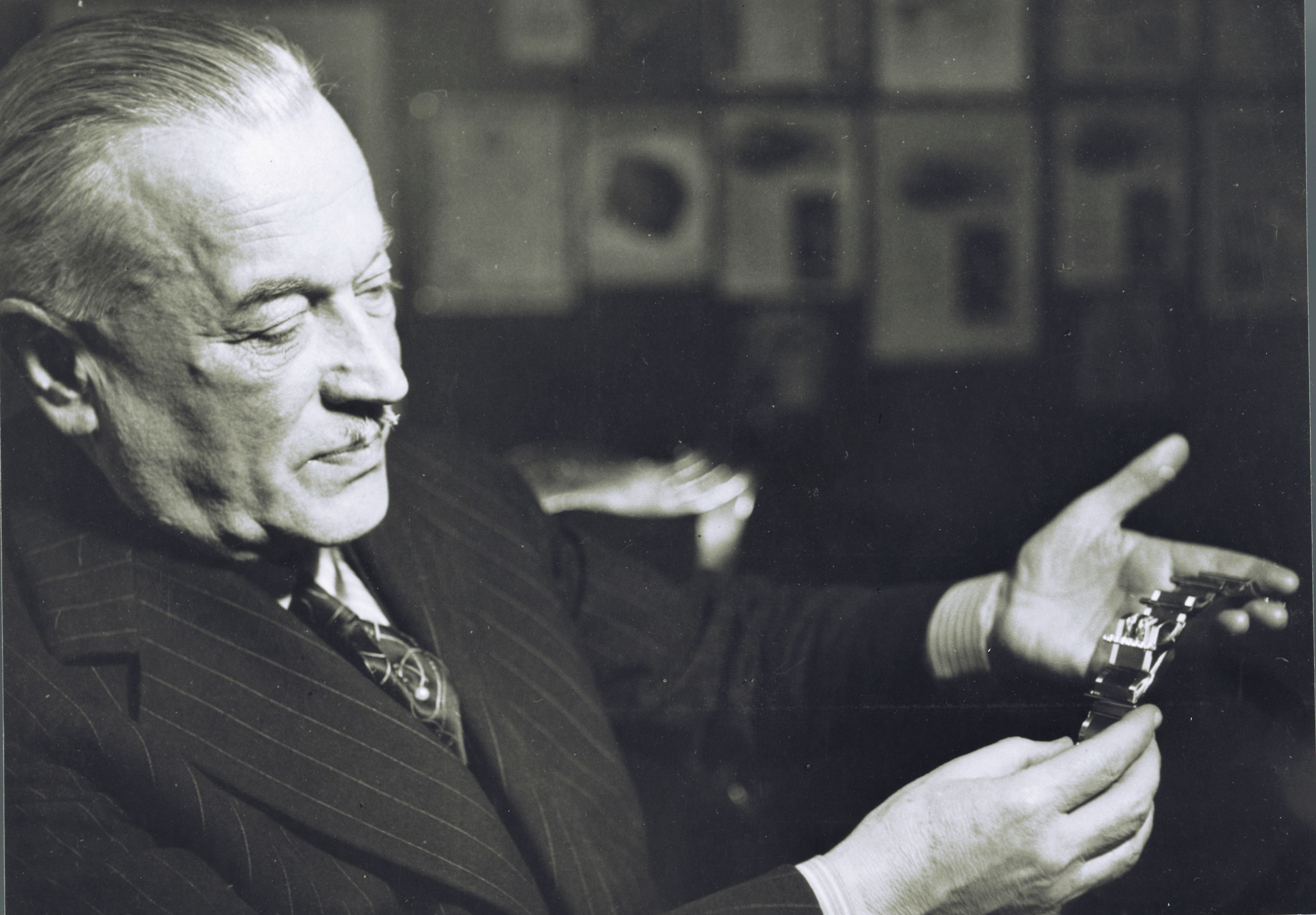
Hans Wilsdorf was born in Bavaria in 1881 and began his career in watchmaking in La Chaux-de-Fonds, Switzerland, before moving to London in 1905, where he founded with his partner the firm Wilsdorf and Davis, specializing in the distribution of wristwatches in Great Britain and the British Empire. He was twenty-four. London was then the economic capital of the world, and Wilsdorf recognized in the wristwatch a product whose moment had not yet arrived but was coming. The question was how to make it ready when it did.
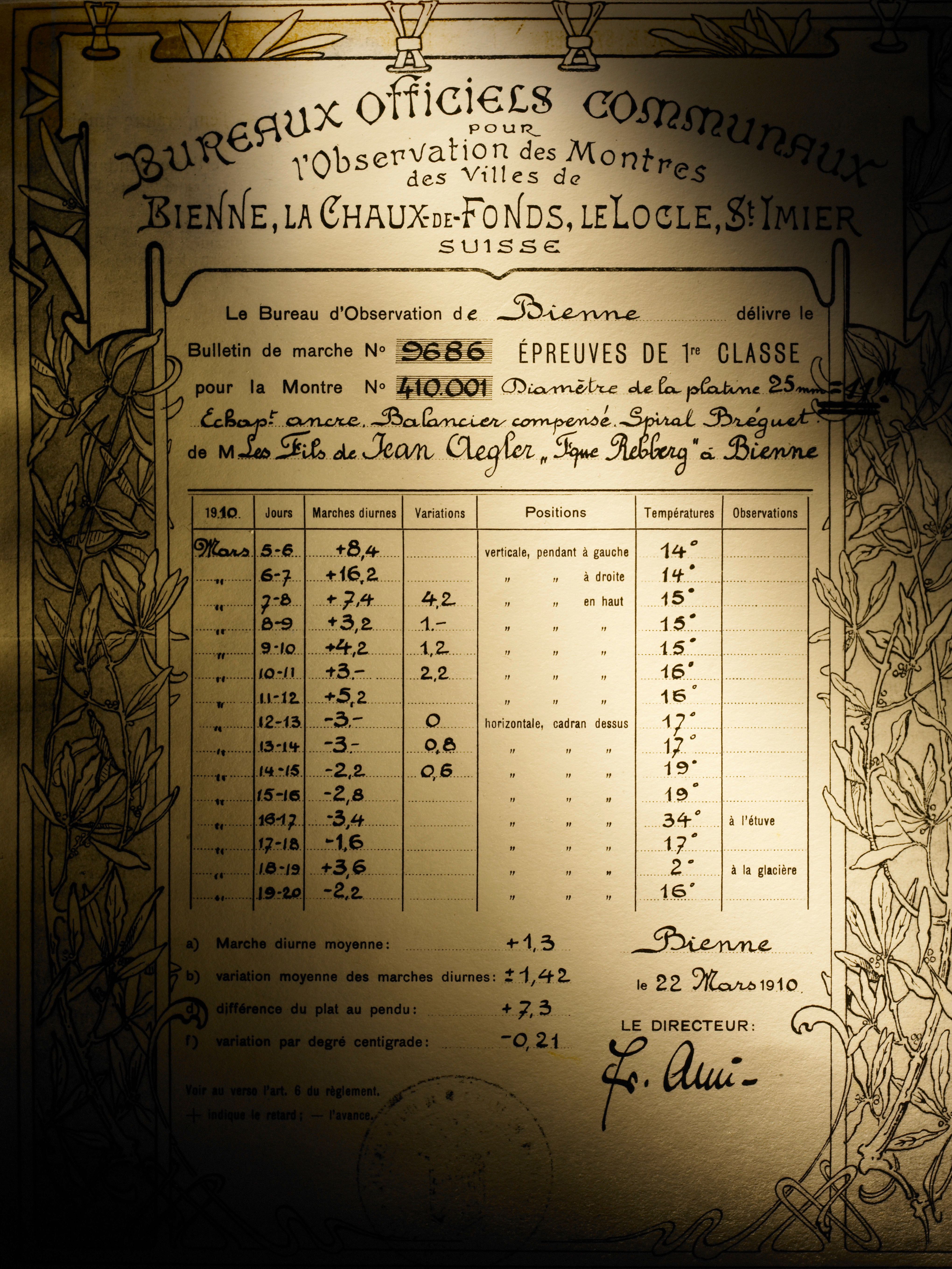
His first task was precision. In 1910, a Rolex wristwatch became the first such watch in the world to receive an official chronometer certificate, granted by the Official Watch Rating Centre in Bienne, Switzerland. This was not a technicality. It was a statement of intent, a demonstration that the wristwatch could be as accurate as the pocket watch that then defined the standard. Four years later, in 1914, a Rolex wristwatch received from the Kew Observatory in England, at the time the world's highest authority for measuring watch precision, the first Class A certificate ever awarded to a wristwatch. The tests lasted 45 days. The distinction had previously been reserved for marine chronometers. The watchmaking world received the news with, as Wilsdorf put it, astonishment.
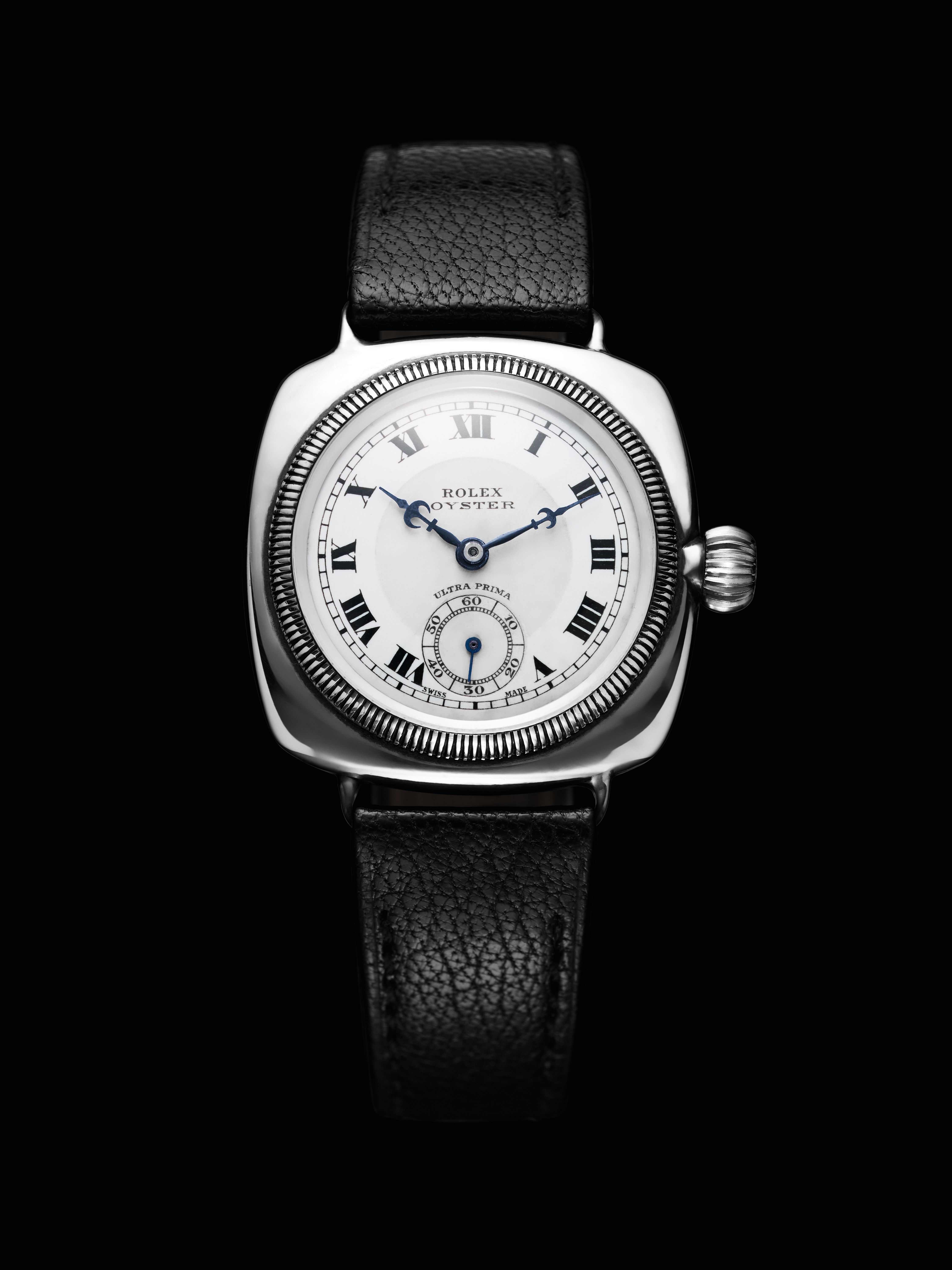
Precision was one battle. Waterproofness was the other. The wristwatch was by its nature more exposed to the elements than the pocket watch it was displacing. Every time a wearer unscrewed the crown to wind the movement, they created a pathway for moisture and dust to enter. Over time, those particles combined with the oil lubricating the movement, creating what Wilsdorf described as a paste that acted "like emery paper" on the watch's finest components, degrading accuracy and reliability incrementally but inevitably. The solution, as he defined it to his technical team, was categorical: "We must succeed in making a watch case so tight that our movements will be permanently guaranteed against damage caused by dust, perspiration, water, heat and cold. Only then will the perfect accuracy of the Rolex watch be secured."
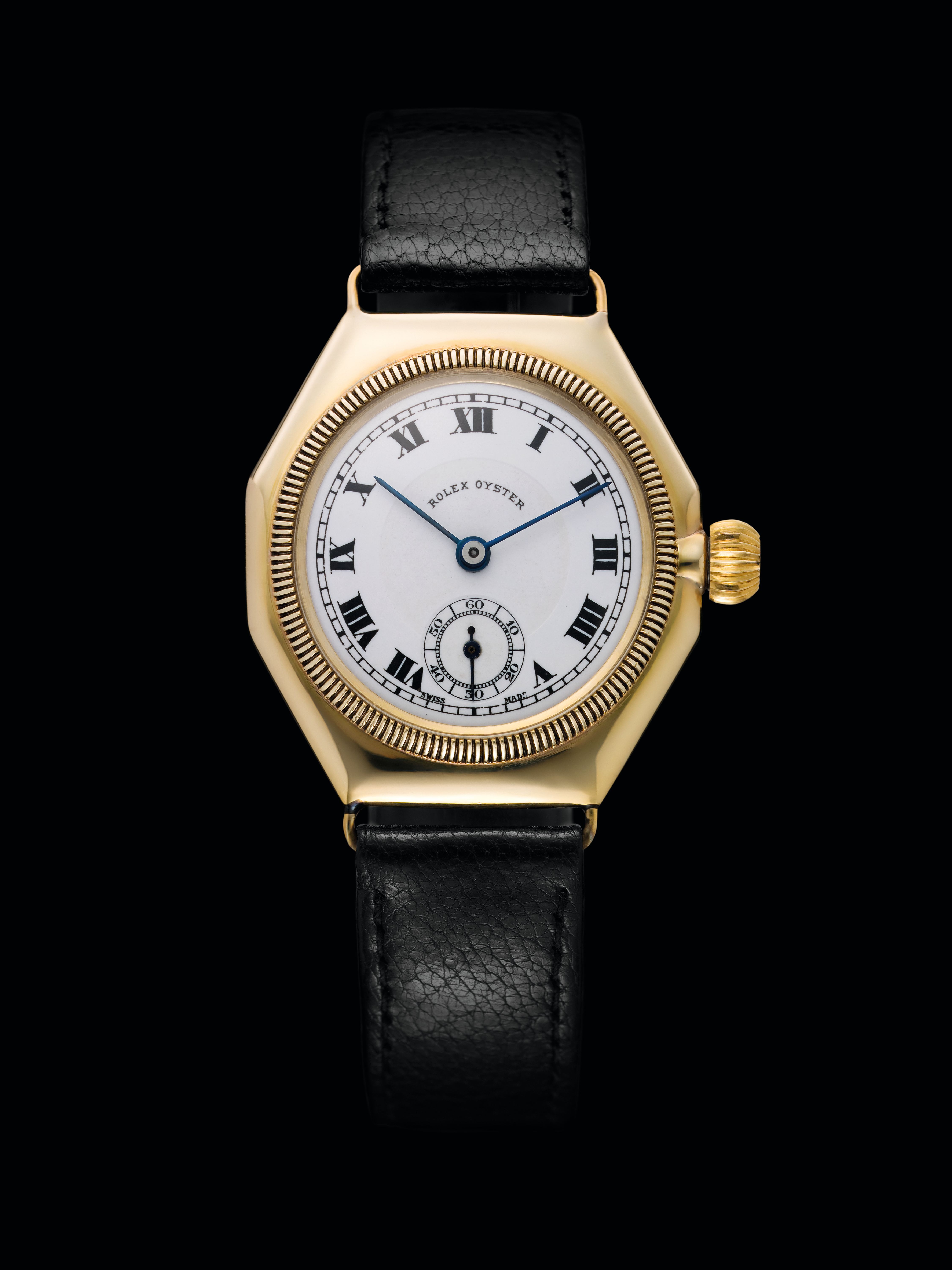
In 1926, that solution arrived. Wilsdorf had left England for Geneva in 1919, founding Montres Rolex S.A. in 1920 and working in closer collaboration with his movement manufacturer, the Maison Aegler in Bienne. The Oyster was the result of those years of sustained technical ambition: the first waterproof wristwatch in the world, its hermetic seal achieved through an ingenious patented system combining a screw-down bezel, case back, and winding crown. The name came directly from the mechanism's logic. As Wilsdorf explained in 1945: "The fact that, like an oyster, it can remain an unlimited time under water without detriment to its parts, gave me the idea of christening it the Rolex Oyster." The shell that seals its contents from the outside world. Precise, functional, biological in its simplicity.
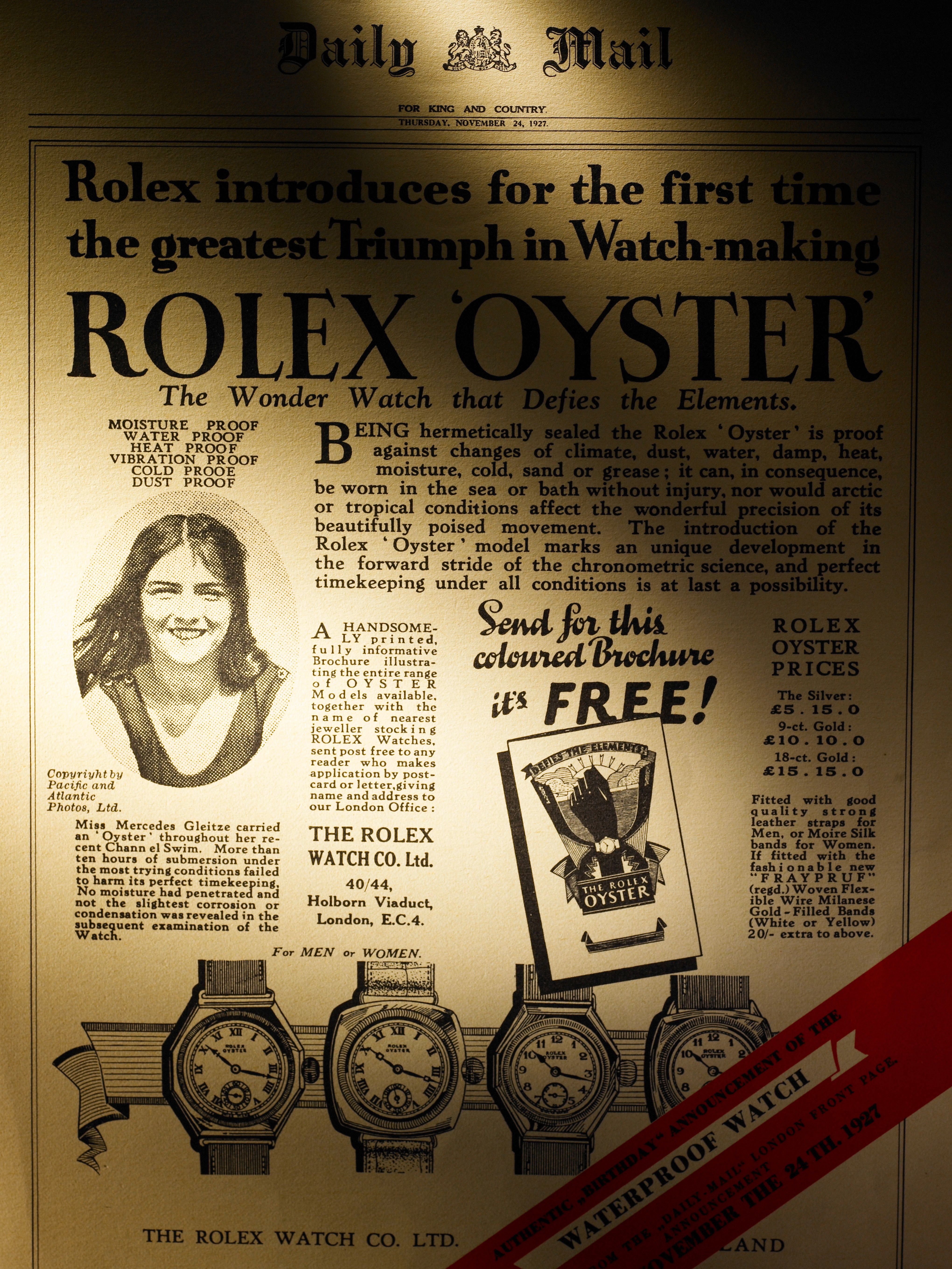
But solving the engineering problem was only part of what Wilsdorf understood needed to happen. He also understood that a waterproof watch, in a world that did not yet believe waterproof watches were possible, required a demonstration, not just a patent. In 1927, he gave the young English sportswoman Mercedes Gleitze an Oyster watch for her swim across the English Channel. She was in the water for more than ten hours. The watch emerged in perfect working order. To celebrate and announce the achievement, Wilsdorf purchased a full-page advertisement on the front page of the Daily Mail, proclaiming the success of what he called "the wonder watch that defies the elements." Rolex retailers across England were simultaneously asked to display goldfish bowls in their windows with an Oyster submerged among the plants and fish. The marketing instinct was as important as the engineering. The watch needed to be seen functioning under conditions that had previously been considered impossible. Gleitze was not a Testimonee in the formal sense the brand would later develop; she was proof. And from that proof grew one of the most sustained traditions in the history of commercial watchmaking: the Rolex Testimonee relationship, built on the principle that the watches should be associated with exceptional people whose accomplishments gave independent witness to what the watches could do.
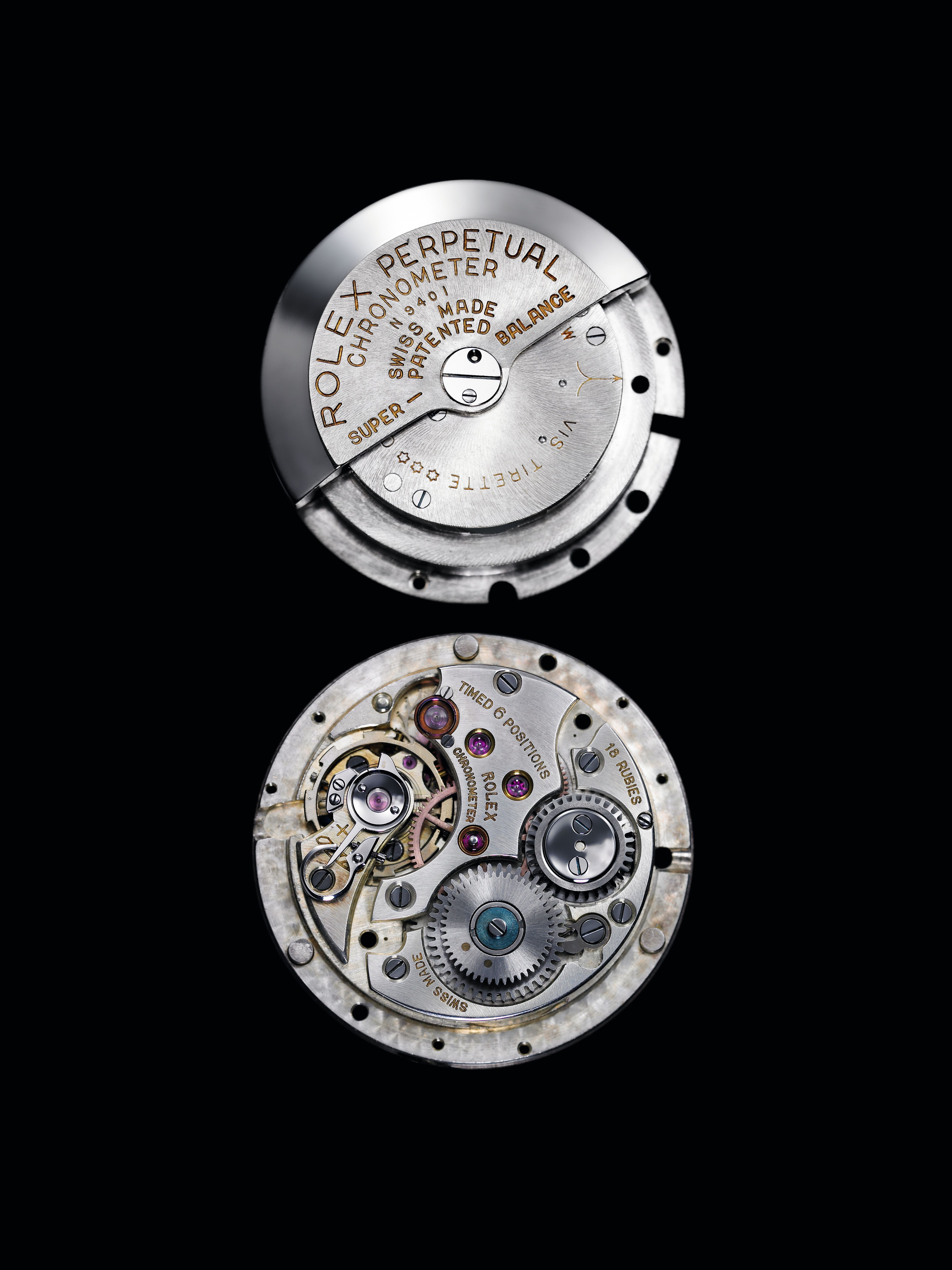
The Oyster's third foundational innovation came five years later. As long as a wristwatch required manual winding, its crown had to be periodically unscrewed, breaching the hermetic seal and exposing the movement to everything the case was designed to keep out. In 1931, Rolex introduced and patented the Perpetual rotor, a self-winding mechanism with a free rotor that wound the mainspring automatically with every movement of the wearer's wrist. The half-moon-shaped oscillating weight rotated in both directions, converting the kinetic energy of everyday wear into a constant supply of energy to the movement. The crown now spent the vast majority of its time screwed down securely against the case. Waterproofness improved as a consequence of self-winding. The two innovations were not parallel developments; they were structurally interdependent.
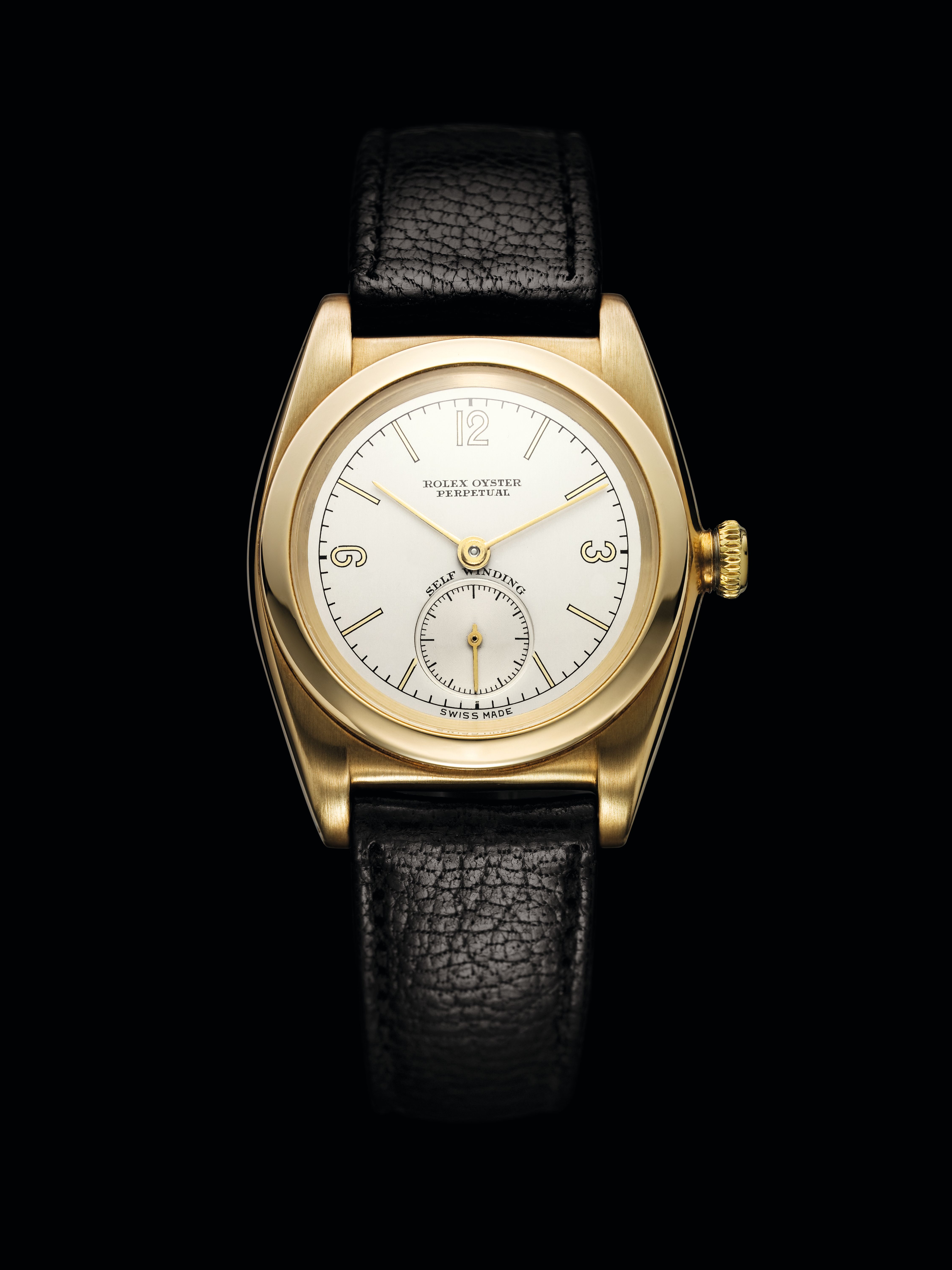
The Oyster Perpetual was the result. A watch that was precise, waterproof, and self-winding. The three problems Wilsdorf had identified at the beginning of his career, the three limitations that made the professional watchmaking world dismiss the wristwatch as a novelty, had been solved in sequence and in combination. By the early 1930s, the Rolex Oyster Perpetual existed as a coherent, fully realized object: a wristwatch that would maintain its timekeeping under conditions that had previously destroyed every competitor. The foundational architecture of the modern mechanical wristwatch, in all three of its essential dimensions, had been established.
The world took notice. In 1935, at the wheel of his record-breaking car Bluebird, Sir Malcolm Campbell became the first driver to break the 300-mile-per-hour barrier. He was wearing an Oyster. He telegraphed Wilsdorf afterwards: "The Rolex watch is still keeping perfect time. I was wearing it yesterday when Bluebird exceeded 300 mph." In 1947, Charles Elwood "Chuck" Yeager, the first pilot to break the sound barrier, was also wearing an Oyster. In 1933, Oyster watches accompanied the Houston Expedition as it made the first-ever flight over Mount Everest at an altitude exceeding 10,000 metres. The world, and its most extreme environments, had become a proving ground.
What came next? Stay tuned...


