Watches And Wonders 2026: This Patek Philippe Celestial Sunrise and Sunset Lets You Experience The Heavens On Your Wrist
 4 min read

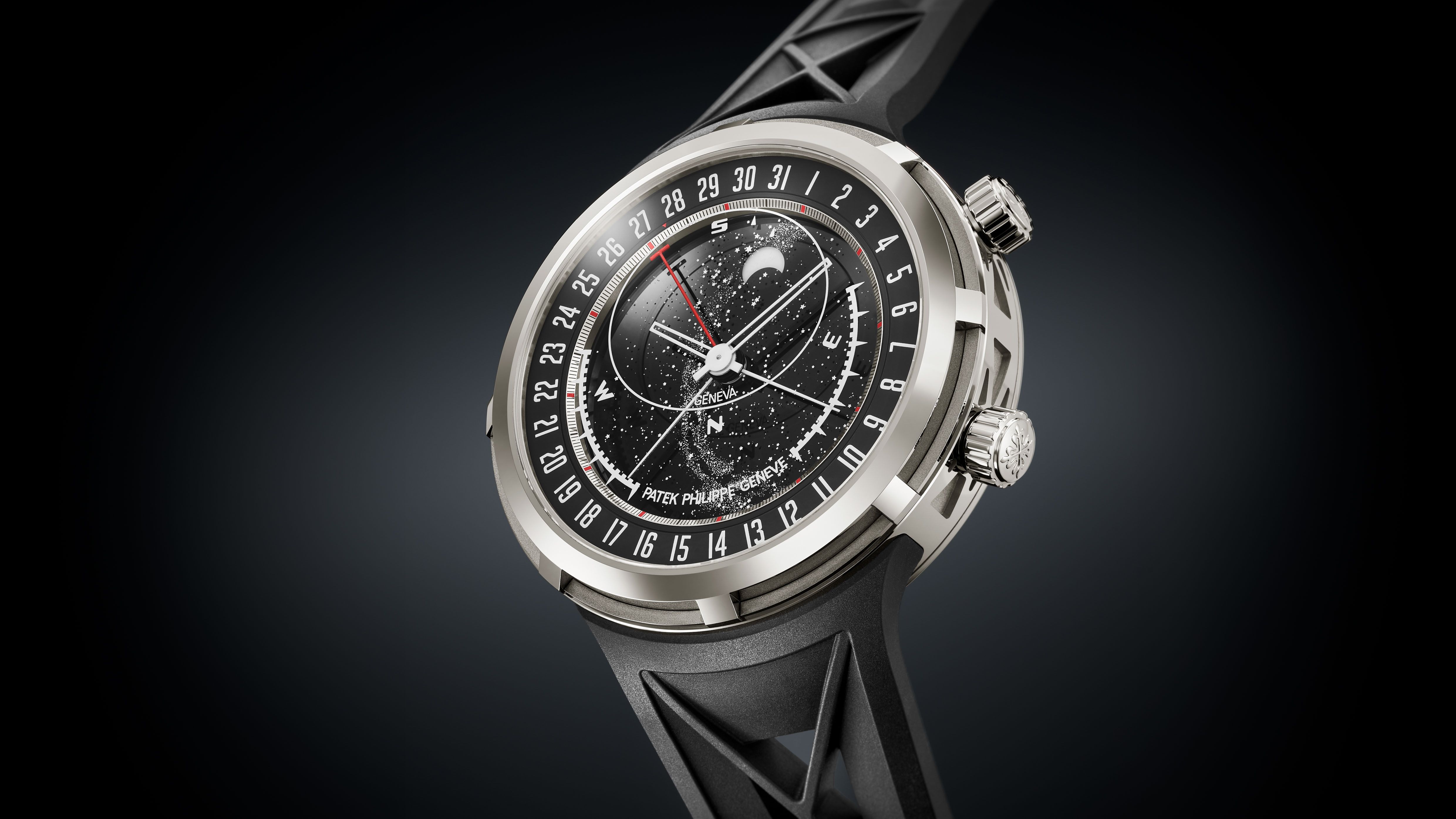
With the Reference 6105G-001, Patek Philippe introduces a landmark in its astronomical watchmaking legacy: the first grand complication wristwatch from the manufacture to display the times of sunrise and sunset. A natural evolution of the Celestial lineage, this new reference reinterprets the earlier 6102 while pushing the complication into entirely new territory.
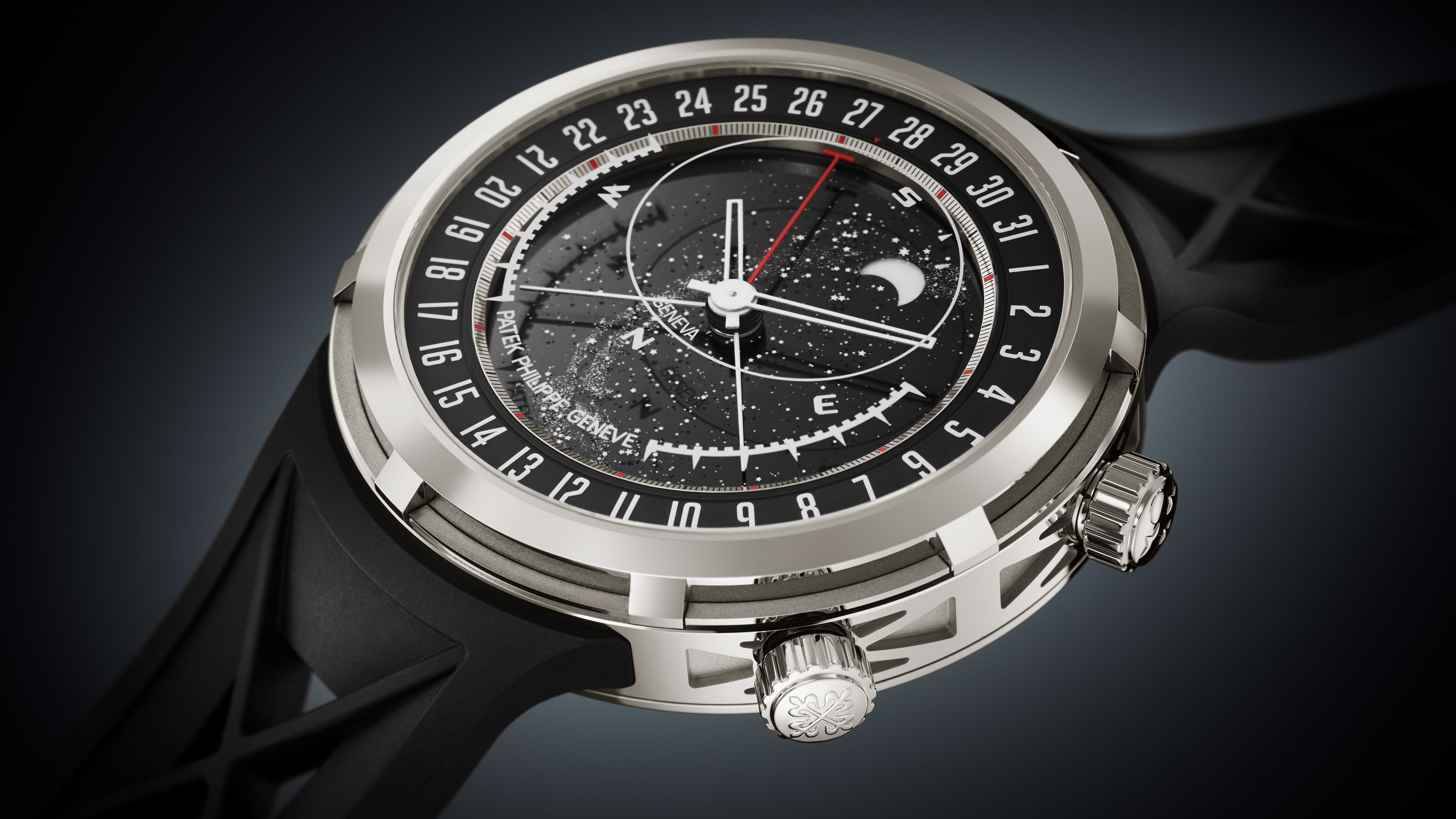
Developed over five years and protected by six patent applications, the watch brings together poetic astronomy and mechanical ingenuity. At its core is a patented system that allows the simultaneous correction of civil time and sunrise and sunset indications during the transition between Summer Time and Winter Time, a function rarely addressed with such elegance in mechanical watchmaking.
The connection between timekeeping and astronomy runs deep, and few names have explored it as consistently as Patek Philippe. From the Star Caliber 2000 pocket watch unveiled at the turn of the millennium, to the Sky Moon Tourbillon and the Celestial wristwatches powered by the ultra-thin caliber 240, the brand has long translated the motion of the heavens into mechanical form. Historically, sunrise and sunset indications have been reserved for exceptional creations, including the legendary supercomplicated pocket watches made for James Ward Packard and Henry Graves Jr., as well as the Calibre 89. With the 6105G-001, this rare complication finally enters the regular wristwatch collection.
Visually, the watch continues the Celestial’s signature sky display, showing the night sky as seen from Geneva or any location at the same latitude. A rotating star chart reproduces the apparent motion of the stars in real time, alongside the angular position and phases of the moon. This celestial ballet is driven by three superimposed transparent disks, each rotating at a different speed. The sidereal day cycle of 23 hours, 56 minutes and just over 4 seconds governs the star chart, while the lunar day and lunar month are reproduced with remarkable precision. The moon-phase display itself requires correction only once every 3,000 years.
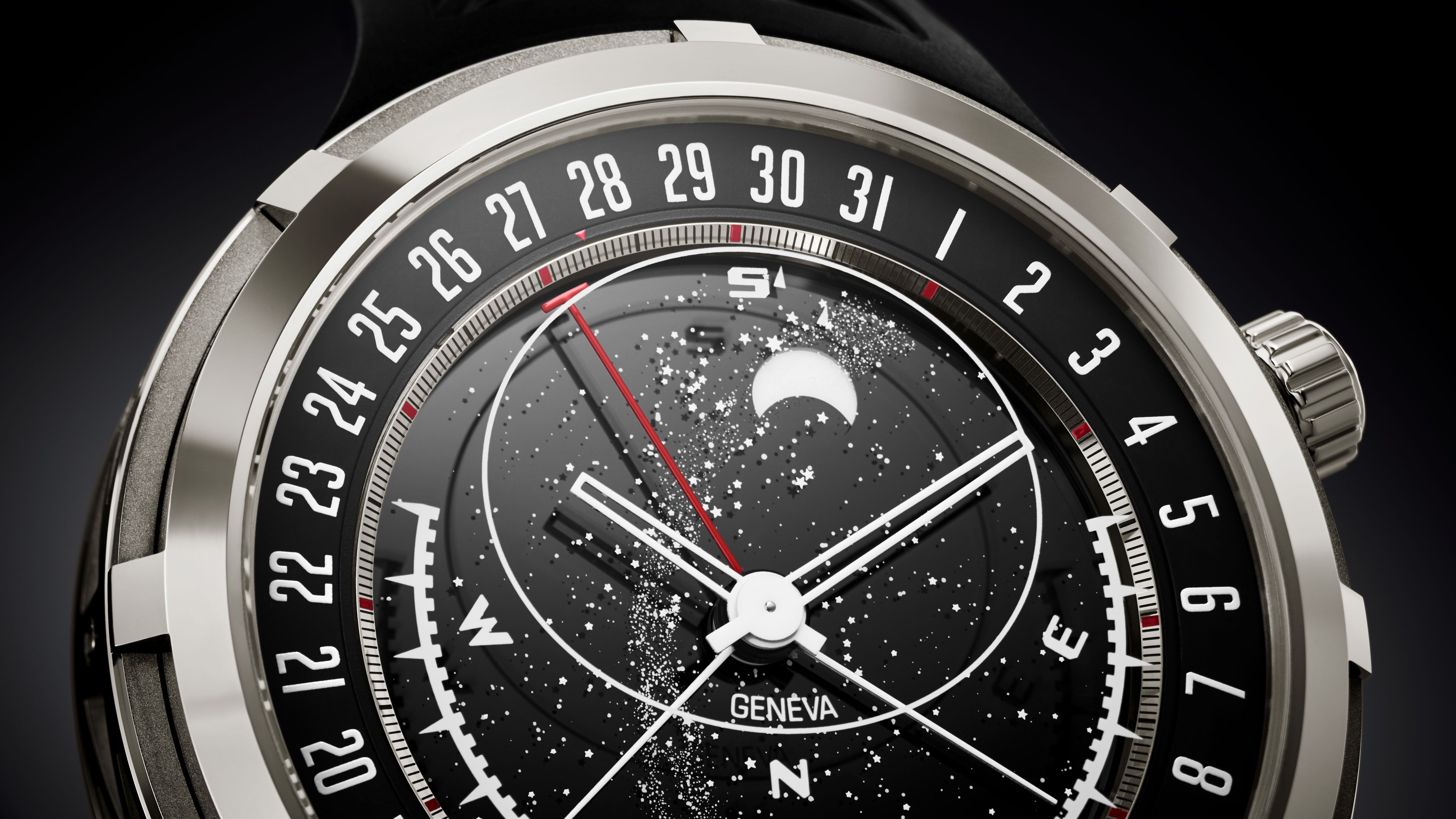
This new iteration adds a constantly changing indication of sunrise and sunset times in Geneva. The display is cleverly integrated into the peripheral date scale, allowing the same graduated ring to serve multiple functions. Skeletonised white gold hands indicate civil time, while additional baton-style hands point to sunrise and sunset on either side of the dial. A red hammer-shaped hand tracks the date. Behind this display lies a highly sophisticated mechanism. Two ovoid cams, rotating once per year, replicate the Earth’s axial tilt and its effect on daylight variation. A patented double feeler-spindle reads these cams with exceptional precision, transmitting the information through a gear train to the hands. Despite the complexity, the system remains compact and efficient.

Equally impressive is the patented corrector system for Summer and Winter Time. Two pushers on the caseband allow the wearer to move the time forward or backward by one hour. A single press adjusts not only the hour hand, but also the date disk and its corresponding indications, ensuring that sunrise and sunset times remain accurate. The mechanism includes a safety system to prevent incorrect manipulation, making the process intuitive and secure.
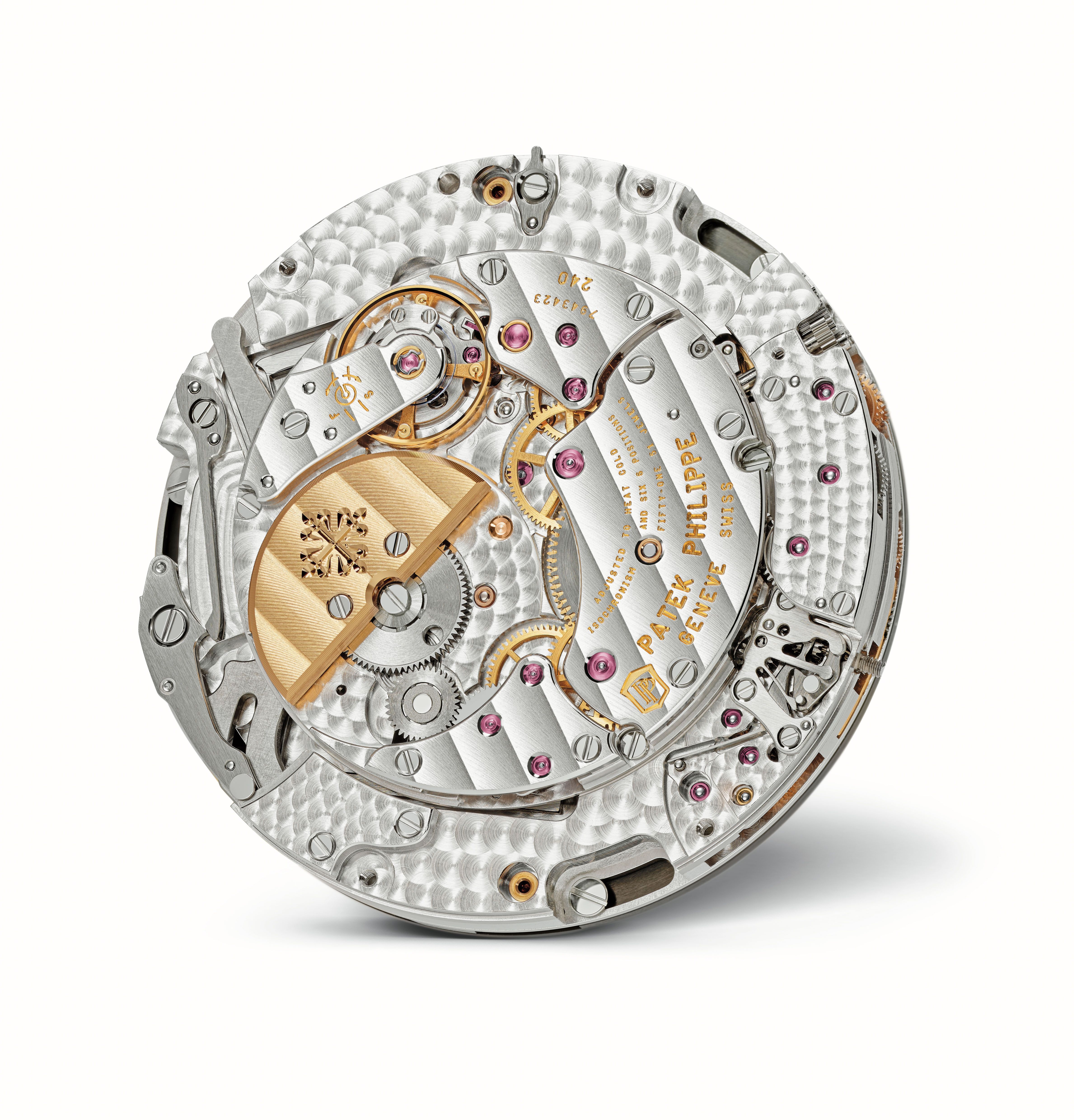
Powering the watch is the new self-winding caliber 240 C LU CL LCSO. Despite incorporating 121 additional components, bringing the total to 426, the movement increases in height by just 1.12 mm, reaching 7.93 mm. It retains the elegant architecture of the 240 family, including an off-centre 22K gold mini-rotor, a Spiromax balance spring in Silinvar, and a Gyromax balance operating at 21,600 vibrations per hour. The power reserve ranges from 38 to 48 hours, and the movement meets the stringent accuracy standards of the Patek Philippe Seal.
The case reflects the technical ambition within. Crafted in white gold and measuring 47 mm in diameter, it features a bold, modern design defined by an X-shaped motif inspired by space module structures. Alternating polished and satin-brushed finishes create depth, while the motif extends onto the caseback, complete with a Calatrava Cross.
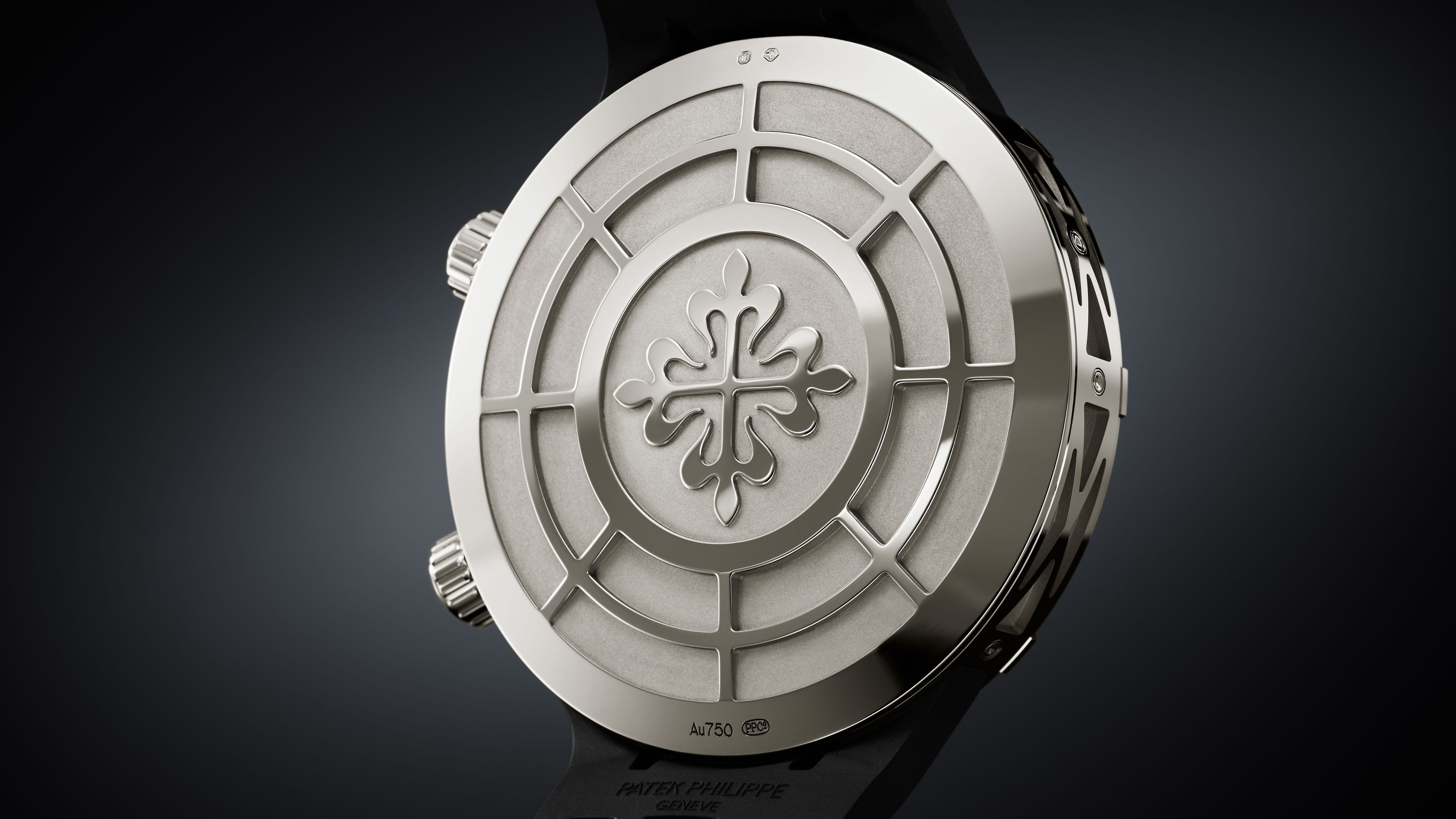
Two crowns manage the watch’s functions. The crown at 4 o’clock handles winding and time-setting, while the crown at 2 o’clock, decorated with stars, controls the astronomical indications. A patented bayonet system prevents accidental adjustments, requiring a push-and-turn action to engage. Additional settings allow for precise adjustment of the moon phases, celestial chart, and sunrise and sunset synchronization. A discreet corrector between 7 and 8 o’clock adjusts the date. The watch is paired with a black composite strap that integrates seamlessly into the case, eliminating traditional lugs and enhancing comfort despite the watch’s size. Its pierced X-pattern echoes the case design, while a patented triple-blade fold-over clasp in white gold ensures security on the wrist.
With the Reference 6105G-001, Patek Philippe once again bridges science and poetry, offering a watch that not only measures time, but connects it to the rhythms of the universe itself.


