Two Metals, One Philosophy: Piaget's Polo 79 Returns In A Two Tone Avatar
 5 min read

Among the great milestones of integrated bracelet watches, few feel as assured in their identity as the Piaget Polo. Launched in 1979, the watch industry was crowded with steel icons and industrial bravado, but the Polo arrived unapologetically different. Entirely crafted in 18-carat gold, it didn’t merely reinterpret the category; it redefined its priorities. This was not a sports watch aspiring to elegance. It was elegance, confidently at play.
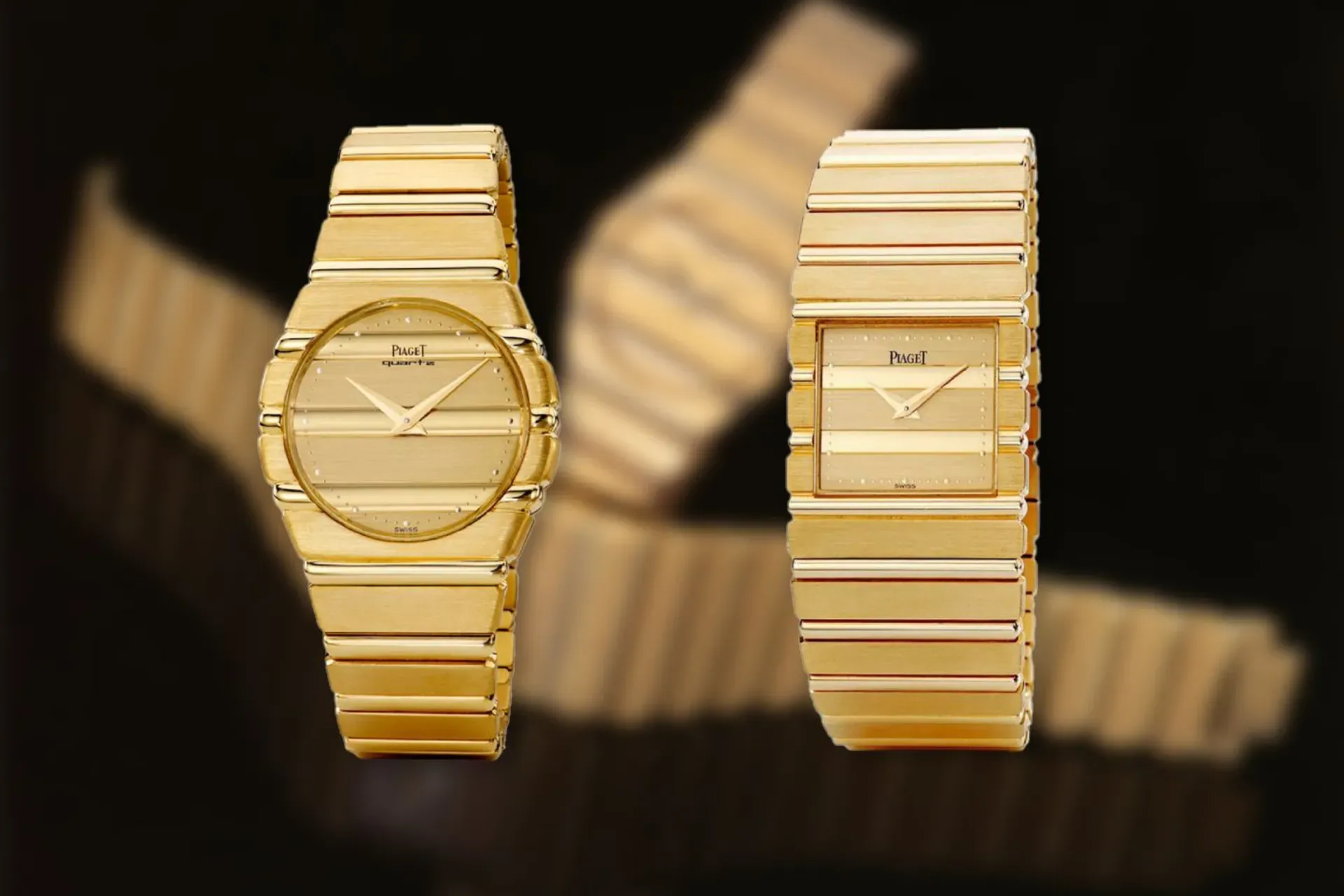
What made the Piaget Polo instantly unmistakable was the continuity of its design. Nowhere else in watchmaking was the fusion between case and bracelet so fluid, so uninterrupted. The signature parallel gadroons alternating polished and brushed horizontal bands ran seamlessly from bracelet to case to dial, erasing conventional boundaries. Introduced in two shapes and sizes, the Polo looked less like a watch attached to a bracelet and more like a single, sculptural object formed around the wrist. Yves G. Piaget captured this philosophy with characteristic clarity: “The entire Polo philosophy can be summed up in one sentence: it’s a watch bracelet rather than a mere wristwatch.”
A Child of the Seventies
The Piaget Polo belongs to a rare breed of watches that didn’t attempt to temper the spirit of their time. It embraced it. The late 1970s were bold, indulgent and expressive and so was the Polo. Crucially, Piaget could afford this freedom. With only a few decades of heritage behind it, the Maison was not burdened by rigid codes or sacred templates. Where others exercised restraint, Piaget exercised confidence.
That confidence extended beyond design. In 1976, Piaget had developed its own in-house quartz calibre, the 7P. Measuring just 3.1mm, it was the world’s smallest quartz movement at the time. This was an extraordinary technical achievement that found its perfect home in the ultra-slim architecture of the Piaget Polo. Precision, discretion and technical daring were all embedded beneath its golden exterior. Ironically or perhaps inevitably the Polo’s early success was swift and decisive. What began as a bold aesthetic statement quickly became a symbol of status and cultural relevance. During its golden era, the Piaget Polo adorned the wrists of Andy Warhol, Jacqueline Kennedy Onassis, Ursula Andress, Brooke Shields, Miles Davis, Elvis Presley, Björn Borg, and countless other tastemakers who defined the era’s visual language.
The 1980s: Evolution of an Icon
The Polo’s momentum only grew in the 1980s. Piaget expanded the collection through a wide spectrum of interpretations, exploring new shapes, materials, and finishes while remaining faithful to the original design codes. The decade introduced two-tone steel and gold versions, alongside some of the most coveted executions today artisanal dials crafted from lapis lazuli, mother-of-pearl, and tiger’s eye stone.
By the early 1980s, the Polo’s popularity had reached remarkable heights, accounting for nearly one-third of Piaget’s total watch sales. The line expanded further with the Polo Date references 15561 and 15791 in 32mm and 30mm respectively, as well as the Day-Date ref. 15562. Despite their variety, all these models remained powered by Piaget’s quartz calibres, reinforcing the Maison’s commitment to ultra-slim sophistication over mechanical bravado.
While the broader industry embraced steel sports watches throughout the 1970s, Piaget remained resolute. There was nothing quite like the Piaget Polo a sports-elegant watch fully cast in gold. For Piaget, gold was never simply a material; it was a philosophy. A passionate equestrian, Yves Piaget infused his love of polo and the high life into a watch that came to embody the glamour of the 1980s. The Piaget Polo felt equally at home at Palm Beach polo clubs as it did at Chez Régine in New York.
Because Piaget Only Measures Time in Gold
In 2024, forty-five years after its debut, the Piaget Polo returned in its purest form as the Piaget Polo 79, created to mark the Maison’s 150th anniversary. Honoured with the “Iconic Watch” award at the Grand Prix d’Horlogerie de Genève in 2024, the revival began in luminous yellow gold. In 2025, a white gold iteration followed, offering a more understated versatility.
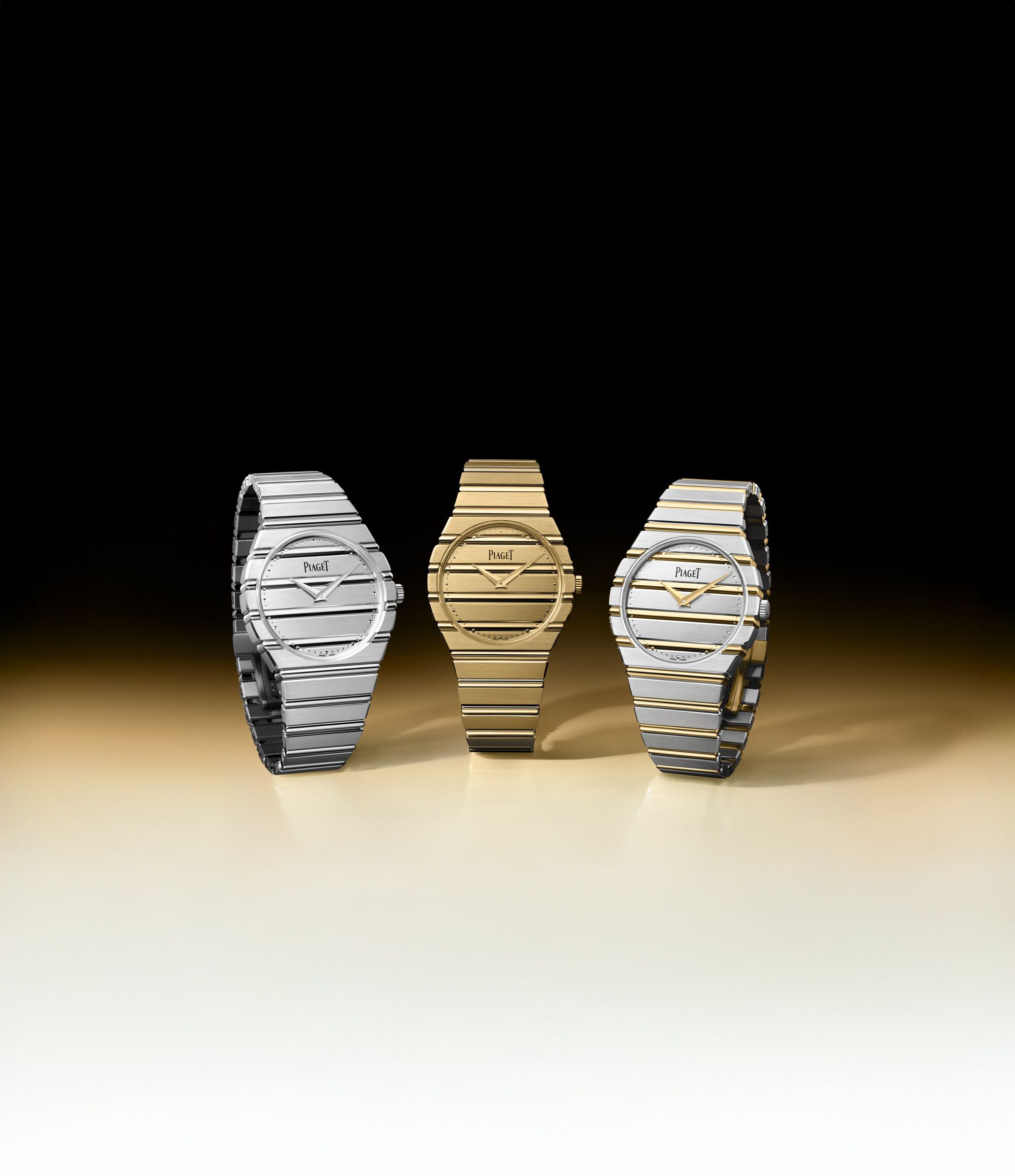
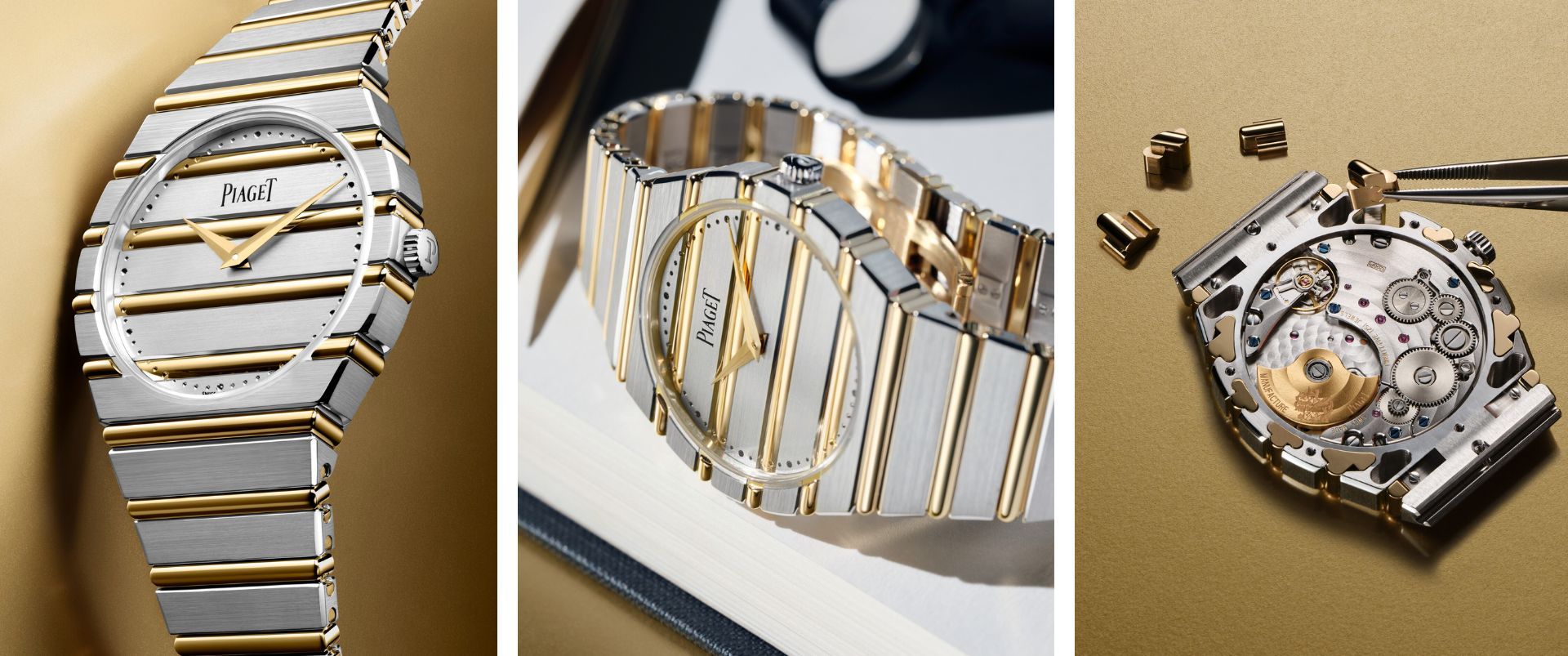
Now, in 2026, Piaget completes the narrative with the introduction of the Polo 79 Two-Tone. A harmonious marriage of yellow and white gold that recalls one of the original 1979 configurations. Designed for collectors who value both distinction and wearability, it is a return not to nostalgia, but to intent. More than a simple combination of metals, the Two-Tone embodies Piaget’s enduring belief that time should only be measured in gold. A philosophy rooted in the Maison’s DNA since 1957, it continues to guide creativity while preserving the timeless codes that define the Piaget Polo.
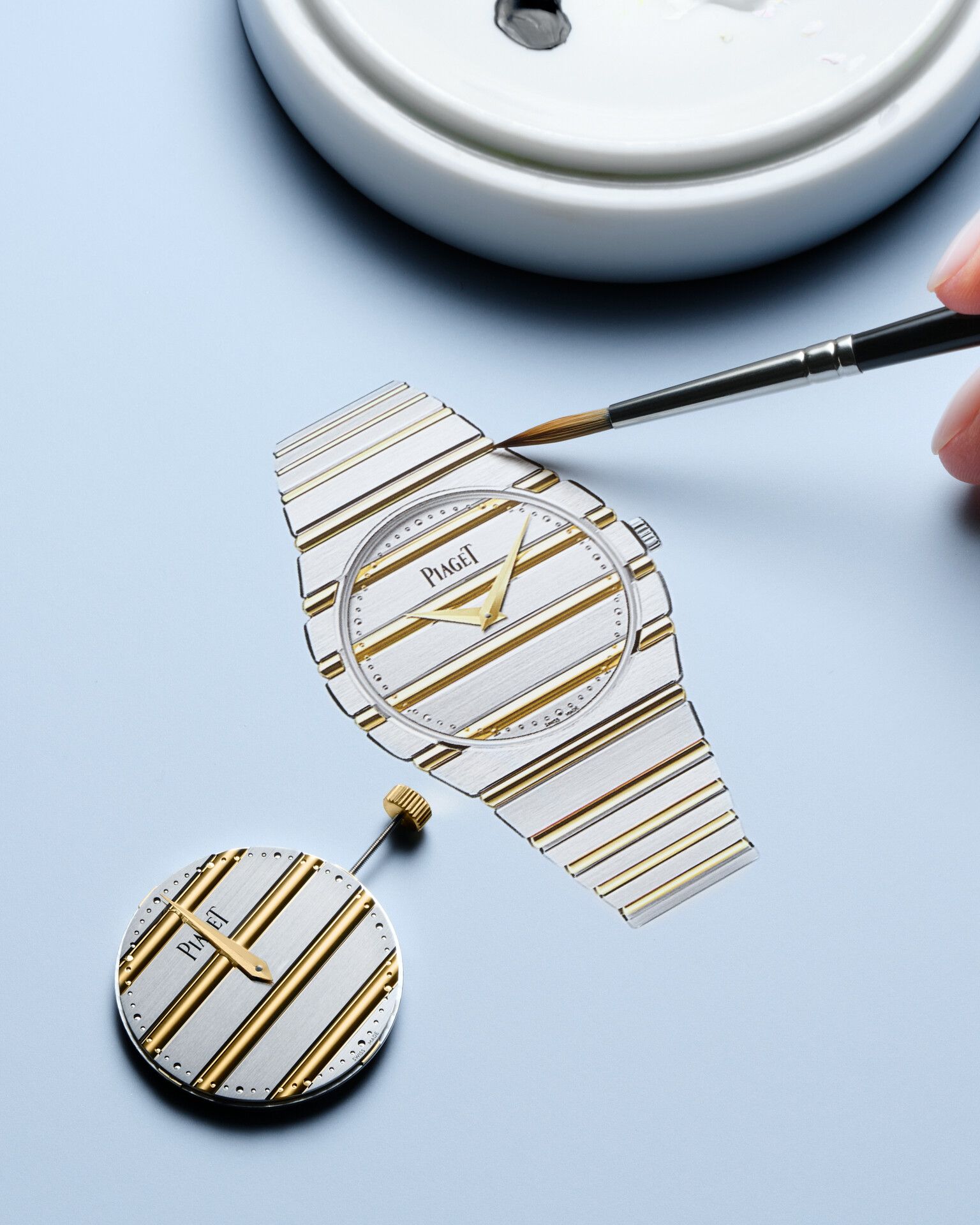
True to Piaget’s signature Extraleganza, the Polo 79 Two-Tone showcases masterful gold craftsmanship. The brushed white gold case and integrated bracelet are rhythmically punctuated by polished yellow gold gadroons, creating depth, contrast, and texture without disrupting the watch’s visual harmony. The solid gold dial mirrors this approach, finished with brushed yellow gold hands that complete the composition with quiet refinement.
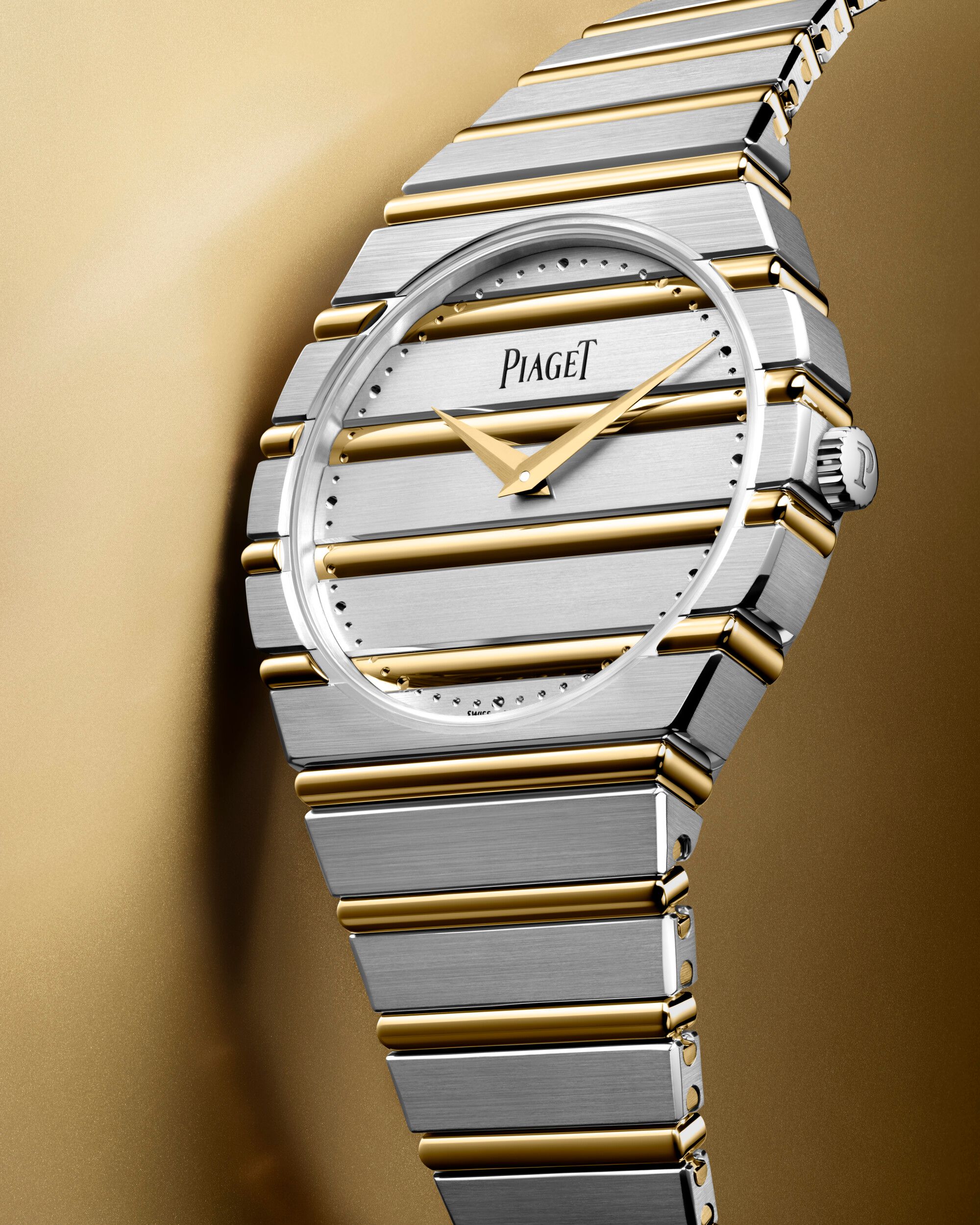
At the heart of the Piaget Polo 79 Two-Tone beats the calibre 1200P1 Piaget’s ultra-thin micro-rotor mechanical movement, measuring just 2.35mm in thickness. This technical achievement ensures the watch retains the silky, elegant profile that has long defined Piaget’s approach to luxury sports elegance. The movement represents the latest chapter in Piaget’s storied legacy of ultra-thin watchmaking, an expertise that has distinguished the Manufacture for generations. Paired with a 38mm case and fully integrated bracelet, the result is a watch of exceptional comfort effortlessly adapting to different wrists and occasions. It is a reminder that true luxury is as much about wearability as it is about beauty.
A Return to Origins
The Piaget Polo 79 Two-Tone is a distilled expression of the original Polo design, thoughtfully reinterpreted for today’s connoisseur. While two-tone configurations existed from the very beginning in 1979, surviving examples are rare once favoured by those who sought a refined balance between elegance and everyday versatility.
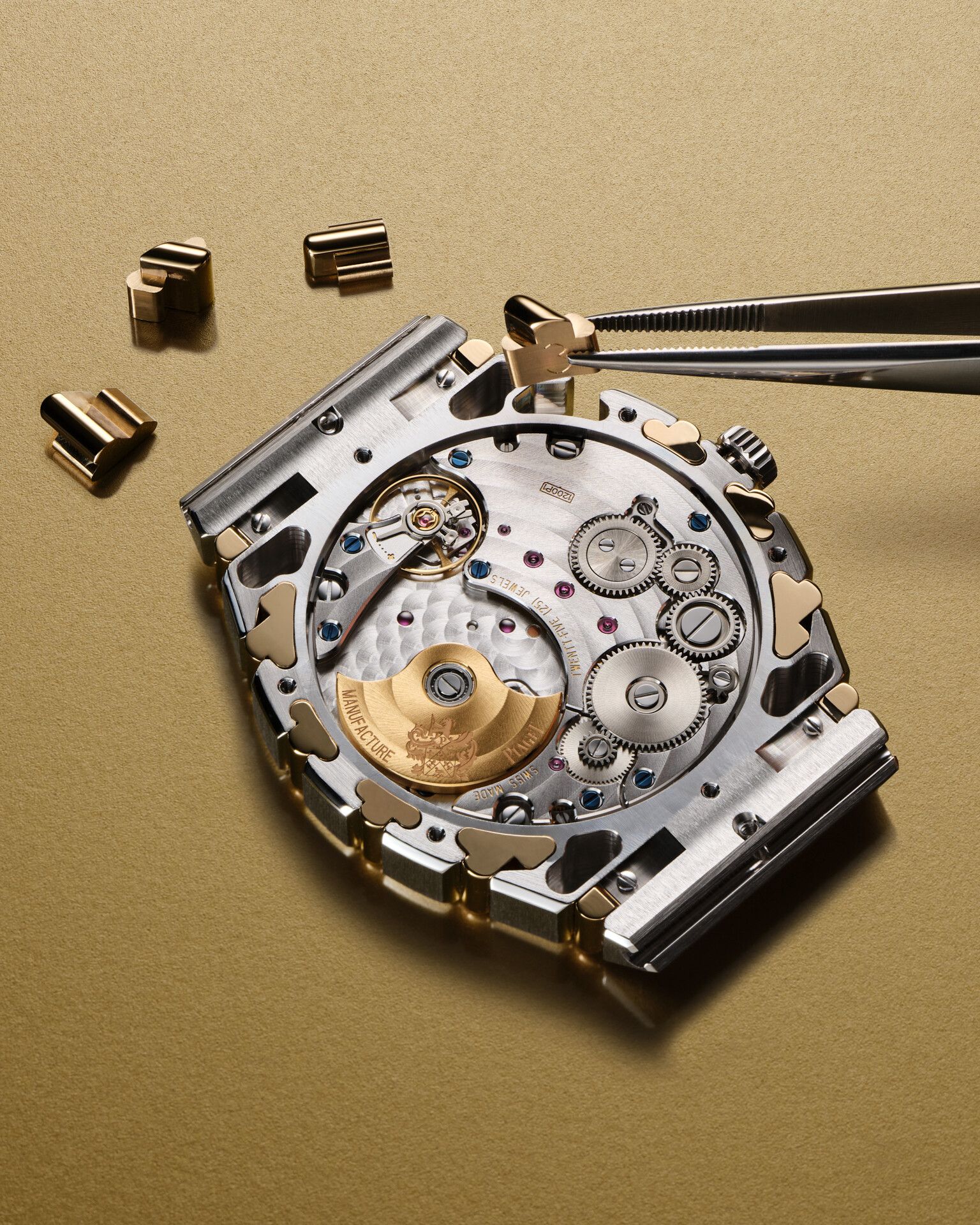
To the untrained eye, the interplay of brushed white gold and yellow gold may even evoke stainless steel. But such compromise was never an option for the House of Gold, where precious metals have always been the only acceptable medium for horological artistry. The revival of the Two-Tone reflects a contemporary collector’s evolving sensibility one that values watches capable of moving seamlessly between sport and sophistication. It is for those who live Piaget’s everyday Extraleganza, where style, sport, and elegance coexist without effort.


