
Watches And Wonders 2026: Cartier Shines In Dazzling Form While The Roadster And Crash Make A Stunning Comeback
 7 min read

At Watches And Wonders, where the industry often leans into technical bravado, Cartier continues to play a different and far more compelling game. Here, watchmaking is not just about precision, but about perspective. It is about form as much as function, and above all, about the enduring power of design.
This year, Cartier leans confidently into its dual identity as both watchmaker and jeweller, presenting a line-up that is at once minimalist and expressive, archival yet unmistakably contemporary. Icons are not merely revisited but reinterpreted softened, sculpted, stretched or refined while new creations blur the boundaries between object, ornament and instrument. From the tactile elegance of reworked shapes to the quiet complexity of métiers d’art, each piece reflects a maison that resists excess in favour of intention. The result is a collection that does not shout for attention, but commands it through clarity, craftsmanship and a distinctly Cartier sense of chic.
The Roadster Makes A Comeback
Streamlined, assertive and unmistakably modern, the Roadster returns to the spotlight with renewed clarity. First introduced in 2002, it marked a bold departure for Cartier a watch shaped by the language of automotive design, where mechanical bodywork, speedometers and industrial detailing informed every line. It was a study in controlled power, its conical crown, magnified date and riveted case establishing a distinctive identity that resonated far beyond traditional watchmaking codes.
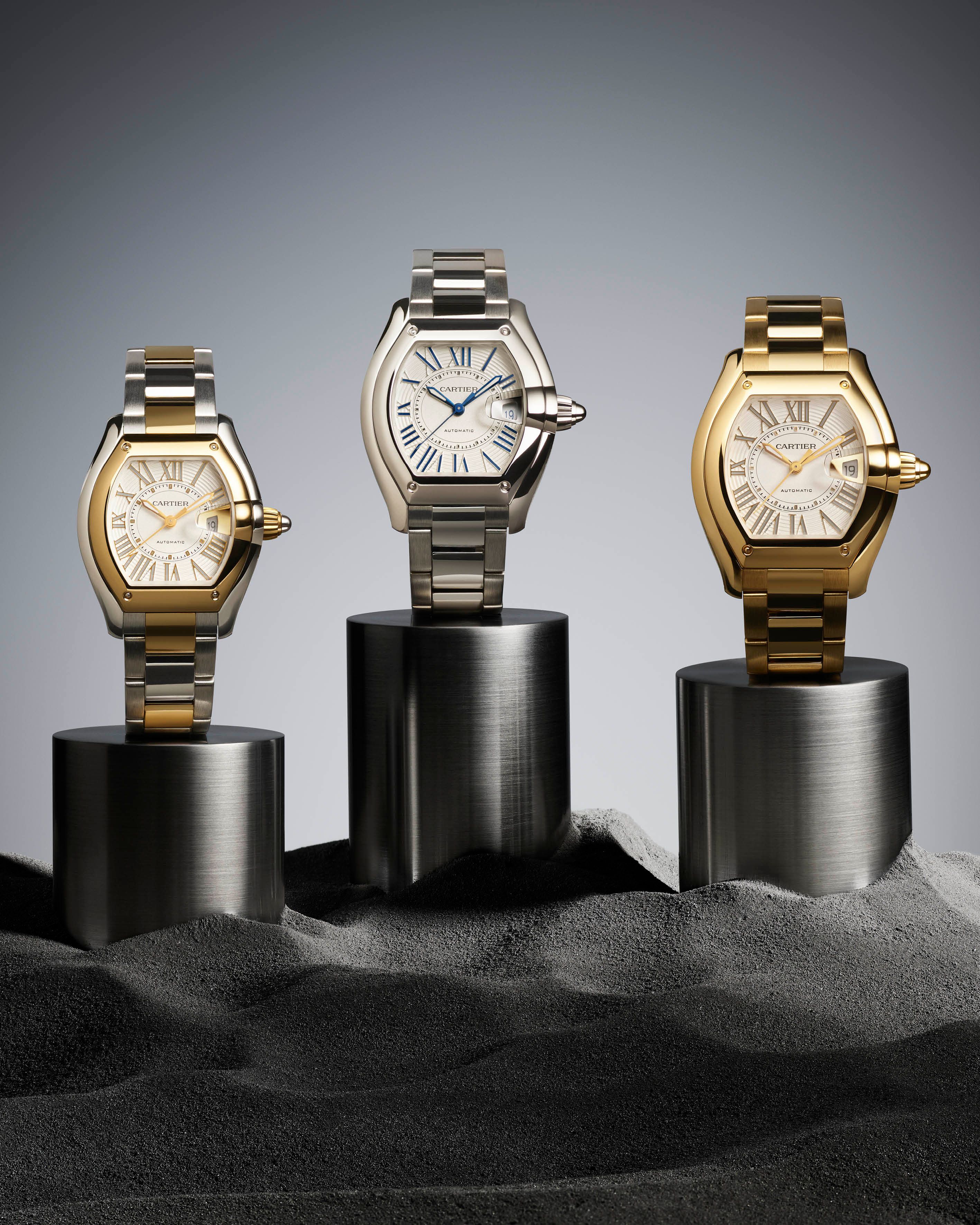
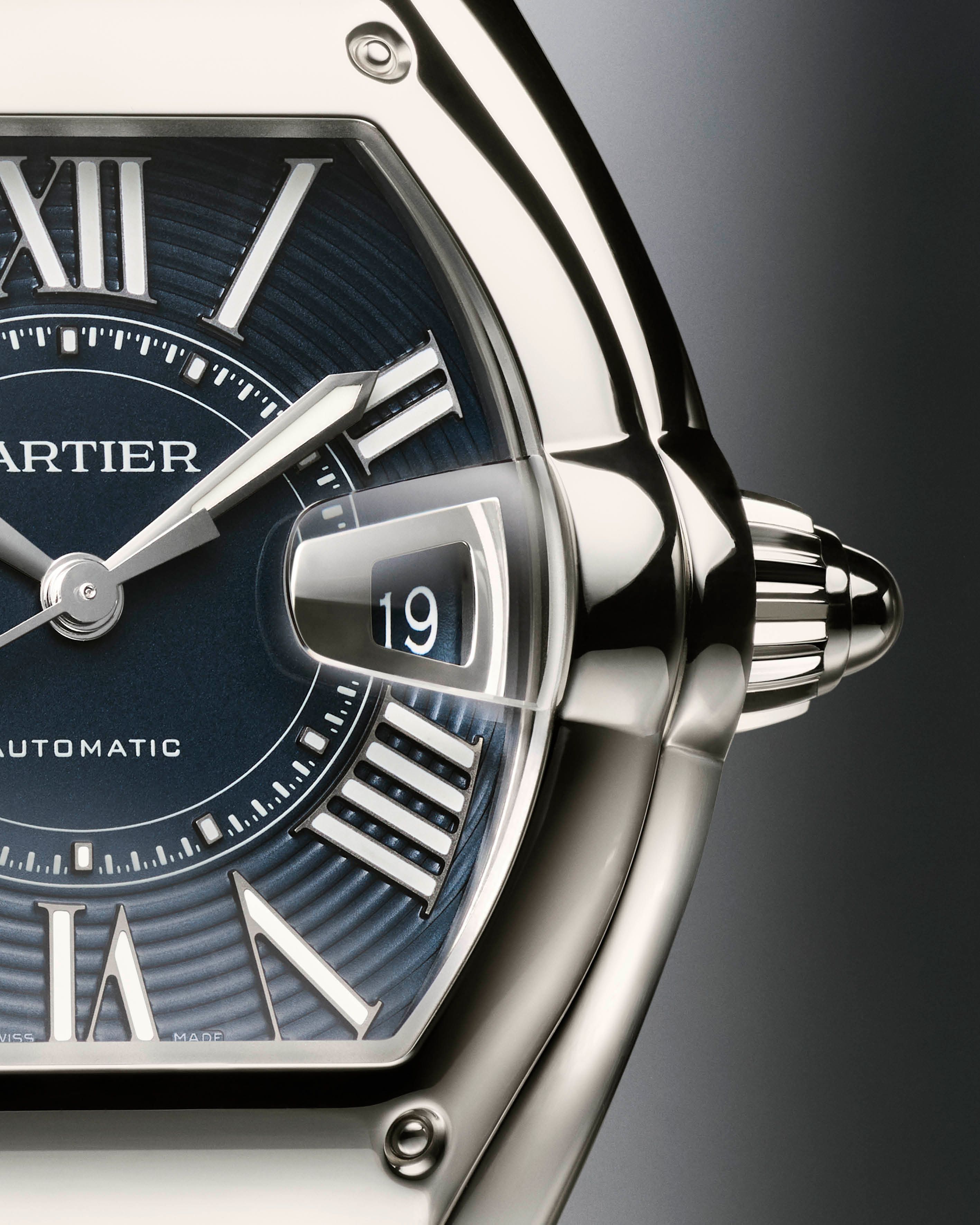
At Watches & Wonders 2026, the Roadster is not revived so much as refined. Its aerodynamic silhouette remains intact, but proportions have been sharpened, volumes rebalanced, and ergonomics reconsidered to meet a more contemporary sensibility. The case flows with greater fluidity, its integration of crown and bezel more seamless, while the interplay between crystal and metal enhances the watch’s sculptural presence. Offered in gold, bi-metal and steel executions, and across two sizes, the new collection retains its original spirit while elevating its sophistication.
The dial continues this evolution with subtle precision. Its signature circular striations and Roman numerals are preserved, but enhanced through refined finishing techniques that introduce depth and relief. A delicate appliqué effect adds dimension, while the reworked rail track and calendar aperture integrate more harmoniously within the design. In the steel versions, sword-shaped hands in blue or anthracite, treated with Super-LumiNova®, reinforce the dashboard-inspired aesthetic functional, legible, and distinctly contemporary.
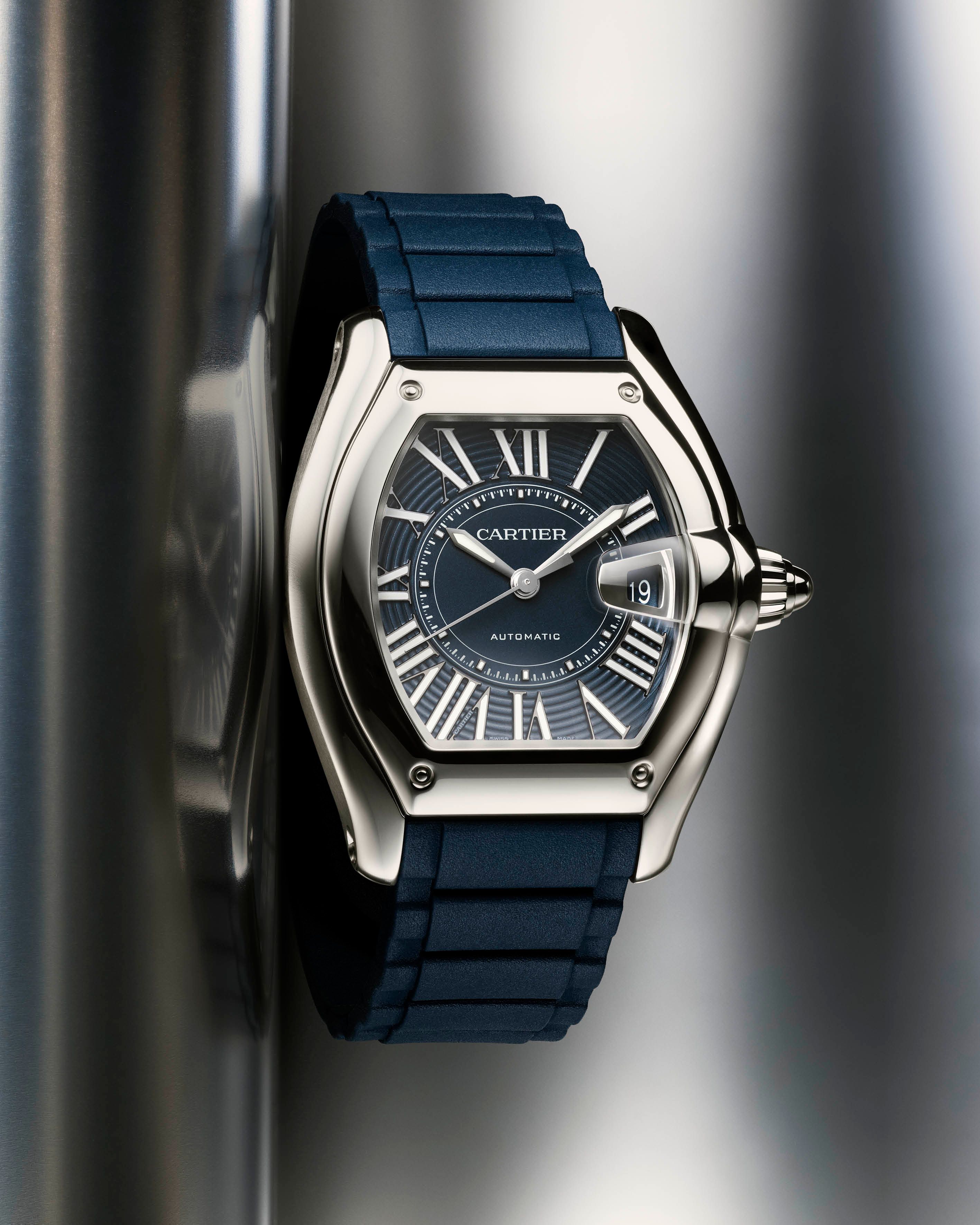
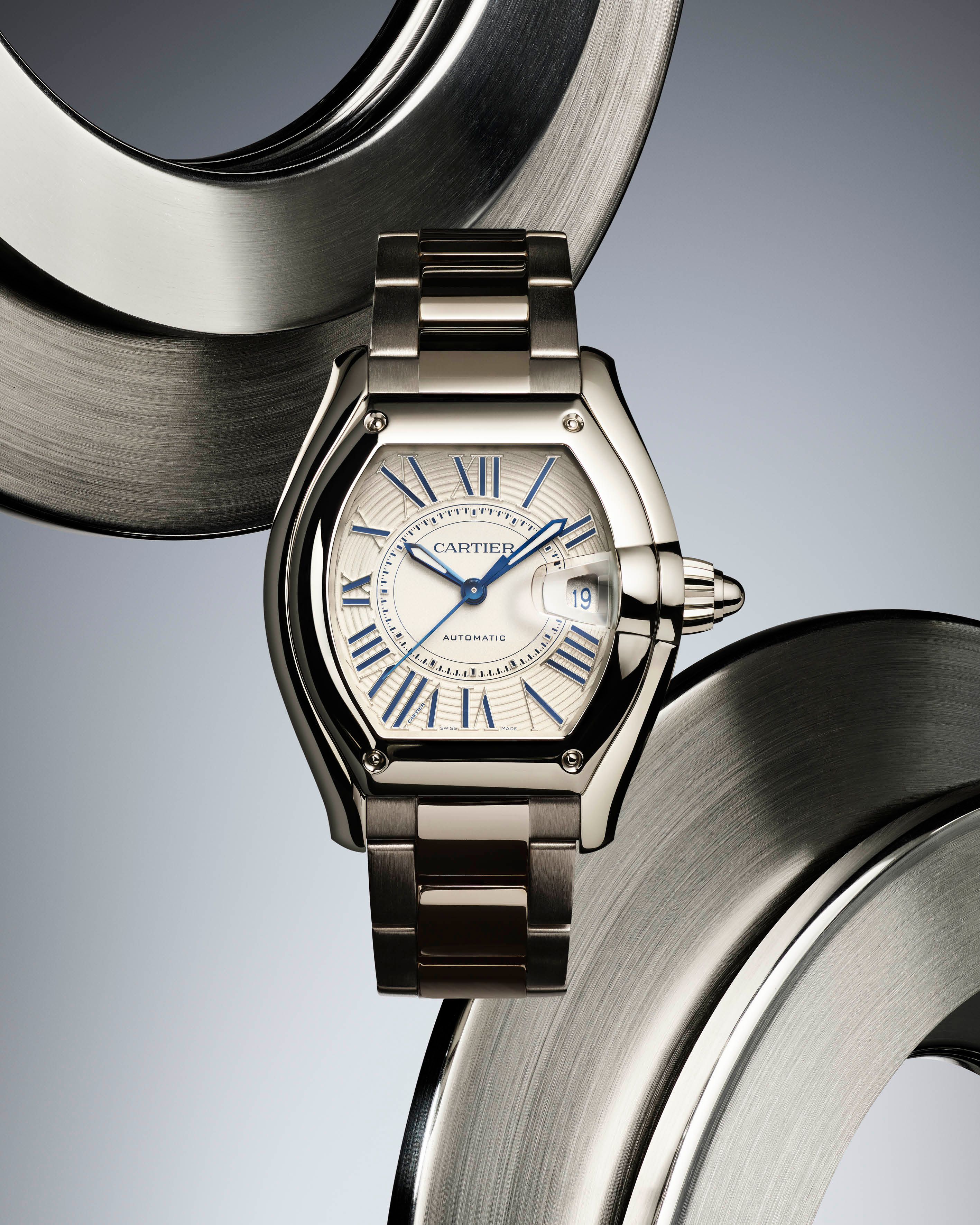
Beneath this considered exterior lies Cartier’s mechanical assurance. Powered by the 1847 MC and 1899 MC self-winding movements depending on size, the Roadster balances technical reliability with everyday wearability. This philosophy extends to the redesigned metal bracelet, where shorter, more ergonomic links and a nuanced interplay of brushed and polished surfaces elevate both comfort and visual rhythm. Equipped with the QuickSwitch™ system, it allows for seamless interchangeability an understated nod to modern versatility.
Crash Skeleton: Distortion, Defined
Celebrating a decade of Cartier Privé, the Crash Skeleton reinterprets one of Cartier’s most radical designs. First introduced in 1967, the Crash returns in a skeletonised form that amplifies its signature asymmetry. At its core is the hand-wound 1967 MC manufacture movement, developed to mirror the watch’s distorted silhouette. Its 142 components are fully revealed, with bridges sculpted into Roman numerals and hand-hammered using traditional techniques transforming structure into decoration.
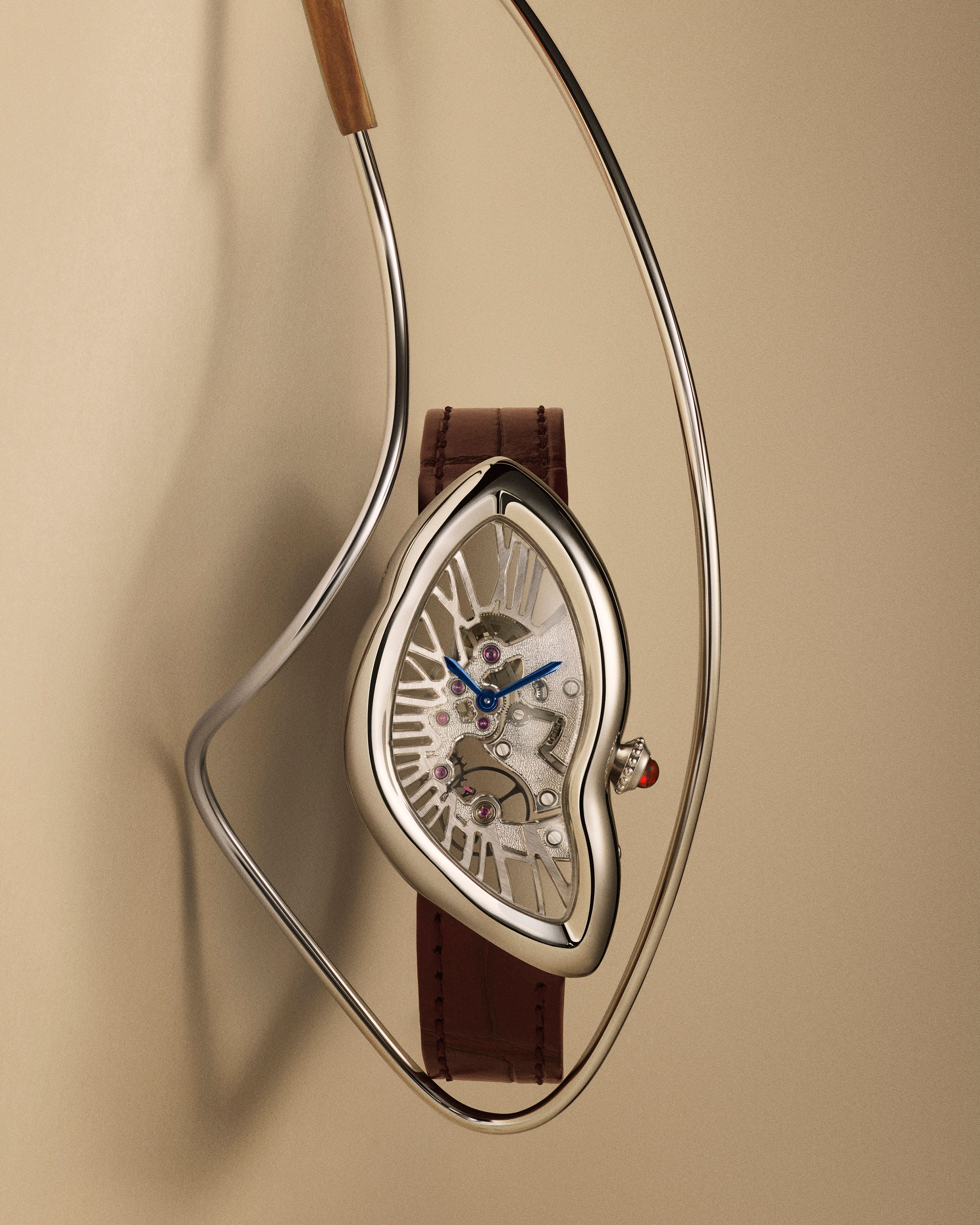
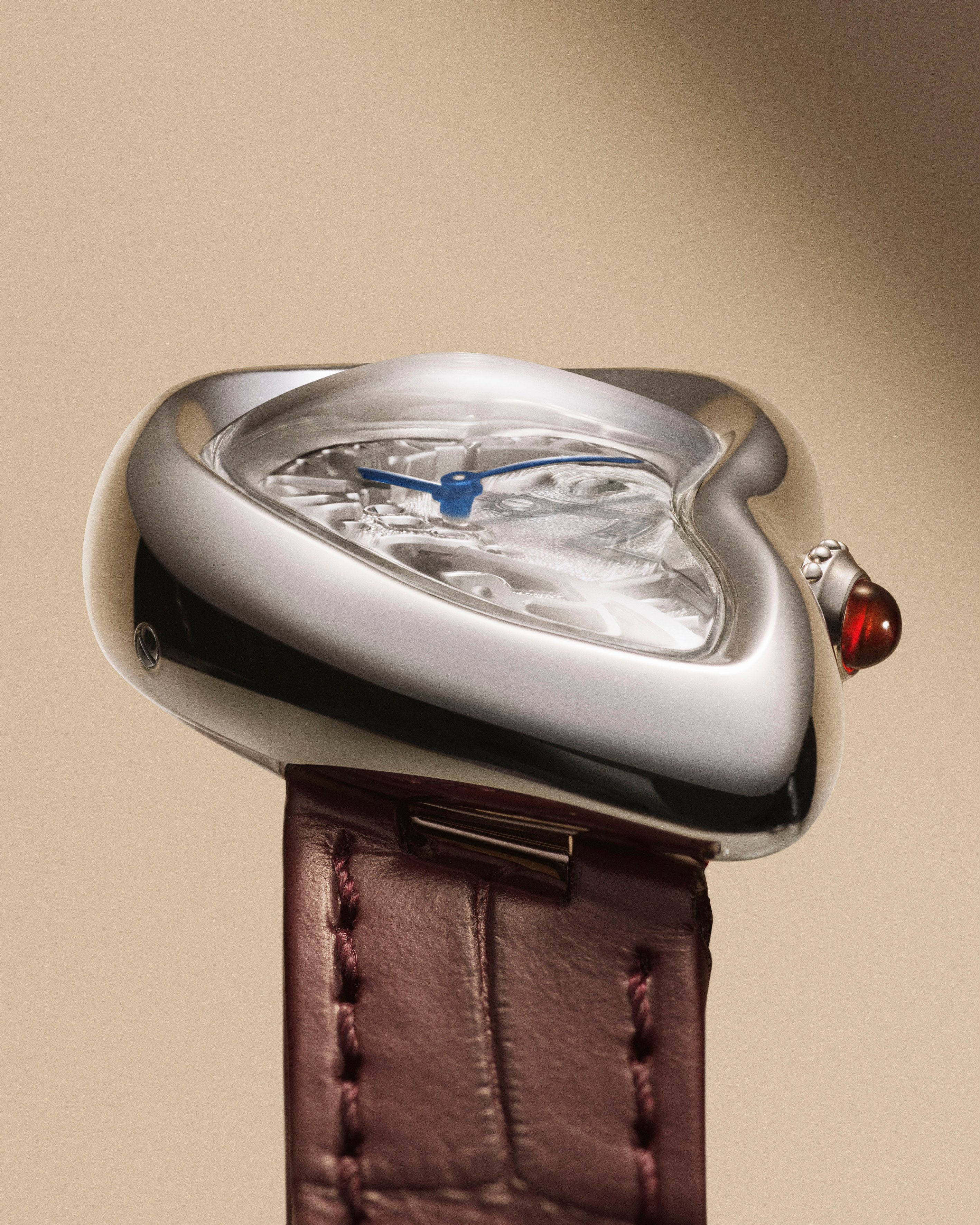
The effect is both technical and expressive, with the movement appearing almost pulled by the crown, heightening the sense of controlled distortion. A patented construction, and a signature Cartier approach, where mechanics serve design. Limited to 150 numbered pieces, the Crash Skeleton is less a watch than a statement one that continues to challenge the very shape of time.
Tortue: The Shape of Time, Reimagined
Minimalist yet unmistakably chic, the Tortue has long embodied Cartier’s mastery of form. Since 1912, its singular silhouette balancing structured lines with softened curves has defined it as a connoisseur’s watch, one that speaks through proportion rather than excess. At Watches & Wonders 2026, Cartier refines this icon with a more tactile, fluid presence. Volumes are softened, proportions expanded, and the case takes on a rounded, almost sensual quality. Offered in yellow, rose and white gold, alongside diamond-set variations, the collection spans from discreet mini formats to more expressive interpretations, all anchored by the unmistakable Tortue shape.
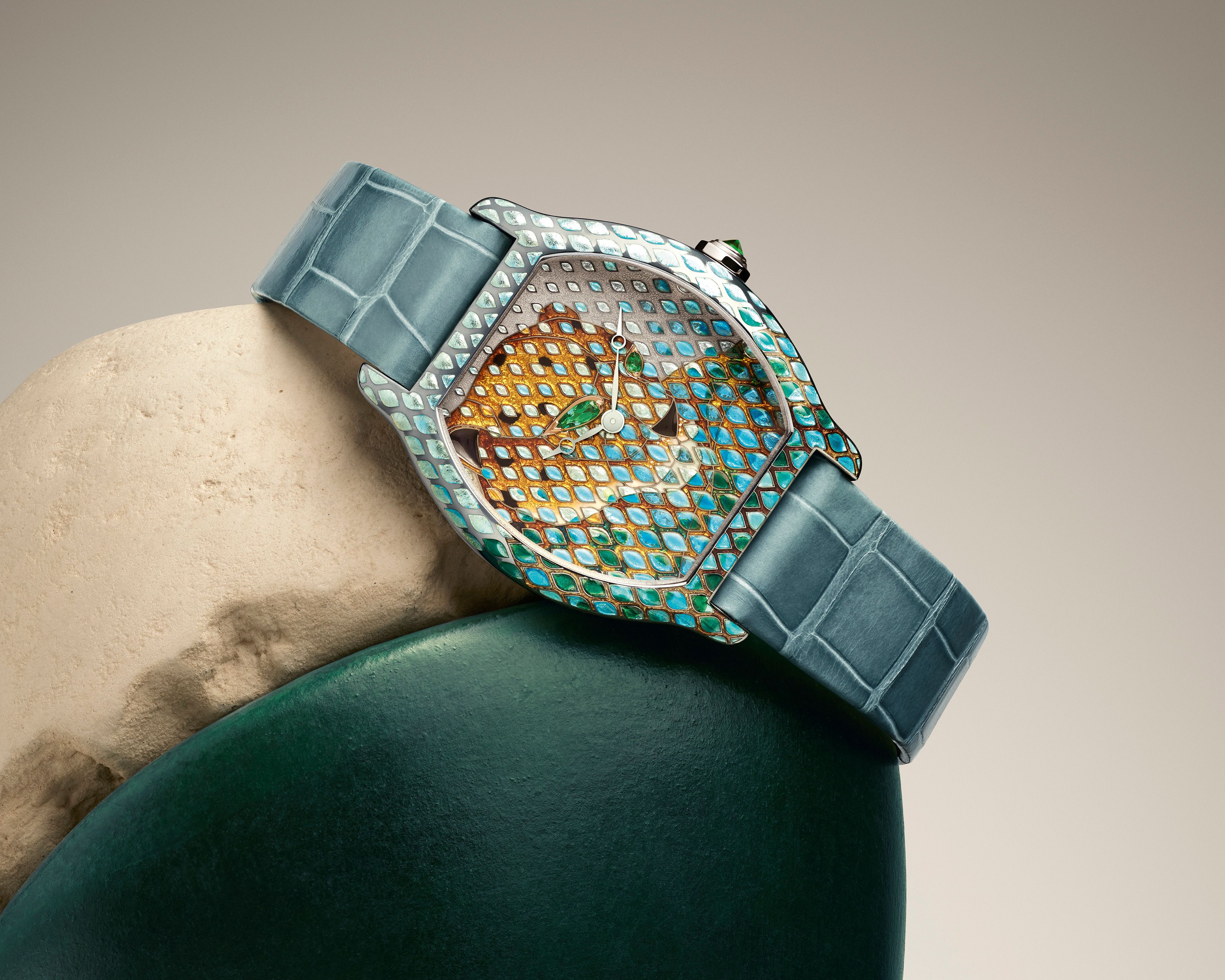
In its most elevated expressions, the Tortue moves into high jewellery. Diamond-set bezels and refined settings maximise brilliance, culminating in a platinum version adorned with baguette-cut stones an unmistakable Cartier signature. Powered by the 430 MC manufacture movement, it balances radiance with mechanical integrity. The narrative deepens further through the Maison des Métiers d’Art. Here, the panther emerges in champlevé enamel, poised behind a curtain of rain, its presence extending across dial and case. Requiring dozens of firings and extensive handwork, each piece becomes a miniature tableau rich in depth, texture and emotion.
Myst de Cartier: The Art of Illusion
A new expression of time, the Myst de Cartier blurs the line between jewellery and watchmaking, embodying Cartier’s enduring creative audacity. Inspired by the Maison’s heritage in 1930’s under the direction of Jeanne Toussaint in the early 1930s – pieces that were both sculptural and flamboyant.
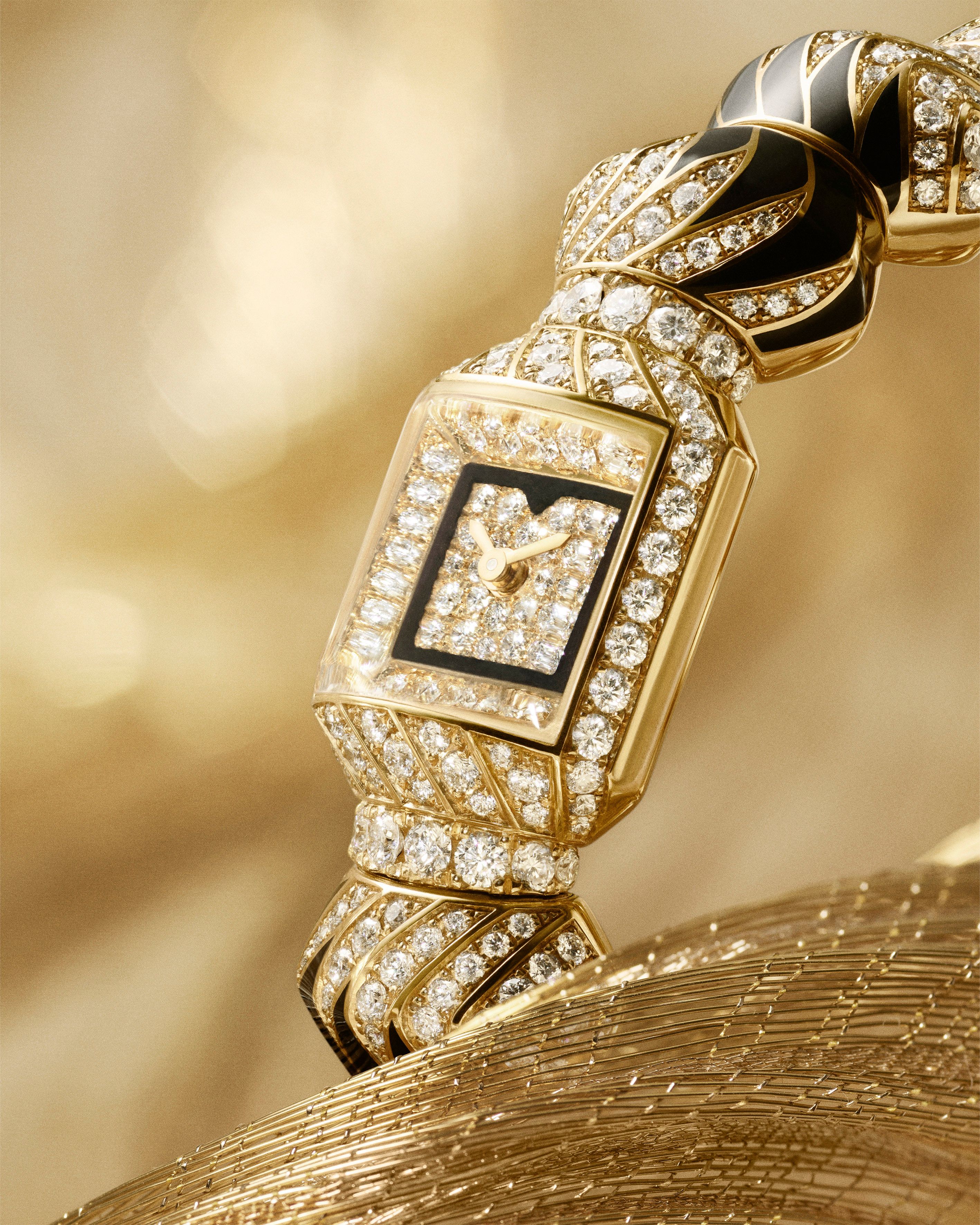
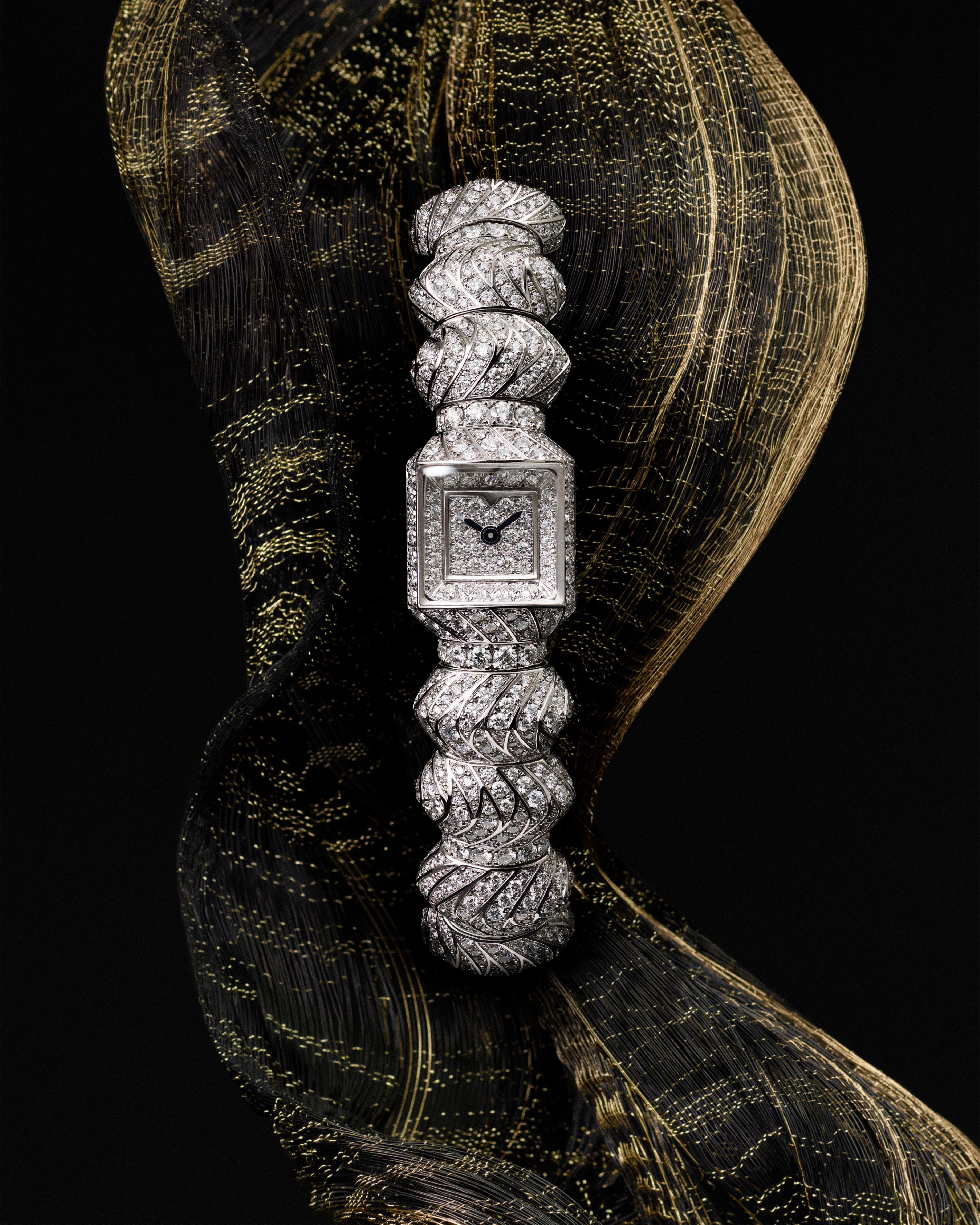
Its construction is strikingly unconventional. Without a visible clasp, the bracelet flows as a sequence of gem-set elements, strung together like talismans. Curves contrast with geometry from the domed crystal to the pavé dial framed in onyx while touches of black lacquer add graphic precision. Crafted using bead-set diamonds of varying sizes and hand-painted lacquer, the flexible bracelet reflects exceptional savoir-faire from the Maison des Métiers d’Art. In its fully diamond-set version, the watch becomes even more elusive, with light revealing and concealing its contours. Recently, the Cartier Libre, Reflection de Cartier and Tressage de Cartier watches have demonstrated how the Maison's designers like to take things further and create ever more daring pieces.
Santos de Cartier Chronograph: Pushing Boundaries
The pioneering spirit of Alberto Santos-Dumont lives on in the latest Santos de Cartier Chronograph, a watch that balances performance with everyday elegance. A refined evolution of the 2020 model, this new iteration enhances proportions and versatility across gold, steel and two-tone versions. Its design remains rooted in the Maison’s legacy of innovation, dating back to 1904 when Louis Cartier created one of the first modern wristwatches for Santos-Dumont.

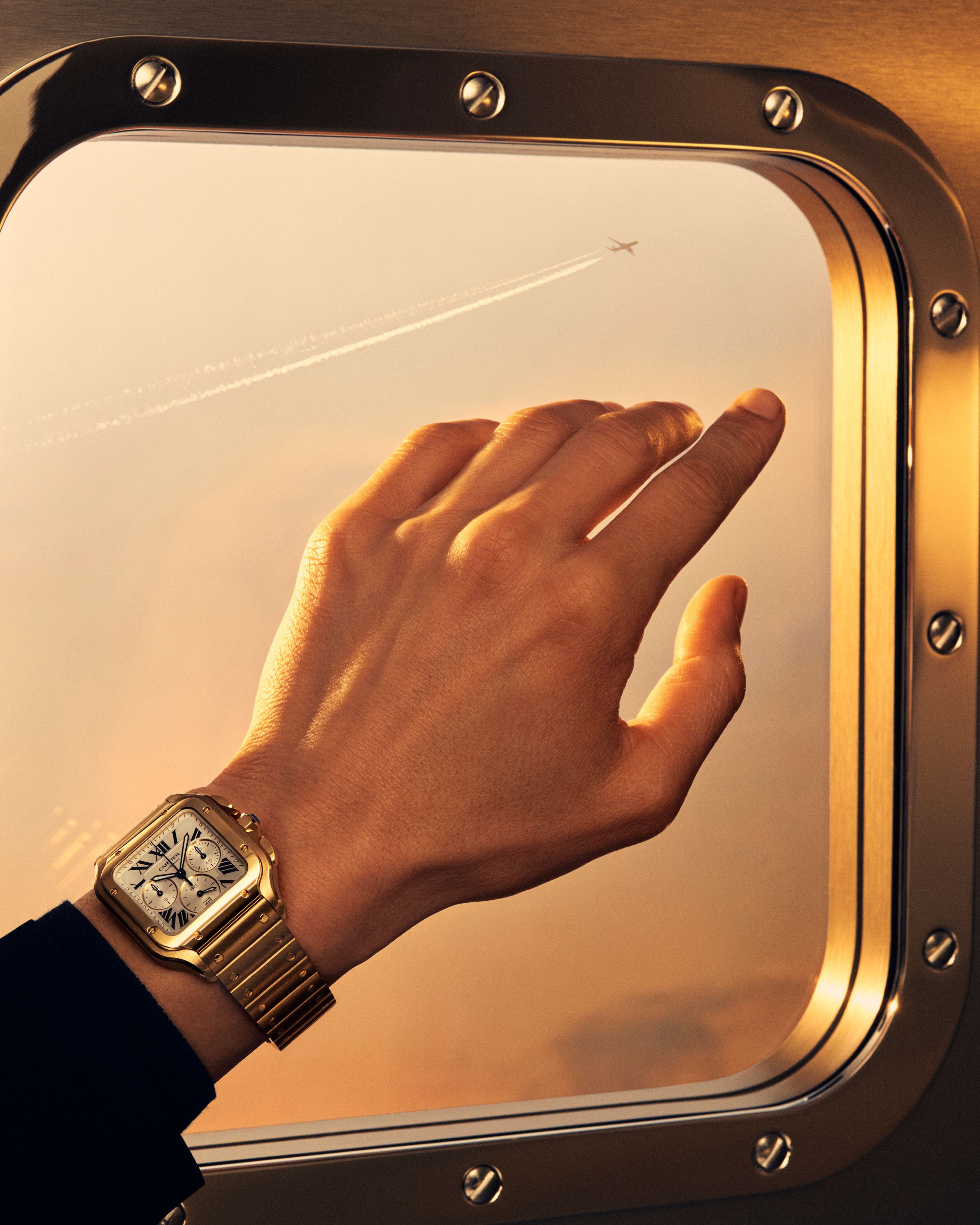
In its large model (47 x 40 mm), the chronograph sharpens its technical edge while preserving the purity of the Santos aesthetic. The dial pairs satin and sunray finishes with bold contrasts, featuring three counters and luminescent sword-shaped hands for optimal legibility. Signature elements from the exposed screws to the faceted crown underscore its iconic identity. Powered by the automatic 1904-CH MC calibre, the watch delivers precision and reliability with a 47-hour power reserve. Built for daily wear, it offers water resistance up to 10 bar along with resistance to shocks, magnetic fields and temperature variations. Ergonomics are equally considered, with the SmartLink™ system for easy bracelet adjustment and QuickSwitch™ for seamless strap changes. A true instrument of performance, the Santos chronograph continues to move with purpose.
Santos-Dumont: Refined Dandyism
Elegant and expressive, the Santos-Dumont channels the unmistakable dandyism of Alberto Santos-Dumont a man known as much for his style as his pioneering spirit. At its heart lies a striking gilded obsidian dial, a material prized for its iridescent depth created by microscopic air bubbles. At just 0.3 mm thick, its execution demands exceptional precision, with each piece polished to reveal a unique play of light.
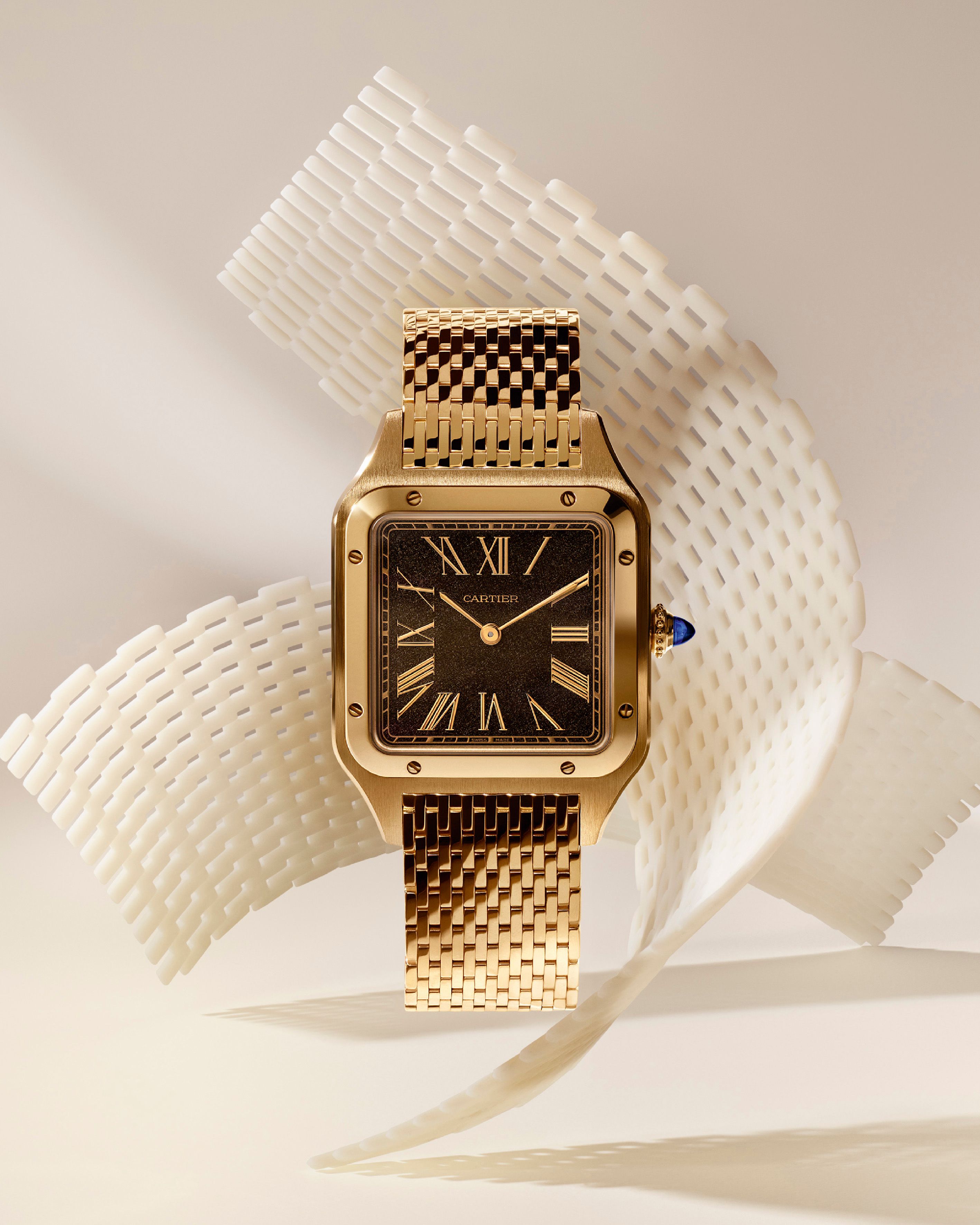
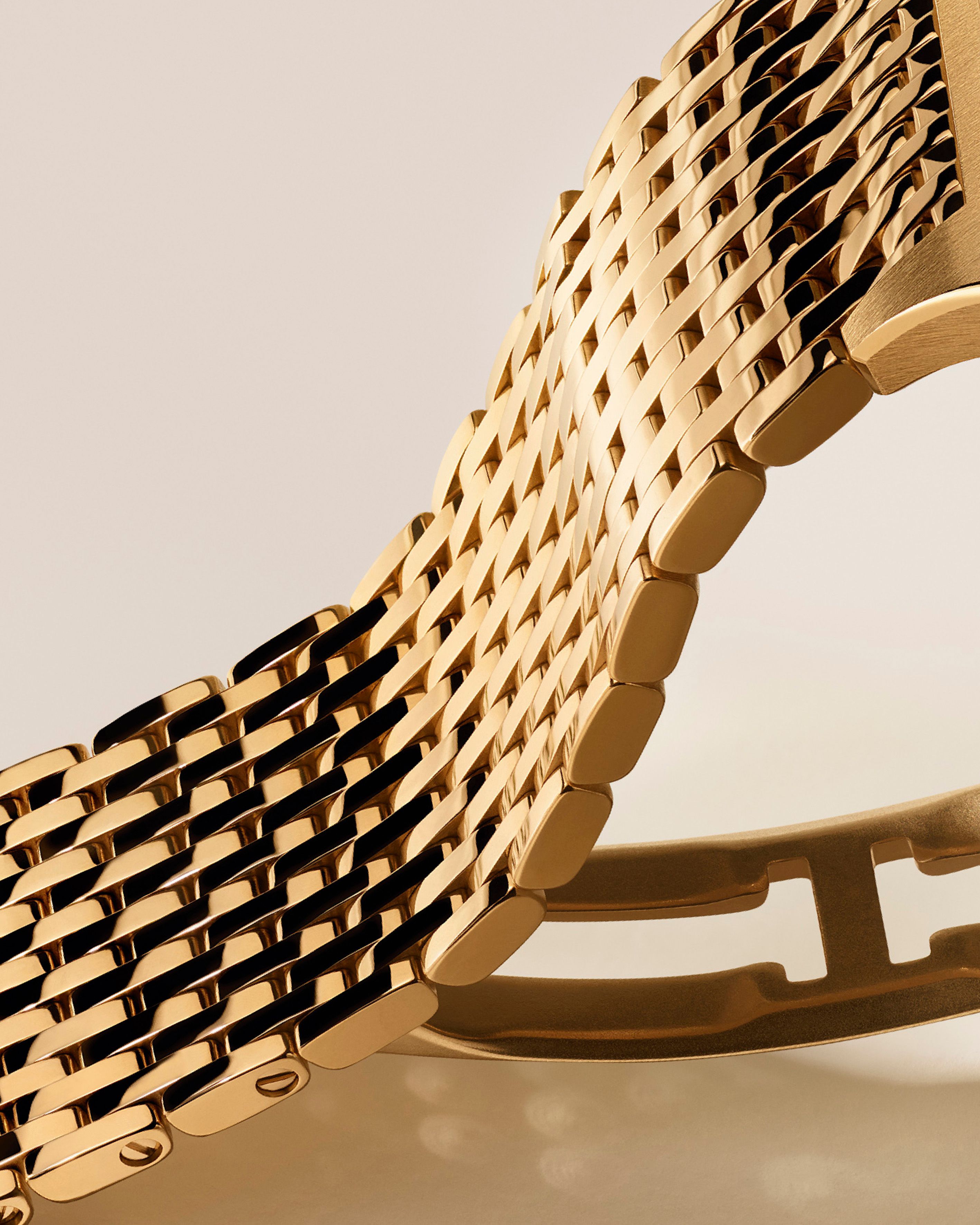
The yellow gold bracelet, inspired by Cartier’s 1920s made-to-measure designs, is a feat of fluid engineering. Composed of hundreds of finely finished links, it drapes seamlessly on the wrist, combining suppleness with a distinctly precious feel. Powered by the hand-wound 430 MC manufacture movement, the collection expands with new large models in yellow gold, gold and steel, and platinum some featuring silvered satin-finish dials with a subtle sunray effect. A study in restraint and refinement, the Santos-Dumont remains an icon of understated sophistication.
Baignoire: Texture Meets Form
With this latest evolution, the Baignoire is reimagined through the jeweller’s lens, now fully adorned with the iconic Clou de Paris motif bringing texture, depth and architectural rhythm to its signature oval form. First introduced in 1958 and named in 1973, the Baignoire has long embodied fluidity and elegance. This new interpretation builds on that legacy, extending the Clou de Paris pattern seamlessly across the bangle bracelet, case and dial. The result is a tactile, sculptural surface that plays with light while preserving the watch’s distinctive curves.
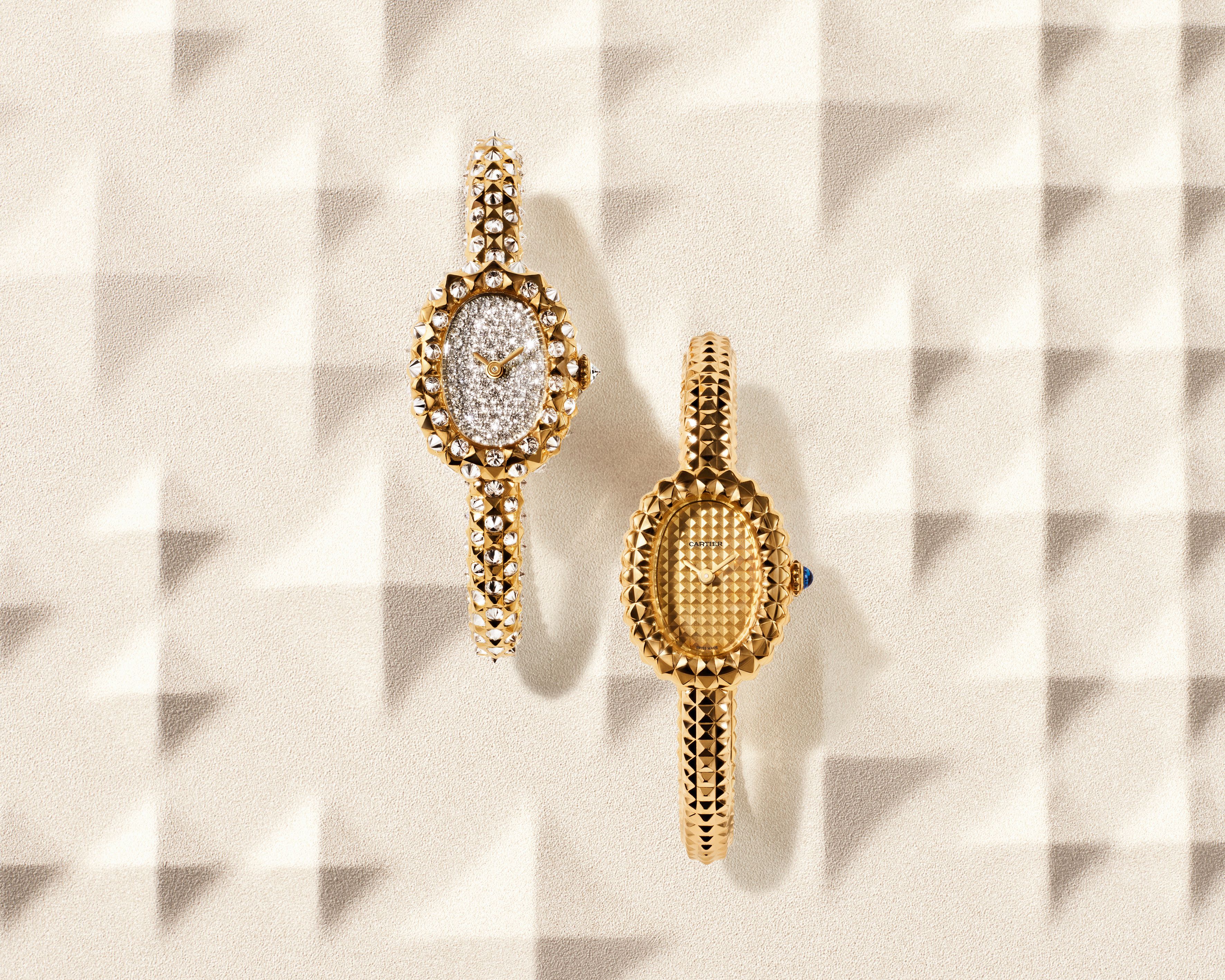
Executing this motif across such rounded volumes requires exceptional precision. Each element is carefully reshaped to maintain harmony, from the flowing bracelet to the discreetly integrated clasp. The final hand-polishing stage enhances the relief, amplifying the interplay of light and shadow. An ultra-precious version elevates the design further, with brilliant-cut diamonds set using snow and inverted techniques to create a dynamic, shimmering surface. A bold fusion of jewellery and watchmaking, the Baignoire once again proves Cartier’s mastery of form, texture and innovation.


