Watches And Wonders 2026: IWC Expands Its Tool Watch Prowess With Over-Engineered Novelties
 6 min read

At Watches and Wonders 2026, IWC Schaffhausen has delivered a collection which depicts an assertion of technical authority spanning spaceflight engineering, avant-garde materials science, and a thoughtful reimagining of classical complications. This is a year in which IWC does not merely iterate - it recalibrates.
In the halls of Palexpo, IWC goes full throttle via elevated engineering.
The defining narrative of IWC’s Watches and Wonders 2026 releases is one of synthesis, where the brand’s longstanding pillars (pilot’s watches, the Ingenieur, and calendar complications) are not simply revisited, but fundamentally rethought. This is not a brand hedging its bets. This is a demonstration of absolute mastery.

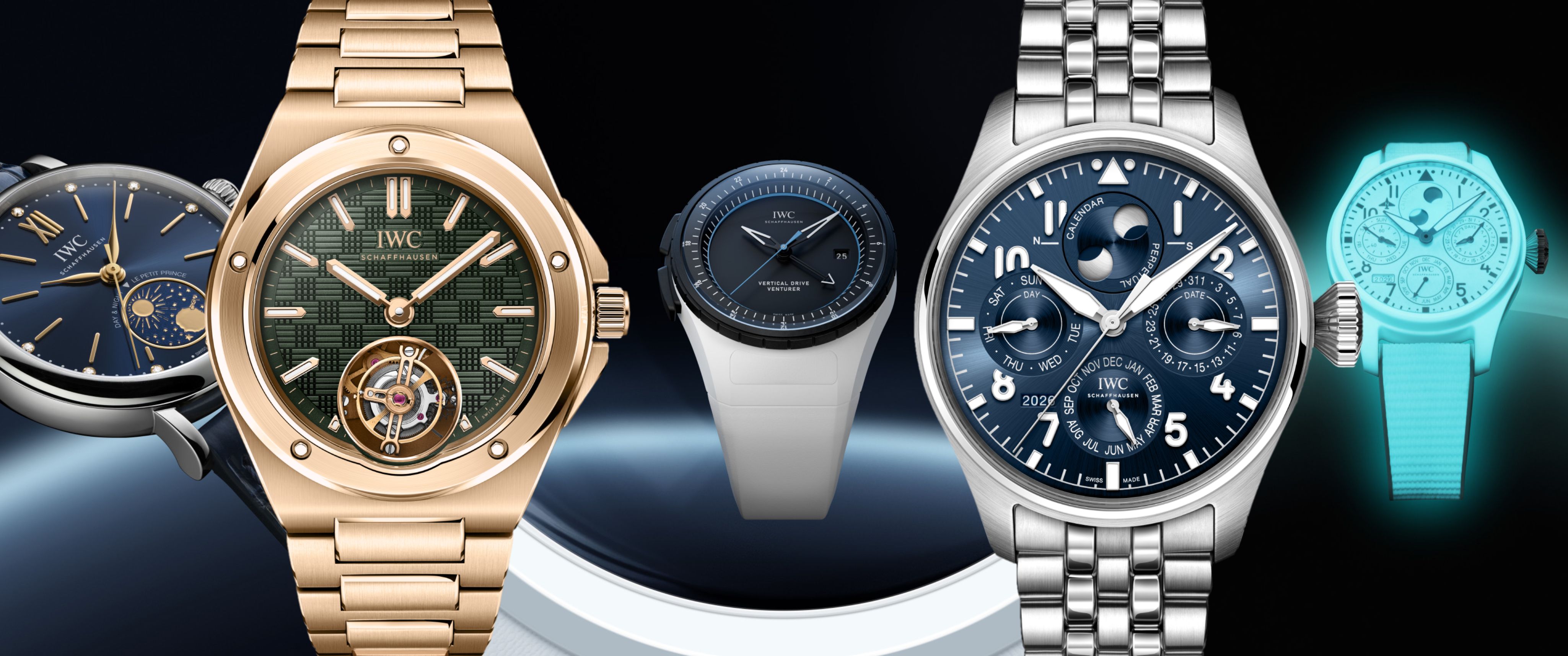
IWC has launched a product offensive that spans the Ingenieur, Pilot, and Portofino families with a technical audacity that feels uniquely Swiss and distinctly engineered for the 21st century. From a tourbillon to a white ceramic chronograph, here is the definitive breakdown of the most compelling releases from the "Engineer of Watchmaking" this year.
Part I: The Final Frontier - The Pilot’s Venturer Vertical Drive
Let us begin where physics ends: Low Earth Orbit.
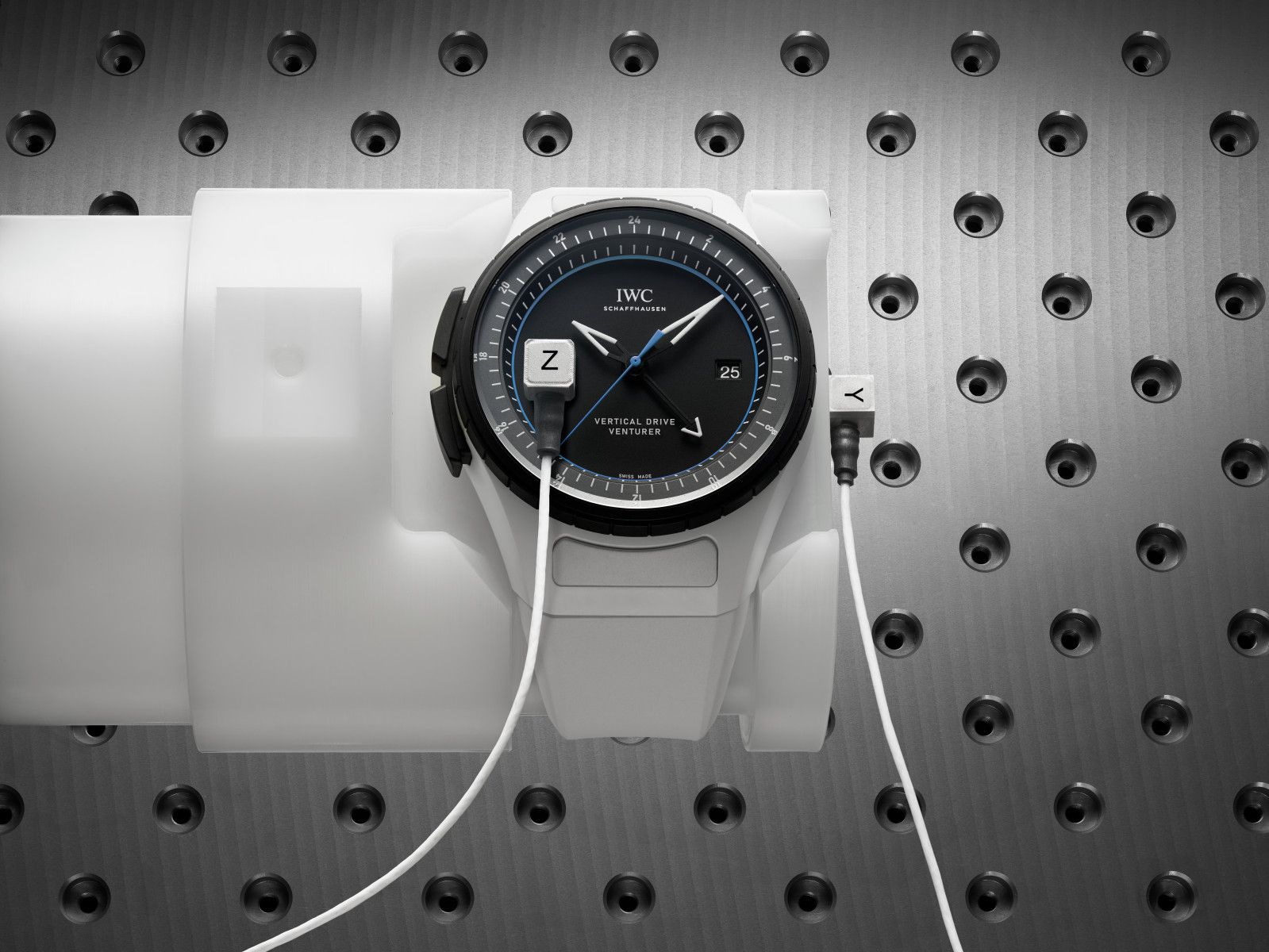
The headline act, and arguably the most significant tool watch of the year, is the Pilot’s Venturer Vertical Drive. For decades, we have debated "tool watches" as a purely aesthetic category. IWC has obliterated that notion. This watch has been engineered and certified for human spaceflight.
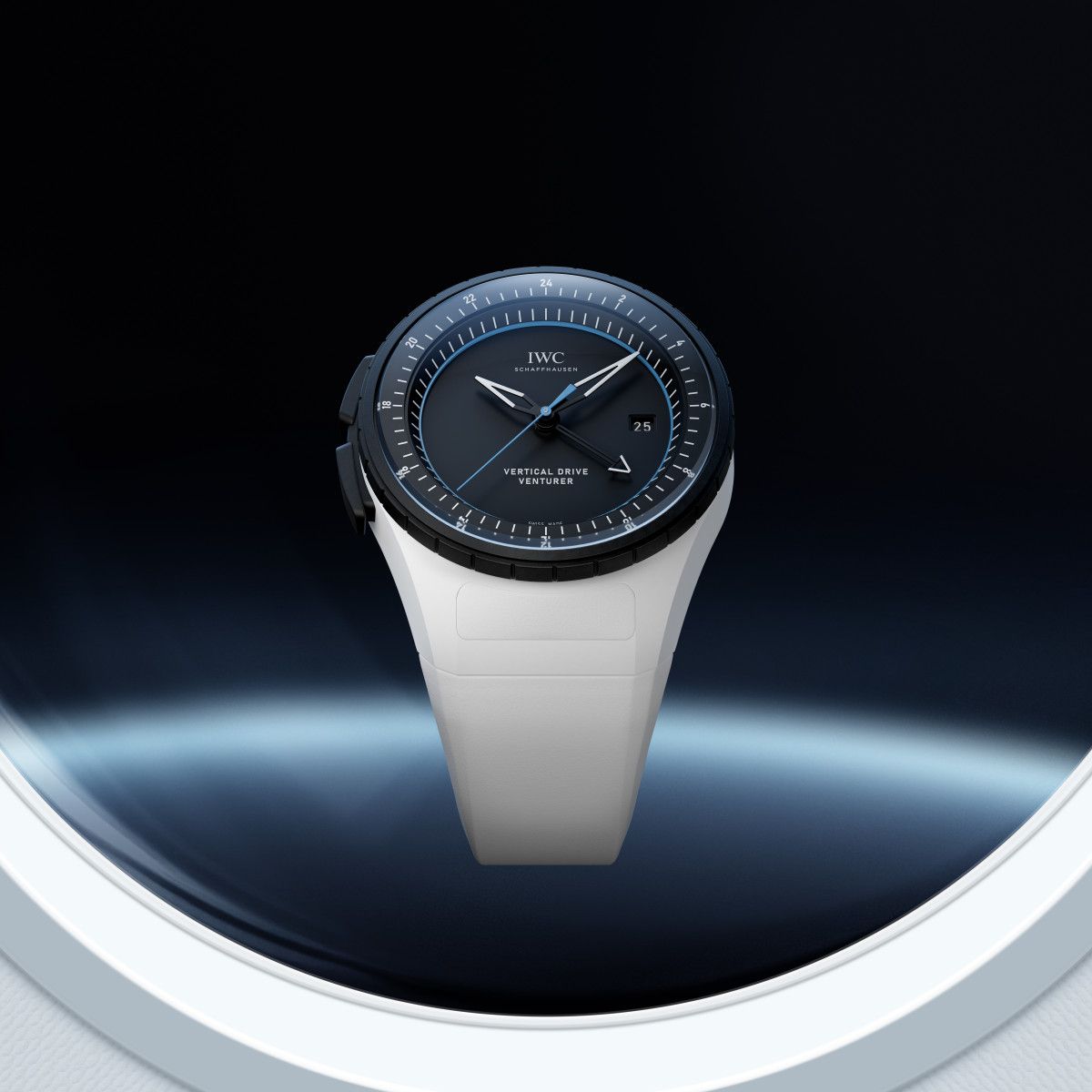
Yes, you read that correctly. While most "space" watches are simply flight-qualified, the Venturer Vertical Drive is built for the brutal, high-acceleration environment of commercial spaceflight. The key differentiator here is the mechanical vertical drive mechanism - a complication that allows astronauts to switch between functions with the tactile, muscle-memory precision required when wearing a pressurized suit. It eschews the traditional pusher for a more robust, glove-friendly interface. A rocker switch located on the side of the case enables the wearer to change between various functions, including winding the movement and setting the home or mission times.
From a materials science perspective, this is IWC doing what IWC does best: solving physical problems with chemistry. The case utilizes a proprietary grade of titanium, ensuring that the instrument remains light enough to not interfere with suit dynamics but robust enough to handle the intense vibrations of launch. If the Genta-esque Ingenieur is the luxury sports car, the Venturer Vertical Drive is the lunar lander. It is a reminder that IWC’s XPL division isn't just playing with R&D, they are building the future of human exploration.
Part II: The Return of the King - The Proset Perpetual Calendar and Ceralume
If spaceflight represents the future, the IWC Proset represents the perfection of the past. Kurt Klaus changed watchmaking forever in the 1980s with a single-crown controlled perpetual calendar. For 2026, IWC has redefined the architecture of the calendar yet again with the IWC Proset which debuts in three editions of the Big Pilot’s Watch in 18-carat 5N gold, white ceramic and stainless steel, all powered by the IWC-manufactured 82665 caliber.


The inherent friction with perpetual calendars has always been the "post-2100" problem, or the risk of damaging the movement if corrected backward. The Proset mechanism addresses this with an ingenious mechanical "handover." We are looking at a system that allows for instantaneous, bidirectional setting of all displays via the crown.
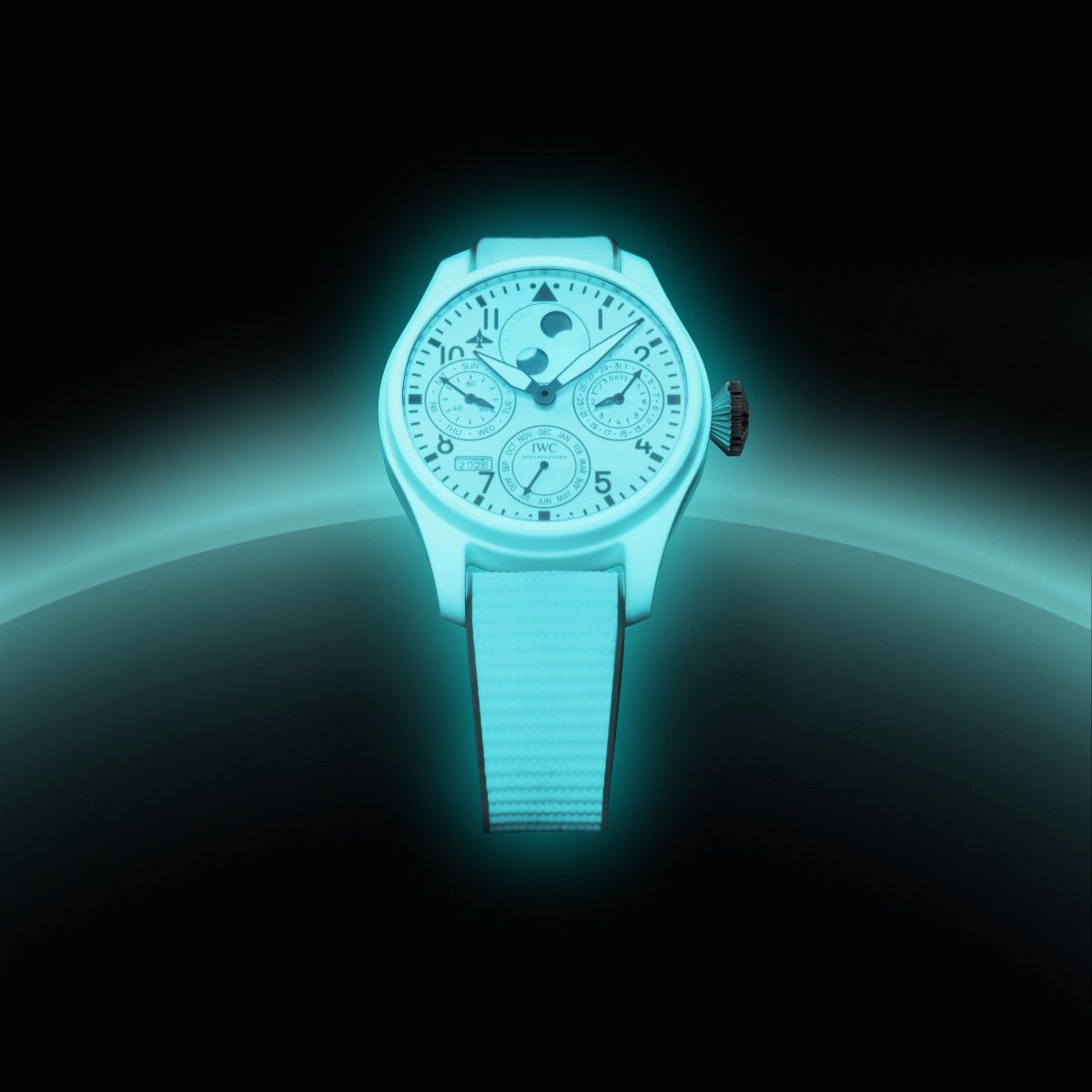
The visual anchor of the calendar novelties , however, is the new Big Pilot’s Perpetual Calendar Ceralume. For the first time, IWC has produced a fully luminous ceramic case. We are not talking about lume painted on a bezel, we are talking about the entire watch case, a solid block of high-tech ceramic, glowing in the dark. It is a Frankenstein-esque marriage of haute horlogerie and high-visibility safety gear. The Big Pilot’s Perpetual Calendar Ceralume looks like a piece of industrial architecture during the day and a ghost in the machine at night. It is absurd. It is brilliant. And it is utterly unique.
Part III: The Genta Renaissance - The Ingenieur Lineup
Gerald Genta’s 1976 Ingenieur SL is the godfather of the integrated bracelet sports watch. IWC has spent the last two years refining that legacy, and in 2026, they have weaponized materials science to an almost absurd degree.
Ingenieur Tourbillon 41
This is the flagship. Housed in 18-carat 5N gold with a dark olive green "Grid" dial, it features a flying minute tourbillon at 6 o'clock. The Caliber 82905 provides an 80-hour reserve, and the use of Armor Gold for the functional bezel screws ensures the structural integrity Genta intended.
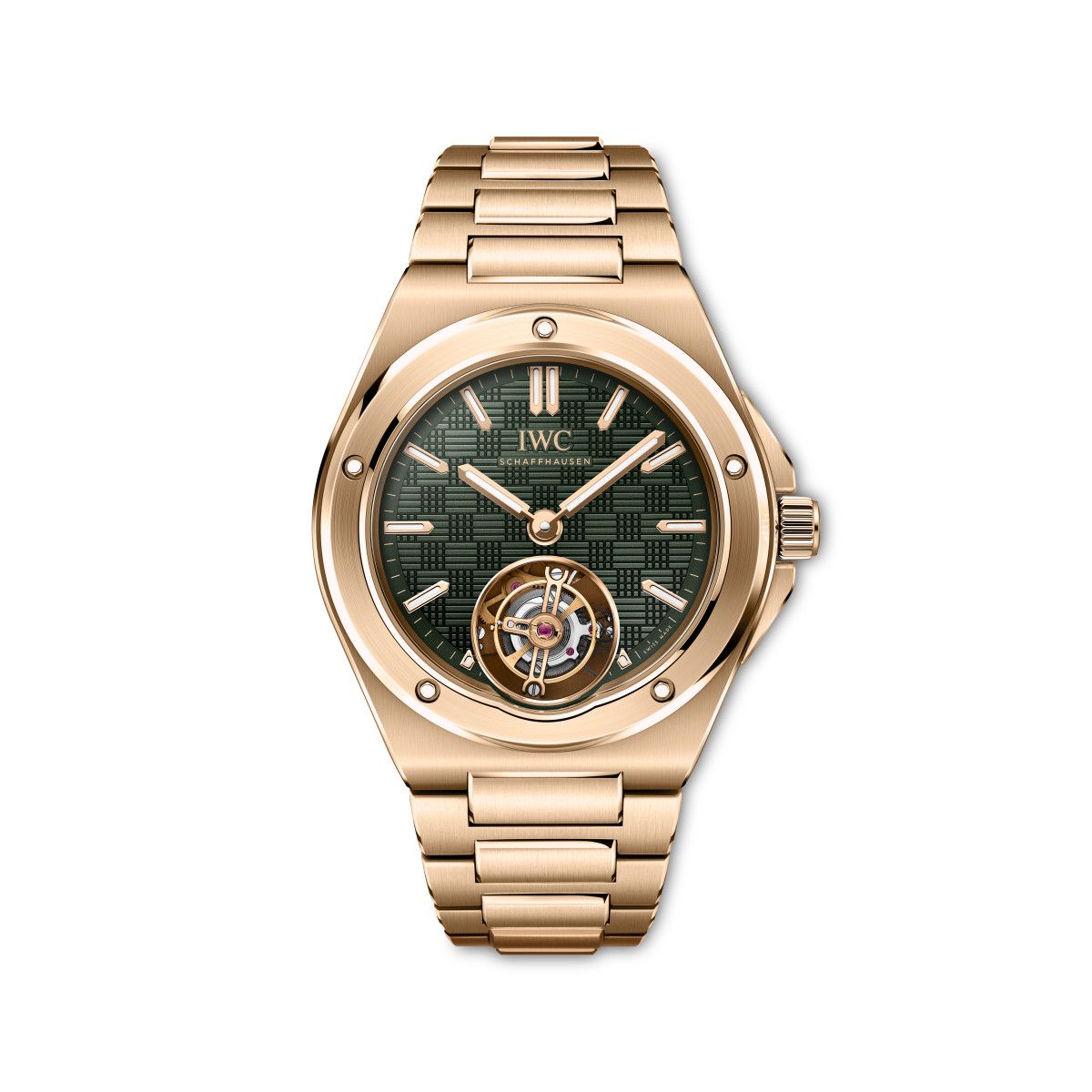
The Ingenieur Tourbillon 41 (Ref. IW345901) introduces haute horlogerie into what was once a purely utilitarian framework. The juxtaposition is striking: a complication emblematic of chronometric refinement housed within Gérald Genta-inspired industrial design language.
Ingenieur Perpetual Calendar 41 Titanium
This is the lightest perpetual calendar watch IWC has ever made. Grade 5 titanium is notoriously difficult to polish and satin-finish, yet the ref. IW344904 reveals a "monolithic" look where the matte grey dial is virtually indistinguishable from the case. This watch disappears on the wrist. It offers the full Klaus calendar (accurate for 577.5 years) without the heft of precious metal. For the engineer who wants a heavy-duty complication in a weightless package, this is the spec-sheet winner.

Ingenieur Automatic 42 - Dark Olive Green Ceramic
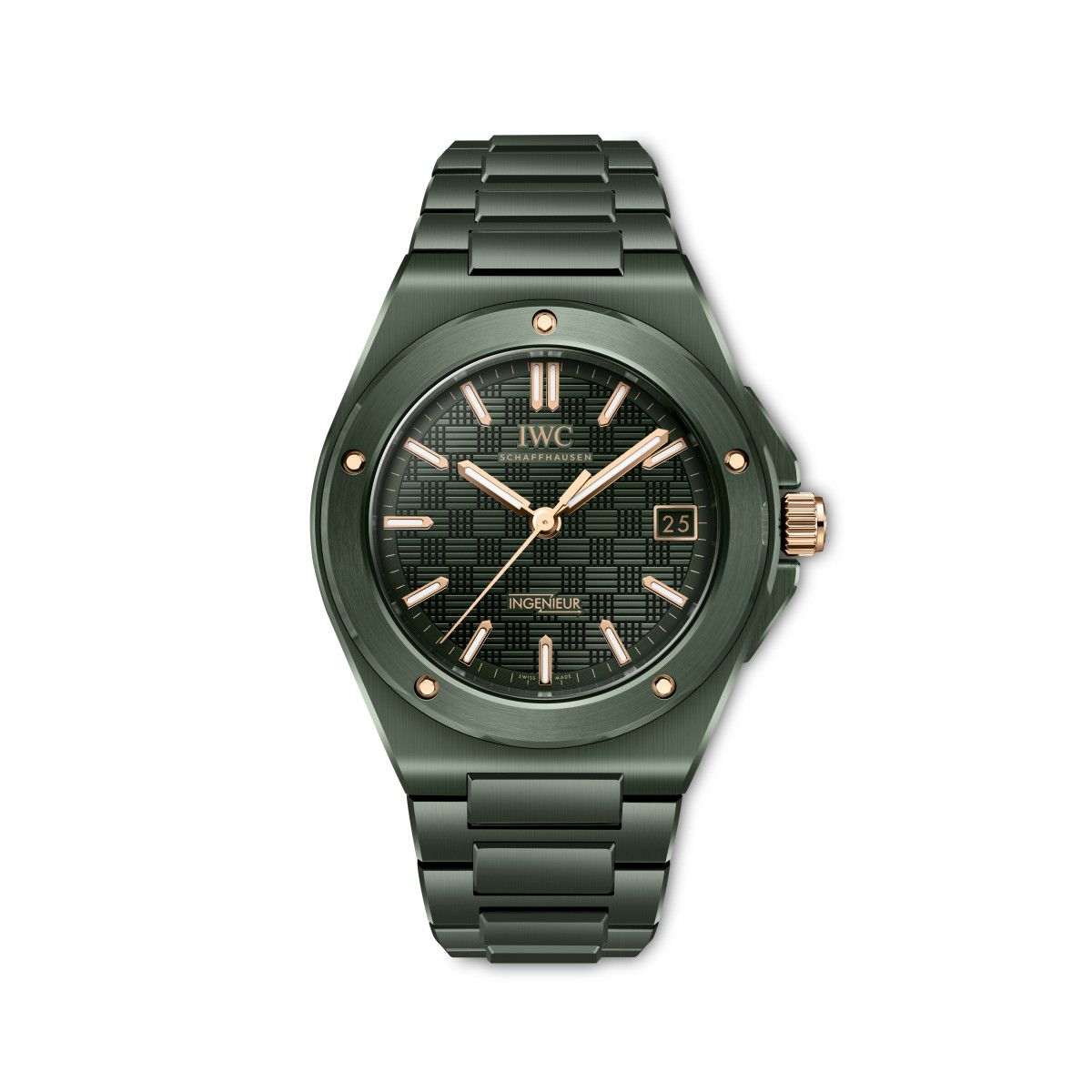
Ceramic is hard, color ceramic is a nightmare. IWC has mastered the sintering process to an exact science, debuting the Genta design for the first time in a full Dark Olive Green ceramic execution (Ref. IW338902). The risk with ceramic is always a lack of warmth, so IWC has counter-programmed the green with 18-carat 5N gold for the crown and Armor Gold for the bezel screws. The contrast is jarring in the best possible way - military utilitarianism meets high jewelry.
Ingenieur Automatic 35
For those with smaller wrists (or simply refined taste), the 35mm collection gets two major updates: a stunning Blue dial (IW324907) that recalls the vintage ref. 866AD, and a diamond-set bezel model (IW324911) featuring 45 white diamonds on a 5N gold bezel. This latter model is particularly interesting; it proves that the hexagonal bezel screw design works just as well in a dressy context as it does in a tool context.


Part IV: The Little Prince Lands in Ceramic
Antoine de Saint-Exupéry’s Le Petit Prince has been a perennial muse for IWC, but 2026 marks two paradigm shifts for the collection.
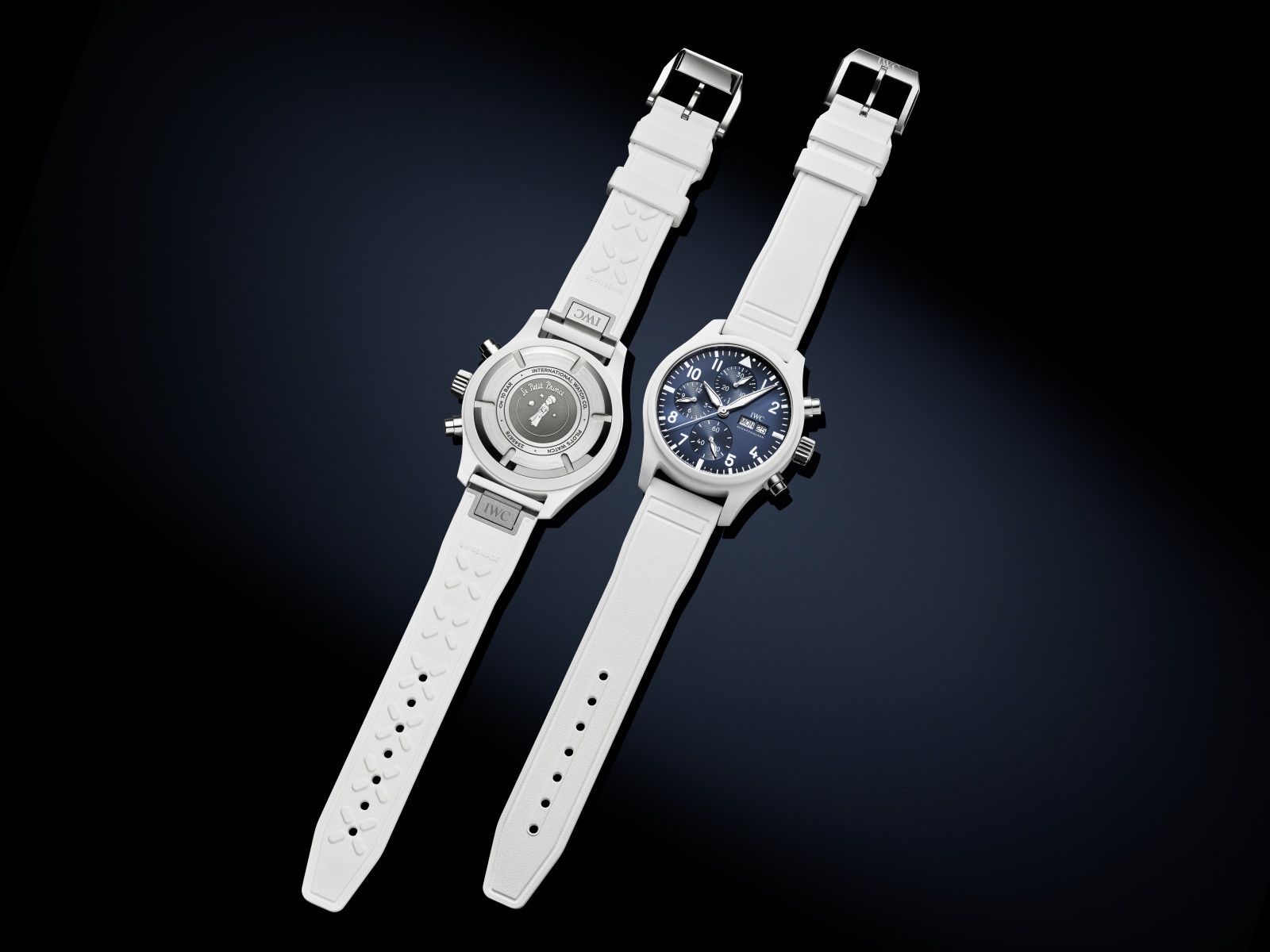
The Pilot’s Watch Chronograph 41 Le Petit Prince in White Ceramic
We have seen blue dials. We have never seen a white ceramic Pilot’s chronograph (Ref. IW389410). The stark, clinical white of the zirconium oxide case provides the perfect canvas for the deep blue sunburst dial. It looks like a frozen planet against a void of space. The engraving of the Little Prince on the titanium case back offers a moment of quiet humanity on a watch that otherwise looks like a piece of stealth aerospace equipment. This is the sportiest "Le Petit Prince" ever made.
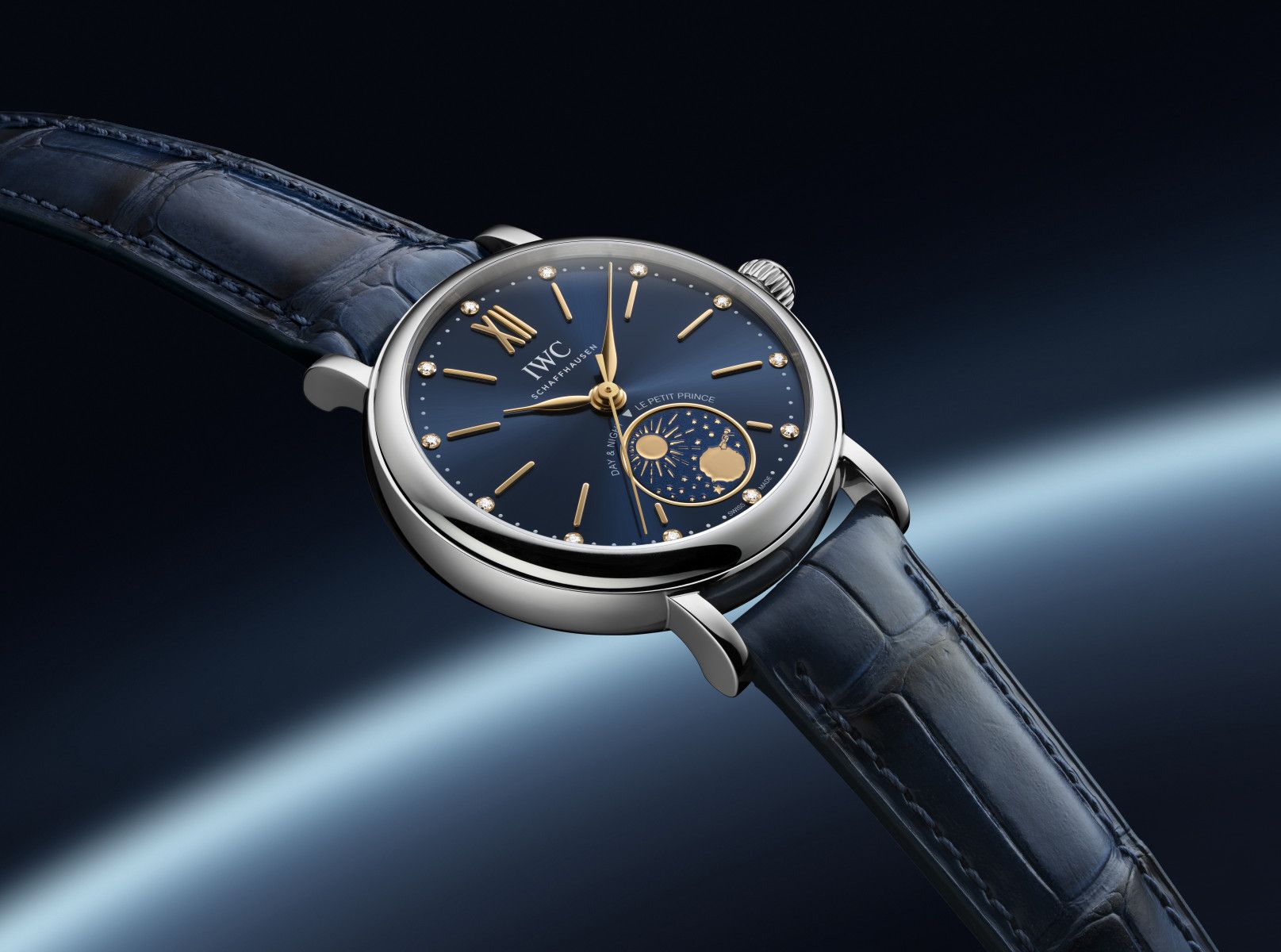
The First Portofino Le Petit Prince
Perhaps the most emotionally resonant release is the Portofino Automatic Day & Night 34 (Ref. IW459806). For the first time, the Prince appears on the dial itself - not just the case back. In the day-night display at 6 o’clock, the Little Prince stands on a golden moon, gazing at the stars. It transforms a simple complication into a stage for literature. Combined with the Santoni blue leather strap, this 34mm watch shifts the Prince collection away from pure "pilot" territory and into the realm of elegant, unisex dress watches.
The New IWC Le Petit Prince Pilot’s Watches
IWC’s Pilot’s watches too have drawn inspiration from Antoine de Saint‑Exupéry’s timeless and deeply cherished tale, The Little Prince. To celebrate the 20th anniversary, IWC has unveiled five Le Petit Prince Anniversary Edition Pilot’s Watches: two Mark XX models in stainless steel and 5N gold cases, 41 mm and 43 mm Pilot’s Chronographs, and a quietly revered but often overlooked piece, the Pilot’s Watch Automatic 36. Each watch is defined by the signature deep‑blue dials associated with the Little Prince universe, while the solid caseback bears a delicate engraved portrait of the Little Prince himself.


The Verdict
IWC has played a daring game in 2026: they have doubled down on niche engineering. The Venturer Vertical Drive could have just been a dual time display, instead, it’s a space-grade instrument. The Proset could have just been a calendar, instead, it’s a glowing ceramic behemoth.
Critics might call it schizophrenic to move from the literary romance of The Little Prince to the hard vacuum of spaceflight. But that misses the point. Whether it is a glowing Big Pilot, a green ceramic Ingenieur, or a prince standing on a moon, IWC is telling a unified story: Emotion, Engineered.
It is the hardest trick in watchmaking to make a machine feel human. In Geneva this year, IWC made it look easy.