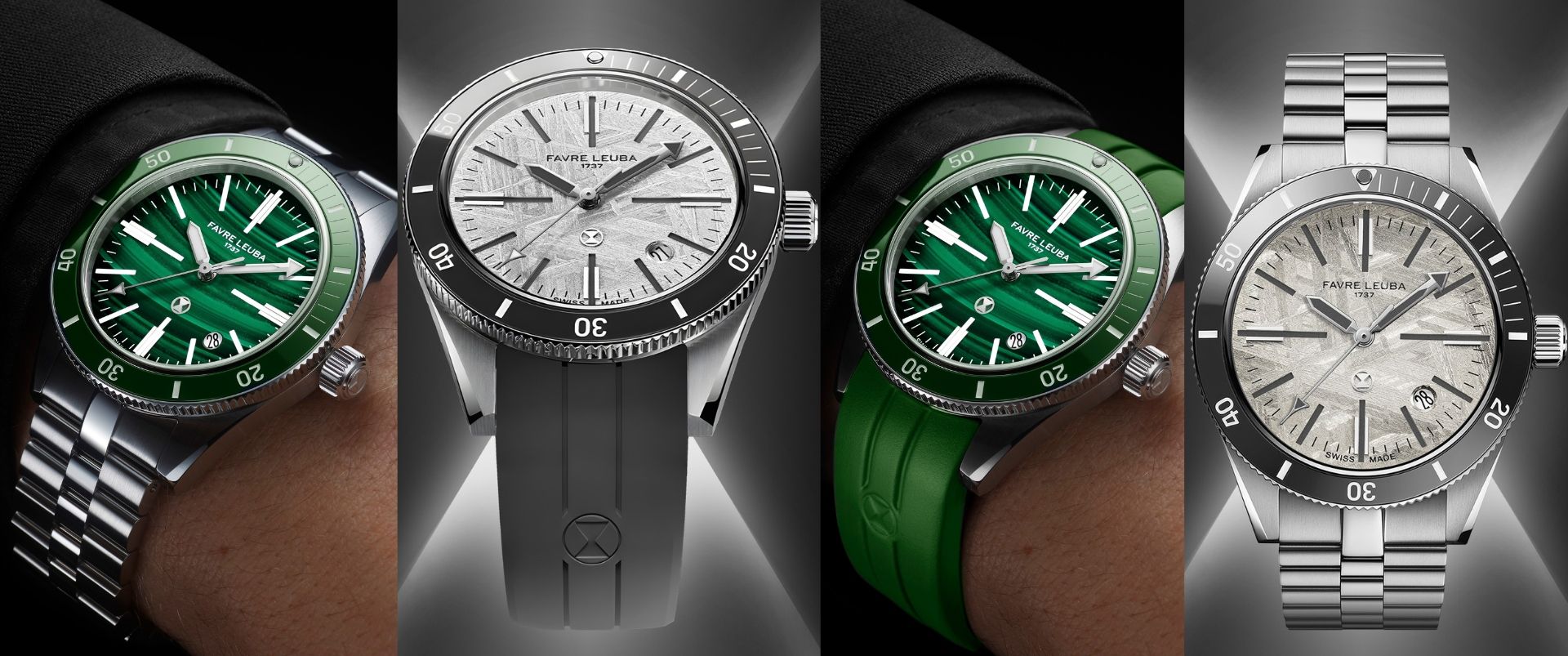
Favre Leuba Deep Raider Renaissance: Meteorite And Malachite
 7 min read

Favre Leuba occupies an unusual position in contemporary watchmaking. Founded in 1737, the maison predates most of the names we consider pillars of Swiss horology, yet it operates today with considerably less fanfare than its younger competitors. The brand has spent recent years methodically rebuilding its identity around dive watch heritage, specifically the Deep Blue lineage that traces back to 1964. Now, with the introduction of meteorite and malachite dial variants to the Deep Raider Renaissance collection, Favre Leuba is making its first foray into stone dials in 288 years of operation. This is not incremental development. It represents a material departure from convention, both literally and strategically. The question is whether the execution justifies the ambition.
Context and Collection Philosophy
The Deep Raider Renaissance exists as a bridge between archive and modernity. While it draws visual cues from the 1964 Deep Blue, particularly in its dial architecture and proportions, the collection was reinterpreted in 2024 with contemporary sizing and finishing standards. The 40mm case diameter positions it squarely in the modern tool watch sweet spot, accessible to a broad range of wrists without sacrificing presence. The ceramic bezel, applied indices, and display caseback are concessions to current market expectations, but the silhouette remains honest to the original design language. These new stone dial editions extend that philosophy into material exploration. Both the meteorite and malachite versions maintain the same case construction, movement, and water resistance specifications as the standard Renaissance models. What changes is the visual and tactile experience of the dial, which becomes the primary point of differentiation.
The Meteorite Dial: Muonionalusta and Technical Complexity
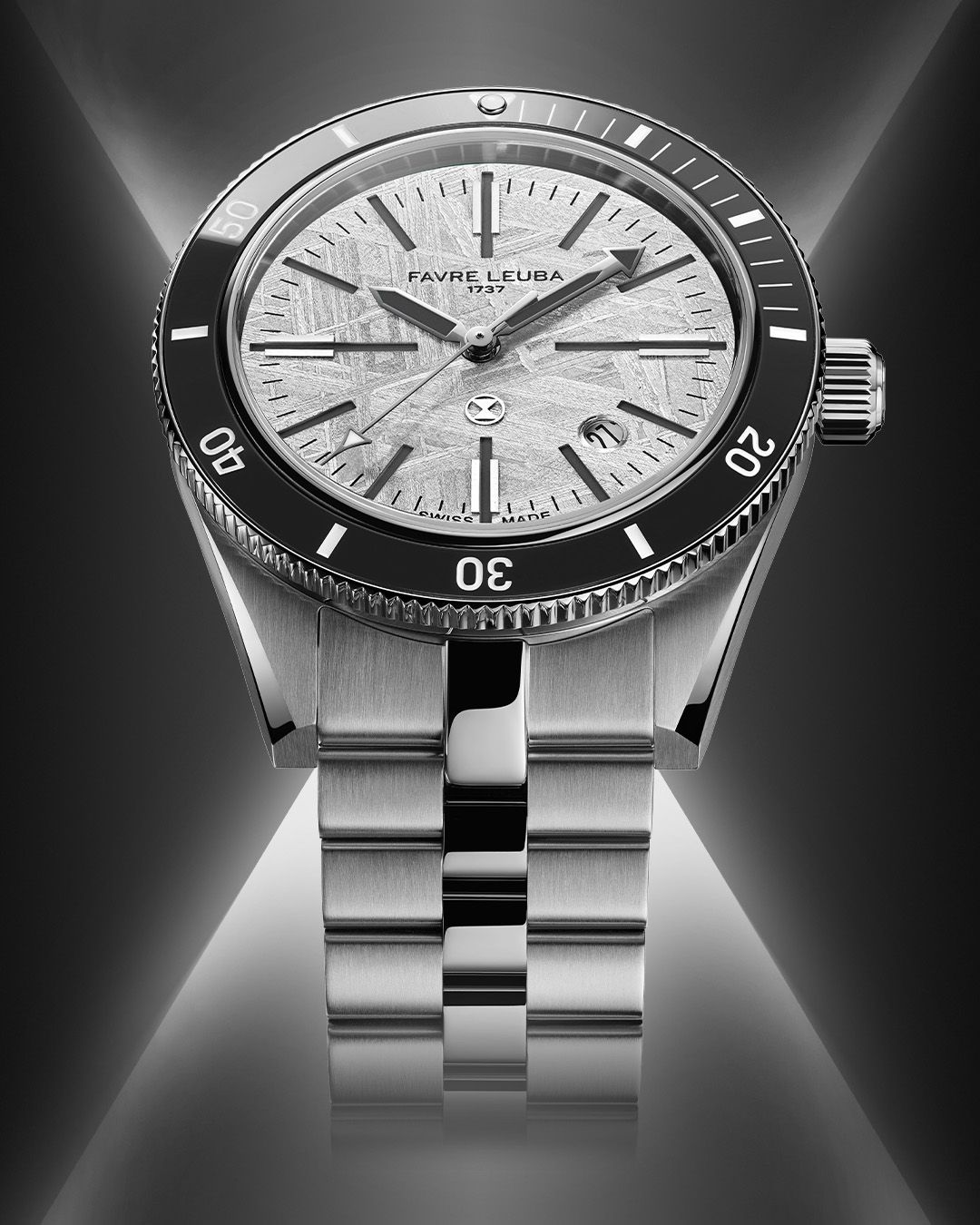
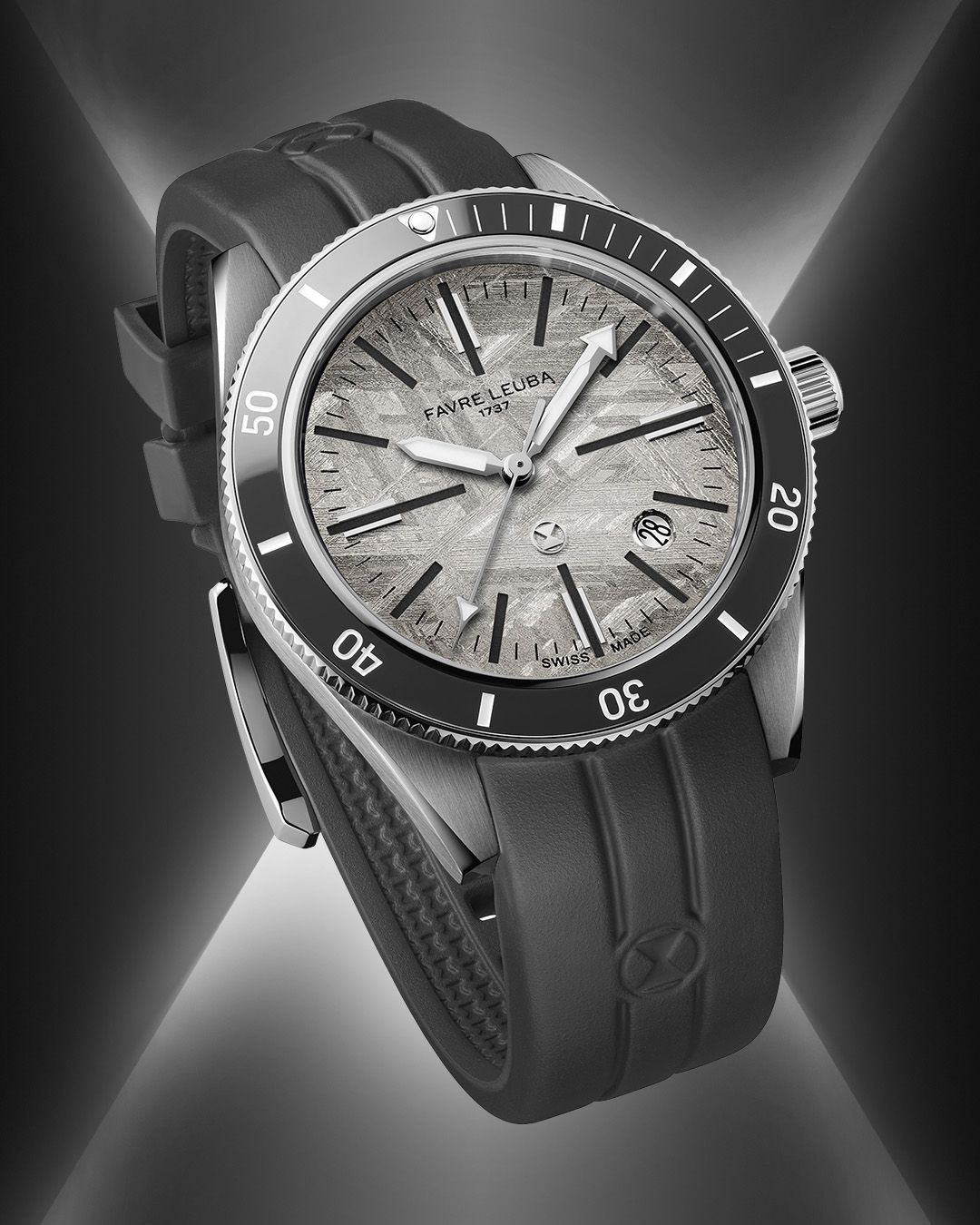
The Deep Raider Renaissance Meteorite uses Muonionalusta, an iron meteorite sourced from northern Sweden. This is not a decorative choice made lightly. Muonionalusta is among the oldest meteorites ever discovered, with an estimated age exceeding one billion years. Its composition of iron, nickel, kamacite, and taenite produces the Widmanstätten pattern, a crystalline structure that forms only under conditions of extreme slow cooling over millions of years in space. When sliced thin and etched with acid, this internal geometry becomes visible as intersecting metallic striations.
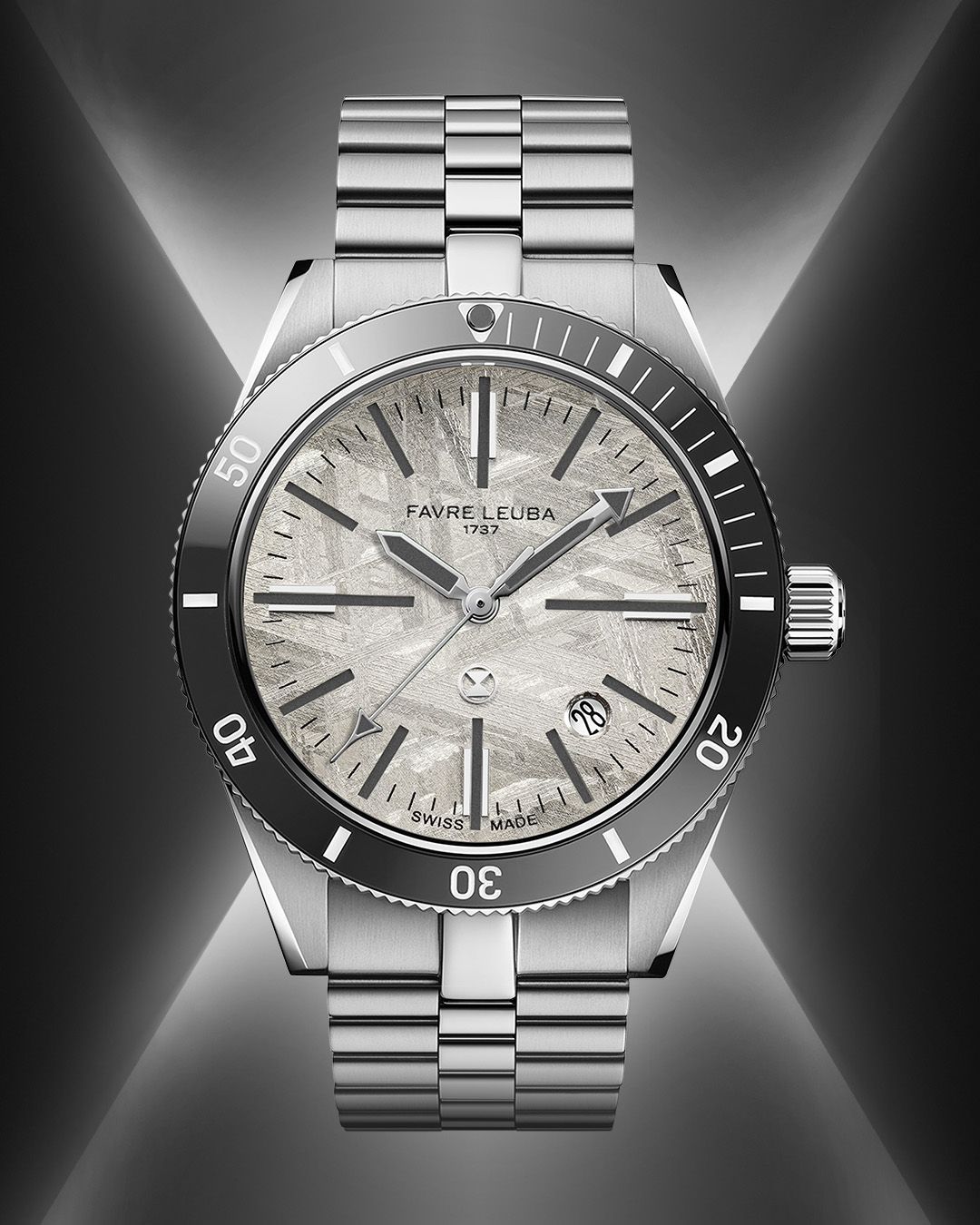
In watchmaking terms, meteorite presents real challenges. The material is brittle due to its high iron content, prone to oxidation, and structurally inconsistent. Each fragment must be evaluated for stability before being cut into thin sections suitable for dial work. The craftsmen at Favre Leuba assess samples individually, selecting only those pieces that can withstand the mechanical stresses of dial production while displaying compelling pattern variation. After cutting, each plate is carefully finished to preserve the extraterrestrial texture without compromising durability. Favre Leuba complicates this further by employing a two-part sandwich construction. The meteorite plate serves as the upper layer, perforated at the hour positions. Beneath it sits a base plate coated in Super-LumiNova, visible through the cut-outs. This creates luminous hour markers with substantial visual depth, a technical solution that addresses the inherent legibility challenges of using a visually dense material like meteorite. The effect is striking in low light, where the lume appears to glow from within the dial's structure rather than sitting atop it. Each piece ships with a certificate of authenticity confirming ethical sourcing, a necessary inclusion given the increasing scrutiny around meteorite provenance in luxury goods. No two dials are identical. The Widmanstätten patterns vary in density, angle, and contrast depending on where the slice was taken from the original fragment.
The Malachite Dial: Geological Storytelling
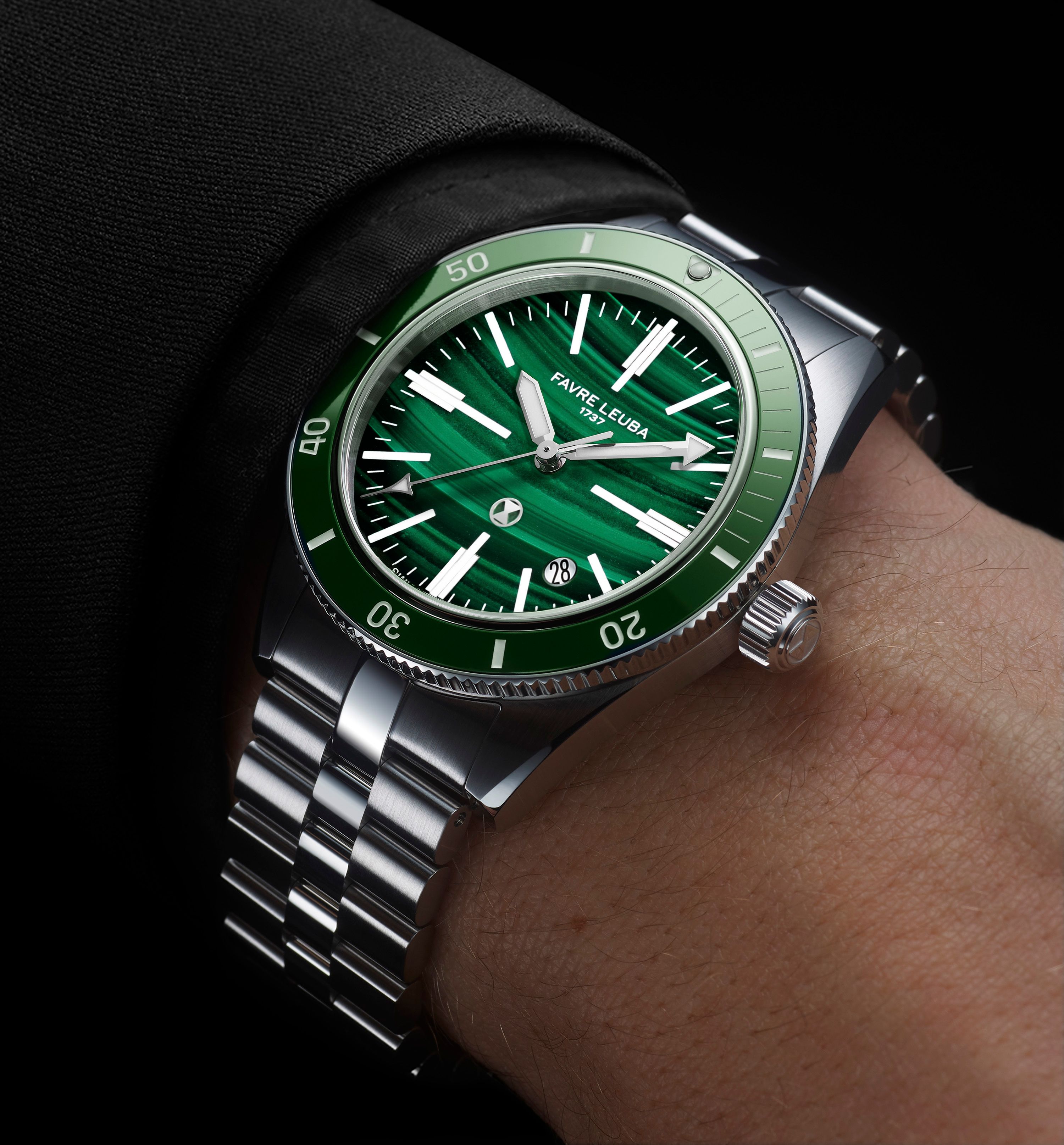
Malachite brings a different set of constraints and opportunities. This copper carbonate mineral forms in the oxidation zones of copper deposits, developing its characteristic banded green patterns through rhythmic precipitation over geological time. The result is a material with vivid chromatic intensity and organic visual movement, but also one that is comparatively soft and prone to fracture along its natural veins. Favre Leuba sources malachite sections based on stability and aesthetic merit, prioritizing pieces with well-defined concentric banding and minimal inclusions. The stone is cut into thin plates, reinforced where structural weaknesses exist, and polished at controlled low temperatures to prevent thermal damage. This is patient, incremental work. Rush the polishing process and the heat can cause micro-fractures. Apply too much pressure and the stone's natural layering can delaminate.
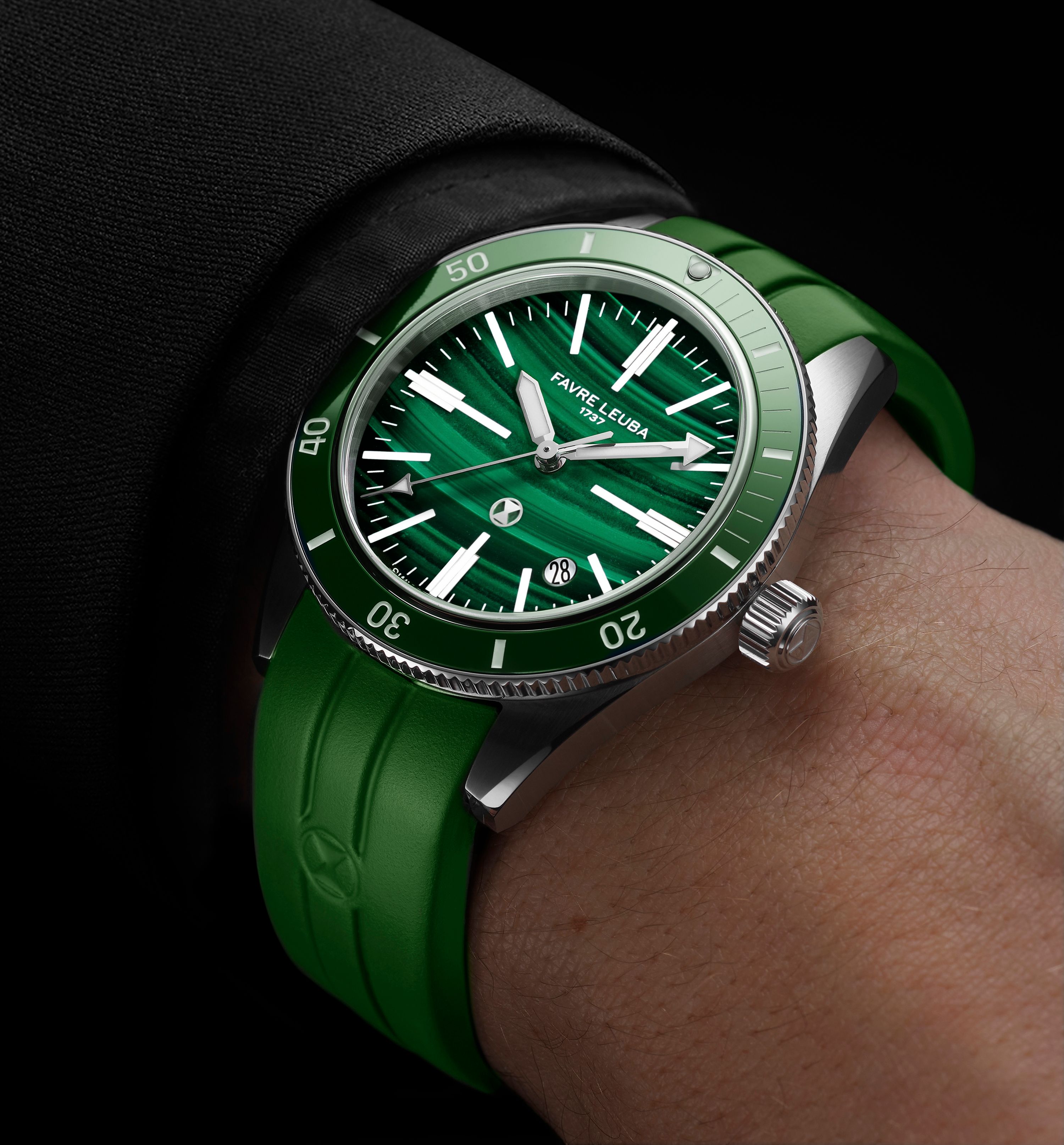
The resulting dial has a depth of field that photographs struggle to capture fully. The concentric rings appear to shift and recede depending on viewing angle and lighting conditions, creating a three-dimensional quality rare in dial design. Unlike the geometric precision of guilloche or the industrial regularity of grained finishes, malachite introduces genuine randomness into the composition. Each dial is a unique geological cross-section, frozen in time and repurposed as horological ornamentation. The green tonality is bold, particularly in a dive watch context where blue and black dominate. It positions the Deep Raider Renaissance Malachite as a statement piece rather than a daily tool, though the water resistance and build quality remain uncompromised.
Case, Movement, and Construction
Both variants share the same technical foundation. The case measures 40mm in diameter and 12.69mm in thickness, executed in brushed and polished stainless steel. Water resistance is rated to 300 meters, adequate for recreational diving and substantially more robust than most dress watches employing decorative stone dials. The unidirectional ceramic bezel rotates with 120 clicks and features a luminous dot at twelve o'clock. The double-domed sapphire crystal carries anti-reflective coating on both surfaces, and the caseback is also sapphire, offering a view of the movement.
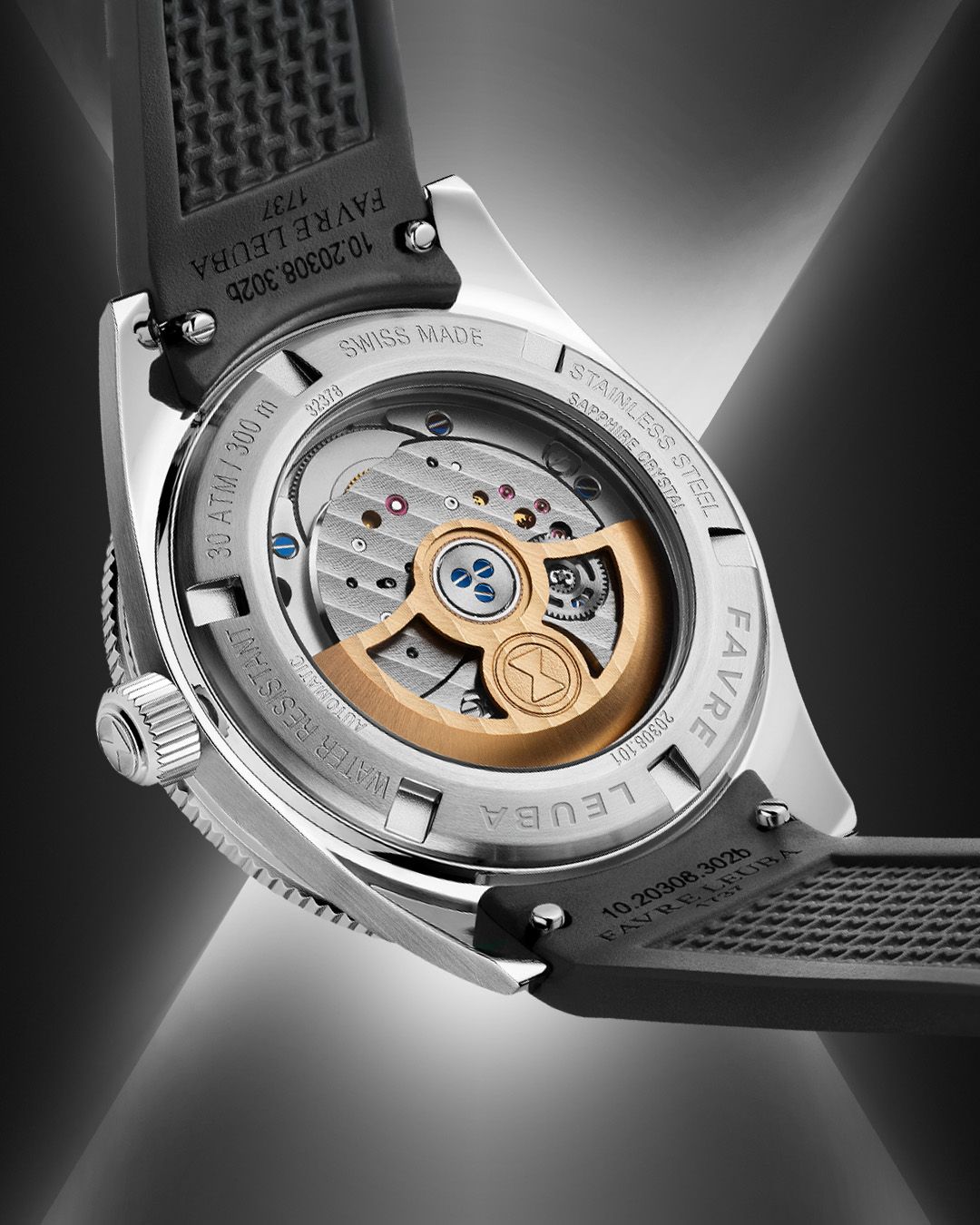
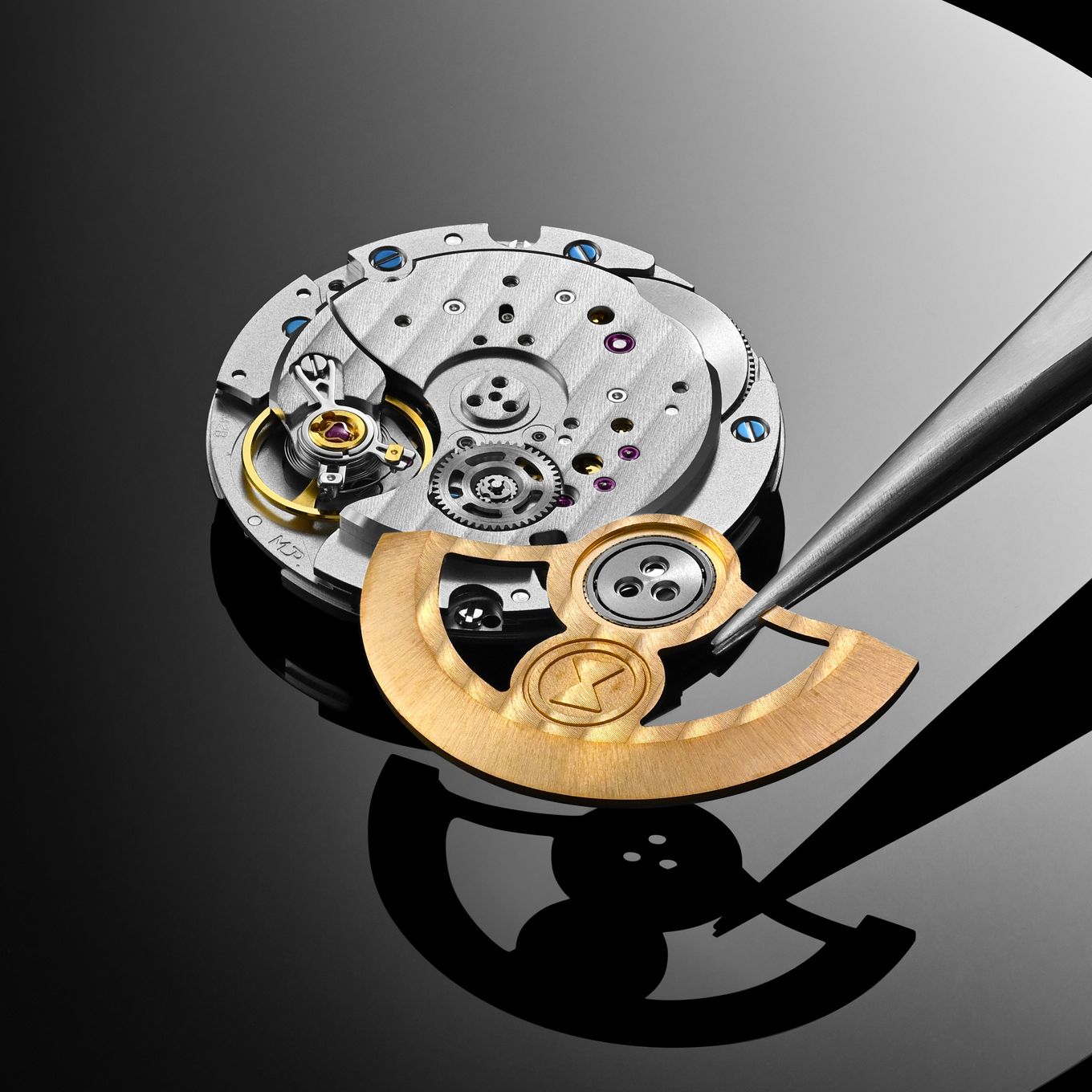
Inside is the FLD02, a self-winding caliber delivering 68 hours of power reserve at a frequency of 28,800 vibrations per hour. The movement architecture features Côtes de Genève finishing on the bridges, blued screws, perlage on the plate, and a skeletonized rotor in a 4N gold tone, engraved with the Favre Leuba emblem. These are finishing touches consistent with Swiss watchmaking standards at this price point, though not exceptional within that context. The movement is robust and serviceable, if not innovative. The integration between case and bracelet deserves attention. Favre Leuba offers both an integrated three-link steel bracelet with mixed brushed and polished surfaces, secured via butterfly clasp, and an FKM rubber strap with pin buckle. The bracelet integration is clean, with no visible gaps or tolerance issues at the endlink junction. The clasp features logo engraving and operates with satisfying mechanical precision.
Pricing and Market Position
The Deep Raider Renaissance Malachite is priced at Rs 2,99,000 on bracelet and Rs 2,89,000 on strap. The Meteorite variant commands Rs 3,29,000 on bracelet and Rs 3,19,000 on strap. In the Indian market, these figures position the watches in direct competition with entry-level offerings from Tudor, Oris, and independent brands like Baltic or Mido at the higher end of their ranges. The premium for the meteorite dial over the malachite reflects both material scarcity and the additional complexity of the sandwich dial construction. Whether that premium is justified depends largely on personal preference for the aesthetic outcome. Both materials carry inherent uniqueness and technical challenges in application. Exclusive distribution through Ethos in India limits immediate accessibility but ensures proper presentation and after-sales support through an established network.
The Deep Raider Renaissance Meteorite and Malachite represent genuine material experimentation from a brand working to reestablish its identity in a crowded market. These are not superficial exercises in novelty. The technical challenges of working with meteorite and malachite are real, and Favre Leuba has addressed them with competent execution. The meteorite version offers the more complex technical solution, with its sandwich dial construction and extraterrestrial provenance providing substantive talking points. The Widmanstätten patterns carry genuine geological and cosmic significance, even if their presence on a wrist remains fundamentally decorative. The malachite dial delivers immediate visual impact, with color and pattern density that photographs cannot fully convey. It is the bolder choice aesthetically, trading some versatility for presence.
Both watches succeed in bringing material storytelling into a collection that was previously defined by proportions and finishing rather than dial experimentation. For a 288-year-old brand introducing stone dials for the first time, the result is measured but confident. Favre Leuba has not revolutionized dive watch design, but it has expanded its own vocabulary in a direction that feels considered rather than reactive. The question for prospective buyers is whether these specific materials resonate enough to justify the price premium over standard dial variants. The answer will be individual, informed by personal taste and the value placed on material uniqueness. What is certain is that both versions deliver on their technical brief, combining legitimate dive watch capability with decorative materials that demand careful craftsmanship. That balance is harder to achieve than it appears.


