
Most Expensive Watches Released At Watches And Wonders 2026
 8 min read

There is a version of the price conversation that reduces everything to absurdity. Half a million euros for a watch. A third of a million for an object that tells you the time less accurately than your phone. Platinum cases. Fifty pieces worldwide. Numbers that stop making ordinary sense. But the watches at the very top of the price table at Watches and Wonders 2026 were not expensive because their makers wanted to charge more money. They were expensive because what is inside them required years of development, hundreds of hours of hand assembly, and in some cases the invention of entirely new engineering solutions that did not exist before the watch was built. That is a different kind of expensive. It is the kind worth understanding.
Here are the watches from Geneva this April that cost the most, and what justified every franc.
A. Lange and Söhne Lange 1 Tourbillon Perpetual Calendar "Lumen": €530,000
Start with the most expensive confirmed price at the show, and also the one that is hardest to argue with once you have held the watch.
The Lange 1 Tourbillon Perpetual Calendar "Lumen" is housed in a 41.9mm, 13mm-thick case crafted from 950 platinum and is limited to 50 pieces. It is powered by the 685-part manufacture calibre L225.1, an entirely new movement developed specifically for this reference. That calibre combines a tourbillon with a stop-seconds mechanism, a perpetual calendar with instantaneously switching displays, the first luminous moon phase with an integrated day/night indicator ever fitted to a Lange 1, and an oversized date. Every single complication updates instantaneously rather than creeping forward, which requires a movement architecture of considerable complexity to achieve.
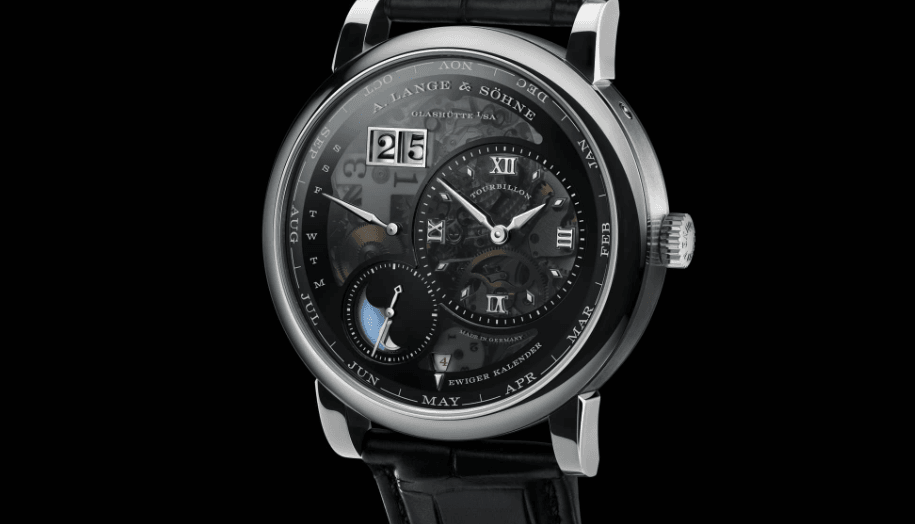
The Lumen treatment adds a semi-transparent sapphire dial treated with a titanium oxide-based coating that allows ultraviolet light through while attenuating visible light. In daylight, the dial reveals the movement beneath. In the dark, the watch comes alive with a luminous display across every complication, including the oversized date, the retrograde day of week, the moon phase, the leap year indicator, and the hands. The tourbillon cock and cage are finished in black polish and engraved by hand with stars and a shooting star. The diamond endstone crowning the tourbillon bearing is not a marketing detail. It is Lange telling you exactly what kind of watch this is. At €530,000, the Lumen is simultaneously the most expensive and the most intellectually honest watch at W&W 2026. The price is a function of platinum, 685 components, hand engraving, and a development programme that produced a movement existing in exactly 50 examples. Nothing about that mathematics is unreasonable.
Ulysse Nardin Super Freak: CHF 320,000 (approximately $393,600)
The Super Freak marks 25 years of the Freak and 180 years of Ulysse Nardin, housed in a 44mm white gold case, limited to 50 pieces. At CHF 320,000, the Super Freak is powered by the new UN-252 automatic calibre comprising 511 components, featuring the world's first automatic double tourbillon carousel.
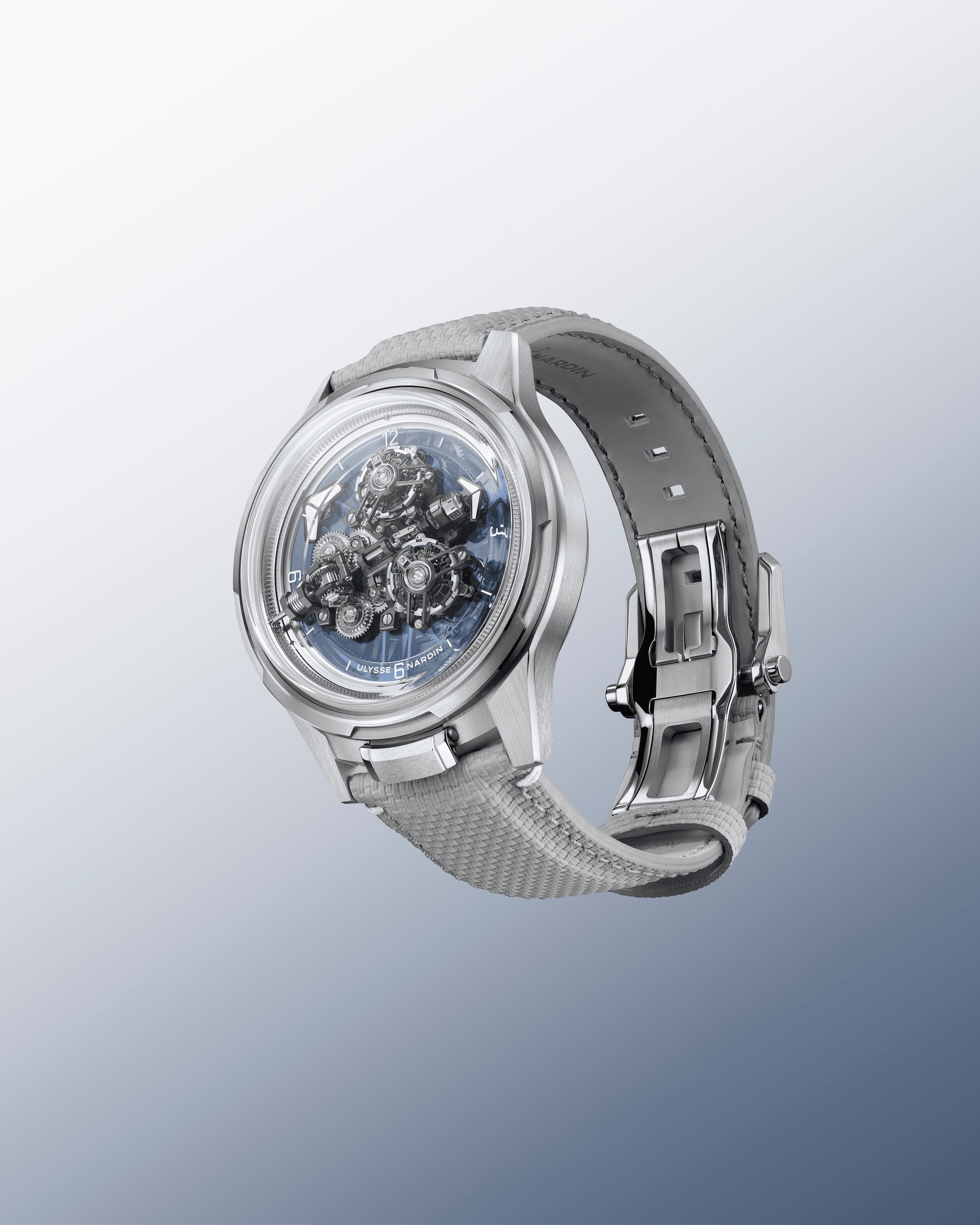
Let that sit for a moment. 511 components. To display hours, minutes, and seconds. That is approximately 400 more components than some of the most sophisticated conventional mechanical movements in production. The reason is the minute bridge, which alone comprises 327 components, weighs 3.5 grams, and rotates fully around the dial once per hour. Mounted on it are two flying tourbillons, each inclined at ten degrees and rotating in opposite directions, connected by the world's smallest differential at 5mm, transmitting averaged energy to a patented gimbal system that delivers the seconds to a direct-read cylinder display. Over 97% of the movement is in constant motion. The watch is assembled entirely by a single watchmaker in Ulysse Nardin's Haute Horlogerie Atelier over 60 hours per piece. The Super Freak is the culmination of a 25-year engineering lineage that began by dispensing with the crown and making the movement itself the hand. There is no predecessor to compare it to. That is, in the most literal sense, what a quarter of a million Swiss francs is paying for.
Bulgari Octo Finissimo Ultra Tourbillon Platinum: Price upon request, limited to 10 pieces
The Octo Finissimo Ultra Tourbillon Platinum does not break a new record. The titanium version unveiled last year at 1.85mm still holds the title of the world's thinnest flying tourbillon. But producing that same 1.85mm architecture in platinum rather than titanium is a different category of manufacturing challenge entirely.
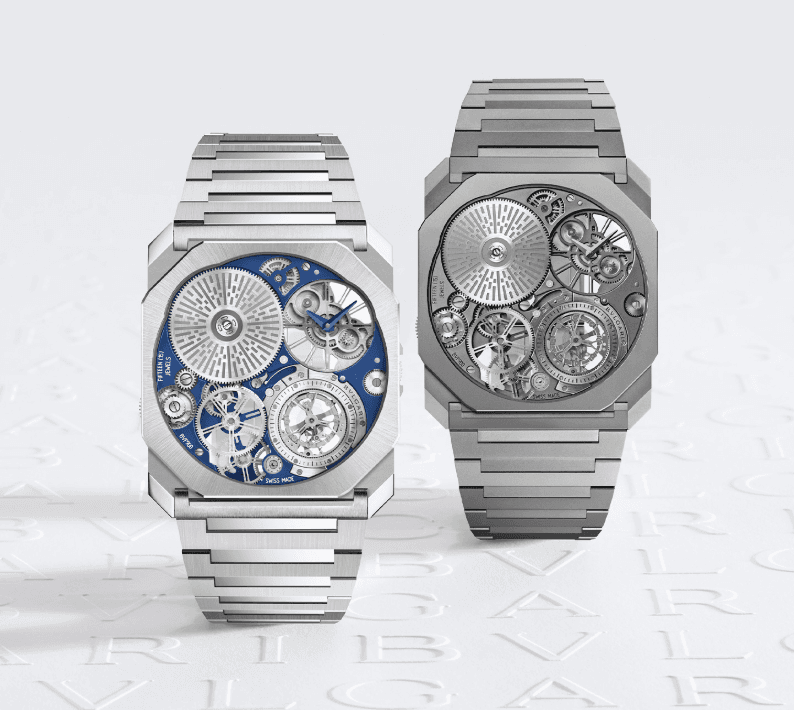
Despite gold prices surpassing platinum in recent years, platinum is significantly more difficult to machine and finish, requiring specialised equipment and a higher level of skill at every stage of production. The purity of platinum alloys used in watchmaking is also higher than the 75% gold standard, increasing both material cost and complexity. The case and bracelet are integrated into a single horizontal plane with the movement. The caseback doubles as the mainplate. The flying tourbillon is peripherally guided and integrated within the movement plane. The result is a watch you could slide beneath a standard hotel room key and still have room. That it exists in platinum, in ten pieces, with blue PVD accents and hand-finished geometric engraving on the exposed ratchet wheel, is Bulgari demonstrating that the record was not a ceiling but a starting point. Price upon request means the price is very much upon request. Estimate accordingly.
Panerai Luminor 31 Giorni PAM01631: $107,000
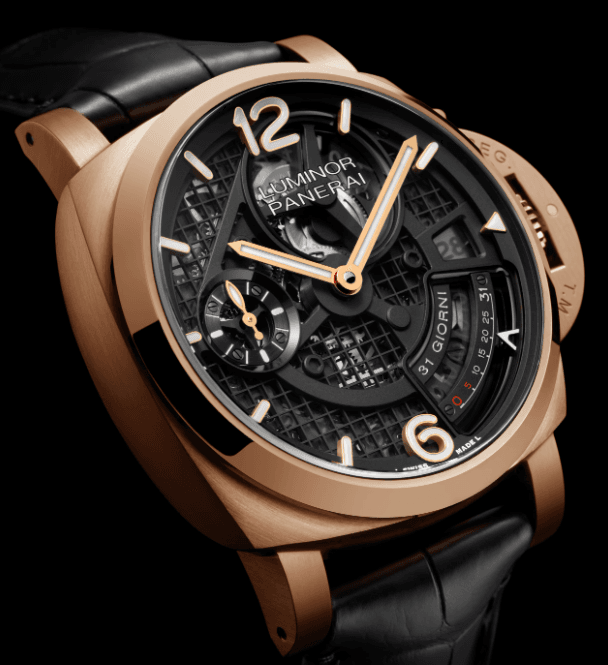
The Luminor 31 Giorni is a 44mm Goldtech case carrying the P.2031/S calibre, a hand-wound skeletonised movement developed over seven years and capable of running for a full calendar month on a single winding. Four barrels in series power the movement. A patented torque limiter maintains consistent driving energy throughout the 31-day reserve, solving the fundamental problem of long-duration movements: that the mainspring delivers less energy as it unwinds, causing accuracy degradation at the end of the power reserve. The power reserve is indicated in days on the dial rather than hours. Limited to 200 pieces, it is the most expensive watch Panerai has released in its standard catalogue for some years, and also the one that most directly connects to the brand's operational philosophy. The Italian Navy's underwater commandos needed watches that could run on extended missions. A month-long power reserve answers that brief in its most extreme possible form. The seven years of development behind the calibre is the watch's real price justification.
Hublot Big Bang Reloaded in Magic Gold: From €46,000
The Hublot Big Bang Reloaded at Watches and Wonders 2026 presents the HUB1280 Unico calibre, a fully integrated self-winding flyback chronograph of 354 components, operating at 28,800 vibrations per hour with a 72-hour power reserve, in a more exposed form than previous Big Bang generations. The column wheel is visible at 6 o'clock. The dual clutch system is visible at 8 o'clock.
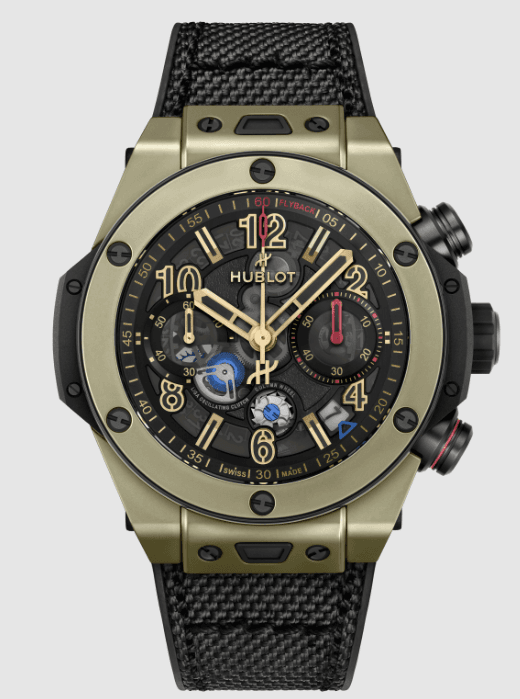
In Magic Gold, the case material that Hublot created by injecting molten 24-karat gold into a compressed boron carbide ceramic matrix, the Big Bang Reloaded sits at the higher end of its price range. Magic Gold measures approximately 1,000 on the Vickers hardness scale, roughly five times harder than standard stainless steel. A case made of it will not scratch under normal wearing conditions in any way that is visible to the naked eye. That is the functional argument for a material that took Hublot its own dedicated foundry in Nyon to produce. The Reloaded is not the most expensive watch at the show. It is arguably the most useful demonstration that expensive materials can be expensive for engineering reasons rather than purely for prestige ones.
A Note on What These Watches Have in Common
Every watch on this list is limited to 200 pieces or fewer. The Bulgari Platinum is 10. The Lange Lumen and the Super Freak are 50 each. The Panerai 31 Giorni is 200. In the Bulgari minute repeater and Ultra Tourbillon Platinum, price upon request is itself a kind of qualification: these are not watches that are meant to be considered by people for whom price is the first question.
What they share is a justification for their cost that is rooted in engineering reality rather than brand premium alone. The Lange Lumen took years of movement development and a platinum case and 60-plus hours of hand finishing. The Super Freak took four years of R&D and 60 hours of assembly per piece. The Panerai 31 Giorni took seven years and a patented torque system. The Bulgari Ultra Tourbillon in platinum took a manufacturing process that even Bulgari's team had not attempted at that level of thinness before. That is the answer to the original question. At this level, the price is not an abstraction. It is a record of how long it took to build something that did not exist before.


