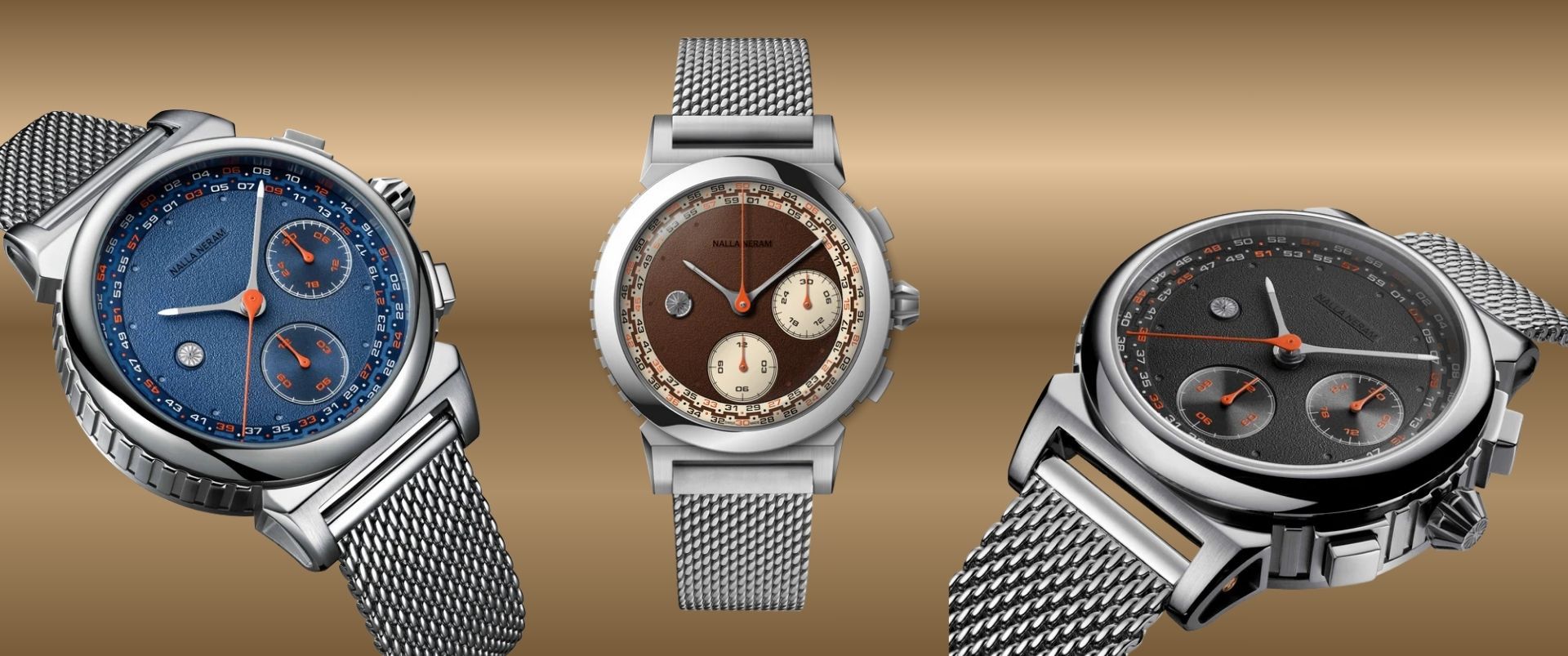
Nalla Neram: Rethinking Swiss Watchmaking Through An Indian Lens
 5 min read

In a world where new watch brands often begin with specifications, speed, or price points, Nalla Neram begins somewhere far quieter and far deeper. Its name, unfamiliar to many outside India, carries a philosophy that has shaped everyday life for millions: the belief in choosing the right moment. For founder Krishnamani Raman, Nalla Neram is not branding poetry. It is a lived experience. “Nalla Neram is not just a name. It is a philosophy. It is something practiced on a daily basis by family members in India for everything they do,” he explains.
Why an Indian Name for a Swiss Watch Brand?
Launching a Swiss-made watch brand with a Tamil name was never going to be the obvious choice. Raman acknowledges this upfront. “Everybody looks for a name that appeals to a lot of people. But we decided we cannot name it like most of the brands. We had to have an Indian name, because what we are trying to create is a Swiss-made timepiece with Indian heritage.”
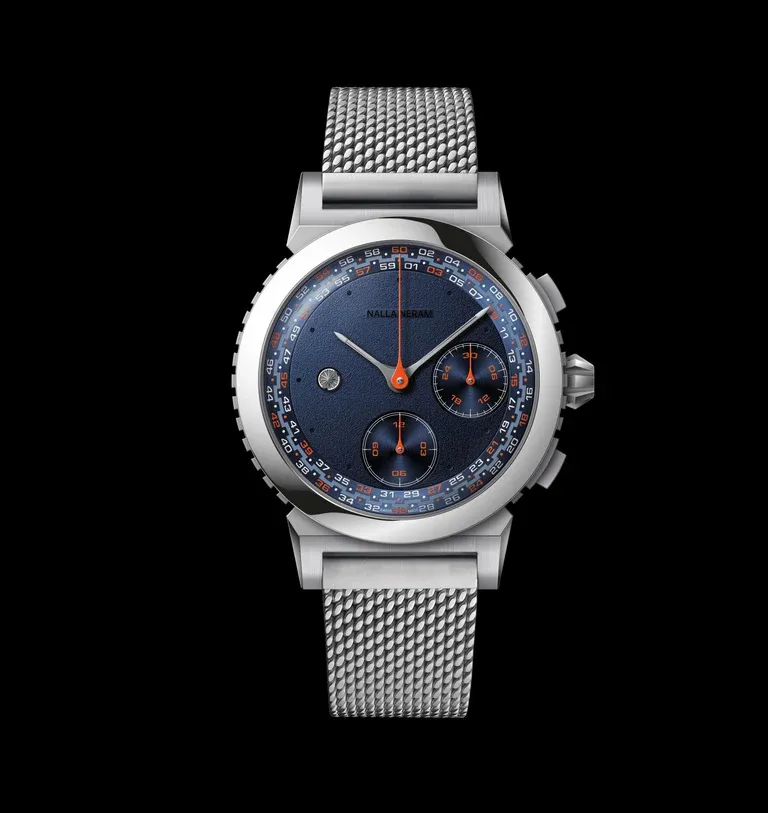
Based in Switzerland for decades and deeply embedded in the country’s watch industry, Raman and his team were not trying to create an “Indian watch brand” in the conventional sense. “The name originates from India, but the intention is worldwide. Good time is something everyone shares. It is not restricted to India.” Nalla Neram, translating to auspicious time, may be unfamiliar on first reading, but Raman was clear-eyed about that risk. “We used it intentionally. If we have to do something, we must do it properly, in our way.”
In much of India particularly in the south Nalla Neram is not an abstract idea. It governs daily life. From Rahu Kalam periods traditionally avoided for important decisions to Muhurat, the precise moment chosen for weddings and new beginnings, time in Indian culture is inseparable from intention. This understanding of time is emotional, cyclical, and forward-moving forms the philosophical backbone of Nalla Neram. “When people buy a motorcycle, a car, join a job, leave the house everything is done by considering whether it is the good time. It is not something we think about once in a while. We practice it every day. A wedding is the start of a new journey. People choose a time suitable for both the bride and groom to begin that journey. The intention is universal. Anyone, anywhere in the world, hopes it is the right time when they start something meaningful,” he shares.
The Chakra: Time in Motion
That philosophy finds its most visible expression in the Chakra, a symbol deeply rooted in Indian thought and far older than its appearance on the national flag. “The Chakra symbolizes time itself. Time keeps moving forward. It doesn’t stay still.”
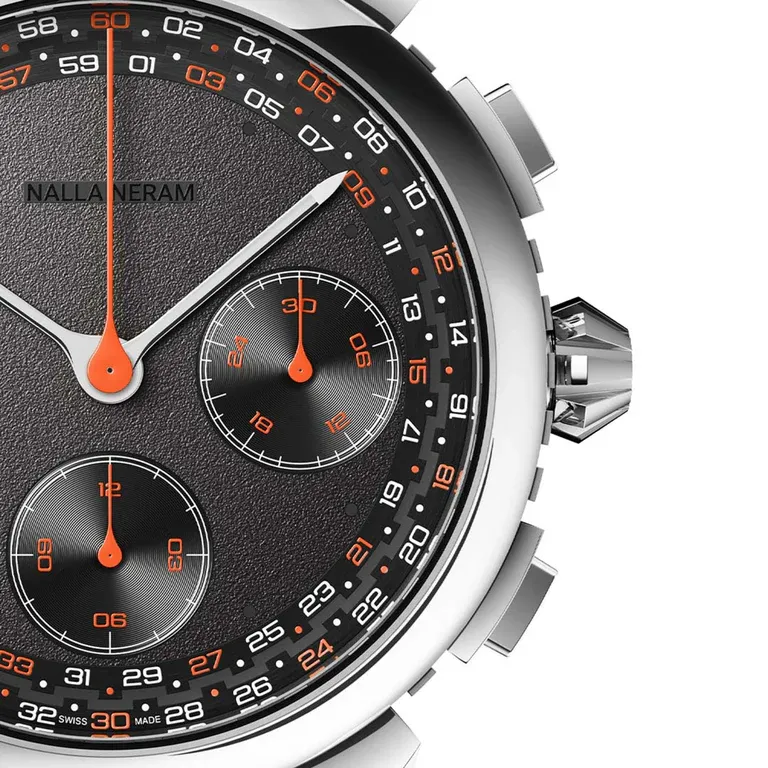
At Nalla Neram, the Chakra is not decorative. It is functional and alive. “On the dial at nine o’clock, the Chakra is continuously spinning. It is not static. It functions as the seconds indicator, moving all the time as long as the watch is being used.”
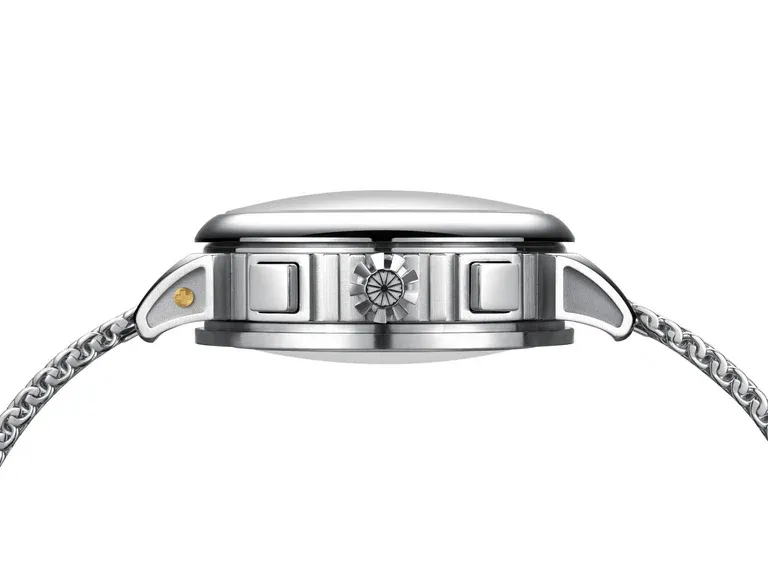
The symbol appears again, engraved on the crown a technically demanding process and once more on the rotor at the back of the watch. “These three features represent the embedding of our Indian heritage and philosophy. This is our main platform. This is our logo, and it will remain part of the brand as long as it exists.”
While the philosophy is Indian, the execution is unapologetically Swiss. Unlike many new brands that begin with readily available movements, Nalla Neram made a decisive and ambitious choice. Deeply embedded in the Swiss watch industry prompted his decision to use a La Joux-Perret calibre for its minutes-timer chronograph.
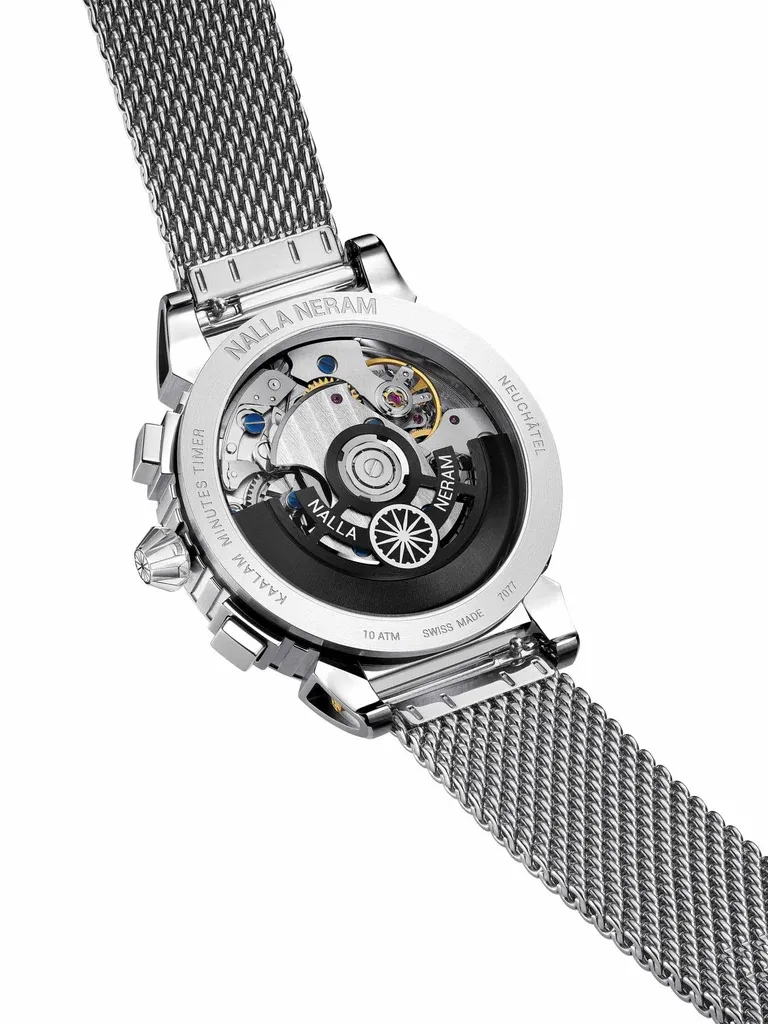
“According to our research, La Joux-Perret movements were among the best we could find. Especially for a minutes timer chronograph, we needed one of the best possible. The most respected movements like the Lemania 2310 used a column wheel. Column-wheel chronographs are considered the best. Patek Philippe gained its reputation largely because of the Lemania 2310. Even today, the basis of their movements comes from that architecture.” It’s a lineage that links Nalla Neram’s technical choices to some of the greatest names in haute horlogerie. For Raman, this wasn’t about nostalgia, it was about respect. “We knew what to go for, and what not to go for.”
Built for Real Life
Beyond philosophy and mechanics, the watch is designed to be lived with particularly in India. “I’ve travelled in India many times wearing this watch. Whether it’s 40 degrees Celsius, sweat, rain, there is absolutely no worry. When you wear it tight, you hardly feel the watch. Only the domed sapphire glass sits on your wrist. The comfort is excellent.”
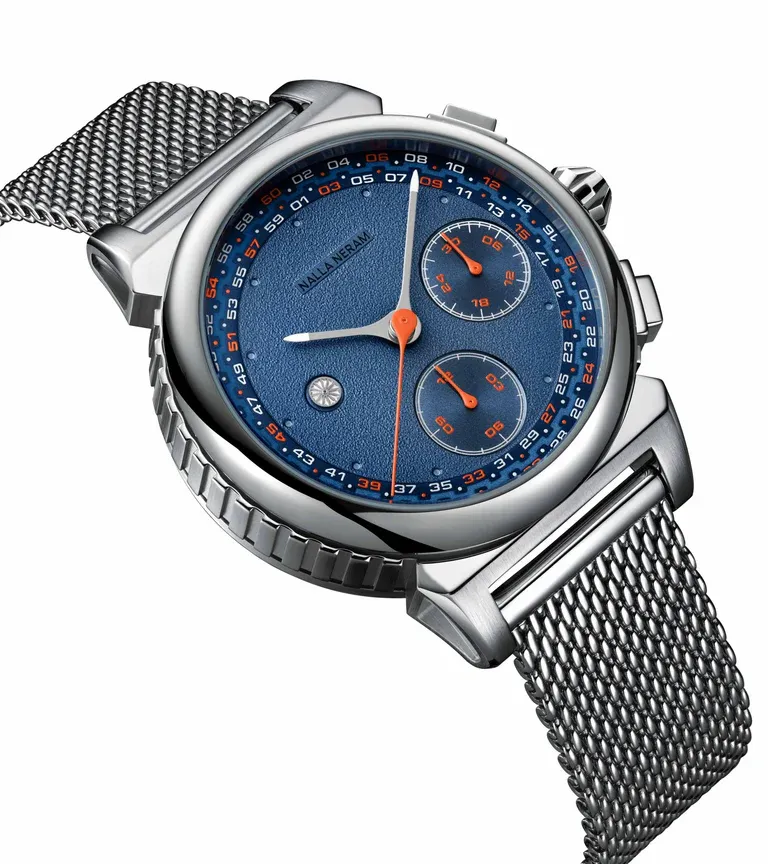
With 100 metres of water resistance, domed sapphire crystals on both the front and back, and exceptional wrist comfort, the watch is meant to disappear when worn yet remain visually striking. Perhaps the most quietly radical choice is the absence of traditional chronograph scales. Instead, Nalla Neram offers a minutes timer, designed for modern professionals. “Most chronographs come with tachymeters or telemeters. These are no longer very useful for most people. This watch is made for working professionals, business owners, independent practitioners, and leaders. It resonates with their purpose,” he notes. It’s a subtle but meaningful rethinking of what a chronograph can and should be today.
India Watch Weekend: A Meaningful Milestone
Nalla Neram’s participation in India Watch Weekend marks an important chapter for the young brand. “The most important thing for us is to meet collectors and people who appreciate mechanical timepieces. We are the first watch company to have been granted a design patent by Switzerland and the European Union for our case, square pushers, crown, lugs, and dial numerals. Being awarded a patent by Switzerland is something very exceptional and unbelievable.” At the event, Raman’s focus is simple. “We want people to handle the watch, wear it, feel it. And we want honest feedback so we can continue creating better products,” concludes Raman. In an industry often driven by personalities, Nalla Neram takes a quietly confident stance. One that feels entirely aligned with the idea of Nalla Neram itself: choosing the right moment, and letting time do the rest.


