The Architecture Of Jaeger-LeCoultre: Understanding The Pillars
 7 min read

Jaeger-LeCoultre doesn't make watches. It builds worlds. Each pillar in the manufacture's structure represents a distinct universe of horological thought, anchored by history and executed with the full force of 180 in-house skills. This isn't brand segmentation for marketing's sake. These are bloodlines that trace back through decades, sometimes centuries, each solving a different problem in mechanical timekeeping.
Reverso: The Swivel
Born 1931. César de Trey's solution to British polo players smashing crystals in India. René-Alfred Chauvot filed the patent March 4, 1931, for a case comprising over 50 components that could flip within its cradle. Those three gadroons across the case serve as grip points. Form serving function before Art Deco made it fashionable. Early models used Tavannes movements. By 1933, Jaeger-LeCoultre had its own rectangular Calibre 410 and 411. The watch nearly died after World War II until Italian businessman Giorgio Corvo found 200 unused cases in Le Sentier in 1972. The 1991 Reverso Soixantième proved the flip case could house serious complications. Since then, tourbillons, minute repeaters, and perpetual calendars have found homes inside that reversible case.
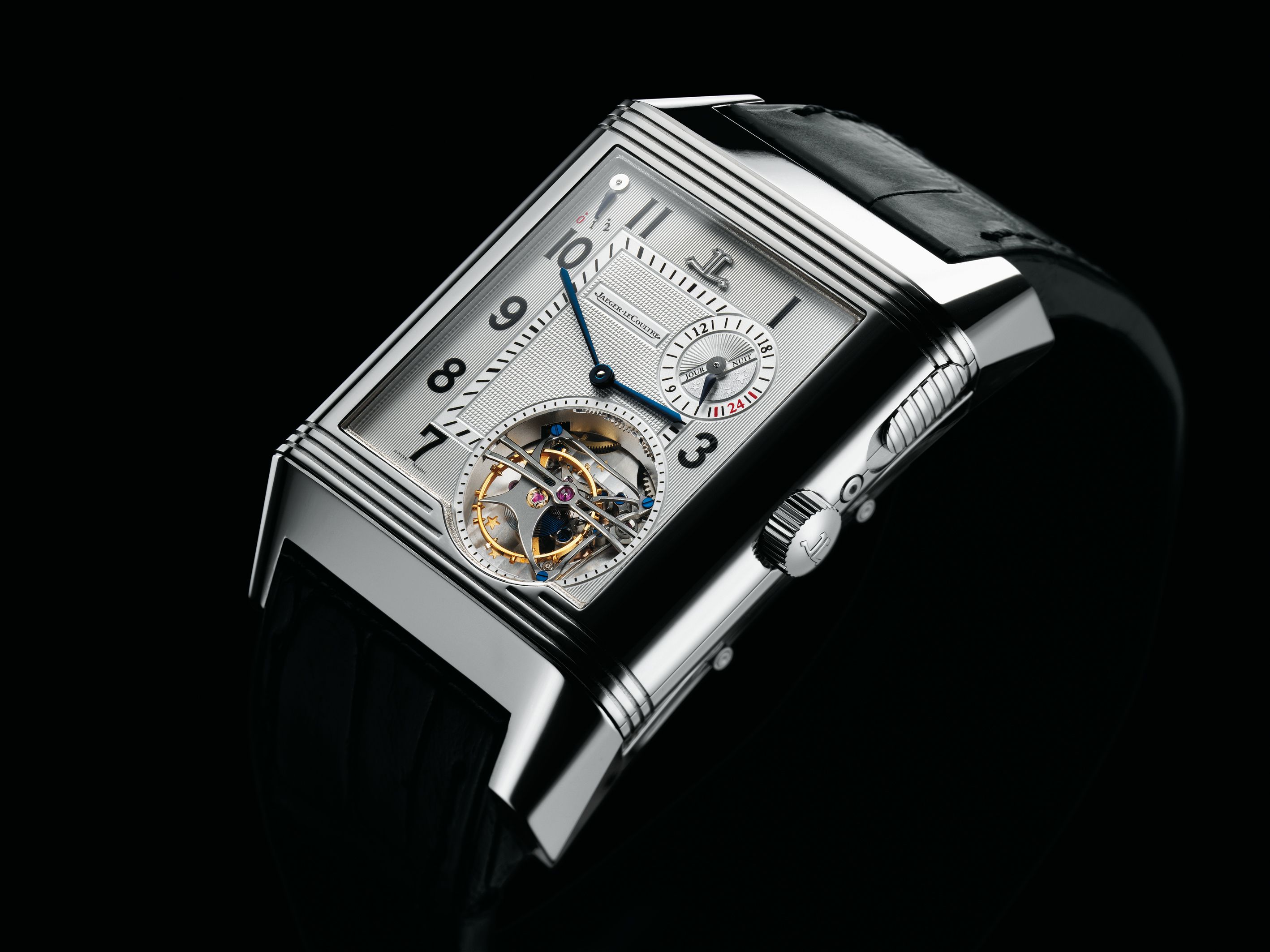
At Watches and Wonders 2025, Jaeger-LeCoultre released nine new Reverso models. The Reverso Tribute Minute Repeater, limited to 30 pieces in pink gold, houses the new Calibre 953 with seven patents. Crystal gongs, trébuchet hammers, and silent interval elimination. The case was completely redesigned from the 1994 Répétition Minutes to optimize acoustics. The front dial features teal blue guilloché enamel. The reverse is openworked to reveal the chiming mechanism. The Reverso Tribute Geographic introduces Calibre 834 with a big date on the front and a rotating 24-hour world time on the reverse. The reverse features a laser-engraved map with hand-applied lacquer oceans. Steel joins the permanent collection while pink gold remains limited to 150 pieces. The Reverso Hybris Artistica Calibre 179 returns in white gold, limited to 10 pieces. The 123-component Gyrotourbillon features an inner cage rotating every 16 seconds and a peripheral carriage rotating every minute. It floats over blue lacquer. The front shows a lattice of fine gold lines. The reverse is skeletonized with blue lacquer accents. The Gyrotourbillon cage alone requires 14 hours of hand beveling.
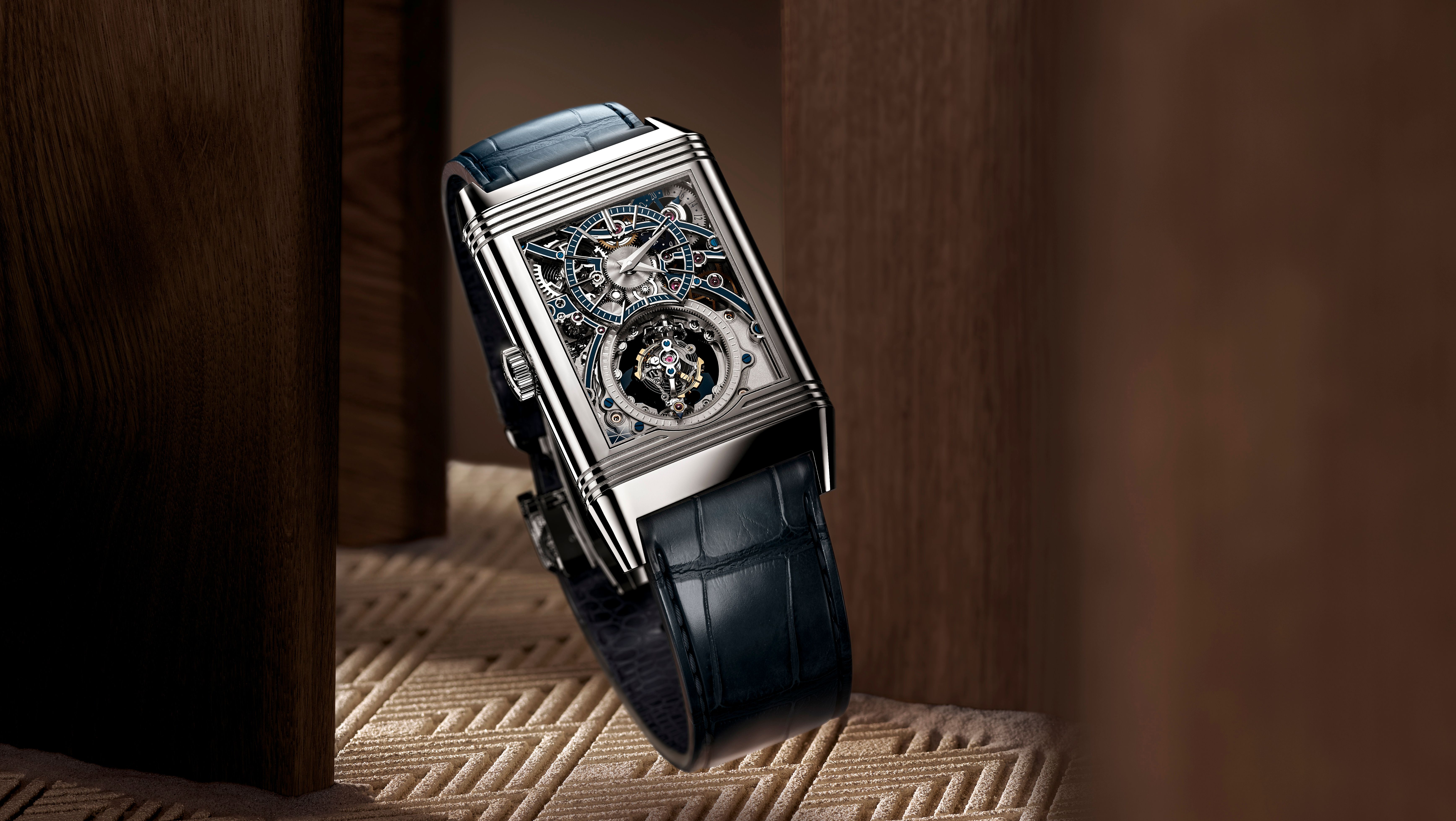
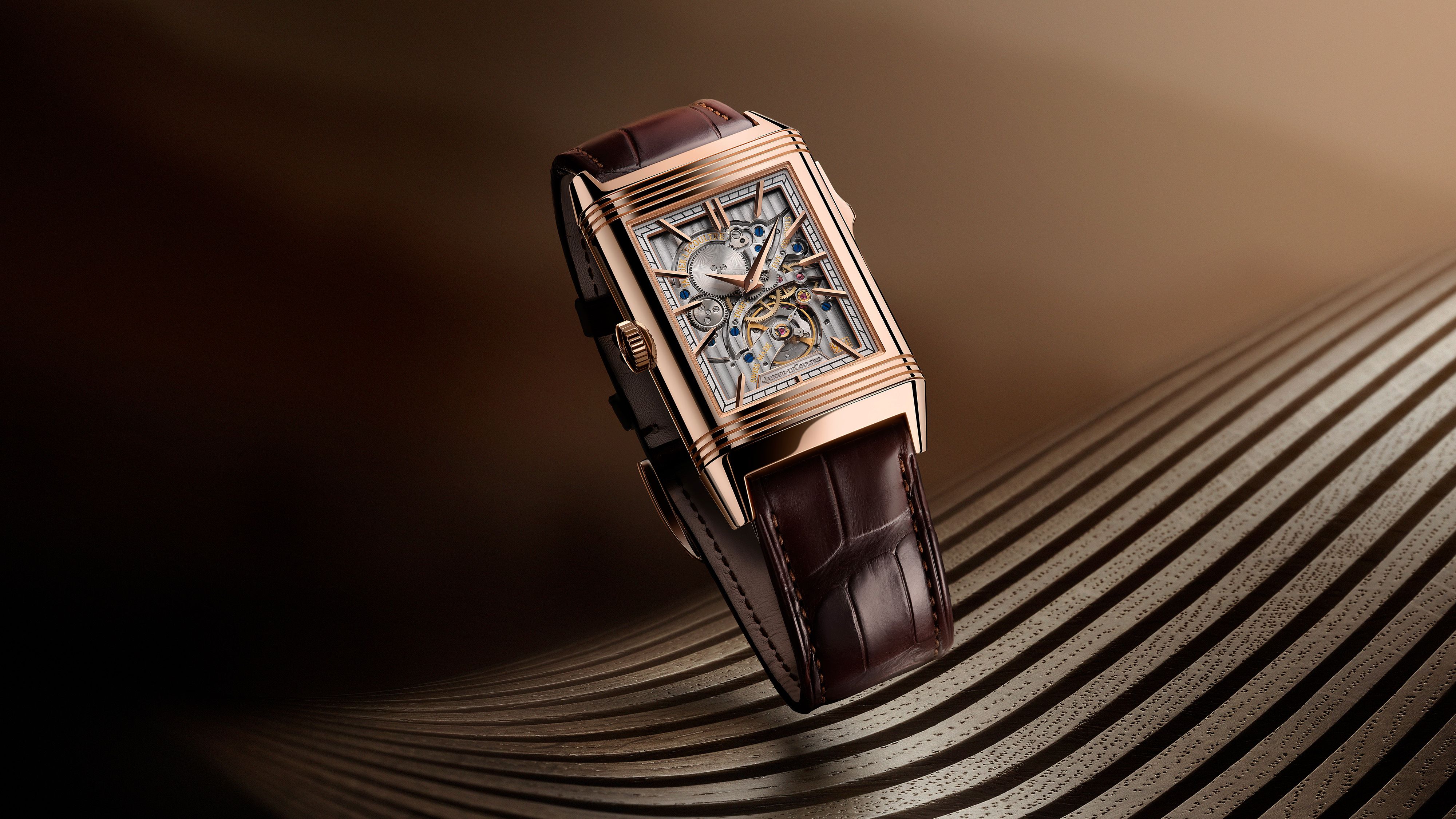
What it represents: The proof that a purpose-built tool can become an eternal design object. The Reverso transcends its sporting origins through sheer geometric discipline.
Master Control: The Standard
1992. Jaeger-LeCoultre introduced the 1000 Hours Control, which involves six weeks of testing the complete cased watch across six positions, temperature variations, atmospheric pressure changes, shock resistance, and magnetic exposure. COSC tests bare movements. Jaeger-LeCoultre tests watches.
The collection draws from 1950s references like the Futurematic, the Geophysic, various triple calendars, and early Memovox models. Current Master Control cases maintain that era's restrained elegance with polished flanks, clean dials, and zero excess.
Calibre 899 powers the base models with a silicon escapement, redesigned barrel, and intelligent energy-saving mechanisms that deliver 70 hours of power reserve. The triple calendar models use Calibre 866, which comprises 344 components. The date hand jumps from the 15th to 16th to avoid obstructing the moonphase display. Chronograph models use Calibre 759, featuring a column-wheel mechanism, vertical clutch, and 65 hours of power reserve. The Master Ultra Thin Tourbillon Enamel arrived in pink gold with a grey dial and intricate enamel starry sky on the reverse. The edition is limited to 90 pieces.

What it represents: Vertical integration as ideology. When you control hairspring production, case manufacturing, and every component between, quality becomes a religious commitment rather than a hope.
Polaris: The Tool
1968 Memovox Polaris. Only 1,714 were made between 1965 and 1970. They now command $15,000 to $100,000 at auction depending on condition. This was the first diving alarm watch that worked. A 42mm super-compressor case with three crowns. The center crown controlled the internal rotating bezel. The crown at 2 o'clock adjusted the alarm. The crown at 4 o'clock wound the movement. Triple caseback design. An inner bronze back enhanced alarm resonance. A middle sealed back provided water resistance. An outer back featured 16 holes allowing sound to escape while preventing wetsuit muffling. Calibre 825 comprised 241 components with two barrels, one for timekeeping and one for the alarm, delivering 60 hours of power reserve. The modern Polaris collection, relaunched in 2018, includes chronographs, date models, and perpetual calendars. The Polaris Mariner meets ISO 6425 dive watch specifications. Calibre 956 features a peripheral gong producing the signature school bell sound, visible through the sapphire caseback.
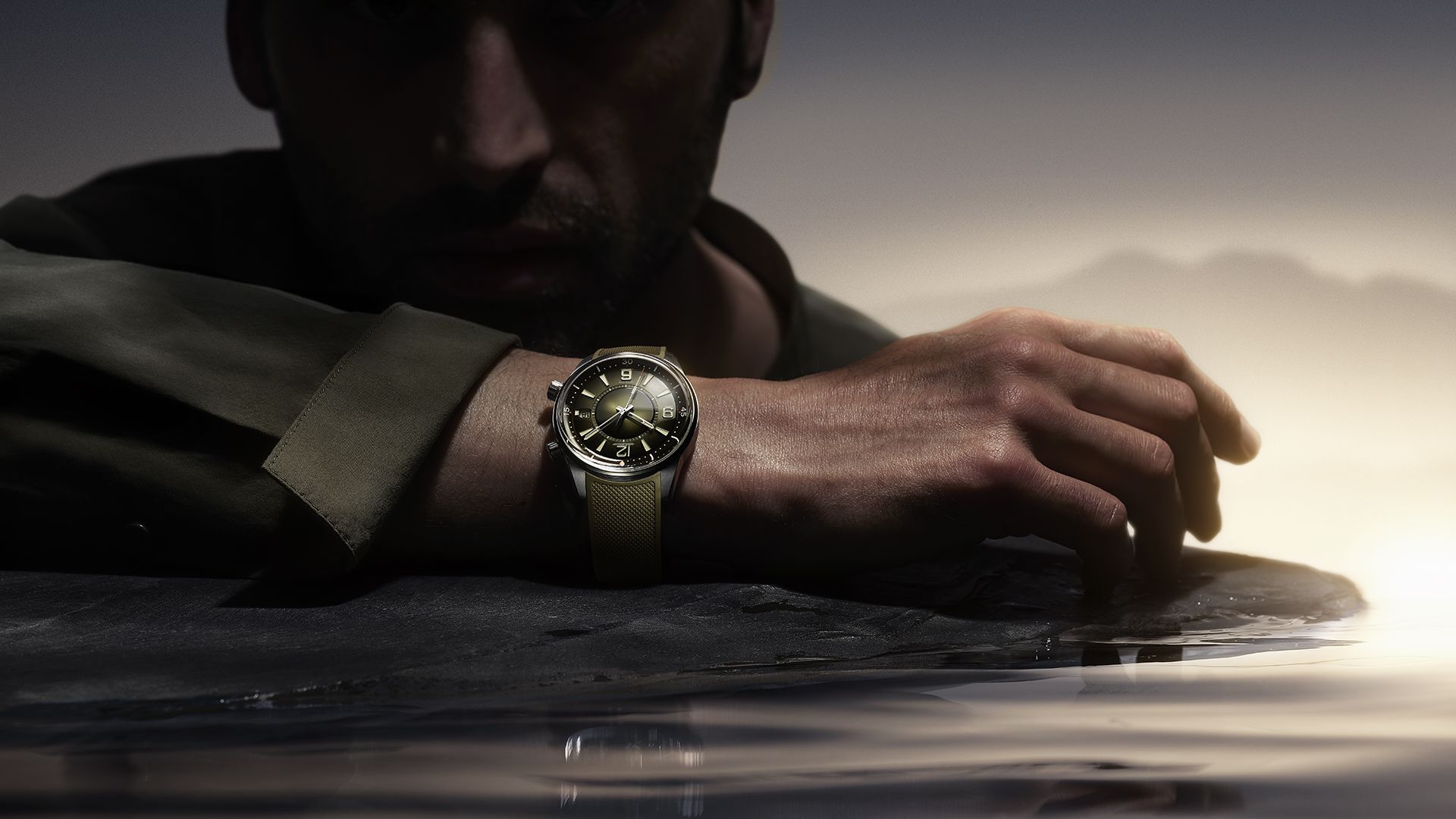
What it represents: The sporting soul. Complications can serve genuine purposes beyond horological flexing. An alarm that works underwater isn't a party trick. It's a lifesaving tool disguised as haute horlogerie.
Rendez-Vous: The Feminine Statement
2012. The first wristwatches were women's watches in the early 1900s as jewelry items. Men adopted them later. Edmond Jaeger and Jacques-David LeCoultre understood this shift required thinner, more complex movements that married high jewelry aesthetics with mechanical integrity. Every Rendez-Vous houses an automatic mechanical calibre developed in Le Sentier. The signature Night & Day indicator, powered by Calibre 967 and 898, displays the sun and moon at 6 o'clock. Moonphase models use Calibre 925, which comprises 242 components and 30 jewels with 38 hours of power reserve. The moonphase accuracy loses only one day every 972 years. The 2025 Rendez-Vous refresh included 64 subtle changes while maintaining the original design codes. Two complications, two case metals, targeting contemporary femininity without compromise.

What it represents: Women's watchmaking as serious horology, not shrunk down men's models. Feminine aesthetics and mechanical complications aren't mutually exclusive. They are complementary expressions of the same craft.
Hybris Mechanica: The Boundary
The summit. Maximum complication without compromise on finishing. The Hybris Mechanica collection houses Jaeger-LeCoultre's most complex movements. These calibres feature over 600 components, with each element finished regardless of visibility. The Reverso Hybris Mechanica Calibre 185, launched recently, is the world's first four-sided watch. The Master Hybris Mechanica Calibre 184, first created in 2019 and reinterpreted in 2024, combines a bi-axial Gyrotourbillon, perpetual calendar, and Westminster chime minute repeater. Four hammers instead of two, requiring a complete mechanism redesign. Crystal gongs for enhanced resonance. Five pieces in pink gold, five in white gold.
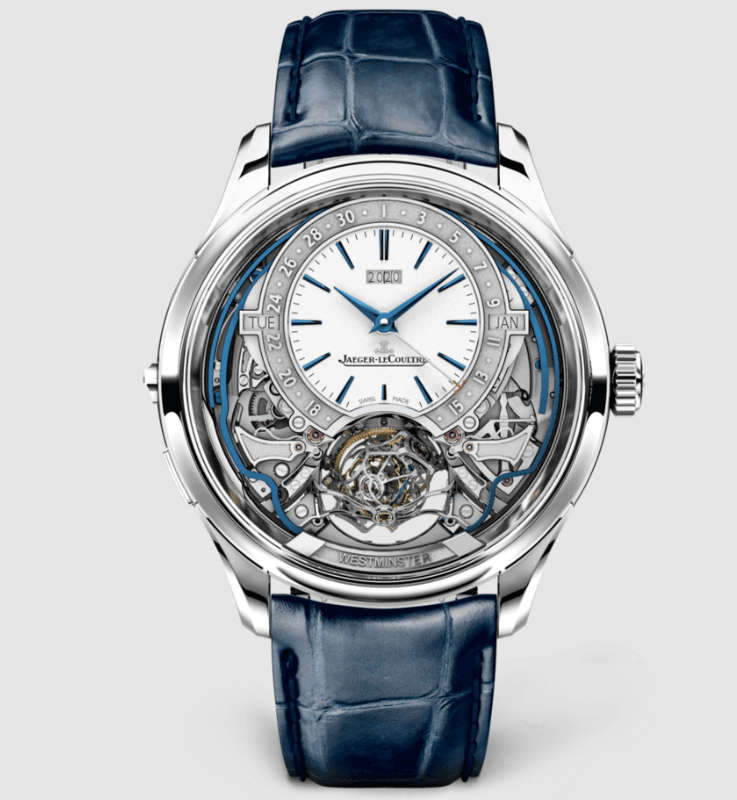
What it represents: The outer technical limit. These are showcase pieces proving that vertical integration enables complexity impossible when outsourcing components.
Hybris Artistica: The Canvas
Where Hybris Mechanica pursues mechanical extremes, Hybris Artistica adds artistic mastery from the Métiers Rares atelier. Grand feu enamel, micro-painting, guillochage, paillonage using 24-karat gold leaf inlay. The 2025 Reverso Tribute Enamel Shahnameh series features four variants, with 10 pieces of each. They feature elaborate Persian miniatures from the namesake epic poem. Each timepiece requires over 100 hours of work combining enamel painting, gold leaf, and guilloché.
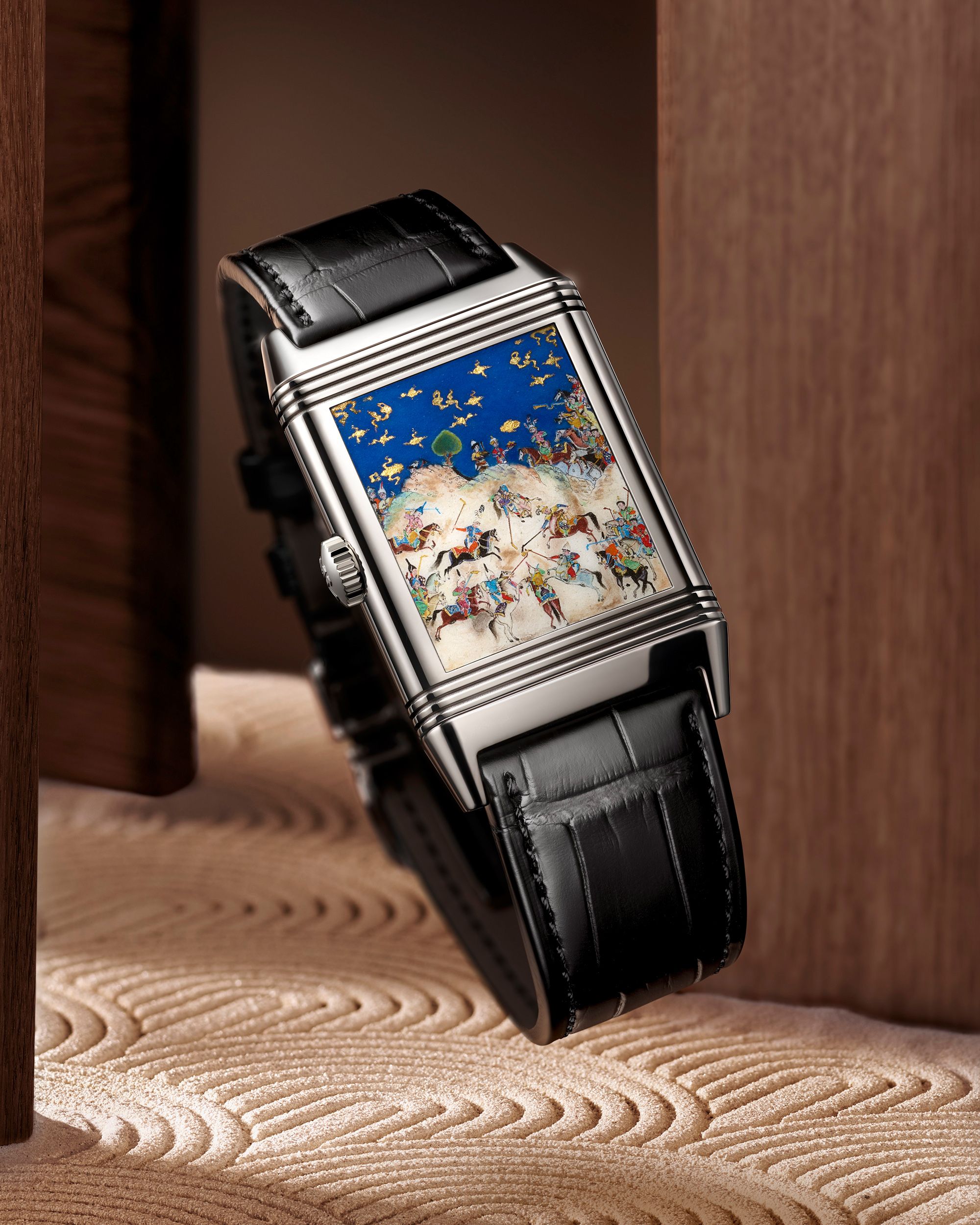
What it represents: Technical virtuosity means nothing without beauty. The 180 skills housed in Le Sentier include both watchmakers and artists. They are equal partners.
Atmos: The Perpetual
1928. Jean-Léon Reutter invented it. Jaeger-LeCoultre brought it to market in the 1930s. The Atmos runs on air, specifically on temperature variations. A hermetically sealed capsule filled with ethyl chloride expands and contracts with ambient temperature changes, winding the mainspring. One degree Celsius provides 48 hours of power reserve. Jaeger-LeCoultre took over production on July 27, 1935. The Atmos 2, announced January 15, 1936, introduced the ethyl chloride power source still used today. The movement's economical ring-shaped balance consumes 250 times less energy than a wristwatch. It would take 60 million Atmos clocks to equal one 15-watt light bulb. Known as the President's Clock, it served as the official gift of the Swiss Confederation throughout the 20th century. Over 500,000 have been produced. Modern complications include moonphases accurate for 3,861 years, perpetual calendars, celestial charts, and even a mystery clock with constant-force mechanism.
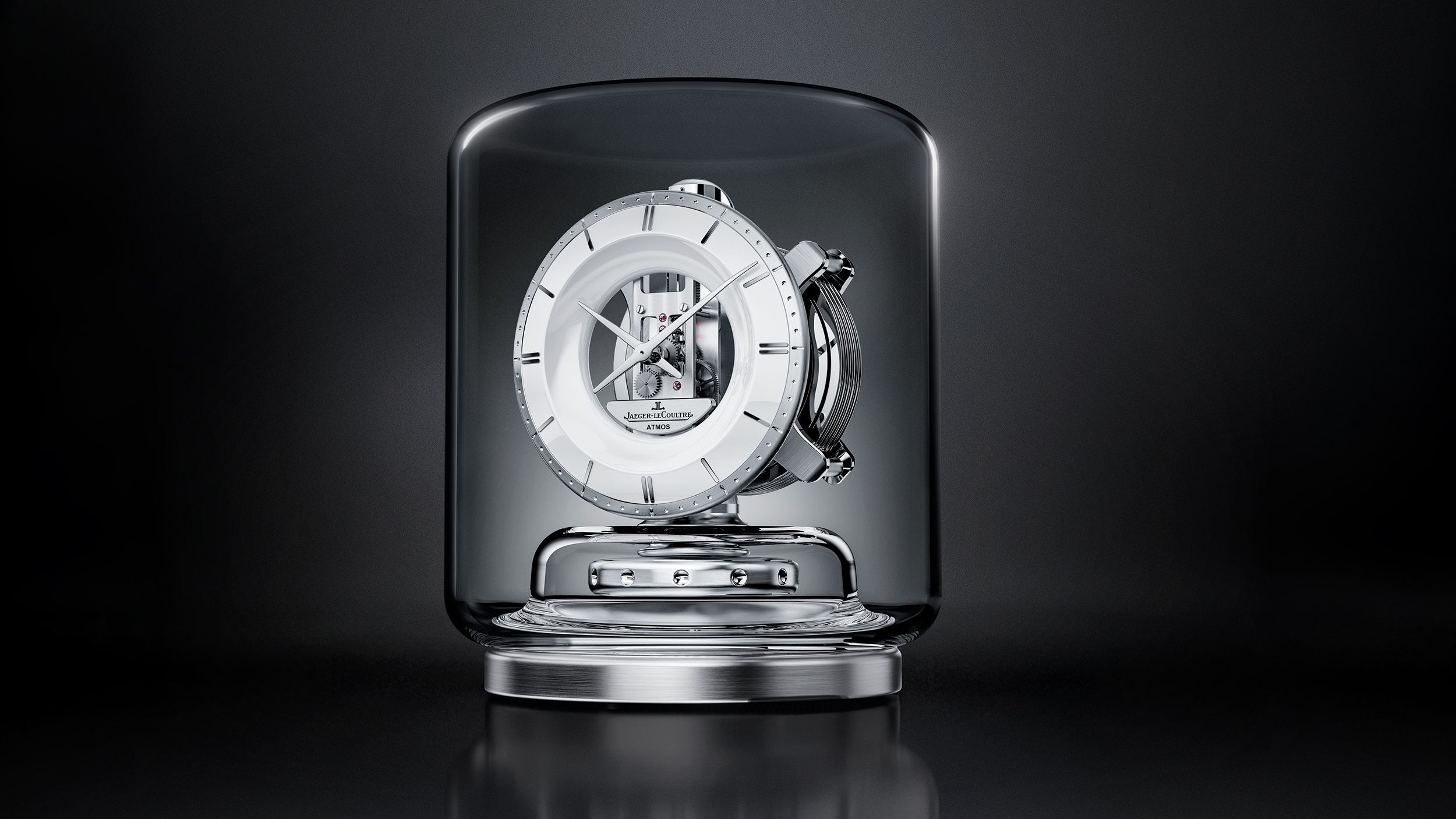
What it represents: The closest humanity has come to perpetual motion. The Atmos proves Jaeger-LeCoultre's philosophy. Mechanical mastery serves elegance, not ego.
The Thread
The 1000 Hours Control protocol, originally designed for Master Control, now applies across all collections. Whether you're buying a Reverso, Polaris, or Rendez-Vous, it undergoes six weeks of testing. This manufacturing discipline, combined with Le Sentier's location in the Vallée de Joux, creates coherence despite aesthetic diversity. These pillars aren't trend chasing. They are historical threads Jaeger-LeCoultre chose to maintain and develop. The Reverso pioneered the swiveling case. The Master Control established internal testing exceeding external certification. The Polaris solved underwater alarms. The Rendez-Vous treated women's watches seriously. Hybris Mechanica and Artistica push technical and artistic boundaries. The Atmos achieved near perpetual motion. Together, they form a complete picture of what a manufacture achieves with full vertical integration and over 190 years of accumulated knowledge. The Watchmaker's Watchmaker isn't marketing. It's architectural truth. Jaeger-LeCoultre has supplied movements to virtually every major brand at some point. This breadth informs depth across every pillar. The pillars stand because they solve problems. They endure because the solutions remain elegant.