Titan: A Timeline Of Firsts That Changed Indian Watchmaking Forever
 5 min read

Few Indian brands have altered the course of an industry as decisively as Titan. Over four decades, the company has not merely grown in scale or valuation; it has consistently redefined what Indian watchmaking could be. From breaking entrenched monopolies to creating global horological milestones, Titan’s journey is best understood through the many firsts it has achieved each one pushing Indian manufacturing, design and ambition forward.
Founded in 1984 as a joint venture between the Tata Group and the Tamil Nadu Industrial Development Corporation (TIDCO), Titan was conceived at a time when India’s watch market was stagnant and tightly controlled. Hindustan Machine Tools (HMT) dominated production, mechanical watches ruled the shelves, and choice was limited. What Titan identified early on was not just a gap in supply, but a gap in aspiration. Indians were increasingly exposed to international watch brands through travel and diaspora, fuelling a thriving grey market and a hunger for modern, well-designed timepieces.
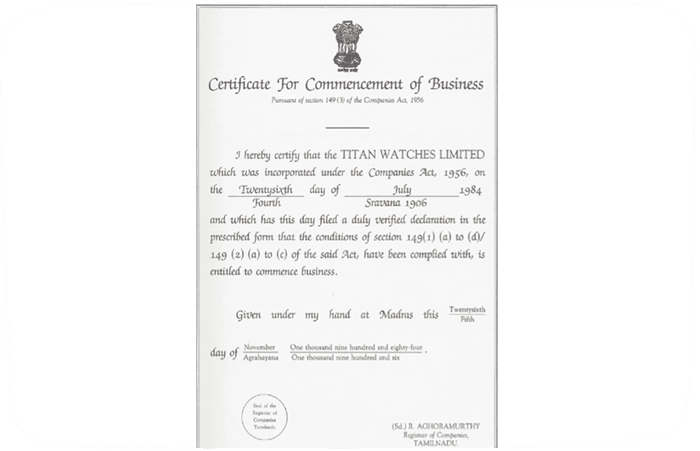
From the outset, Titan made its first defining move: committing entirely to quartz technology. When production began in 1987 at Hosur, Tamil Nadu, the company became India’s first large-scale quartz watch manufacturer. The decision was bold, forward-looking, and foundational. It signalled Titan’s intent not to follow legacy norms, but to build the future.

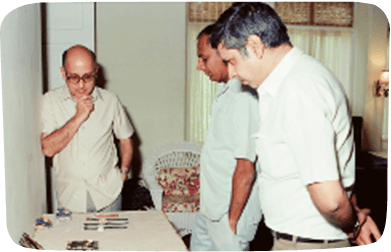
Equally radical was the way Titan chose to manufacture. Faced with a shortage of skilled labour, the company recruited young candidates directly from schools and colleges, trained them in-house, and supported relocation with housing and community care. Hosur soon transformed into India’s first modern watchmaking hub. Titan extended this philosophy beyond its own factories, nurturing local vendors by sharing technology, quality systems and R&D capabilities. In doing so, it created an ecosystem, not just a company long before “Make in India” became a national mandate.
Redefining How India Bought Watches
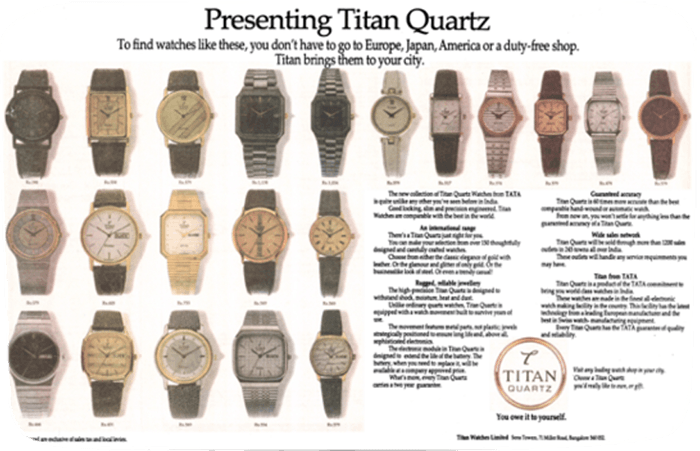
By the late 1980s, Titan was ready to sell but not in the conventional sense. When its first collections arrived in 1989, they looked unlike anything India had seen before: slim cases, gold-plated dials, leather straps and contemporary styling, priced accessibly. Titan positioned itself as premium yet attainable, global yet rooted. It also revolutionised retail. Titan opened India’s first exclusive watch brand showrooms, beginning with its Colaba store in Mumbai in 1990, inaugurated by JRD Tata. Post-sales service was embedded into the brand promise, not treated as an afterthought. This focus on ownership experience would later become one of Titan’s strongest differentiators.
Then came advertising that rewrote the rules. At a time when celebrity endorsements were becoming the norm, Titan did the opposite half-page newspaper ads featuring nothing but close-up watch visuals and prices. Consumers responded instantly, often walking into stores with newspaper cuttings in hand. Titan also became the first Indian watch brand to adopt a sonic identity, with its now-iconic Western classical melody lending emotional depth and memorability to the brand. Perhaps most importantly, Titan changed what a watch represented. Through thoughtful retail training and positioning, it reframed the watch as the perfect gift- timeless, personal and aspirational. Watches became markers of life’s milestones, embedding Titan deeply into Indian culture.
From Global Expansion to Engineering Audacity
In 1993, Titan became the first fully Indian-owned watch brand to establish a sustained international presence, entering Europe before expanding into the Middle East and Asia-Pacific. A year later, it pushed technical boundaries at home by introducing India-made diving watches and chronographs, proving that Indian manufacturing could deliver precision and rugged performance.
Yet Titan’s most audacious engineering feat arrived at the turn of the millennium. In the late 1990s, the company embarked on an ambitious project to develop the world’s slimmest watch movement just 1.15 mm thick, including the battery. Swiss brands refused to consider buying an Indian-made movement, citing brand image concerns. Titan responded not with retreat, but resolve. In 2002, the Titan Edge was launched. Measuring just 3.5 mm thick and weighing approximately 14 grams, it was the slimmest watch in the world at the time. Affordable, elegant and technologically groundbreaking, Edge became India’s first globally recognised horological icon, cementing Titan’s reputation for engineering excellence.
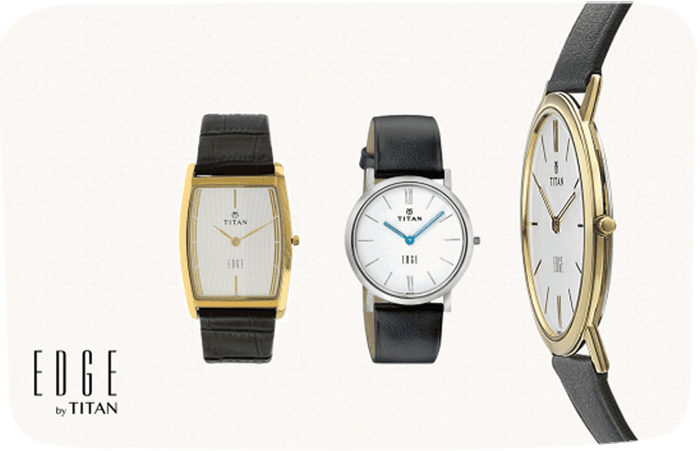
This appetite for reinvention continued. In 2003, Titan launched Fastrack, becoming the first Indian watch brand to successfully tap youth culture. When early pricing limited growth, Titan pivoted quickly embracing new materials, bolder design and accessible pricing. Fastrack soon became a category-defining brand for young India. By 2009-10, Titan crossed the billion-dollar revenue mark for the first time, an unprecedented achievement for an Indian watch company.
The Modern Era: Smart, Global and Complicated
When smartwatches disrupted the industry, Titan once again chose evolution over resistance. In 2016, it launched Juxt, one of India’s first serious hybrid smartwatches, followed by fitness wearables under Fastrack and strategic investments in wearable technology. By the late 2010s, Titan had secured a meaningful share of India’s wearables market.
The COVID-19 pandemic presented one of the company’s toughest tests. Titan responded with a comprehensive “Retail Reimagine” strategy strengthening omni-channel capabilities, rebranding World of Titan stores into a more premium, global-facing Titan World format, and sharply reducing import dependence by strengthening local manufacturing. The result was resilience at a time when many retailers struggled to adapt.
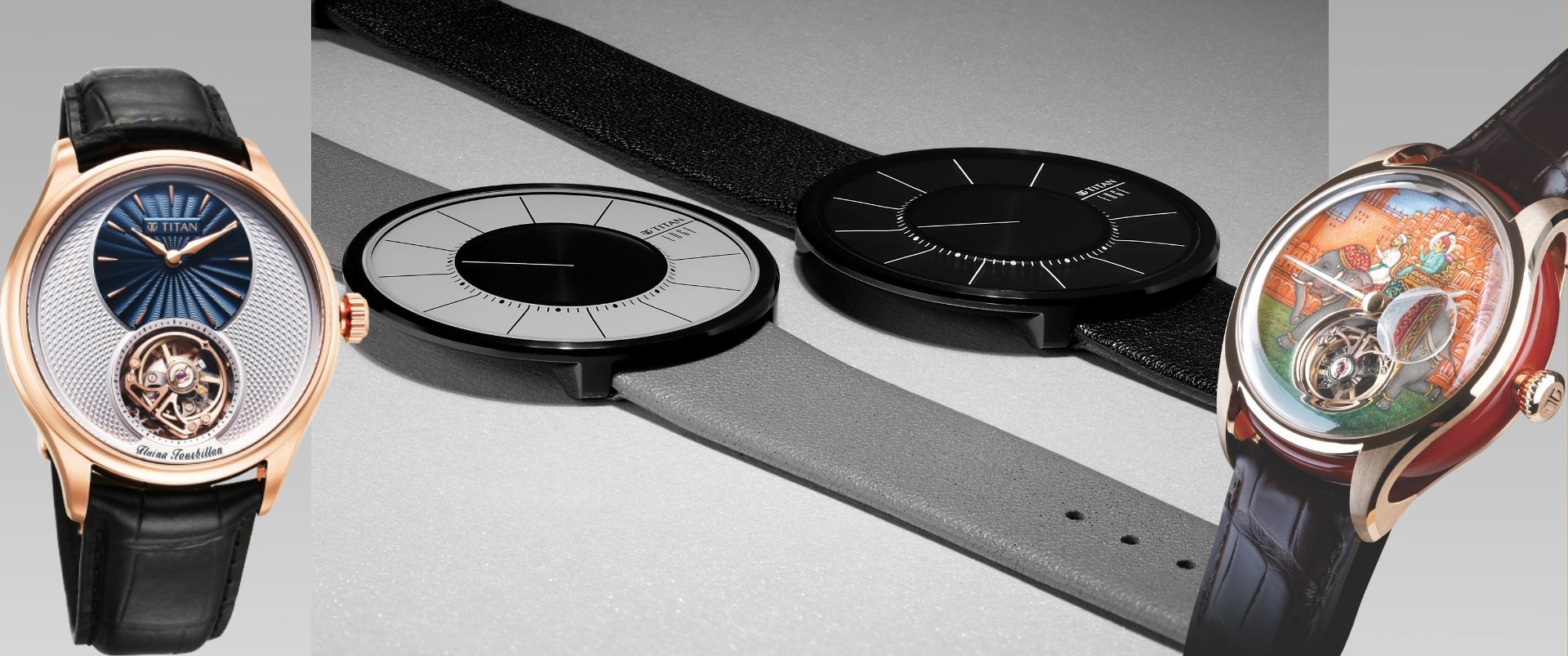
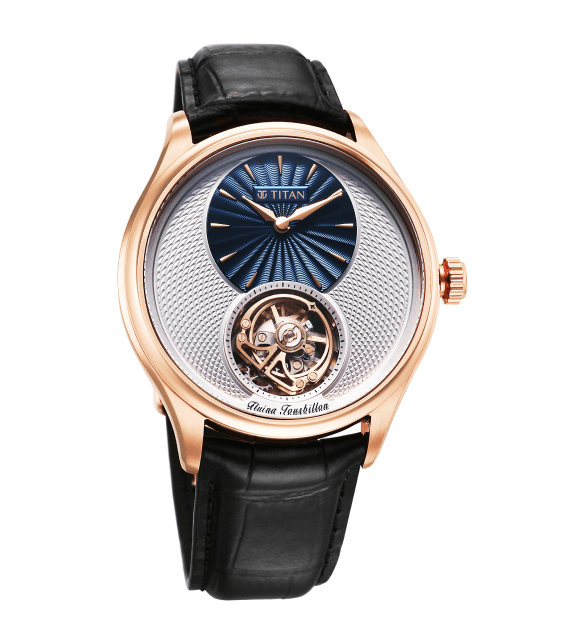
As Titan marked 40 years in 2024, it unveiled its most symbolic first yet: India’s first in-house Flying Tourbillon. Powered by the Calibre 7TH1 and housed in an 18K rose gold case, the limited-edition timepiece was not about volume or commercial scale. It was a statement one that declared Indian watchmaking ready to stand in the realm of haute horlogerie.
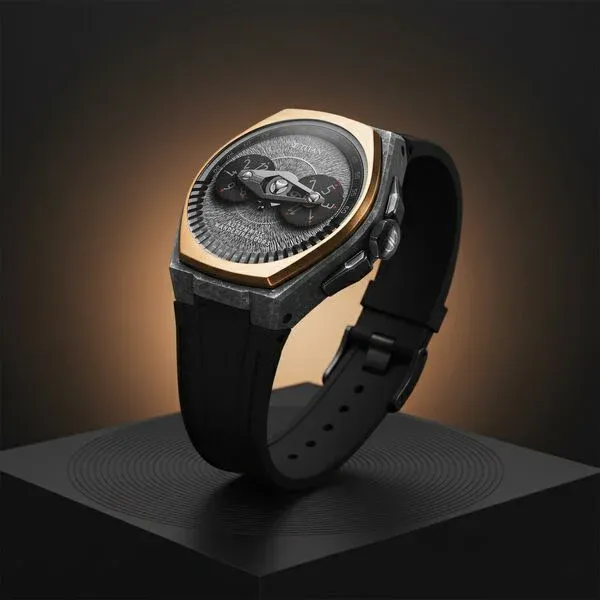
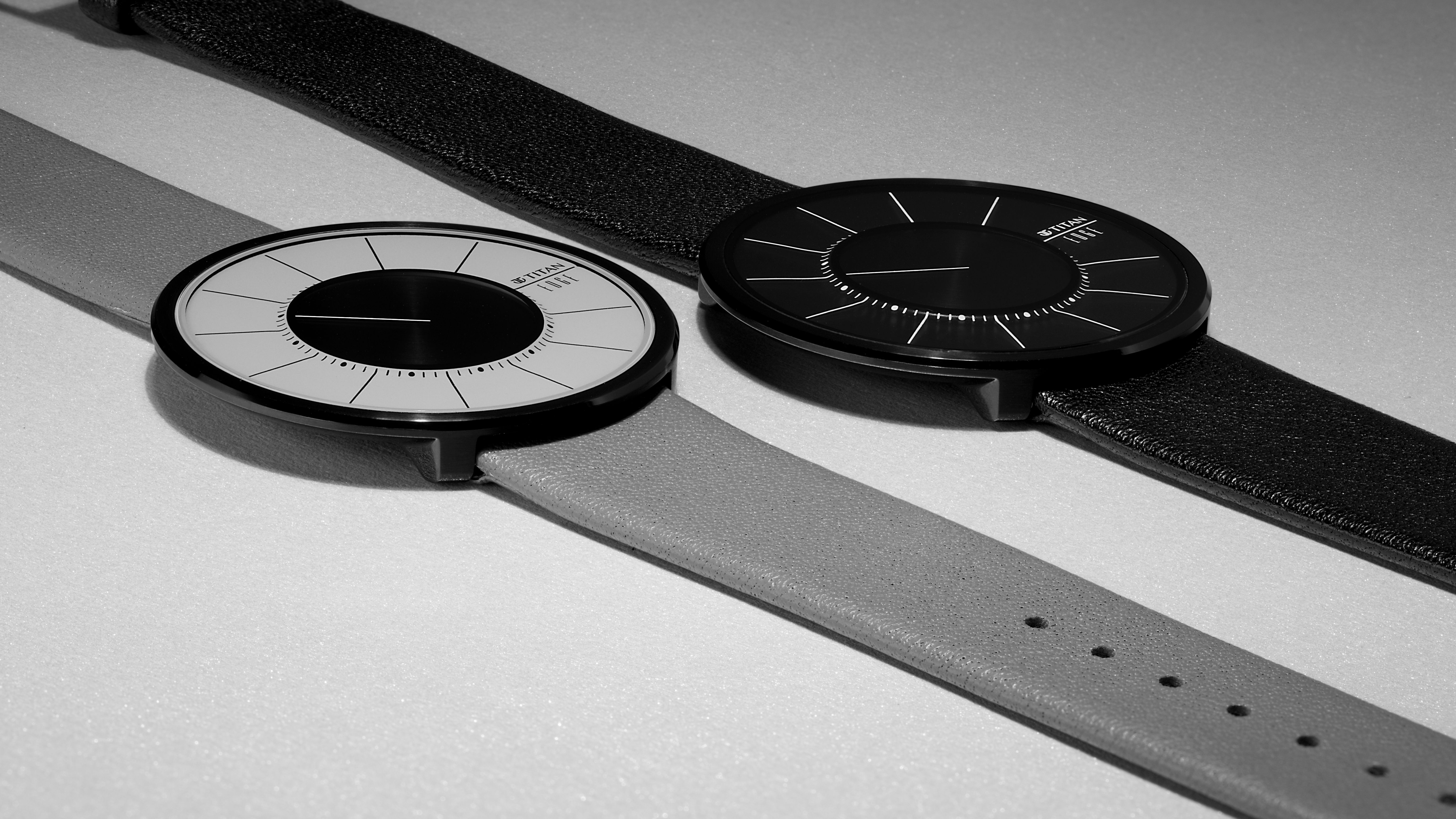
That momentum continues with another first: India’s first fully in-house wandering hour complication in the Stellar collection. Built on Titan's in-house Calibre 7AW-D2, an automatic movement with 22 jewels, a 40-hour power reserve, and a frequency of 28,800 bph. Accuracy sits at -10/+30 seconds per day, which is reasonable for a mechanical movement handling this level of complexity. The calibre itself is based on Titan's 7ACO, a movement they've been refining for six years. Taking forward the legacy of slimmest watches, Titan launched the Edge Ultraslim. At just 3.3 mm thick, the Edge Ultraslim distils two decades of ultra-thin expertise into a refined meditation on time, design and restraint. Another feather in its cap was its presence at watchmaking’s most prestigious stage: the Grand Prix d’Horlogerie de Genève 2024.
Four decades on, Titan sells nearly one watch every two seconds. But numbers alone do not define its legacy. Titan’s true achievement lies in how often it has dared to be first—first to disrupt, first to globalise, first to innovate, and first to believe that world-class watchmaking could be built on Indian soil. In mastering time, Titan has done far more than keep pace with history. It has shaped it.


