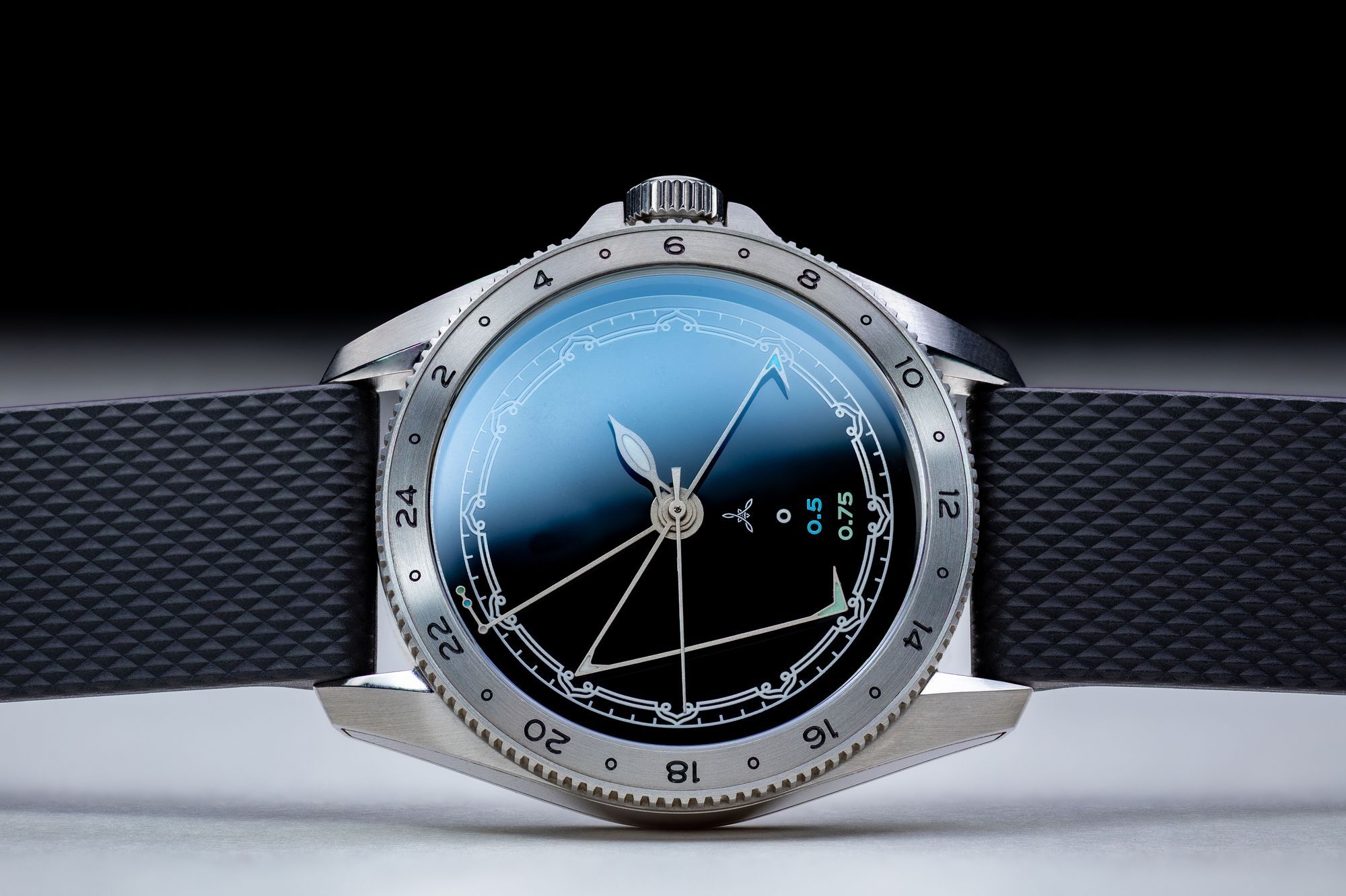
Did You Know? Ardra Labs Just Patented What Rolex Couldn't Figure Out for 70 Years
 8 min read

Your GMT watch is lying to you. Not deliberately, but it can't help itself. Set it to track time in Mumbai and it'll round down 30 minutes. Try Nepal and you're off by 45 minutes. The entire GMT complication, perfected by Rolex in 1954 and copied by everyone since, operates on a fundamental assumption that the world divides neatly into whole-hour time zones. Ten countries ignored that memo. Their 1.6 billion residents have been doing mental math ever since. Nava Krishnan bought his first proper GMT watch and immediately hit this wall. Tried setting the GMT hand to Indian Standard Time where his family lives. Couldn't do it. IST runs at GMT+5:30. His watch forced him to pick GMT+5 or GMT+6, both wrong by half an hour. Most people would shrug and add 30 minutes in their head like everyone else has done for decades. Krishnan filed a patent instead.
The Math Problem Nobody Wanted to Solve
Pan Am pilots flying transatlantic routes needed to track New York and London simultaneously. Both cities sit in whole-hour zones. The GMT-Master handled this perfectly. Then aviation went global. Flights landed in Delhi, Kabul, Tehran, Adelaide, Kathmandu, Yangon. Suddenly the elegant two-timezone solution required passengers to remember whether they needed to add or subtract 30 minutes, or was it 45 for Nepal, or wait, does Iran do 30 or 45 minute offset? The watch industry's response: deal with it. Some brands added extra subdials showing second time zones. Others built dual 24-hour displays. A few created complex calculations requiring you to reference multiple hands against multiple scales. None integrated offset zones into the core GMT architecture. They treated non-standard time zones as exceptions rather than solving the underlying mechanical limitation.
Look at the numbers. India alone has 1.4 billion people in GMT+5:30. Add Iran at GMT+3:30 or GMT+4:30 depending on daylight saving. Myanmar at GMT+6:30. Afghanistan at GMT+4:30. Parts of Australia at GMT+9:30 or GMT+10:30. The Chatham Islands at GMT+12:45. Nepal at GMT+5:45. Roughly one in five humans on earth live in time zones that traditional GMT watches cannot display accurately. The solution existed conceptually. Building it mechanically at reasonable cost was the problem. Developing an entirely new movement architecture requires millions in tooling, years of testing, and established brand infrastructure to absorb the risk. Independent watchmakers don't have those resources. Established manufactures don't have the motivation. Why solve a problem affecting non-Western markets when your current GMT watch sells perfectly well to business travelers shuttling between London, New York, Tokyo, and Hong Kong?
Building Around the Movement That Already Works
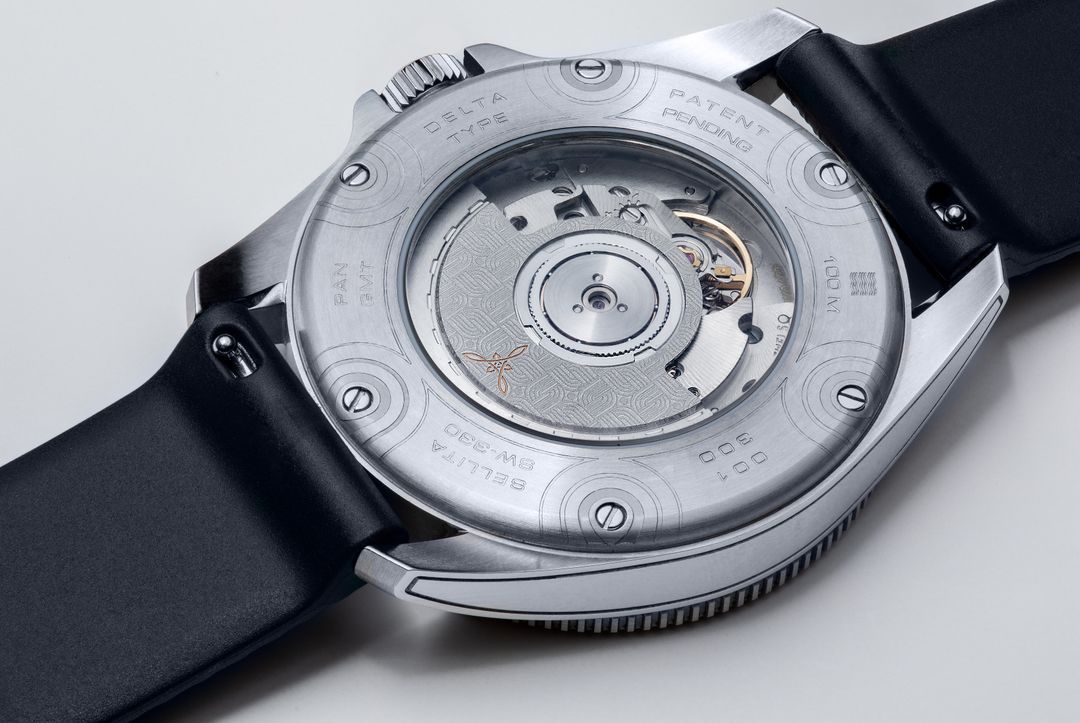
Krishnan approached this pragmatically. Don't reinvent GMT movements from scratch. Take a proven GMT caliber and add a module that enables offset reading. Patent the module, not the entire movement. This makes production feasible for an independent brand operating without manufacture-level capital. The Delta Type uses the Sellita SW330, a 26.2mm Swiss GMT movement delivering 42 hours of power reserve at 28,800 vibrations per hour. Standard architecture. Twenty-five jewels. Based on ETA 2893-2. Reliable, serviceable, available to independent brands. Nothing exotic. The PAN-GMT complication sits on top as a patented module modifying how time information displays without rebuilding the movement itself.
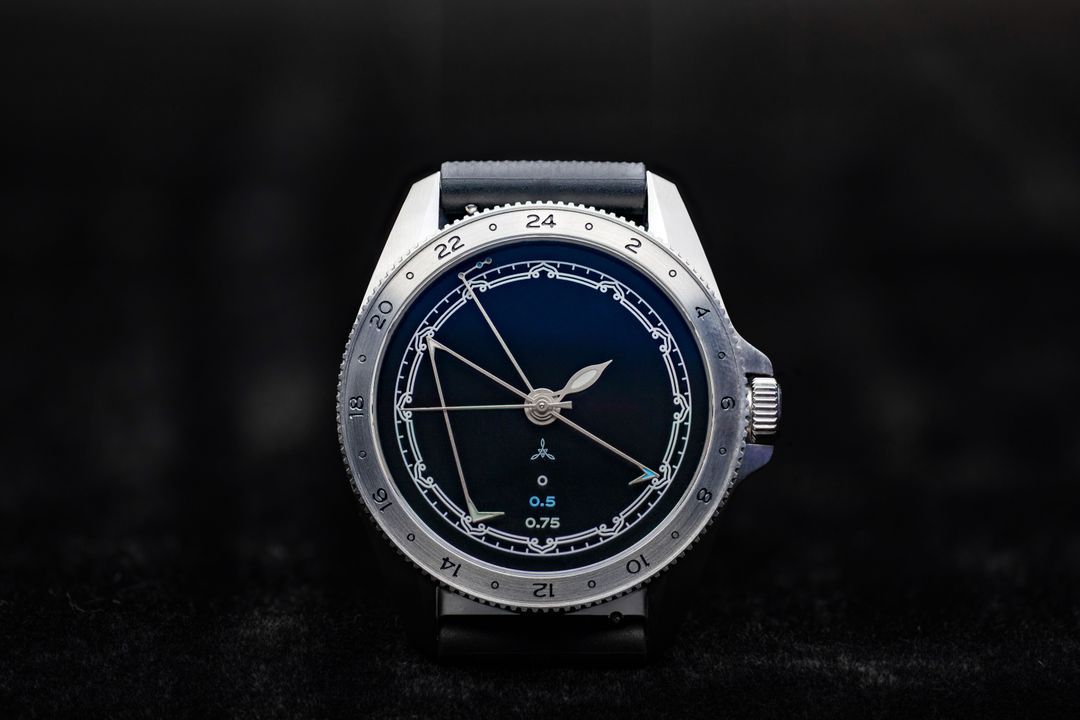
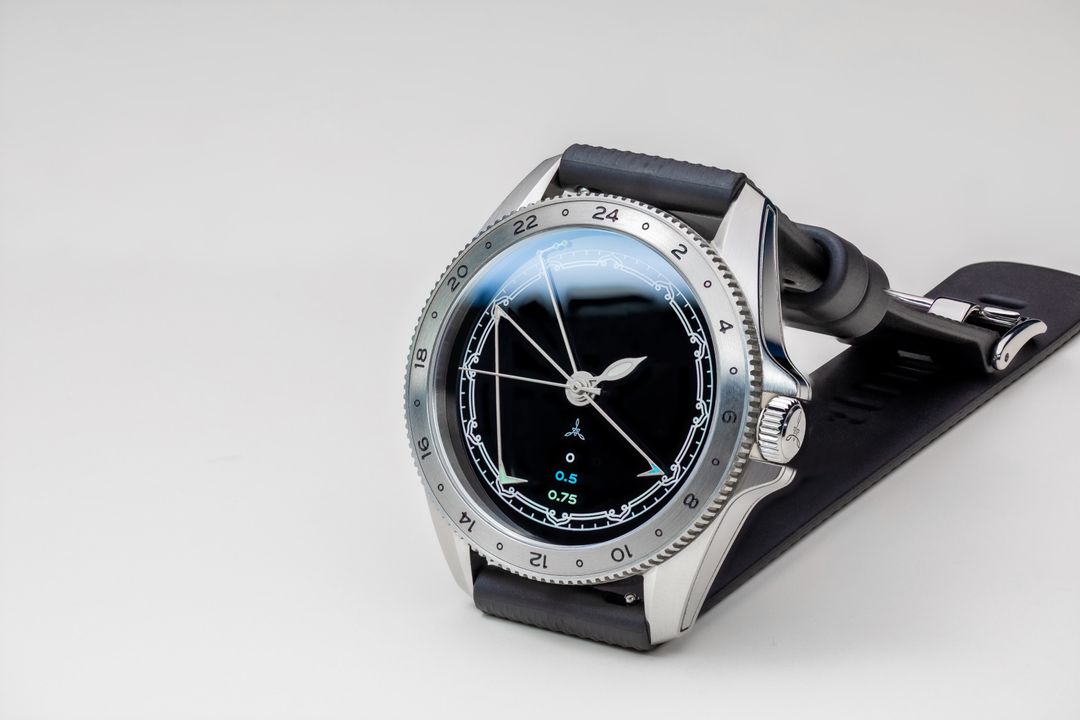
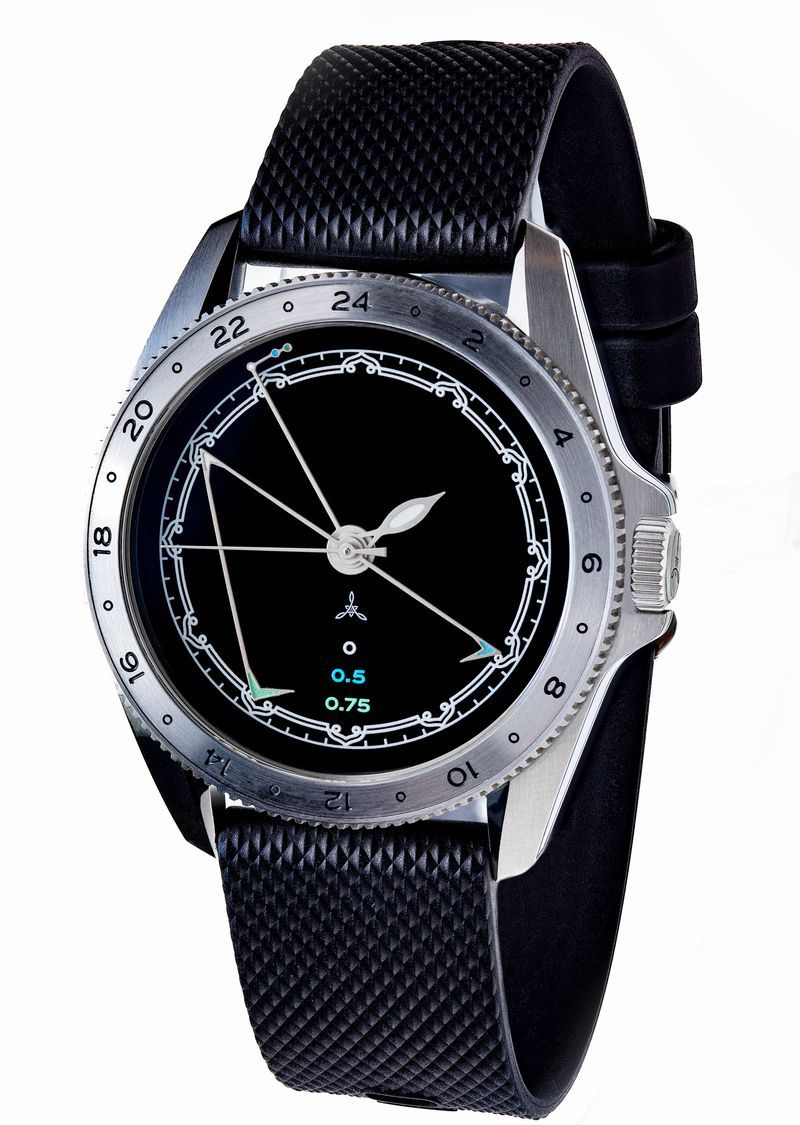
Here's how it works. Traditional GMT watches have an hour hand for local time, a minute hand shared between local and GMT readings, and a 24-hour GMT hand pointing to a rotating bezel. Simple until you need to read GMT+5:30. The Ardra Labs approach eliminates standard hour indices completely. In their place: a line-style double dot element that mimics tri-color GMT pointers. The minute hand becomes a three-vertex structure with color-coded tips. White vertex reads minutes for whole-hour zones. Blue vertex reads minutes for 30-minute offset zones. Green vertex reads minutes for 45-minute offset zones.
Reading local time is conventional. Raindrop-shaped hour hand indicates hours on a 12-hour track. White vertex on the three-pronged minute hand shows minutes. Reading alternate time zones requires following the 24-hour GMT hand to the bezel for hours, then using the corresponding colored vertex for minutes. Need to know time in Mumbai while sitting in Zurich? GMT hand shows the hour on the 24-hour bezel. Blue vertex shows the 30-minute offset. Need time in Kathmandu? Green vertex handles the 45-minute offset. Configure it right and you can track four different time zones simultaneously across different offset types.
The mechanical elegance is that nothing about the underlying movement changes. The Sellita SW330 operates exactly as designed. The module reinterprets how its outputs display on the dial. This keeps costs manageable, reliability high, and serviceability straightforward since any watchmaker familiar with ETA 2893 architecture can work on it.
When Design Draws From Rice Powder
The dial aesthetic pulls from two sources. Futurism for the overall vibe, suggesting instruments for space travel rather than business trips. Kolam for the geometric precision and cultural grounding. Kolams are South Indian floor art, primarily practiced in Tamil Nadu, Karnataka, and Andhra Pradesh. Women draw intricate geometric patterns each morning using rice powder at home thresholds. The designs range from simple connected dots to elaborate mathematical constructions requiring serious skill. They're temporary, destroyed by foot traffic, redrawn daily. This connects to watchmaking through cyclical time, daily renewal, mathematical precision expressed through hand work, and cultural continuity maintained through repetition. The Ardra Labs logo takes direct inspiration from kolam geometry. You see it in gold on the exhibition caseback rotor. The dial itself features embroidered indices creating subtle three-dimensional texture against the black cosmic background. The hands are sand-blasted stainless steel. Everything suggests navigational instruments designed for universal time reading regardless of planetary location.
This isn't decorative cultural reference. The entire brand concept stems from Krishnan's experience as someone with family in India trying to use watches designed around European and American time zones. The kolam influence grounds the design in South Indian artistic traditions while the futuristic execution ensures the watch doesn't read as regional novelty. It's a tool that happens to draw from specific cultural heritage rather than cultural product pretending to be a tool.
Making 300 Watches Across Four Countries
Independent watch brands don't manufacture everything in-house. They can't. The Delta Type prototype represents collaboration spanning Switzerland for movements, Hong Kong for case manufacturing, the Netherlands for dial work, and Italy for finishing. Managing this supply chain while hitting quality standards and price targets separates successful brands from abandoned Kickstarter campaigns. Specs are straightforward. Thirty-nine millimeters diameter, 11 millimeters thick, 20 millimeter lugs. Stainless steel case. Flat sapphire crystal with anti-reflective coating. Bidirectional bezel with 120 clicks for precise adjustment. One hundred meters water resistance, good for swimming but not diving. The Sellita SW330 shows through an exhibition caseback with the kolam-inspired logo on the rotor. The watch ships on a strap, specific details to be determined based on final production decisions.
Price is set at $2,400 USD. Limited to 300 pieces total. This positions the Delta Type well below Swiss manufacture GMT complications from established brands. Rolex GMT-Master II starts around $10,000. Grand Seiko GMT pieces run $5,000 to $8,000. Even microbrand GMT watches using stock ETA or Sellita movements without modifications typically price between $1,200 and $2,000. The $2,400 reflects the patented PAN-GMT module, Swiss movement, limited production, and development costs amortized across just 300 units. Whether 300 collectors globally will pay that price for this capability remains to be seen. The watch needs to ship first. Fratello Watches covered the prototype in December 2022. Initial plans called for orders opening in early 2023 with six-month delivery. Extended timelines are normal for independent brands developing new complications. Tooling delays happen. Suppliers miss deadlines. Quality control reveals issues requiring iteration. What matters is execution on the final product.
India Doesn't Need Permission To Innovate
India's watch market is strange. Enormous population. Growing wealth. Sophisticated collector communities in Mumbai, Delhi, Bangalore. Virtually zero domestic mechanical watch manufacturing infrastructure. HMT partnered with Citizen mid-century to produce reliable manual-wind movements under license. Quartz killed them. Titan emerged in the 1980s through Tata, focusing on quartz before recent mechanical moves. Microbrands arrived around 2015. Bangalore Watch Company, Jaipur Watch Company, others began producing watches designed in India, manufactured through Chinese or Swiss partnerships. These brands emphasize Indian cultural heritage, local design, accessible pricing. They position as Indian watch brands serving the domestic market. Ardra Labs took a different path. Krishnan established operations near Swiss watchmaking centers. Secured Sellita movements. Developed a patented complication. Priced globally. The brand happens to be founded by someone of Indian origin solving a problem directly affecting India's 1.4 billion people, but it competes on technical merit rather than national identity.
This demonstrates something important. Indians can operate at the highest levels of horological innovation without needing to wave flags about it. The Delta Type succeeds or fails based on whether the PAN-GMT complication works, whether execution meets Swiss standards, whether collectors value solving offset time zones enough to pay $2,400. Indian heritage informs design language and founding motivation. The watch gets evaluated on engineering. Indian collectors appreciate this. They want innovation, not marketing stories. They value complications solving real problems, not features added for differentiation. The Delta Type delivers both. A patented mechanical solution to time zone offsets affecting billions of people. Design language drawing from South Indian art. Pricing that reflects capability rather than badge equity.
For over a billion people living in GMT+5:30, a watch that accurately displays IST alongside other zones has practical appeal beyond horological curiosity. Business travelers between Mumbai and Singapore. Developers coordinating with teams in California and London. Families spread across India and diaspora communities globally. Everyone deals with time zone math daily. The Delta Type makes that math mechanical.
Ardra Labs will be at India Watch Weekend 2026. First chance for Indian collectors to handle the Delta Type in person and see how the PAN-GMT complication functions in practice. Photos don't convey how quickly you read the three-vertex minute hand or whether colored vertices create visual confusion. These watches need handling. The dial layout is unconventional enough that it only makes sense through physical interaction.


