Breguet's Aventurine Dials: The Technical Reality Behind the Sparkle
 5 min read

Most brands buy aventurine sheets from Murano suppliers, cut circles, polish, mount. Breguet rejected this entirely for its 250th anniversary pieces. The manufacture built aventurine dials using grand feu enamel technique, layer by layer, fired repeatedly at 800 degrees Celsius. The distinction matters. Aventurine glass traces back to 17th century Venetian accidents involving copper shavings in molten glass. Copper oxide powder added to molten glass under reducing conditions leaves metallic copper particles that crystallize within the glass matrix. The difficulty lies in controlling crystal growth during cooling. Cool too early and crystals stay microscopic. Cool too rapidly and they cluster unevenly. Copper crystals form triangular and hexagonal structures creating the characteristic sparkle.
Why Grand Feu Instead of Industrial Sheets
Breguet employs grand feu enamel as deliberate technical complication. The method involves applying powdered glass mixed with copper particles in successive layers, firing each individually at 800 degrees Celsius. Each firing changes enamel color unpredictably as metal oxides shift hue.
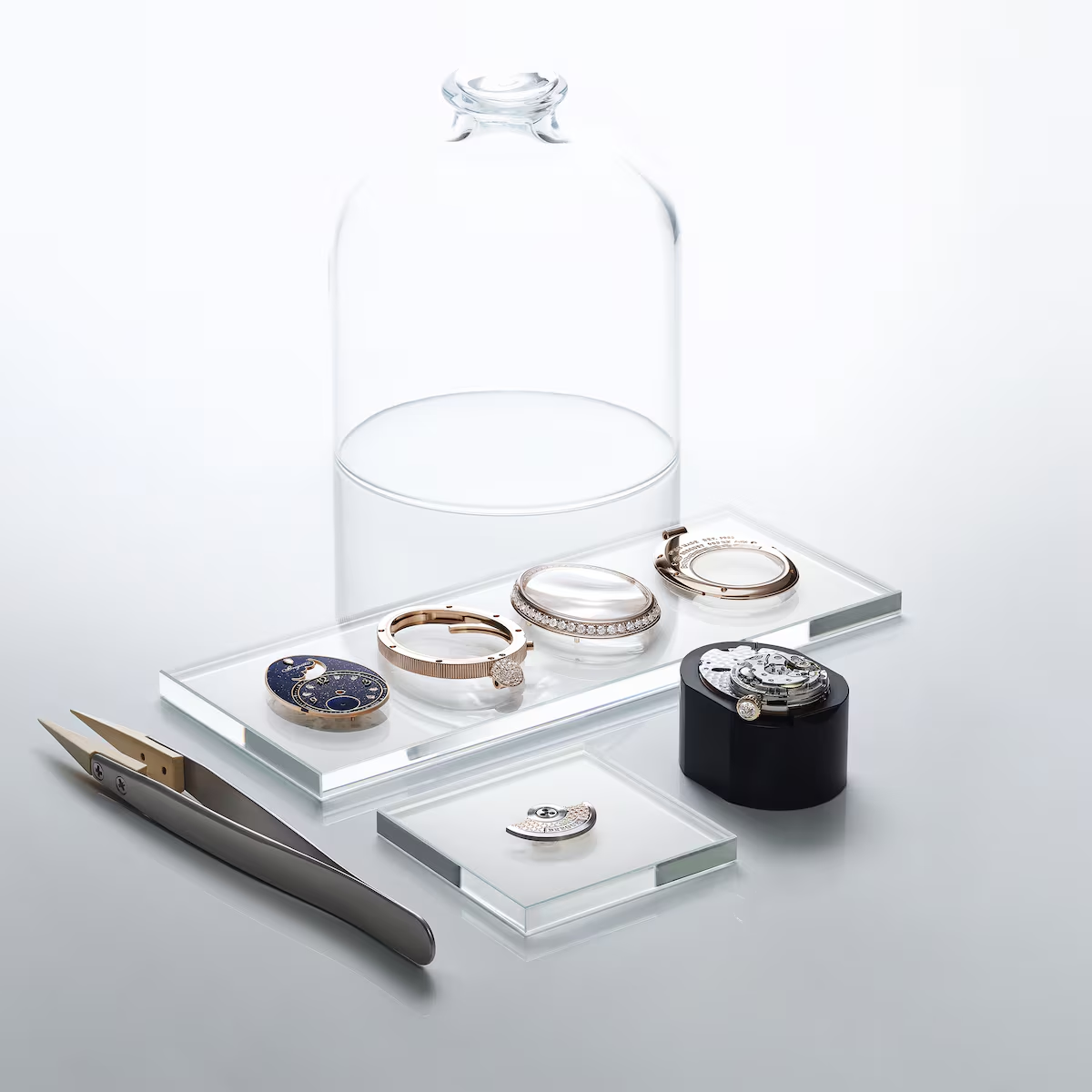
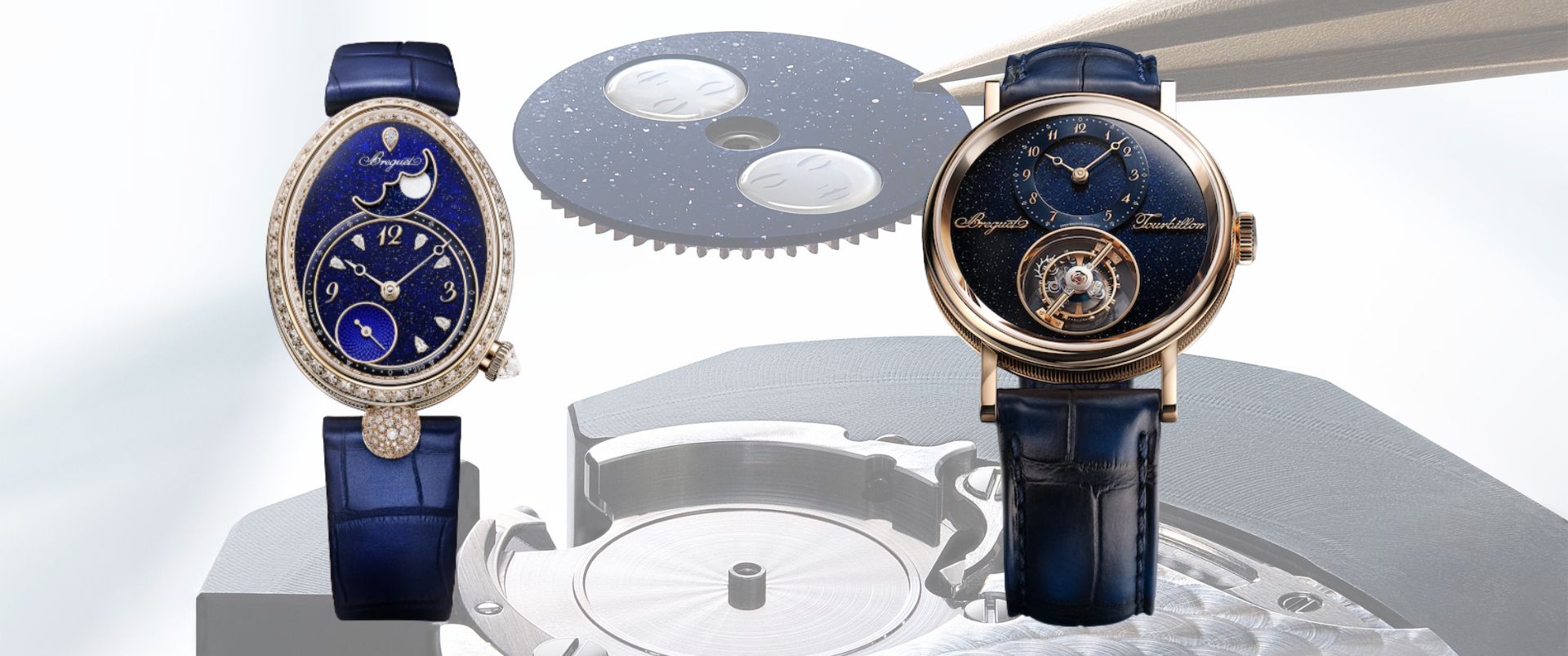
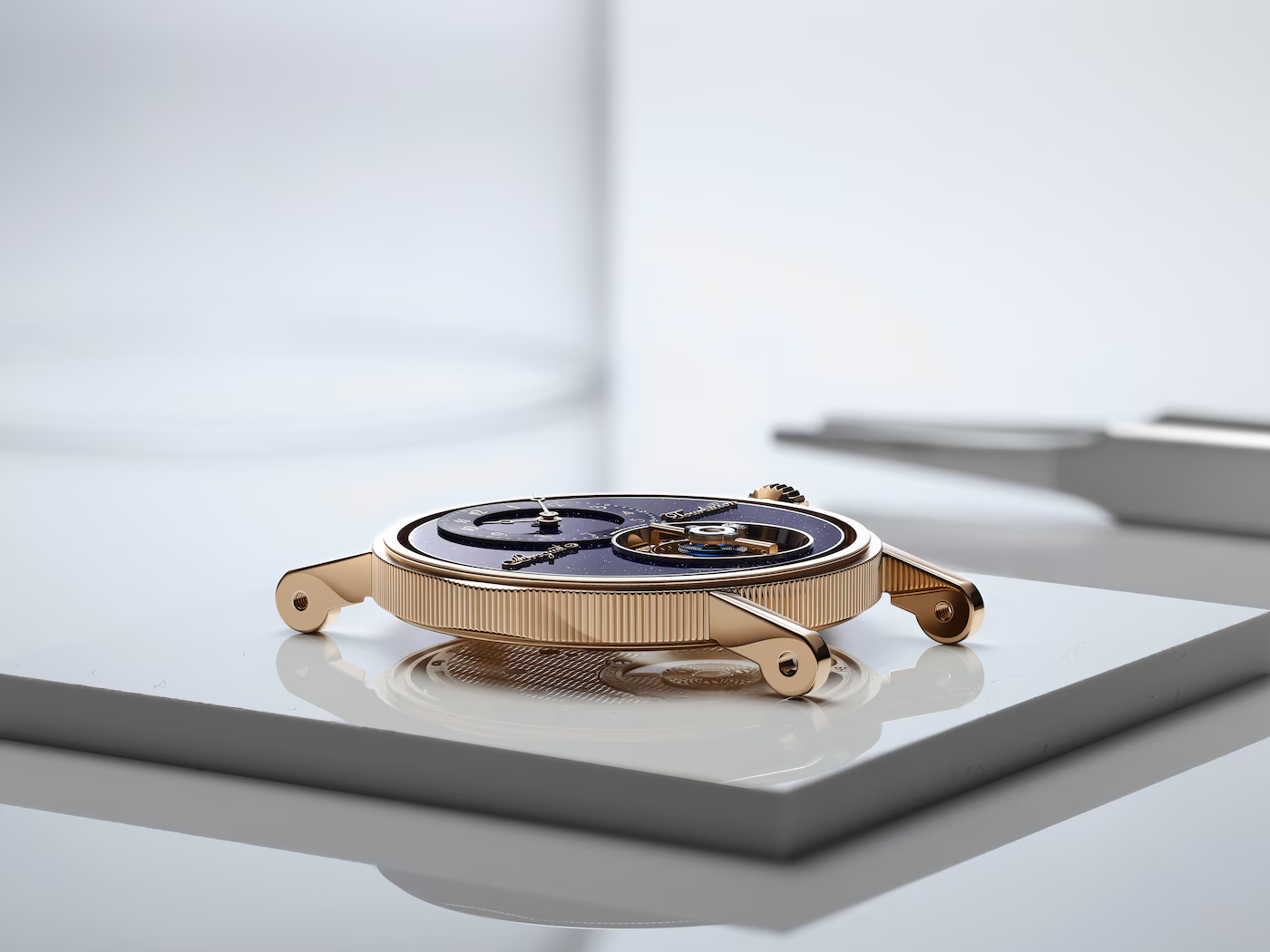
The Classique Tourbillon Sidéral 7255 presented specific structural challenges. The tourbillon sits 2.2mm above the mainplate and 0.9mm above the dial surface. To accommodate this while maintaining aventurine dial integrity, Breguet engineered a gold base forming a sealed chamber with the bezel. This chamber protects aventurine enamel layers during repeated kiln firings as temperatures cycle between ambient and 800 degrees. Raised rims along the dial perimeter and apertures for hands and tourbillon function as containment walls. Without these precisely machined boundaries, molten enamel and copper mixture would flow unpredictably during firing. Each layer must be painted, dried, fired, evaluated, then the next applied. The process typically requires six firings minimum, though complex enamels can demand fifteen separate kiln cycles.
The Reine de Naples 9935: Layered Complexity
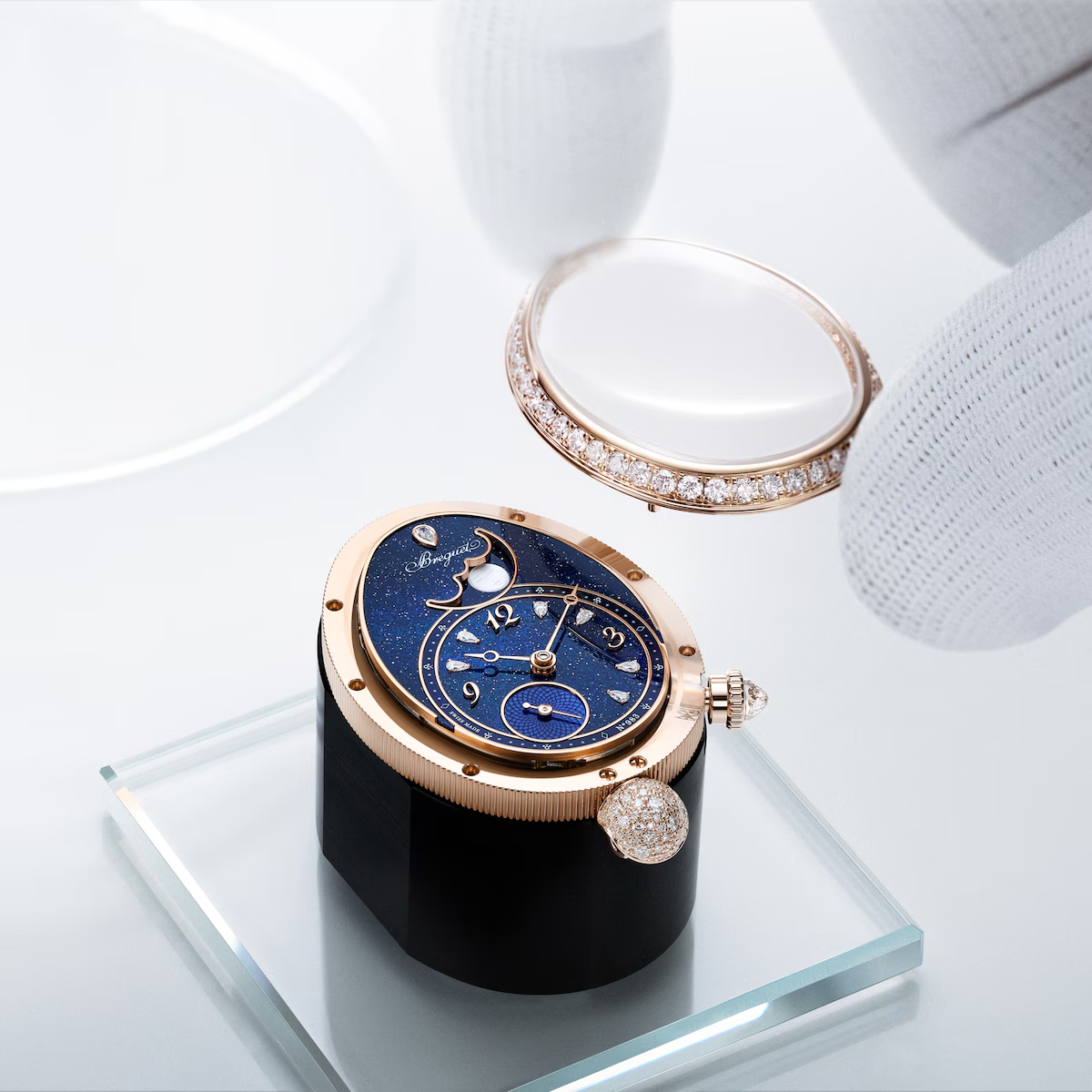
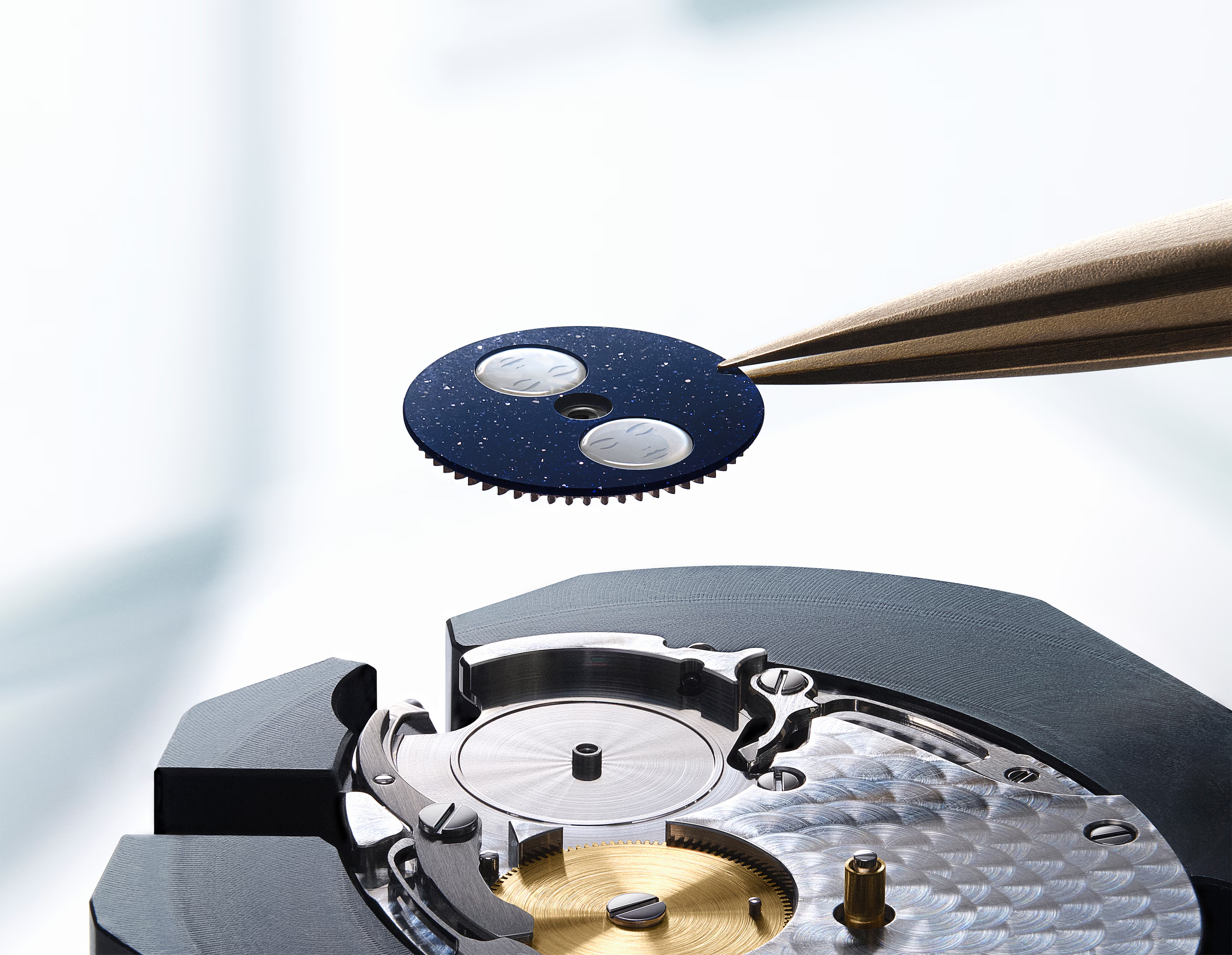
The Reine de Naples 9935 employs two-level dial construction. The upper visible layer consists of blue aventurine glass, while beneath sits thin Tahitian mother-of-pearl. When light passes through translucent blue aventurine, it encounters the mother-of-pearl surface below, reflects off its nacreous structure, then passes back through the aventurine.
Mother-of-pearl's aragonite crystal layers diffract light at varying wavelengths depending on viewing angle. Pairing this with aventurine's copper sparkle produces interference patterns that change throughout the day. Breguet achieves blue aventurine through cobalt additions, requiring adjusted firing temperatures. Cobalt behaves differently than pure copper oxide during reduction. The 9935 dial measures 28.5mm wide within an oval case stretching to 36.5mm. Working with elongated surfaces rather than circular blanks introduces asymmetric stresses during firing. The moon phase indicator also employs aventurine glass, requiring separate fabrication at roughly 8mm diameter where any defect becomes immediately visible. The watch houses caliber 537L2 with 225 components including silicon balance spring. The movement operates at 3.5 Hz, maintaining continuity with historical pocket watch movements.
The Tourbillon Sidéral 7255: Technical Restraint
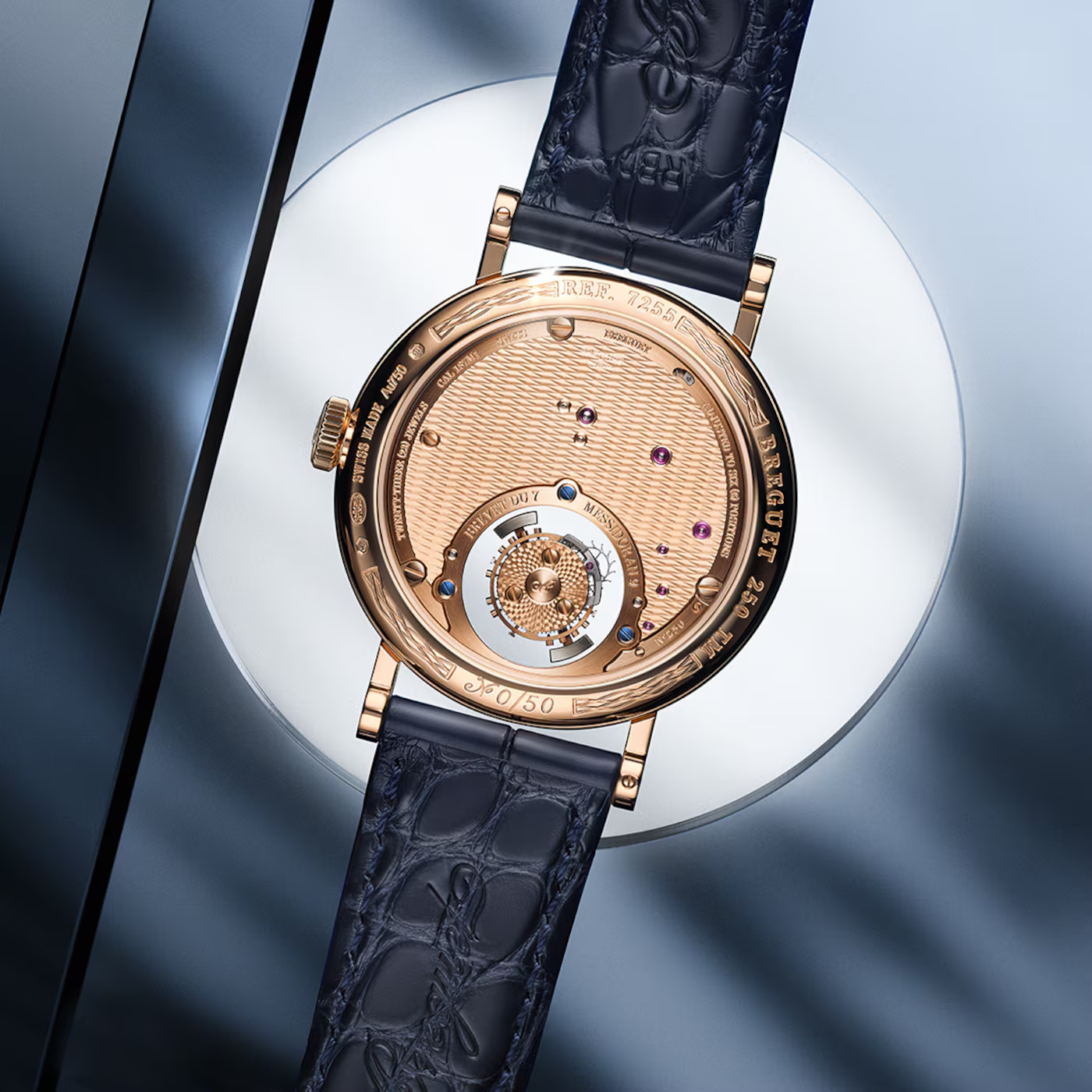
The 7255 commits entirely to aventurine enamel. No mother-of-pearl, no guilloché. Just deep blue aventurine with copper crystal inclusions. This represents Breguet's first aventurine enamel dial despite 250 years of production. Grand feu enamel builds substance through layering, resulting in a dial surface notably thicker than painted or stamped alternatives. This thickness becomes structurally relevant when accommodating the flying tourbillon projecting 0.9mm above the dial plane. The enamel must cure with sufficient strength to support machining for the tourbillon aperture without fracturing while maintaining translucency. The caliber 187M1 derives from the caliber 558 family introduced in 1990 for the Breguet 3350, originally from Daniel Roth working with Lemania. The 187M1 measures 30mm diameter and 4.8mm thick excluding the 2.2mm tourbillon projection, operating at 2.5 Hz with 50-hour power reserve. The flying tourbillon marks Breguet's first despite the brand's foundational tourbillon role. The cage eliminates the upper bridge, supported only from below using sapphire components. Movement architecture relocated the barrel and going train opposite the crown, preventing visible components from intruding into space surrounding the tourbillon.
Powdered glass consists primarily of silica melting above 1700 degrees Celsius. Firing at 800 degrees allows controlled crystal growth without overheating metal substrates. Each firing cycle stresses the metal base through thermal expansion. Aventurine's copper crystals form through precipitation during slow cooling as dissolved copper atoms cluster into crystalline structures. Breguet's layer-by-layer approach complicates this because each successive firing reheats previously cured layers, potentially disrupting crystal structure. Blue coloration requires cobalt additions integrated with copper. Balancing these effects demands testing as excess cobalt obscures copper visibility while insufficient cobalt produces weak color.
What the Complexity Delivers
Aventurine's signature quality lies in its dimensionality. Light penetrates translucent glass, encounters copper crystals at various depths below the surface, reflects, refracts through surrounding glass, then exits at angles determined by crystal position and viewer perspective. This creates apparent movement as the watch tilts. The sparkle shifts continuously rather than remaining static. The Reine de Naples 9935 multiplies this effect by layering mother-of-pearl beneath aventurine glass. Light must navigate two materials with different optical properties. The nacreous iridescence adds color shifts independent of aventurine's sparkle. The Tourbillon Sidéral 7255 maximizes aventurine's cosmic aesthetic by eliminating competing elements, providing backdrop for the flying tourbillon's mechanical theater. Both applications demonstrate understanding that aventurine works best when design accommodates rather than fights its characteristics. Its unpredictability means no two dials appear identical, creating quality control challenges for brands prioritizing consistency.
The Unromantic Assessment
Aventurine dials are not revolutionary. Breguet did not invent new chemistry or discover novel crystal structures. What the manufacture accomplished was applying existing technique to dial production with care exceeding industry standards. This distinction matters because watch marketing frequently conflates craft mastery with innovation. Mastery commands respect precisely because it requires no novelty to demonstrate value. Anyone can research aventurine creation processes. Most cannot execute them successfully. The knowledge exists publicly. The skill develops through years of practice accepting high failure rates.