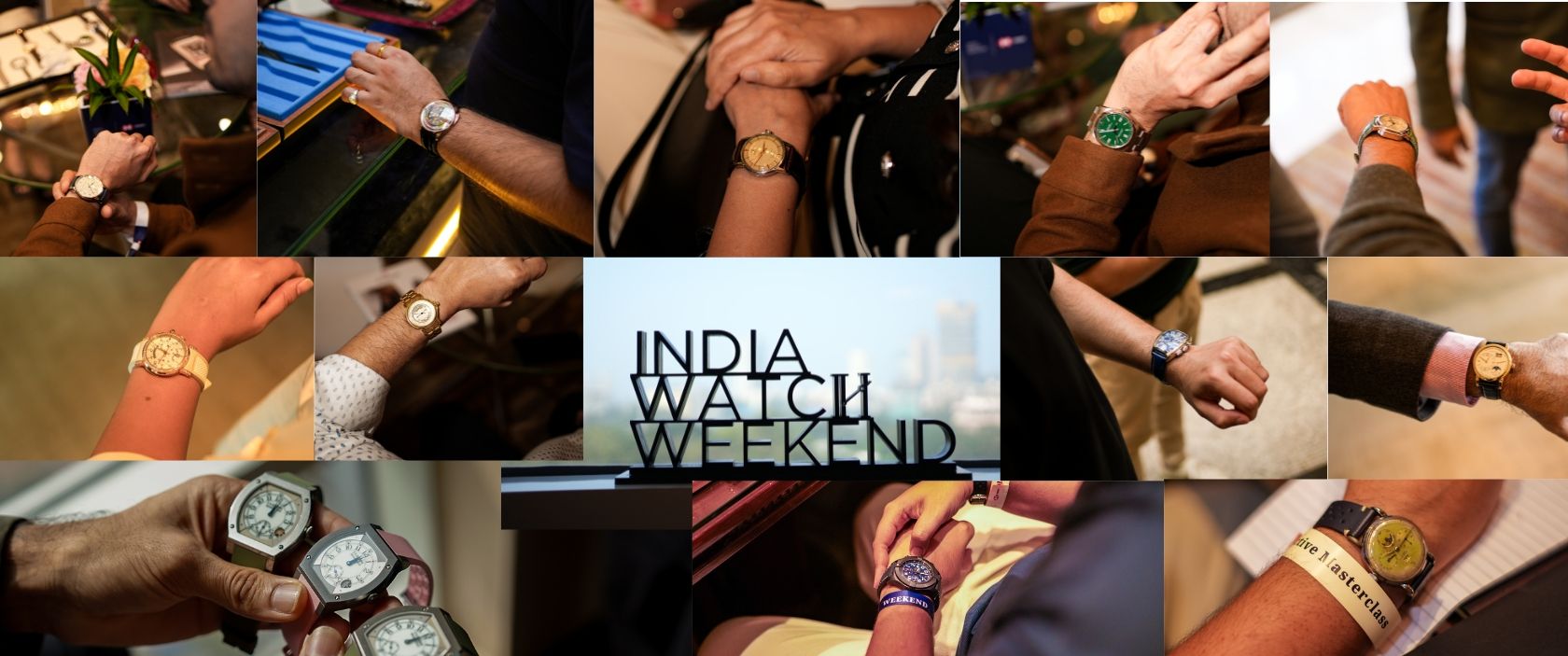
What India Is Wearing: A Snapshot From India Watch Weekend 2026
 5 min read

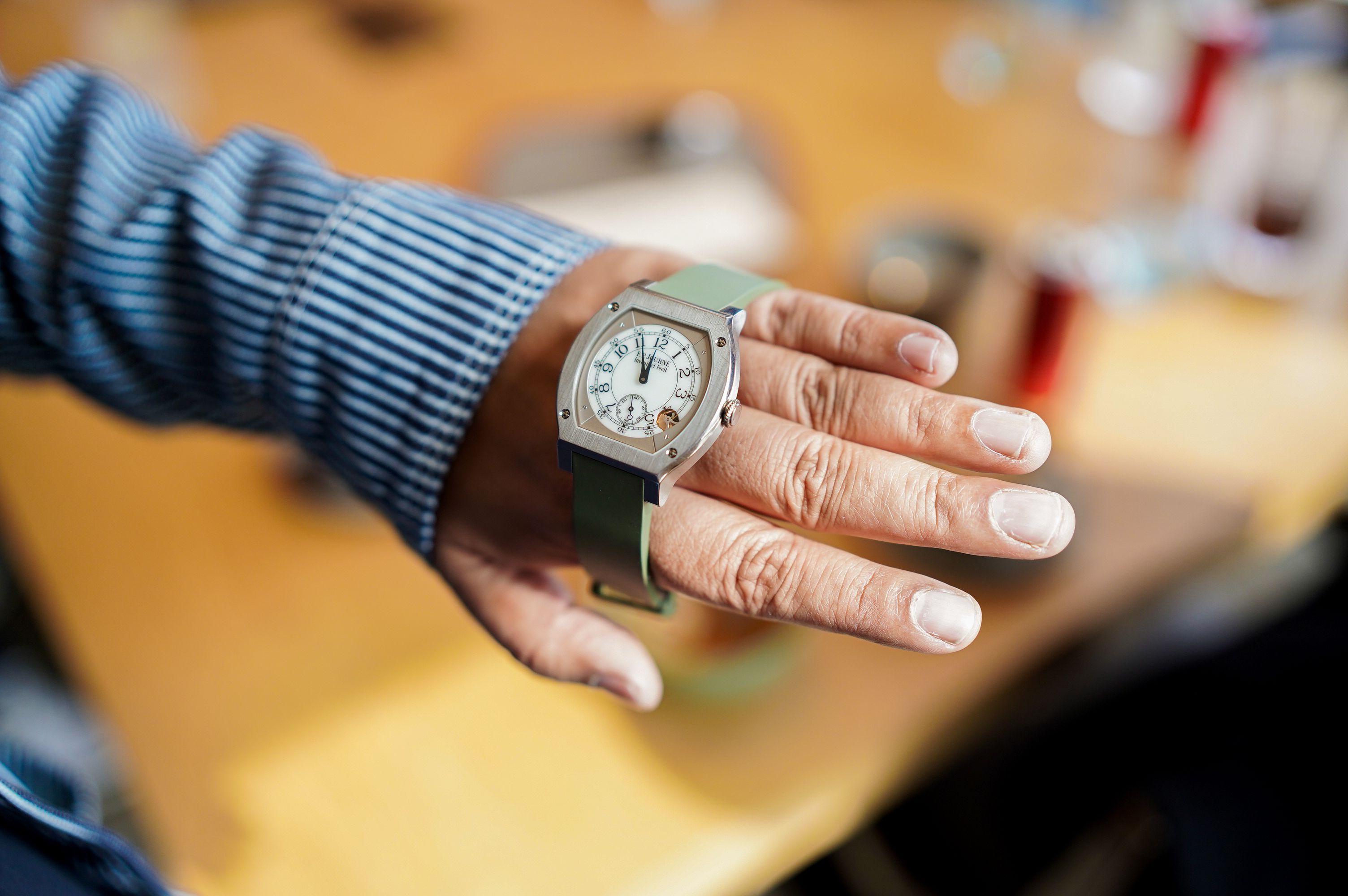
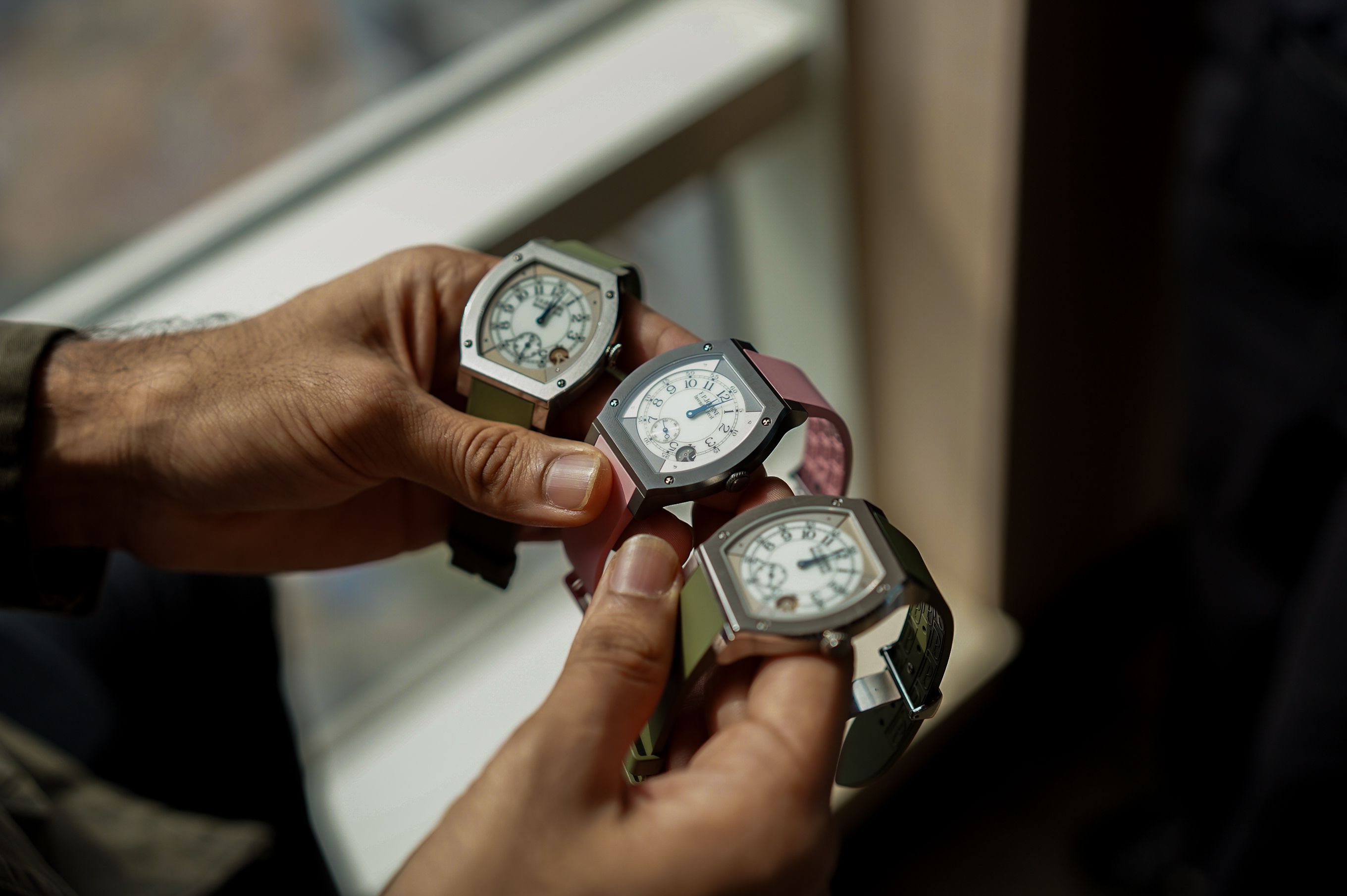
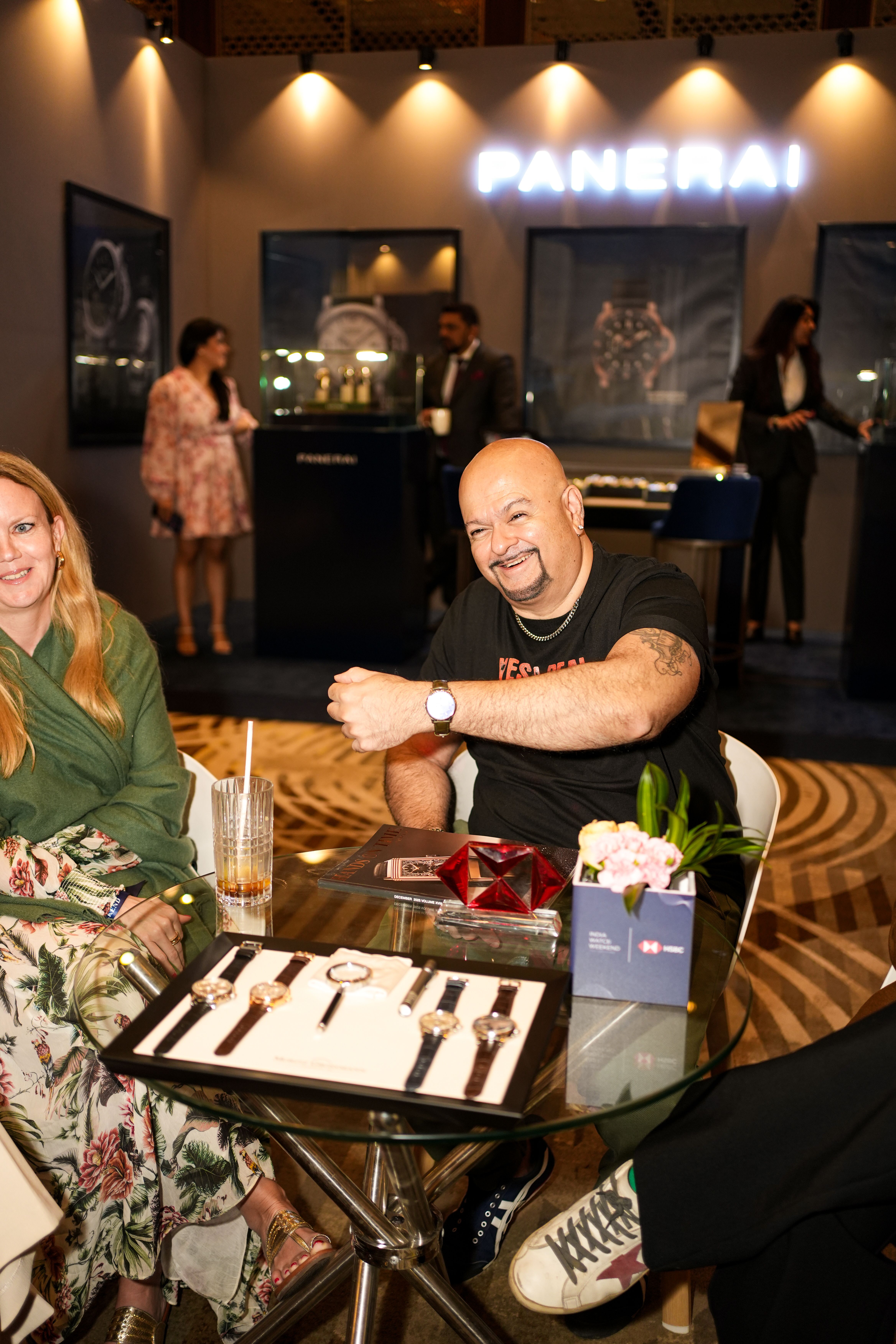
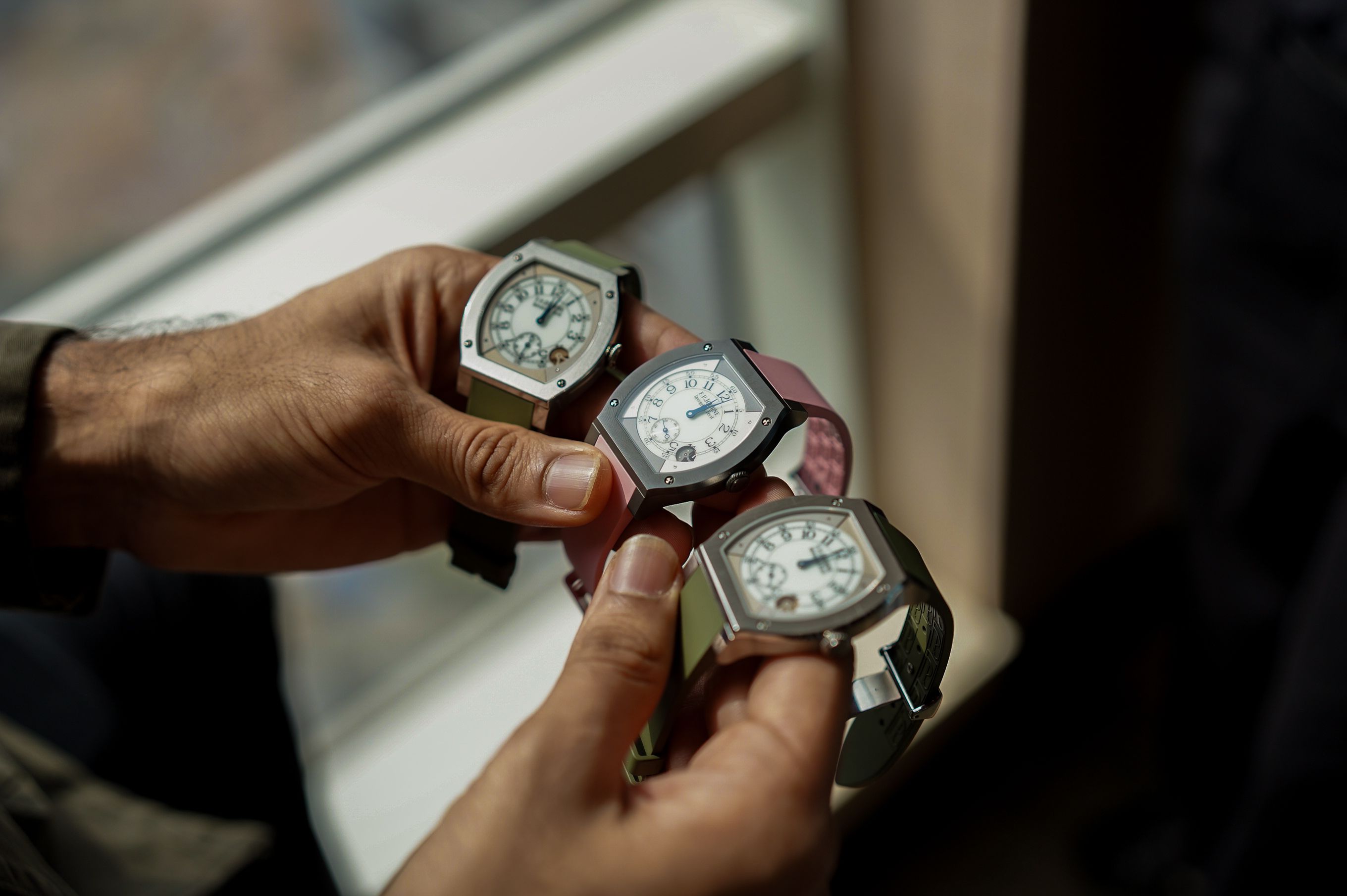
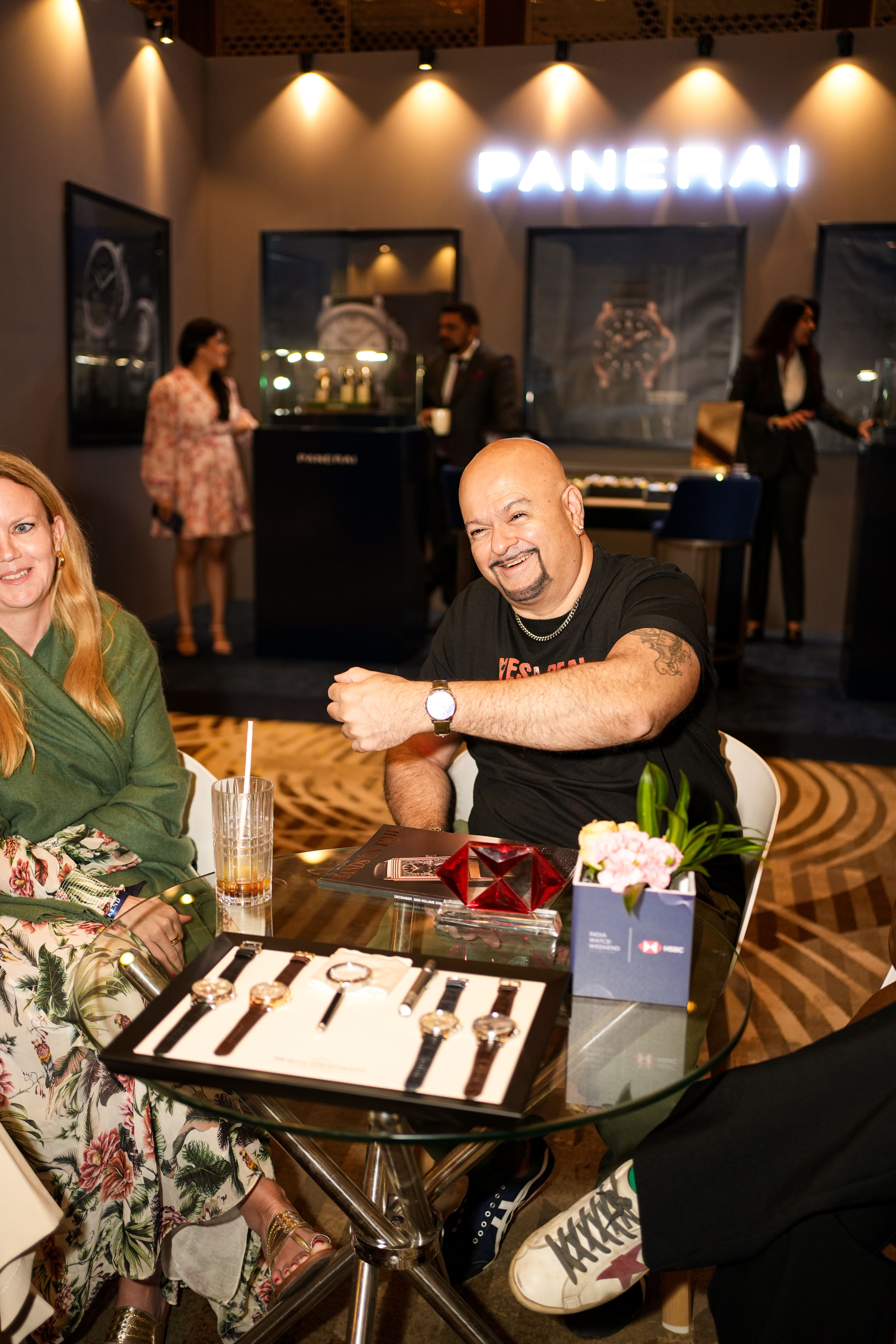
India Watch Weekend in Mumbai last weekend offered something rare in the local horological landscape: an unfiltered view of what serious collectors are actually wearing. Not what they might buy, or what brands are promoting, but what has made it past consideration and onto wrists. The first edition of this collector-focused gathering, organized by The Hour Markers and Red Bar India, drew enthusiasts from across the country to Time Avenue's Mumbai location. What they wore tells a more complex story than the market statistics suggest. The Indian luxury watch market stands at $1.6 billion as of 2024, projected to reach $2.8 billion by 2033. Swiss watch exports to India grew 25.2% year over year, making it the fastest-growing market globally for Swiss timepieces. These figures reflect real momentum, but they describe purchasing behavior in aggregate. What showed up on wrists at India Watch Weekend reveals how that purchasing translates into actual collection building and daily wearing habits.
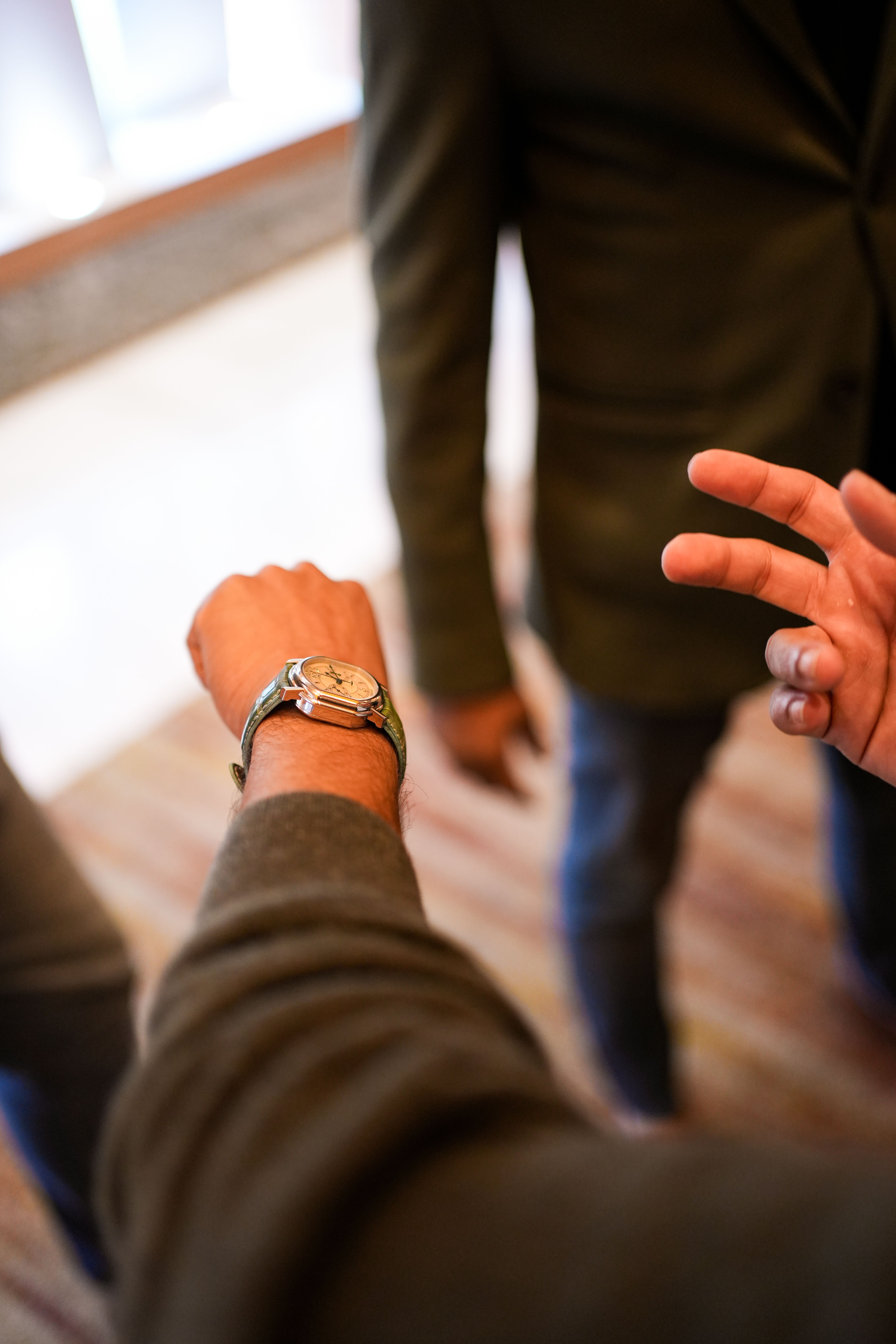
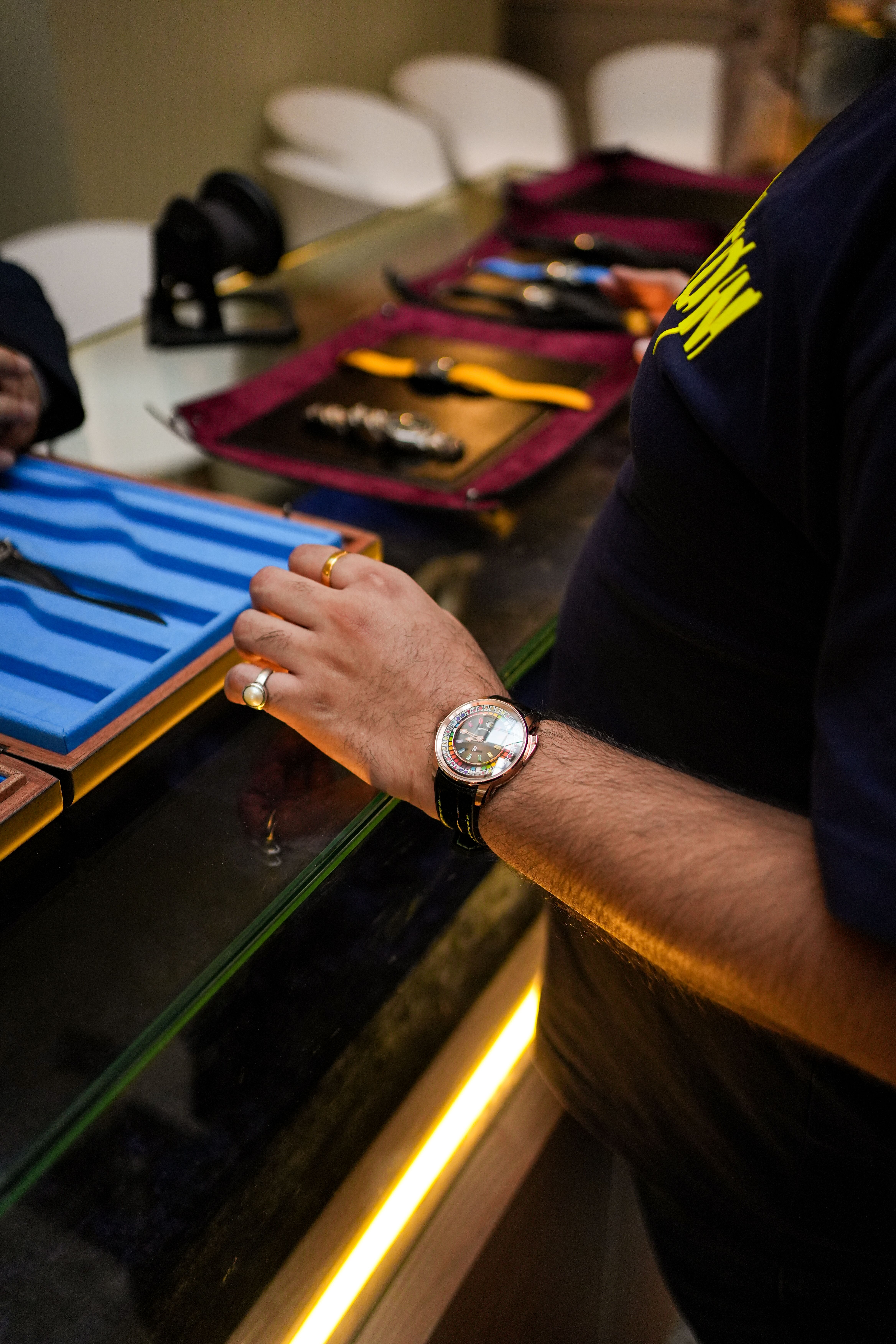
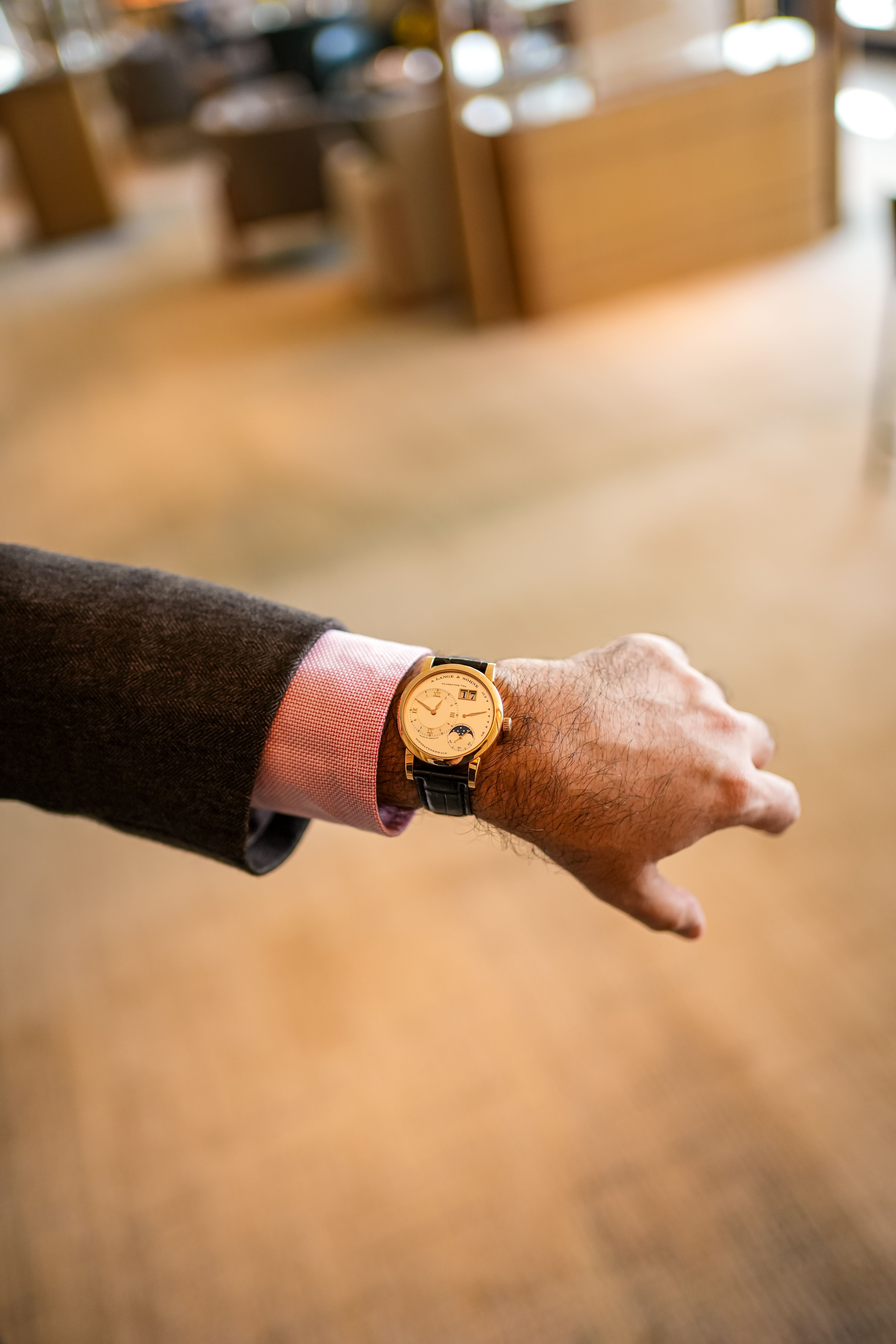
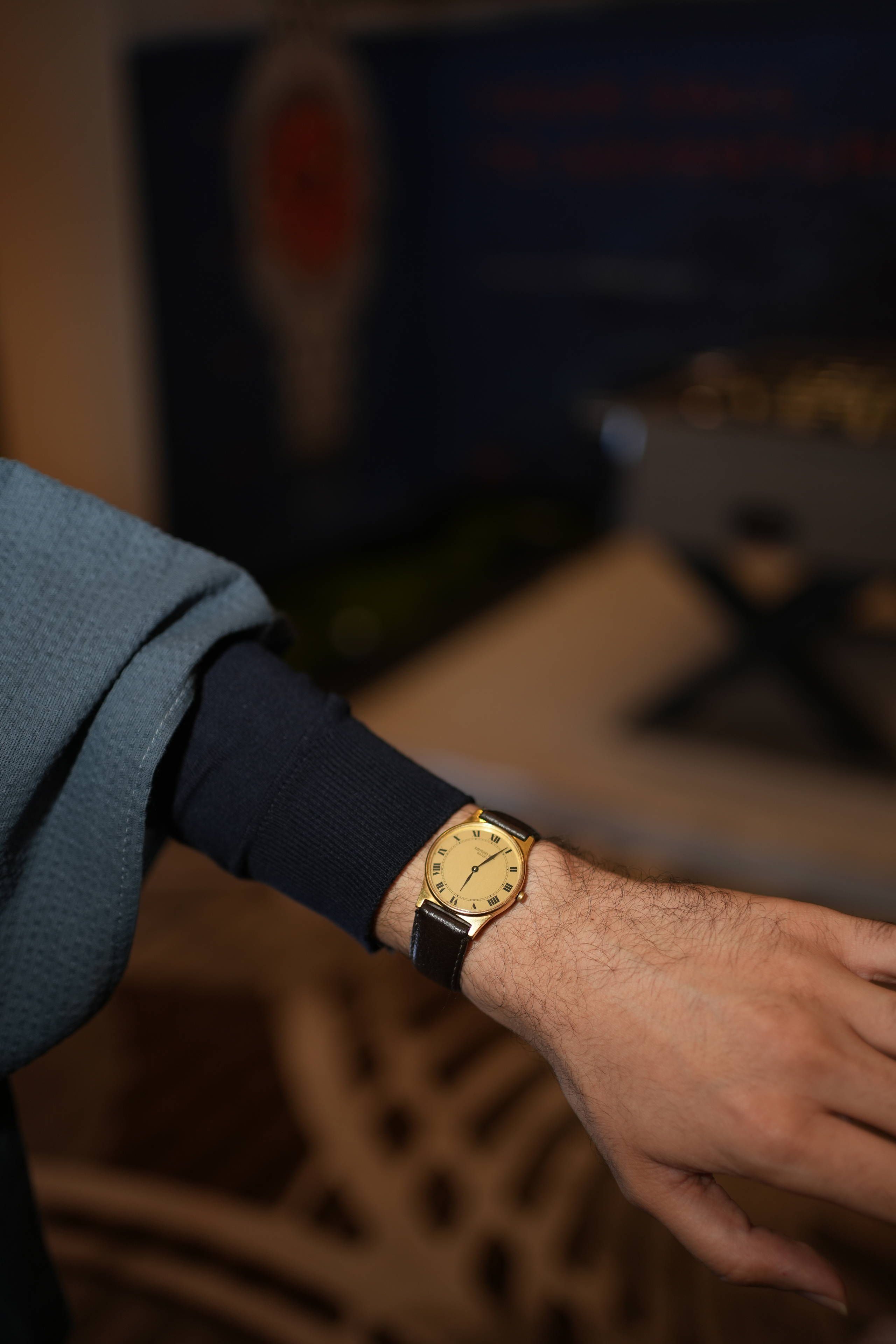
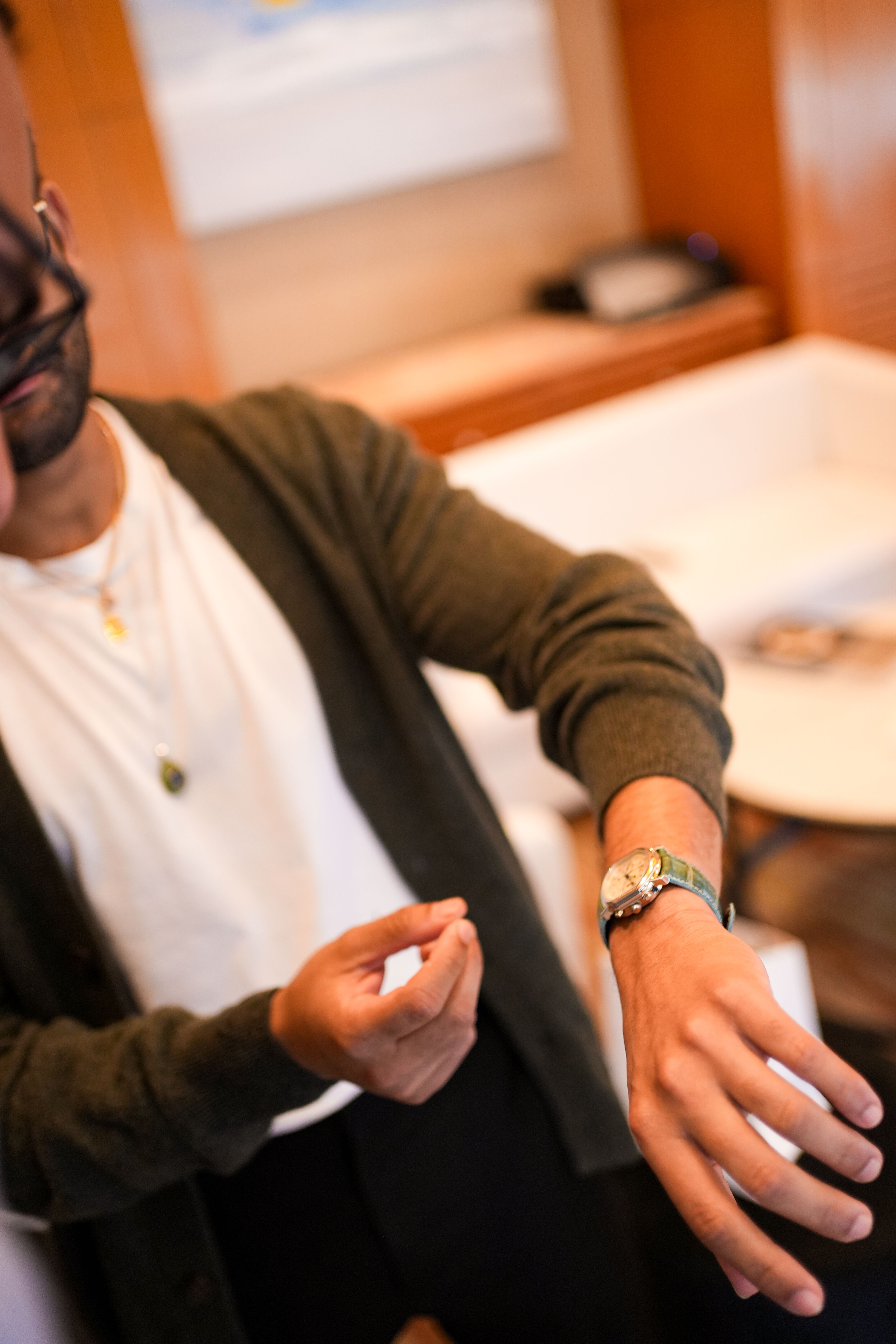
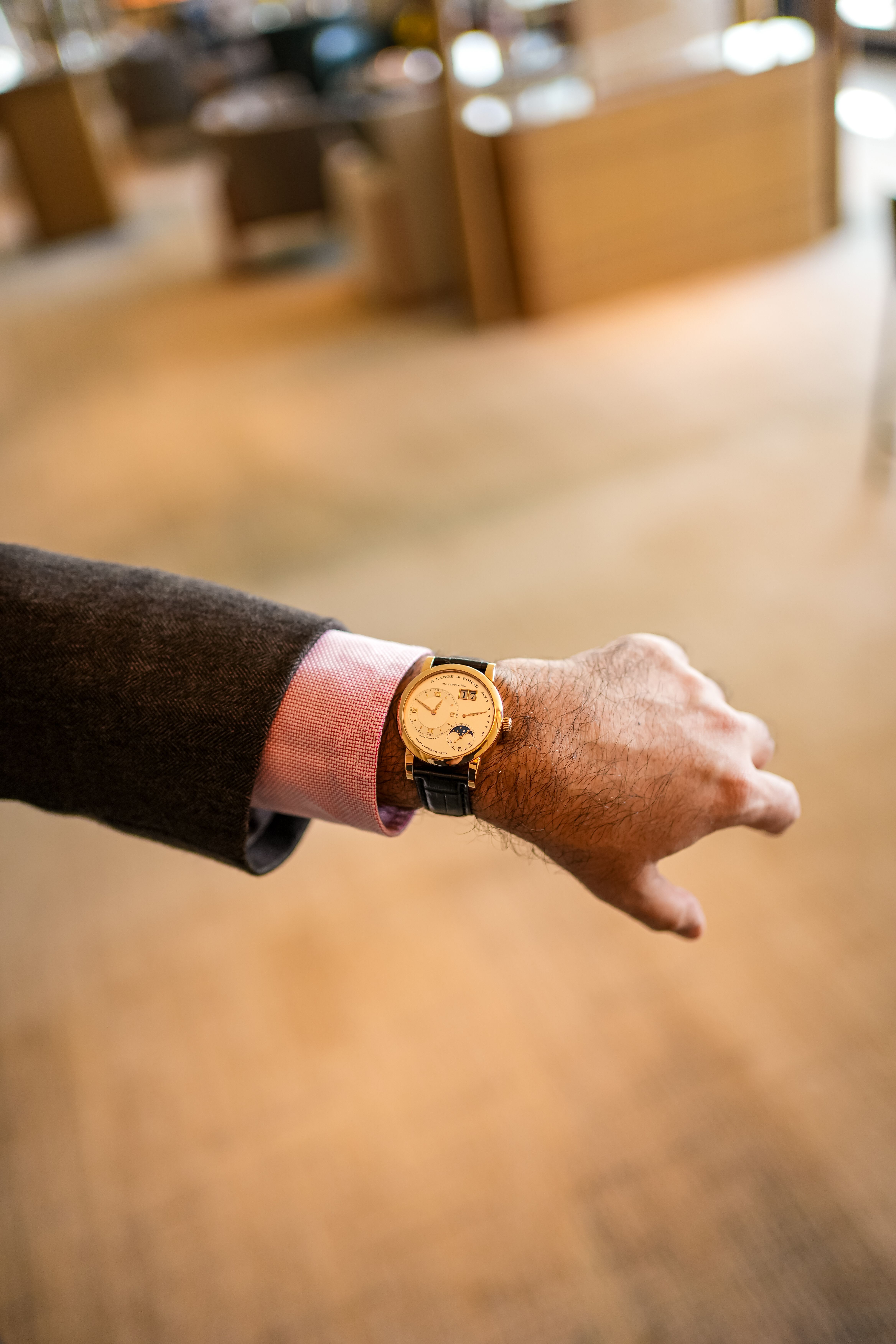
The range was notable. A pink gold A. Lange & Söhne Zeitwerk represented the kind of complication-driven haute horlogerie that was virtually absent from Indian collecting discourse a decade ago. The Zeitwerk's jumping numerals and patented constant-force escapement place it firmly in the category of mechanically ambitious watchmaking, the sort of piece that requires both substantial capital and a developed understanding of what differentiates it from more accessible luxury offerings. Near it, a 40-year-old Patek Philippe Nautilus. Not a contemporary reference riding secondary market speculation, but an older example that predates the current mania for integrated bracelet sports watches. Its presence suggests either early adoption or inheritance, both of which indicate collecting patterns with some depth behind them.
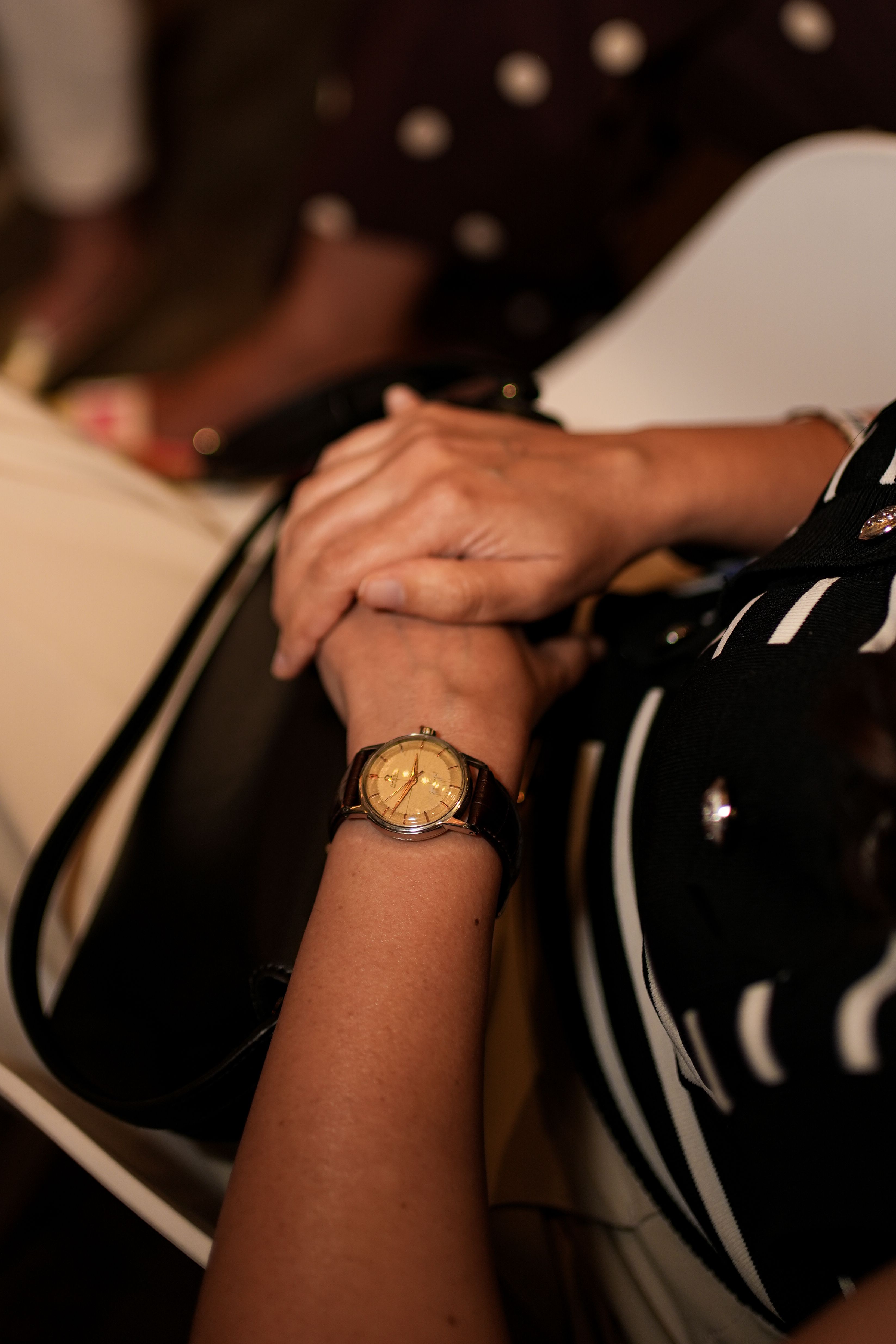
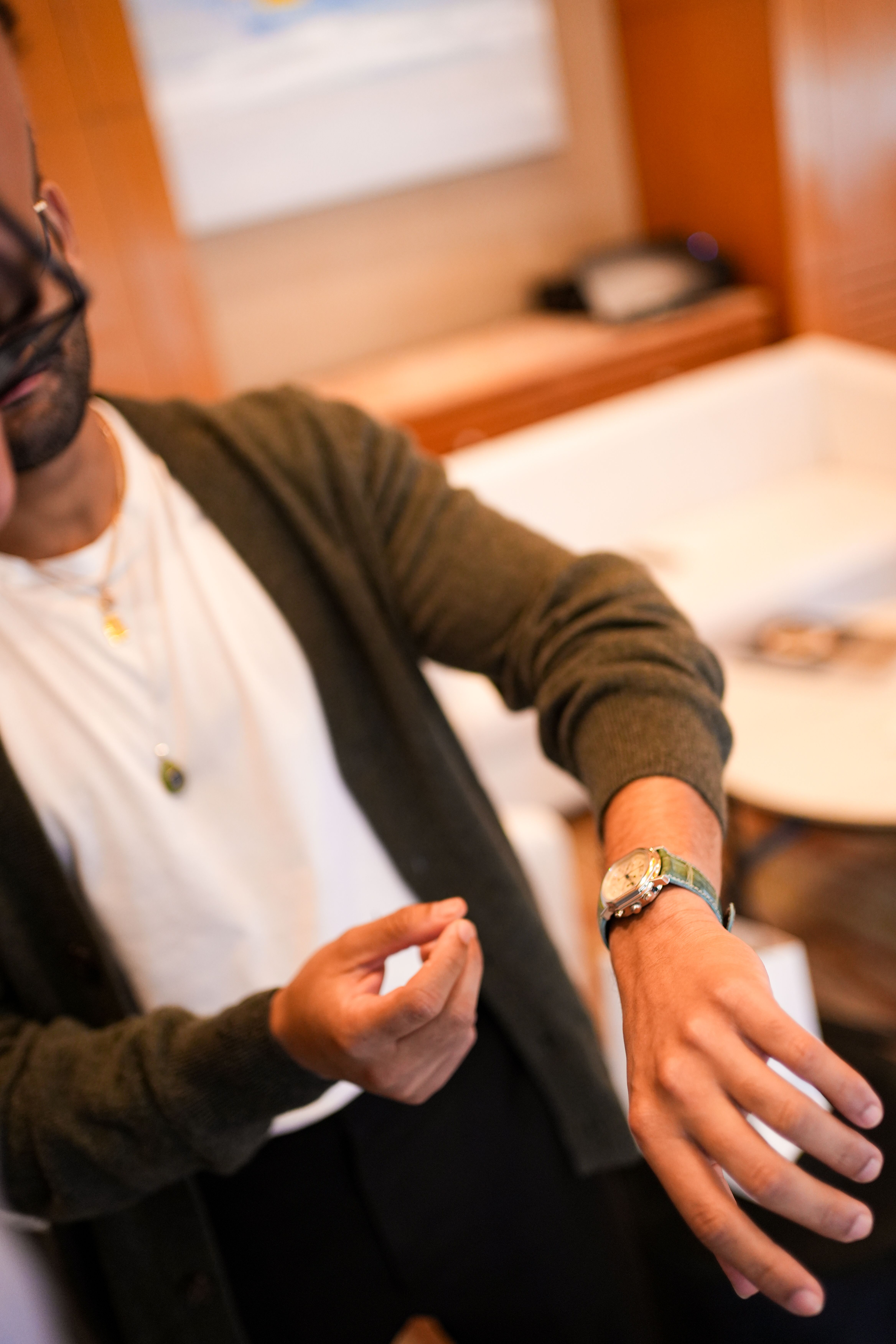
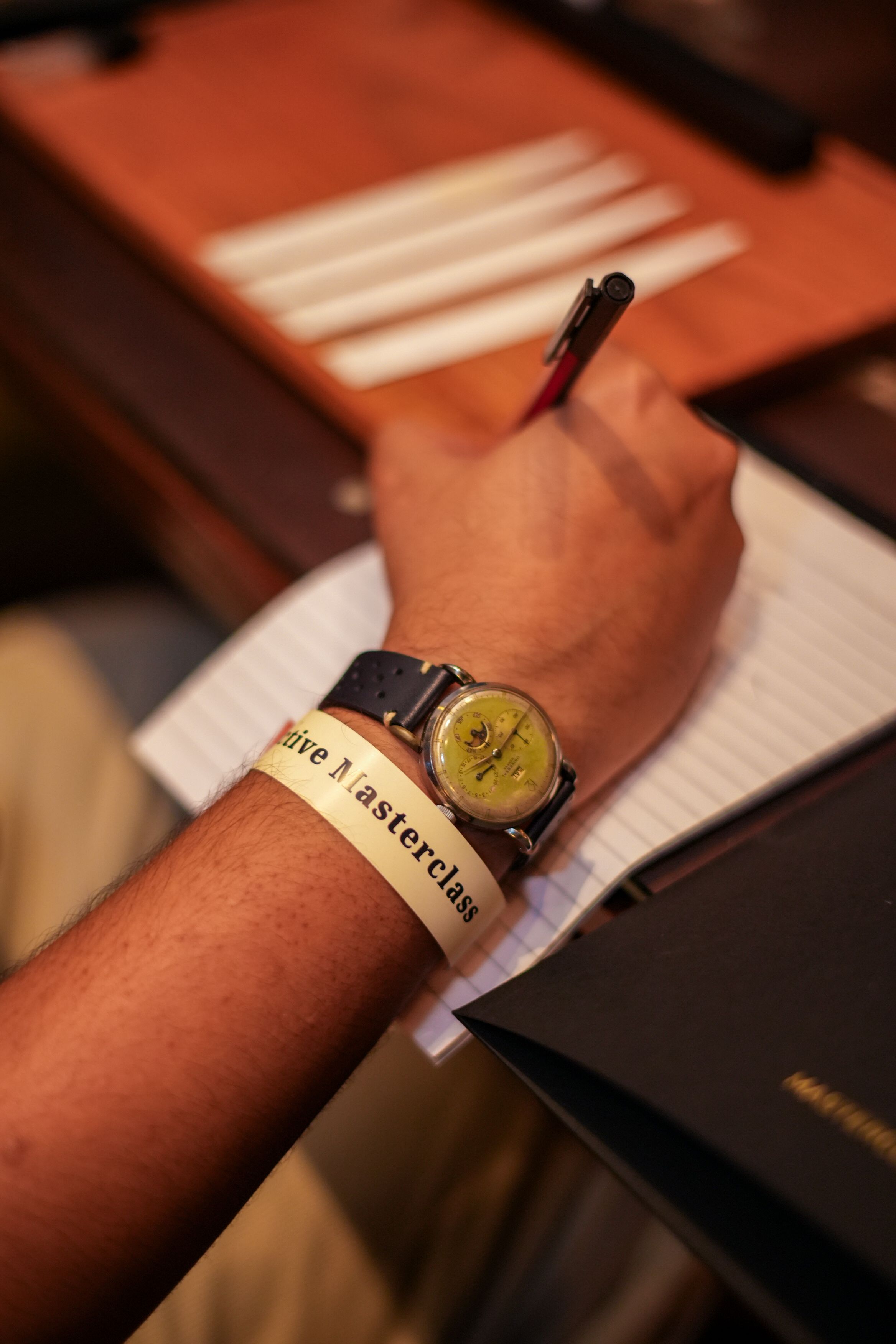
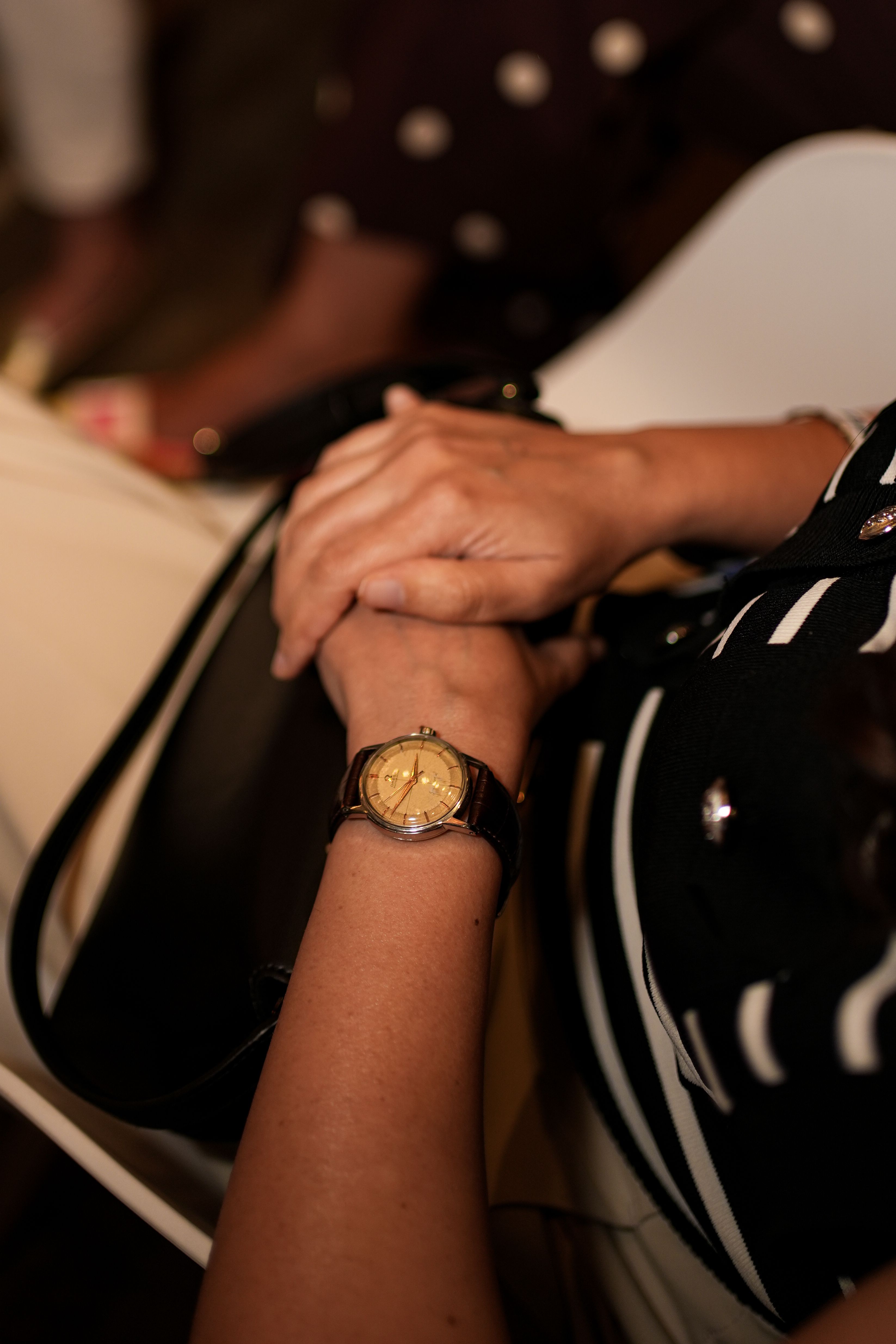
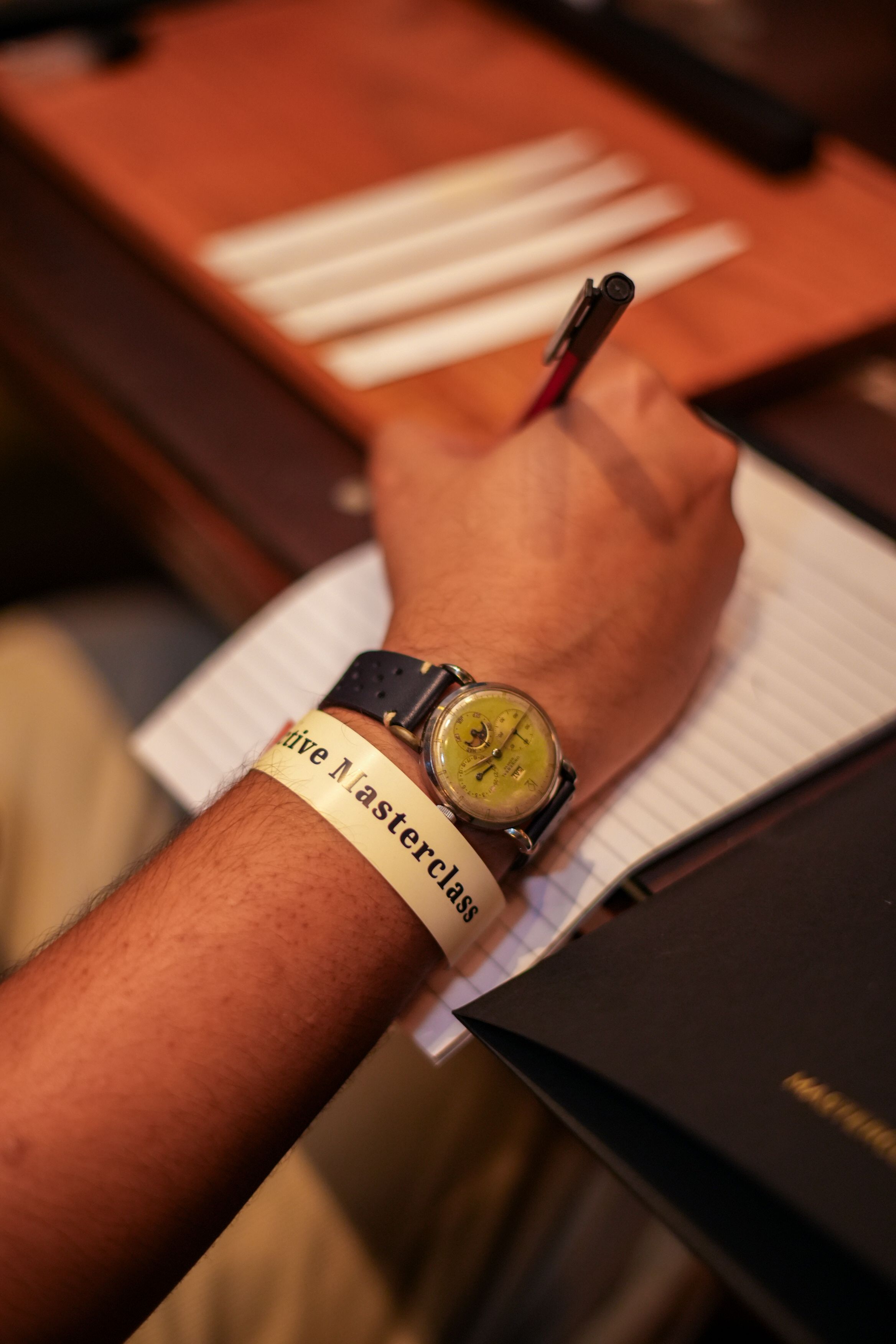
A 1940s Universal Genève triple calendar moonphase occupied different territory entirely. Vintage complications from Geneva's second tier carry their own appeal, particularly pieces that combine useful functions with period-correct aesthetics. Universal Genève produced competent movements in significant volumes during the mid-century, and their triple calendars remain accessible entry points into vintage complications for collectors willing to accept the service complexities that come with 80-year-old watchmaking.
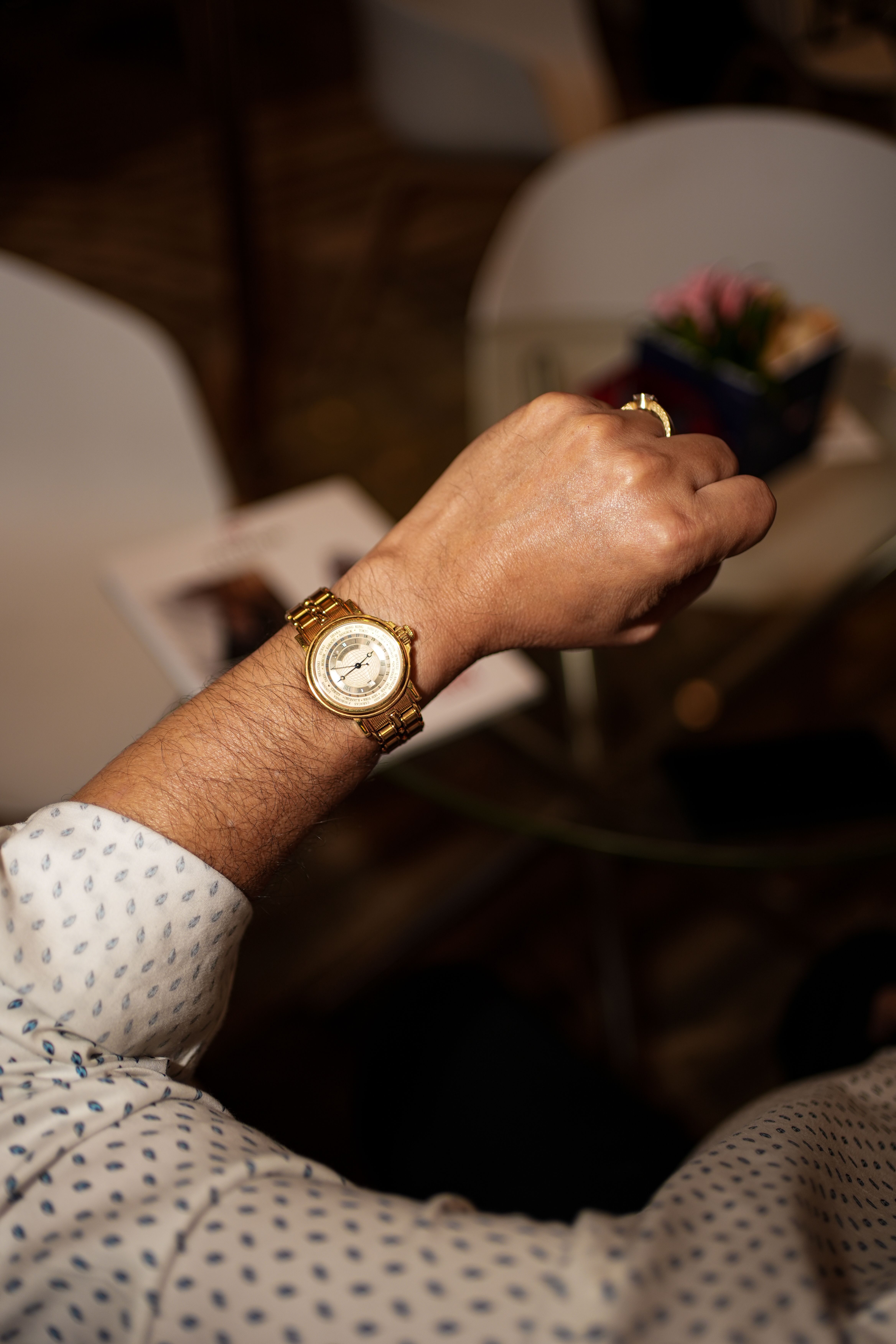
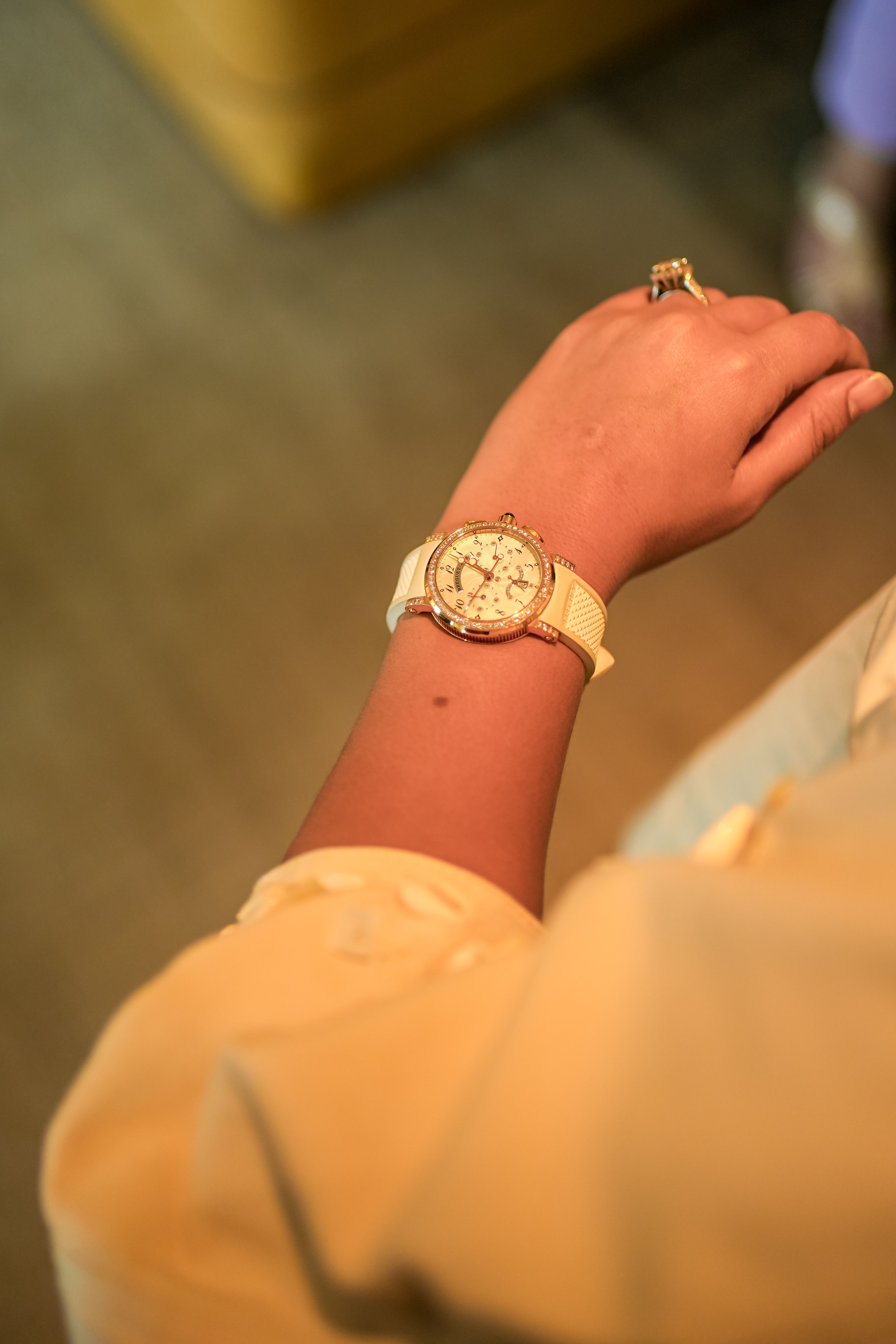
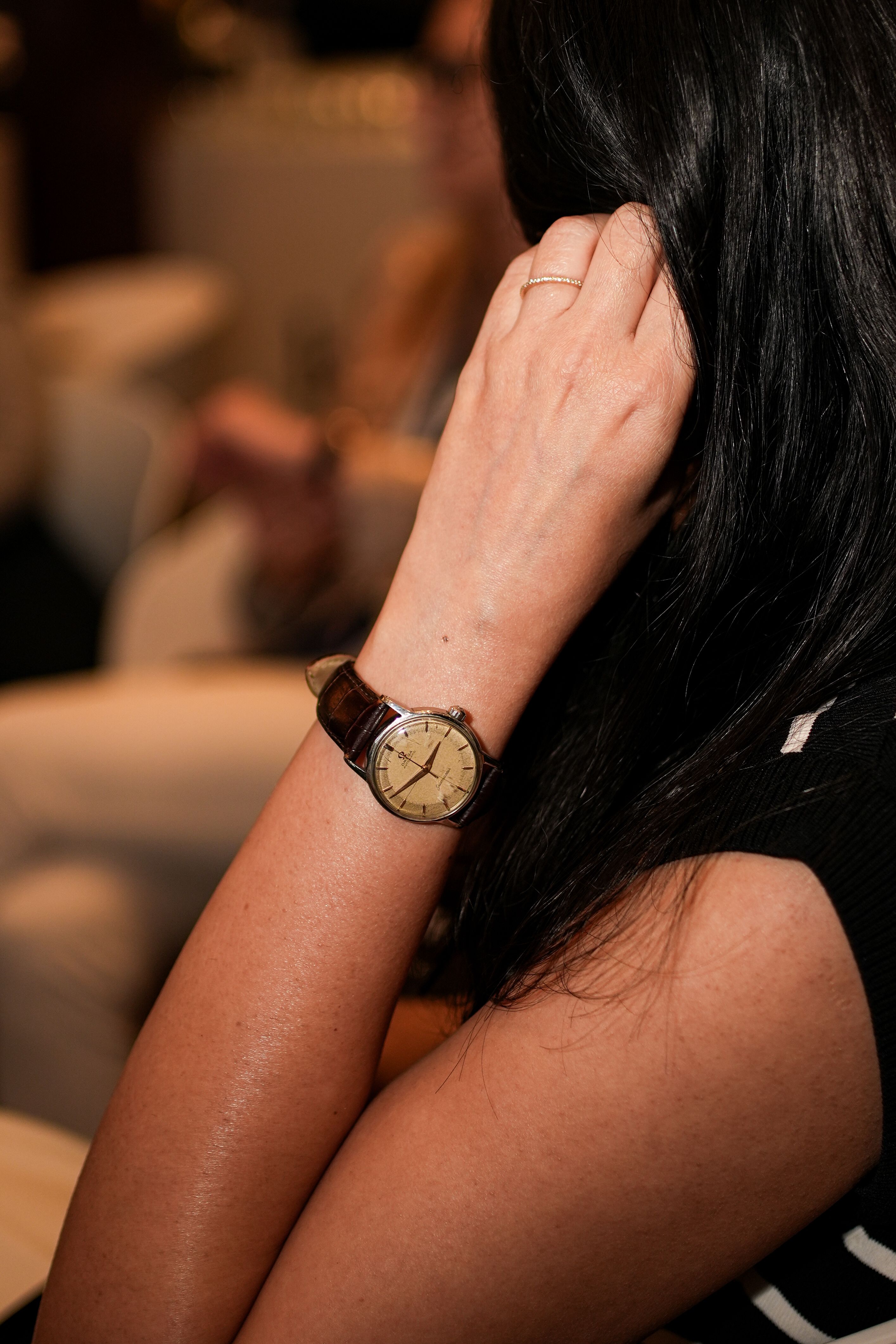
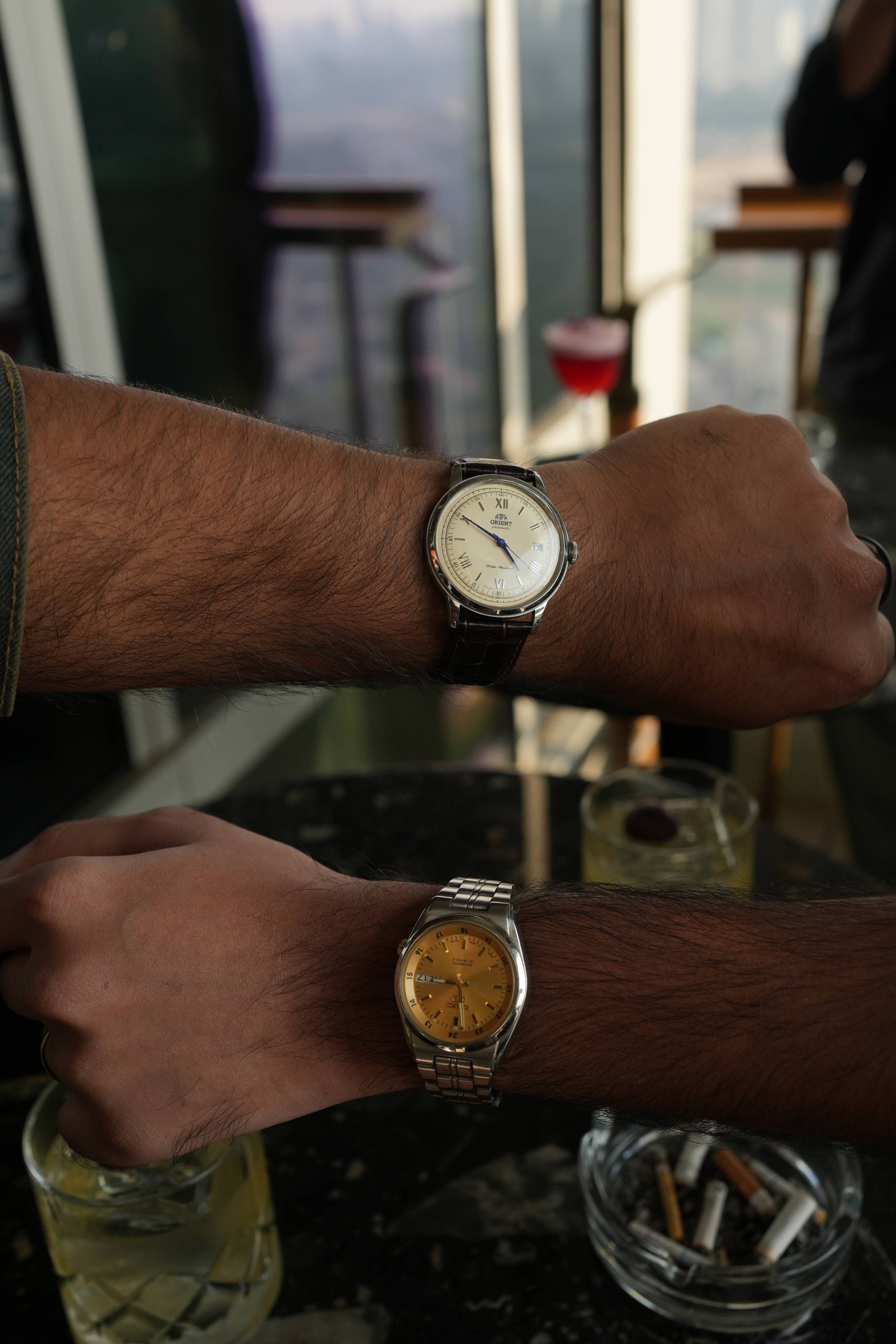
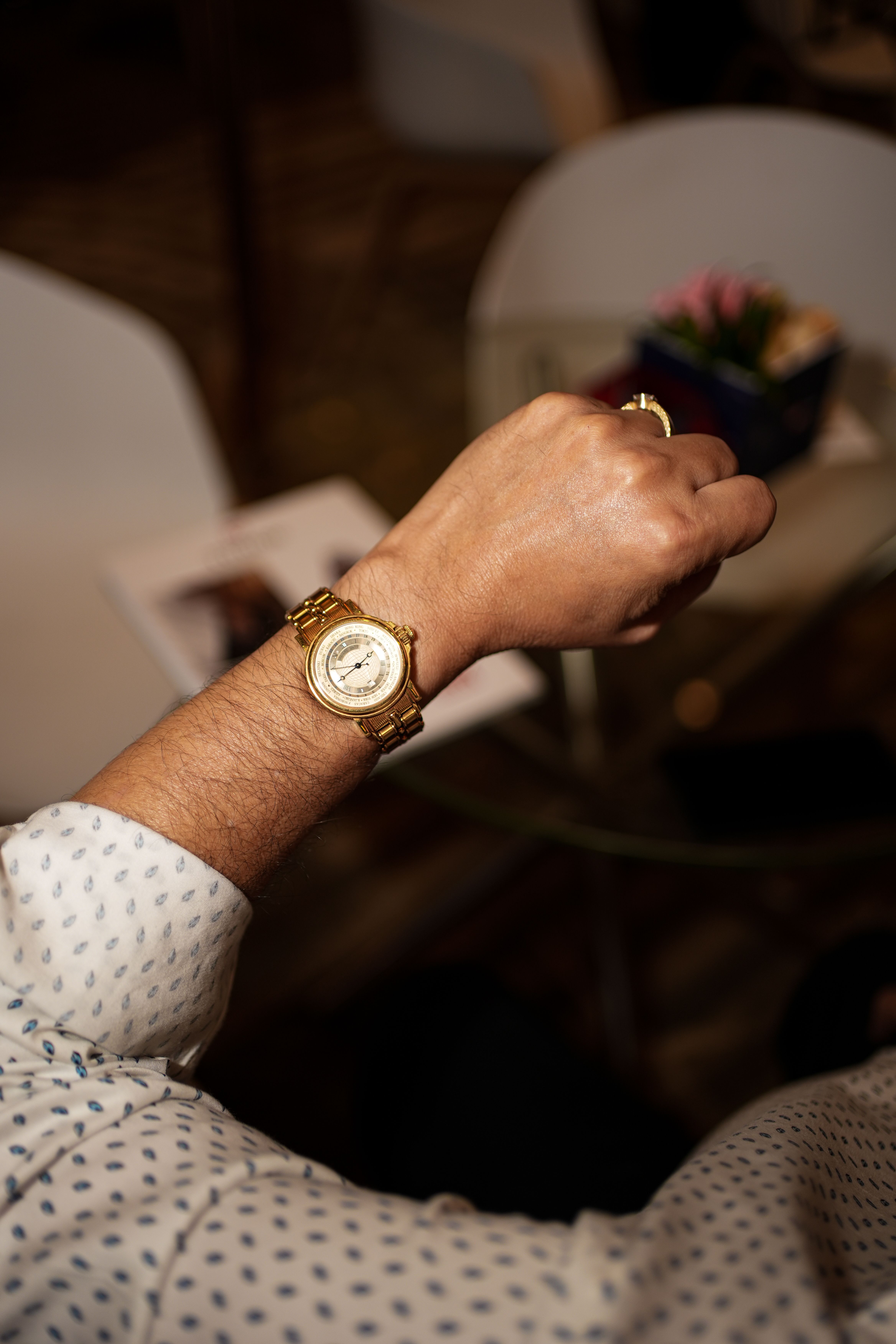
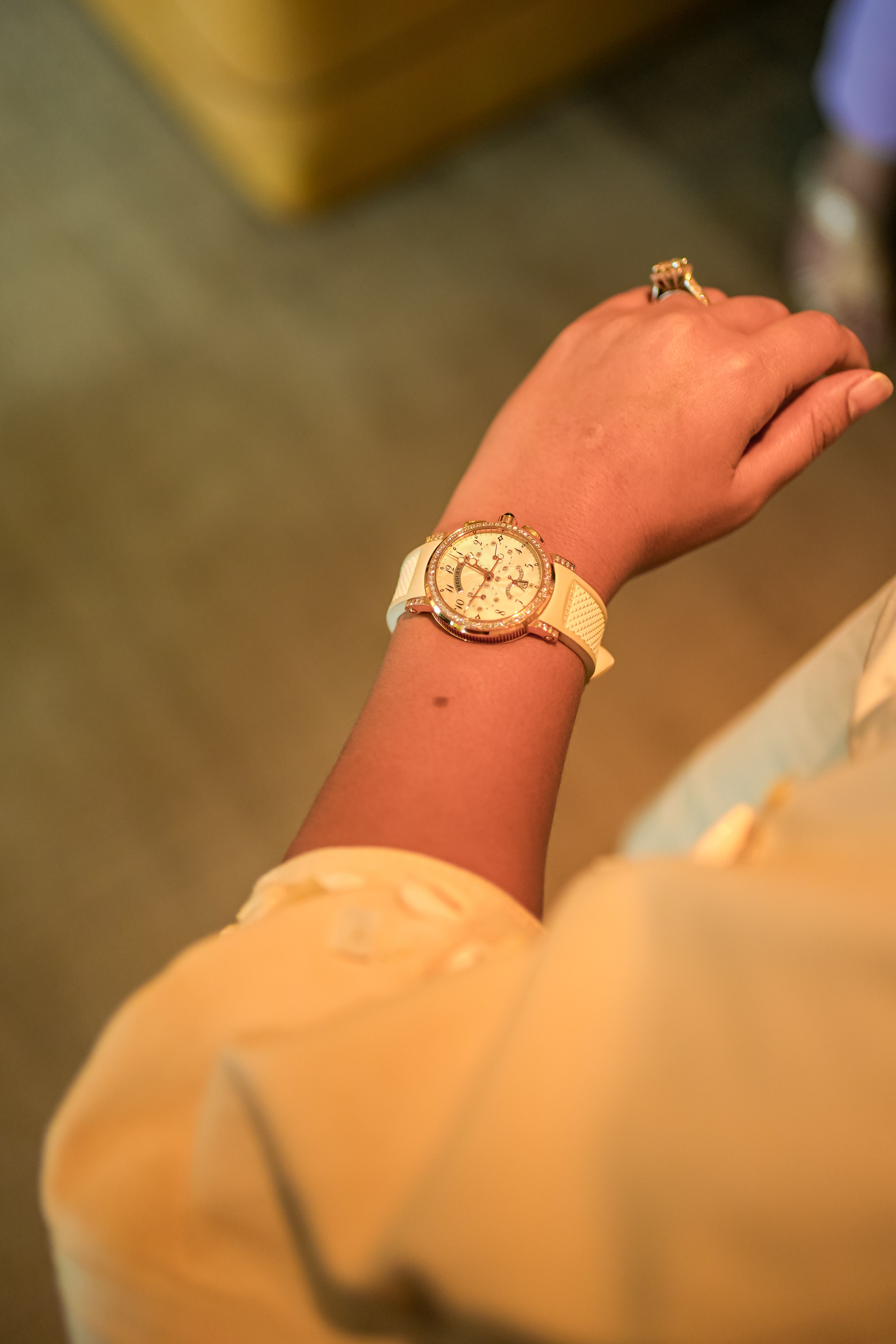
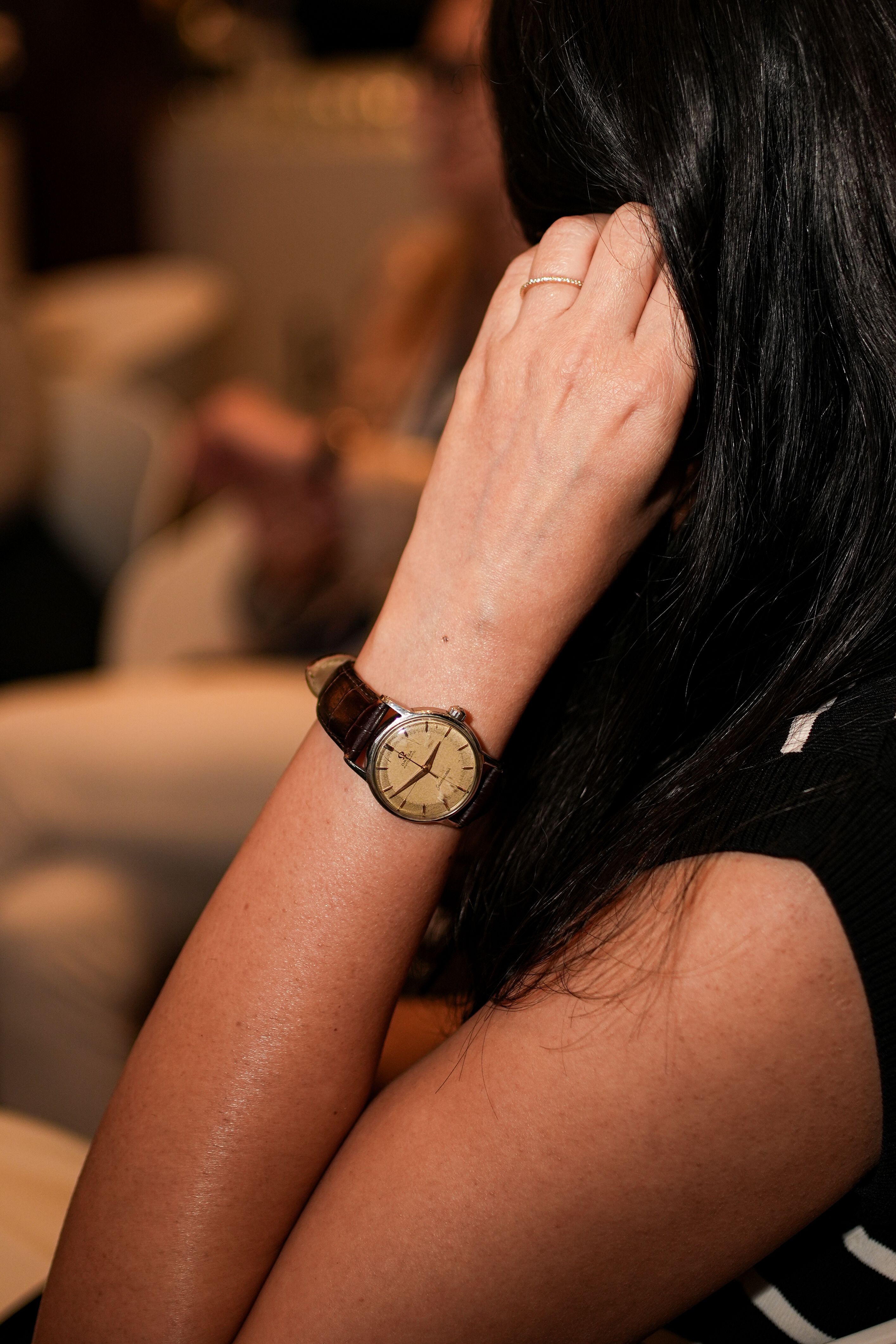
What made the gathering more interesting than a simple parade of expensive watches was the presence of everything else. An HMT Janta, the Indian-manufactured manual-wind watch that sold for rupees rather than lakhs, sat comfortably in the mix. HMT's production ended over a decade ago, but the brand retains nostalgic and cultural significance in India. Wearing one to a watch event makes a deliberate statement about valuing horological heritage that extends beyond Swiss manufacture. Omega showed up multiple times, including an Automaton, a model that represents the brand's efforts to push beyond its core Seamaster and Speedmaster lines into more niche references. Breguet appeared in both Marine Chronograph and Marine Hora Mundi configurations, suggesting interest in the brand's modern sports offerings rather than its historically oriented dress watches. The Marine collection has struggled somewhat to establish clear identity in a crowded luxury sports watch segment, making its presence here worth noting.
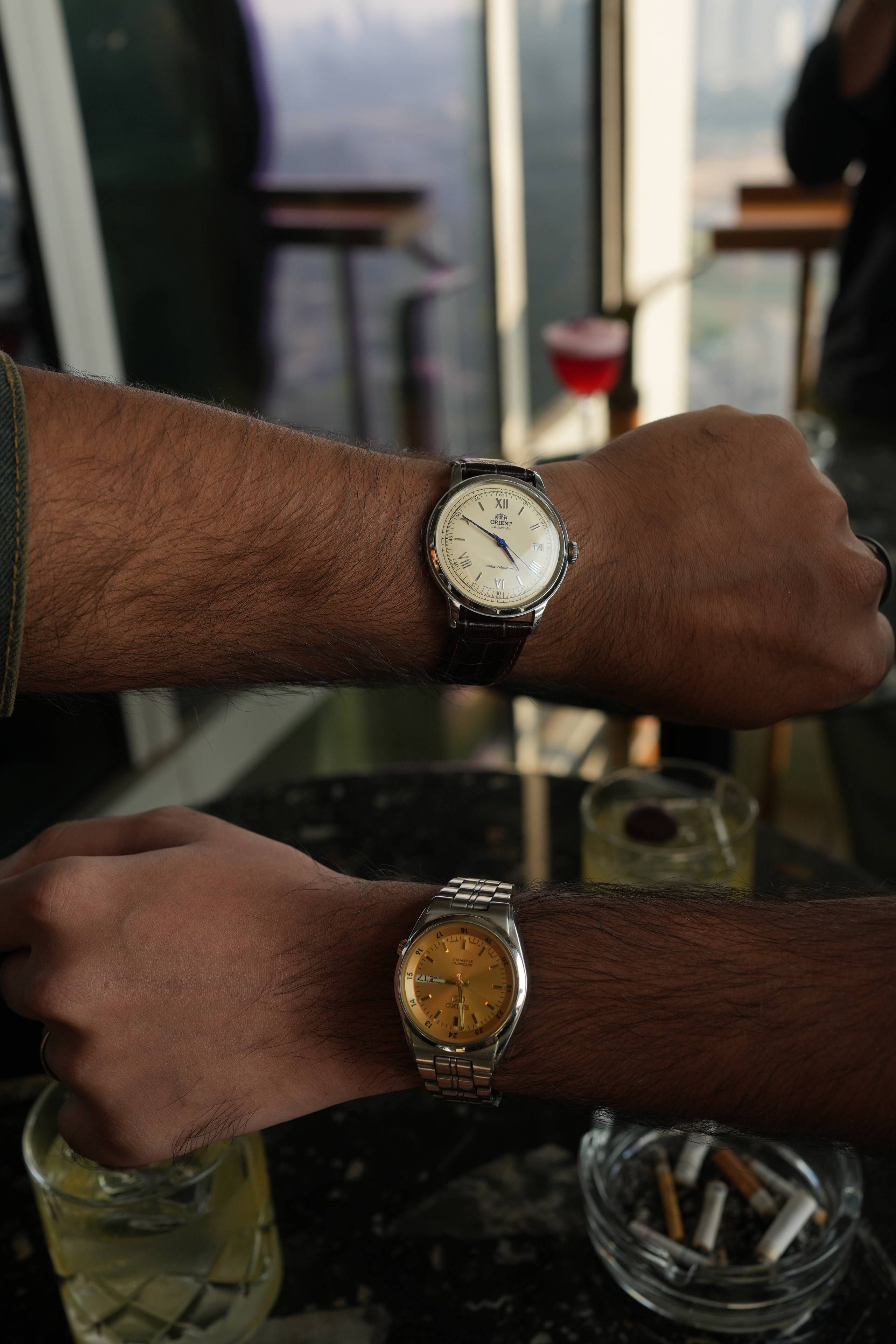
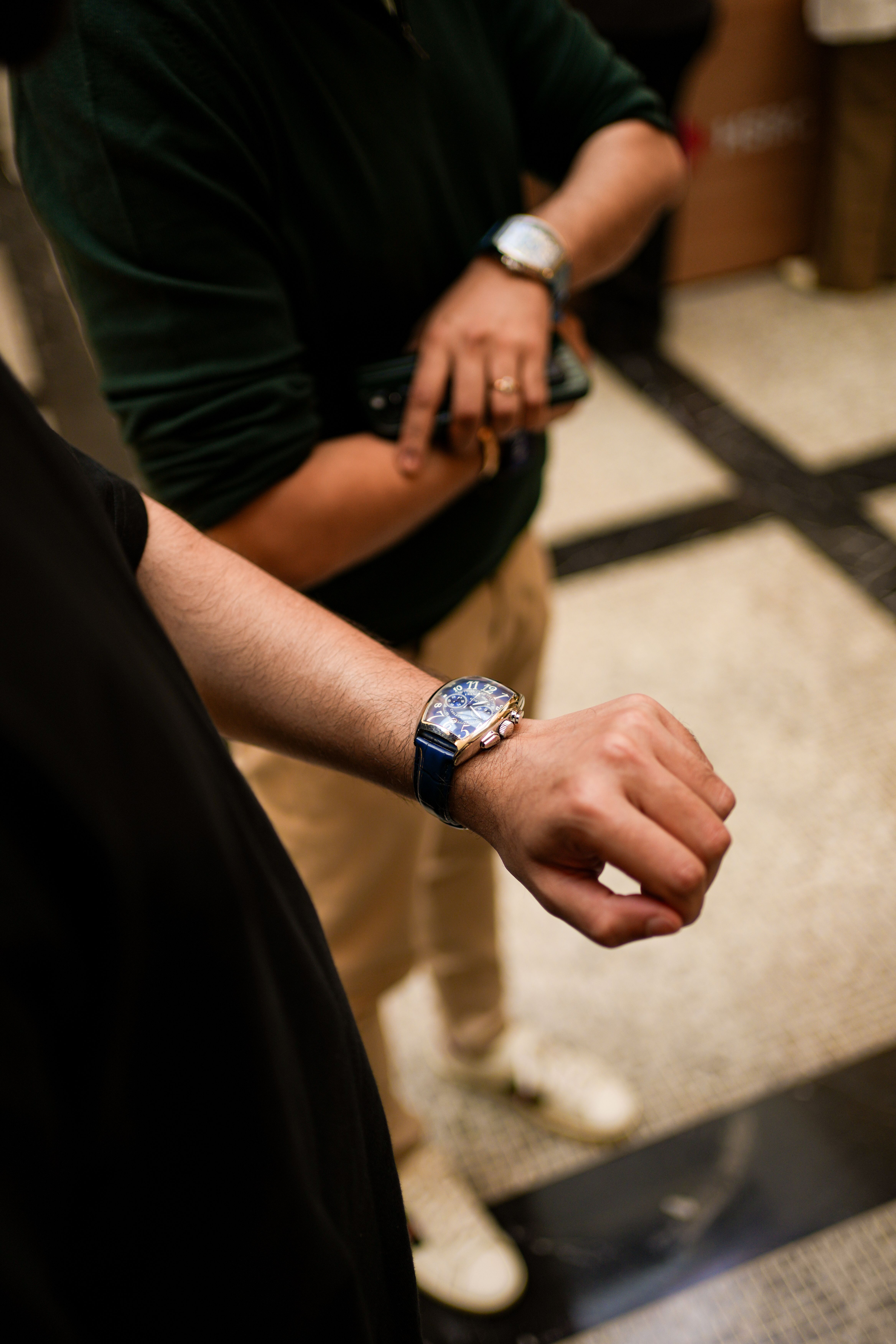
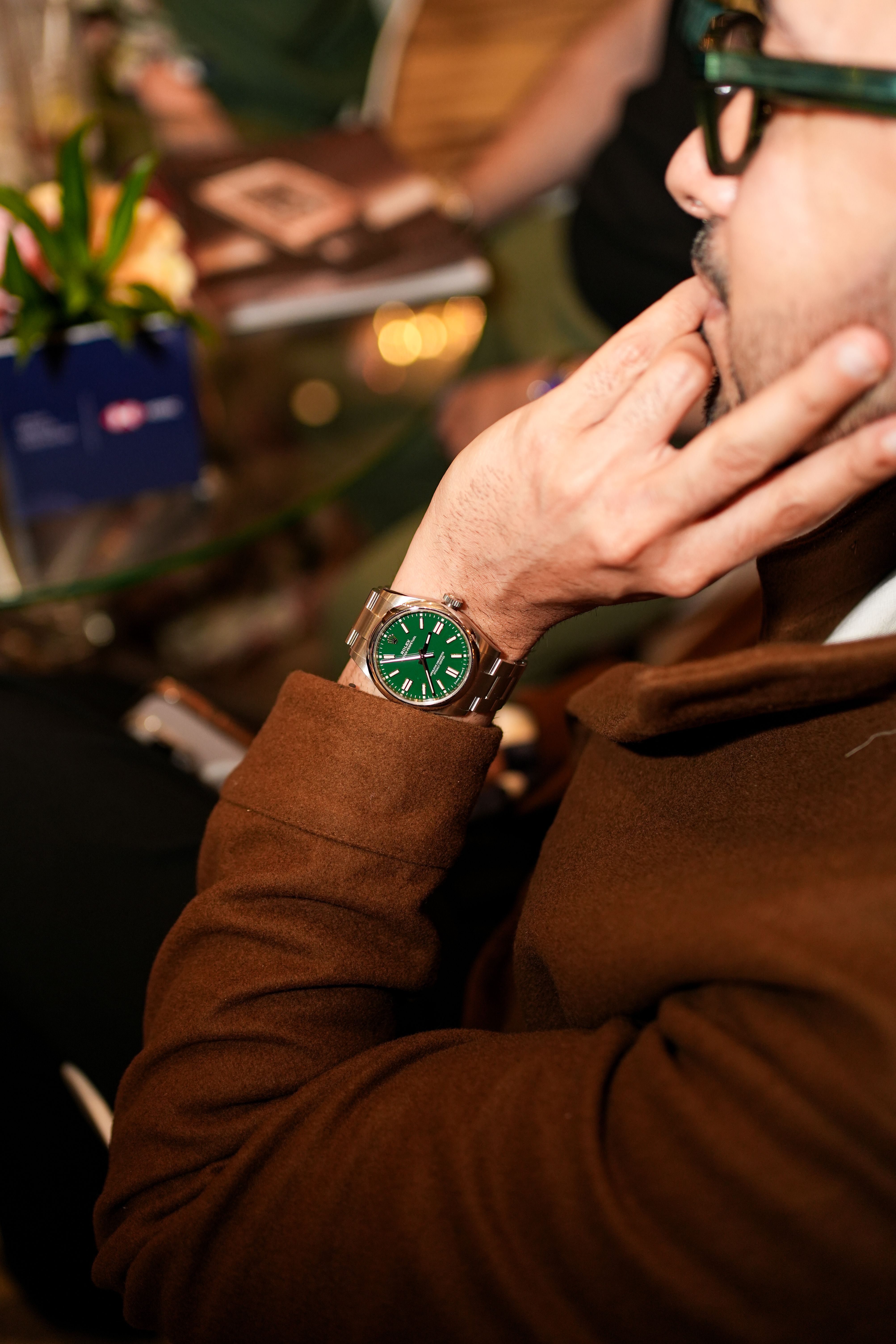
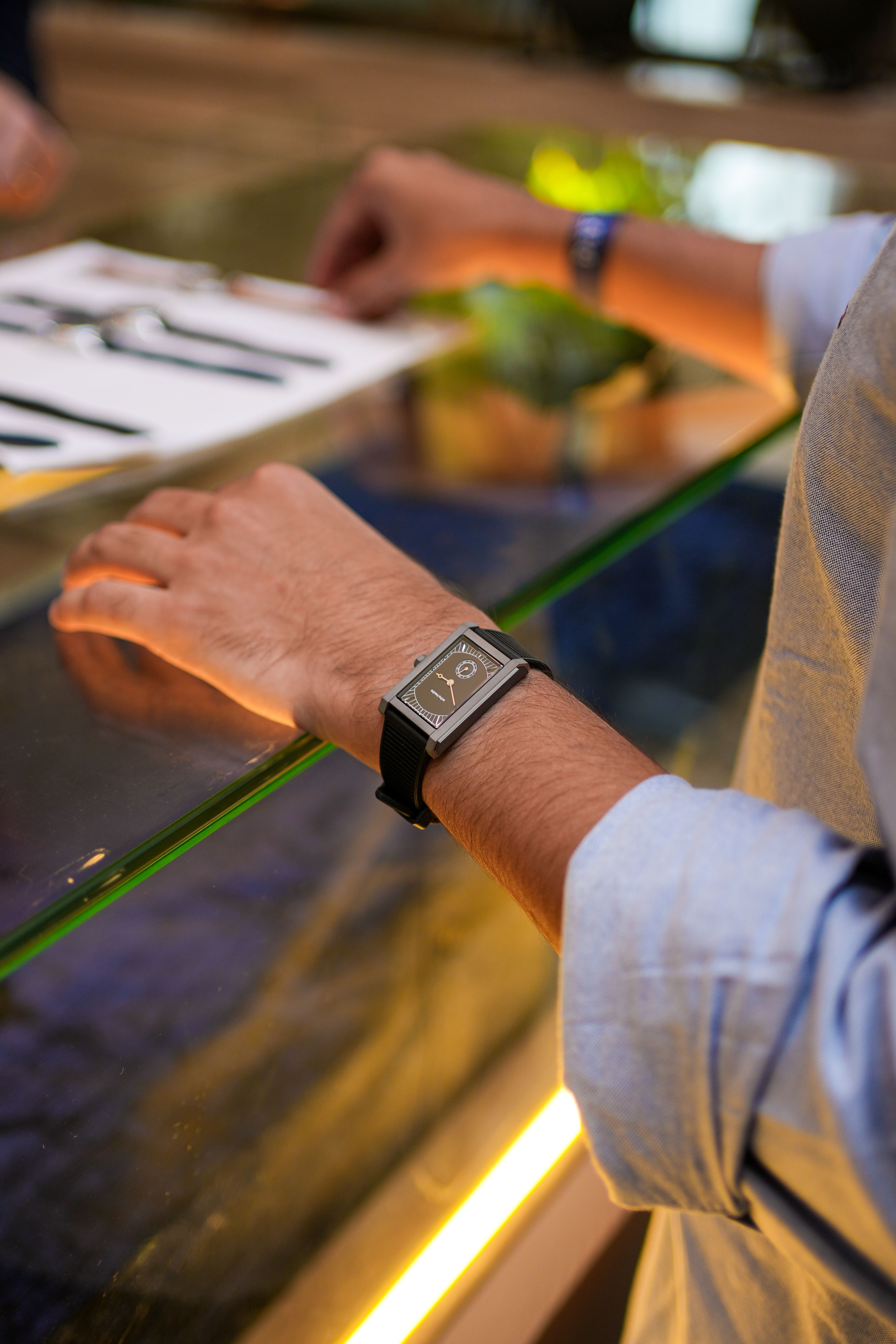
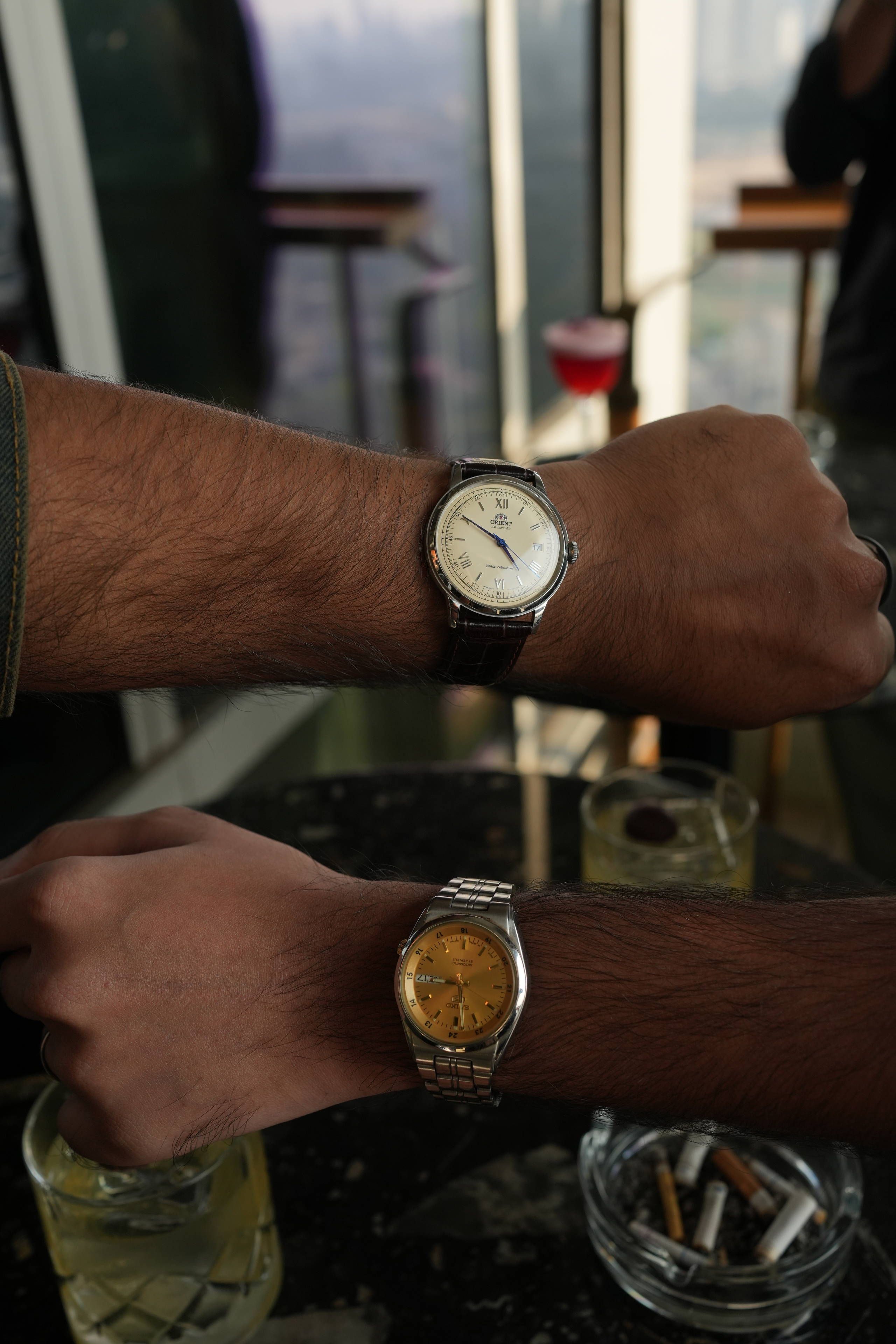
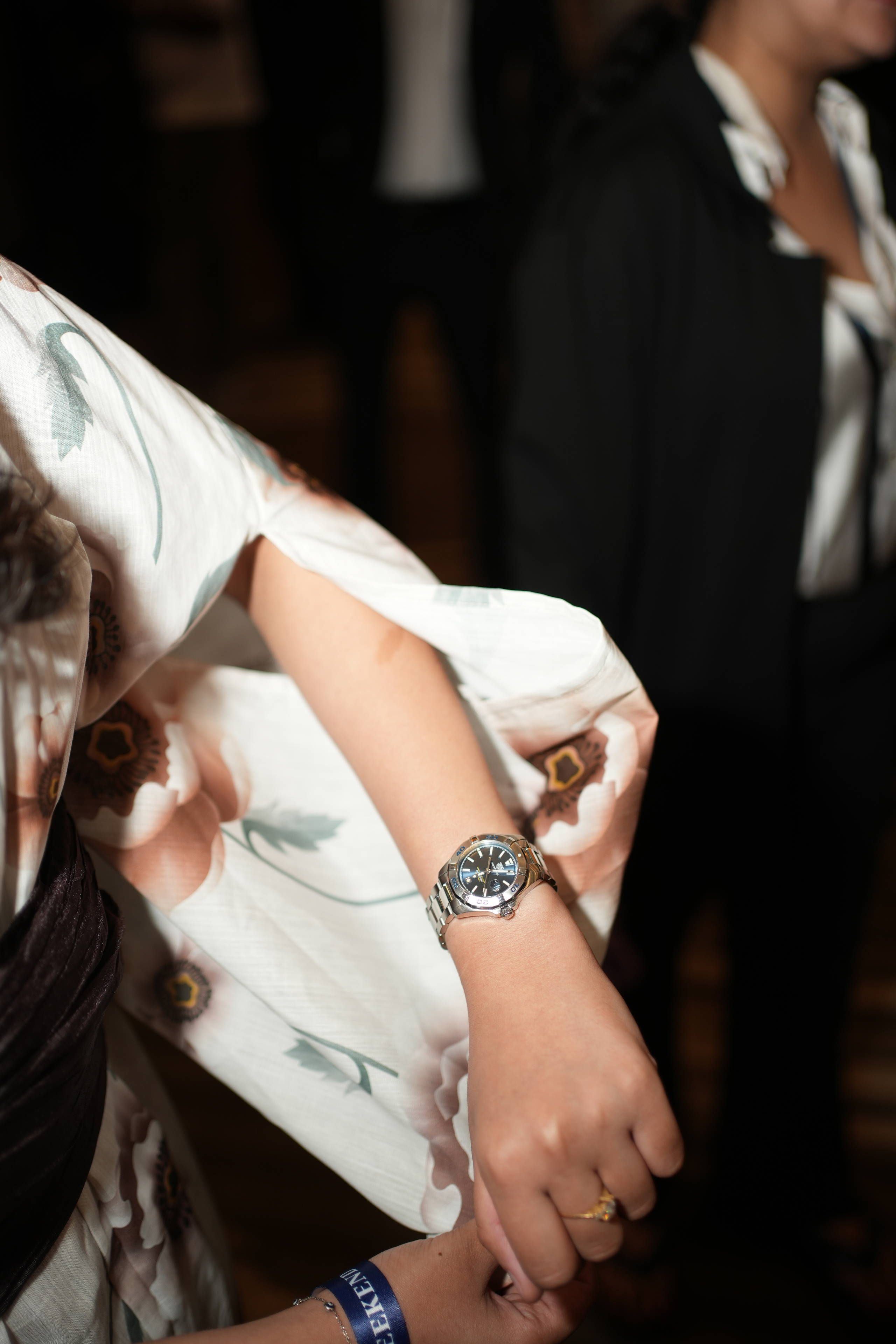
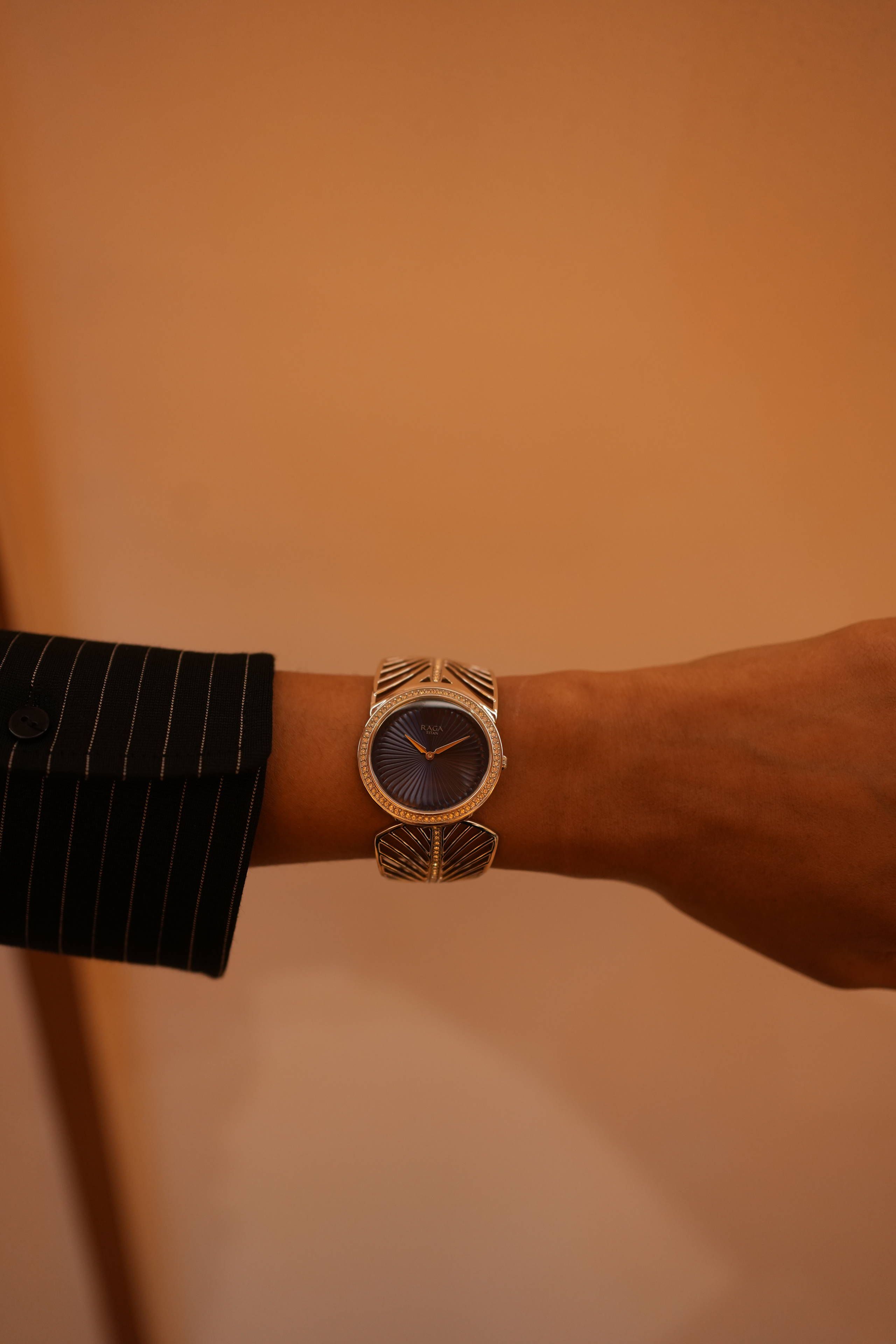
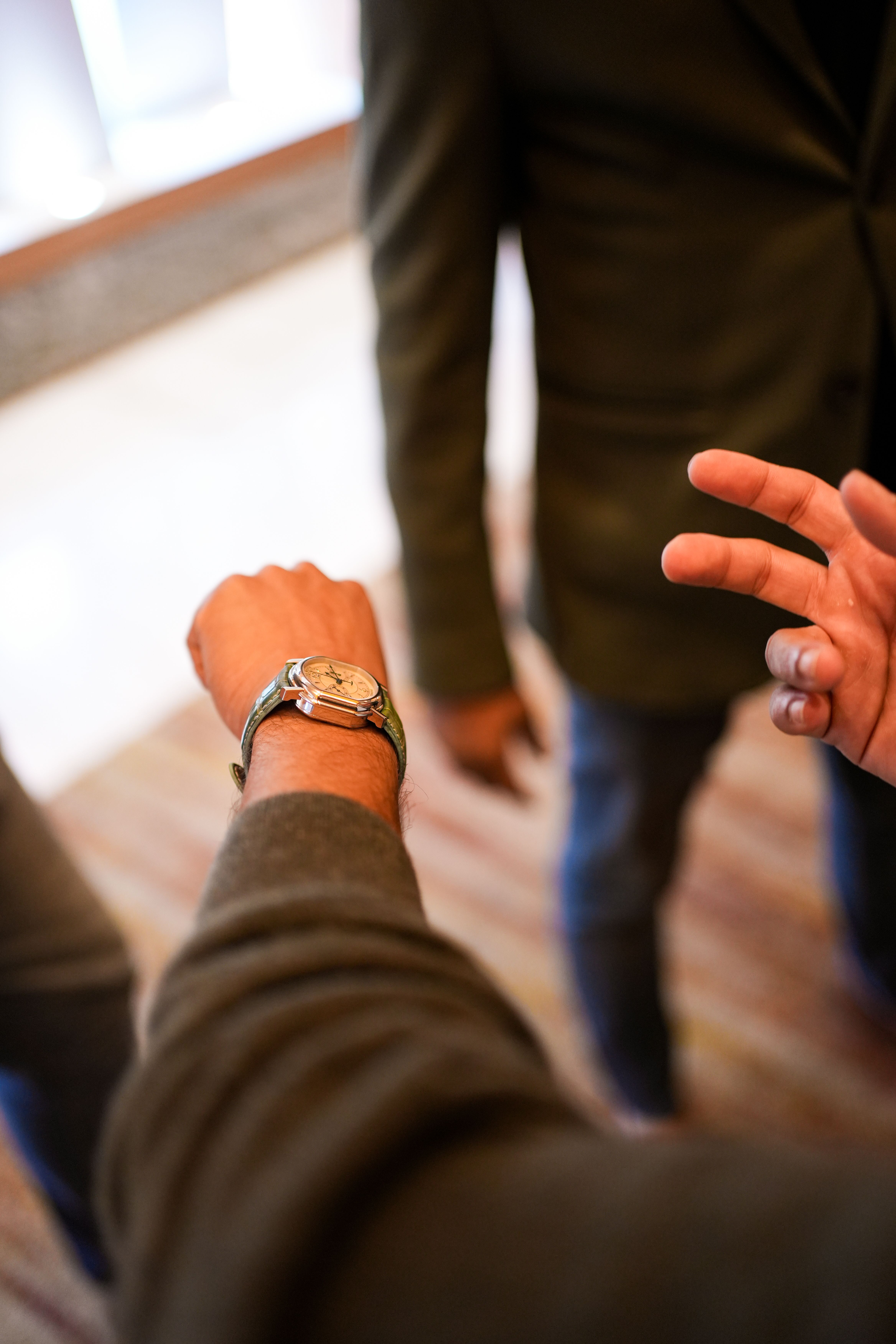
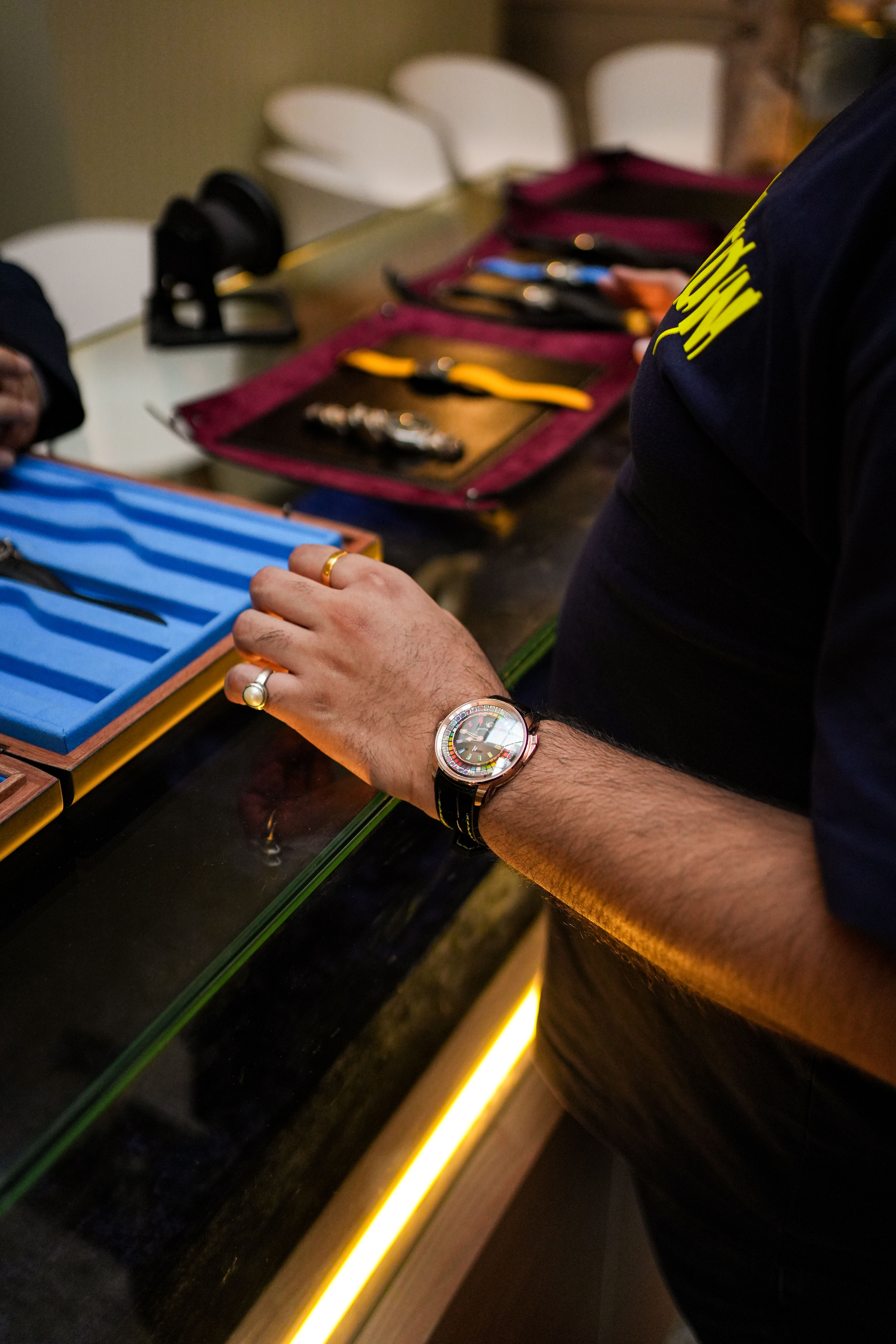
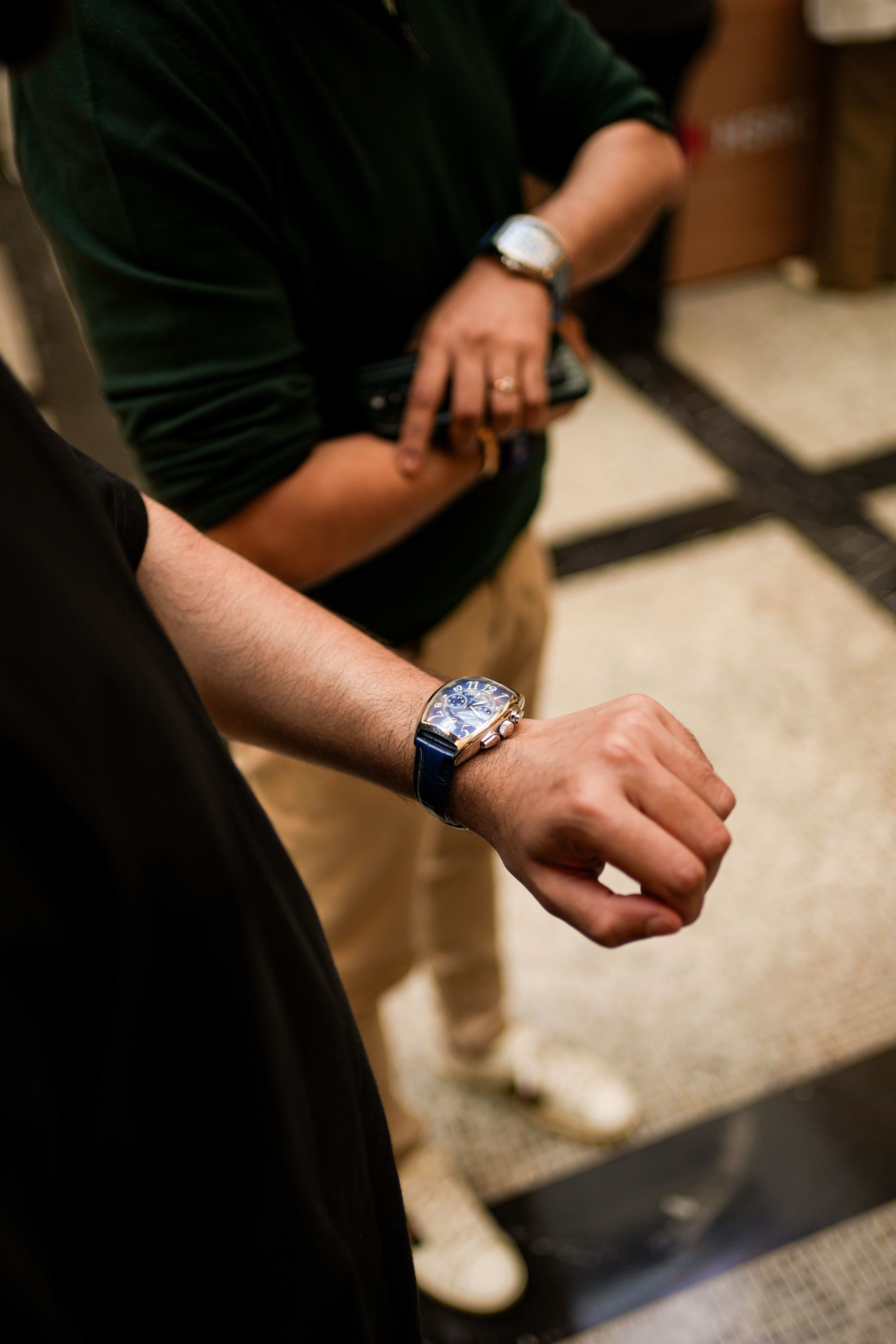
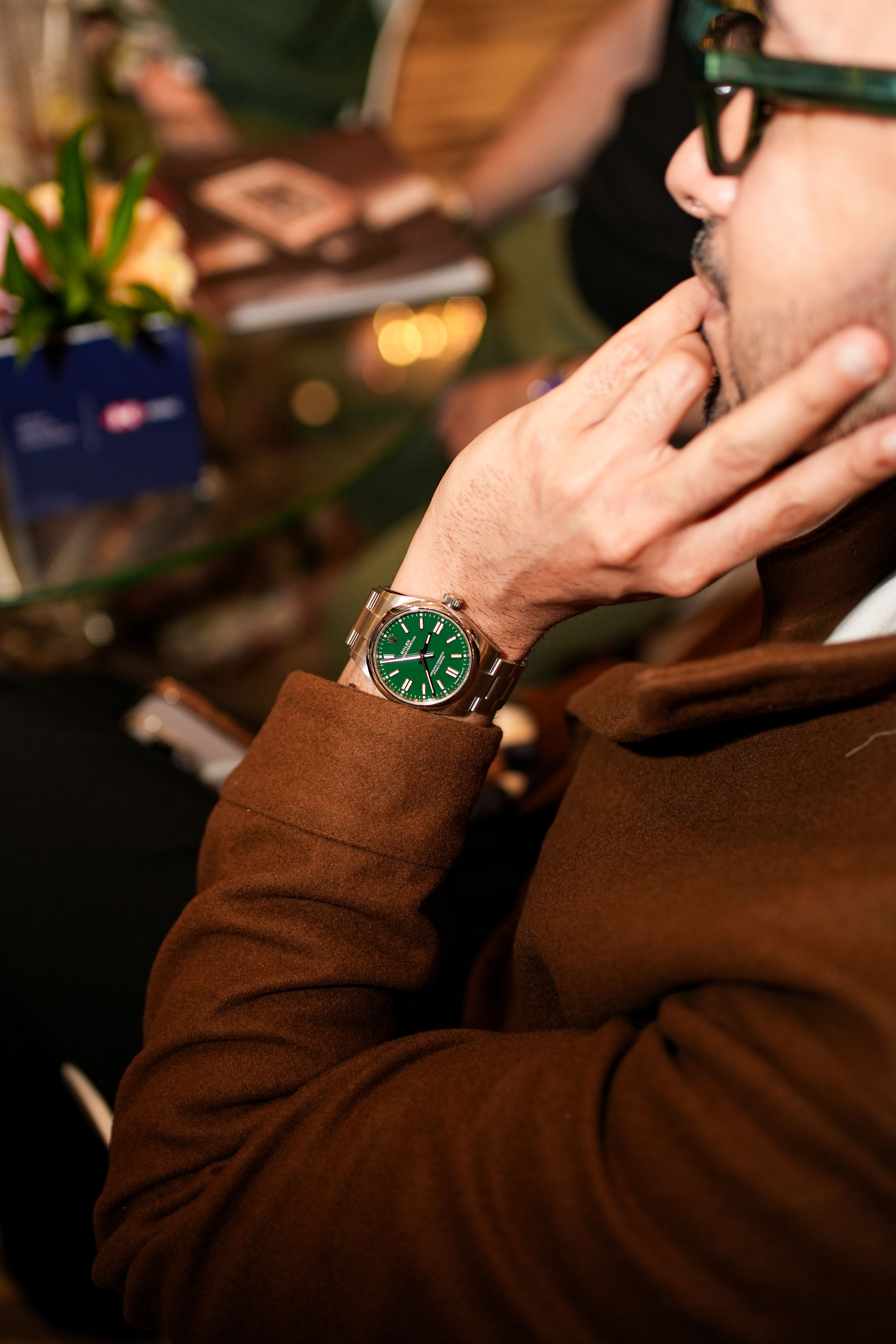
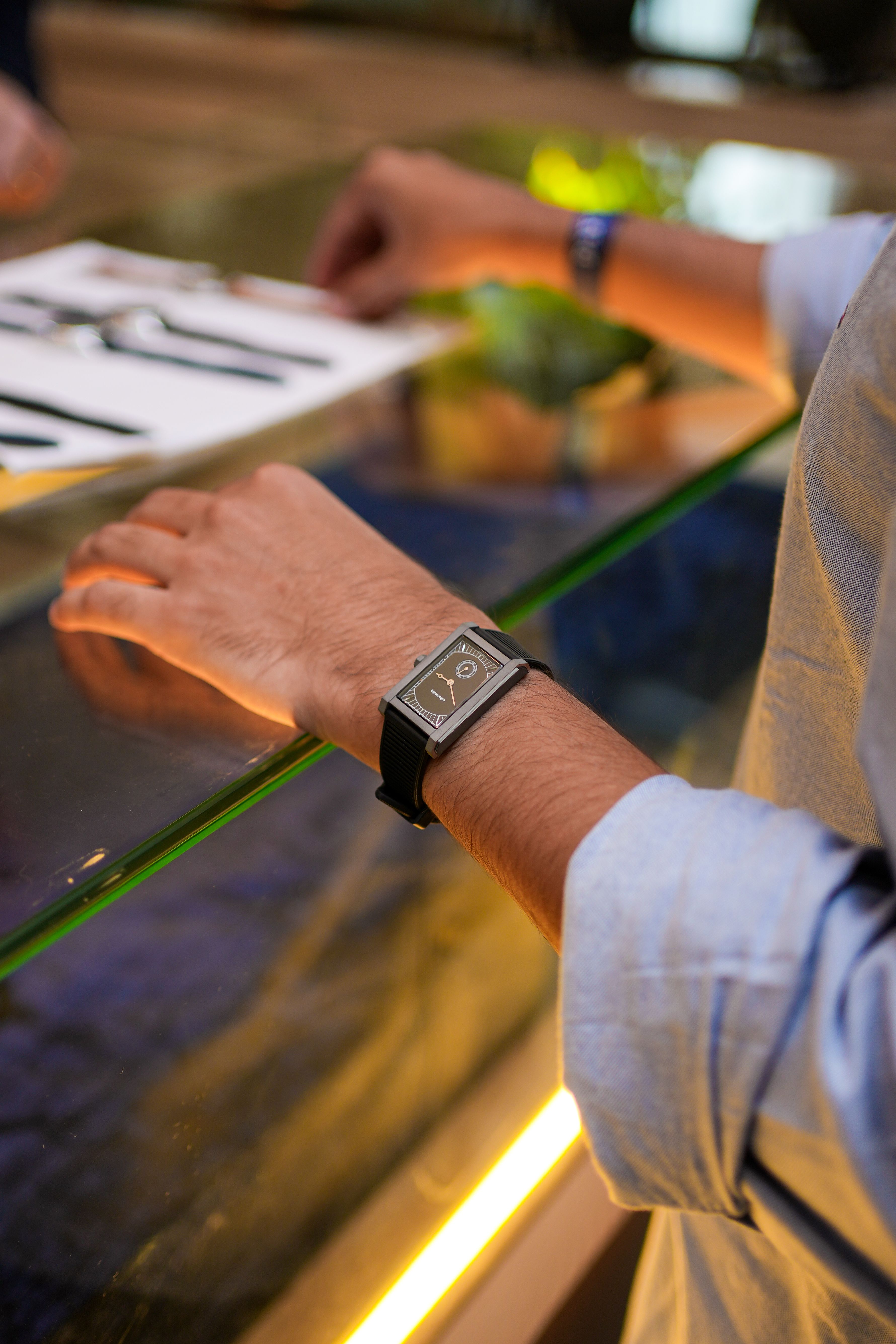
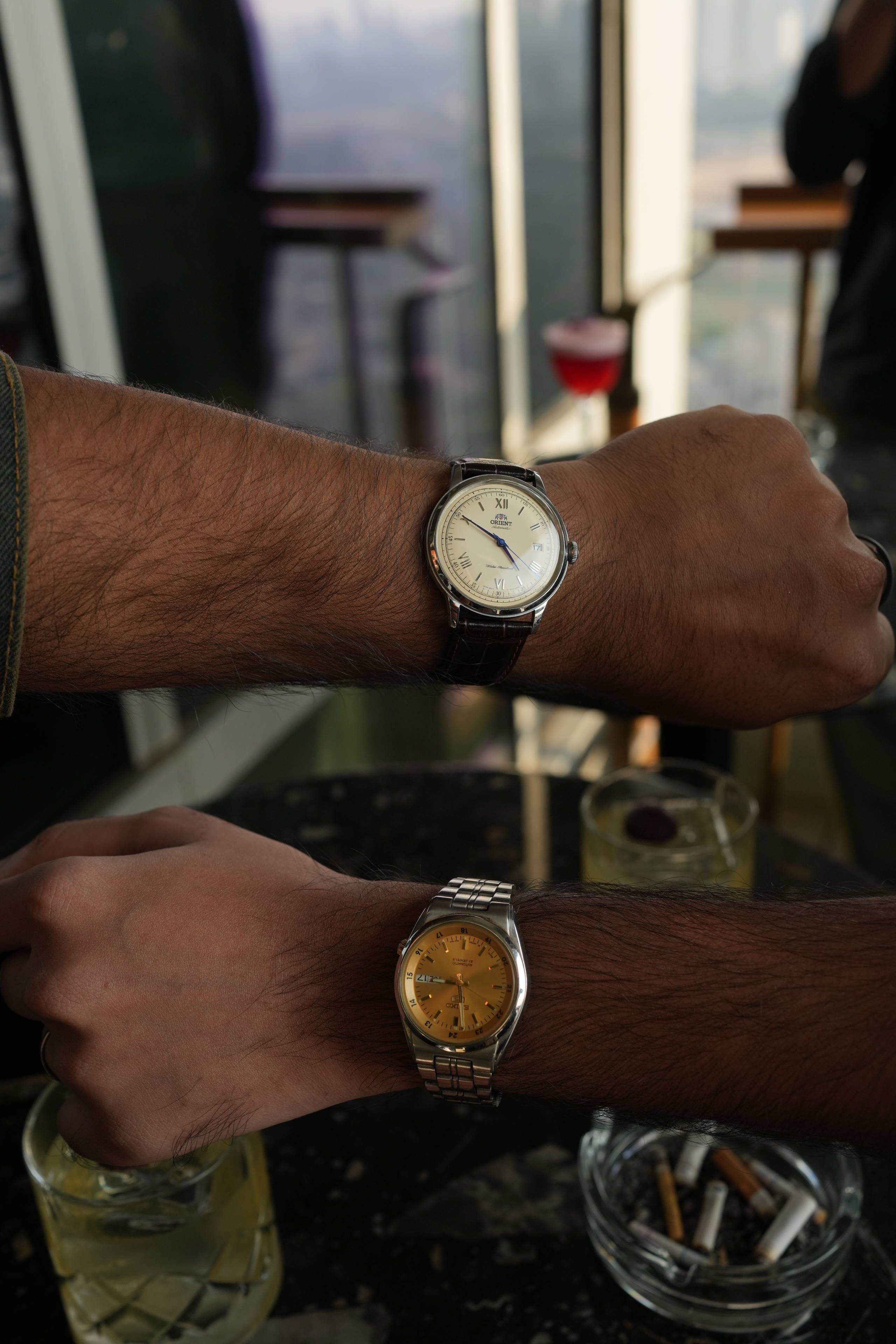
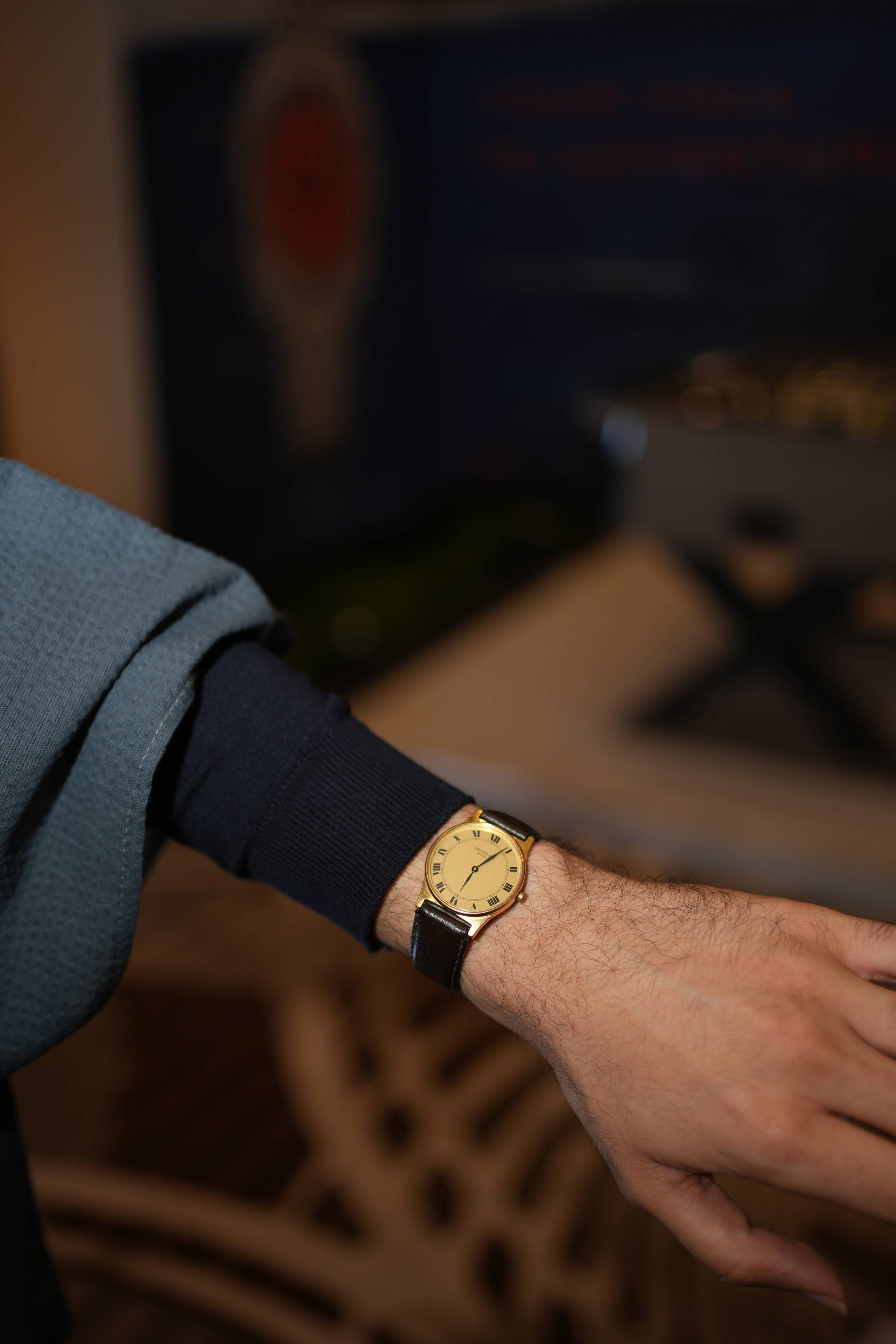
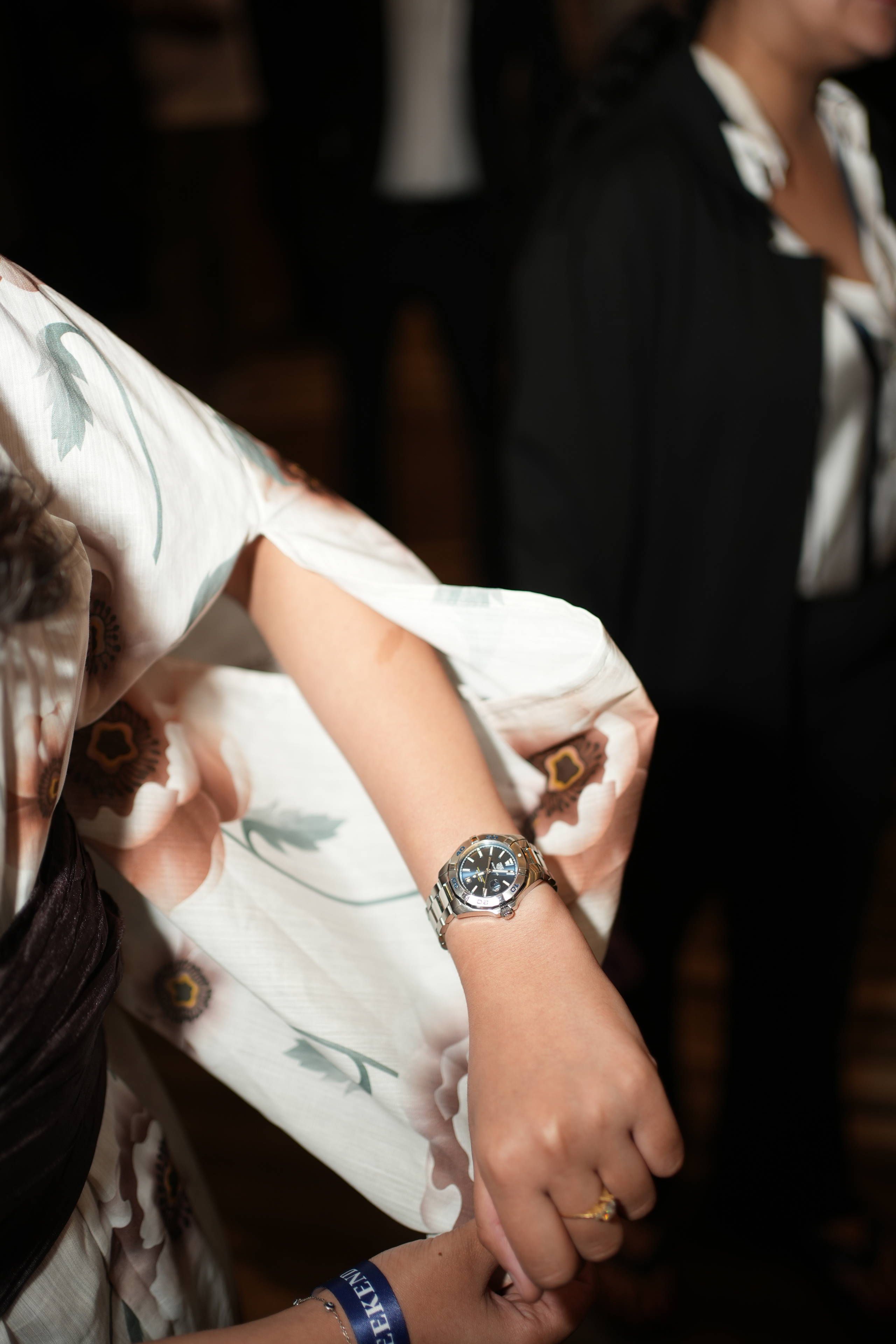
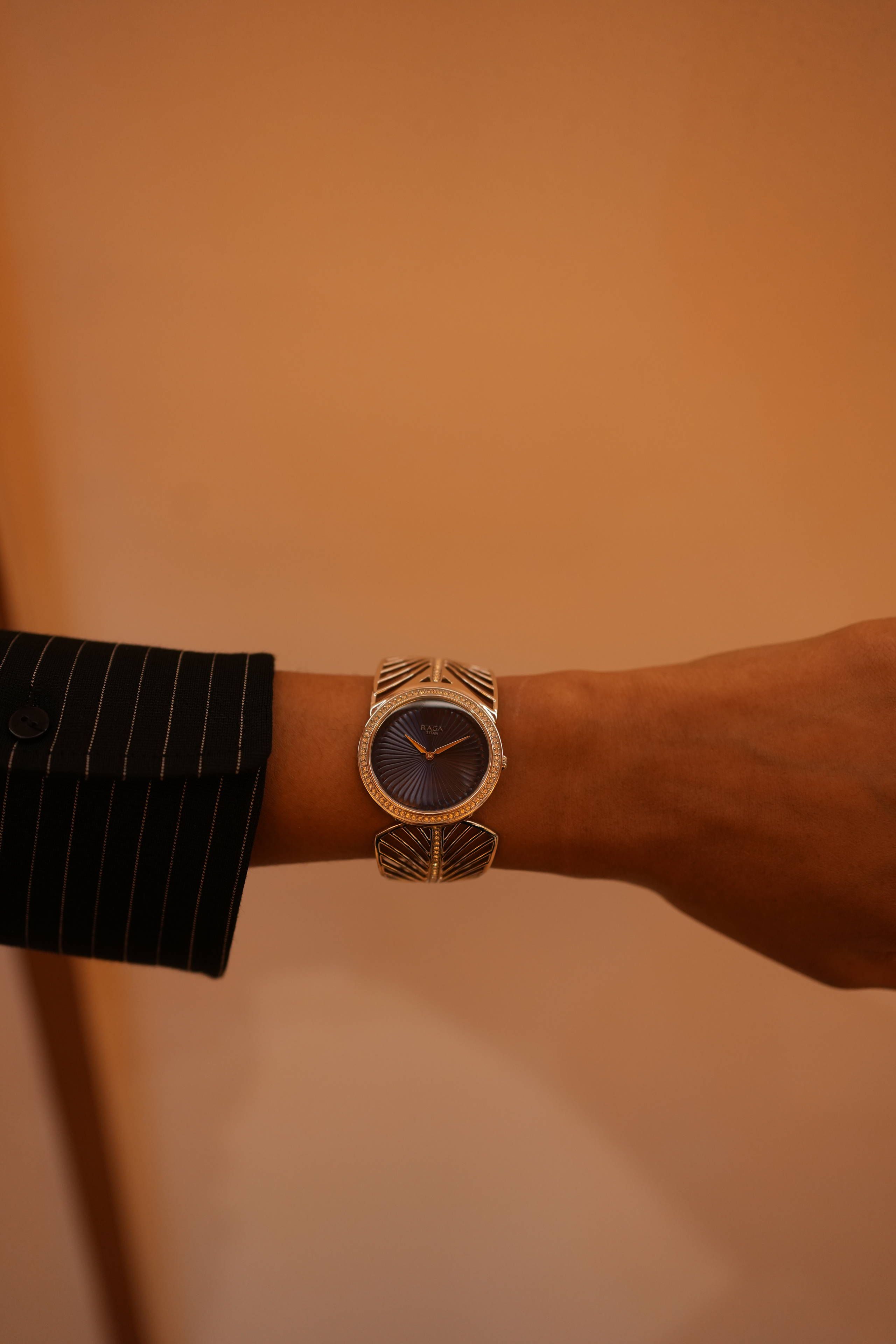
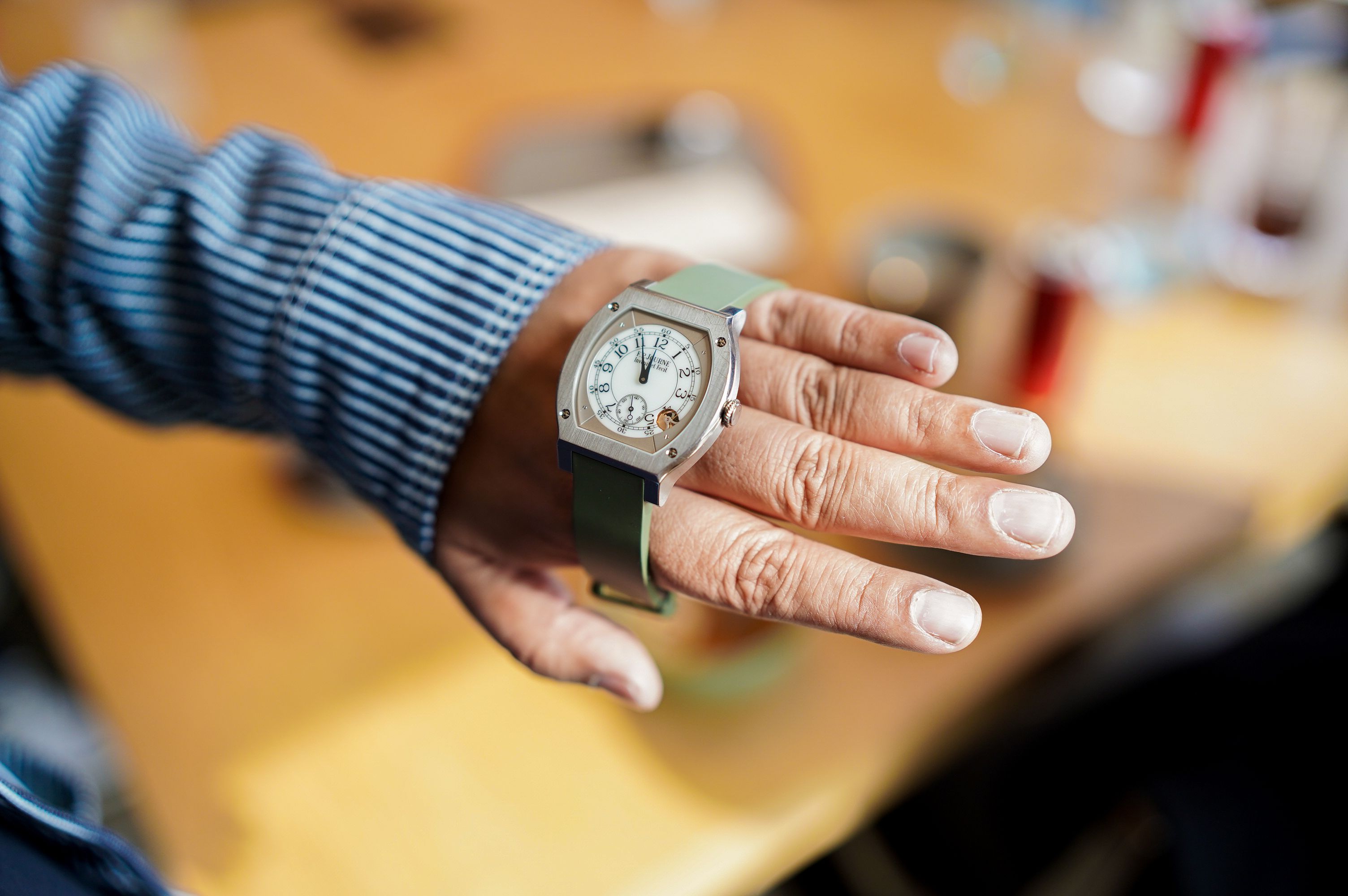
A Rolex Oyster Perpetual, likely a recent 36mm reference given the contemporary popularity of that size, represented the most attainable current Rolex sports model. Its inclusion says less about the wearer's budget than about a preference for restrained luxury over the Submariner and GMT-Master references that dominate aspirational watch discourse. Daniel Roth's appearance was unexpected. The brand, now under Bulgari after various ownership changes, produced distinctive watches with complex case shapes and dial architectures during its independent years. Collectors who seek out Daniel Roth are typically operating with specific aesthetic criteria that value unconventional design over brand recognition. A Nomos Glashütte Club Automatic, Franck Muller Casablanca, Orient automatic, Tag Heuer, Seiko 5, and Titan Raga all appeared. This distribution matters because it reflects the actual economic reality of watch collecting in India, where the median household disposable income sits around ₹318,896 annually. Most collectors are building collections in the ₹50,000 to ₹3,00,000 range, not the six-figure territory that luxury marketing emphasizes.
The telling detail from India Watch Weekend was not the presence of expensive watches but the range of horological knowledge on display. Collectors are moving past brand recognition into functional understanding. Interest in complications, movement finishing, and independent watchmaking has developed faster than the market statistics alone would predict. Indian collectors are gaining deeper comprehension of complications and functions, which alters purchasing behavior. Watches are being acquired for mechanical interest rather than purely for occasion-based wearing or status signaling. This represents a maturation in the market that mirrors developments in Hong Kong and Singapore a decade earlier.
India Watch Weekend revealed a collecting community in transition. The presence of haute complications alongside entry-level mechanicals, vintage alongside contemporary, and domestic manufacture alongside Swiss import suggests a market that has moved past its earliest phase of simple brand aspiration into something more textured. Collectors are skipping the purely aspirational phase that characterized earlier luxury markets. Access to information, global secondary markets, and peer community has compressed the learning curve. The watches on display at India Watch Weekend were not trying to impress through brand names alone. They represented considered choices across a wide price spectrum, worn by collectors who understand what they own and why they own it. That represents a more durable foundation for market growth than simple disposable income increases would provide. India is not becoming a market that buys luxury watches because it can afford them. It is becoming a market that understands them, collects them with intent, and wears them with knowledge of what is on the wrist. The distinction matters, and it showed clearly in Mumbai last weekend.