$17 Million In Steel. The Market Is Telling You Something
 9 min read

The auction calendar and the Watches & Wonders calendar do not officially speak to each other. One is governed by collectors, provenance, and competitive bidding. The other is governed by manufacture strategy, press cycles, and the industrial ambition of the brands themselves. But the two conversations are about the same thing: what a watch is worth, and why. In 2025, the results at Phillips, Sotheby’s, and Christie’s delivered a set of answers that no amount of brand communication could have manufactured.
Three facts frame the year. Phillips achieved a total of $290,463,315 in auction sales across 2025, the highest annual total ever recorded by any watch auction department, while selling 99 percent of lots offered. Sotheby’s posted a record $193.6 million in watch sales, up 22 percent year on year. Their December New York sale alone reached $42.8 million, the highest-grossing watch auction in Sotheby’s history globally. The market for serious watches, at the serious end, was not merely healthy in 2025. It was operating at levels that had no precedent. Within that context, five pieces stand out. Not because they were the most expensive watches sold, but because each one illuminates something specific about where collector conviction lives, and what that means for the brands preparing to show their newest work in Geneva.
A 35mm Steel Watch From 1943 Just Sold for $17.6 Million. Read That Again.
Patek Philippe Reference 1518 in Stainless Steel - Phillips, Geneva, November 2025 - CHF 14,190,000 / $17,631,075
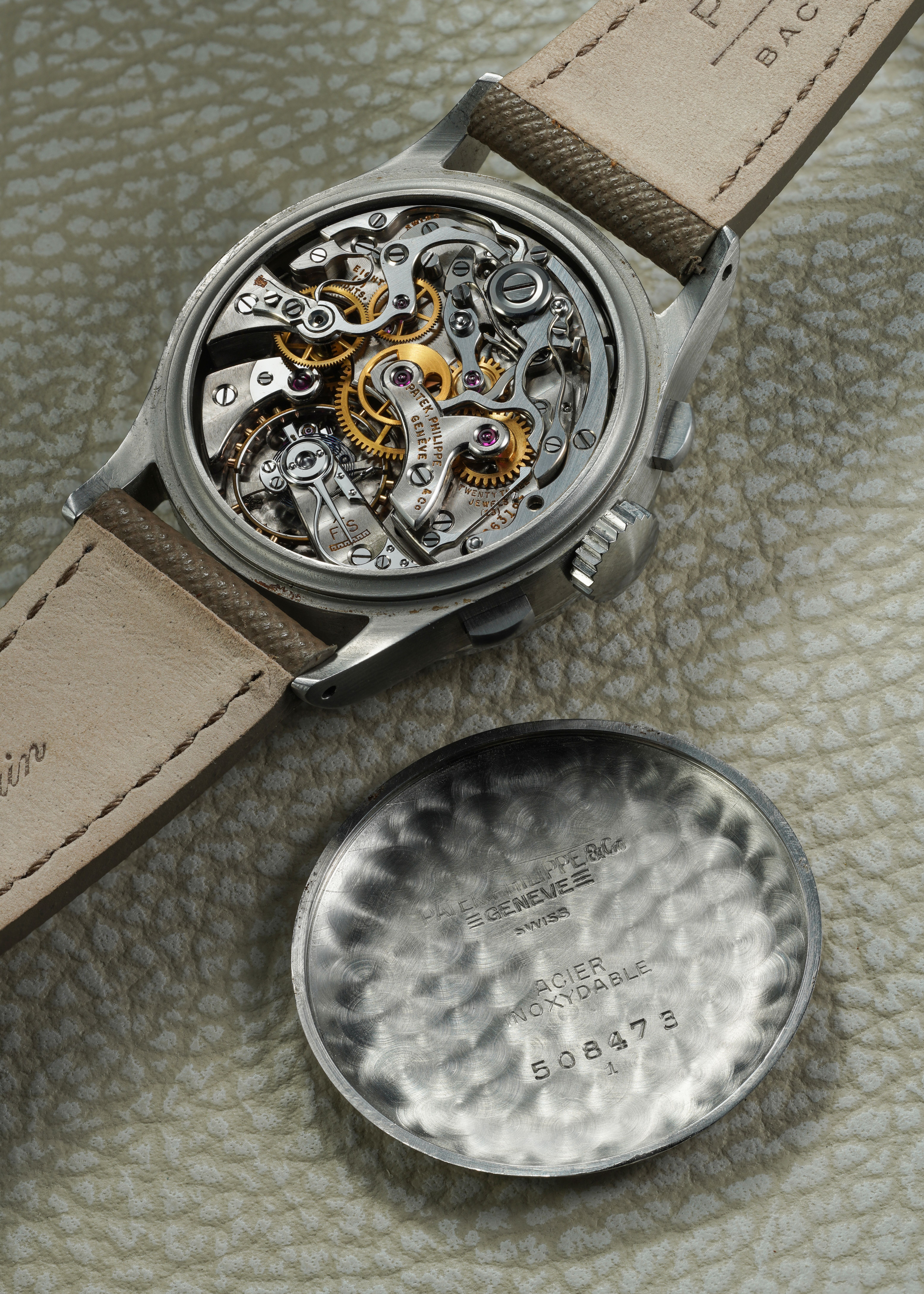
The watch that headlined Phillips’s Decade One anniversary auction is, strictly speaking, an object that should not exist. The Patek Philippe Reference 1518, introduced in 1941 as the world’s first serially produced perpetual calendar chronograph wristwatch, was made almost entirely in 18-carat yellow gold. Of the estimated 281 examples produced, the vast majority followed that path. Four are known in stainless steel. This is one of those four, and not just any of them: it carries the digit “1” engraved inside the caseback, confirming it as the very first steel 1518 ever made.
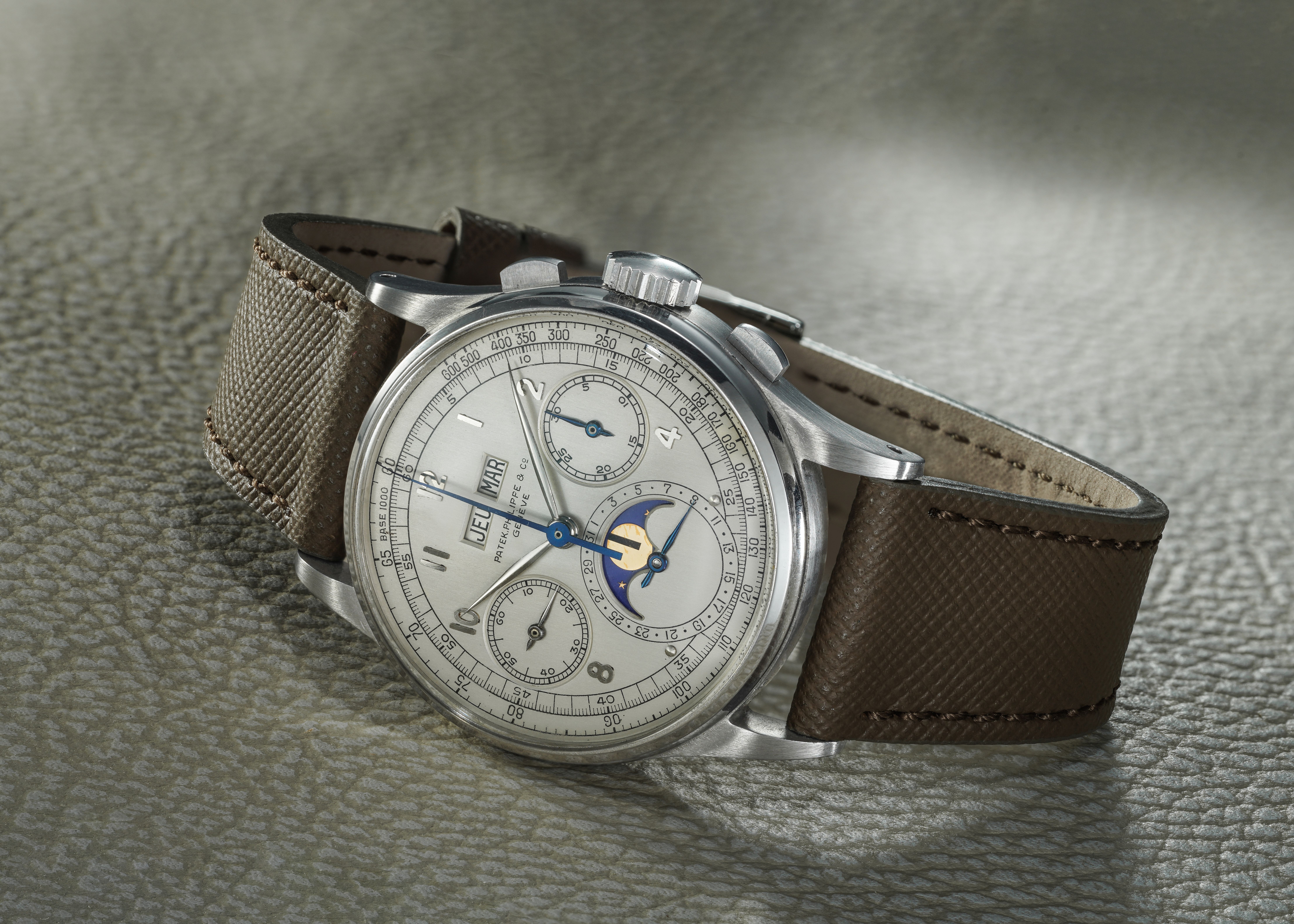
Manufactured in 1943 and delivered on 22 February 1944 to a retailer in Budapest on the same day Hungary was severing its military alliance with Nazi Germany, this watch entered the world at a moment of maximum historical uncertainty. It resurfaced in the early 2000s, sold at Phillips in 2016 for CHF 11,002,000, the first wristwatch to break the eight-figure barrier at auction, then returned in November 2025 as the centrepiece of the house’s tenth-anniversary celebration. Five bidders. Nine minutes and twenty-eight seconds. Winning bid by telephone. CHF 14,190,000 with premium. The room watching included F.P. Journe and dealer Davide Parmegiani.
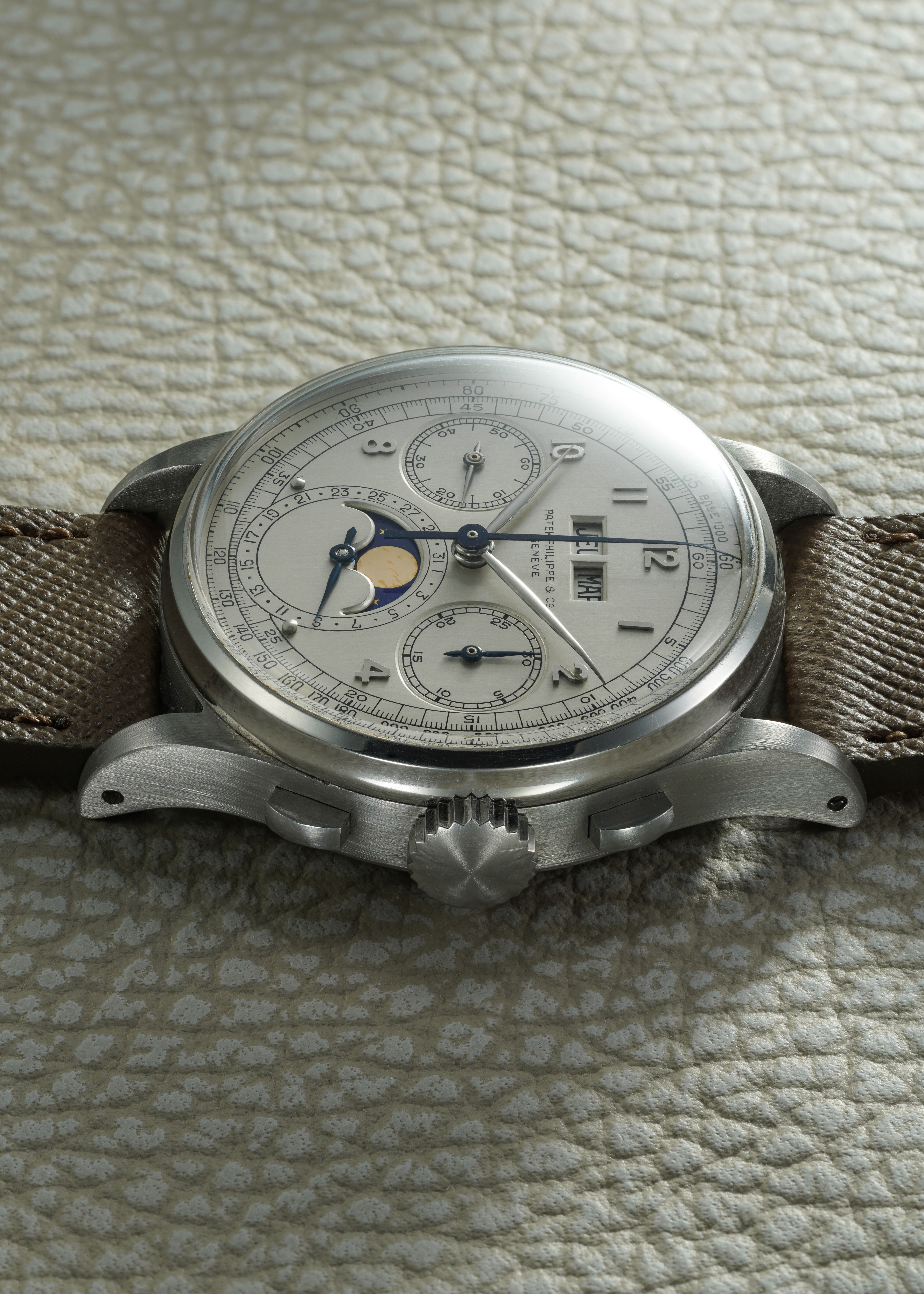
What this result says is not simply that rare Patek Philippe commands extraordinary sums. It says that a 35mm stainless steel watch from 1943, one that could be mistaken for something modest from across the room, can command nearly $18 million because of what it represents: the first proof that Patek Philippe could contain its most ambitious complications within a material the market then considered beneath a watch of that complexity. The steel 1518 is a document of audacity. Patek Philippe will be at Watches & Wonders 2026 in April. The Nautilus turns 50 this year. The brand has been systematically retiring steel complications from its catalogue for four years. The auction market has just told the manufacture, emphatically, that watches combining mechanical ambition with materials that defy expectation occupy a tier of their own. Thierry Stern is listening.
Eight of the Ten Most Expensive Watches Sold in America Last Year Were From One Independent F.P. Journe FFC Prototype, from the Collection of Francis Ford Coppola - Phillips, New York, December 2025 - $10,775,000
That sentence requires a moment to absorb. Eight of the ten lots in the top tier of the Phillips New York Watch Auction XIII in December were F.P. Journe watches. At the single highest-grossing watch auction in United States history, $43.5 million total, the dominant story was not Patek Philippe, not Rolex, not any of the houses preparing to fill 1,200-square-metre exhibition halls in Geneva. It was a Geneva-based independent watchmaker whose entire annual production fits within a few hundred pieces. The headline lot was the FFC Prototype, a unique 2021 wristwatch Journe made as a prototype for what would become the FFC collection, consigned from the personal collection of Francis Ford Coppola. It incorporates Journe’s resonance complication: two balance wheels oscillating in mechanical sympathy, each regulating the other toward a more stable frequency. It had never been on the market. Coppola had received it directly. Eleven minutes of bidding, opening at $1 million. Final price: $10,775,000.
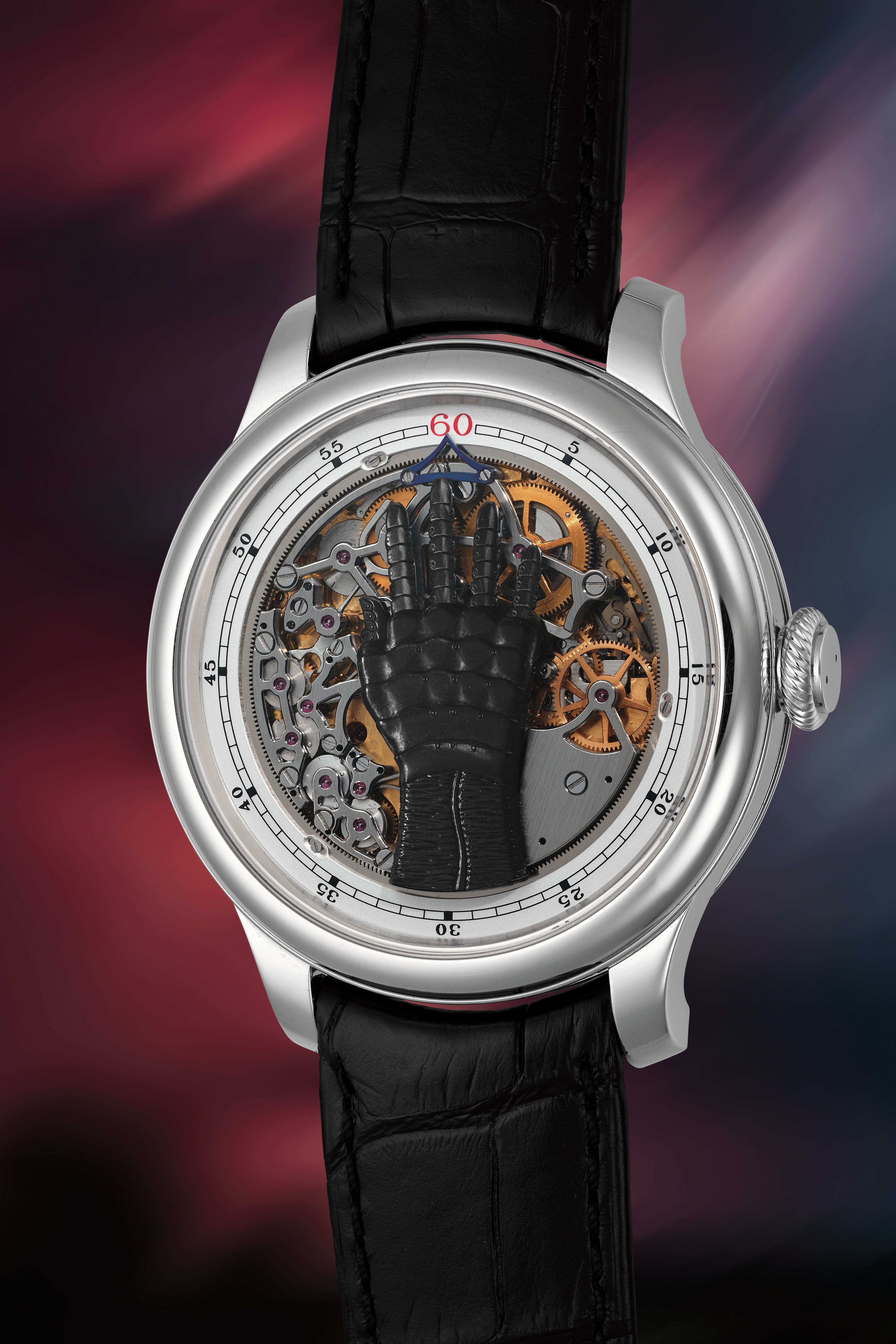
Three simultaneous records: highest price ever for an F.P. Journe at auction; highest price ever for a wristwatch by an independent watchmaker at auction; highest price achieved for any non-charity wristwatch made in the 21st century. The previous holder of that last record was a different Journe. F.P. Journe does not participate in Watches & Wonders. He never has. His business runs through his own boutiques, his own events, his own calendar. The auction results suggest this is not a liability. A watchmaker whose secondary market behaves this way does not need a trade fair to establish credibility. Every independent in the Carré des Horlogers this year expanding from 16 to 23 exhibitors - is operating in an environment shaped, at least partly, by what Journe’s work commands at auction.
Audemars Piguet Paid Seven Times the High Estimate to Buy Back Its Own Watch
Audemars Piguet “Grosse Pièce” Pocket Watch - Sotheby’s, New York, December 2025 - $7,736,000
Robert Olmsted bought this watch from a dealer in March 1970 for $23,350. He kept it quietly for 54 years through the entirety of the Royal Oak era, through the commodification of the Audemars Piguet name in sports and streetwear, through a period in which the brand’s historical identity was almost entirely overshadowed by Gerald Genta’s design masterpiece. When Olmsted died in 2024, the watch came to Sotheby’s as the centrepiece of the Olmsted Complications Collection.
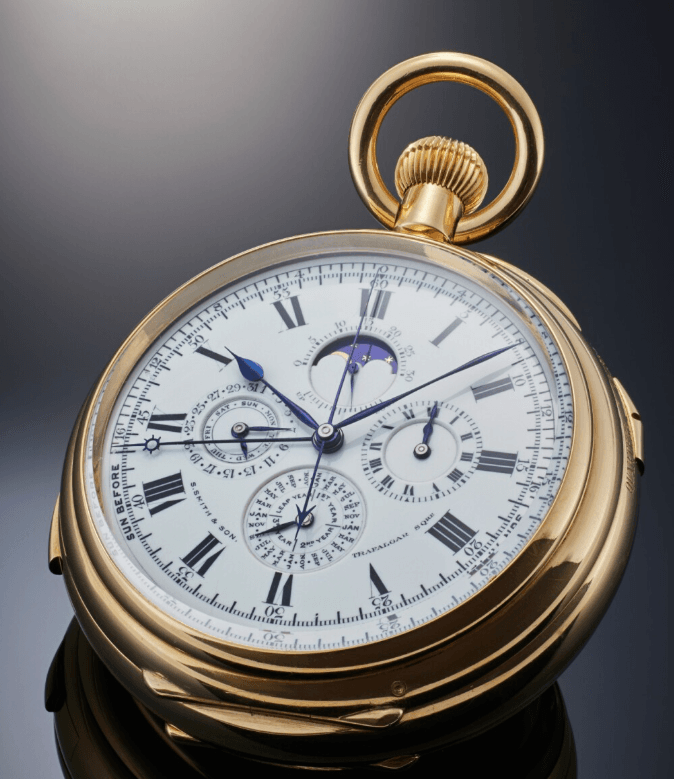
The “Grosse Pièce”, named simply for its size, an approximately 80mm pocket watch in 18-carat yellow gold was originally commissioned in 1914, delayed by the outbreak of World War One, and delivered in 1921 after being shown at the Geneva Watch Exhibition in 1920. It has 19 complications. Confirmed by Audemars Piguet’s own heritage department as the only watch the brand has ever made incorporating both a tourbillon and an astronomical star chart depicting the night sky over London with 315 stars. It also features a minute repeater, grande and petite sonnerie, chronograph, sidereal time, perpetual calendar, moon phases, and equation of time.
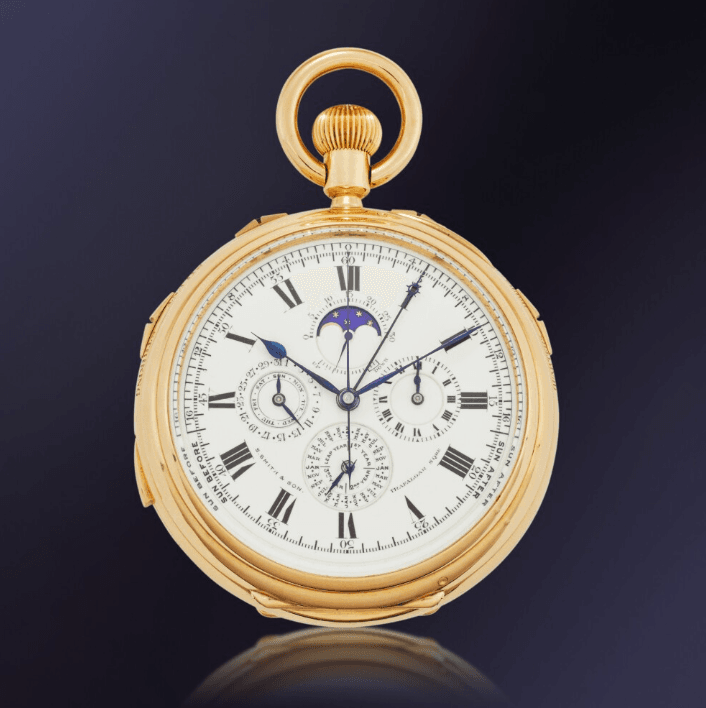
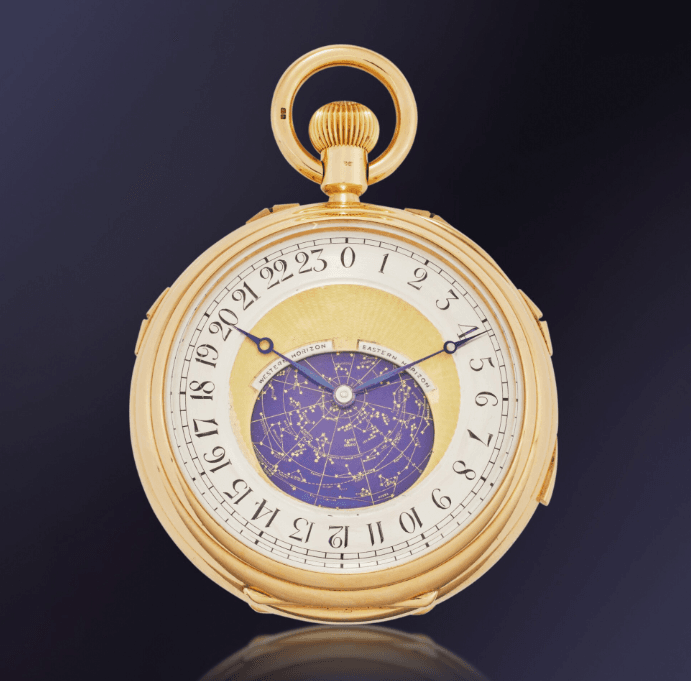
It was estimated at $500,000 to $1,000,000. It sold for $7,736,000. The buyer was Audemars Piguet itself, which paid seven times the high estimate to repatriate it. The brand announced the watch will undertake a multi-year world tour through AP Houses before being permanently installed in the Musée Atelier Audemars Piguet in Le Brassus. Audemars Piguet is returning to Watches & Wonders 2026 for the first time since 2019, occupying a 1,200-square-metre space in Hall 2. The manufacture’s theme for its return is the tradition of établissage, the collaborative workshop culture that defined Swiss watchmaking before vertical integration, and which produced the Grosse Pièce in the first place. The watch that sold for $7.7 million in December, now owned by the brand, embodies exactly the heritage argument Audemars Piguet is bringing to Geneva in April. The auction and the fair, in this case, are telling the same story.
Rolex Is Turning 100. The Watch That Started It All Just Appeared at Auction
The “Companion Oyster” - Sotheby’s, Geneva, November 2025
This one requires careful framing. It is not a record price in the conventional sense. What sold at Sotheby’s Geneva in November 2025 was something more specifically significant than any complication or any celebrity provenance: a pre-production prototype of the original Rolex Oyster, the watch Rolex gave to Mercedes Gleitze for her English Channel swim in 1927, the event that effectively announced the waterproof wristwatch to the world and gave birth to the Rolex Testimonee concept.
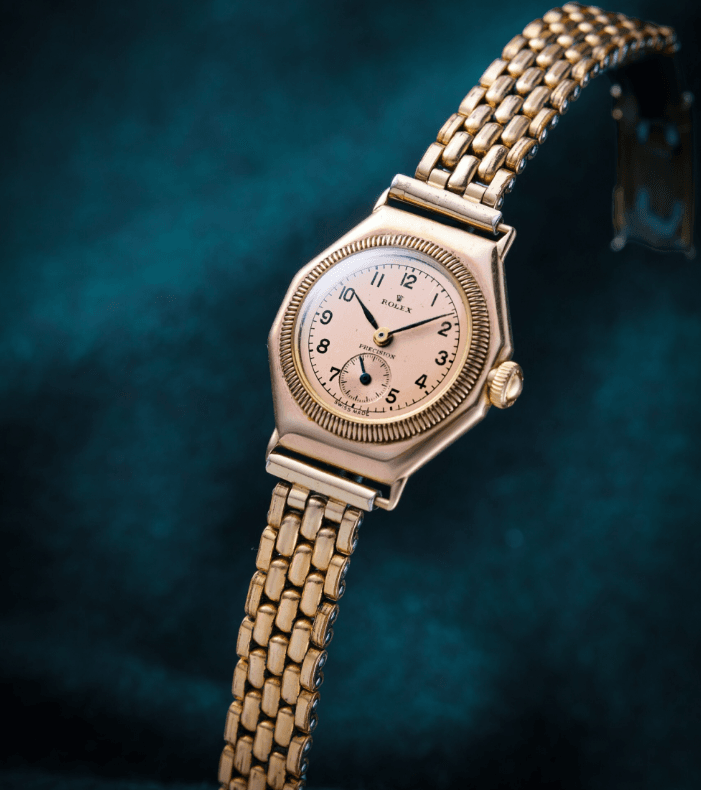
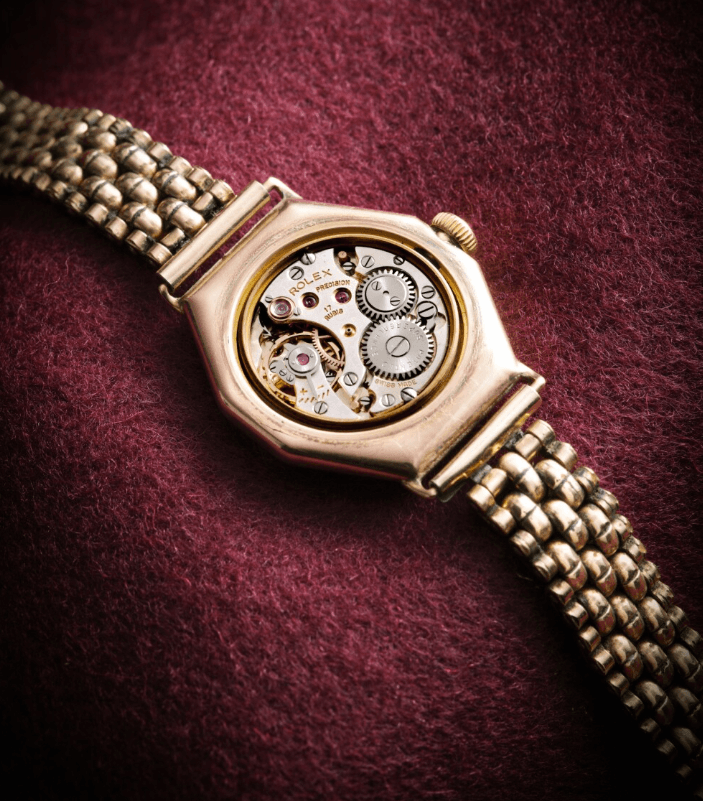
This is the watch. The one on Mercedes Gleitze’s wrist for more than ten hours in the English Channel in October 1927. The one that emerged from the water still keeping perfect time, which Wilsdorf announced on the front page of the Daily Mail as the greatest triumph in watchmaking. The hammer price is almost beside the point. What matters is that this object was publicly transacted at the precise moment Rolex is approaching the centenary of its most important innovation. Rolex turns 100 years of Oyster production in 2026. The brand will be at Watches & Wonders in April. The Companion Oyster’s appearance at auction the previous November was not coincidental. When a manufacture is approaching a centenary of its most important innovation, having the originating object of that innovation visible and transacted in the market is a form of cultural preparation. The auction room and the fair are in conversation, whether or not anyone formally acknowledges it.
No Single Headline. Just Consistent, Disciplined Results. That’s the Lange Argument.
A. Lange & Söhne across the 2025 Season
No single A. Lange & Söhne lot dominated the 2025 auction calendar the way the Patek 1518 or the Journe prototype did. What happened instead was something more structurally interesting: a sustained pattern of strong results across multiple houses and multiple sales, confirming the Glashütte manufacture’s standing in the top tier of collector interest without any single piece generating a record headline. At Phillips New York in December, Lange 1 references consistently reached above the estimate. Through the spring and autumn Phillips' sales combined, A. Lange & Sohne perpetual calendars and complicated dress watches found competitive bidding across multiple sessions. The average lot value for Lange references at Phillips live auctions in 2025 exceeded the house average, reflecting the discipline with which the manufacture controls its own supply and the depth of genuine collector conviction around the brand’s movement finishing standard.
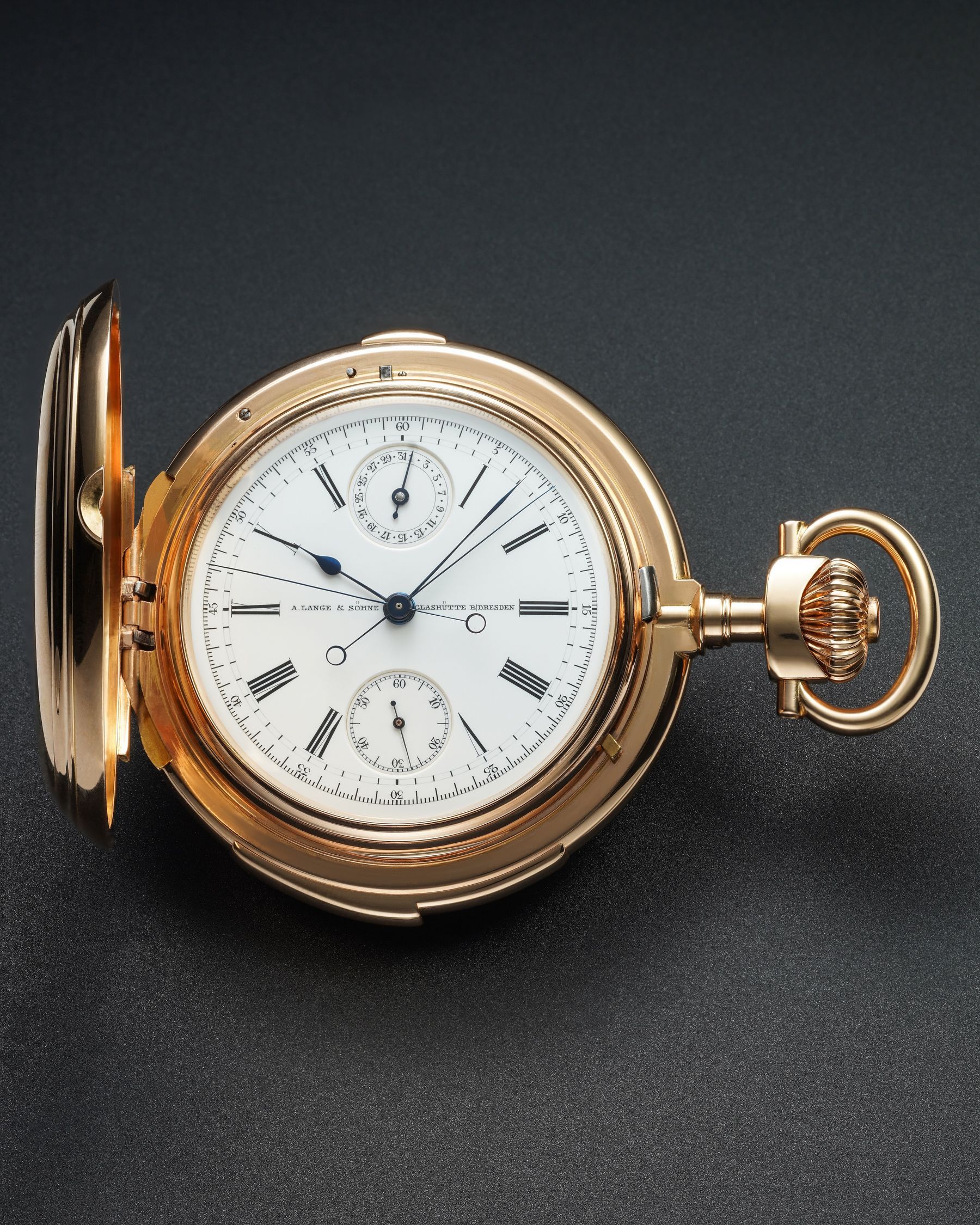
Collectors who buy A. Lange & Sohne at auction are not speculating on brand heat or secondary market trajectory. They are buying movements they believe will be studied and admired for generations. That is a particular kind of argument. In a year when Geneva is dominated by Nautilus anniversaries, Audemars Piguet’s return, and Rolex’s Oyster centenary, Lange arrives with the quietest profile and arguably the most disciplined long-term auction record of any brand at the fair.
The Auction Room Has Already Voted
The five watches in this article represent five different arguments about value in horology. The steel 1518 argues for rarity combined with historical precedence. The Journe FFC Prototype argues for independent genius with documented provenance. The Grosse Pièce argues for institutional heritage reclaimed. The Companion Oyster argues for originating objects in a centenary year. The Lange pattern argues for sustained quality in a market that rewards depth of conviction over short-term heat. In April, in Geneva, 66 brands will each make their own argument. The auction room has already indicated which arguments the serious market finds most convincing. The question is whether the brands listening in April heard the same thing.


