
 7 min read

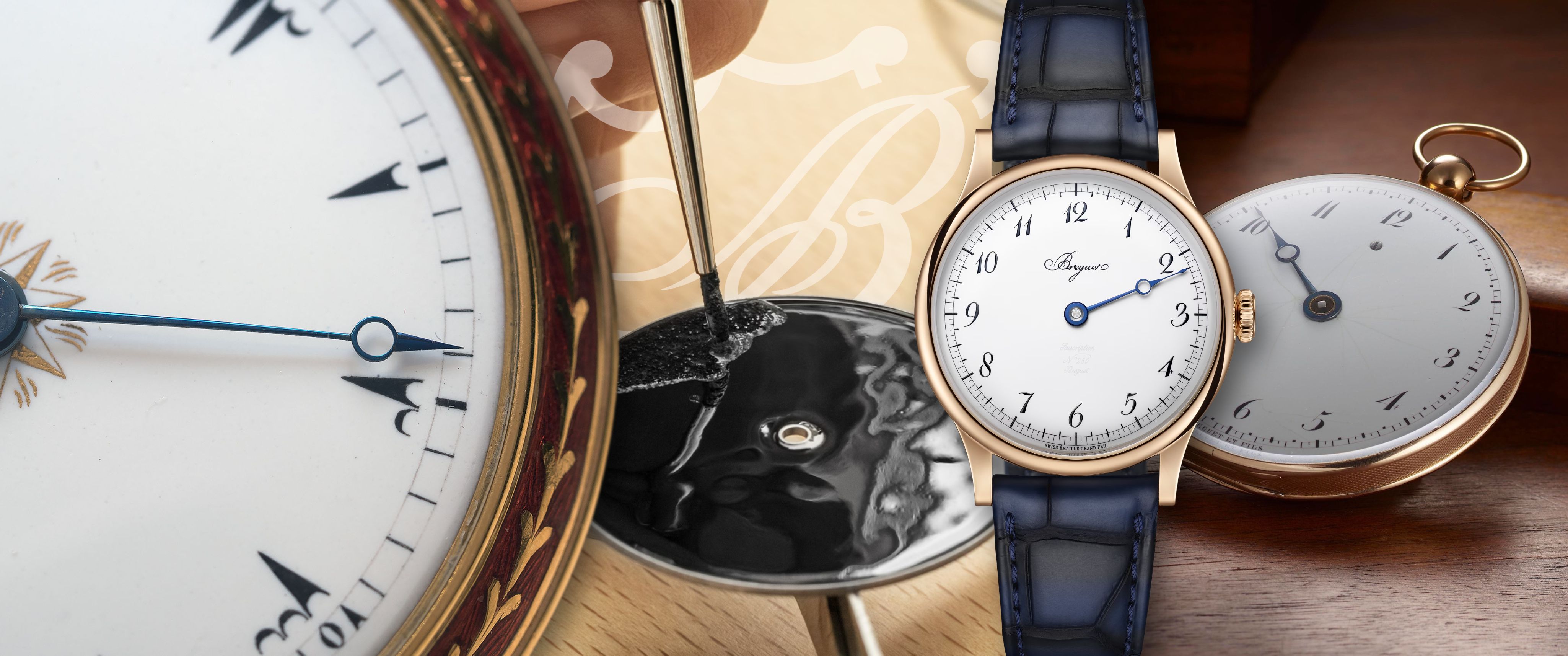
In the storied legacy of enamel in high horology, Breguet has rarely been the loudest voice, but it has almost always been one of the most authoritative. The grand feu dial of the Classique Souscription 2025 does not just commemorate the brand’s 250th anniversary, it distills two and a half centuries of thinking about legibility, restraint and surface into one of the purest contemporary expressions of Breguet’s enamel tradition.
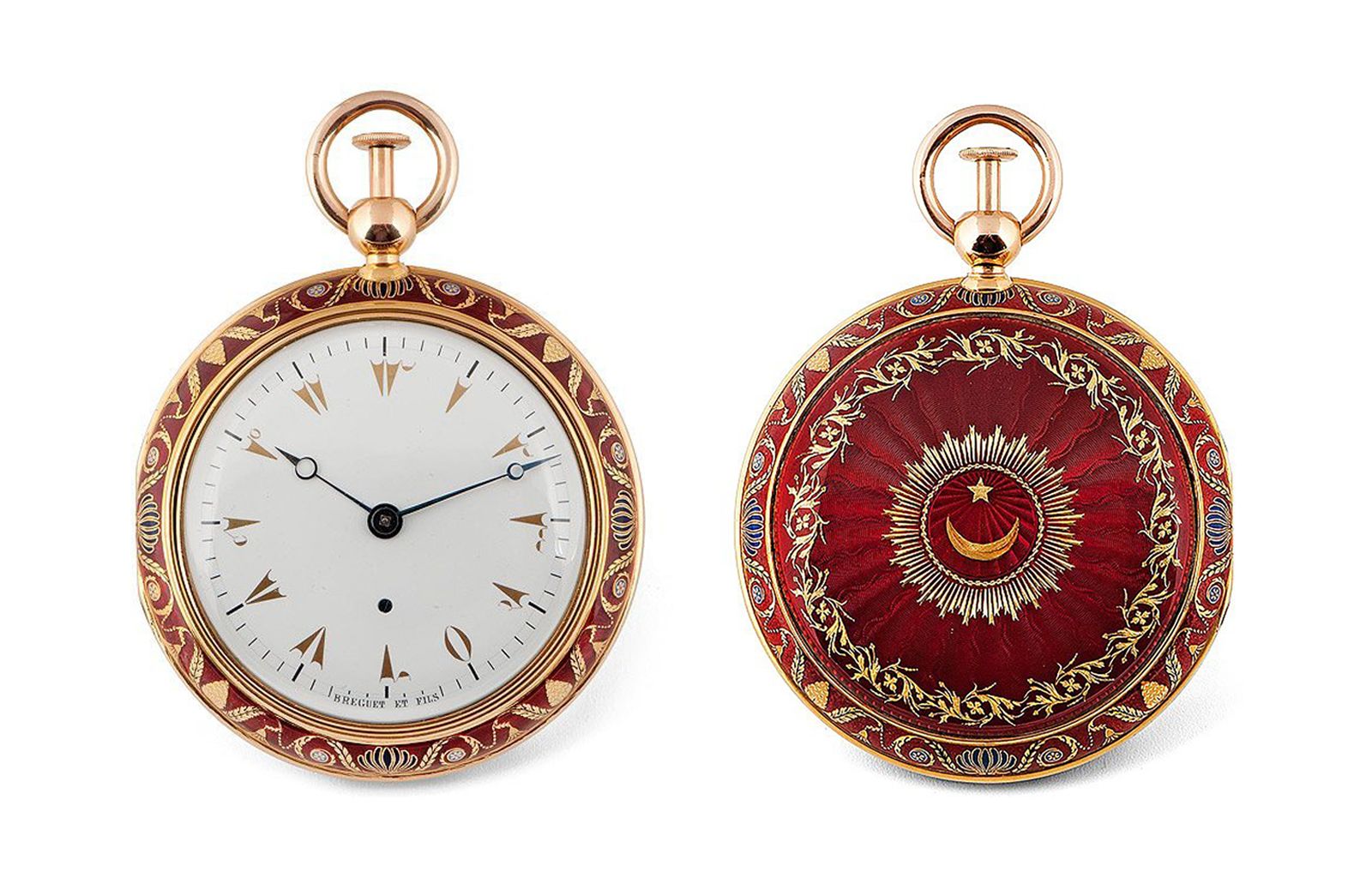
From Antiquity to Haute Horlogerie: The Legacy of Enamel in Watchmaking
Enamel, derived from the French email (“to smear”), is a complex decorative process. It is a glass-like coating fused onto metal through repeated cycles of intense heat, often exceeding 800 degrees Celsius. Each layer of powdered enamel is painted, fired, cooled, and polished. If even a minuscule blemish appears, the entire dial must be discarded and begun anew. This nearly sacrificial process yields surfaces that are luminous, enduring, and resistant to the ravages of time and light.
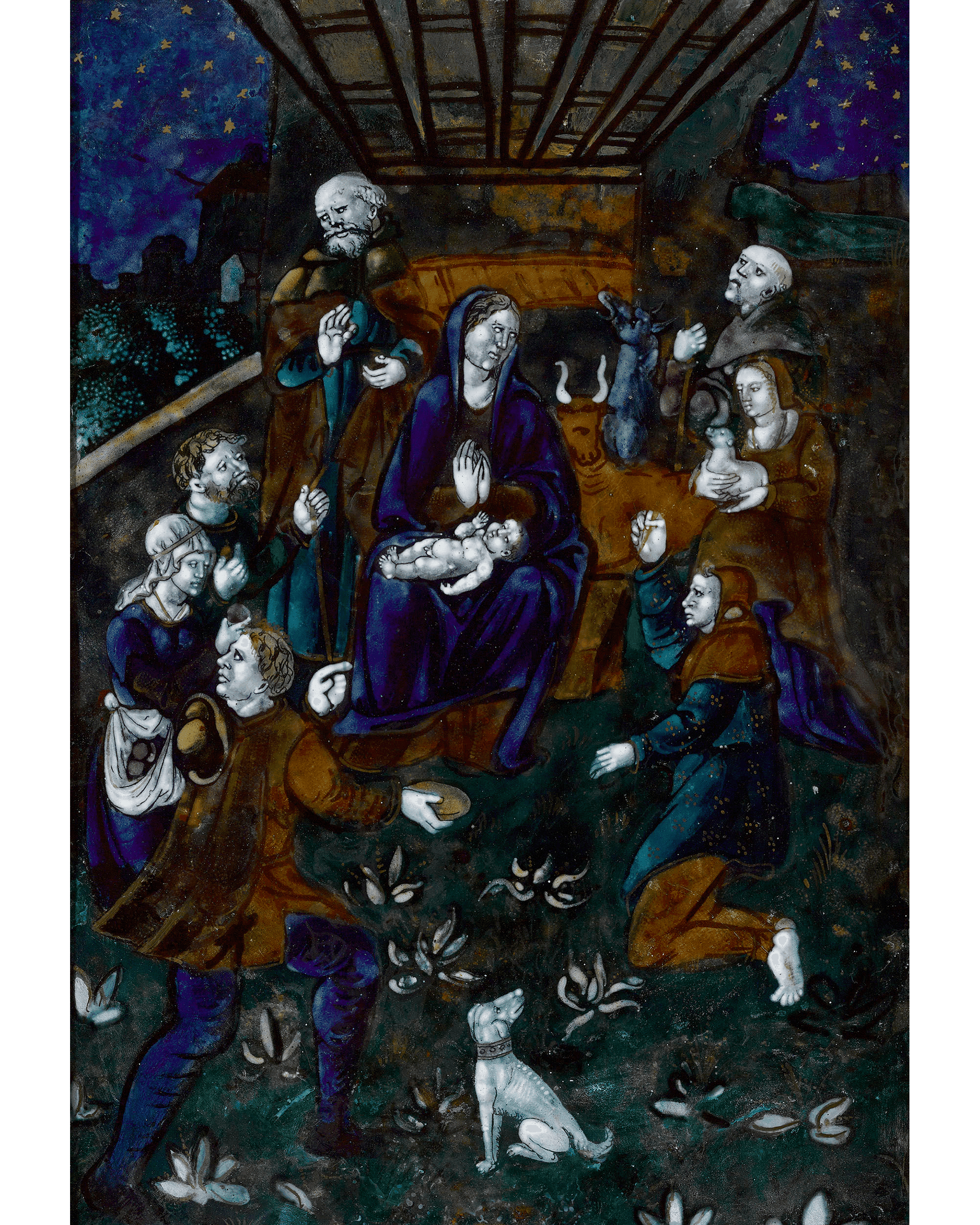
Though enameling traces its roots back to 13th-14th century BC, its adoption in watchmaking began in earnest in the 17th and 18th centuries as artisans sought surfaces as pure and enduring as the mechanical hearts beneath them. Among these early horological pioneers was Abraham-Louis Breguet, whose vision for exquisite dials was inseparable from his mechanical innovations. He was among the first to integrate enamel into pocket watches both as an aesthetic statement and a herald of technical purity.
Origins Of Breguet’s Enamel Language
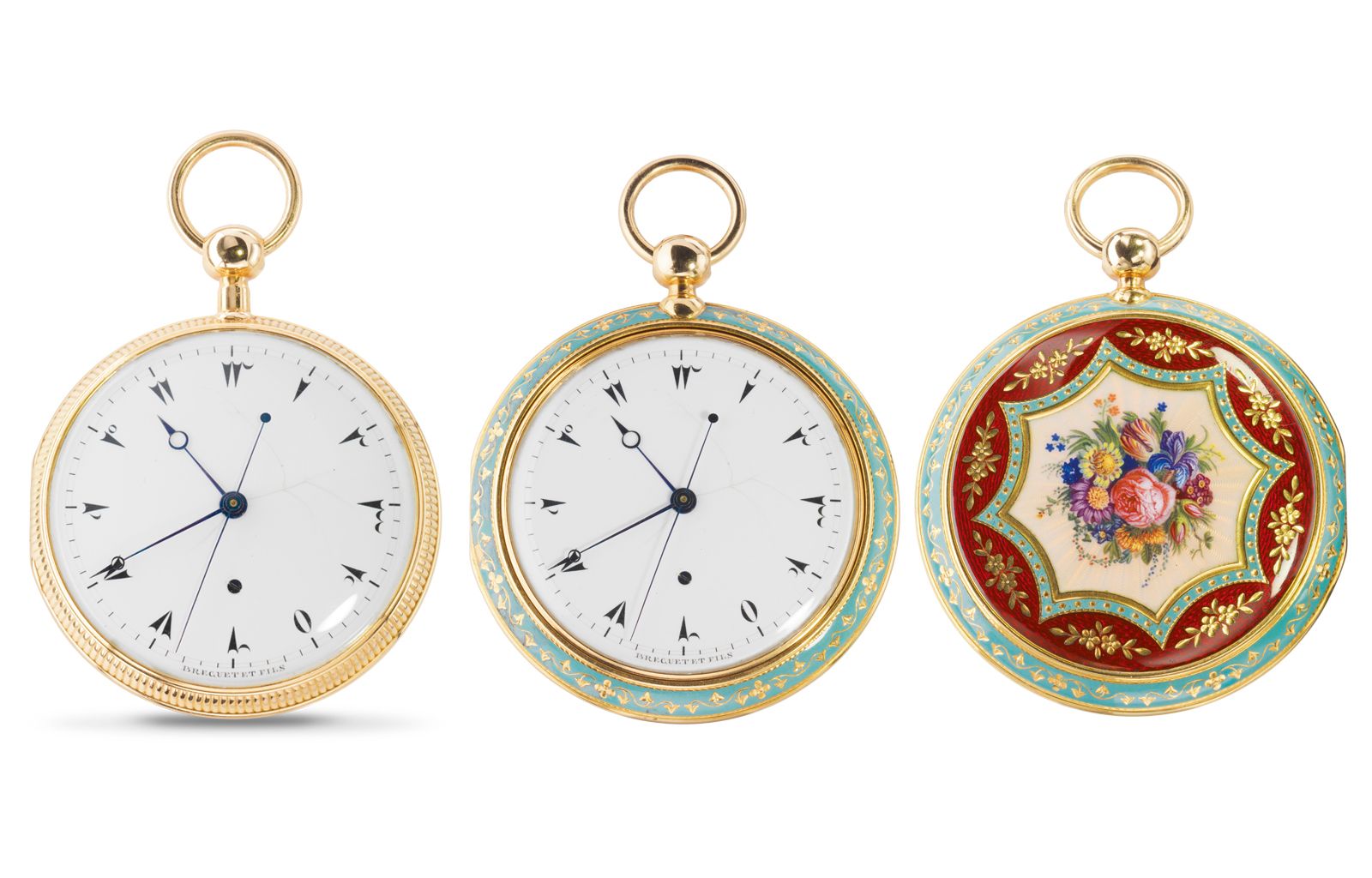
When Abraham‑Louis Breguet began simplifying the visual language of watches at the end of the 18th century, enamel was a technical choice before it was an aesthetic one. Fired at high temperature on a metal base, it offered a chemically stable, brilliant white ground that made his new, sloping Arabic numerals and railroad minutes readable in poor light and through scratched crystals. That choice of material was inseparable from the “new style” he introduced: open‑tipped hands, clearly printed scales and dials that eliminated superfluous decoration in favor of information hierarchy.
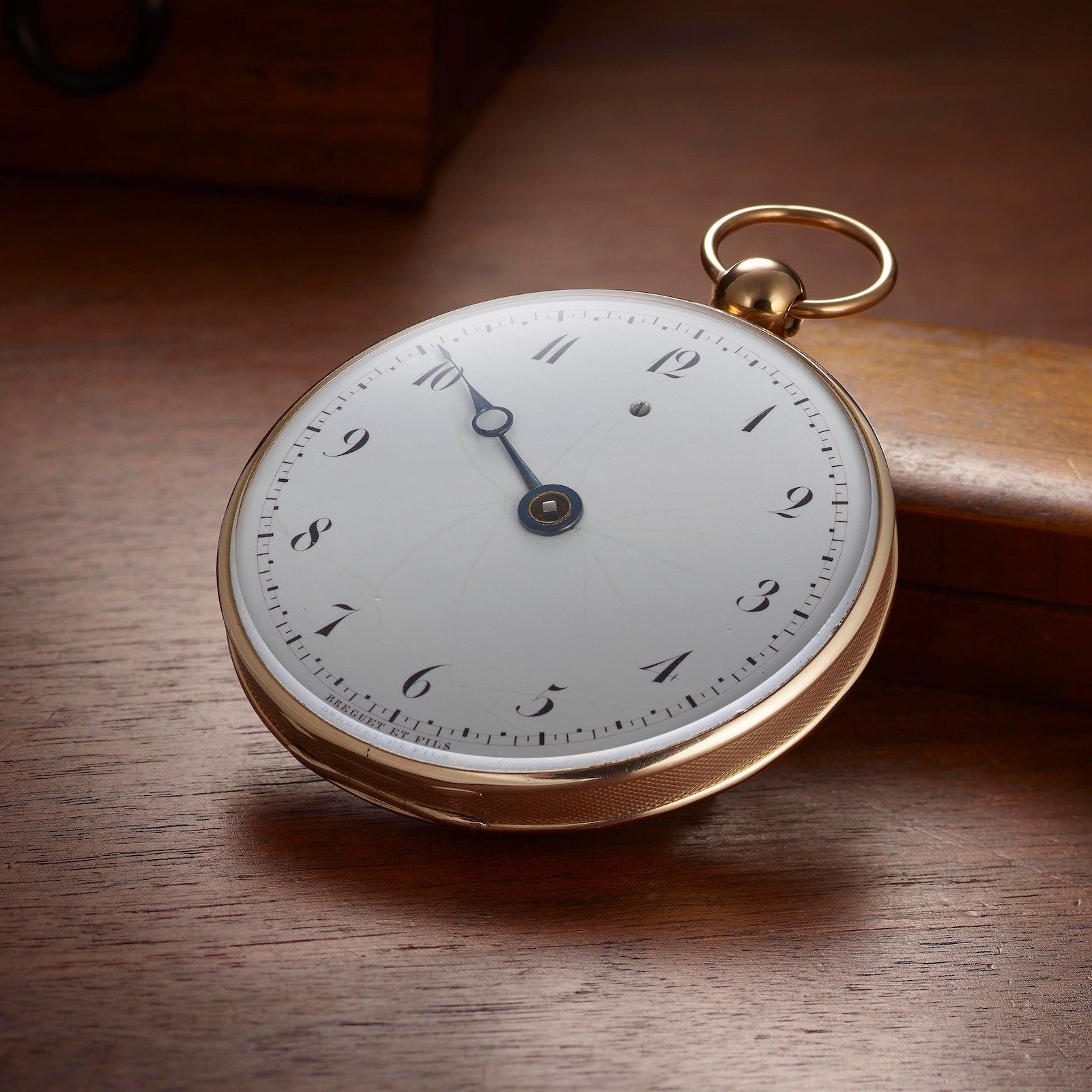
The Souscription watches of the 1790s pushed this philosophy to an extreme. These large, roughly 61 mm pocket watches used a single hand over a white enamel dial and a simplified movement architecture, offered on a subscription model that required a quarter of the price up front to finance production. In enamel terms, they codified several Breguet signatures: inclined Arabic numerals, chemin‑de‑fer minutes and finely drawn script, all executed on a white background whose functional neutrality allowed typography and hands to do the expressive work.
Technique: Grand Feu And Diamond‑Point
The dial of the Classique Souscription 2025 returns explicitly to that older grammar, but the way it is made belongs to a 21st‑century workshop with an honest reverence for 18th‑century processes. The dial is described as grand feu enamel, a multi‑stage firing technique in which successive layers of finely ground enamel powder are applied to a metal blank and fired at high temperature until they fuse into a dense, glassy surface. The result is an exceptionally bright, slightly domed white field that resists UV aging and retains its gloss for decades.
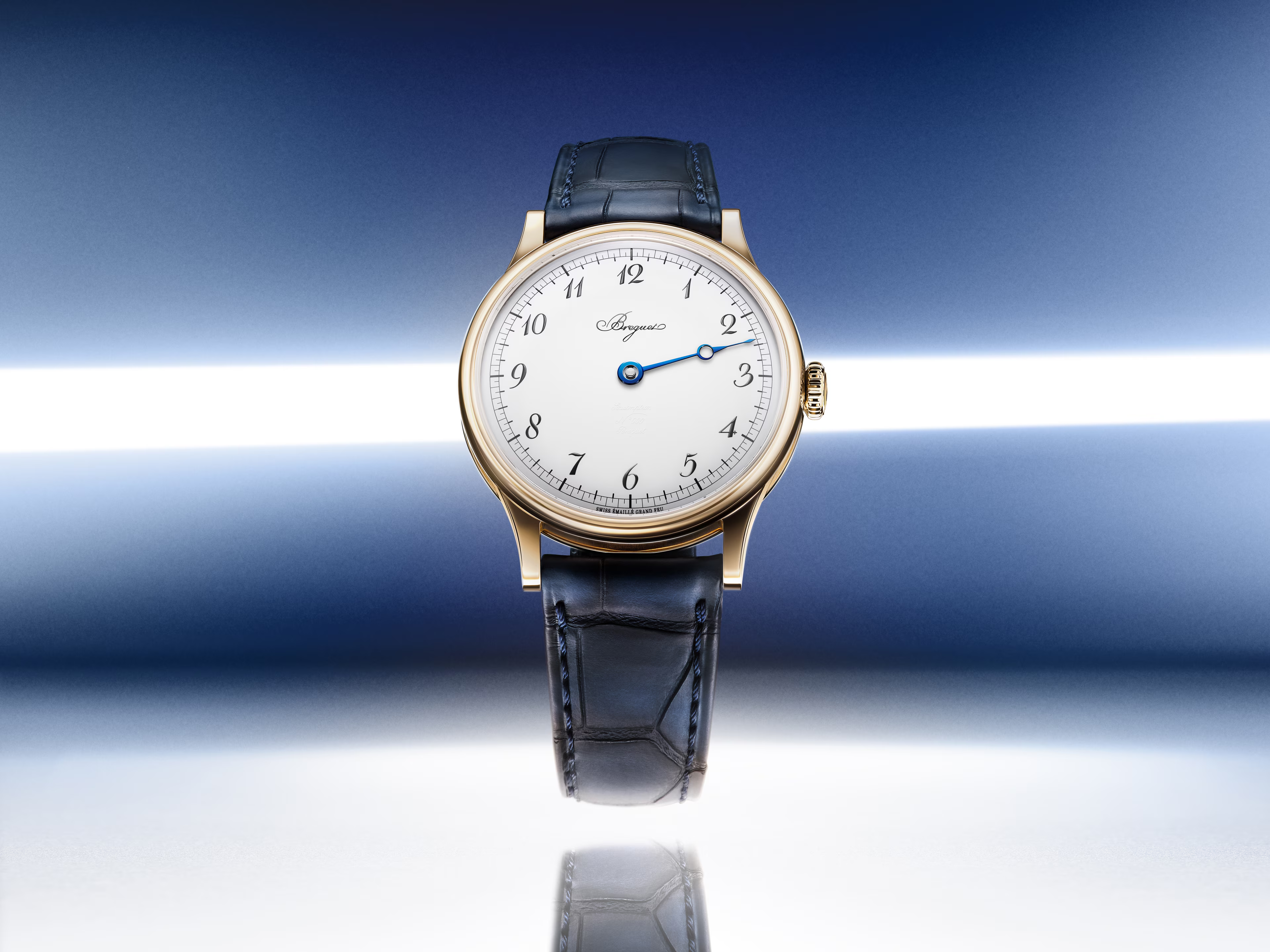
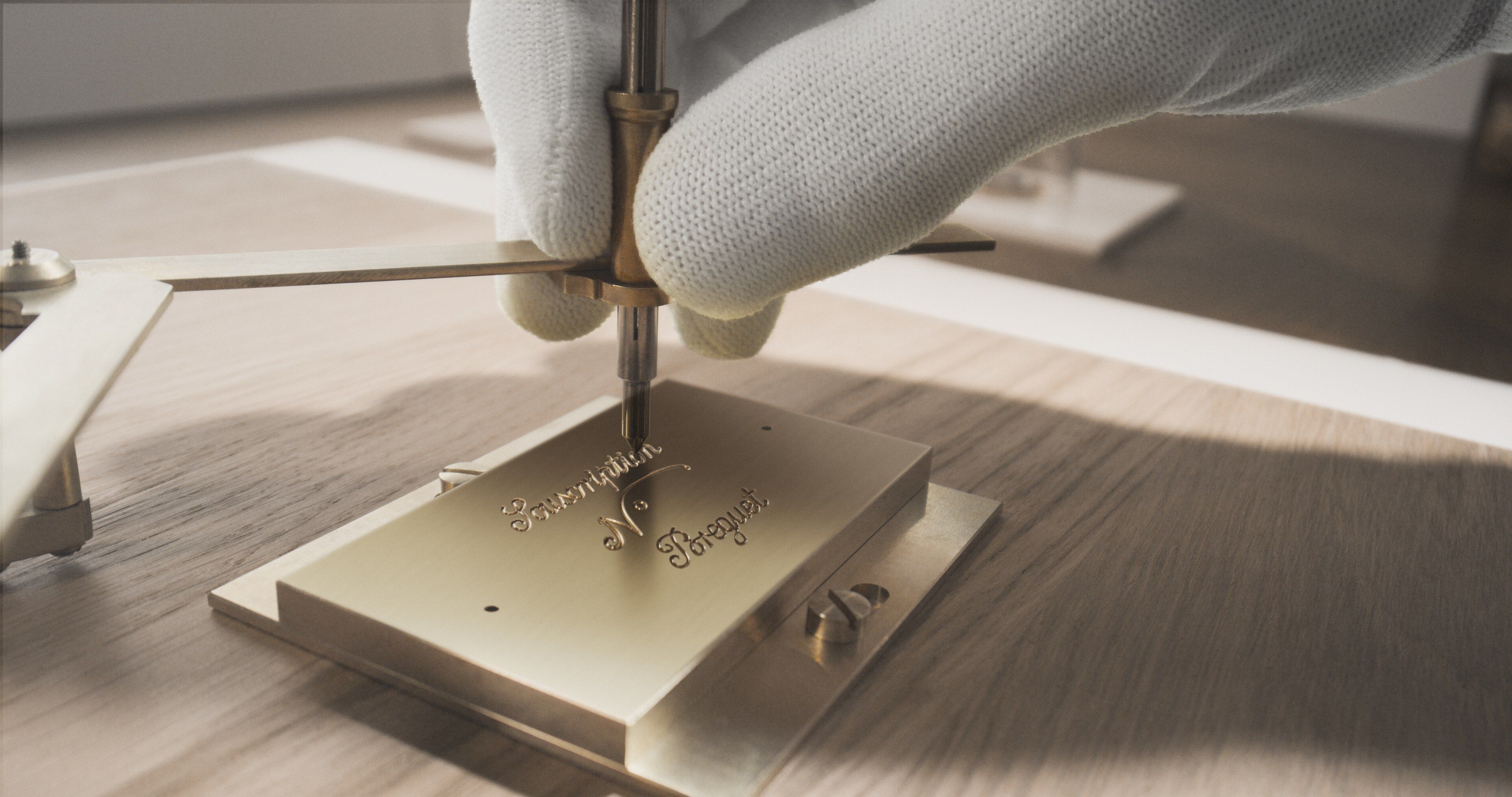
On that surface, Breguet deploys two distinct enamel executions. The numerals, minute track and Breguet signature at 12 o’clock are rendered in black petit feu enamel, a lower‑temperature firing that allows for precise, sharply edged printing of the scales without disturbing the underlying ground. By contrast, the word “Souscription”, the individual serial number and the discreet secret signature between the center and 6 o’clock are not printed at all, they are engraved into the enamel itself using a diamond‑point pantograph, a precision tool with articulated arms that mechanically scales down an original model. This technique, already used in Abraham‑Louis Breguet’s day, traces fine incisions into the hardened enamel, giving the inscriptions a subtle, almost ghost‑like presence that reveals itself only in certain light, while at the same time acting as an anti‑counterfeiting device.
Artistry: A Single Hand, Many Decisions
The “radiant face” of the Souscription 2025 looks deceptively simple, but every element of its layout and execution reflects Breguet’s historic preoccupations with clarity and proportion. At the center is a single, steel Breguet hand, open‑tipped, flame‑blued and then curved by hand so that its tip floats precisely above the minute track. The hand’s geometry - its counterweight, its narrowing shaft and the eye‑like opening near the tip - is calibrated to preserve the classical balance between mass and air that defines traditional Breguet hands, even when there is only one of them on the dial.
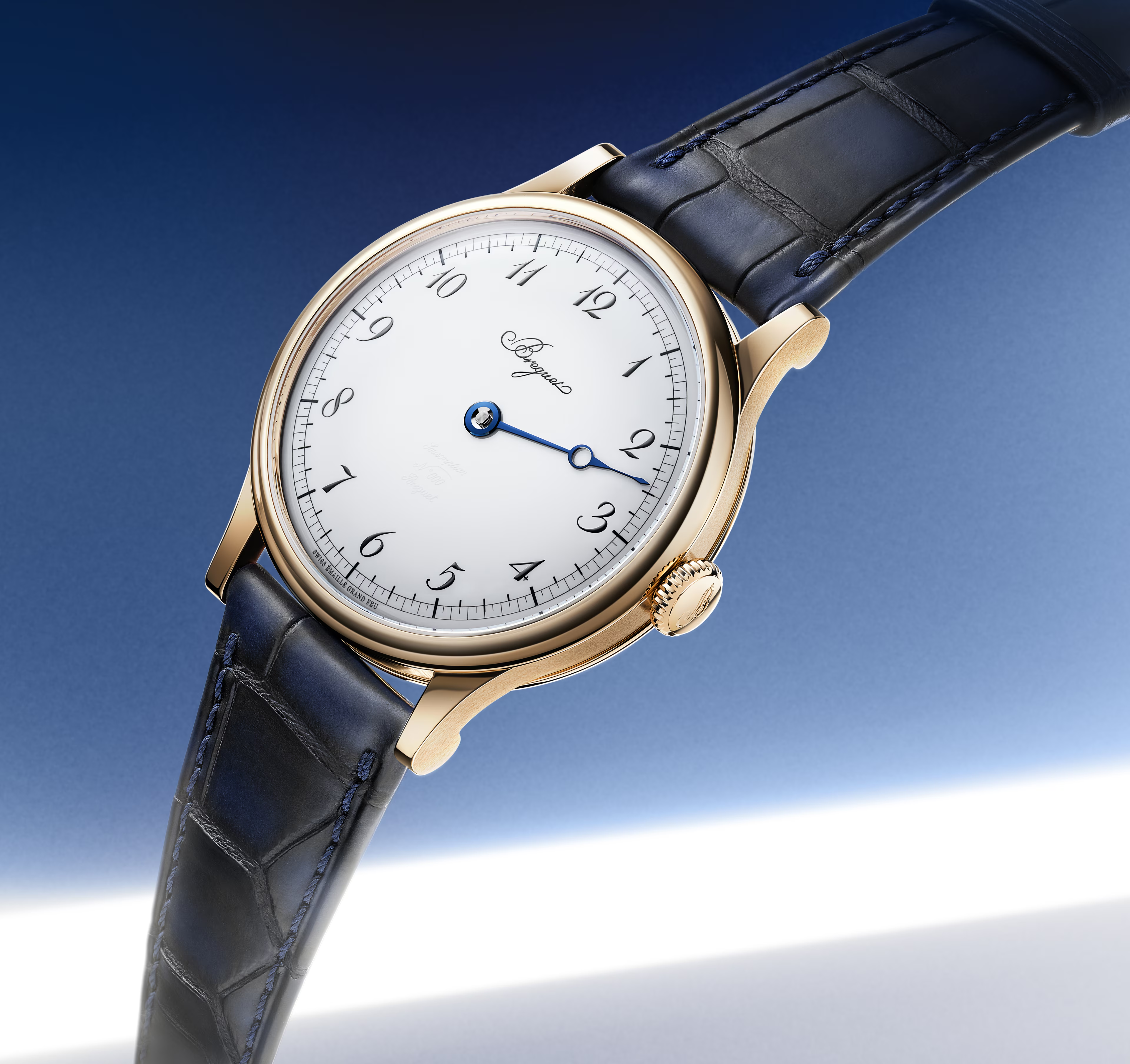
The numerals are the familiar, slightly inclined Breguet Arabic figures, set just inside a circular chemin de fer carrying sector divisions for hours and for the 5, 10, 15 and 30‑minute intervals. This choice of sectoring is not decorative, it reintroduces to a single‑hand watch the kind of intuitive time reading that Abraham‑Louis was already chasing: enough information to locate the hand to the nearest five minutes without cluttering the dial with subsidiary indications. The enamel’s uniform white field acts as a neutral stage on which these black indications stand in sharp relief, while the sapphire crystal with a chevé profile, thin at the center, gently curving toward the edges, minimizes distortion of the scales and allows the dial to sit visually close to the glass.
Case, Crystal And Movement: A Coherent Object
Although the focus is the dial, the way Breguet houses and frames it in the Classique Souscription 2025 reinforces the sense that the enamel is one component in a unified object rather than a decorative insert. The 40 mm case debuts a new proprietary “Breguet gold”, a pale alloy combining gold, silver, copper and palladium, whose blond tone echoes the gilded brass of the VS00 caliber visible through the back. Instead of the traditional coin‑edge fluting, the case middle is delicately satin‑brushed, a nod to the austere simplicity of the original Souscription pocket watches, while the lugs are curved and more fluid than the straight horns of earlier Classique references, improving ergonomics and visually tightening the frame around the dial.
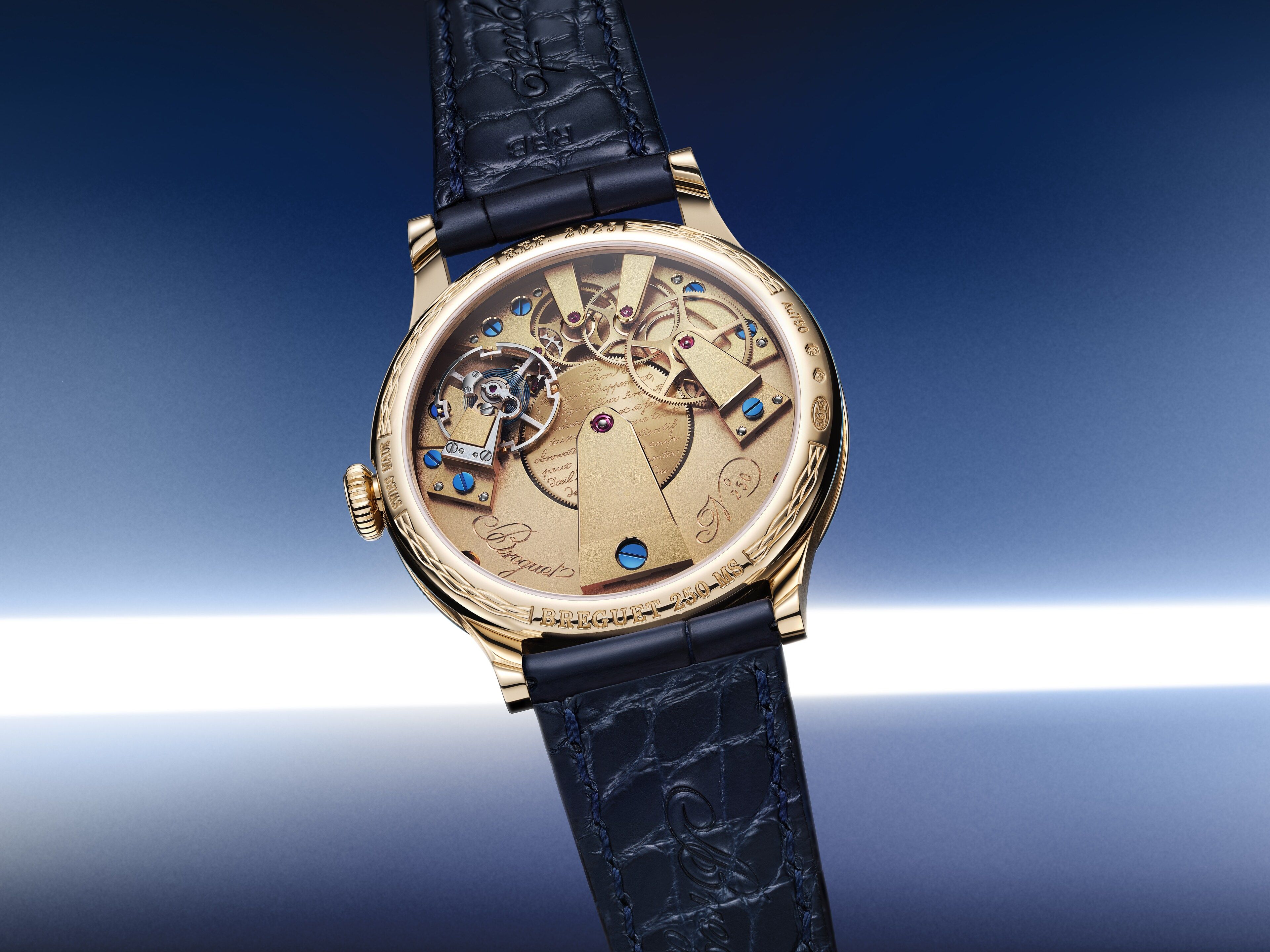
On the reverse, the slightly domed sapphire crystal reveals a movement architecture consciously modeled on the first Souscription calibers but decorated in a resolutely contemporary idiom. The VS00 features plates and bridges that are finely shot‑blasted, a matte texture directly inspired by historical Breguet movements, accented by blued screws and ruby bearings. The dominant visual element is an imposing central ratchet wheel, engraved in cursive with the founder’s period text describing the design of the Souscription movement, and surrounded by a newly developed guilloché motif named “Quai de l’Horloge”. This pattern, whose interlacing curves reference the geometry of Paris’s Île de la Cité and Île Saint‑Louis, underscores the watch’s role as an anniversary piece tied to the physical location of Breguet’s original Quai de l’Horloge workshop.
Why Enamel Matters Now?
At a time when many brands prioritize spectacle over substance, Breguet’s commitment to enamel is a bold assertion: traditional craft remains essential to the language of high watchmaking. No matter how sophisticated a movement may be, it is the dial, the human-facing canvas, that defines our first emotional connection to a watch. Enamel, with its depth, permanence, and ineffable glow, elevates this canvas into art.
Souscription 2025 As Enamel Manifesto
Viewed strictly as an enamel dial, the Classique Souscription 2025 is conservative: white grand feu, black petit feu indications, a single hand, and inscriptions that alternately hide and reveal themselves depending on the angle of light. But in the context of Breguet’s history, it is unusually discursive, using technique to restate several core ideas at once. The diamond‑point pantograph work literalizes the Maison’s ongoing fight against counterfeiting in the medium of enamel itself, the choice of a chevé crystal and satin‑brushed case middle reinstates once‑radical functional innovations as aesthetic choices; and the grand feu surface, almost clinically pure, allows the house numerals and signature to exist at their most legible and least ornamental.
Technically, the watch pairs that dial with a 3 Hz, four‑day, single‑barrel movement that is as disciplined as the face it drives, its Quai de l’Horloge guilloché and engraved ratchet wheel functioning as a three‑dimensional counterpart to the front’s graphic clarity. Conceptually, the Souscription 2025 demonstrates that Breguet’s enameling is not about baroque tableaux or painterly miniatures; it is about creating a permanent, high‑contrast field on which information, proportion and subtle inscriptions can speak more loudly than color. In a market saturated with elaborate enamel pictures, that restraint may be the most Breguet thing about it.


